GLYDE
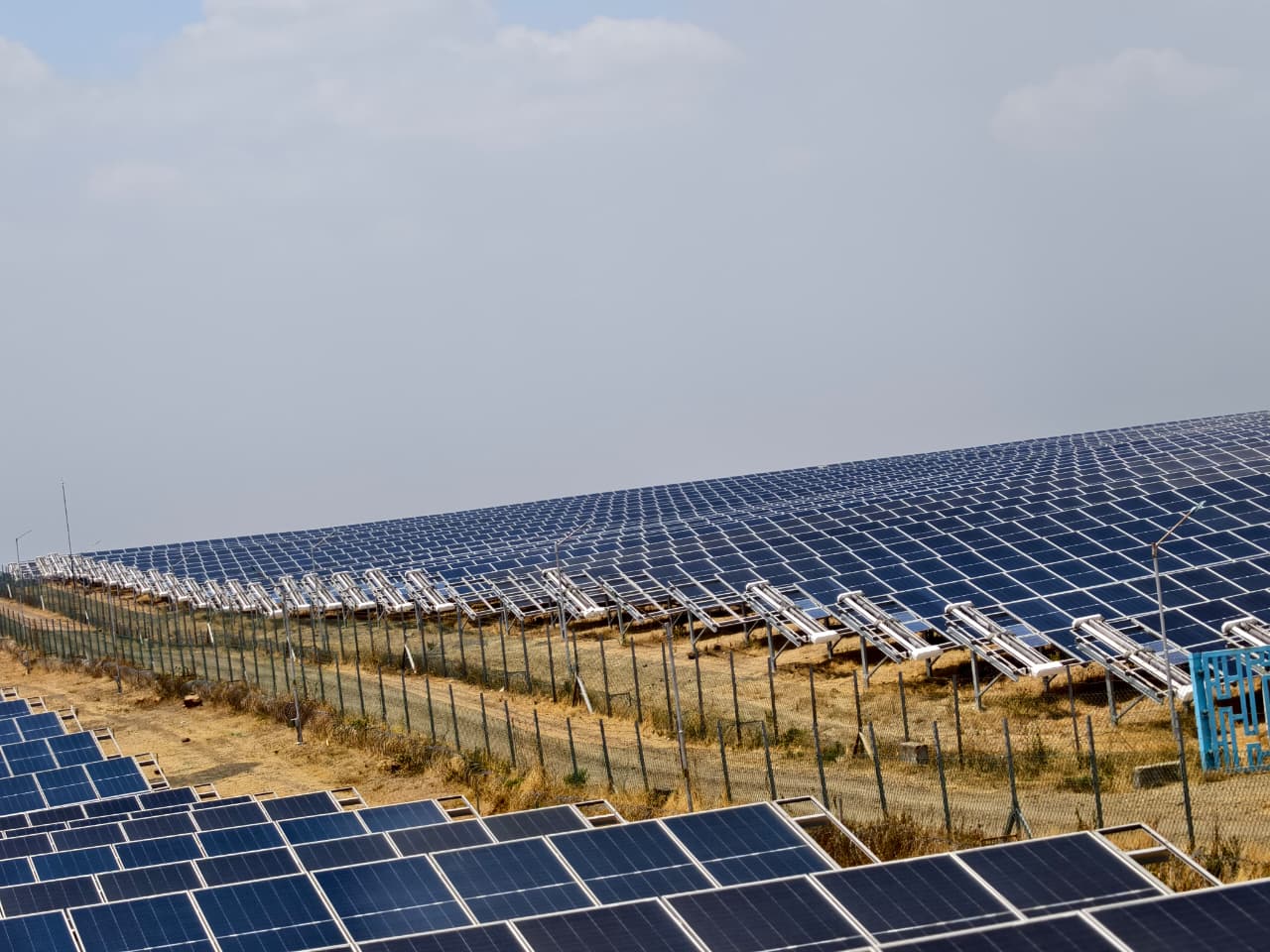
Fully autonomous waterless cleaning with patented dual-pass airflow and microfiber for fixed and seasonal-tilt utility plants.

Solar Panel Cleaning System · Made in India
50 MW+
Typical plant size deployed
Same day
Pan-India breakdown response
TÜV NORD
Certified hardware
Waterless
Dual-pass cleaning
Our robot line-up
Not sure which robot fits your plant? Filter by layout or engagement model.
GLYDE
Fully autonomous waterless cleaning with patented dual-pass airflow and microfiber for fixed and seasonal-tilt utility plants.
GLYDE-X
Autonomous tracker robot with patented dual-pass microfiber and flexible 360° bridge.

NYUMA
Fully autonomous single-pass PBT waterless cleaning for fixed and seasonal-tilt utility-scale plants.

NYUMA-X
Autonomous tracker robot with single-pass PBT cleaning and flexible body for single-axis tables.

HELYX
Semi-automatic pick-and-place waterless cleaning with single-pass PBT for scattered and distributed utility plants.

Opex
Pay-per-panel-cleaned Opex, Taypro operates the cleaning robot fleet on your plant with no upfront CAPEX.
NECTYR
Fleet portal to schedule, monitor, and report on solar panel cleaning robots across your site.
CRADYL
Battery-powered movable docking station on end-row rails for autonomous row-to-row robot transfer on scattered plants.
MINY
Compact cleaning robot for smaller rooftop plants, waterless, lightweight, coming soon.
ORION
Generation-trained solar plant health monitoring SaaS, SCADA-aware insights with optional Taypro robot field data.
Primary service page
Procurement teams evaluating solar panel cleaning service should start with our product OPEX page, scope, SOPs, billing model, and NECTYR reporting, before regional coverage or MW-scale deployment guides.
Solar panel cleaning, defined
Solar panel cleaning is the scheduled removal of dust, agricultural residue, bird droppings, and other soiling from photovoltaic modules so plants recover generation that dirt would otherwise block. On Indian utility-scale sites, soiling commonly cuts output by 8–25%. Manual wet washing is labour-heavy, water-hungry, and hard to audit across rows.
Taypro provides waterless solar panel cleaning with autonomous and semi-automatic robots — including the GLYDE automatic solar panel cleaning system — or as a managed solar panel cleaning service. Cycles run without water tankers or detergents; the waterless cleaning technology page explains dual-pass airflow and microfiber. Proof of each cycle is logged in NECTYR.
Solar panel cleaning recovers generation lost to dust: agricultural residue and bird droppings can cut PV output by 8–25% across Indian utility plants. Manual washing is expensive, water-hungry, and never consistent across rows or shifts. A purpose-built Solar Panel Cleaning Robot cleans every panel the same way every night, and removes water from your O&M plan entirely.
Taypro is a Made-in-India manufacturer of robotic cleaning systems. Our line spans the fully GLYDE automatic robot, the NYUMA PBT automatic line, the semi-automatic pick-and-place HELYX for scattered plants, tracker-ready GLYDE-X and NYUMA-X for single-axis layouts. Learn how waterless cleaning technology works, then monitor every robot through NECTYR and deploy as CAPEX or monthly OPEX service.
Further reading: solar panel maintenance guide and what defines a solar panel cleaning robot.
System, robot, and machine
A solar panel cleaning system is the plant setup around the hardware: the cleaning robot, docking and row transfer, the schedule, and a NECTYR record of each cycle. Procurement language also calls that hardware a solar panel cleaning robot or a solar panel cleaning machine. On Indian utility sites those names describe an automated row cleaner.
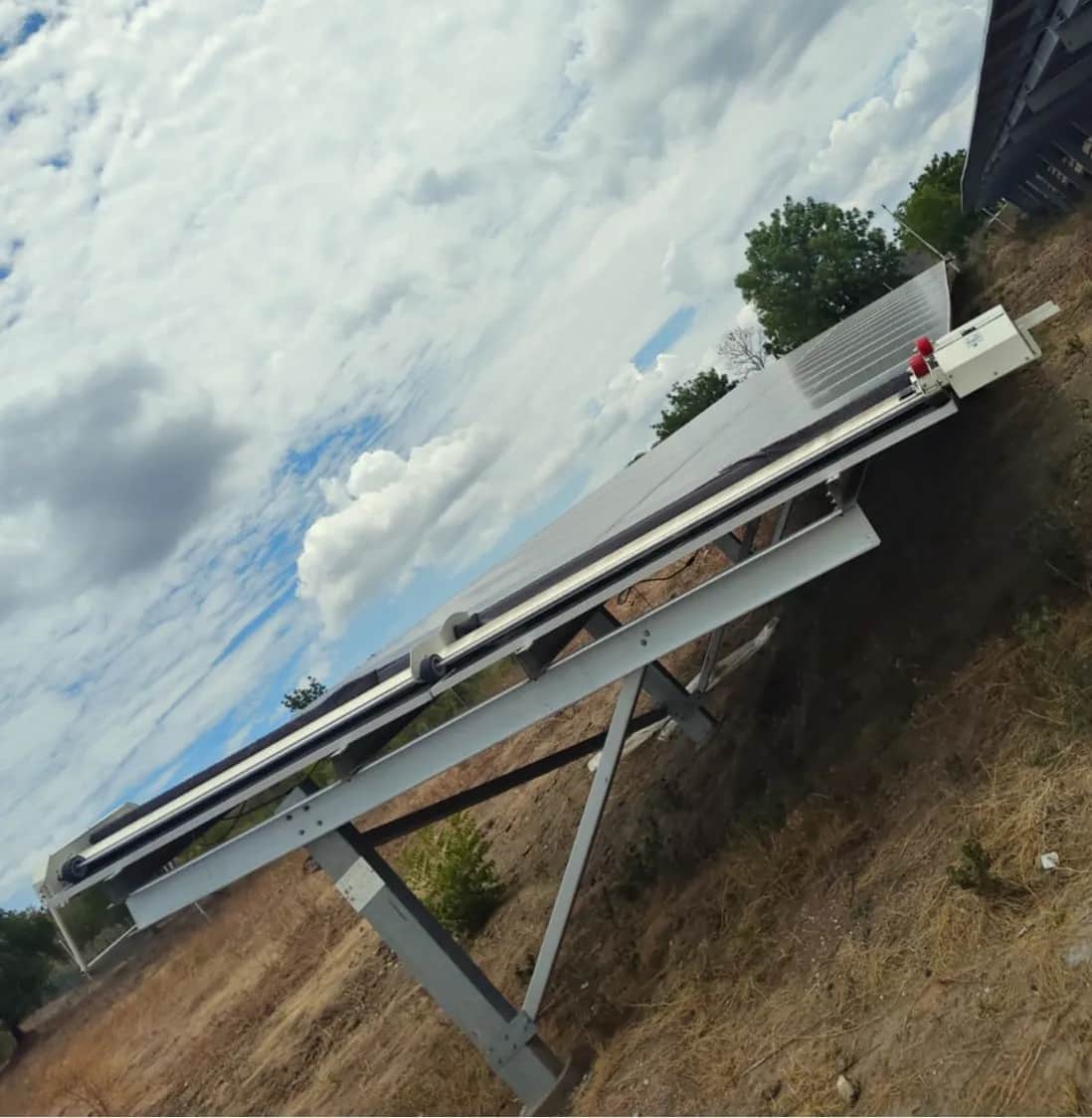
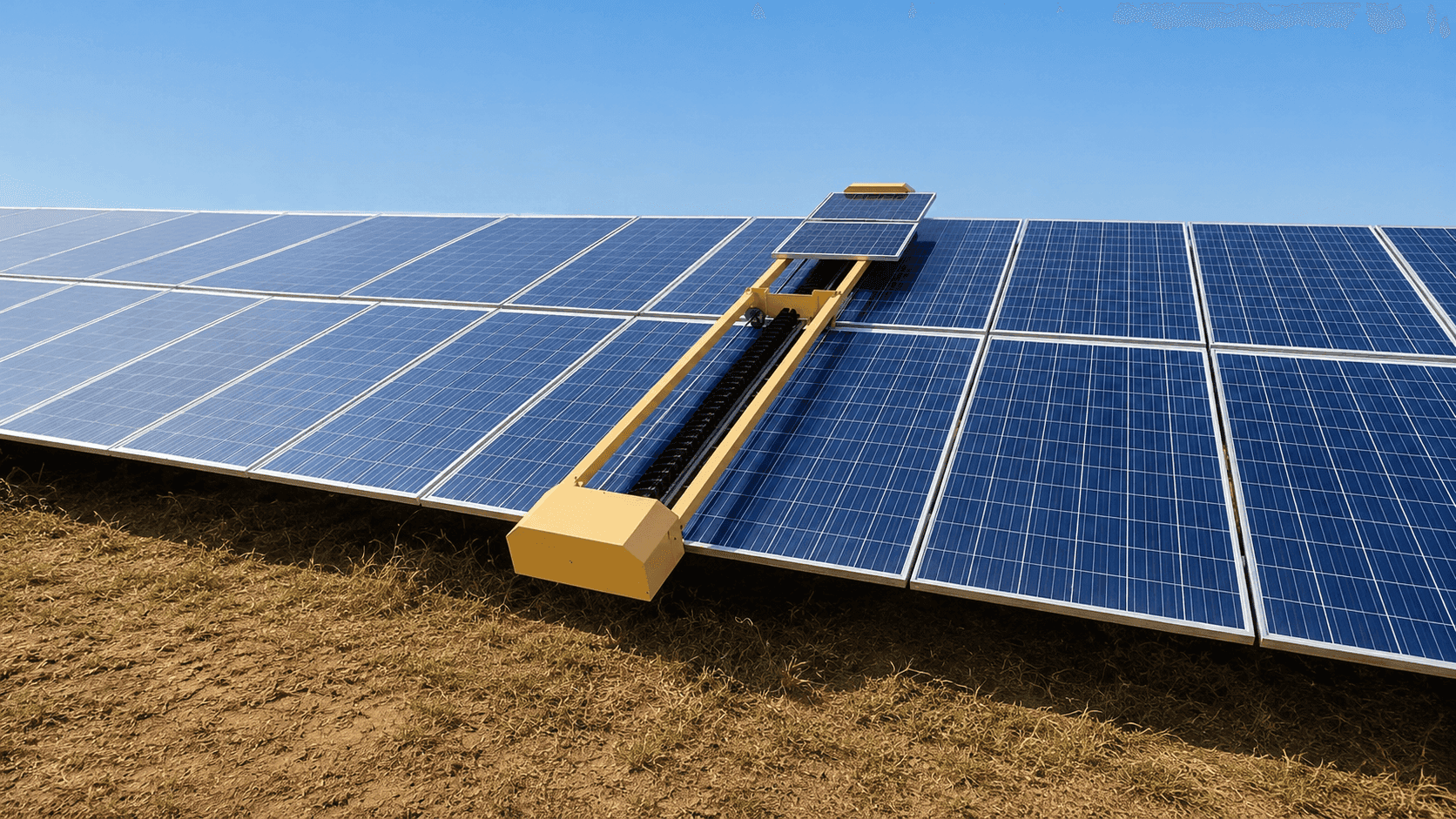
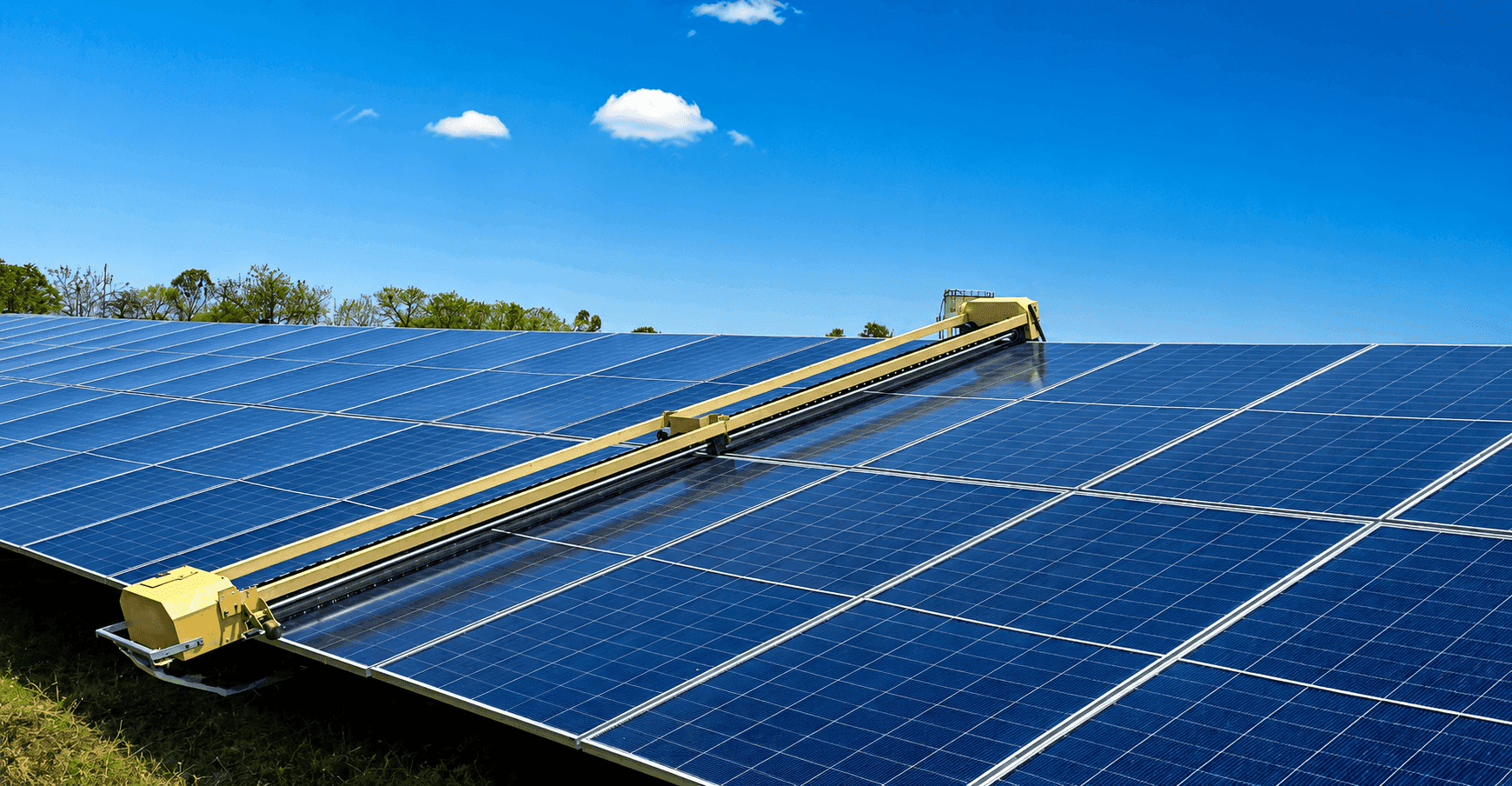
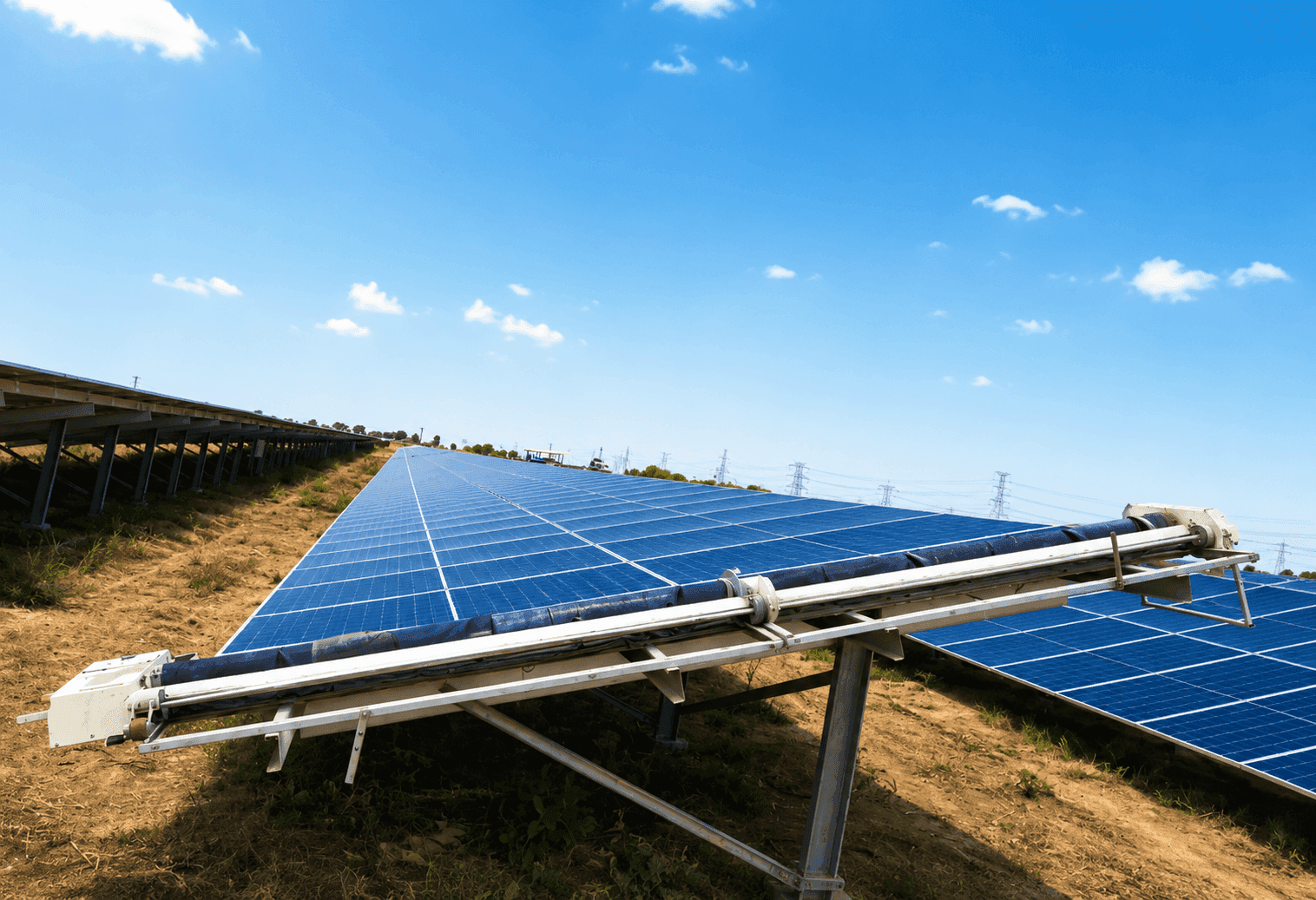
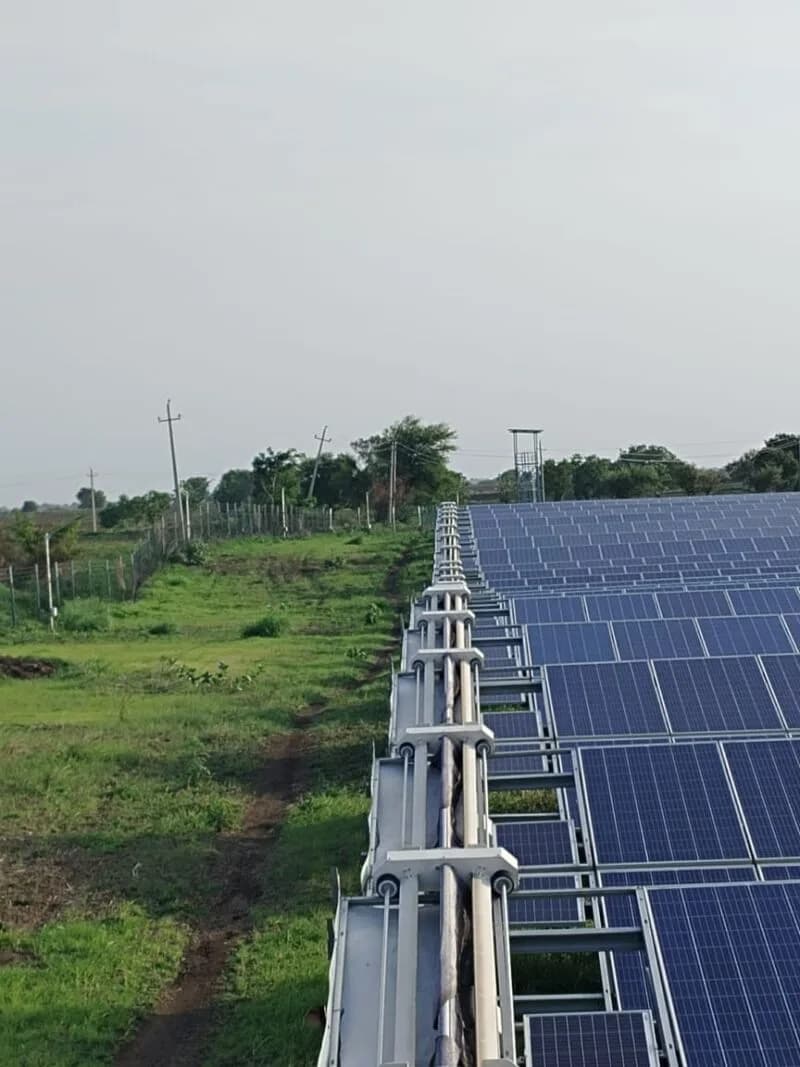
The automatic end of that line runs on a schedule and returns to its dock. Fixed and seasonal-tilt plants use the GLYDE — patented dual-pass airflow and microfiber. Tracker tables use GLYDE-X or NYUMA-X. NYUMA is the single-pass PBT automatic robot, and HELYX is semi-automatic pick-and-place for scattered blocks. This page compares the fleet. The GLYDE page carries the automatic specification.
IPPs that want cleaning as plant OPEX, with the fleet off the balance sheet, use Taypro's pay-per-panel OPEX service. Taypro operates the robots and bills for panels cleaned. Cycles are waterless, so the O&M plan drops water tankers. Dual-pass and PBT methods explains dual-pass versus single-pass PBT. Each cycle is logged in NECTYR for O&M and lender review.
Explore the Taypro stack
Jump to the right page for your plant type, commercial model, or technical deep dive.
A quick guide to picking the right Taypro platform. Final recommendation is always confirmed with a plant soiling study and site walkthrough.
Want Taypro's core dual-pass microfiber technology on fixed or seasonal-tilt arrays? GLYDE delivers fully autonomous cleaning with AI scheduling.
See GLYDEGLYDE-X pairs patented dual-pass microfiber with a flexible body for horizontal single-axis tracker plants.
See GLYDE-XPrefer a fully autonomous PBT single-pass platform on the same plant types? NYUMA is built for reliable daily dry cleaning without microfiber.
See NYUMANYUMA-X delivers single-pass PBT cleaning on trackers with the same flexible-body platform class as GLYDE-X.
See NYUMA-XHELYX is semi-automatic pick-and-place with single-pass PBT, ideal when crews move one robot across multiple blocks.
See HELYXOPEX delivers robotic cleaning as a monthly service, with reports in NECTYR.
See OPEXFive hardware platforms across plant type, cleaning technology, autonomy, and connectivity.
| Criteria | GLYDE | GLYDE-X | NYUMA | NYUMA-X | HELYX |
|---|---|---|---|---|---|
| Plant type | Fixed / seasonal-tilt utility-scale | Single-axis tracker | Fixed / seasonal-tilt utility-scale | Single-axis tracker | Scattered / distributed fixed-tilt |
| Autonomy | Fully autonomous | Fully autonomous | Fully autonomous | Fully autonomous | Semi-automatic (pick & place) |
| Cleaning technology | Patented dual-pass microfiber | Patented dual-pass microfiber | Single-pass PBT brush | Single-pass PBT brush | Single-pass PBT brush |
| Cleaning rate | Up to 3,600 modules per charge | Row-by-row, tracker-synchronised | Up to 2.2 km (~3,600 modules) per charge | Row-by-row, tracker-synchronised | ~1 MW in ~2 hours per unit |
| Commercial model | CAPEX + AMC | CAPEX + AMC | CAPEX + AMC | CAPEX + AMC | CAPEX + AMC |
| NECTYR | LTE, Wi-Fi, hybrid self-healing RF mesh, LoRa, and LoRaWAN | LTE, Wi-Fi, hybrid self-healing RF mesh, LoRa, and LoRaWAN | LTE, Wi-Fi, hybrid self-healing RF mesh, LoRa, and LoRaWAN | LTE, Wi-Fi, hybrid self-healing RF mesh, LoRa, and LoRaWAN | Operator-led with NECTYR reporting |
Not sure which platform fits? Share your plant details and our team will recommend the right Solar Panel Cleaning Robot mix after a quick soiling study. .
Robot vs manual cleaning guide·Taypro vs Indian competitors·Taypro vs Solabot·Taypro vs Skilancer·Taypro vs Aegeus·Taypro vs Vayu Solar·Waterless vs water-based cleaning·GLYDE vs NYUMA fixed-tilt robots·GLYDE-X vs NYUMA-X tracker robots
Solar panel cleaning machine guideRooftop solar cleaning robot (MINY)
Manual brushes and wipers work on small sites; at 10 MW+ the labour, water, downtime, and inconsistent coverage usually favour robotic dry cleaning.
This video is hosted on YouTube. To view it, please accept cookies in your browser settings. YouTube may set cookies for functionality and analytics.
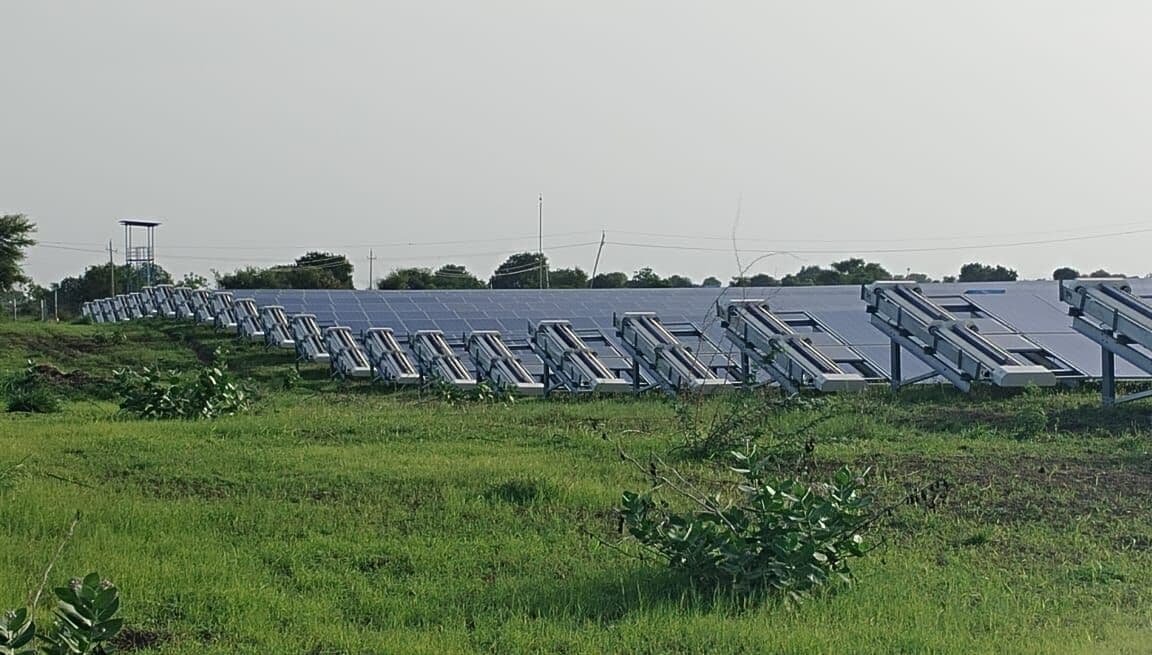
Waterless autonomous solar panel cleaning robots in operation on Indian utility-scale sites.
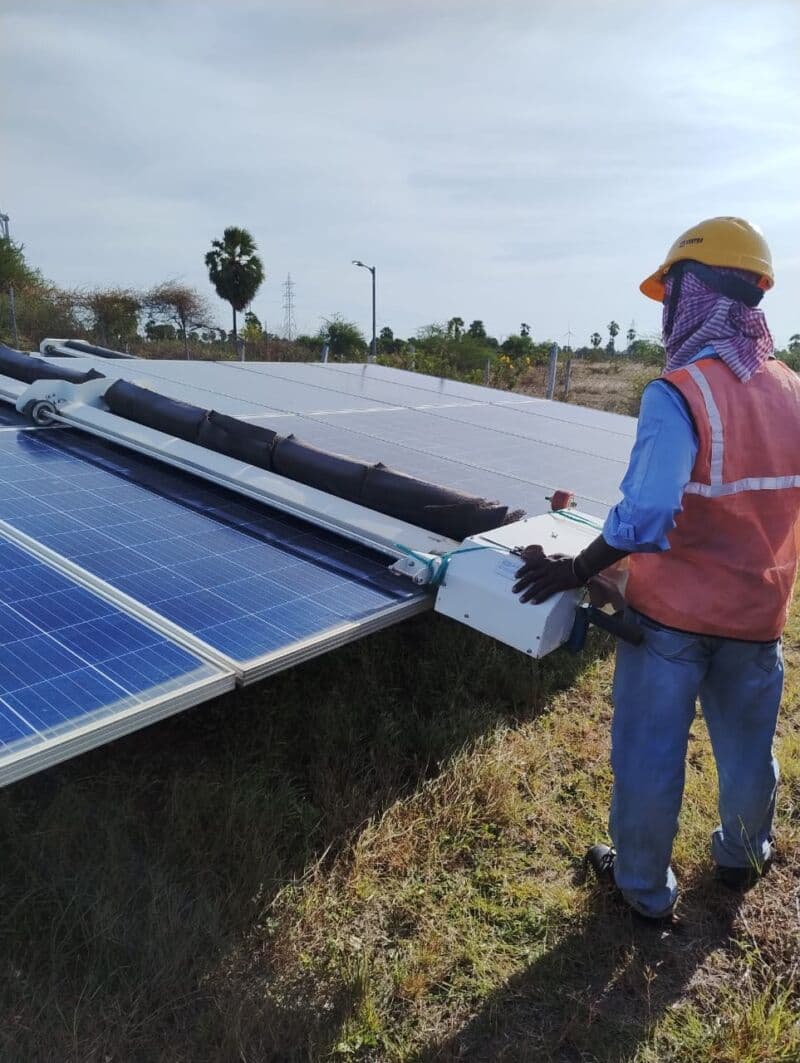
This overview shows Taypro autonomous solar panel cleaning robots operating on utility-scale arrays in India. Robots traverse fixed-tilt rows using waterless dual-pass cleaning, airflow lifts dry dust, then microfiber completes the wipe without water or detergents.
Fleet schedules and completion data feed into NECTYR, Taypro's monitoring portal, so O&M teams can audit block-wise cleaning history alongside inverter performance. Deployments combine GLYDE and NYUMA-class robots depending on row geometry and soiling class.
For procurement teams comparing cleaning machines and robots, Taypro offers CAPEX purchase with AMC or Opex pay-per-panel-cleaned service on the same hardware platforms shown in the field footage.
Utility buyers weigh cleaning method, commercial model, fleet software, and India-local support, not robot brochures alone. Use this category view when evaluating Taypro against wet washing, import dry robots, or labour-only O&M.
Taypro is a Made-in-India OEM with 5 GW+ robotic capacity deployed and 11 billion+ panels cleaned annually across its fleet, patented dual-pass dry cleaning on GLYDE and GLYDE-X, single-pass PBT on NYUMA, NYUMA-X, and HELYX, the NECTYR fleet portal, and optional Opex pay-per-panel-cleaned service. The table compares typical approaches in Indian RFQs so you can see where Taypro fits your plant, without vendor name-dropping.
| What to evaluate | Manual wet wash crews | Import dry robots (CAPEX hardware) | Taypro |
|---|---|---|---|
| Cleaning method | Water, brushes, variable pass quality | Often single-pass dry brush or airflow | Waterless dual-pass microfiber (GLYDE / GLYDE-X) or single-pass PBT (NYUMA / HELYX) |
| Typical plant fit | Small C&I or emergency washes only | Utility fixed-tilt; tracker lines vary by OEM | 10 MW+ utility, fixed-tilt, single-axis tracker, scattered blocks |
| Commercial model | Recurring labour Opex | CAPEX purchase; managed service optional | CAPEX + AMC or Opex managed fleet |
| Operations & audit proof | Paper logs; weak block-level proof | Basic fleet telemetry on some platforms | NECTYR scheduling, weather holds, completion maps, structured AMC |
| India manufacturing & SLA | Local crews; water and tanker logistics | Import supply chain; local SLA varies | Chakan Pune manufacturing; pan-India spares; same-day breakdown targets |
Flagship deployments with robot counts, water saved, and reported generation outcomes.
One partner
From robot purchase to managed cleaning and fleet software, one accountable vendor for utility-scale solar operations.
GLYDE, GLYDE-X, NYUMA, NYUMA-X, and HELYX, waterless autonomous and semi-automatic systems for fixed tilt, trackers, and scattered blocks.
Site assessment, robot mapping, connectivity, operator training, and NECTYR onboarding, bundled with hardware orders.
Structured annual maintenance, regional spares, same-day breakdown targets, and remote diagnostics through NECTYR.
Pay-per-panel-cleaned managed cleaning, Taypro operates the fleet on your plant with no upfront robot CAPEX.
Fleet operations portal live on deployed robots; ORION plant intelligence designed for existing Taypro fleets at renewal.
Why IPPs choose Taypro
Utility buyers increasingly contract on total cost of ownership, same-day service SLAs, auditable cleaning coverage, and software that survives beyond the first commissioning season. Taypro combines waterless robots, NECTYR fleet operations, and a pan-India field network so operations teams get one accountable partner, not disconnected hardware, crews, and spreadsheets.
Rajasthan dust storms, Gujarat heat, Karnataka humidity, Tamil Nadu monsoons, Taypro's Solar Panel Cleaning Robots are designed, tested and serviced for the realities of large-scale Indian solar O&M.
Indian utility plants increasingly sit in water-stressed districts. Taypro's waterless dual-pass cleaning removes module washing from your water plan entirely.
Daily or near-daily robotic cycles are the only economical way to neutralise the 8–25% soiling losses common across Rajasthan, Gujarat, MP and Maharashtra.
Validated for operating temperatures up to 90°C and TÜV NORD certified for damp-heat / dry-heat, proven across summer, monsoon and post-monsoon cycles.
Taypro targets same-day on-site breakdown resolution across India, with immediate remote diagnostics through NECTYR, regional spare inventory, and structured AMC programs so mean time to repair stays predictable.
Engineered for Indian solar
Explore solar panel cleaning robots by state, soiling context, live projects, and RFQ guidance:
Designed, manufactured and serviced by TAYPRO Private Limited, with patented technology, certified hardware, and pan-India deployments behind us.
Designed, manufactured and serviced by TAYPRO Private Limited, engineered for the realities of Indian utility-scale solar O&M.
TÜV NORD certified hardware, ISO-aligned processes, and patented dual-pass cleaning and RF mesh communications.
Robotic cleaning live at multi-megawatt plants across Maharashtra, Madhya Pradesh, Karnataka and beyond, including 50–250 MW projects.
Taypro targets same-day on-site breakdown resolution across India, with immediate remote diagnostics through NECTYR, regional spare inventory, and structured AMC programs so mean time to repair stays predictable.
Deployed at utility scale
Taypro robots clean panels at multi-megawatt plants across Maharashtra, Madhya Pradesh, Karnataka and beyond. A small sample of recent installations is below.
Plug in your plant size and tariff for a directional payback estimate, or open the full calculator for PDF export.
Open full ROI & price calculatorLoading calculator…
Let us help you
Module compatibility
Taypro cleaning robots are accepted for use on plants with modules from top-tier manufacturers, so waterless robotic cleaning does not put your module warranty at risk.
Company names are used for identification only. All trademarks are the property of their respective owners and do not imply endorsement by those companies.
Trusted by Tata Power Solar, Avaada, BluPine Energy, Amplus Solar, Hindustan Power, First Energy, Hindustan Petroleum, NLC India and other IPPs, EPCs, and C&I operators deploying Taypro cleaning robots across India.


Site dashboards, weather context, block-wise schedules, cleaning logs, exports, gateway and robot health, and support tickets, all role-based and ready for utility-scale O&M governance.
Whether you operate a 50 MW or a 250 MW plant, a few simple practices keep robotic cleaning consistent, safe and audit-ready.
Keep track of your solar panel cleaning schedule for maximum benefits.
Thoughtfully choose the perfect time when the sun is down and solar panels are cooler for efficient cleaning.
The roof and its surface should be properly assessed before operating the cleaning robots over it.
Cleaning and maintaining the robots consistently is necessary.
Charge the batteries from time to time to ensure the longevity of the cleaning robots.
Solar panel cleaning is the scheduled removal of soiling from PV modules so plants recover generation lost to dust. Utility plants in India typically need frequent dry cycles in high-soiling months. Taypro delivers that as waterless robots (CAPEX) or a pay-per-panel-cleaned OPEX service, with NECTYR reports for each cycle — not a price list on this page.
A solar panel cleaning system is the robot, docking, schedule, and fleet record used to remove soiling on a utility plant. Taypro systems are waterless and can be bought as CAPEX or run as a pay-per-panel OPEX service. Compare GLYDE, NYUMA, HELYX, and the tracker robots on this page.
On utility plants, buyers use machine and robot for the same automated row cleaner. Taypro's machines are GLYDE, GLYDE-X, NYUMA, NYUMA-X, and HELYX: waterless platforms, with patented dual-pass on GLYDE and GLYDE-X and single-pass PBT on NYUMA, NYUMA-X, and HELYX. Model comparison stays on this page.
A Solar Panel Cleaning Robot is an automated machine that removes dust, bird droppings and other soiling from PV modules without water and without manual labour. For Indian utility-scale plants, soiling can cut generation by 8–25%, which directly hits PPA performance and DISCOM penalties. Robotic cleaning recovers that lost yield, removes water from your O&M plan, and gives you predictable cleaning every cycle, far more consistent than manual wash teams.
For most large fixed or seasonal-tilt plants, the Taypro GLYDE Automatic Solar Panel Cleaning Robot is the right answer, fully autonomous, waterless dual-pass cleaning, AI/ML scheduling, and built for Indian heat and dust. For single-axis tracker plants, GLYDE-X is the tracker-aware option. For scattered or smaller blocks, HELYX's semi-automatic pick-and-place model gives the lowest cost-per-MW.
Shortlist vendors on five criteria: waterless fit for your dust and soiling, fixed-tilt vs single-axis tracker compatibility, CAPEX robot purchase vs managed Opex cleaning, fleet software with block-level proof of completion, and India-local manufacturing with spares and breakdown SLA. Taypro is a Made-in-India manufacturer with 5 GW+ robotic capacity deployed across 150+ live sites and 11 billion+ panels cleaned annually, patented dual-pass dry cleaning on GLYDE and GLYDE-X, single-pass PBT on NYUMA, NYUMA-X, and HELYX, the NECTYR fleet portal, and optional Opex pay-per-panel-cleaned service, with utility case studies linked from this hub. Other suppliers commonly evaluated on Indian utility RFQs include Indian OEMs such as Solabot Technologies, Aegeus Technologies, Skilancer Solar, and Vayu Solar; global and regional OEMs with India deployments such as Ecoppia, Airtouch Solar, and LEAPTING (Huzhou LEAPTING Technology); and equipment suppliers active in India such as Langfang Sol-Bright New Energy Technology. Rooftop-focused vendors such as Jetsons Robotics are more common on commercial and industrial sites than on 50 MW+ utility fields. Published market-share rankings differ by source and year, so validate row layout fit, service SLA, and deployment proof, not brochure robot counts alone, before final selection.
GLYDE and GLYDE-X are fully autonomous, they run on pre-scheduled cycles, return to their docking station, and report status to NECTYR without daily operator effort. HELYX is semi-automatic and operator-assisted, which keeps it portable across blocks. Across all three, the NECTYR fleet portal lets your team monitor health, schedule cleaning, and pull cleaning reports remotely.
No. All Taypro robots are waterless. They use a patented dual-pass dry cleaning method, first airflow to lift dust, then a soft microfiber cloth for a deep wipe. There's no water tanker logistics, no module thermal-shock risk, and no consumption of scarce water in dry districts.
Pricing depends on plant size, model (GLYDE / B / T), site layout and commercial structure (CAPEX vs OPEX). Typical CAPEX deployments target a 12–18 month payback driven by yield recovery, reduced water and labour, and lower DISCOM penalties. Use the Taypro Solar Panel Cleaning Robot ROI Calculator on our website for a quick plant-specific estimate, then contact us for a detailed quote.
Yes. OPEX is our pay-per-panel-cleaned monthly service for utility-scale plants (typically 50 MW+). Taypro deploys GLYDE, HELYX or GLYDE-X as the site requires, runs 3–10 cycles per month based on a soiling study, and bills only for panels cleaned. You see every cycle and report on NECTYR without owning the hardware.
Every Taypro deployment is monitored through NECTYR, the secure customer portal for fleet dashboards, schedules, cleaning logs, exports, and support tickets. Fleet connectivity uses LTE, Wi-Fi, hybrid self-healing RF mesh, LoRa and LoRaWAN, designed and sized by Taypro engineers during commissioning.
Taypro provides same-day on-site breakdown resolution across India along with immediate remote diagnostics from NECTYR, dedicated field engineers, and AMC-backed spare planning. AMC packages add preventive maintenance, spares planning, and a structured ticketing workflow on NECTYR so mean time to repair stays predictable.
Taypro is a Made-in-India manufacturer. TAYPRO Private Limited designs, builds, deploys and services its own Solar Panel Cleaning Robots, with patented dual-pass cleaning and RF mesh communications, TÜV NORD certified hardware, and a pan-India service network.
Frequency depends on dust load, agricultural residue events (such as crop burning in Punjab and Haryana), monsoon patterns and PPA performance targets. Most Indian utility-scale plants benefit from cleaning every 1–3 days during dry months and faster cycles after dust storms. Taypro starts every project with a plant soiling study to recommend the right cleaning cadence per block.
Share your plant details, Taypro will recommend the right Solar Panel Cleaning Robot mix and commercial model after a short soiling study.