
Executive summary
robotic solar panel cleaning Maharashtra, The Ahmadnagar-Jalalpur solar plant is a massive facility. It has a capacity of 375 MW. It is located in Maharashtra. This site faces many operational hurdles. The plant is near large agricultural zones. It is also near busy transit corridors. These locations cause heavy soiling on the solar panels. The soiling is not uniform across the site. It creates uneven patterns on the modules. Dust from farms settles on the glass. Heavy road grit also builds up. Local humidity cycles make the problem worse. These factors cause performance to drop at the string level. Traditional cleaning crews struggle to fix this. They cannot provide consistent results across such a large area.
Maintenance managers also face logistical problems. Manual cleaning schedules often clash with other tasks. For example, cleaning often competes with vegetation management. It also competes with civil O&M windows. Supervisors lacked a way to track work. They could not prove which strings were cleaned. This lack of data made oversight very difficult. The site needed a better way to manage maintenance.
To solve these issues, the site deployed four HELYX robots. The project used a semi-automatic Capex procurement model. This model helps optimize water use. It also helps manage human resources better. The robotic system follows a structured cleaning schedule. This schedule allows for 3 to 10 dry cleaning cycles per month. The exact number depends on the soiling levels. This transition to robotic solar panel cleaning in Maharashtra works well. The project has recovered 375 MWh of additional generation every year. It also saves 1.4 million litres of water annually. This makes the large ground-mount asset more sustainable and efficient.
Environment and soiling at Ahmadnagar- Jalalpur
Managing agricultural soiling patterns at Ahmadnagar-Jalapur
The 375 MW solar facility sits in a unique landscape. The area around Ahmadnagar-Jalapur has high-intensity farming. There are also many regional transit corridors nearby. These two factors create a specific soiling profile. This profile is different from desert or industrial sites. Dust from nearby crop cycles settles on the panels. At the same time, road grit from heavy traffic builds up. This grit is often coarse and abrasive. The local climate adds even more complexity to the situation. Frequent humidity cycles act as a binding agent. This moisture helps the dust stick to the glass surfaces.
This cycle of wetting and drying is problematic. It effectively bakes a film of grime onto the modules. This film consists of road grit and agricultural dust. It creates stubborn, string-level soiling patterns. These patterns do not appear uniformly across the plant. Instead, they cluster in specific areas. These clusters depend on wind directions. They also depend on drainage paths within the ground-mount rows. Because the soiling is uneven, manual cleaning is hard. Traditional teams struggle to find the dirtiest strings. This leads to inconsistent power output across the 375 MW block.
The environment presents three main challenges:
- Agricultural dust: Seasonal harvesting and tilling create fine dust. This dust travels easily across the entire plant.
- Road grit: Nearby high-traffic roads introduce coarse pollutants. These particles cling tightly to the solar glass.
- Humidity cycles: Regional moisture shifts cause dust to harden. This makes the layers very difficult to remove.
These environmental variables make manual cleaning very inefficient. It is logistically difficult to manage such a large site. Supervisors often could not verify cleaning quality. They could not tell which strings were actually cleaned. This happened during high-pressure maintenance windows. This led to persistent gaps in energy yield. The semi-automatic robotic cleaning strategy solves this. It allows for a targeted cleaning approach. Operators can apply cycles exactly where they are needed. They also get granular proof of work. This data is provided through the NECTYR operations layer.
O&M before Taypro
Operational Hurdles in the 375 MW Ahmadnagar-Jalapur Plant
The 375 MW Ahmadnagar-Jalapur plant faced many problems before Taypro. The main issue was operational friction. The plant struggled to synchronize manual crews with water logistics. Managing water tankers for a site of this scale is hard. It requires very precise timing. However, these tasks often clashed with other work. Cleaning often interfered with civil work. It also interfered with vegetation management. This created a constant struggle for the O&M team.
The reliance on manual labor created an audit gap. This gap hindered performance monitoring. Supervisors could not keep accurate records. They did not know which blocks were serviced. They did not know which specific strings were cleaned. This happened during each maintenance rotation. Without reliable verification, the team had to guess. They had to react to problems instead of preventing them. Identifying underperforming strings was a manual and slow task. It was not a data-driven strategy.
The main operational bottlenecks included:
- Logistical Constraints: Water transport schedules often caused delays. These schedules clashed with essential civil O&M windows.
- Audit Gaps: Management lacked clear proof of coverage. They could not confirm which strings were cleaned in each cycle.
- Resource Competition: Coordinating night crews was difficult. Their work competed with vegetation control and other site tasks.
Manual, water-intensive methods left the plant vulnerable. The energy output was often volatile. The site needed a more consistent approach. By switching to semi-automatic robotic cleaning, the site improved. They established a steady cadence of dry cleaning cycles. This change eliminated the need for heavy water use. It also provided the precise proof of work required. This data helps optimize energy output across the 375 MW array.
Fleet and deployment at 375 MW
Fleet Deployment and Robotic Solar Panel Cleaning in Maharashtra
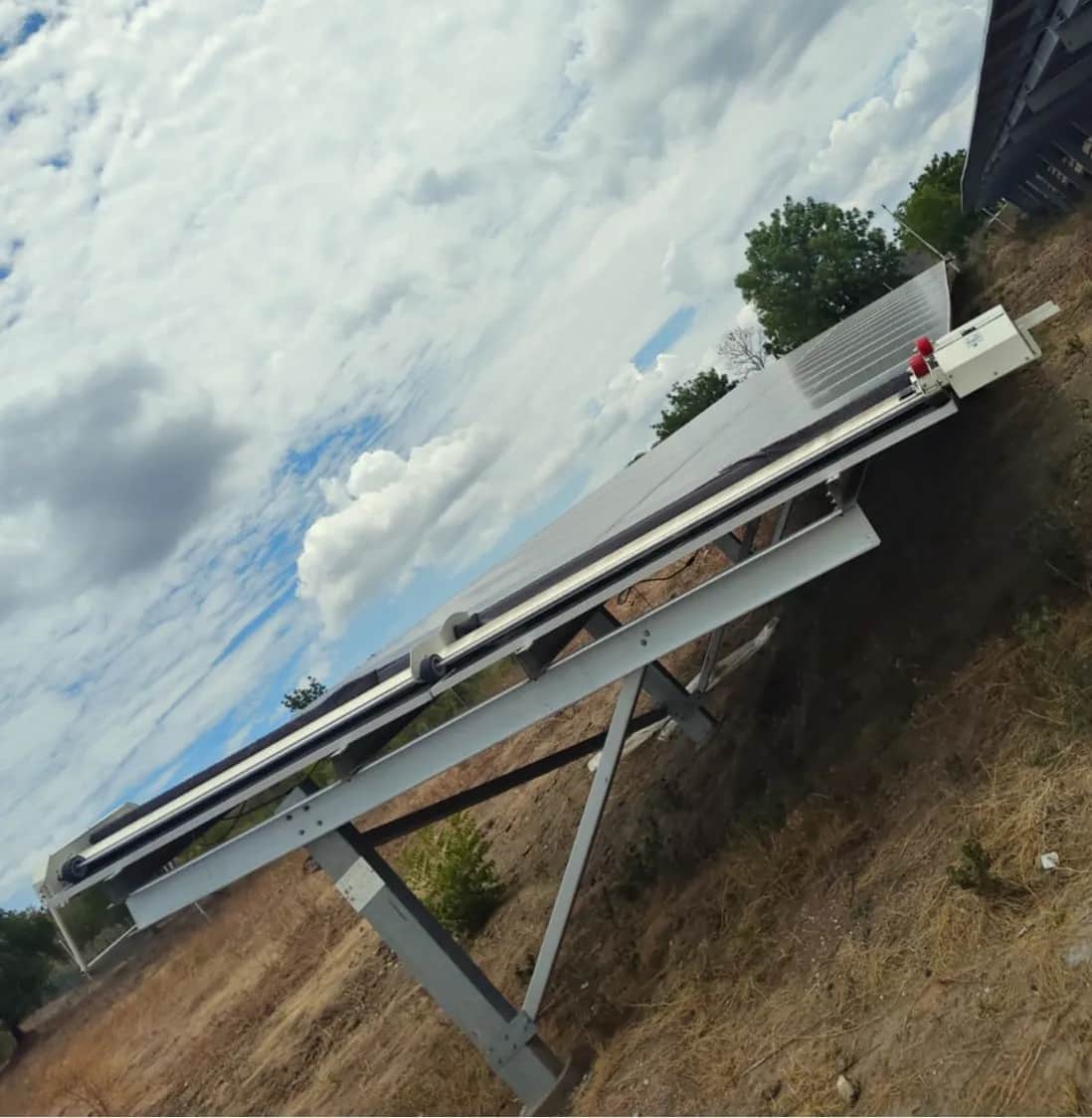
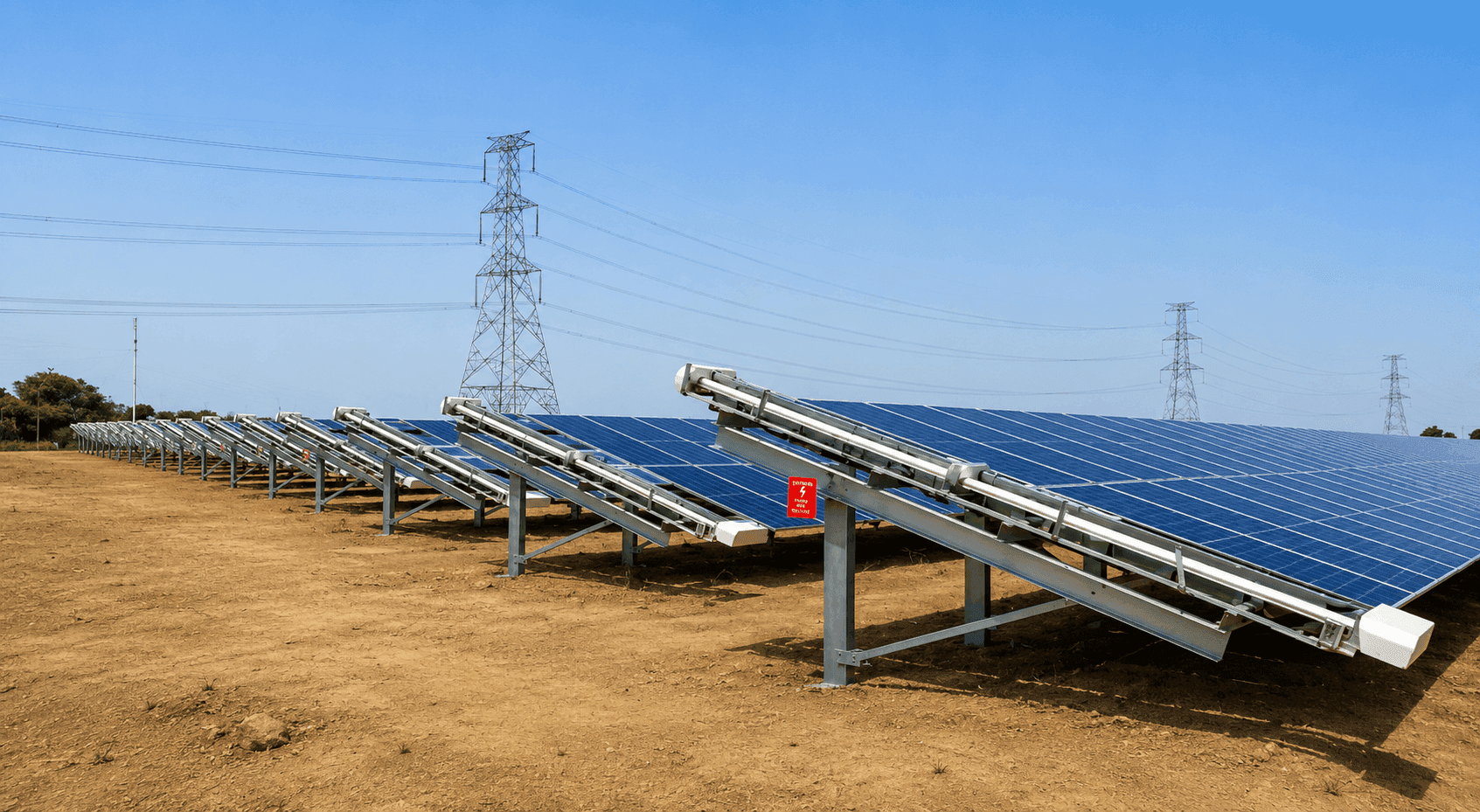
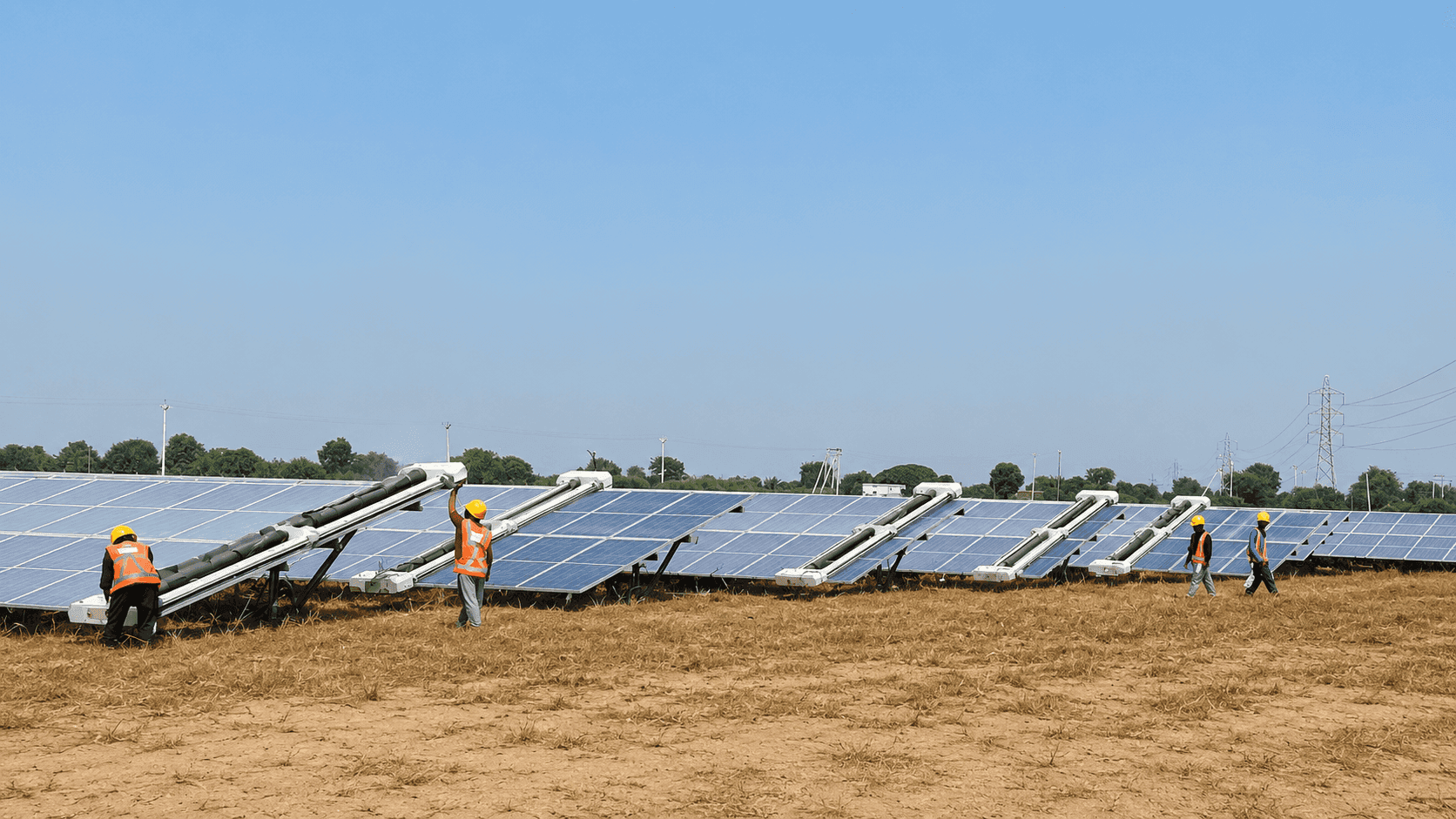
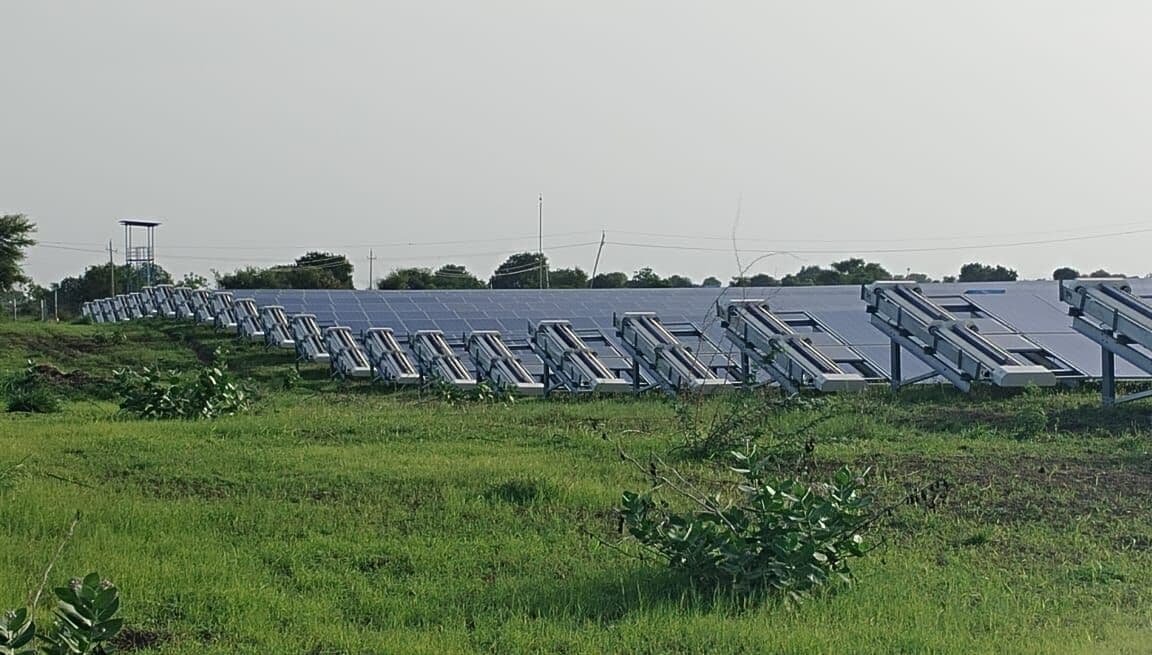
The deployment strategy for the Ahmadnagar-Jalapur project was specific. It focused on a Capex-based procurement model. The goal was to solve the soiling challenges of this 375 MW site. The project integrated four HELYX semi-automatic robots. This allowed the site to move away from manual labor. They moved from water-intensive cleaning to a repeatable protocol. The HELYX units are ideal for this type of work. They are portable and can move across distributed plant blocks.
The HELYX robots navigate the ground-mount array effectively. They provide a targeted response to uneven soiling. This soiling comes from agricultural dust and road grit. It also comes from moisture-driven humidity cycles. The deployment ensures that every cleaning pass is waterless. This directly helps the environment. The facility saves over 1.4 million litres of water every year. This is a major win for regional sustainability.
Key details of the deployment include:
- Fleet Configuration: The project uses four HELYX units. These were chosen for their portability. They work well across scattered plant blocks.
- Cleaning Cadence: The site uses a scheduled, semi-automatic cadence. They perform 3 to 10 dry cycles per month. This allows for adjustments based on real-time soiling.
- Procurement Model: The site adopted a direct Capex investment model. This gives asset owners full control. They control the hardware and the maintenance cycles.
- Verification and Control: Every cycle is integrated with the NECTYR layer. This gives supervisors granular proof of work. This data was impossible to get with manual crews.
This robotic implementation has changed the maintenance workload. It has moved from unpredictable labor to a data-driven process. By standardizing dry cleaning, the site has stabilized performance. The 375 MW site now sees an extra 375 MWh of generation annually. This proves the value of robotic solar panel cleaning in Maharashtra. Consistent and documented maintenance is vital for utility-scale ROI.
Operations and monitoring
Optimizing Operational Accountability and Cleaning Schedules
Managing a 375 MW site in Maharashtra is a complex task. It requires precise coordination. Cleaning must work alongside civil maintenance. In the past, this was a major struggle. Coordinating night crews often caused friction. Manual cleaning teams often clashed with vegetation management teams. These teams all needed the same resources. By adopting a semi-automatic robotic strategy, these conflicts are gone. The robots operate independently. This allows other maintenance teams to work at the same time. There is no risk of overlapping labor needs.
Many people in the industry believe in a misconception. They think daily washing is necessary to fight dust. They think they must wash the panels every day. However, our data shows a different reality. A structured, semi-automatic cadence is much better. We recommend 3 to 10 cycles per month. This is sufficient to manage uneven soiling. This approach minimizes water usage. It also addresses localized soiling before it causes damage. This protects the long-term health of the modules.
Operational improvements include:
- Fleet Coordination: The site no longer relies on night crews. This avoids competition with civil and vegetation schedules.
- Accountability Through NECTYR: Every cycle is tracked in the NECTYR portal. This provides irrefutable proof of work for every block.
- Strategic Weather Management: Schedules are optimized for local weather. The system includes automatic wind holds to protect the robots.
- Verification: The move to robotics provides a transparent audit trail. Supervisors know exactly which strings were serviced.
This implementation proves a key point. High-capacity sites can achieve consistent energy yields. They can do this through scheduled, verified maintenance. Replacing manual labor with a reliable robotic fleet is the answer. The project has recovered significant generation capacity. It has also set a new standard for oversight in large-scale assets.

Results and impact
Quantifiable Operational Gains at the Ahmadnagar-Jalalpur Site
The deployment of HELYX robots has transformed the Ahmadnagar-Jalalpur plant. It has fundamentally changed operational performance. The site replaced legacy manual methods with a high-precision fleet. This fleet is semi-automatic. It has helped the site overcome chronic soiling challenges. The dust from farms and grit from roads no longer stops production. This transition has led to a massive annual recovery of energy. It shows the link between cleanliness and total plant output.
The environmental impact is also very high. The waterless cleaning approach is a major benefit. It has eliminated the need for large-scale water logistics. This is especially important in the Maharashtra region. The plant saves over one million litres of water every year. This reduction in water demand helps the local area. It also reduces logistical pressure on the site managers. They can now use their resources elsewhere. They can focus on essential civil maintenance tasks. They no longer struggle with water-related scheduling conflicts.
The project has achieved these specific results:
- Increased Energy Yield: Removing soiling has driven up annual energy production. This secures stable returns for the asset owners.
- Precision Water Conservation: The waterless system saves over one million litres of water annually. This supports regional sustainability goals.
- Operational Clarity: The NECTYR layer provides verified data. This eliminates any ambiguity in maintenance reports. Every string is serviced on time.
- Streamlined O&M: Site crews no longer clash with vegetation management. This leads to better efficiency across all plant activities.
Peer comparison and planning checklist
Peer Comparison and Operational Planning
The Ahmadnagar-Jalalpur 375 MW project is a strategic model. It shows the power of semi-automatic robotic cleaning in Maharashtra. We can compare this to other projects. For instance, the soyegaon-solar-project uses autonomous deployment on fixed-tilt arrays. Another example is the yavatmal-kupti-14-mw site. That site uses different protocols for access. The Jalalpur installation shows the scalability of pick-and-place cleaning. Fully autonomous sites often use daily dry cleaning. However, the semi-automatic approach at Jalalpur is very effective. It works well for scattered blocks. It is perfect when civil maintenance and cleaning overlap.
This deployment shows that robot choice matters. You must align your robot with your O&M logistics. High-density autonomous arrays are great for some sites. But the semi-automatic fleet at Jalalpur offers more flexibility. It is ideal for teams working around complex dust patterns. By standardizing the protocol, the site manages high soiling rates. This is common in Maharashtra. It also ensures that safety and water conservation remain the priority. It protects the long-term ROI of the utility-scale asset.
Use this planning checklist for your next project:
- Audit your current soiling profiles block by block. This helps you choose the right robot density.
- Sync your cleaning schedules with vegetation management. This minimizes downtime for civil O&M.
- Implement NECTYR reporting immediately. This establishes verified proof of cleaning for every string.
- Standardize your pick-and-place mobility routes. This ensures consistent coverage during monsoon and harvesting.
- Assess your annual water savings. Compare this against your regional logistics costs to optimize your budget.