Executive summary
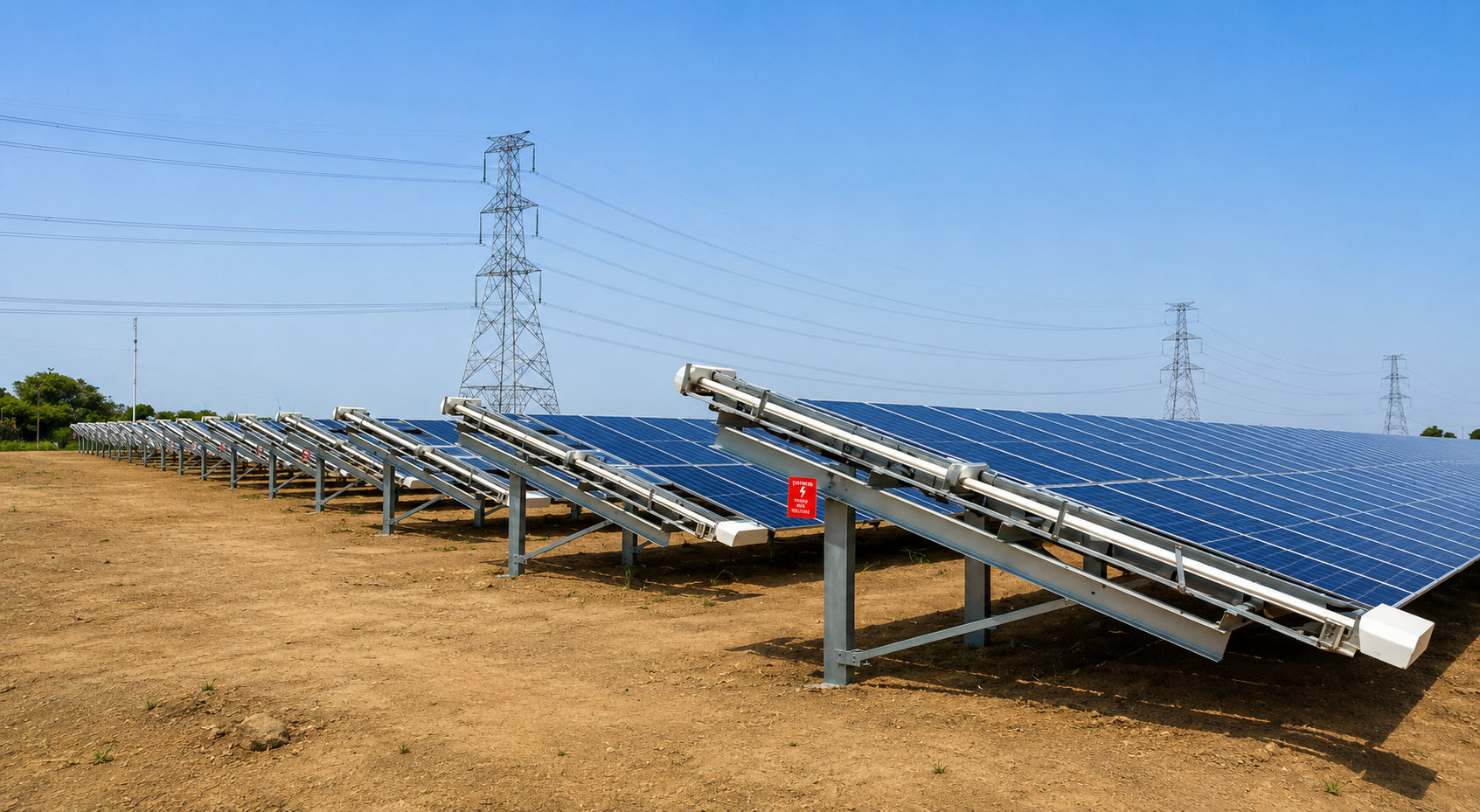
The 75 MW Seci Phase 2 project is a large solar site in Gujarat. This project is a key site for utility-scale solar operations. The location faces many tough environmental challenges. The plant must deal with very complex soiling. There is inland cementitious dust from the local terrain. There is also coastal film dust from the sea. These two dust types create a difficult problem for solar panels. The dust causes uneven soiling across the entire site. It is especially bad near the site haul roads. It is also very bad near the quarry areas. This causes the performance ratio to drop quickly. It also causes monthly energy yields to change. These shifts make financial reporting very hard for IPP stakeholders.
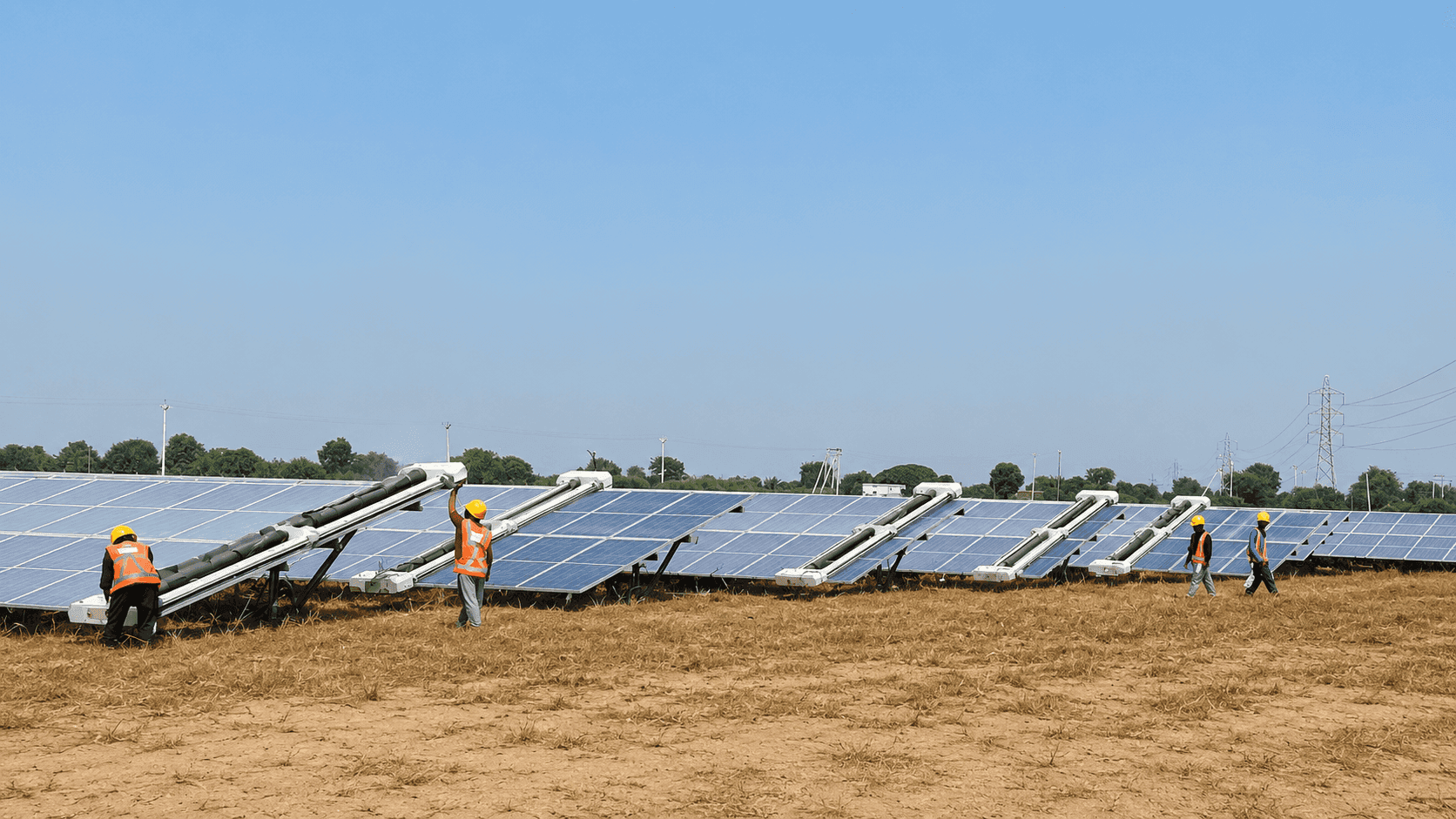
To stop these losses, the project moved to a CAPEX model. They deployed two NYUMA automatic robots. These systems perform daily waterless cleaning cycles. This maintains clear modules regardless of the dust levels. This change removes the need for water tankers. It also removes the struggle to find groundwater. This was a major issue during peak dust months. By using a steady cleaning schedule, the site has seen great success. The project has recovered 2.81 GWh in annual generation. It has also saved 10.5 million litres of water every year. This proves that autonomous robots work well in high-soiling industrial zones.
Environment and soiling at Seci Phase 2,Gujarat
Environment and soiling at Seci Phase 2, Gujarat
The 75 MW Seci Phase 2 project in Gujarat faces a unique soiling profile. This environment requires a new way to manage maintenance. The site is hit by two different types of dust. First, there is inland cementitious dust. This comes from the regional terrain and local quarries. Second, there is coastal film residue. This comes from the nearby sea. This mix creates a thick, uneven layer on the solar modules. The high temperatures in Gujarat cause this layer to harden quickly on the glass.
Soiling is not the same across the whole project. Some parts of the site get much dirtier than others. This is a major operational challenge. Strings located near quarry operations suffer from heavy buildup. Strings located near high-traffic haul roads also degrade fast. This creates a huge gap in performance across the solar array. For large IPP portfolios, this is a big problem. It is hard for O&M teams to explain these yield gaps to finance teams. These discrepancies make it difficult to predict monthly energy production.
Traditional wet cleaning is not a sustainable choice here. The site relies on groundwater and water tankers. This is very difficult in this region. Water availability is often low during the peak dust months. Also, the local dust is very abrasive. Standard water-based cleaning often fails to remove this hardened film. To solve these issues, the facility uses a CAPEX-based robotic strategy:
- Automated Mitigation: Two NYUMA robots provide daily waterless cleaning cycles. This prevents the cementitious film from bonding to the glass.
- Operational Consistency: The NECTYR portal provides a logged cleaning cadence. This helps managers track performance and see PR recovery.
- Performance Gains: Daily interventions recovered 2.81 GWh in annual generation. The site also saved 10.5 million litres of water.
O&M before Taypro
Operational challenges and resource constraints before automation
Before using robots, the 75 MW Seci Phase 2 plant faced many hurdles. It was very hard to keep the modules clean. The site deals with a mix of inland dust and coastal film. This creates uneven soiling on the panels. Strings near quarries and haul roads degrade much faster than other strings. Traditional wet cleaning methods could not handle this hardened layer. The dust was too stubborn for standard washing.
Logistics and environment also made work difficult. The site had to use groundwater and external water tankers. This resource model was very unstable. Water became very hard to find during the dustiest months. These limits made it impossible to have a steady cleaning cycle. Because of this, the energy yield fluctuated unpredictably. The plant could not maintain a consistent level of cleanliness.
Financial reporting was also a major problem. The O&M teams did not have a reliable history of cleaning. They could not provide data-backed reasons for Performance Ratio (PR) changes. They could not explain these changes to the finance departments. This created a gap between field operations and financial targets. The NYUMA robotic system fixed these issues. It delivers daily waterless cleaning cycles. It also provides clear data through the NECTYR portal. This shift removed the need for heavy water and labor. It also removed the uncertainty of manual cleaning at the Gujarat site.
Fleet and deployment at 75 MW
Fleet selection and procurement strategy for 75 MW scale
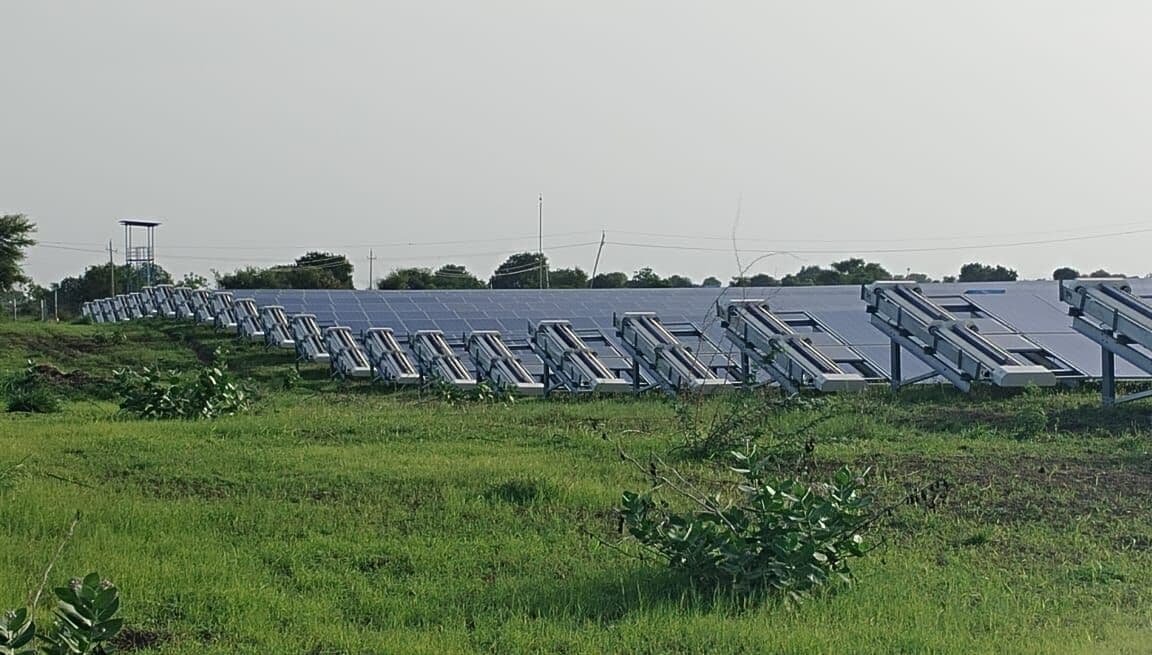
The Seci Phase 2 project chose a direct CAPEX procurement. They selected the NYUMA robotic system for this task. This choice was made to meet specific site needs. The plant required a permanent and reliable cleaning solution. It needed to manage the unique dust of Gujarat. By buying two NYUMA units, the plant covers the 75 MW site effectively. The robots target the strings with the highest degradation. These are the rows near the quarry borders and the site roads.
The CAPEX model helps with long-term asset control. Unlike OPEX service models, this allows operators to keep full control. They can manage the cleaning frequency themselves. They also manage all the operational logs. This provides a strong path to stop PR variance. It also removes the need for water tanker logistics. It also removes the need for temporary manual labor crews.
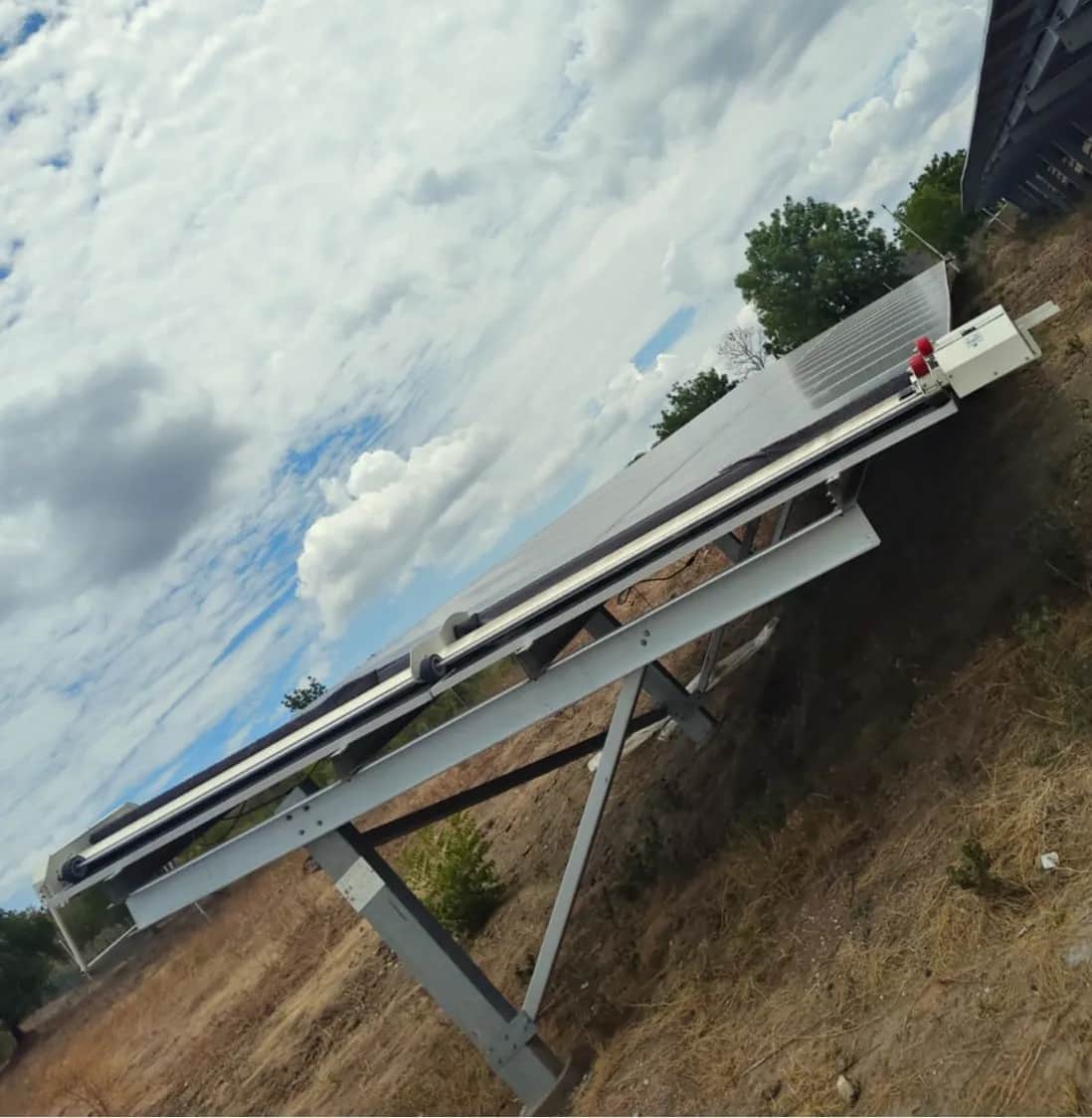
The deployment of the NYUMA fleet focused on precision. The team calibrated the robots for this ground-mount site. The robots are very tough and reliable. They feature an IP65 rating for dust and water protection. They can operate in temperatures up to 90°C. The cleaning uses a single-pass PBT brush. This brush has a 5-star helix design. It is also made of UV-stable material. The robots move at a speed of 10 to 15 metres per minute. Each robot can clean up to 2.2 km on a single charge. The team integrated the fleet with the NECTYR platform. This allows for daily autonomous waterless cleaning cycles. This ensures the modules stay clear of cementitious dust and coastal film. This creates a predictable schedule. This schedule supports better financial reporting. The site achieves a consistent cleaning standard across the whole array. This removes the unpredictability of old maintenance models. It also meets the high energy recovery targets for this project.
Operations and monitoring
Operations and monitoring: Moving to daily dry cleaning
At the 75 MW Seci Phase 2 project, daily dry cleaning is essential. This is needed to fight the inland dust and coastal film. Traditional wet washing was not a reliable method. Groundwater was often scarce in the region. Moving water by truck was also a huge logistical burden. The NYUMA robotic system solved these problems. The site now runs daily dry cleaning cycles. This keeps the modules clear. This is especially important for strings near quarries and haul roads.
NECTYR provides the detailed data needed for large IPP management. Every robotic cleaning path is recorded in the system. This allows operators to see the link between cleaning and performance. They can correlate maintenance tasks with real-time data. This creates a full audit trail for the plant. This accountability is very important. Teams can explain month-to-month PR variance to finance teams with precision. They no longer have to use estimates like manual cleaning teams do.
Accountability and inspection-led maintenance
The system is set up for continuous and autonomous work. It is a very stable operation. Key features of this system include:
- Daily waterless cleaning cycles to stop coastal film from hardening.
- Automated reports through NECTYR to find areas with high soiling.
- Proactive wind hold protocols to keep the robots safe during bad weather.
The site has moved from manual cleaning to a robotic cadence. This ensures high cleaning efficiency. Every module is serviced in a consistent way. This directly recovers energy that was once lost to uneven soiling. The system is reliable and easy to manage.
Results and impact
Maximizing yield through daily autonomous waterless cleaning
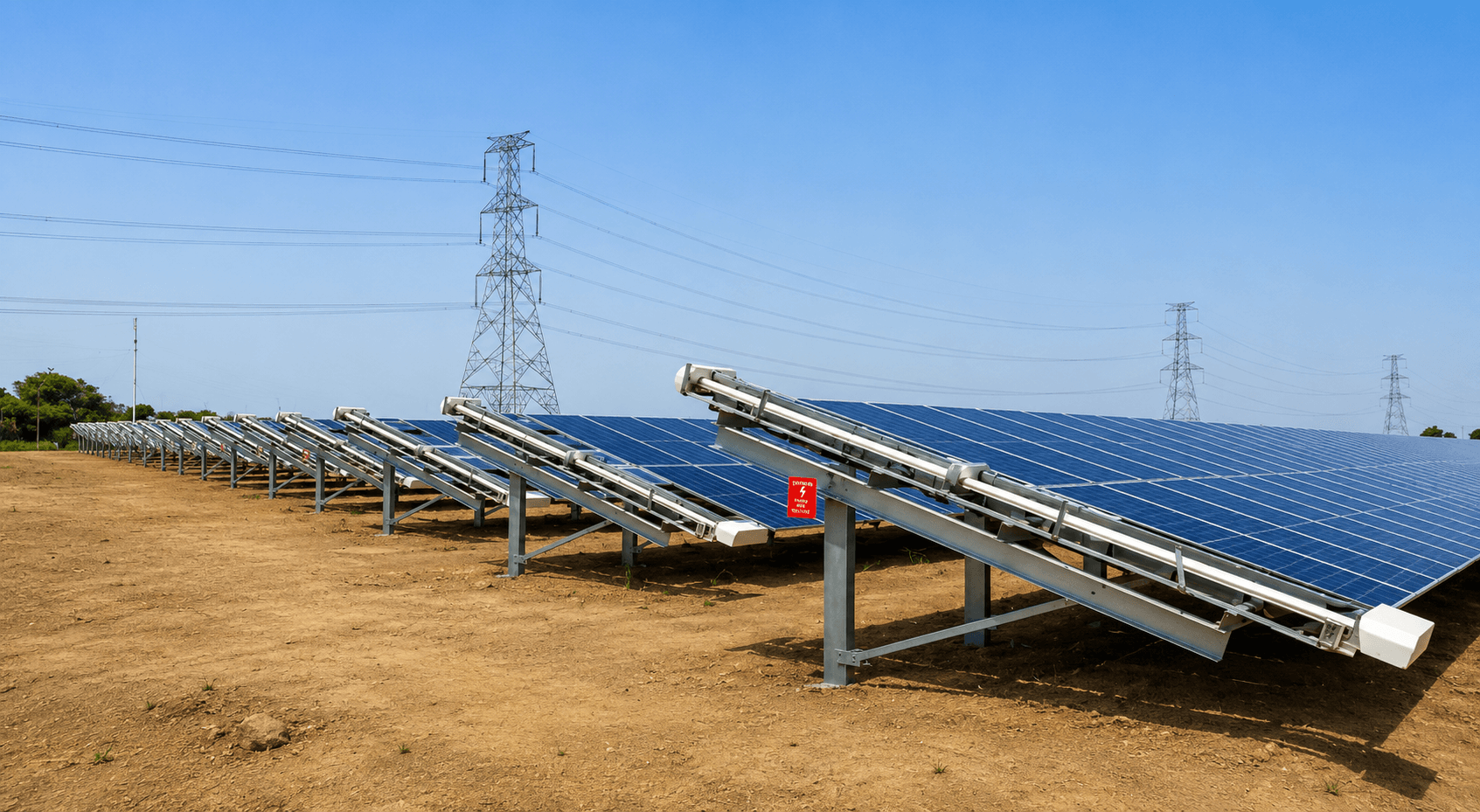
The move to an autonomous system has changed the site. The 75 MW Seci Phase 2 plant has a new energy profile. It has moved away from water-dependent manual methods. This removes the need for groundwater and water tankers. The NYUMA fleet provides daily waterless cleaning cycles. These cycles are vital for this site. They fight the accumulation of cementitious and coastal film dust. The robots keep the glass clean every single day.
Quantifiable generation recovery and resource efficiency
The impact of this daily cleaning is very clear. There has been a huge increase in annual energy yield. By keeping the modules clean, the system recovers lost energy. It stops the performance degradation caused by soiling. This improvement is achieved while saving a lot of water. The project saves millions of litres of groundwater every year. This shows that large-scale cleaning does not need much water. It is a very efficient and green solution.
The NECTYR platform makes these operations fully auditable. The cleaning cadence is both consistent and transparent. For the IPP portfolio, this is a major benefit. There is a clear link between maintenance and plant performance. These results prove that daily robotic cleaning is a great strategy. It turns soiling losses into a manageable factor. It helps ensure long-term financial performance and site availability.
Peer comparison and planning checklist
Benchmarking autonomous cleaning against regional utility-scale deployments
The Seci Phase 2 project follows the standards of large Gujarat sites. It is similar to the 300 MW Bachau and 250 MW Neneva sites. Those large sites use massive fleets to manage dust. The 75 MW Seci project also uses the NYUMA single-pass PBT system. This system is perfect for mid-scale projects. It uses dedicated hardware instead of manual labor. This allows for high-frequency cleaning. It matches the discipline seen in larger regional leaders.
Manual cleaning is often very unstable. Labor and resources can change quickly. The NYUMA fleet is much more reliable. It provides a steady, daily waterless cleaning rhythm. This reliability is vital for IPP finance teams. They must monitor PR variance across all their Gujarat sites. Automation helps to neutralize the impact of dust. It protects performance at sites near quarries and roads. This makes the whole portfolio more stable.
Peer comparison and planning checklist
- Assess your site's soiling profile. Decide if NYUMA (PBT) or GLYDE (microfiber) is best for your dust.
- Map your haul roads and quarry locations. Use this to set priority zones in NECTYR.
- Set a daily autonomous cleaning schedule. This removes the need for water tankers and manual labor.
- Audit your local groundwater availability. Use this to build a strong case for CAPEX investment.
- Check your site's network connectivity. NECTYR needs this for real-time logging of cleaning cycles.