Executive summary
robotic solar panel cleaning Maharashtra, The 37.5 MW ground-mount solar plant in Ahmadnagar-Jamb, Maharashtra, faced major energy losses. These losses came from uneven soiling on the solar panels. Local agricultural dust, road grit, and humidity caused heavy buildup. This buildup happened at the string level, making energy output unpredictable. Traditional manual cleaning could not solve these problems effectively. O&M teams struggled to manage water logistics and night crew schedules. Also, supervisors had no way to verify if every string was actually cleaned.
To fix this, Taypro deployed two HELYX semi-automatic robots. These robots use a pick-and-place model for waterless cleaning. This solution provides a consistent and efficient cleaning routine. The project has already recovered 37.5 MWh of additional generation per year. It also saves 140,000 litres of water every year. By using robotic solar panel cleaning Maharashtra, the site now has better operational stability. It also has clear proof of cleaning for every module.
Environment and soiling at Ahmadnagar- Jamb
Environment and soiling at Ahmadnagar-Jamb
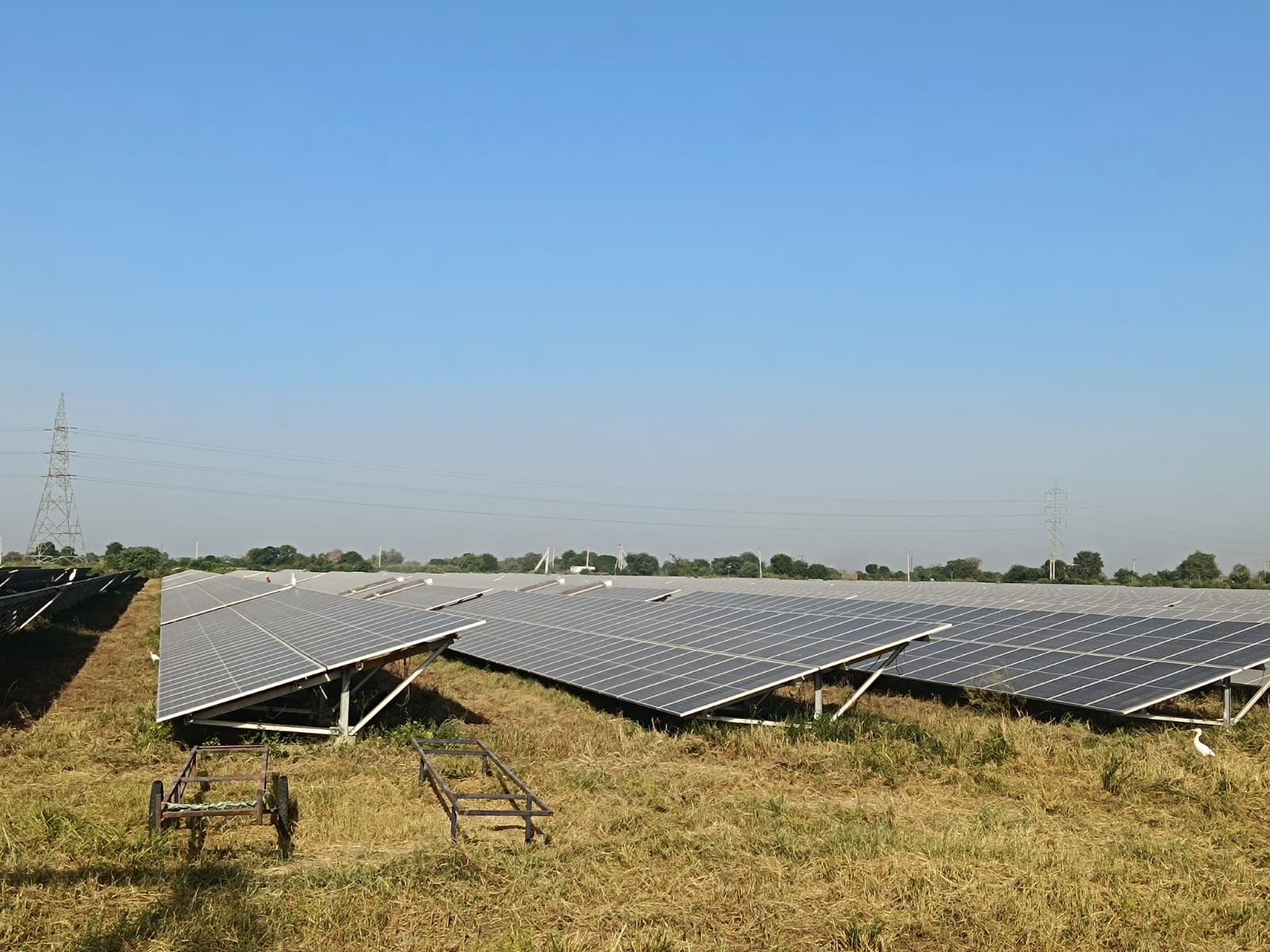
The Ahmadnagar-Jamb facility is a 37.5 MW solar plant. It sits in a region with specific weather patterns. The local climate in Maharashtra includes intense seasonal changes. This area is surrounded by heavy agricultural activity. Constant farming creates huge amounts of fine, wind-borne dust. This dust settles on the solar panels daily.
When this dust meets the local humidity, a problem occurs. The moisture turns the dust into a hard, crust-like film. This film is very difficult to remove. The soiling is not even across the whole site. Instead, it creates uneven patterns at the string level. Road grit from nearby traffic also adds to the buildup. This creates localized hotspots of low energy production.
Traditional cleaning often fails to handle these conditions. Cleaning schedules must change constantly to prevent the dust from hardening. The unique environment of this site requires a specialized approach. The main soiling factors include:
- Heavy agricultural dust from nearby farming cycles.
- Humidity that hardens contaminants on the panel surface.
- Road grit that causes uneven shading and lower yields.
- String-level soiling that leads to inconsistent energy output.
O&M before Taypro
Operational Bottlenecks and Manual Cleaning Limitations
Before Taypro arrived, the Ahmadnagar-Jamb plant faced many logistical hurdles. The site relied on manual, water-based cleaning. This required constant water logistics. Moving water trucks around the site was a major task. These trucks often blocked other essential work. For example, water logistics competed with vegetation control and civil maintenance.
Scheduling was another big problem. Much of the manual cleaning happened during night shifts. This made supervision very difficult. Managers could not easily see the quality of the work. There was no digital record of which strings were cleaned. This created significant "audit gaps." Even if logs said a block was clean, it might still be dirty.
This lack of visibility caused hidden energy losses. High-soiling zones were often missed by manual crews. Without a way to prove cleaning completion, the plant suffered. The uneven, agriculture-heavy soiling patterns became a permanent threat to performance. The site needed a way to clean without water and provide real data.
Fleet and deployment at 37.5 MW
Deployment of HELYX Robotics at 37.5 MW
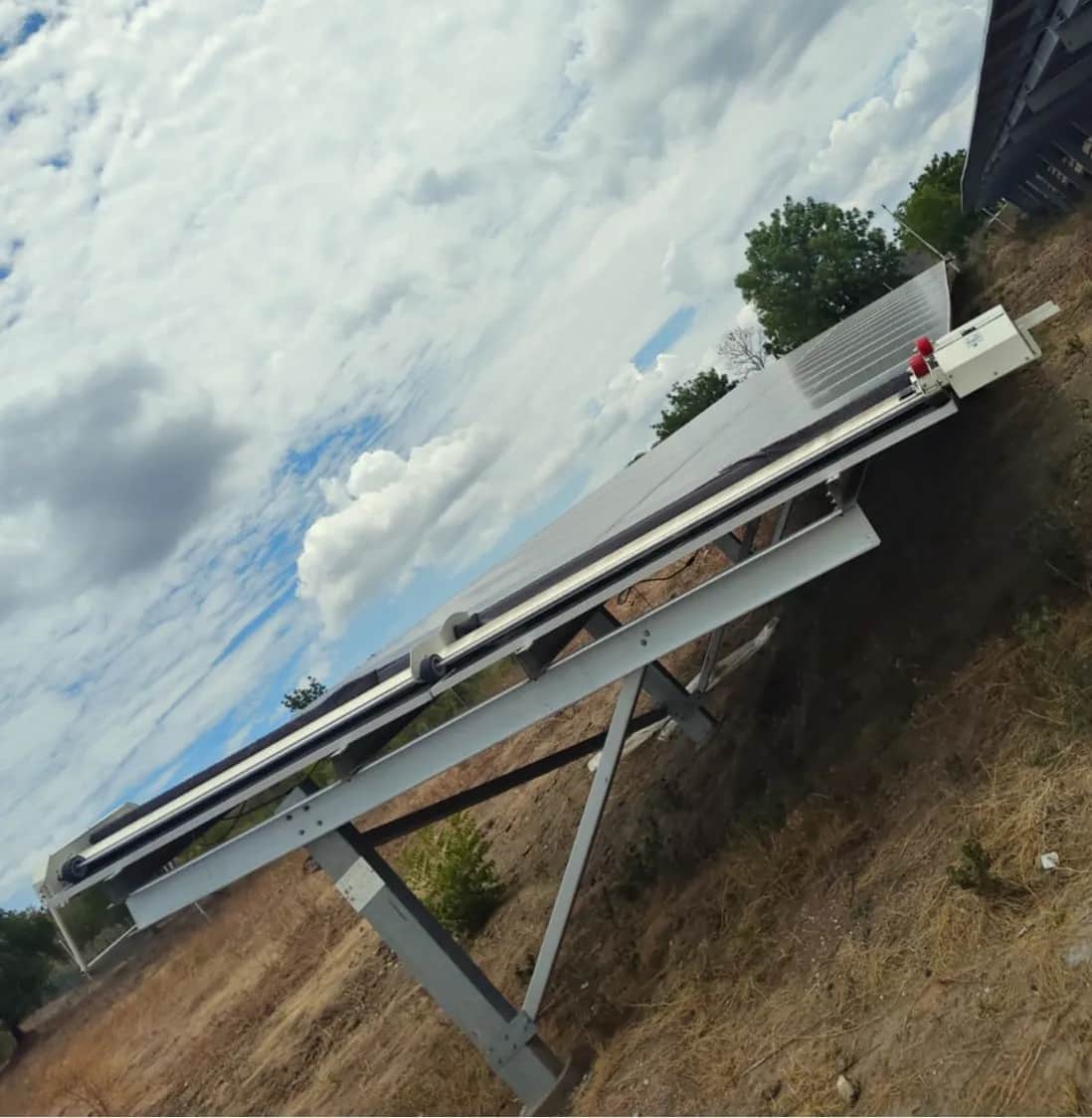
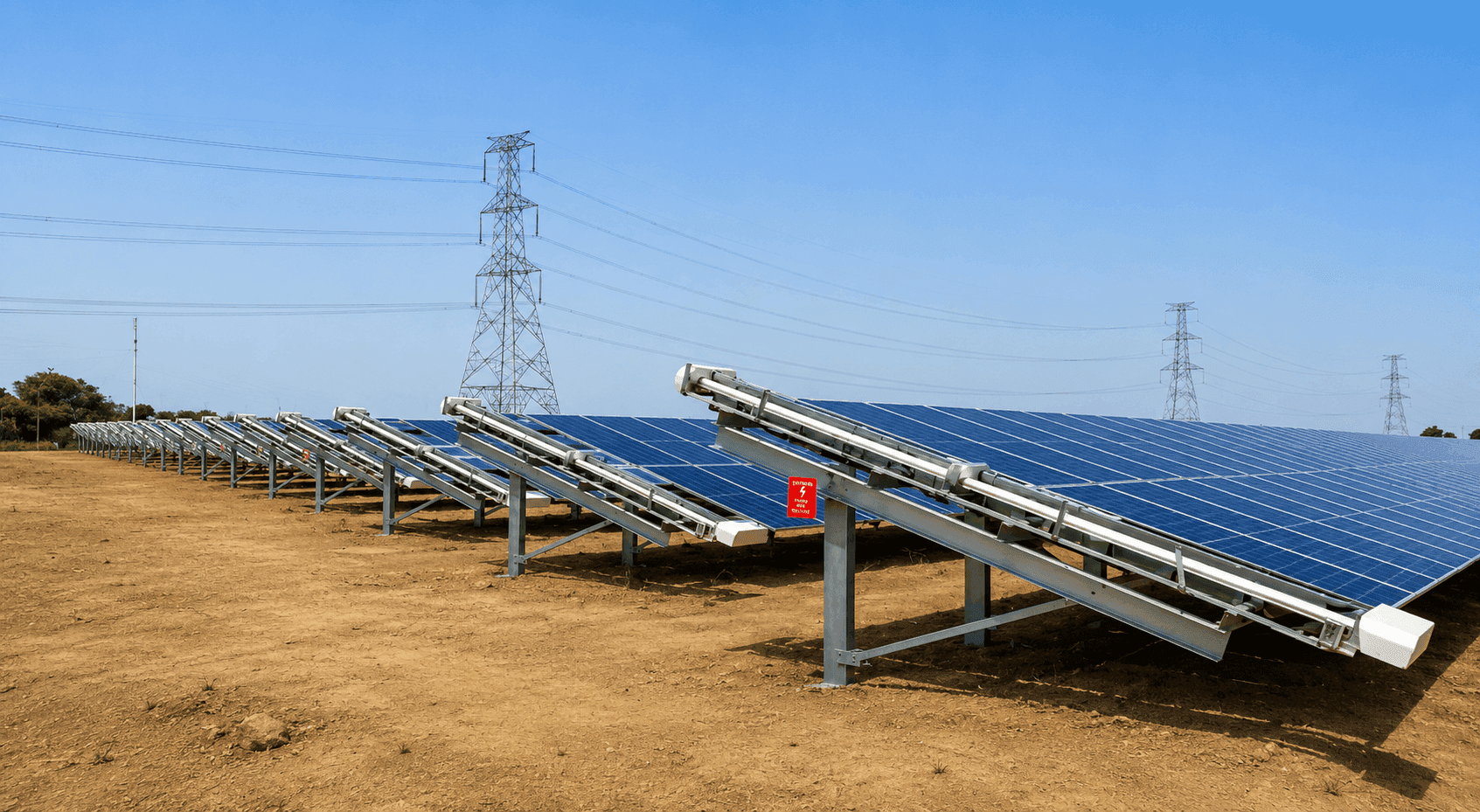
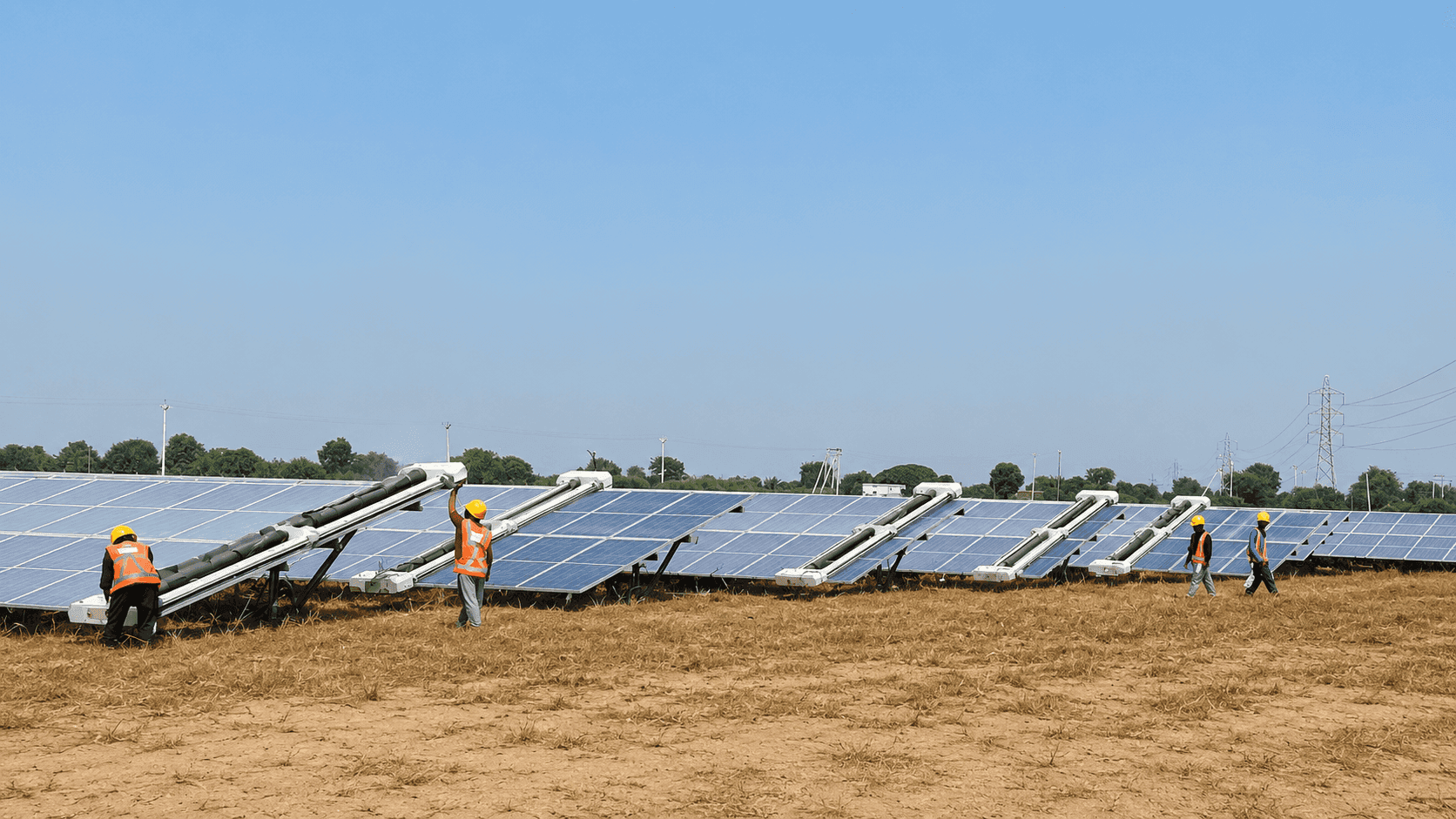
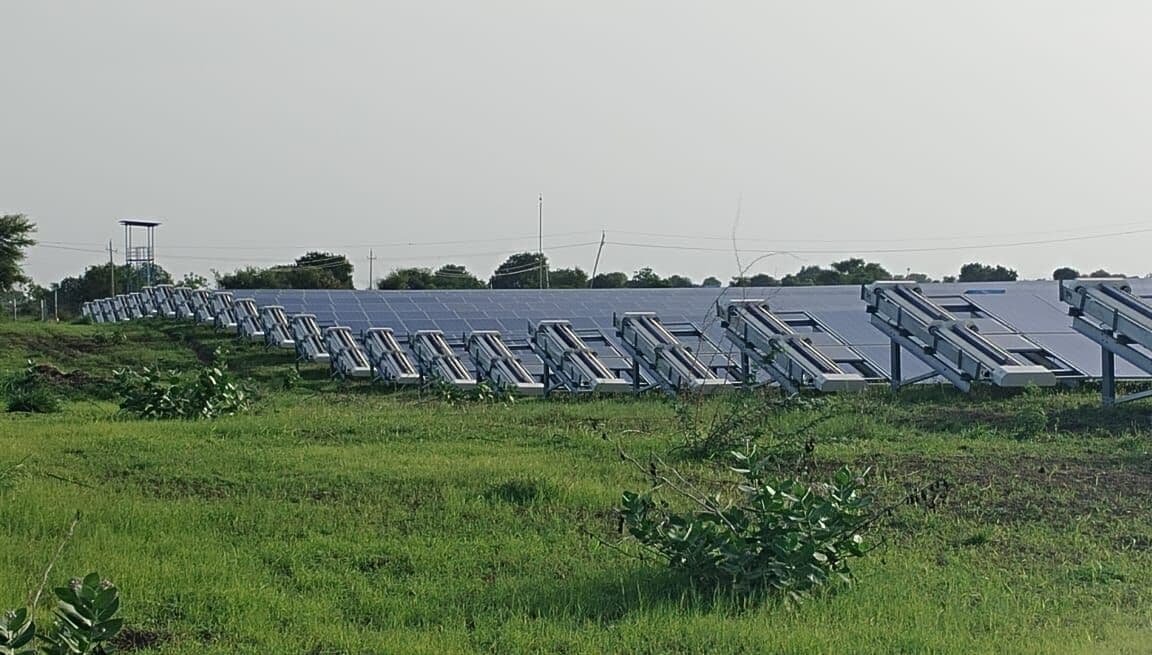
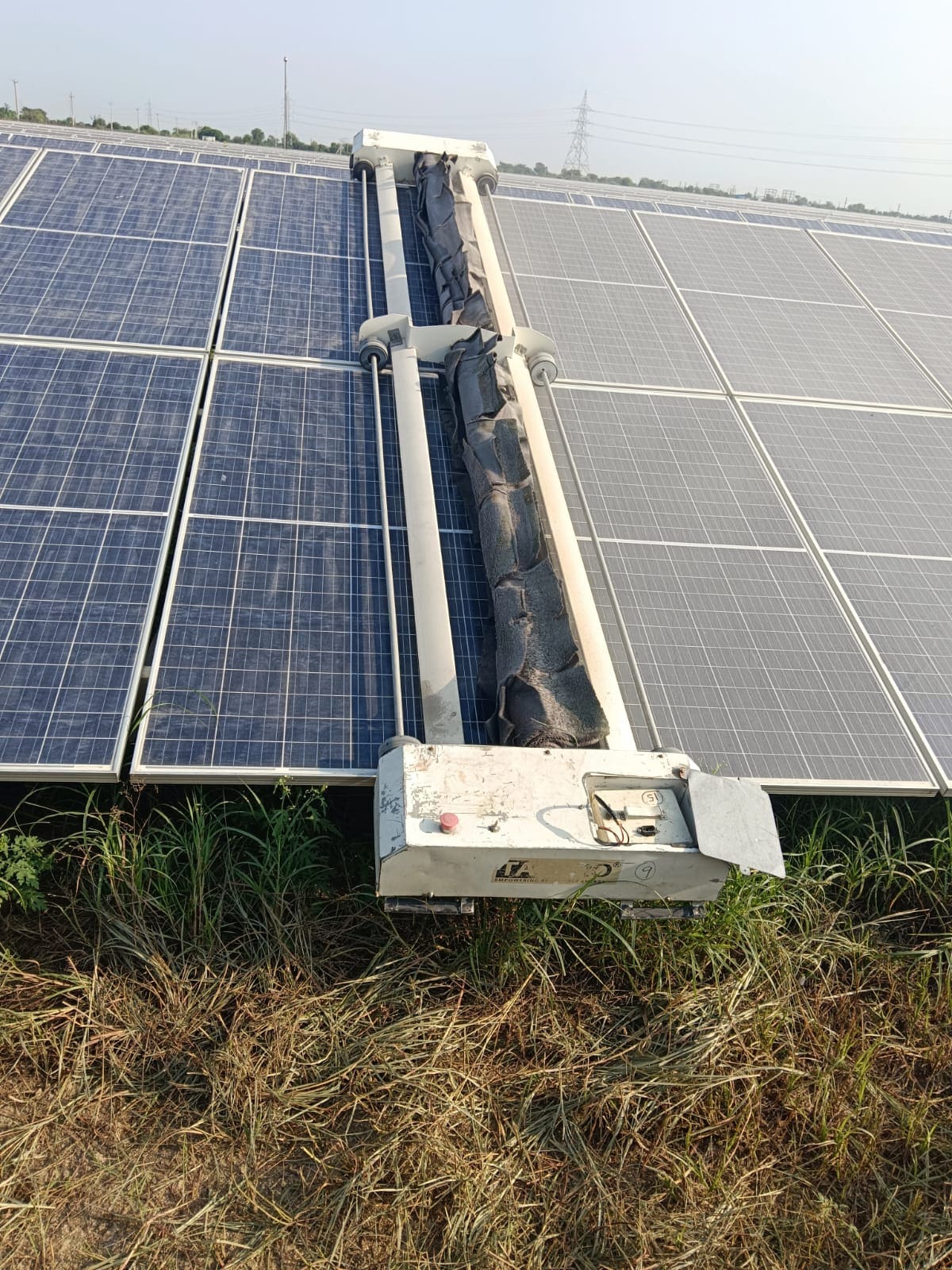
The deployment at Ahmadnagar-Jamb focused on creating a reliable routine. Taypro introduced two HELYX semi-automatic robots. These robots were purchased under a Capex model. They were chosen to handle the specific challenges of ground-mount arrays. The HELYX system is ideal for sites with scattered or distributed blocks.
The HELYX robots use a pick-and-place method. This allows them to move between different rows and blocks easily. They use a single-pass PBT brush for waterless cleaning. This method is fast and very effective. It removes dust without needing a single drop of water. This immediately solved the site's water logistics problems.
The deployment process included training the local site crews. They learned how to move the robots between rows. This new workflow is much more precise than manual cleaning. It ensures that every string receives the same level of care. The key parts of the deployment include:
- Two HELYX semi-automatic robots for targeted cleaning.
- A scheduled cleaning cadence of 3–10 dry cycles per month.
- A transition from manual night crews to structured robotic windows.
- The removal of water trucks from the daily O&M schedule.
Since the commissioning, the facility has moved to a consistent dry-cleaning schedule. This shift has made the plant much more efficient. The robots help keep the panels clean despite the heavy agricultural dust. This proactive approach prevents the dust from hardening on the glass.
Operations and monitoring
Operations and Monitoring at the 37.5 MW Jamb Plant
Moving to robotic cleaning changed how the site is managed. The team no longer relies on manual night-shift reports. Instead, they use the NECTYR fleet monitoring portal. NECTYR provides a digital view of all robot activities. This gives supervisors "proof of cleaning" for every block. They can now verify that every string is actually being maintained.
The plant follows a disciplined cleaning cadence. Currently, the robots perform 3–10 scheduled dry cleaning cycles every month. This frequency is not fixed. The team adjusts the schedule based on real-time data. They look at local weather forecasts and soiling levels. If a dust storm is expected, they can plan cleaning cycles accordingly.
The pick-and-place method offers great flexibility. Supervisors can prioritize rows that show the most soiling. They do not have to worry about moving massive water tankers. This allows the cleaning team to work alongside other O&M tasks. The operational benefits include:
- Real-time monitoring of all cleaning tasks via NECTYR.
- Flexible scheduling of 3–10 dry cycles per month.
- The ability to react quickly to local weather and dust events.
- Clear, digital records for all cleaning operations.
This inspection-led model has turned a chaotic process into a predictable one. The plant now manages complex soiling as a routine task. It has moved from reactive cleaning to proactive maintenance. This ensures the long-term health of the solar modules.
Results and impact
Results and Impact of Robotic Cleaning in Ahmadnagar
The HELYX fleet has transformed the Ahmadnagar-Jamb plant. It has turned a reactive maintenance struggle into a high-performance operation. By using semi-automatic robots, the site has removed the friction of water-based cleaning. There are no more conflicts between water trucks and other site tasks. Every block is now cleaned with consistent precision.
The results are visible in both energy and environmental metrics. The facility has seen a major drop in water use. This saves 140,000 litres of water every year. This is vital for sustainability in the Maharashtra region. At the same time, the plant is producing more power. The site has recovered approximately 37.5 MWh of additional generation per year.
By removing the agricultural dust and road grit, the panels absorb more light. The HELYX robots ensure that the modules stay in optimal condition. This protects the long-term value of the asset. This case study proves that robotic solar panel cleaning Maharashtra works. It shows that data-driven cleaning leads to much more reliable energy output.
Peer comparison and planning checklist
Peer comparison and planning checklist
The success at the 37.5 MW Jamb site shows a trend in Maharashtra. Semi-automatic robotic cleaning is quickly replacing manual labor. This approach is proven across several other regional projects. For example, the yavatmal-kupti-14-mw site uses a similar pick-and-place method. The soyegaon-solar-project and ahmadnagar-jalalpur-10-mw sites also show great results with this technology.
These projects all share a common goal. They want to move away from the inconsistency of manual crews. Manual cleaning often misses specific strings or areas. The HELYX approach ensures every block gets uniform cleaning. This standardizes performance across different types of solar sites. Whether a site is small or large, robotic cleaning provides a clear advantage.
For plant managers looking to upgrade, we recommend this checklist:
- Map your specific soiling zones (dust, grit, or humidity).
- Use NECTYR to get digital proof of cleaning for every block.
- Schedule cleaning to avoid conflicts with vegetation and civil work.
- Set a target of 3–10 monthly dry cycles for uneven soiling.
- Calculate your annual water savings to track your ROI.
Implementing these steps will help you maximize your plant's yield. It will also make your O&M tasks much more predictable.