Executive summary
robotic solar panel cleaning Maharashtra. The 225 MW Ahmadnagar-Karhe solar plant in Maharashtra faces unique daily challenges. The site is a large ground-mount facility. It deals with complex soiling from the local environment. Constant dust from nearby farms and road grit creates heavy layers on the panels. Regional humidity cycles make these problems even worse. These factors create uneven soiling at the string level. Traditional manual cleaning crews often struggle to manage this consistently.
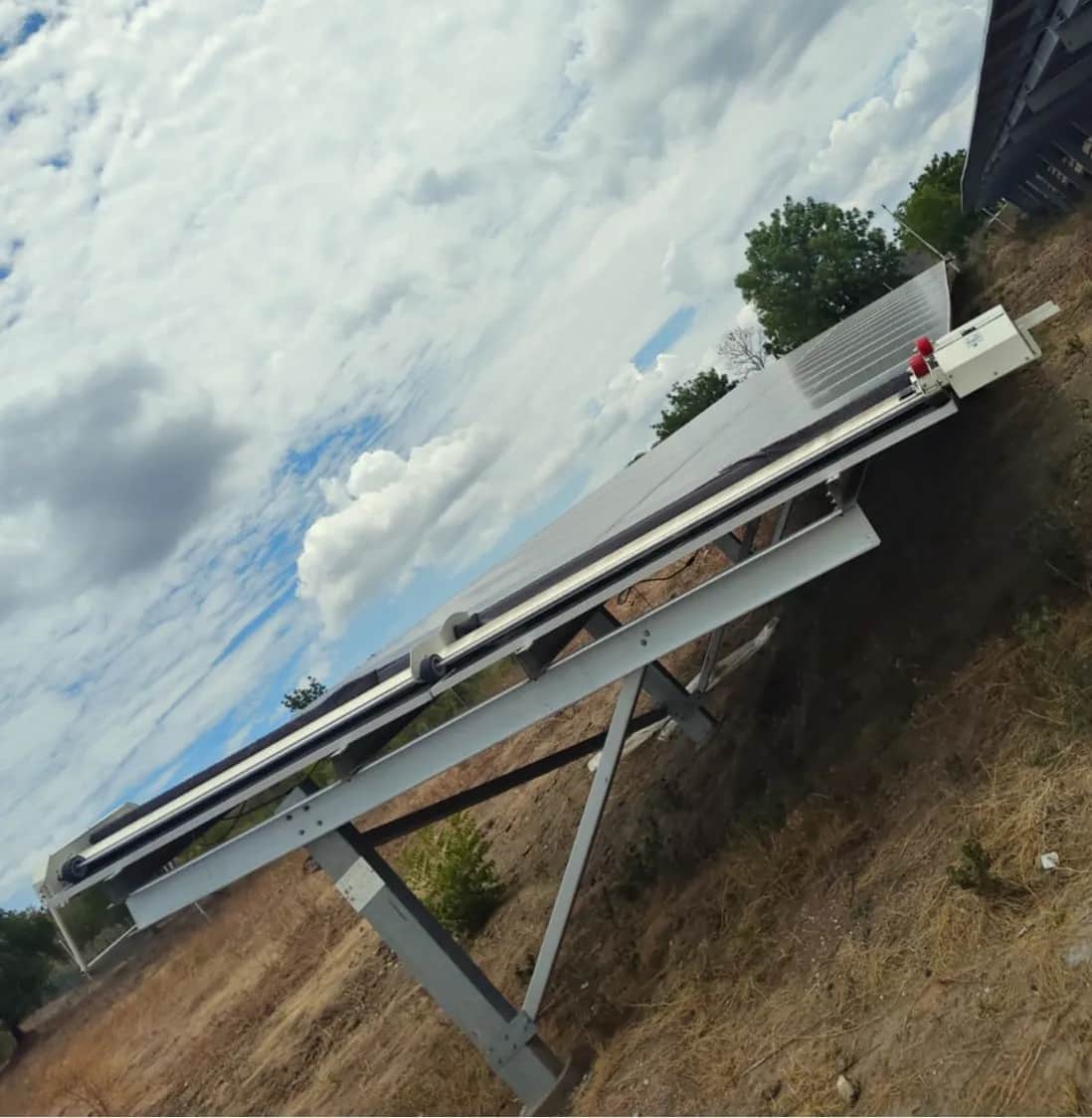
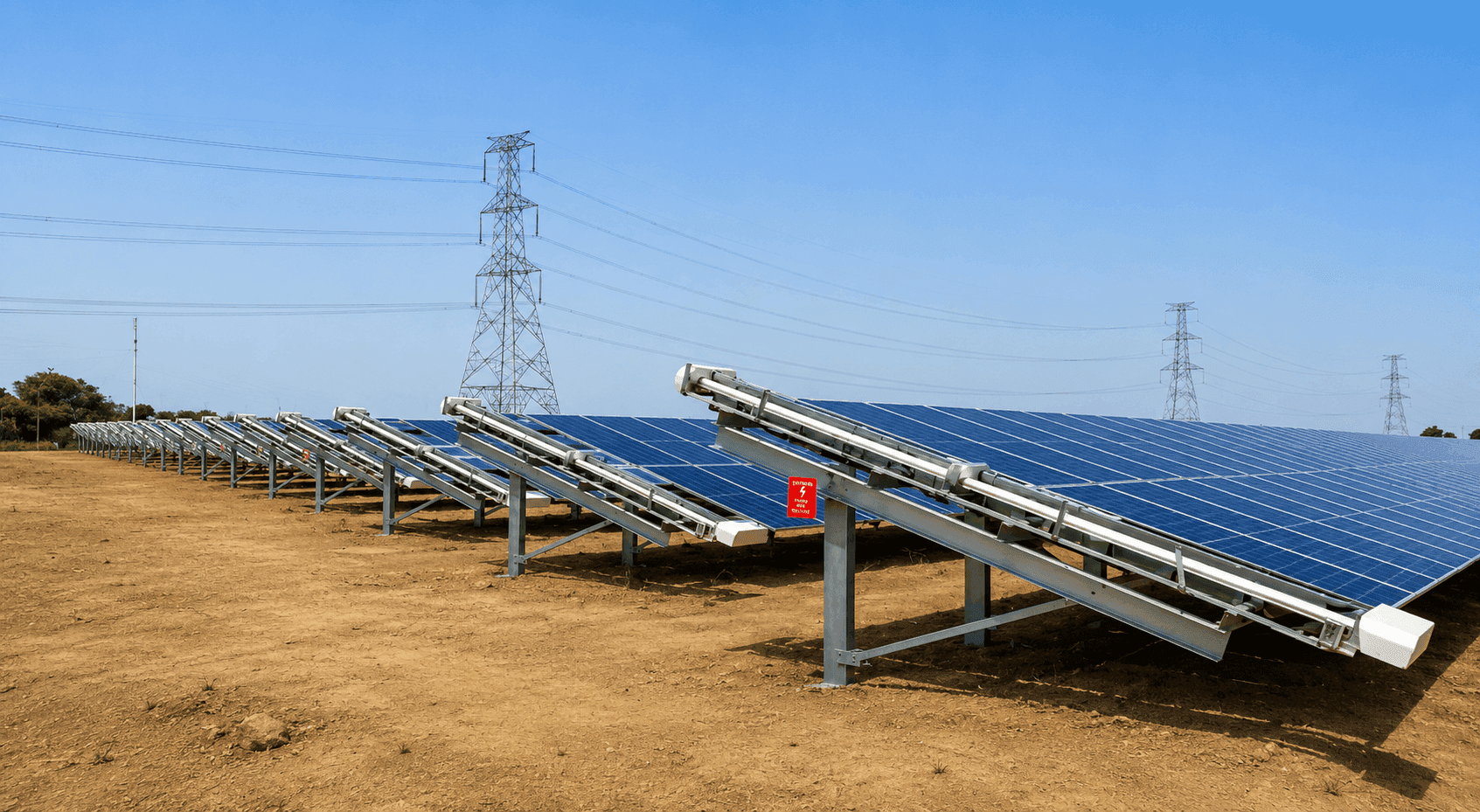
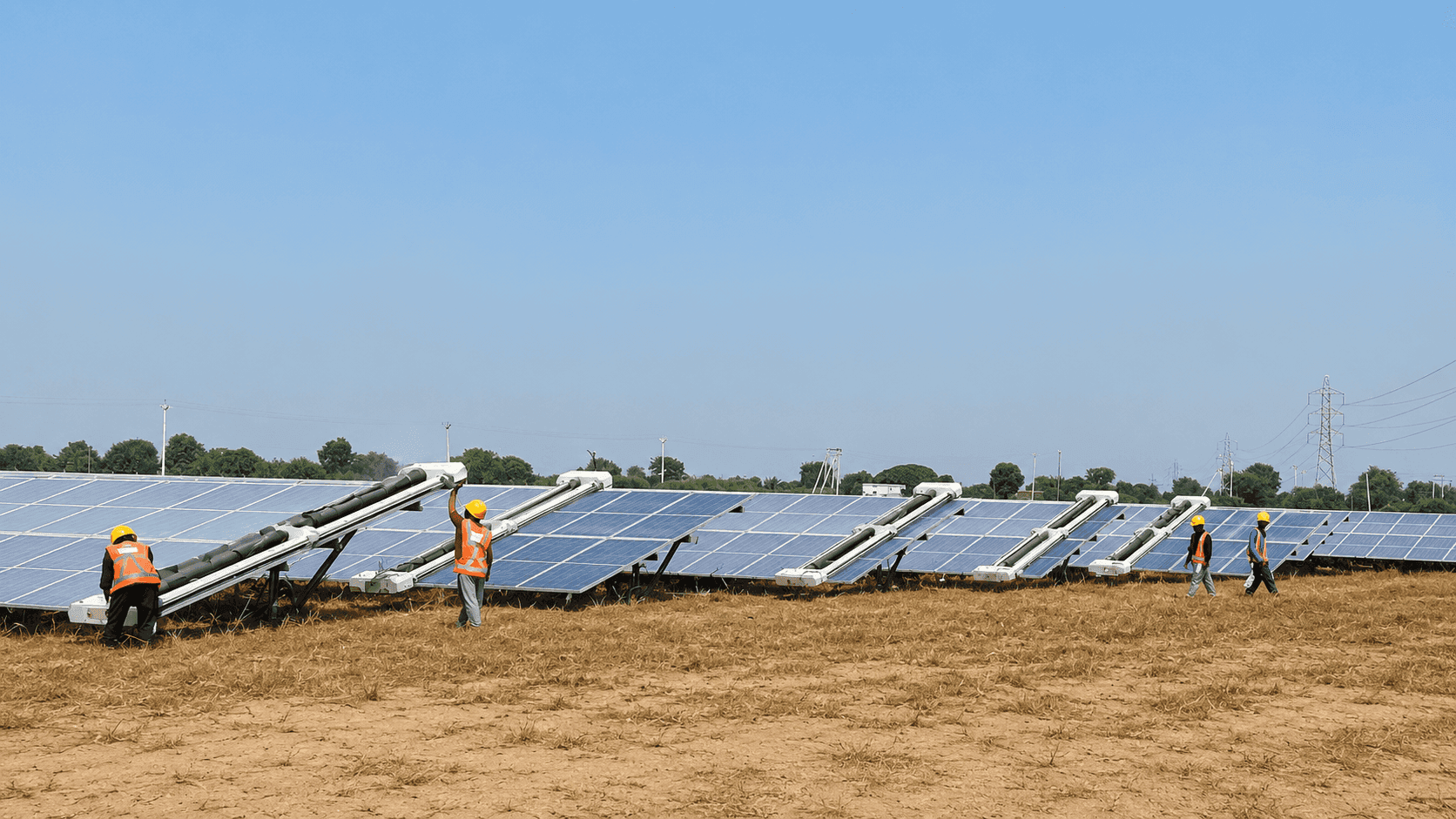
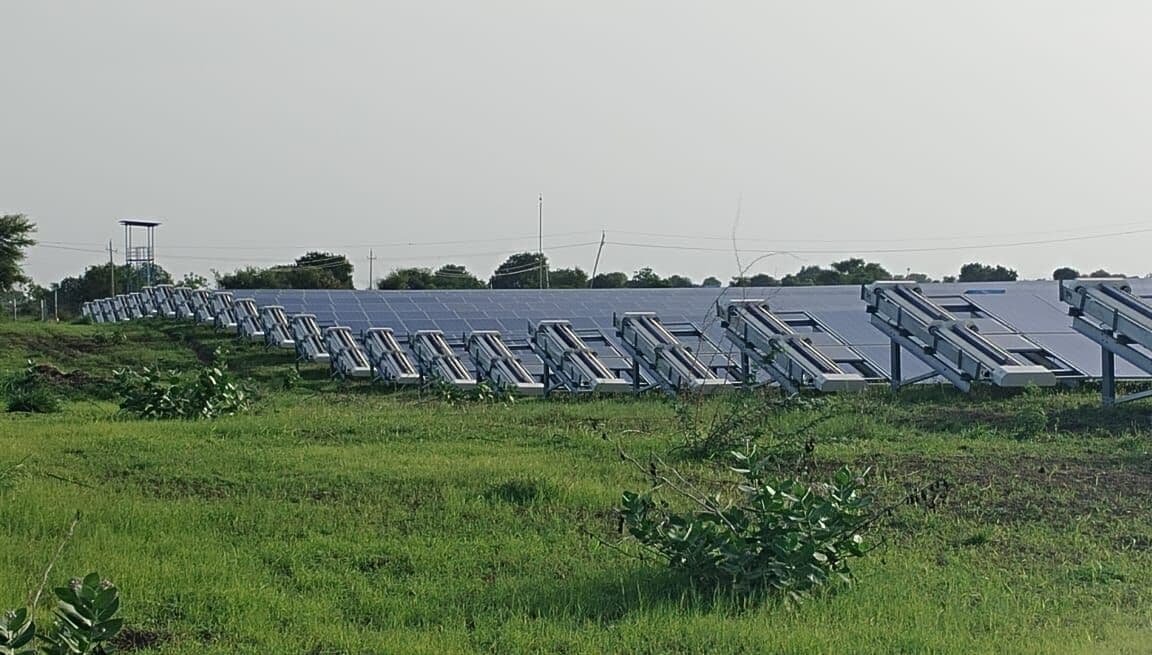
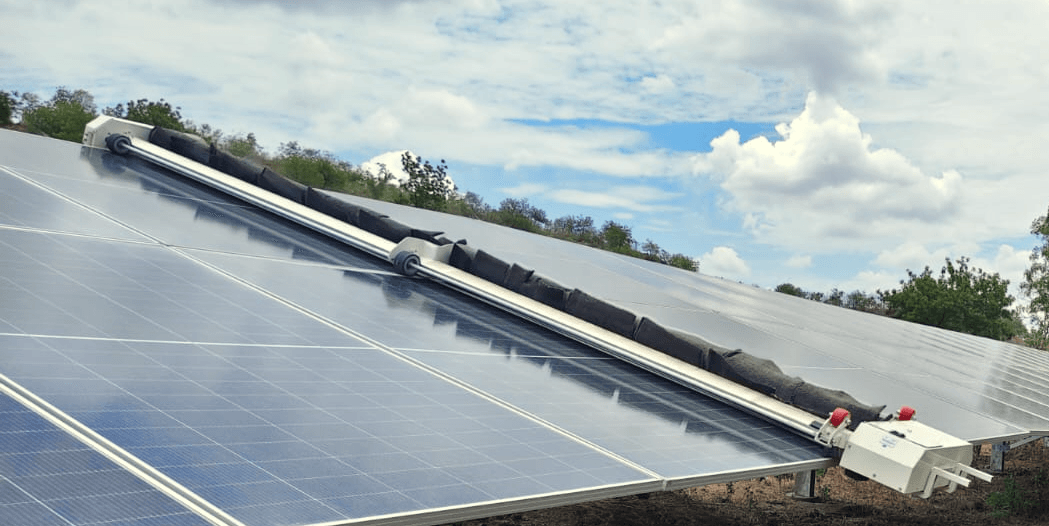
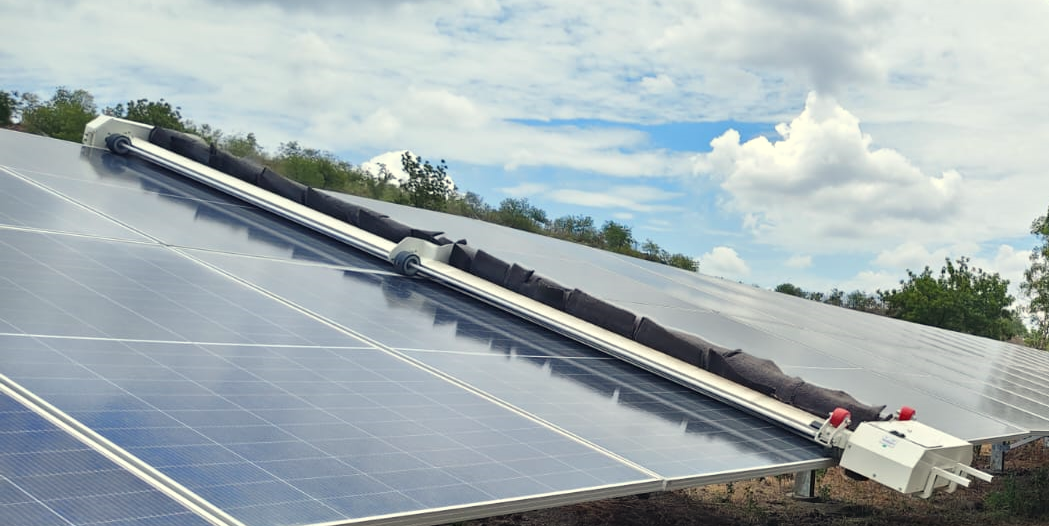
To solve these issues, the plant deployed three HELYX semi-automatic robots. This solution provides a reliable way to perform robotic solar panel cleaning Maharashtra. The HELYX robots use a pick-and-place method for waterless cleaning. This allows the team to maintain scattered array blocks with high precision. The site now follows a structured cleaning schedule of 3 to 10 dry cleaning cycles per month. This change has successfully reduced energy volatility. It also removes the heavy logistical burden of managing water supplies.
The move to Taypro’s waterless technology has already shown great results. The site now gains an extra 225 MWh of generation every year. It also saves 840,000 litres of water annually. This deployment replaces unpredictable manual labor with a proven, data-backed cleaning cycle. It ensures high performance even in the difficult Maharashtrian climate. The plant can now maintain peak output with much less effort.
Environment and soiling at Ahmadnagar- Karhe
Managing agricultural dust and humidity cycles in Ahmadnagar-Karhe
The 225 MW Ahmadnagar-Karhe solar site sits in a unique micro-climate. It is located near intensive agricultural zones. This location brings specific environmental risks to the solar panels. Unlike dry deserts, this area has high levels of airborne dust from crop cycles. Local soil tilling also adds significant particulate matter to the air. This dust does not settle in a simple or even way. It creates a very difficult cleaning environment for plant operators.
The dust interacts with local humidity cycles to create a binding effect. When humidity rises, the dust becomes damp. This creates stubborn layers of grime on the module surfaces. We call this "cementing." Standard manual wiping often fails here. Instead of removing the dirt, manual crews may simply smear it across the glass. This can actually make the soiling problem worse over time. It creates a thick crust that blocks sunlight from reaching the cells.
These soiling patterns often occur at the string level. This means some strings are very dirty while others are relatively clean. This unevenness causes major energy degradation. It is a problem that manual cleaning crews often miss. The specific environmental challenges include:
- Differential Soiling: Dust builds up unevenly. This depends on the row orientation. It also depends on how close a row is to a service road or a field.
- Humidity-Induced Cementing: Nightly dew traps the dust. This turns loose particles into a hard layer. This layer is very difficult to clean without specialized tools.
- Operational Friction: Cleaning teams must coordinate with other site tasks. They often compete with vegetation management and civil works. This leads to gaps in the cleaning schedule.
Because the soiling is string-specific, manual labor is often not enough. A 225 MW site needs perfect uniformity to maintain high yields. Manual crews lack the ability to guarantee that every single string is clean. This leads to inconsistent energy output across the entire facility. By using a semi-automatic robotic cleaning model, the facility can address these deposits with precision. Robotic solar panel cleaning in Maharashtra replaces human variability with a consistent cycle. This prevents dust from hardening into permanent capacity loss.
O&M before Taypro
Logistical constraints of O&M before robotic integration
Before using the Taypro semi-automatic fleet, the 225 MW facility relied on manual teams. This model was very labor-intensive. It created many operational hurdles for the site managers. They had to manage complex water procurement logistics. They also had to schedule night crews. These schedules often clashed with other important tasks. For example, vegetation management and civil O&M often happened at the same time. This made it very hard to keep a steady cleaning routine.
The reliance on manual labor created three main problems for plant performance:
- Unverifiable Cleaning Data: Supervisors could not prove which strings were cleaned. There was no digital record of the work. Without this proof, they could not be sure if crews skipped difficult areas.
- Water Dependency and Waste: Sourcing and moving water was a major cost. It was also inefficient. The manual process used huge amounts of water. This was a waste of a precious resource in Maharashtra.
- Fragmented Oversight: It was hard to schedule manual crews around other tasks. This resulted in inconsistent cleaning cycles. Many panels were left soiled for too long. This allowed agricultural dust to build up and reduce power output.
These gaps led to uneven energy degradation. Some rows were cleaned well, but others were ignored. This directly hurt the total energy yield of the 225 MW plant. Moving to a robotic solar panel cleaning model solved these issues. The team moved away from unreliable manual logs. They adopted a structured and traceable cleaning framework. This shift provided the visibility and efficiency the site needed to thrive.
Fleet and deployment at 225 MW
Fleet and deployment strategy for 225 MW of robotic solar panel cleaning
The 225 MW Ahmadnagar-Karhe project needed a strong solution. It had to handle heavy dust and road grit. We deployed a fleet of three HELYX semi-automatic robots. These robots are perfect for managing large ground-mount installations. The site used a CAPEX procurement model. This allows the O&M team to own the hardware. They also benefit from Taypro’s high-precision waterless cleaning technology.
The deployment process started with careful testing. We conducted systematic row-coverage tests. This helped us validate how the robots navigated the specific terrain. It also ensured consistent cleaning across every module. This initial phase was vital for optimization. We used the data to map the entire array. This mapping helped the team find the best paths for the three-unit fleet. We wanted to ensure every robot could cover its assigned blocks efficiently.
After the testing phase, the plant moved to a structured schedule. The robots perform dry cleaning cycles about 3 to 10 times per month. This number depends on the local humidity and dust levels. This structured plan is a huge improvement. It means cleaning no longer interferes with other site work. It does not clash with vegetation management or civil maintenance. The cleaning happens on a set, predictable loop.
The HELYX fleet also solves the problem of accountability. Every cleaning cycle is logged in the NECTYR operations portal. This provides digital proof of service for every block. Supervisors no longer have to guess if the work is done. This shift has removed the stress of night crew scheduling. It has also ended the need for complex water logistics. The results are clear. The project saves 840,000 litres of water every year. It also recovers 225 MWh of additional generation annually through consistent maintenance.
Operations and monitoring
Optimizing operations with inspection-led robotic accountability
Managing a 225 MW plant requires a careful balance. You must manage energy yield and resources at the same time. In Ahmadnagar-Karhe, the environment is always working against you. Dust, grit, and humidity create uneven soiling on the strings. In the past, supervisors struggled to track the cleaning status. They had to deal with manual water logistics and scheduling conflicts. It was a constant struggle to maintain high performance.
We solved these challenges by moving to an inspection-led model. We integrated the NECTYR fleet portal into the site operations. This gave the O&M team total visibility. They can now see the cleaning status of every single block. This digital verification is much better than manual logs. It removes all guesswork. The three HELYX robots are now deployed exactly where they are needed most. This ensures the highest possible efficiency for the plant.
The site now follows a strict cleaning cadence. The robots perform 3 to 10 dry cycles per month. This schedule is based on real local conditions. It adapts to the dust and humidity levels of the region. This prevents the two biggest mistakes in O&M. These mistakes are over-cleaning and neglecting high-soiling zones. Because the robots use waterless cleaning, the team saves massive amounts of time. They no longer have to worry about water transport or night shifts.
Accountability is now a core part of the workflow. We achieved this through several key improvements:
- Scheduled dry cycles: A steady cadence of 3 to 10 cycles per month keeps the panels clean. This requires very little human intervention.
- Evidence-based reporting: NECTYR provides digital proof for every block. Supervisors have full control over the entire fleet.
- Conflict-free maintenance: Robotic cleaning is separate from civil O&M. This eliminates downtime and stops operational bottlenecks.
- Resource efficiency: The automated approach saves 840,000 litres of water each year. It also recovers 225 MWh of clean energy.
Results and impact
Optimizing Performance Through Robotic Solar Panel Cleaning in Maharashtra
The switch to a robotic cleaning strategy has changed the Ahmadnagar-Karhe plant. It has fundamentally improved the O&M profile of the site. By moving away from manual water cleaning, the site is more stable. The energy output is no longer at the mercy of local dust. The 225 MW installation now delivers consistent power. It does this despite the difficult humidity cycles in Maharashtra.
The impact of this deployment goes beyond just cleaning. The site now has a predictable operational rhythm. The friction between cleaning crews and civil maintenance teams is gone. With the NECTYR fleet portal, managers are now proactive. They no longer react to problems after they happen. Instead, they use data to manage the plant. This proactive model is the key to securing high uptime. It ensures the asset performs as expected for years to come.
The operational gains from this project are significant. The following highlights show the impact of the Taypro solution:
- Significant water preservation: The waterless solution removes the need for heavy water logistics. This leads to massive annual water savings.
- Substantial energy recovery: Consistent cleaning cycles have improved energy yield. String-level soiling no longer hurts the site's total generation.
- Enhanced operational visibility: The semi-automatic system allows for precise scheduling. This prevents conflicts with other important maintenance tasks.
- Resource optimization: Supervisors can now focus on higher-value work. They can reallocate their budget toward plant optimization instead of manual labor.
Peer comparison and planning checklist
Peer Comparison and Planning Checklist for Large-Scale Sites
The 225 MW Ahmadnagar-Karhe project is a benchmark for the region. It shows how to scale robotic solar panel cleaning Maharashtra. Other projects, like the 10 MW Ahmadnagar-Jalalpur or 14 MW Yavatmal-Kupti sites, use smaller deployments. Those sites focus on local soiling issues. However, the Karhe site shows how to manage a much larger footprint. It uses three semi-automatic robots to handle high-density blocks. This multi-unit strategy provides the throughput needed for a 225 MW site. At this scale, manual intervention is simply not sustainable.
Comparing these different projects reveals a clear trend. As a plant grows, the main challenge changes. It shifts from simple cleaning to complex logistics. On smaller sites, managing crew schedules is easy. On the 225 MW Karhe project, the focus is on "proof of work." The site uses a structured cadence to ensure every string is cleaned. This eliminates the "blind spots" that occur with manual cleaning. This robotic model allows for much more precise maintenance windows. These windows do not compete with other site tasks.
Use this checklist to evaluate your own large-scale cleaning needs:
- Assess soiling intensity: Look at seasonal dust levels. This helps you decide how many semi-automatic units you need.
- Map maintenance windows: Identify when civil and vegetation work happens. Ensure your cleaning cycles do not conflict with these times.
- Define performance metrics: Set clear goals for per-block verification. This ensures you get consistent energy recovery.
- Audit water logistics: Calculate your current water costs. Use this to find the potential savings from waterless robots.
- Select the right model: Look at your row layout. Choose a deployment model that offers flexibility for scattered blocks.