Executive summary
robotic solar panel cleaning Maharashtra. The 187.5 MW solar project in Ahmadnagar, Kelwad BK, faced major operational hurdles. Aggressive regional soiling caused these problems. Local agricultural dust and pervasive road grit made the situation worse. Frequent humidity cycles also created thick grime on the panels. These factors caused uneven dirt patterns at the string level. This uneven soiling reduced the overall energy output of the plant.
Maintenance teams struggled with complex logistics. They had to manage water procurement and night crew schedules. These tasks often clashed with civil and vegetation management work. Furthermore, site supervisors lacked clear data. They could not verify which strings were cleaned in every cycle. This created a significant gap in O&M reporting and accountability.
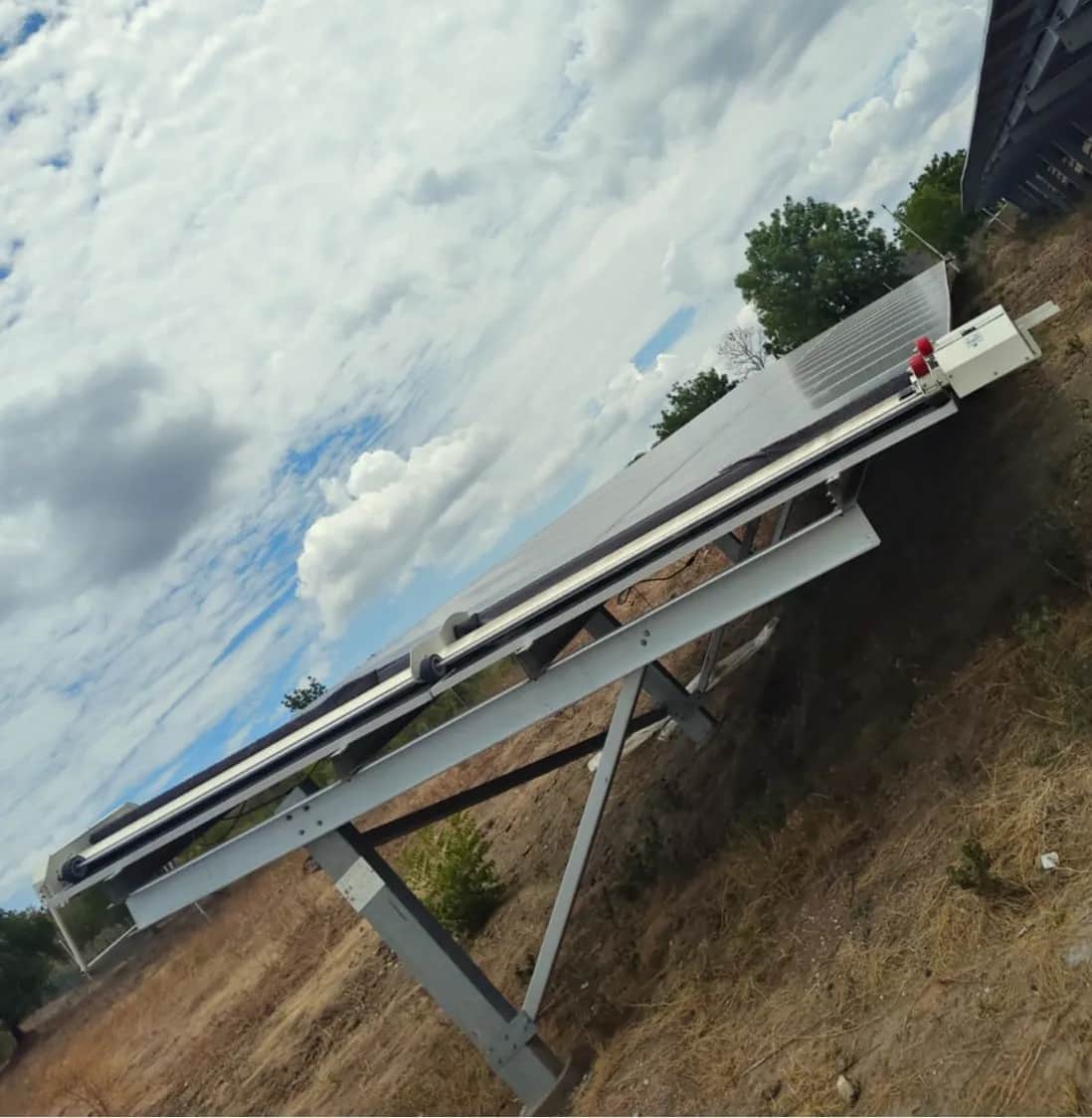
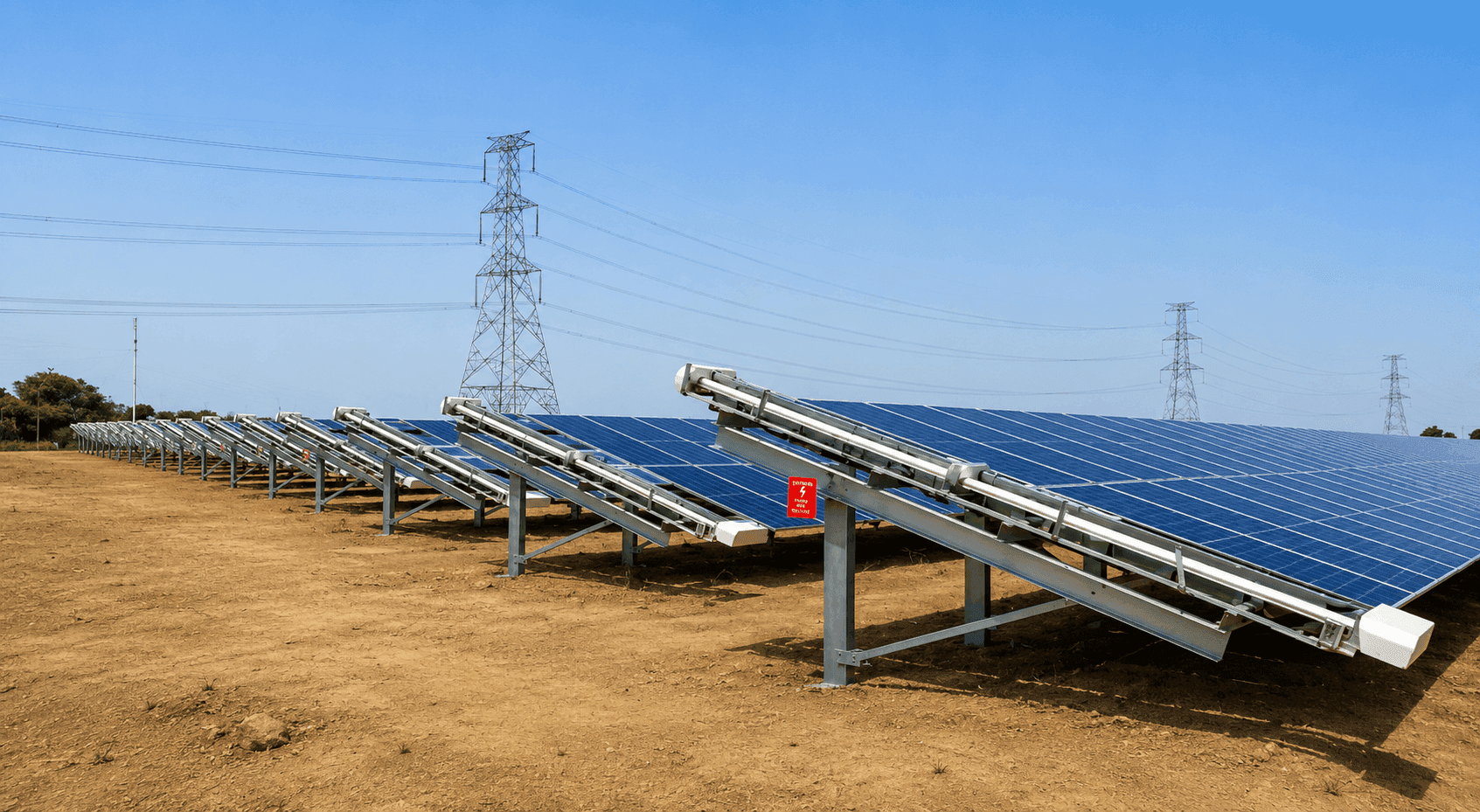
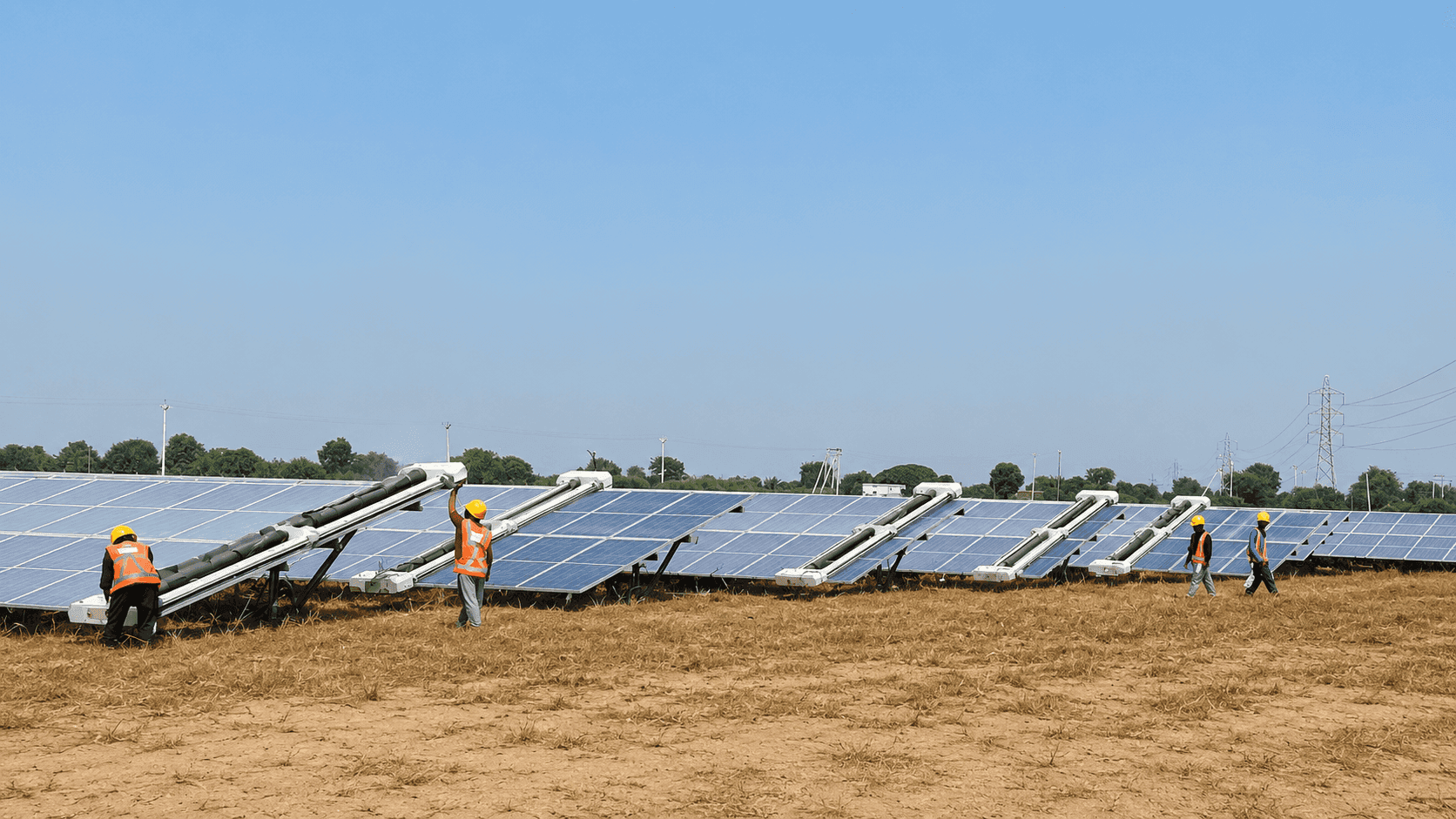
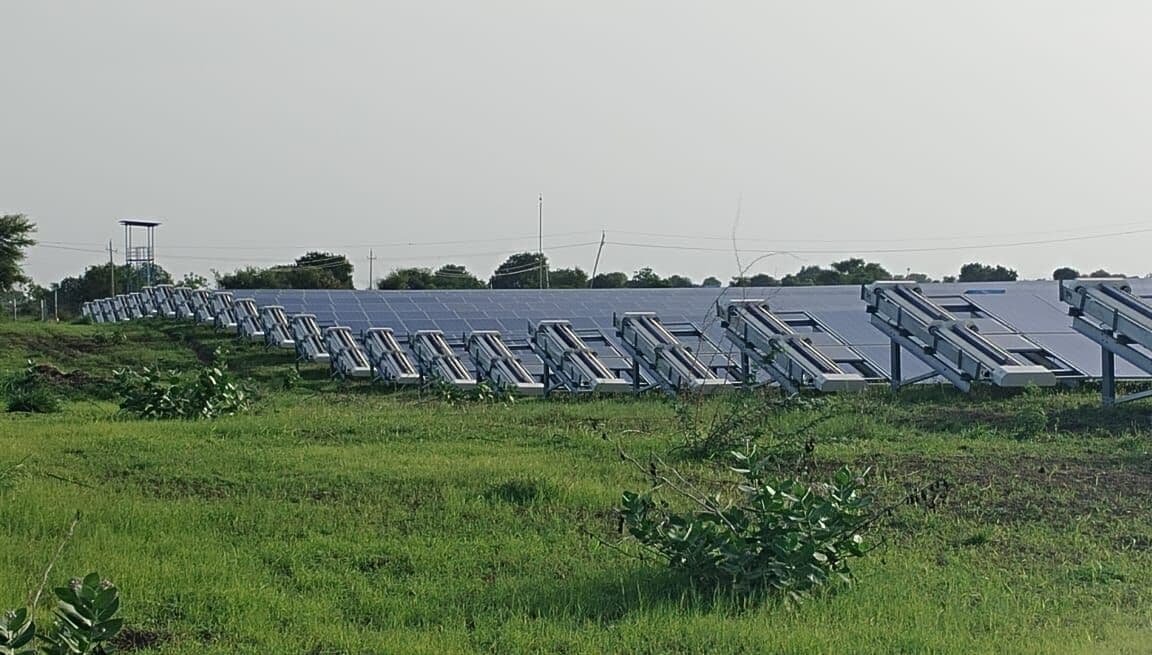
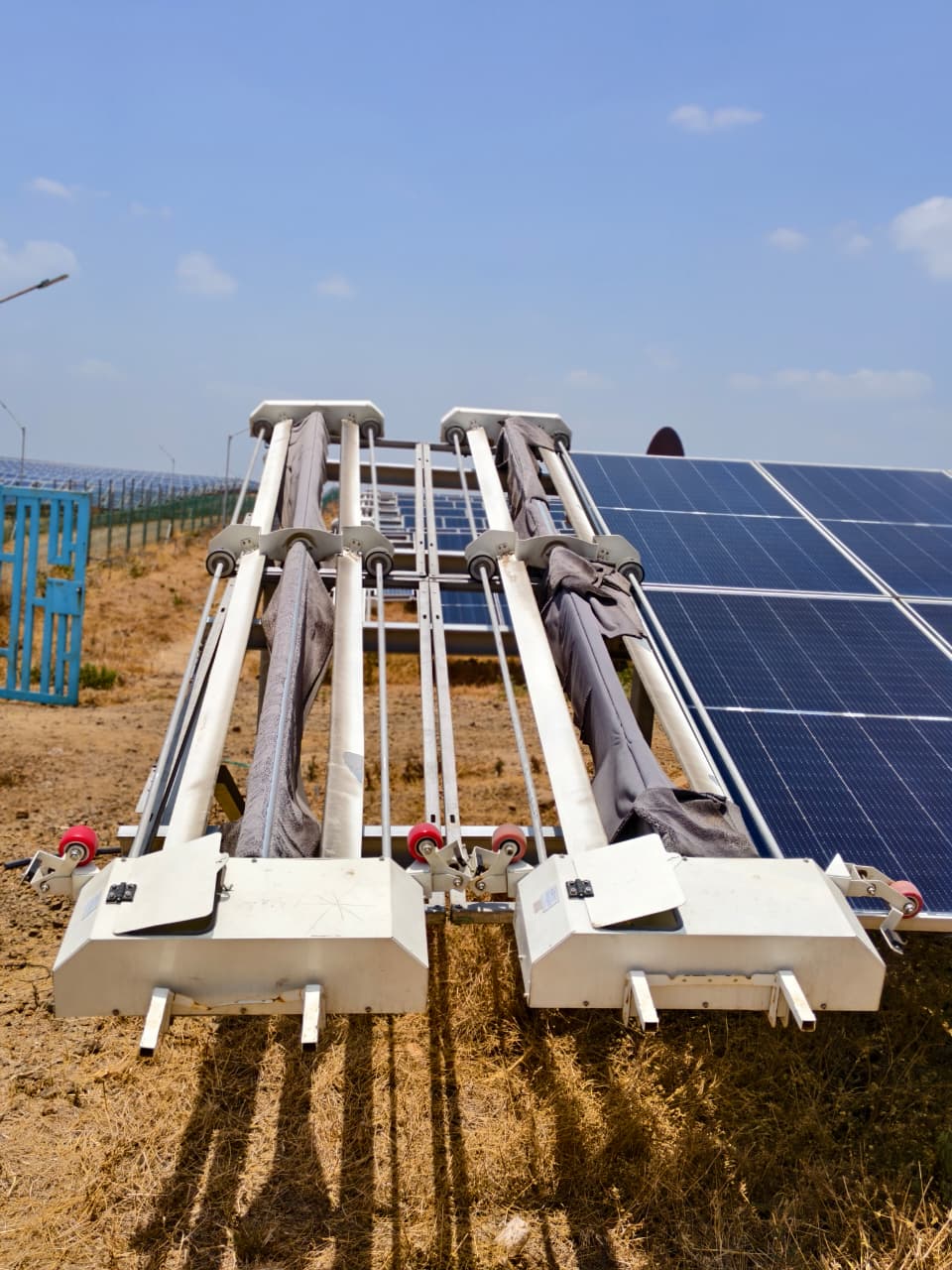
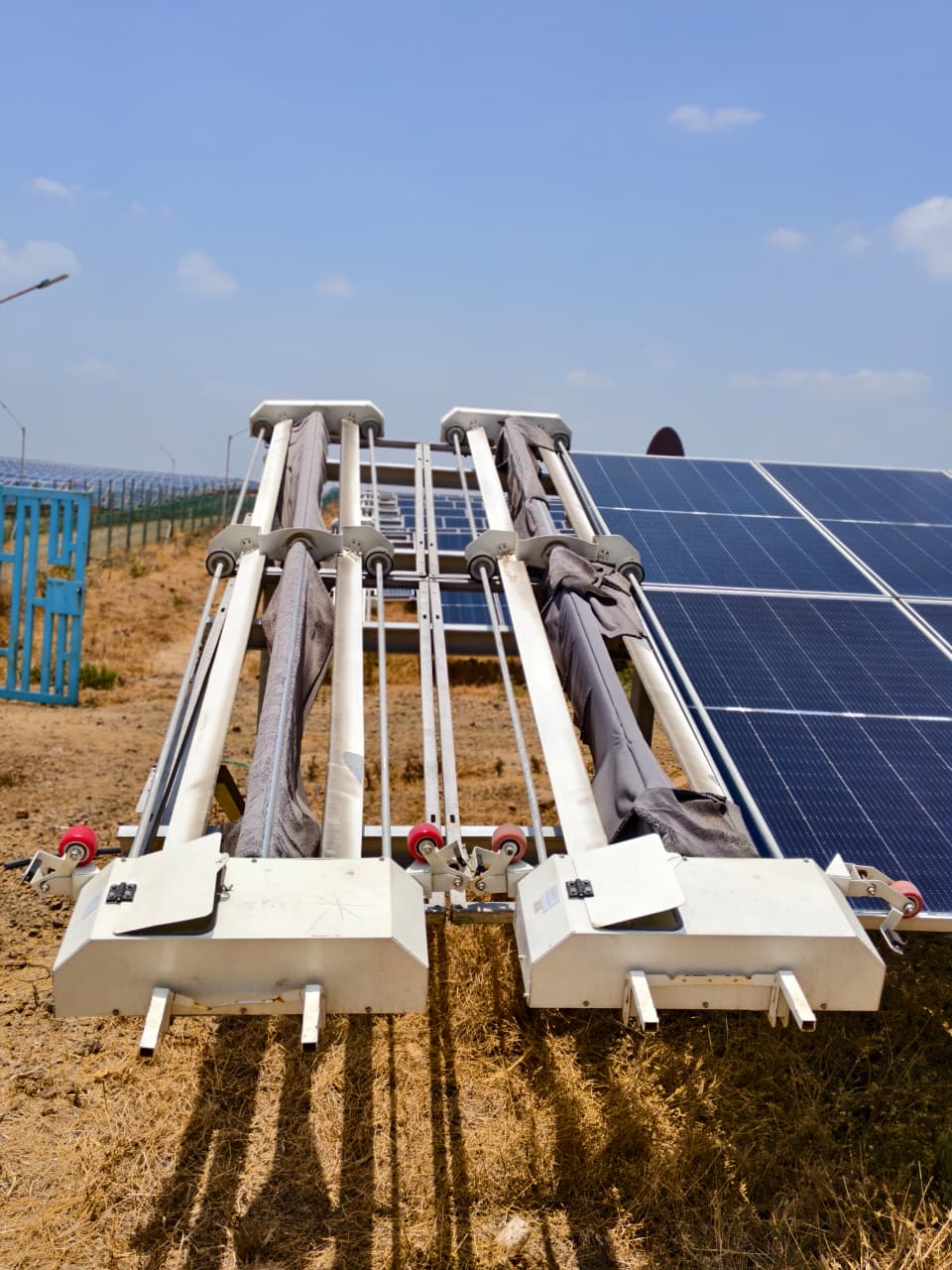
To solve these issues, Taypro deployed two HELYX semi-automatic robots. These units provide targeted, waterless dry cleaning. The robots use a pick-and-place method. They move across distributed blocks to clean specific areas. This deployment allows for 3 to 10 dry cleaning cycles per month. This frequency depends on the weather and site access.
The system integrates with the NECTYR fleet monitoring portal. NECTYR provides supervisors with precise, block-level proof of cleaning. This digital audit trail ensures total transparency. As a result, the facility recovered 187.5 MWh of extra generation annually. The plant also saved 700,000 litres of water every year. This case study proves the value of semi-automatic robotic cleaning in Maharashtra.
Environment and soiling at Ahmadnagar- Kelwad BK
Environmental Challenges and Regional Soiling at Ahmadnagar-Kelwad BK
The 187.5 MW solar plant at Ahmadnagar-Kelwad BK sits in a tough micro-climate. This environment challenges standard maintenance rules. The region has several specific environmental stressors. These include high-intensity agricultural dust from nearby farms. Local road networks also contribute constant road grit. Additionally, the area experiences distinct nocturnal humidity cycles. These factors combine to create a stubborn layer of grime on the solar modules.
The dirt does not settle evenly across the site. Instead, it forms uneven patterns at the string level. This makes manual cleaning very difficult to manage. The interplay of these regional factors creates four main hurdles for this Maharashtra facility:
- Agricultural Dust Accumulation: Nearby cropping cycles release fine dust into the air. This dust interacts with the morning dew. It creates a tacky film on the glass. This film is hard for the wind to clear naturally.
- Road Grit Dynamics: The plant is near unpaved regional transport routes. These roads deposit abrasive grit constantly. This grit requires specialized cleaning. If not removed, it can cause micro-scratches on the panel glass.
- Humidity-Driven Caking: The area has high daytime temperatures. Temperatures drop rapidly at night. This cycle accelerates the hardening of organic and mineral dirt. Periodic cleaning is essential to maintain a steady energy yield.
- Uneven String Soiling: The local topography affects wind and moisture. This causes different array blocks to soil at different rates. Because of this, manual O&M teams struggle to schedule cleaning effectively.
Managing this site requires more than a simple schedule. It requires high transparency in cleaning verification. Without robotic help, supervisors faced massive logistical hurdles. They had to coordinate water supply and night crews. They also had to manage vegetation and civil works. The uneven soiling patterns made this coordination nearly impossible. By moving to a semi-automatic robotic model, the site addresses these stressors. The robots provide real-time data to confirm the health of every string.
O&M before Taypro
Audit Trail Crisis: The Manual O&M Struggle at Ahmadnagar-Kelwad BK
The 187.5 MW Ahmadnagar-Kelwad BK site faced instability before using robotic solar panel cleaning in Maharashtra. The biggest issue was an audit trail crisis. Supervisors could not verify cleaning work. They did not know which specific strings were cleaned during manual shifts. While the team managed labor and water, they lacked granular data. They could not ensure uniform coverage across the large ground-mount array.
The site dealt with several critical operational gaps:
- Lack of Verification: There was no automated logging system. Supervisors had no proof of which strings were cleaned. This led to inconsistent performance across different blocks.
- Logistical Friction: Managing night crews and water supply was difficult. These tasks often competed with other essential work. Vegetation control and civil maintenance also needed attention during these windows.
- Uneven Soiling Patterns: Dust and moisture create "hotspots" of heavy dirt. Manual teams often missed these specific sections. This led to premature drops in energy yield.
- Resource Intensive: Traditional water-based cleaning is very heavy on logistics. It is hard to track and optimize at a 187.5 MW scale. The sheer volume of water and labor required was inefficient.
Performance losses were often discovered too late. Managers only saw the impact on SCADA dashboards after the damage was done. This was a reactive approach to maintenance. The site needed a solution that offered both precision and real-time data. They needed a way to confirm cleaning for every single string.
Fleet and deployment at 187.5 MW
Optimizing CAPEX with Semi-Automatic Deployment at 187.5 MW
The deployment strategy at Ahmadnagar-Kelwad BK focuses on optimizing CAPEX. The site uses a semi-automatic model to solve logistical problems. Two HELYX robots were integrated into the daily operations. This setup provides the flexibility to clean distributed array blocks. The pick-and-place method is very effective here. It allows managers to target high-soiling hotspots caused by agricultural dust and road grit. This ensures priority attention for the most affected areas.
The strategic deployment follows a clear four-part framework:
- System Selection: The site uses two HELYX units. These provide reliable, waterless, single-pass PBT cleaning. These units are highly portable. Maintenance crews can move them between different ground-mount blocks easily. They clean based on real-time soil levels.
- Deployment Logistics: The HELYX robots function as a pick-and-place fleet. They do not require fixed tracks for every row. This allows for 3 to 10 dry cleaning cycles per month. This schedule aligns with the local humidity and maintenance cycles.
- CAPEX Efficiency: This model maximizes the return on investment. It deploys high-performance robots only where they are needed. This avoids the high cost of full-site automation. It eliminates the need for expensive infrastructure on every single row.
- Commissioning Emphasis: The setup focuses on operational agility. Crews are trained in efficient rotation patterns. This ensures the robots cover the most affected strings first. This mitigates the uneven soiling that previously hurt energy generation.
The transition from manual methods has changed the site. The team now uses a semi-automatic robotic system. This system reduces water waste by 700 thousand litres every year. It also delivers consistent cleaning to recover 187.5 MWh per year. This targeted deployment proves that portable PBT technology works for large assets. It is a viable solution for utility-scale solar in Maharashtra.
Operations and monitoring
Optimizing robotic solar panel cleaning in Maharashtra with NECTYR
The NECTYR fleet monitoring portal has transformed operations at the Ahmadnagar-Kelwad BK plant. Previously, the O&M team struggled with coverage verification. It was hard to track cleaning across different ground-mount blocks. Manual logs were often incomplete. Supervisors were often uncertain about which strings had been cleaned. This led to gaps in maintenance during high-soiling periods.
The new NECTYR-governed schedule solves this. Every cleaning cycle is now digitally recorded. Every action is traceable. This move replaces fragmented manual reporting with clear visibility. Managers can now confirm that the semi-automatic schedule is followed exactly as planned.
The operation at this 187.5 MW site uses a structured model:
- Digital Accountability: NECTYR provides per-block proof of work. This eliminates uncertainty. Supervisors can finally see exactly which strings were serviced.
- Cycle Cadence: The cleaning is mapped to a 3 to 10 monthly dry cycle schedule. This is optimized for regional agricultural dust and road grit. It ensures performance stays stable between cycles.
- Integrated Logistics: The team aligns robot deployment with other tasks. They coordinate with vegetation and civil maintenance windows. This prevents scheduling conflicts and keeps the plant running smoothly.
- Fleet Oversight: Supervisors use the NECTYR platform for constant monitoring. They check battery health and robot status. They also track path completion. This real-time data allows for quick adjustments. No block is left unserviced due to mechanical downtime.
The plant now maintains a high standard of care. This is done through an inspection-led approach. The site avoids the inefficiencies of water-reliant washing. This systematic control preserves the critical infrastructure. It also reliably recovers the energy lost to regional soiling.
Results and impact
Optimising Robotic Solar Panel Cleaning in Maharashtra: Efficiency and Conservation
The robotic cleaning system at the 187.5 MW Ahmadnagar site is a success. It replaced traditional, water-heavy cleaning with a precision, waterless approach. This change reduced operational friction significantly. The plant no longer relies on complex water logistics. It also does not need difficult night crew scheduling. This transition addressed the heavy dust and humidity-induced grime. It did so across all expansive ground-mount arrays.
The semi-automatic fleet and NECTYR delivered four key improvements:
- Significant Resource Savings: The plant achieves huge annual water conservation. This reduces the stress on local water supplies. It also lowers the environmental footprint of civil O&M tasks.
- Increased Power Yield: Single-pass PBT technology handles uneven soiling very well. This consistent cleanliness recovers significant annual energy. The plant now meets its performance targets despite local environmental challenges.
- Enhanced Operational Transparency: The NECTYR digital audit trail is a game changer. It provides clear, per-block proof of completion. This eliminates the guesswork found in manual labor models. It ensures total accountability for every cleaning cycle.
- Logistical Harmony: Robotic operations now integrate with existing maintenance tasks. They work alongside vegetation and civil works. This prevents scheduling conflicts. It allows the site to maintain stable output without disruptions.
This deployment shows the power of strategic robotic integration. It provides more than just clean panels. It creates a predictable and low-maintenance environment. It maximizes energy recovery. It also lowers the long-term cost of ownership for utility-scale plants.
Peer comparison and planning checklist
Peer Comparison and Robotic Planning for Maharashtra Solar Assets
The 187.5 MW Ahmadnagar site shows the move from manual labor to robotics. We can compare this to the 10 MW Ahmadnagar-Jalalpur project. Both sites face similar issues with agricultural dust and high humidity. The 10 MW site serves as a smaller reference point. However, the 187.5 MW installation proves that HELYX systems can scale up. They can manage very large and distributed blocks effectively.
Other projects use different methods. For example, the Yavatmal-Kupti 14 MW site uses fully automatic projects. These sites use fixed-position robots. Those robots perform daily dry cleaning cycles. This is different from the 187.5 MW site. The Kelwad BK site uses a semi-automatic workflow. It relies on 3 to 10 monthly dry cycles per block. Asset owners can choose between these two models. They must balance CAPEX against logistical needs. These comparisons show that Maharashtra sites can recover energy effectively. They just need to choose the right cleaning intensity for their budget.
Use this planning checklist for your next robotic solar panel cleaning Maharashtra deployment:
- Assess Soiling Density: Determine if your site needs daily automated cleaning or scheduled semi-automatic cycles. This will help you find the best ROI.
- Review Maintenance Windows: Check your existing civil and vegetation schedules. Ensure robot deployment does not create operational conflicts.
- Verify Mounting Types: Confirm that your chosen robot supports your mounting system. Ensure compatibility with fixed-tilt or single-axis trackers.
- Establish Digital Monitoring: Use software like NECTYR. This creates a verifiable audit trail for every cleaned block or string.
- Calculate Potential Savings: Use local environmental data to estimate water savings. Use this to justify the move to a waterless O&M model.