Executive summary
robotic solar panel cleaning Maharashtra,
Environment and soiling at Ahmadnagar- Kharatwadi
Managing Variable Soiling Environments at Ahmadnagar-Kharatwadi
The 187.5 MW Ahmadnagar-Kharatwadi plant sits in a complex environment. It is located near heavy agricultural activity. It is also near major transit routes. These factors create a "dual-layer" soiling problem for the solar panels. First, seasonal crop cycles create fine agricultural dust. This dust is nutrient-rich and very fine. It forms a persistent film on the surface of the modules. Second, heavy transport on nearby roads kicks up road grit. This grit is made of abrasive minerals. These particles are often large and jagged. If handled incorrectly, this grit can damage the anti-reflective coatings on the glass.
The weather in Maharashtra makes this situation even harder. The region has high humidity cycles. During the evening and early morning hours, moisture levels rise. This atmospheric moisture interacts with the dust on the panels. The result is a thick, cement-like grime. This grime does not wash away with wind. It does not move with light rain. Instead, the grime cures onto the glass surface. This process creates very uneven soiling patterns. Some solar strings become much dirtier than others. These variations create localized bottlenecks. Certain rows produce much less power than the rest of the plant. This makes traditional maintenance very difficult to manage.
Before the robotic solution, the operational teams struggled. They had to maintain a consistent cleaning standard in a changing environment. High water usage for manual cleaning was a major issue. Cleaning crews often competed with other tasks. For example, they had to balance cleaning with vegetation management. They also had to work around civil O&M windows. This competition meant that cleaning was often delayed. Supervisors also lacked verifiable data. They had no way to prove which blocks were actually cleaned. This lack of information made it impossible to ensure high performance across the entire 187.5 MW site.
- Agricultural Dust: Fine organic particles that bond with morning dew to create hard, opaque patches on modules.
- Road Grit: High-impact, abrasive minerals from local roads that require careful, non-abrasive cleaning methods.
- Humidity-Driven Soiling: Rapid moisture changes that trap dust and create inconsistent shading across different strings.
- Logistical Constraints: Overlapping O&M demands that often forced teams to delay essential manual panel cleaning.
O&M before Taypro
Accountability and Logistics: The O&M Crisis at Kharatwadi
The 187.5 MW Kharatwadi facility faced a major O&M bottleneck before the transition. Managing human cleaning crews created a difficult logistics conflict. Supervisors had to coordinate many moving parts. They had to align night crew schedules with other site needs. These needs included vegetation management and civil maintenance. Because these tasks often needed the same space or time, conflicts were common. As a result, cleaning cycles were frequently delayed. Sometimes, cleaning was deprioritized entirely to focus on other maintenance tasks.
This conflict led to a serious lack of visibility. The plant did not have a digital audit trail. Management had no real way to prove which strings were cleaned. Crews would report their progress, but the data was not always accurate. The uneven soiling from dust and grit meant that performance often stayed low. Even when crews worked, the results were inconsistent. Supervisors lacked granular data for every block. They could not hold teams accountable for the quality of the cleaning. They also could not identify which specific areas of the 187.5 MW array were losing the most energy.
Manual cleaning methods also caused significant waste. The plant used massive volumes of water every year. This was necessary to fight the heavy, humidity-cured grime. However, this high water use was very expensive. It did not always guarantee a consistent output of power. The facility was stuck in a bad cycle. It faced high costs and low accountability. The plant consistently underperformed because the maintenance was intermittent and unverified.
- Logistical Bottlenecks: Manual schedules often clashed with critical civil and vegetation maintenance windows.
- Audit Gaps: A lack of digital tracking meant supervisors had no proof of string-level cleaning.
- Resource Inefficiency: High water consumption failed to solve the stubborn soiling patterns of Maharashtra.
- Accountability Deficit: Poor reporting methods made it hard to assess which plant blocks needed urgent care.
Fleet and deployment at 187.5 MW
Fleet and deployment at 187.5 MW
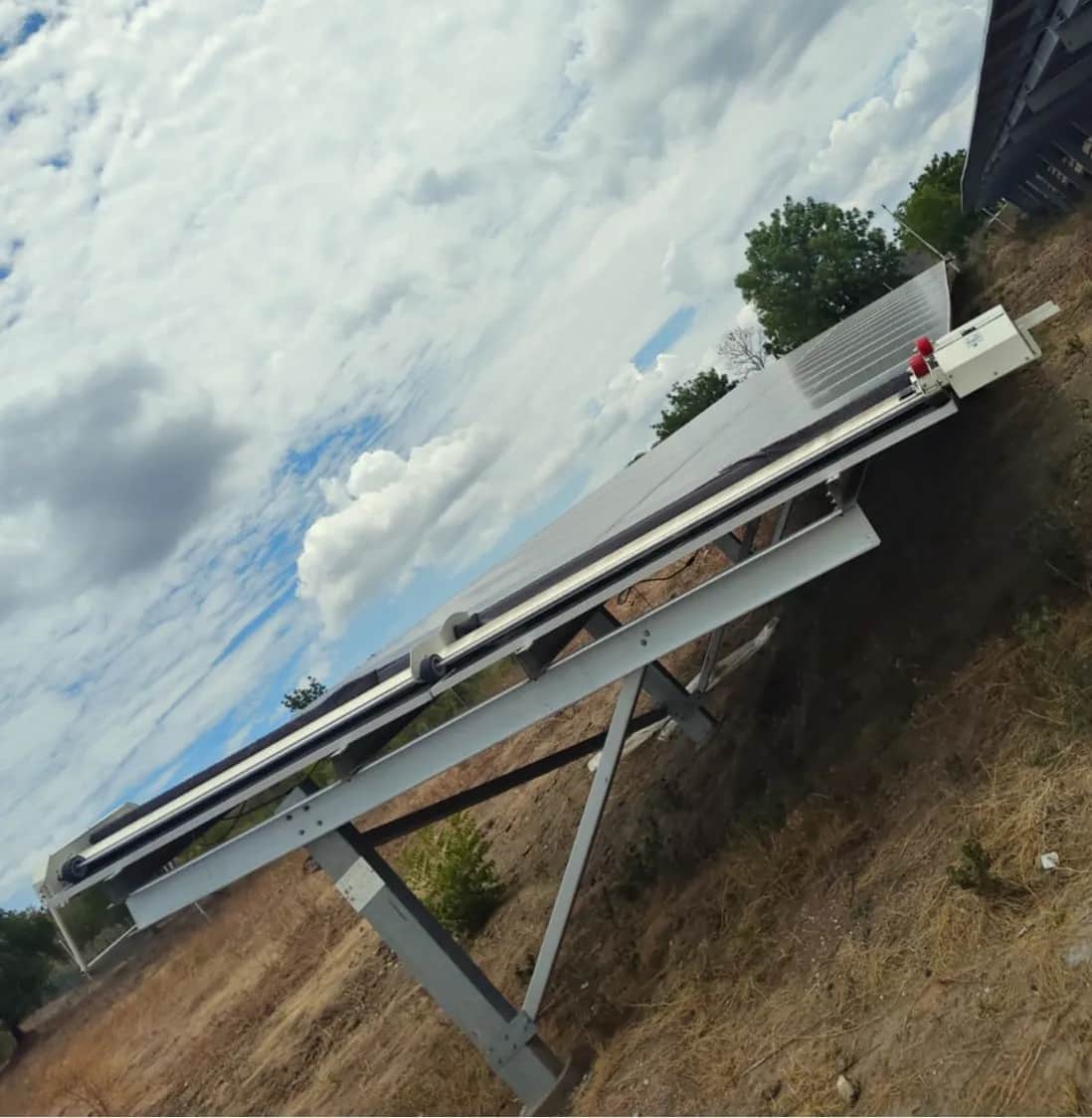
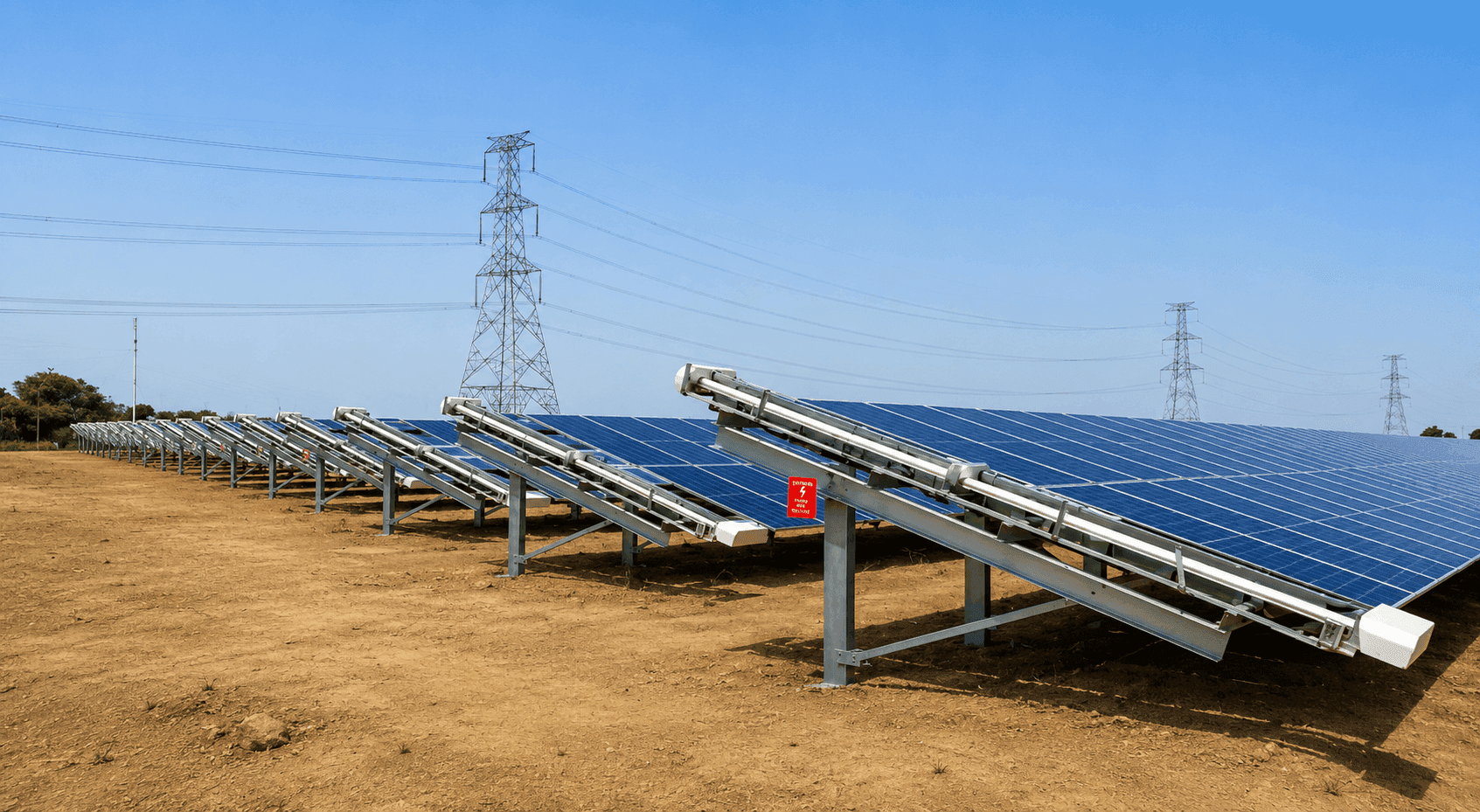
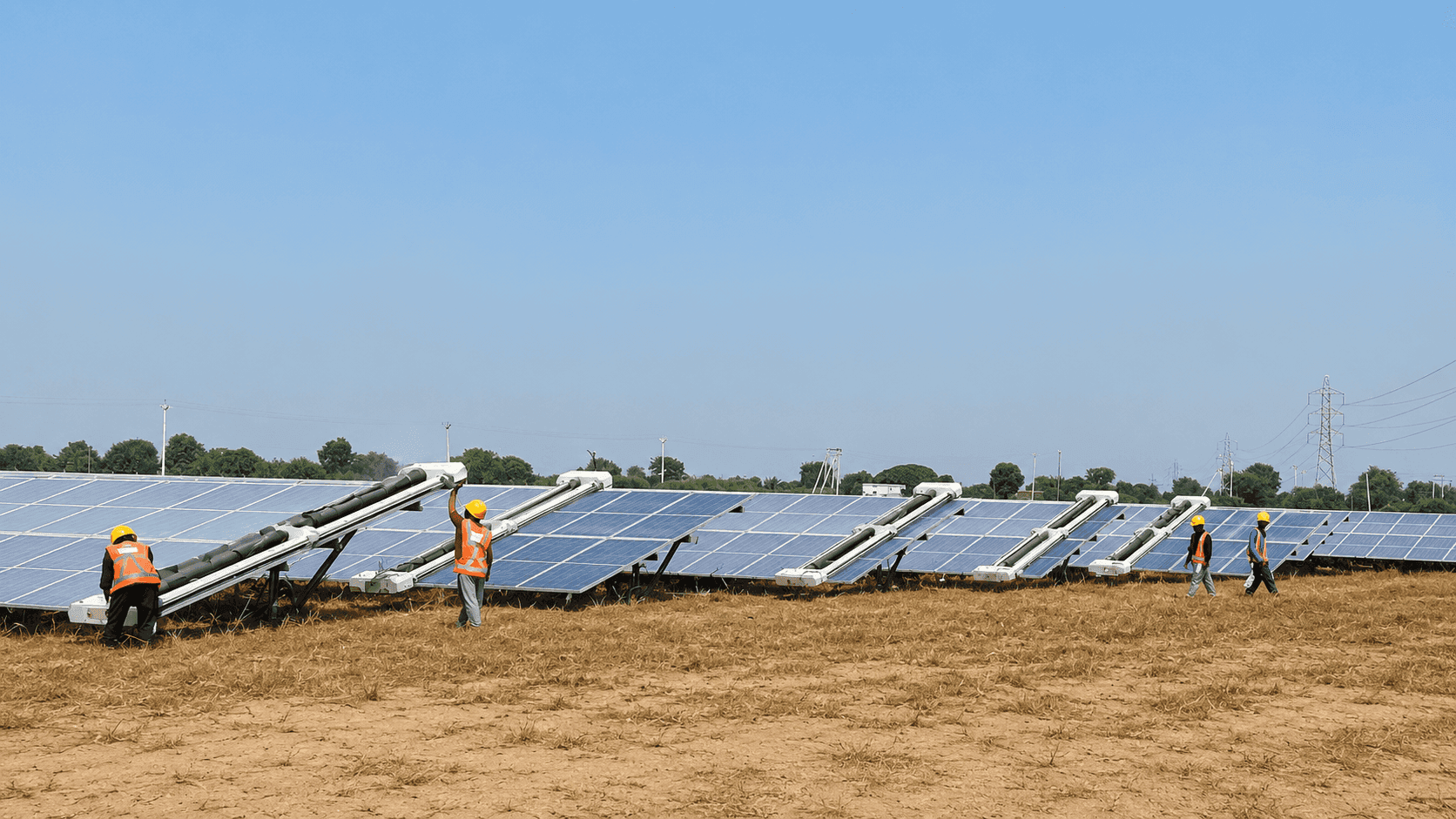
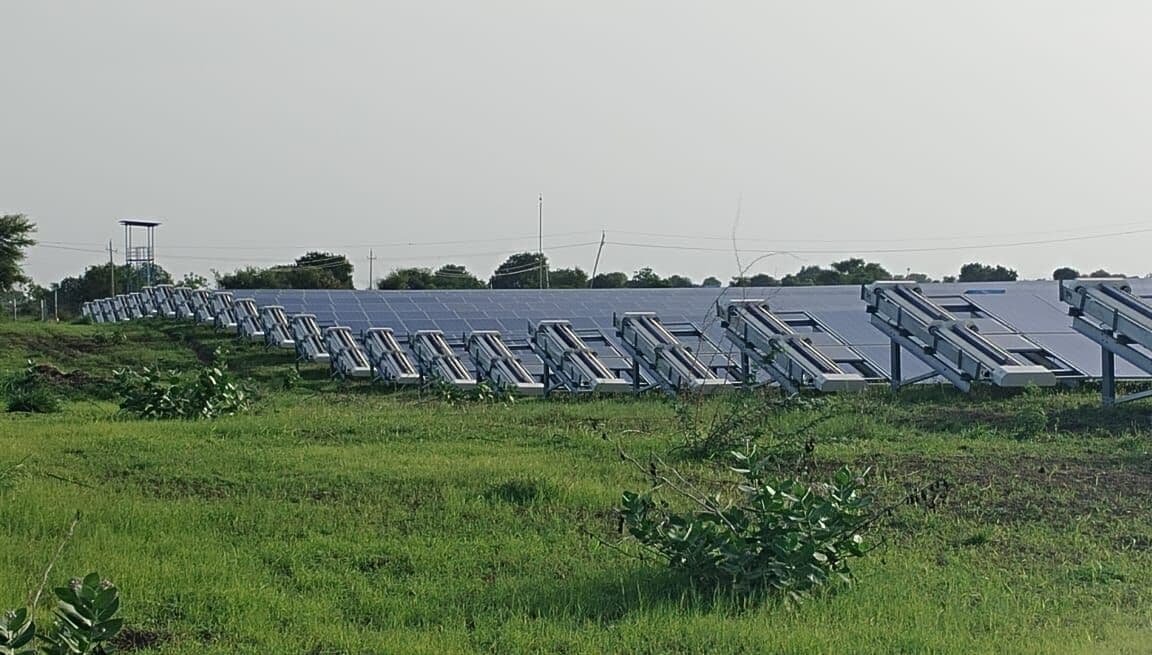
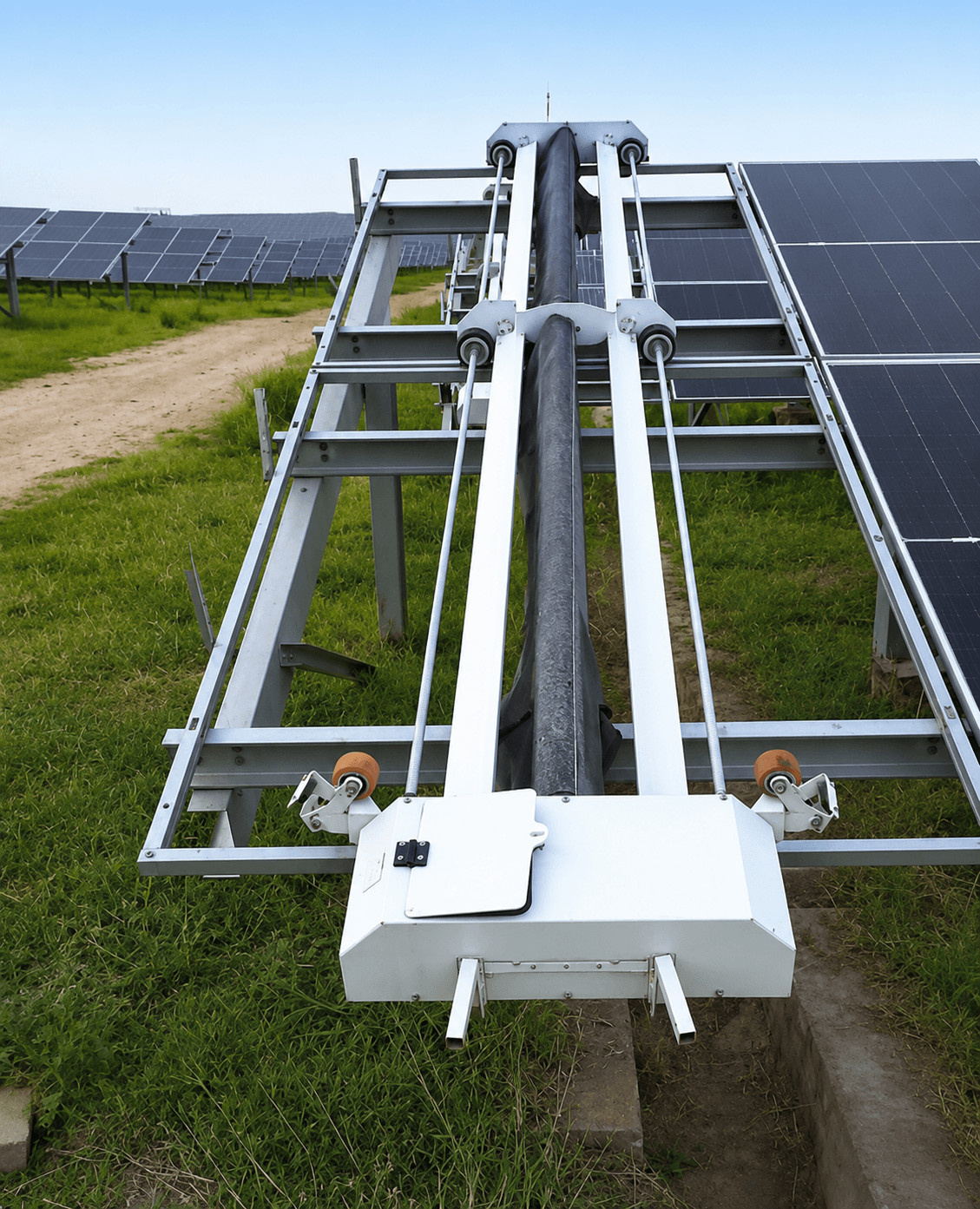
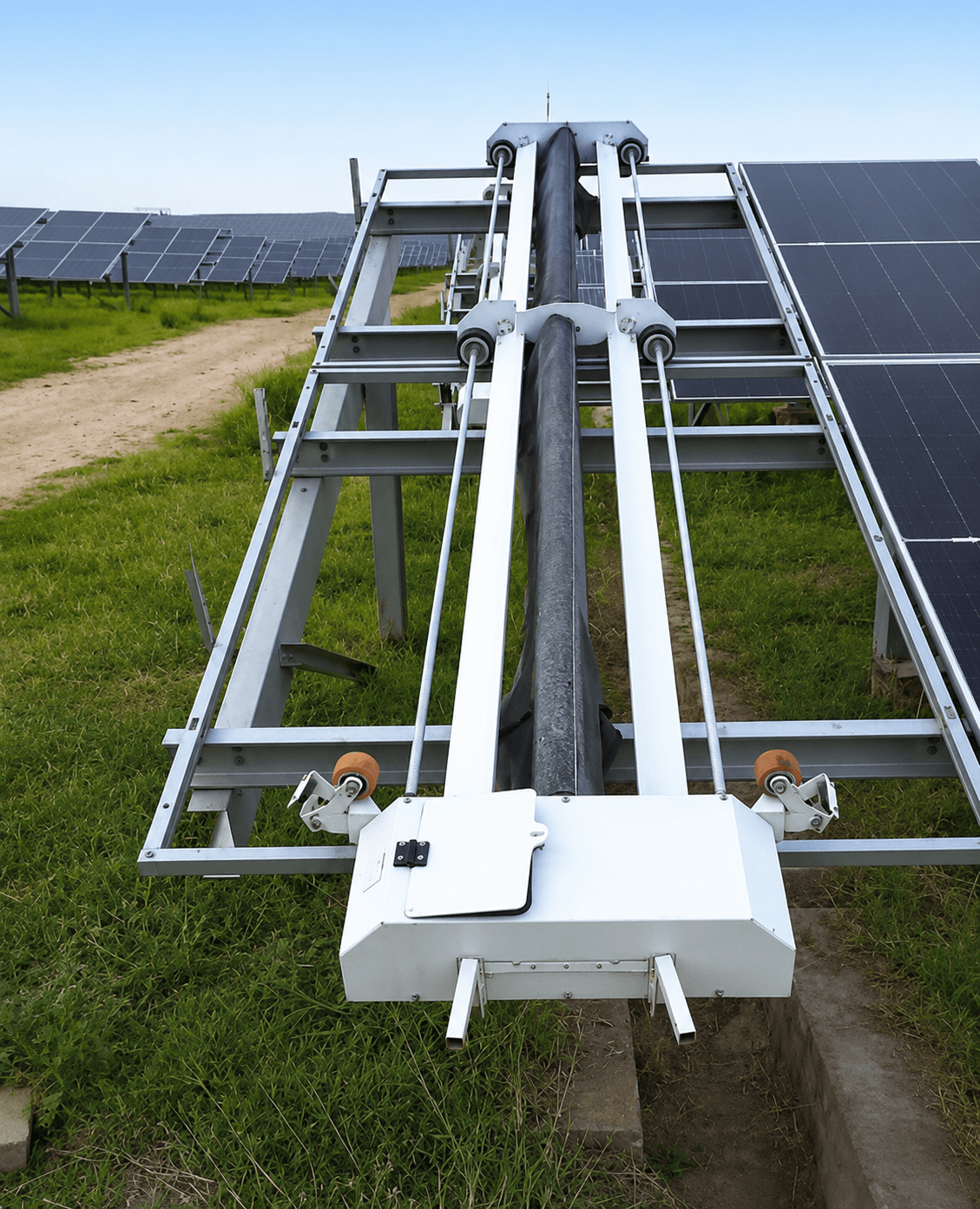
Taypro changed the strategy at the Ahmadnagar-Kharatwadi site. We moved the plant to a structured, waterless robotic cleaning plan. We deployed a fleet of two HELYX semi-automatic robots. We chose the HELYX model because it is perfect for distributed utility-scale blocks. This site uses a CAPEX procurement model. This allows the facility to own the technology. They can then integrate it into their long-term O&M plans.
This new system replaced manual, water-based labor. It uses a precise and scheduled dry cleaning protocol. The HELYX units use single-pass PBT brush technology. This technology is designed to remove agricultural dust and road grit. It does this effectively without using any water. By using these semi-automatic robots, the site maintains a steady rhythm. They perform approximately 3 to 10 dry cleaning cycles per month. The team adjusts this frequency based on local humidity. They also look at how much dust is building up on specific strings.
A key part of the deployment was the integration of NECTYR. NECTYR is our fleet monitoring portal. It ensures that every single cleaning pass is logged. This provides supervisors with the proof they need. They can now see exactly which blocks were cleaned. This solves the visibility problem that existed before. The HELYX fleet addresses the uneven soiling caused by local weather. This ensures that the 187.5 MW site meets its performance targets consistently.
- Water Conservation: The switch to waterless PBT technology saves 700,000 litres of water every year.
- Operational Output: This deployment helps recover energy losses, adding 187.5 MWh of generation per year.
- Strategic Deployment: The HELYX system is portable and perfect for scattered ground-mount blocks.
- Digital Accountability: NECTYR provides a verifiable audit trail for every single cleaned string.
Operations and monitoring
Optimizing robotic solar panel cleaning in Maharashtra: Operational precision at Kharatwadi
Managing a 187.5 MW ground-mount site is a massive task. It requires more than just manual labor. The Kharatwadi facility shows how to stabilize performance. We did this by replacing inconsistent wet cleaning with a data-driven protocol. The team uses two HELYX robots. They follow a scheduled cleaning cadence of 3 to 10 dry cycles per month. This schedule is tailored to the specific dust and grit patterns of the region.
The shift to a semi-automatic model solved many logistical problems. It ended the conflict between water logistics and vegetation management. This approach uses single-pass PBT brush technology. It maintains high energy output without the risks of water-based cleaning. The cycles are scheduled dynamically. We account for local humidity and current soiling levels. This ensures that the panels are cleaned only when they actually need it.
Accountability is now a core part of operations. We use NECTYR to provide block-level telemetry. This digital oversight replaces the old manual reporting. Previously, supervisors had no proof of which strings were serviced. Now, every robot pass is logged in real time. This creates a transparent audit trail. It confirms that the facility is operating efficiently. NECTYR also helps with scheduling. If there is high wind or extreme weather, the team can pause the robots. This protects the solar assets from damage.
- Verified Performance: NECTYR provides the telemetry needed to verify all cleaning work.
- Operational Efficiency: The 3 to 10 monthly cycle schedule aligns cleaning with actual soil buildup.
- Asset Protection: Intelligent scheduling via NECTYR ensures robot safety during regional weather events.
- Scalable Impact: This deployment recovers energy and saves huge volumes of water across the 187.5 MW array.
Results and impact
Results and Impact of Robotic Solar Panel Cleaning in Maharashtra
The HELYX semi-automatic system transformed the 187.5 MW Kharatwadi facility. It changed how the plant manages soiling. By investing in CAPEX robotic technology, the site removed its old bottlenecks. They no longer struggle to coordinate night crews with other maintenance tasks. The new precision-based model ensures steady energy output. It overcomes the constant challenges of agricultural dust and road grit.
The impact is clear in two main areas: resource conservation and production stability. The use of HELYX technology has led to a massive reduction in water use. This effectively ends the reliance on water-intensive cleaning. This is a major benefit for a site of this scale. Beyond saving water, the robotic fleet recovers lost energy. It prevents the energy drops caused by uneven soiling. The PBT brush technology ensures consistent and high-frequency performance.
Transparency has also reached a new level. O&M supervisors can now monitor every cycle. They use NECTYR for granular, block-level verification. This digital oversight ensures that every string is addressed according to the plan. It removes the uncertainty of manual field reports. The result is a highly efficient environment. It is a data-backed system that protects the solar array. It also maximizes the return on the initial technology investment.
- Water Conservation: Eliminating manual washing saves 700,000 litres of water annually.
- Generation Recovery: Removing dust and grit recovers 187.5 MWh of energy each year.
- Operational Verification: NECTYR provides definitive proof of cleaning across every block.
- Asset Protection: PBT technology provides a safe cleaning process that minimizes panel degradation.
Peer comparison and planning checklist
Peer Comparison and Implementation Roadmap
The Kharatwadi 187.5 MW project shows the shift from labor to robotics. We can compare it to other sites to see the difference. The 10 MW Ahmadnagar-Jalalpur plant uses similar semi-automatic methods. However, the Kharatwadi site is much larger. It requires much more logistical coordination because of its size. The Soyegaon Solar Project is different. It uses a fully autonomous fleet for scheduling. The Kharatwadi site is a hybrid approach. It balances HELYX cycles with existing civil maintenance windows. This is a smart strategy for Maharashtra. It accounts for the specific regional dust and humidity levels. It prevents the inconsistent cleaning quality seen with manual methods.
Moving to a robotic cleaning solution requires careful planning. You must align your O&M teams with your infrastructure. Use this checklist to transition your site to an optimized robotic program.
- Verify Site Accessibility: Check that your pathways or rails can hold your chosen robot model.
- Assess Soiling Profiles: Map your local dust, grit, and humidity. This helps determine how often to clean.
- Integrate NECTYR Operations: Use NECTYR to replace manual reports with digital proof and analytics.
- Align O&M Calendars: Sync your robotic cleaning with vegetation and civil work to avoid downtime.
- Review Procurement Models: Compare CAPEX and OPEX to find the best fit for your long-term goals.