Executive summary
robotic solar panel cleaning Maharashtra, The 375 MW Ahmadnagar-Kharda solar plant is a massive ground-mount array in Maharashtra. This large-scale site faces constant environmental pressure. The local area is prone to heavy agricultural dust. Nearby roads also contribute fine grit to the panels. Additionally, the region has unique humidity cycles. These factors combine to create very uneven soiling patterns. This means some solar strings get much dirtier than others. Managing such a large site using traditional methods is difficult. It often requires a lot of manual labor. It also requires complex water logistics. These needs often conflict with other site tasks like vegetation management. Furthermore, plant supervisors lacked clear visibility. They did not have proof of which strings were actually cleaned. This lack of data led to inconsistent performance across the 375 MW installation.
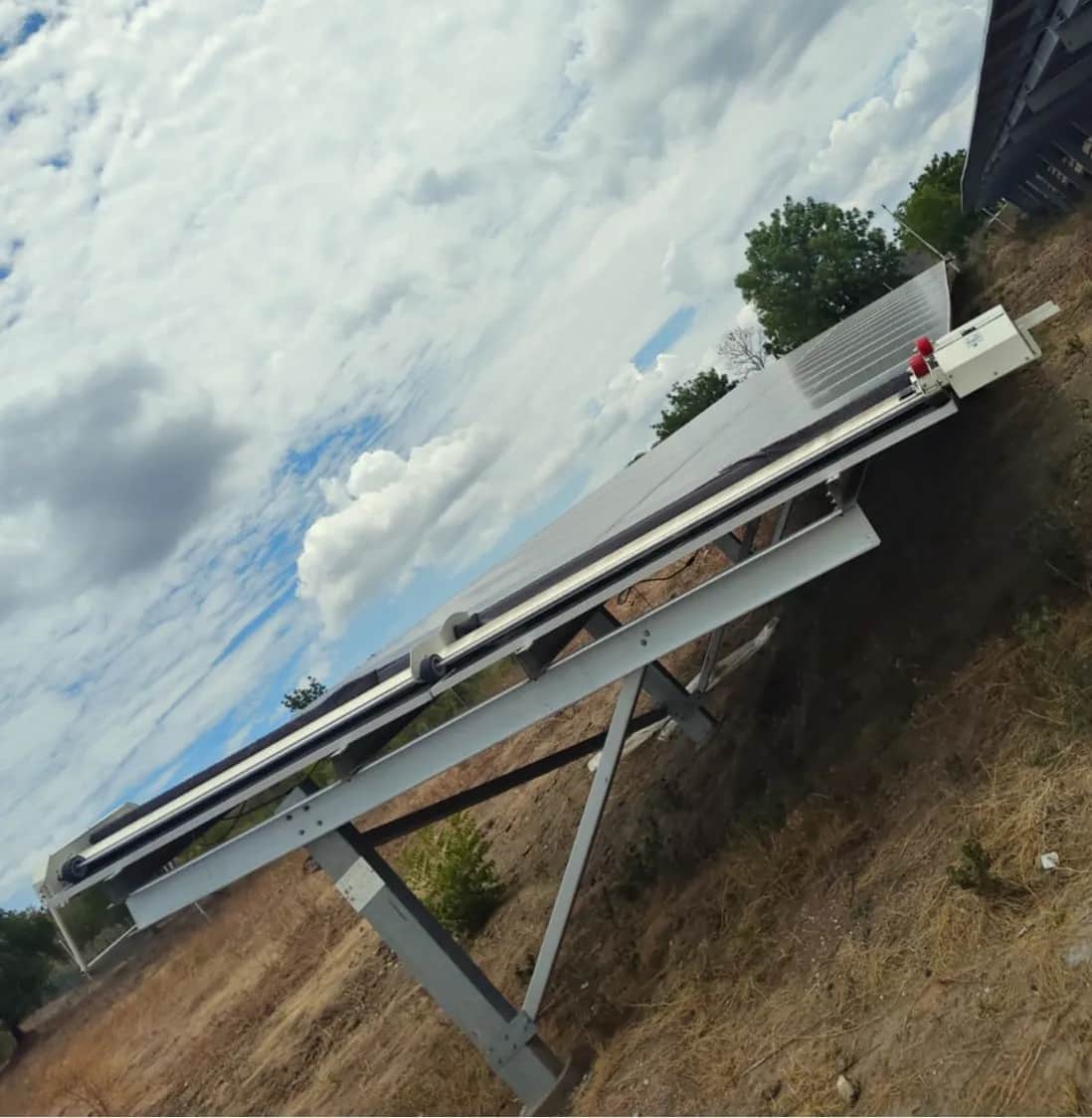
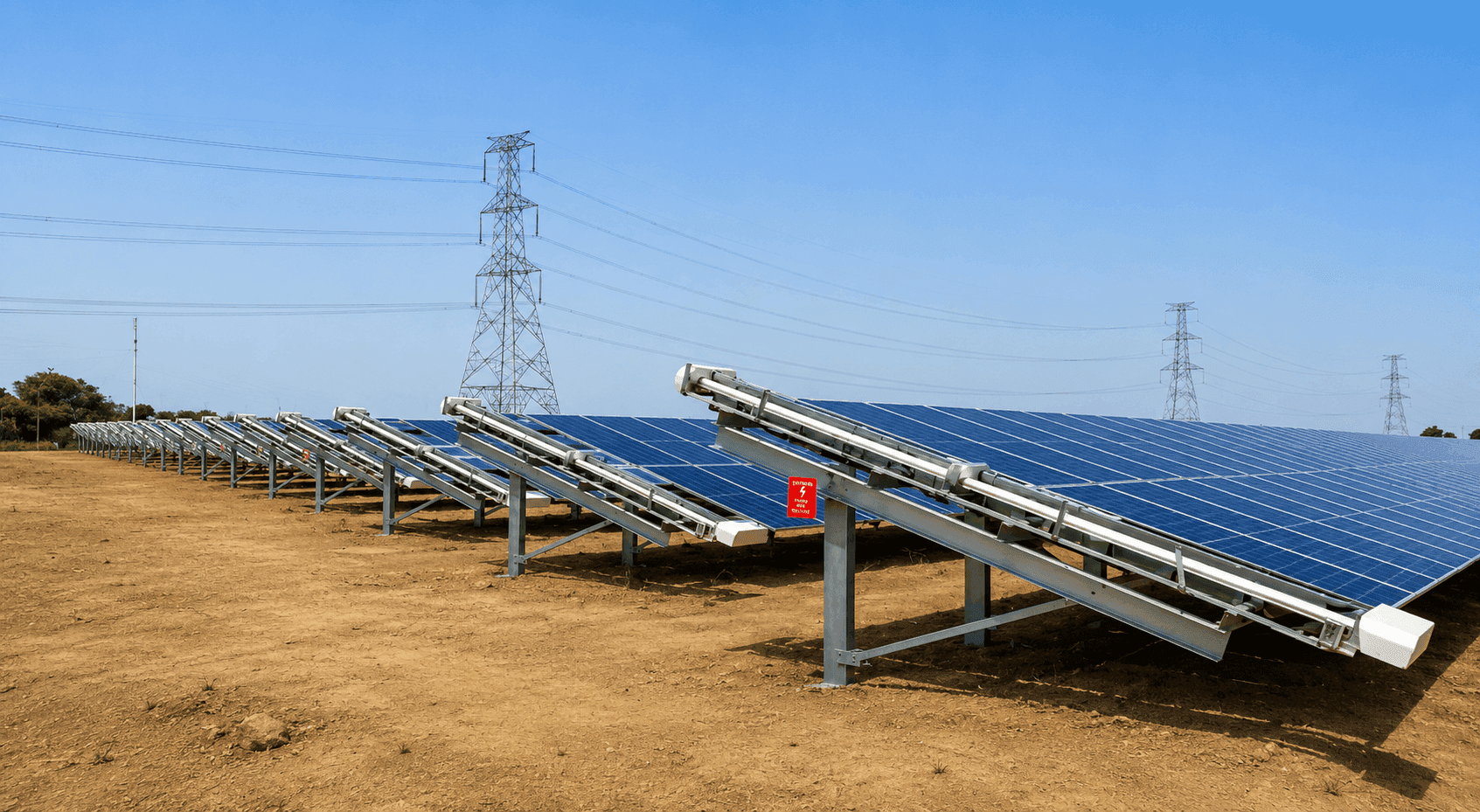
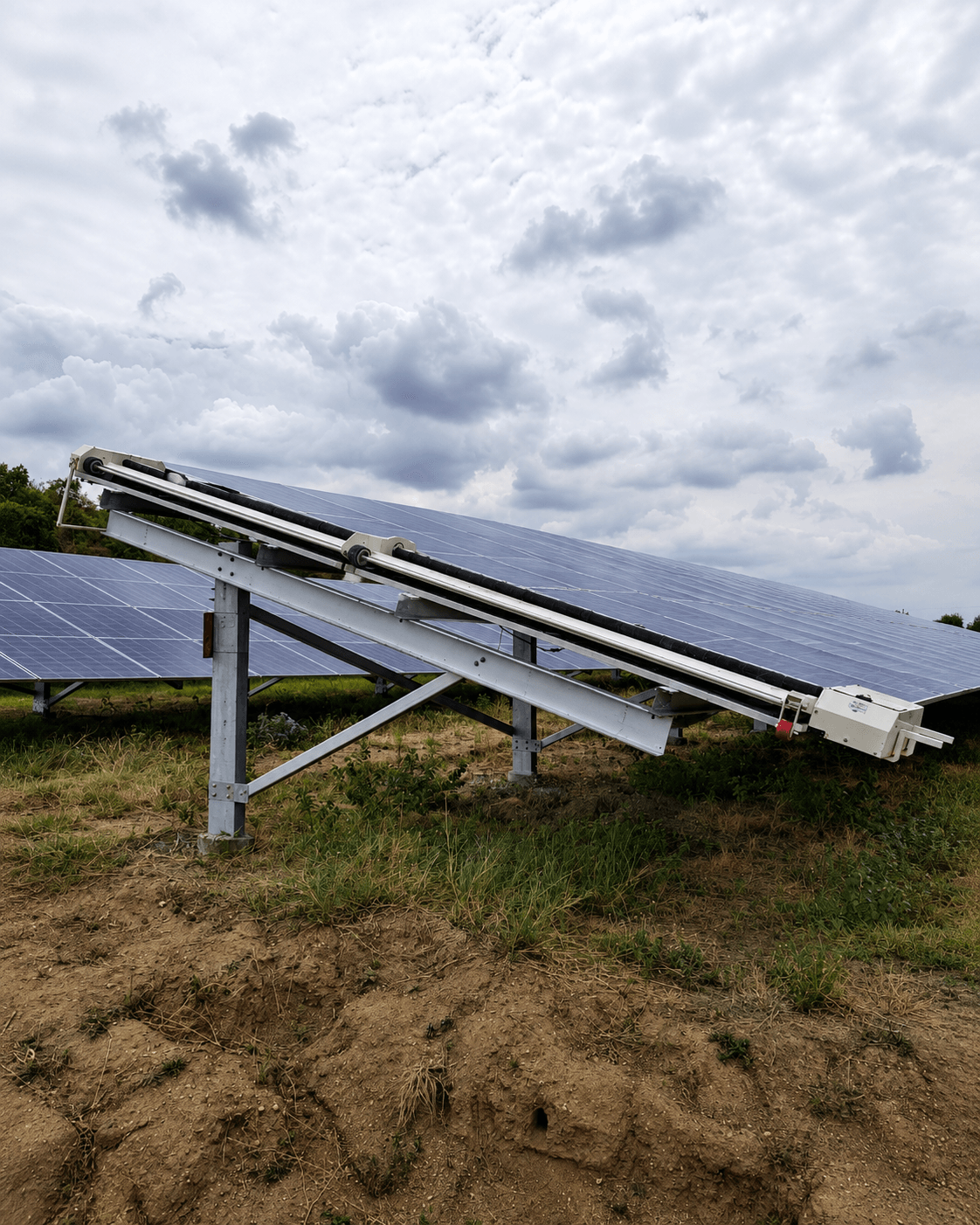
To solve these problems, Taypro deployed a strategic solution. We provided a fleet of four HELYX robotic cleaning units. This is a semi-automatic system. By implementing robotic solar panel cleaning in Maharashtra, the plant has moved toward a data-driven model. The site now follows a reliable cleaning cadence. It completes 3 to 10 dry cleaning cycles every month. This waterless technology removes the need for massive water transport. It also ensures that every block is accounted for. The deployment has already shown great success. The plant has recovered an additional 375 MWh of generation per year. It has also saved 1.4 million litres of water annually in Maharashtra. This shift to robotic cleaning has stabilized energy output and reduced operational overhead.
Environment and soiling at Ahmadnagar- Kharda
Managing agricultural soiling and humidity cycles in Ahmadnagar-Kharda
The 375 MW Ahmadnagar-Kharda project operates in a complex microclimate. This environment causes rapid and uneven dust buildup on the solar modules. The plant is located near busy agricultural zones. These zones release high amounts of organic dust into the air. At the same time, fine grit from nearby arterial roads settles on the panels. This creates an abrasive layer on the surface of the modules. In many arid regions, dust is just a dry powder. However, Maharashtra is different. The region experiences distinct humidity cycles. These moisture shifts act as a binding agent. The humidity turns the dust and grit into a sticky residue.
This moisture-dust interaction is a major challenge. It creates a patchy and almost cement-like soiling profile. This residue is difficult to remove with standard manual cleaning. Because the soiling is uneven, it affects different strings differently. Some rows of panels become much darker than others. This leads to significant performance drops at the string level. Panels in high-exposure areas degrade faster than those in shaded spots. Traditional cleaning intervals often missed these localized hotspots. This resulted in constant energy loss across the 375 MW array. The plant could not maintain a steady yield because the cleaning was not targeted enough.
The environmental conditions at this site require a very specific strategy. The cleaning method must handle the physical density of agricultural grit. By using robotic solar panel cleaning in Maharashtra, the site has standardized its process. The HELYX robots provide uniform mechanical force across all modules. This ensures that even the most stubborn residue is removed. This systematic approach has replaced old manual methods. The new model provides the consistency needed to fight regional soiling. It removes the guesswork from maintenance. It also ensures that every string receives the same level of care regardless of local dust patterns.
O&M before Taypro
Operational friction and visibility gaps in legacy solar O&M
Before the arrival of Taypro robotics, the O&M team faced many inefficiencies. Managing the 375 MW Ahmadnagar-Kharda site was a logistical struggle. Manual cleaning protocols were very hard to maintain. The team had to manage complex water logistics across a huge area. They also had to coordinate large groups of manual workers. Because the plant is a massive ground-mount array, scheduling was difficult. Cleaning crews often worked at night. This created friction with other essential site tasks. For example, cleaning schedules often clashed with vegetation management. They also interfered with civil infrastructure maintenance windows.
The biggest issue was a complete lack of oversight. Supervisors could not see the full picture of plant cleanliness. There was no way to verify which specific strings were cleaned. This created massive "blind spots" across the project. In these spots, agricultural dust and road grit would build up for weeks. This led to persistent and untracked energy losses. Managers knew the yield was dropping, but they could not prove why. They could not easily identify which blocks needed urgent attention. The lack of granular data meant the maintenance was reactive rather than proactive.
Manual labor caused several critical pain points for the site managers:
- Lack of cleaning validation: Without digital logs, the team could not confirm if every string was serviced. This made it impossible to guarantee consistent plant performance.
- Resource contention: Moving water around the site was a huge task. This often took priority over other critical electrical or civil maintenance.
- Inconsistent cleaning quality: Manual scrubbing is not always precise. It often failed to remove the thick, humidity-bound residue common in Maharashtra.
These systemic gaps made it impossible to optimize the plant's total yield. Site managers were essentially working in the dark. They needed a way to move from manual labor to a high-visibility model. They needed a system that provided proof of work. By shifting to a robotic model, the project aimed to solve these visibility and resource issues once and for all.
Fleet and deployment at 375 MW
Fleet and deployment strategy for the 375 MW Ahmadnagar-Kharda array
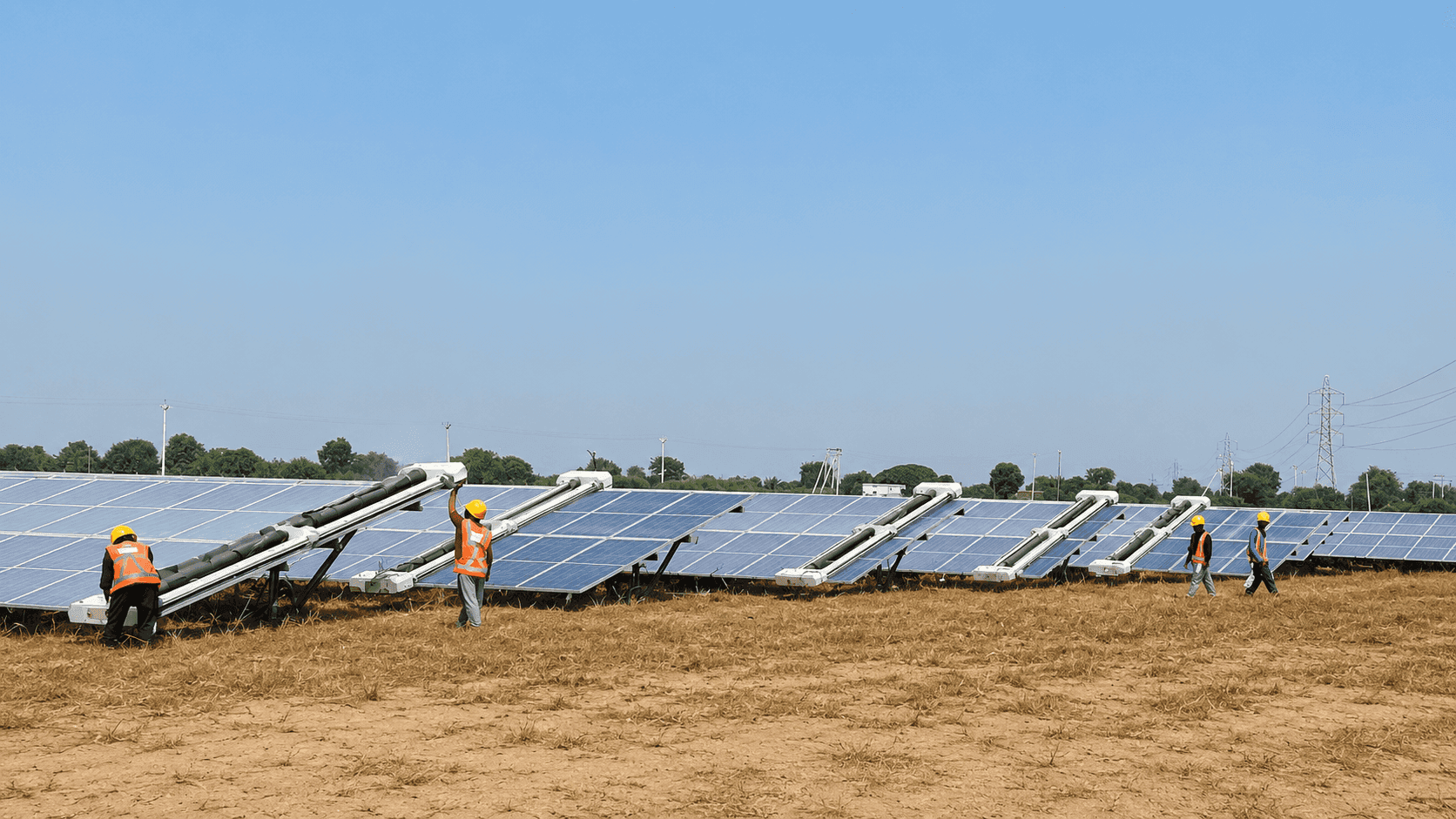
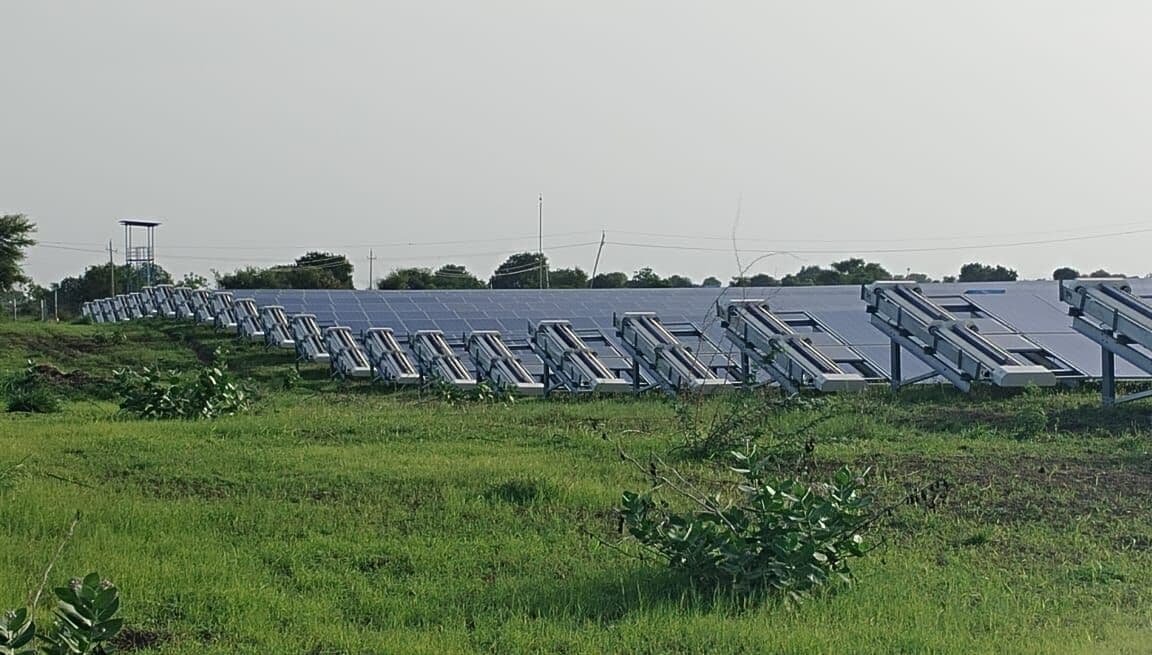
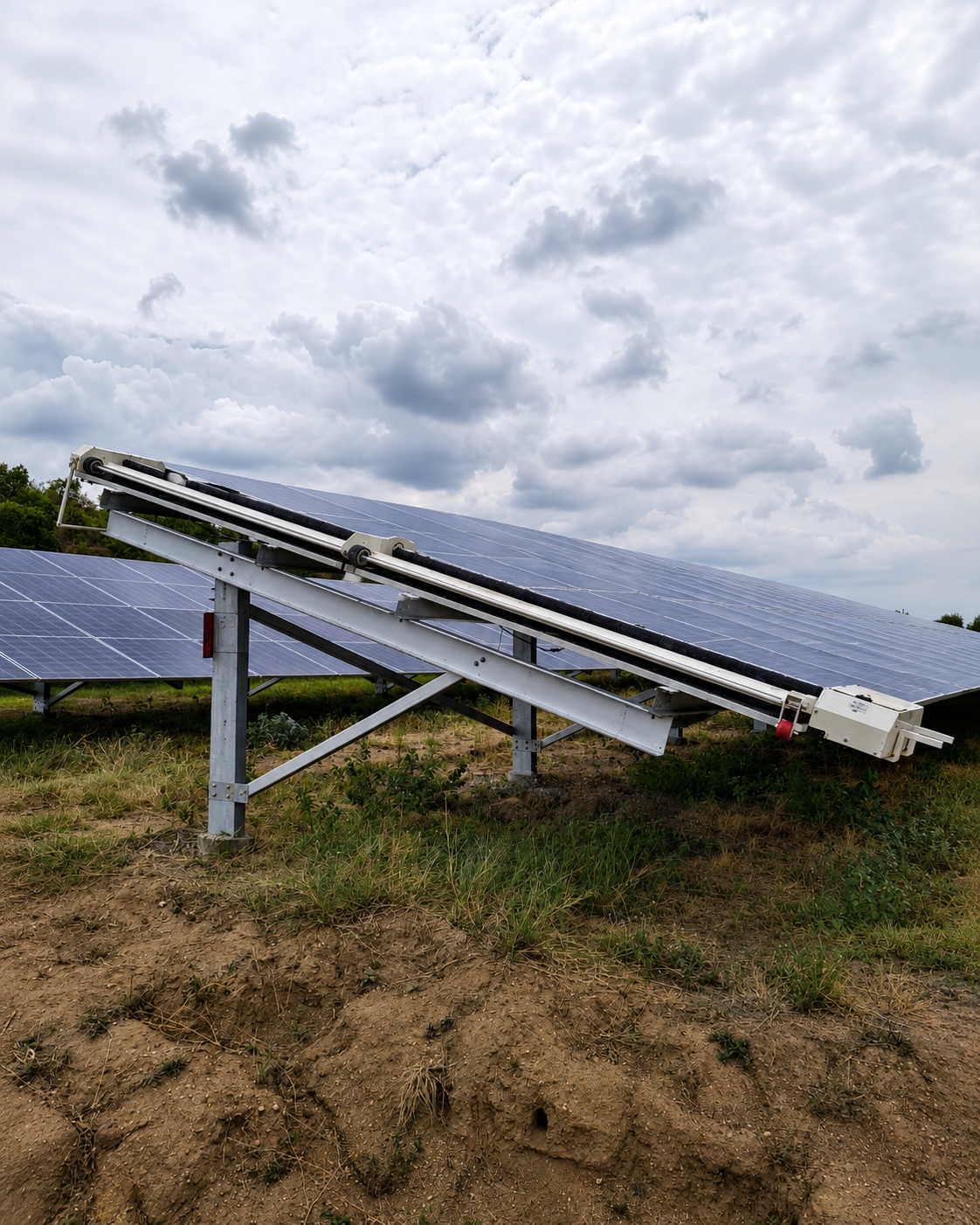
To handle the scale of the 375 MW Ahmadnagar-Kharda site, the team chose a smart path. They opted for a Capex deployment of the HELYX robotic cleaning system. Instead of relying on inconsistent manual labor, they deployed four semi-automatic HELYX units. This transition allows for a standardized and precision-driven approach. The robots ensure that every module receives a uniform cleaning cycle. This effectively removes the layers of agricultural dust and road grit. It also prevents the performance drops that previously plagued the solar strings.
The procurement follows a Capex model. This allows the O&M team to keep full control over the cleaning schedule. The HELYX system is perfect for the challenges in Maharashtra. The high humidity there often binds dust to the panels. Manual crews struggle with this sticky residue. However, the HELYX robots use a single-pass PBT brush technology. This provides the consistent mechanical pressure needed to clean the panels thoroughly. Because the system is waterless, it also solves the water logistics problem. There is no longer a need to compete with other site tasks for water resources.
The deployment of the fleet followed a specific workflow to ensure maximum uptime:
- Smart scheduling: The team now runs 3 to 10 dry cleaning cycles per month. These cycles are based on real-time soiling trends.
- Modular movement: The HELYX robots use a pick-and-place method. This allows supervisors to move them across different blocks easily. This optimizes the use of the four robots across the massive 375 MW footprint.
- Digital transparency: Every cleaning pass is logged. This provides management with the proof of work they previously lacked.
This initiative for robotic solar panel cleaning in Maharashtra delivers real results. It provides much more than just clean panels. It provides stability for the entire site. Beyond saving 1.4 million litres of water every year, it also boosts energy production. The improved consistency is expected to recover 375 MWh of generation annually. By using a semi-automatic fleet, the Ahmadnagar-Kharda project shows a sustainable way to manage large sites. It reduces the need for human-intensive routines while increasing the total energy yield.
Operations and monitoring
Optimizing robotic solar panel cleaning in Maharashtra: A 375 MW site strategy
Running a 375 MW utility-scale plant requires precise logistics. At Ahmadnagar-Kharda, the team must balance cleaning needs with site operations. Before Taypro, the maintenance team struggled to synchronize their work. Manual night crews often got in the way of civil works. They also conflicted with vegetation management schedules. The uneven soiling caused by local dust and humidity made the problem even worse. The site needed an inspection-led system. It needed a way to ensure accountability without disrupting other O&M tasks.
The site now uses a structured, semi-automatic cleaning cadence. They utilize the HELYX system to maintain the panels. By scheduling 3 to 10 dry cleaning cycles per month, the team has solved the water problem. They no longer need to transport large amounts of water across the site. This allows the team to schedule cleaning more flexibly. They can avoid interfering with panel inspections or civil maintenance. Every single cleaning pass is now tracked through the NECTYR fleet portal. This gives supervisors verifiable, block-level evidence. They can see exactly when and where each string was cleaned.
- Precise scheduling: The 3 to 10 cycle cadence prevents heavy soil buildup. It also keeps operational windows open for other maintenance work.
- Complete accountability: NECTYR provides detailed reporting. Managers now have definitive proof of completion for every block in the 375 MW area.
- Operational resilience: The robot fleet is easy to manage. If there is bad weather or high winds, the schedule can be adjusted quickly. This protects both the robots and the solar panels.
Moving to a structured dry cleaning model has eliminated many old inefficiencies. The Ahmadnagar-Kharda plant no longer relies on unverified manual labor. This robotic solar panel cleaning Maharashtra deployment is a massive success. It saves 1.4 million litres of water every year. It also recovers 375 MWh of generation annually. These results show how powerful it is to combine automated cleaning with high-level fleet oversight.
Results and impact
Results and Impact
The move to a robotic cleaning fleet has transformed the Ahmadnagar-Kharda site. It solved the major problems of uneven soiling and poor oversight. By integrating the HELYX system, the plant has moved past manual methods. Traditional cleaning struggled to handle the high-dust agricultural environment. Now, cleaning operations are precise and consistent. They no longer depend on the complex logistics of night crews or water hauling. The site can now focus on other important maintenance tasks without interruption.
The impact is visible in both resource use and energy output. The waterless approach is a huge win for the region. It eliminates the heavy water dependency of the past. This helps meet local water conservation goals in Maharashtra. At the same time, the robotic fleet prevents energy loss. It stops the gradual decline in performance caused by dust and road grit. This consistent cleaning ensures the array works at its highest possible efficiency all year round.
- Water Conservation: Switching to waterless technology has drastically reduced the annual water consumption of the facility.
- Optimized Generation: Regular and data-backed cleaning cycles have recovered a huge amount of annual energy. This energy was previously lost to heavy soiling.
- Operational Transparency: The NECTYR portal gives asset managers clear proof of maintenance. This ensures full accountability across the entire 375 MW installation.
This deployment proves the value of robotic solar panel cleaning in Maharashtra. By matching technology to the specific needs of the Ahmadnagar region, the plant has succeeded. It has achieved higher energy yields. It has also lowered operational friction. This makes the site much easier to manage than it was with manual cleaning.
Peer comparison and planning checklist
Peer Comparison and Robotic Planning: Scaling Operations in Ahmadnagar
The 375 MW Ahmadnagar-Kharda project is a massive step forward. It represents a significant scale-up for robotic solar panel cleaning in Maharashtra. We can see this scale by comparing it to other sites. For example, the Ahmadnagar-Jalapur 10 MW project uses a much smaller fleet. In contrast, the Kharda site uses a complex semi-automatic model to cover its vast area. The Yavatmal-Kupti 14 MW site also has different soil conditions. The Kharda site faces much heavier agricultural dust. This requires a much more rigorous semi-automatic schedule compared to the smaller, fixed-tilt sites.
This project builds on Taypro's previous successes in the Ahmadnagar district. We have used insights from the Soyegaon solar project and the Jalalpur site to improve our approach. The Kharda deployment optimizes how waterless cleaning fits into existing O&M windows. This continuity is very important. It proves that semi-automatic deployment is not just an equipment upgrade. It is a proven method to fix the oversight gaps found in manual cleaning. It provides a reliable way to scale operations for much larger plants.
- Perform a baseline audit of soiling patterns. This helps you find the best cleaning frequency for your specific strings.
- Coordinate robotic shifts to match your maintenance windows. Avoid scheduling cleaning during peak vegetation or civil work times.
- Create dedicated storage and charging zones. This makes it easier to move robots across different site blocks.
- Use NECTYR fleet monitoring. This allows you to verify the cleaning status of every block and ensure total coverage.
- Set up a regular inspection schedule for the equipment. This keeps the robot fleet in good mechanical health.