Executive summary
robotic solar panel cleaning Maharashtra, The 262.5 MW ground-mount solar array is located in Ahmadnagar-Majampur, Maharashtra. This site faces many performance challenges due to the local climate. Agricultural dust and road grit are constant problems. Regional humidity cycles also cause issues. These factors create uneven soiling patterns at the string level. Traditional cleaning methods often fail to solve these problems. Site teams also struggled with water logistics. Managing night crews and water tankers was difficult. This work often clashed with vegetation and civil maintenance tasks. Additionally, supervisors could not verify cleaning quality. They lacked proof of which strings were actually cleaned each cycle.
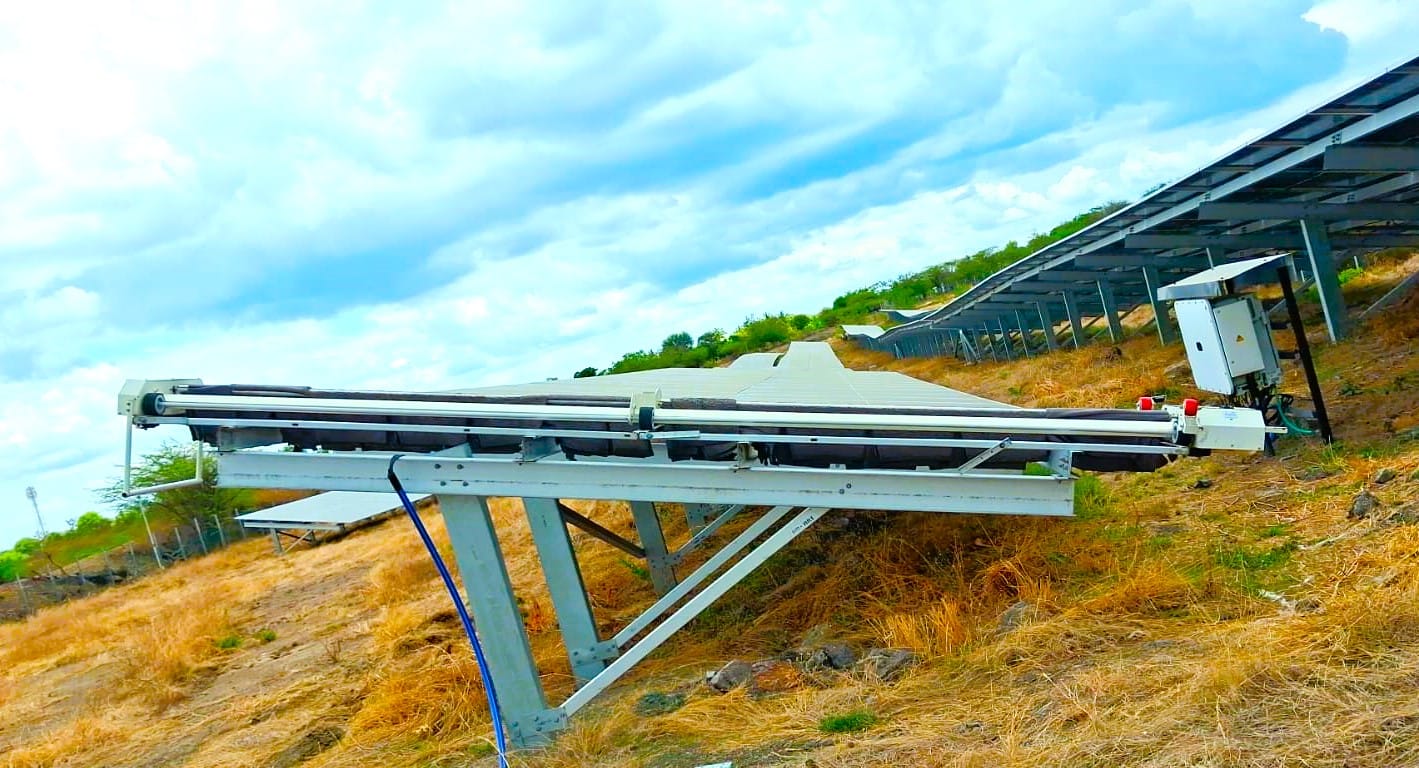
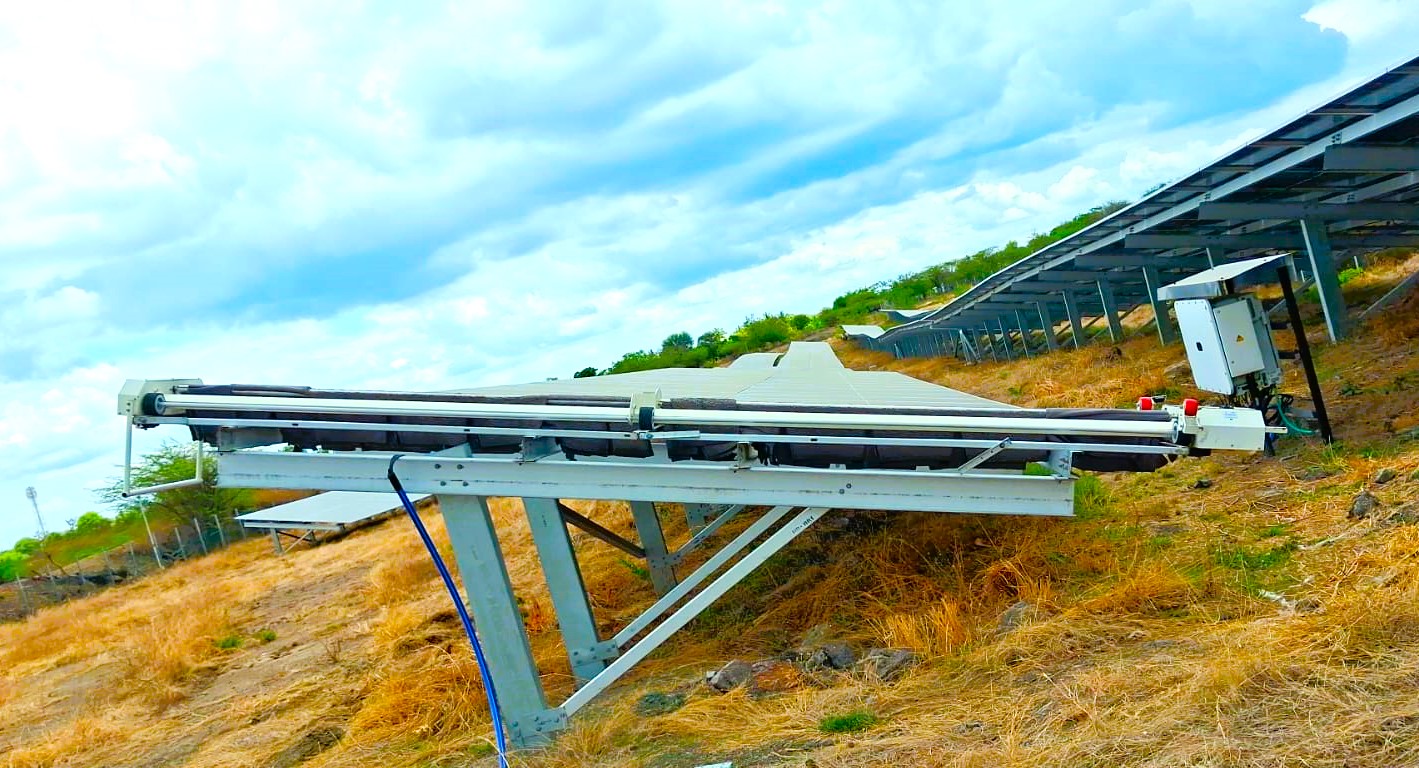
To fix these problems, the site deployed three HELYX robots. These are semi-automatic robots. This procurement model supports scattered plant blocks. The site uses a targeted approach to cleaning. They perform between 3 and 10 dry cleaning cycles per month. The timing depends on real-time soiling levels. By using robotic solar panel cleaning in Maharashtra, the plant gained efficiency. The deployment recovered 262.5 MWh of additional generation every year. It also saved 980,000 litres of water annually. This technology stabilizes energy output. It also makes the O&M program much more reliable.
Environment and soiling at Ahmadnagar- Majampur
Managing uneven string-level soiling in Ahmadnagar-Majampur
The 262.5 MW Ahmadnagar-Majampur plant is in a tough environment. It sits within the Maharashtra agricultural belt. This region has very specific soiling patterns. Fine agricultural dust is always present. There is also heavy road grit from nearby traffic. Local wind patterns move these particles onto the panels. Humidity cycles then lock the dust in place. This creates a thick, cement-like layer on the modules. This layer is very hard to remove. Natural wind or light rain cannot clean it effectively.
The soiling at this site is rarely uniform. It creates uneven patterns across the array. We call this string-level soiling. This is a major problem for utility-scale plants. It causes mismatches in voltage and current. These mismatches happen within the same block. This lowers the overall efficiency of the plant. Standard manual cleaning often misses these localized spots. As a result, the 262.5 MW capacity suffers permanent production losses. These losses add up over time.
The site also deals with several logistical issues. These include the following factors:
- Logistical competition: Water transport and night crew schedules often conflict with other work. This includes vegetation clearing and civil maintenance.
- Lack of verification: Supervisors previously had no granular proof of service. They could not confirm which strings were actually cleaned.
- Variable accumulation: Road grit levels change based on the block location. Some blocks are closer to transport routes than others. This means some areas get dirty much faster.
The site now manages these variables with precision. They use three HELYX robots for cleaning. The robots follow a schedule of 3 to 10 dry cleaning cycles per month. This schedule is not fixed. Instead, it is tailored to real-time soiling levels. This ensures that the most affected strings get priority. The team targets agricultural dust and road-based grit directly. This solves the core issues of the old manual O&M model. The plant now operates with much higher consistency.
O&M before Taypro
Managing Solar O&M Logistics in Ahmadnagar
The 262.5 MW Majampur project faced many hurdles before Taypro. Managing O&M was a constant struggle. The team had to coordinate manual labor crews. They also had to manage vegetation control and civil maintenance. All these teams needed access to the site at the same time. These scheduling conflicts led to many delays. Because cleaning was delayed, dust and grit would accumulate. The dirt would then harden on the panels. This made cleaning even harder later on.
Manual cleaning also caused massive water logistics problems. The site had to manage a fleet of water tankers. This was both very expensive and very inefficient. It took too much time to move water around a large plant. Furthermore, the site lacked digital oversight. This created a large audit gap for management. Supervisors could not see the results of the work easily. They had to rely on manual reports that were often inaccurate.
The site faced several specific operational challenges:
- Conflicting Work Windows: Night crews and water tankers often blocked access for other teams. This included workers doing vegetation clearing.
- The Verification Gap: There was no way to prove work was done. Supervisors could not check if every string was cleaned.
- Unpredictable Soiling: Road grit was not spread evenly. Some areas needed cleaning more often than others. Manual teams could not adapt quickly to this.
The deployment of three HELYX robots has changed everything. The facility now uses a data-backed cleaning strategy. The team performs 3 to 10 dry cleaning cycles every month. This is based on the actual soiling of each block. This new method has removed the logistical chaos. It has also reduced water use by nearly one million litres every year. Most importantly, it provides a clear audit trail. This ensures consistent performance across the entire 262.5 MW array. The site is now much more efficient.
Fleet and deployment at 262.5 MW
Fleet Deployment and Robotic Solar Panel Cleaning in Maharashtra
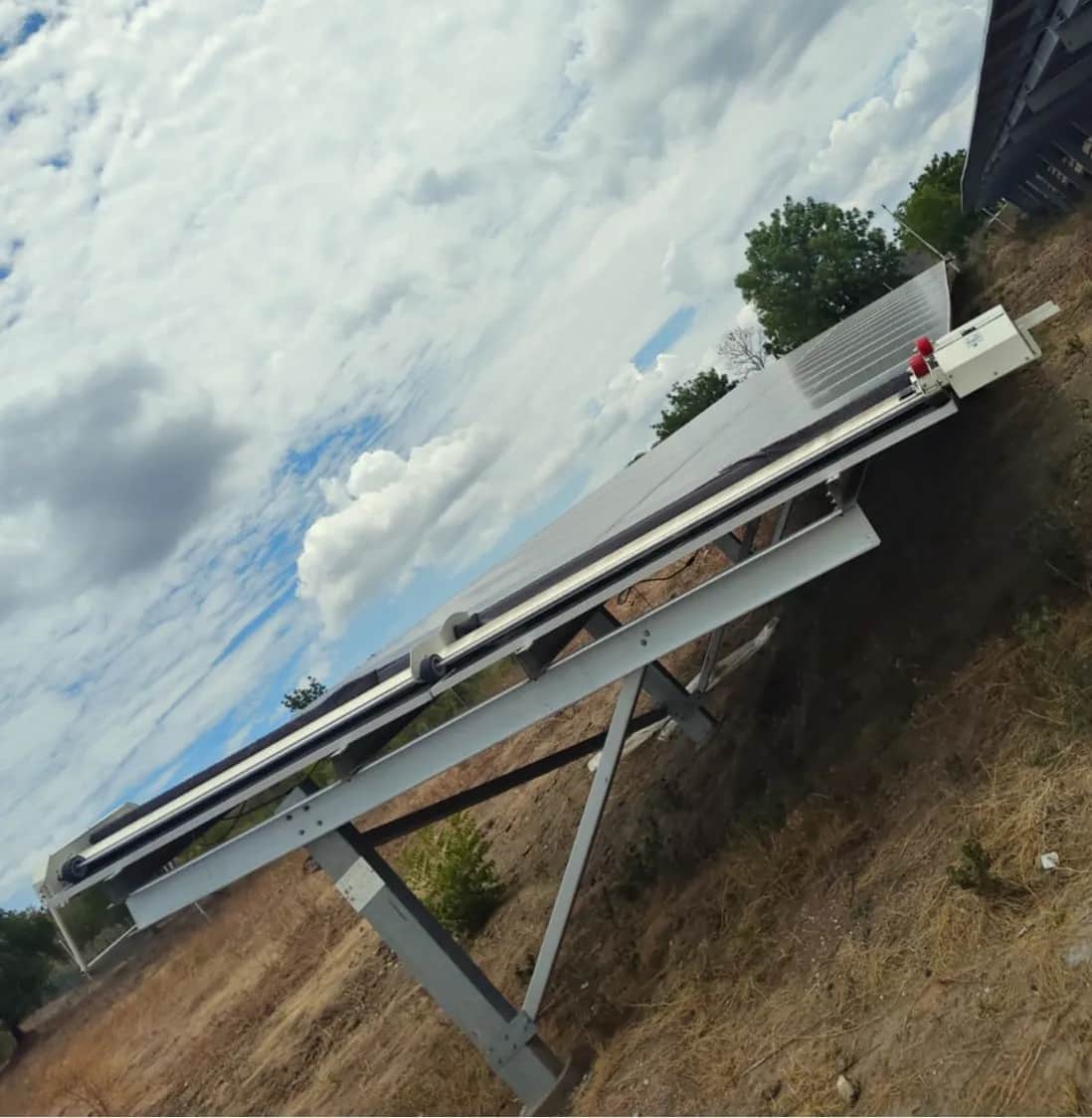
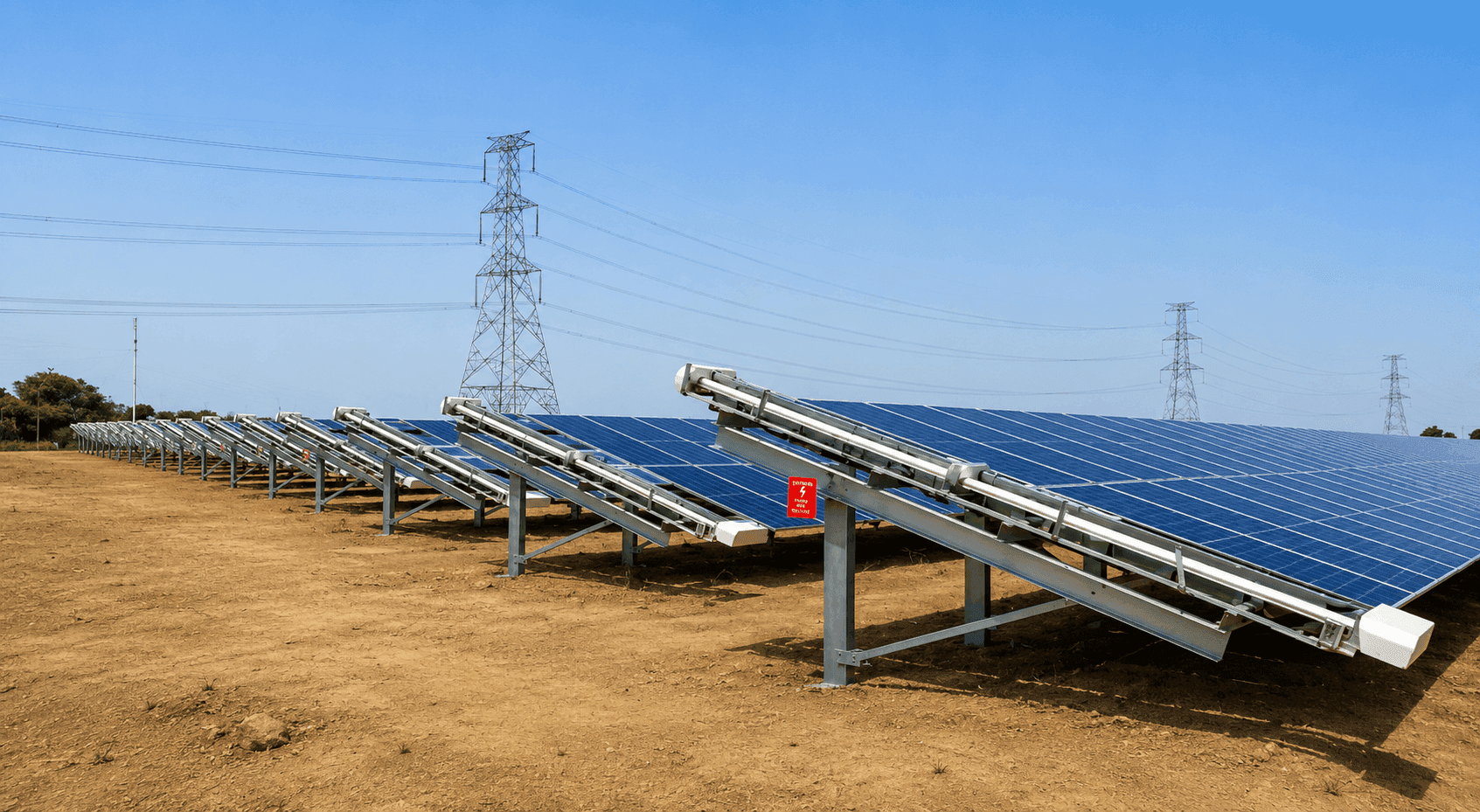
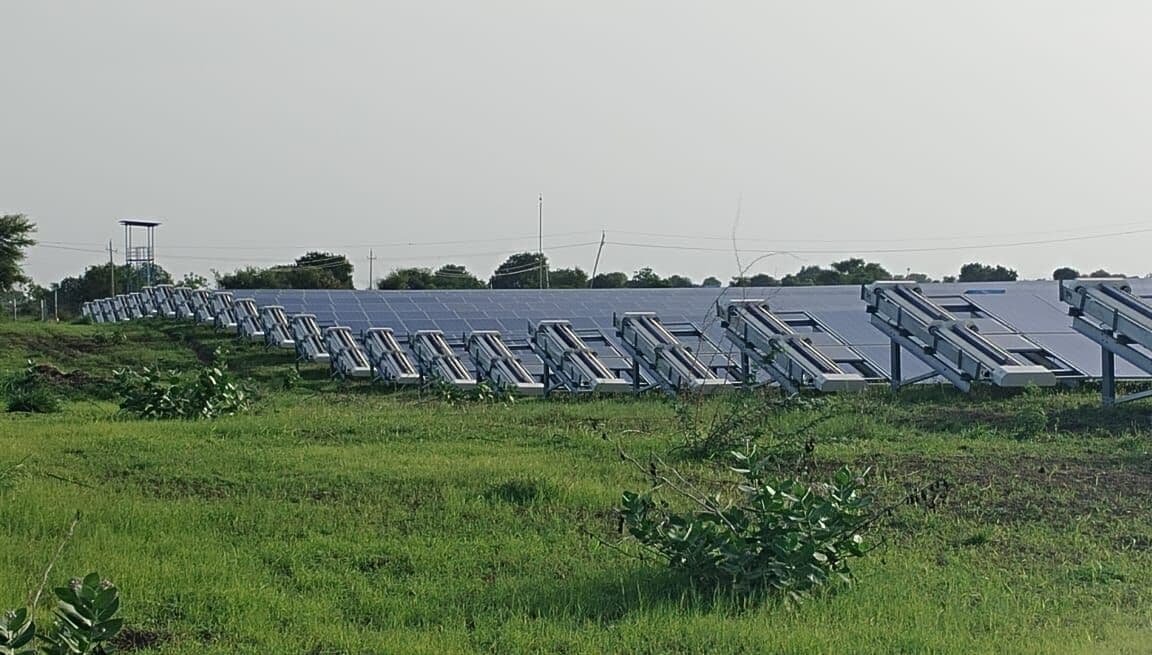
The 262.5 MW Majampur site uses a smart deployment strategy. It uses three HELYX robotic units. This fleet maintains high generation efficiency. The project uses a CAPEX procurement model. This allows the plant owner to own the hardware. It also gives them full control over operations. This setup is perfect for large ground-mount arrays. The team uses a flexible, semi-automatic approach. This is very effective for managing large spaces.
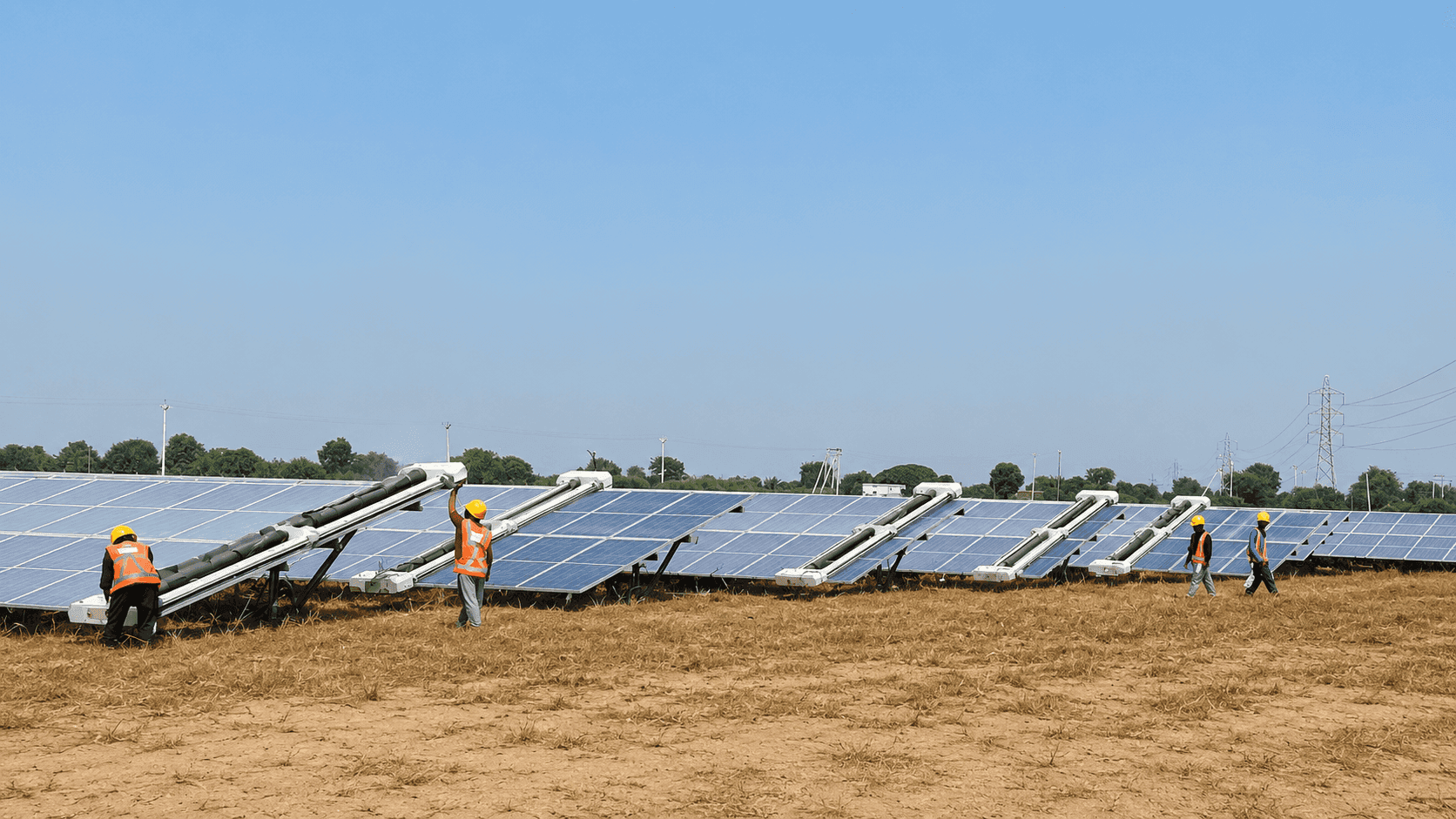
The HELYX robots use pick-and-place technology. This allows the team to address specific blocks. They focus on areas with heavy agricultural dust. They also target areas with high road grit. This prevents the need for permanent infrastructure on every row. The HELYX fleet is a portable solution. It moves between designated zones easily. This provides a great waterless alternative to manual labor. The deployment supports the required 3 to 10 dry cleaning cycles per month.
Key details of the deployment include:
- Fleet Mix: Three HELYX semi-automatic robots serve the 262.5 MW plant.
- Cleaning Technology: The robots use single-pass PBT brush technology. This cleans thoroughly without using water.
- Operational Deployment: The pick-and-place method allows for quick movement. Robots can move between distributed blocks easily.
- Mapping Focus: The team first maps high-soiling zones. They look for areas affected by traffic and humidity. This ensures the robots target the most impacted strings first.
By choosing robotic solar panel cleaning in Maharashtra, the site improved safety. Manual crews no longer need to walk on hazardous panels. This deployment has also delivered great environmental results. The site saved 980,000 litres of water every year. It also generated an extra 262.5 MWh of power. The transition allows supervisors to use objective data. They can now ensure each string is serviced based on real-time needs. This makes the entire O&M process much more professional.
Operations and monitoring
Optimizing Operations with Scheduled Cleaning and NECTYR Monitoring
The 262.5 MW Ahmadnagar-Majampur site has moved to a new model. It has shifted from reactive manual labor to a data-driven model. The site uses an inspection-led O&M approach. Instead of unpredictable manual cycles, they use a structured schedule. They perform 3 to 10 dry cleaning cycles every month. This removes the friction between cleaning crews and other tasks. There is no longer a fight for access between cleaning and vegetation management. The system is much smoother now.
Water logistics often create hidden costs in large solar plants. Moving water for cleaning is a major bottleneck. The three HELYX robots solve this problem. Their pick-and-place workflow removes the need for water tankers. It also removes the need for night crew scheduling. The system is entirely dry. This avoids the common myths about daily washing. Some people believe daily washing is necessary. However, it often leads to high costs and surface degradation. Dry cleaning is a much more efficient choice for this site.
The operation relies on several key features:
- Accountability via NECTYR: The NECTYR fleet portal records every cleaning pass. This gives supervisors definitive proof of coverage. They can see exactly which strings were cleaned.
- Intelligent Scheduling: The team does not use a fixed daily schedule. They use NECTYR insights to time the cycles. Cleaning happens when soiling levels are high.
- Safe Wind Management: Operators can pause the robots easily. This is important during high-wind events. It protects the robots and ensures long-term fleet health.
- Operational Independence: The CAPEX model gives the owner total oversight. They control the frequency of cleaning. They are no longer tied to the availability of manual labor.
This strategy directs effort where it matters most. The robots target the uneven patterns caused by dust and grit. This makes the cleaning highly effective. By moving to robotic solar panel cleaning in Maharashtra, the facility has optimized its power profile. The plant is now more predictable and easier to manage.
Results and impact
Results and Impact: Optimizing Generation at Ahmadnagar-Majampur
The use of HELYX robots has changed how the Majampur site manages soiling. The 262.5 MW plant now has a very stable generation profile. Moving from manual cleaning to a robotic regime was the key. The plant now uses a systematic and autonomous waterless approach. This reduces the volatility caused by dust and road grit. The uneven soiling at the string level is now a thing of the past. The plant produces power more consistently than ever before.
The most immediate impact is the reduction in water use. The site has nearly eliminated water consumption for panel cleaning. By saving 980,000 litres of water annually, the site has cut costs. It no longer relies on complex water logistics. The site also avoids the need for night crew scheduling. This allows other maintenance teams to work without interruption. Vegetation and civil teams can now operate freely. This creates a much better workflow for the entire site.
The project has delivered several major benefits:
- Resource Efficiency: The plant no longer needs expensive water transport. This lowers the total O&M spend for the facility.
- Performance Recovery: The automated system recovers 262.5 MWh of power per year. This ensures the 262.5 MW capacity stays at its peak.
- Total Transparency: NECTYR provides granular data for every cleaning cycle. Supervisors have proof of coverage for every single string.
- Maintenance Autonomy: The robots work independently of manual labor markets. The plant can stay clean even if labor is hard to find.
The plant owners have secured a sustainable model. They have moved away from water-heavy and manual practices. They now prioritize data-backed maintenance. This ensures long-term success for the Ahmadnagar-Majampur project. Robotic solar panel cleaning in Maharashtra has proven its value.
Peer comparison and planning checklist
Peer Comparison and Implementation Planning
The Ahmadnagar-Majampur project uses a semi-automatic fleet. This provides a different profile than fully automatic sites. For example, the Soyegaon solar project uses fully autonomous robots. Those robots perform daily dry cleaning cycles. The Ahmadnagar-Jalalpur 10 MW site also uses automation. It uses automated deployment to handle high-density soiling. In contrast, Majampur uses three semi-automatic robots. This allows for targeted maintenance of specific blocks. This is perfect for managing fluctuating agricultural dust levels.
The semi-automatic approach offers great flexibility. It is ideal for plants with diverse terrain. It also helps sites with localized soil accumulation. While automatic plants focus on daily cycles, Majampur focuses on 3 to 10 monthly cycles. This balances the cost of labor with the need for cleanliness. This strategy reacts well to the humidity and grit cycles in Maharashtra. It maintains strict control over per-block performance.
Site managers should use this checklist for successful deployment:
- Analyze Soiling: Study how dust accumulates. Define the best monthly frequency for each block.
- Check Site Layout: Ensure the site allows for pick-and-place movement. Robots must move easily between rows and sub-arrays.
- Set a Protocol: Create a clear schedule for your onsite team. Synchronize robot use with other O&M tasks.
- Use Data: Connect your performance logs to NECTYR. This keeps a clear record of all cleaned zones.
- Manage Batteries: Plan your battery logistics carefully. Keep robots charged for all planned cleaning windows.
- Perform Safety Checks: Conduct regular checks on the robotic units. This ensures high cleaning quality and robot safety.
Implementing a robotic solar panel cleaning Maharashtra strategy requires careful planning. However, the rewards are significant. You can reduce water use and increase power output. You can also gain better control over your O&M costs. A well-planned deployment ensures your solar assets perform at their highest level for years to come.