Executive summary
robotic solar panel cleaning Maharashtra. The 300 MW ground-mount solar facility in the Ahmadnagar-Mandavgan region of Maharashtra faces many operational hurdles. The local environment is quite difficult for solar maintenance. Agricultural dust, road grit, and frequent humidity cycles create a major problem. These factors cause inconsistent soiling patterns across the plant. The dirt levels vary significantly between different string levels. This uneven accumulation previously caused serious gaps in energy production.
The plant O&M team also struggled with manual logistics. Managing night crew schedules was difficult. They also had to balance water resources with other tasks. These tasks included vegetation management and civil maintenance. A major issue was the lack of data. Supervisors did not have proof of which strings were cleaned in each cycle. This made it hard to ensure consistent performance.
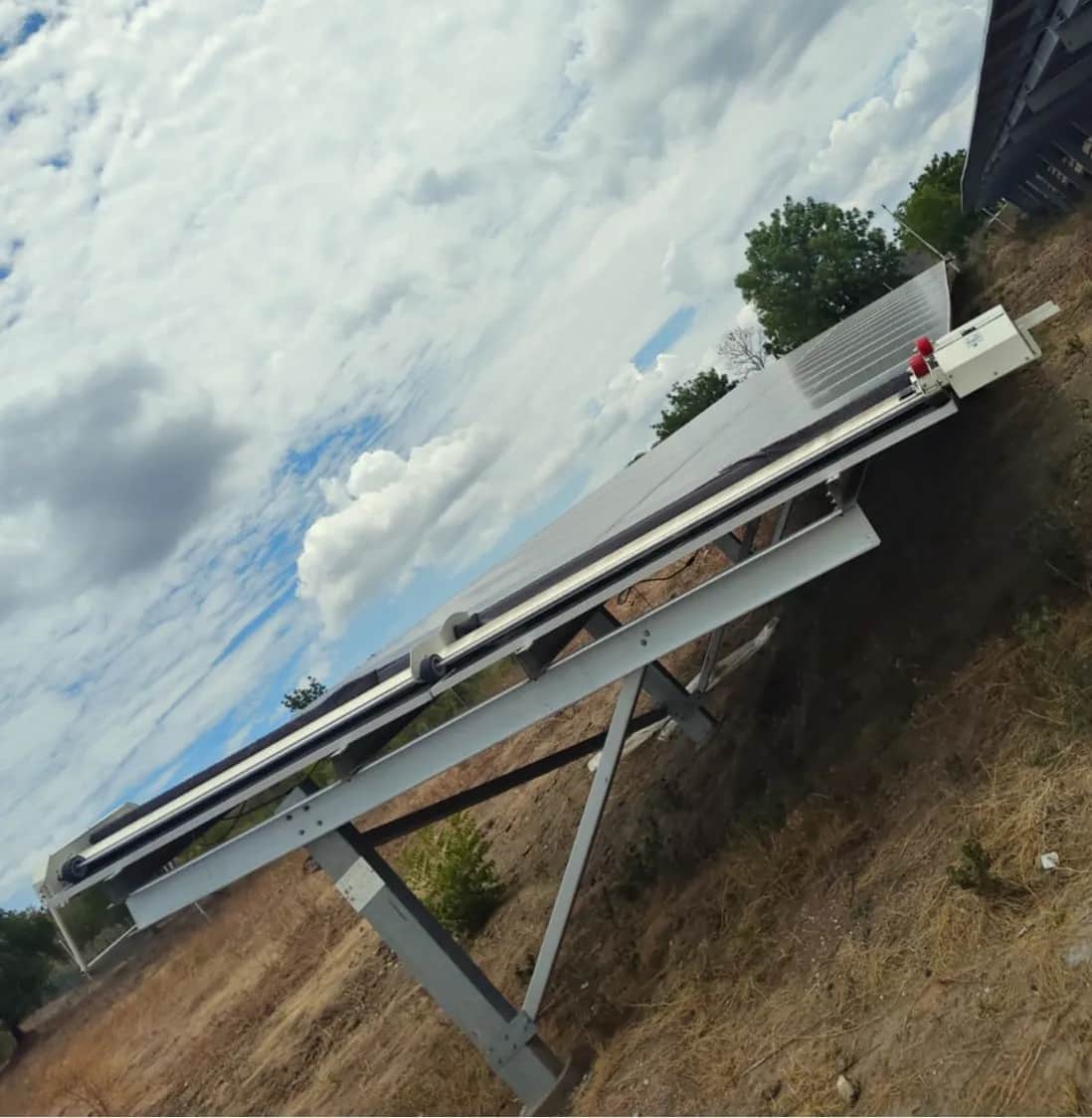
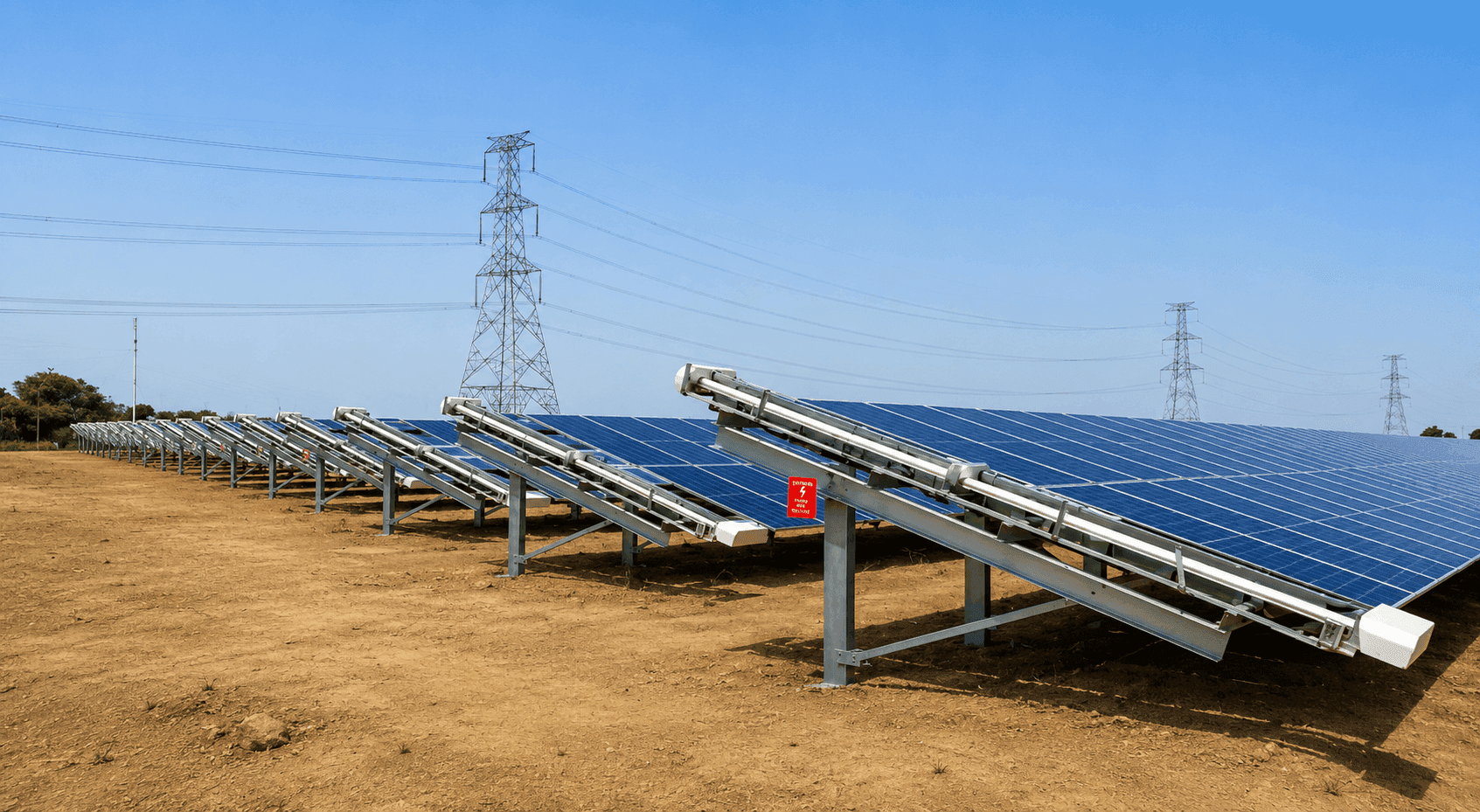
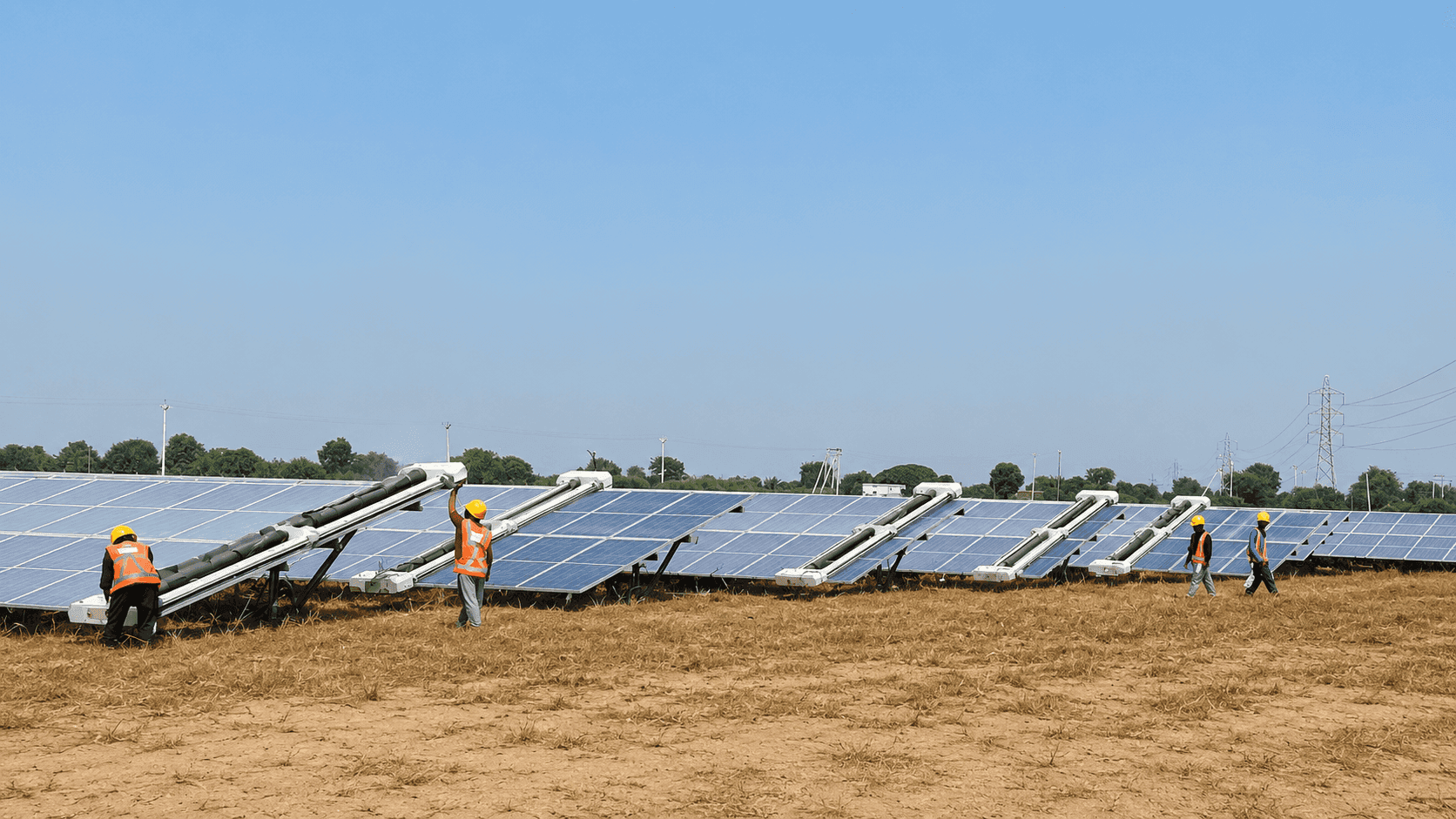
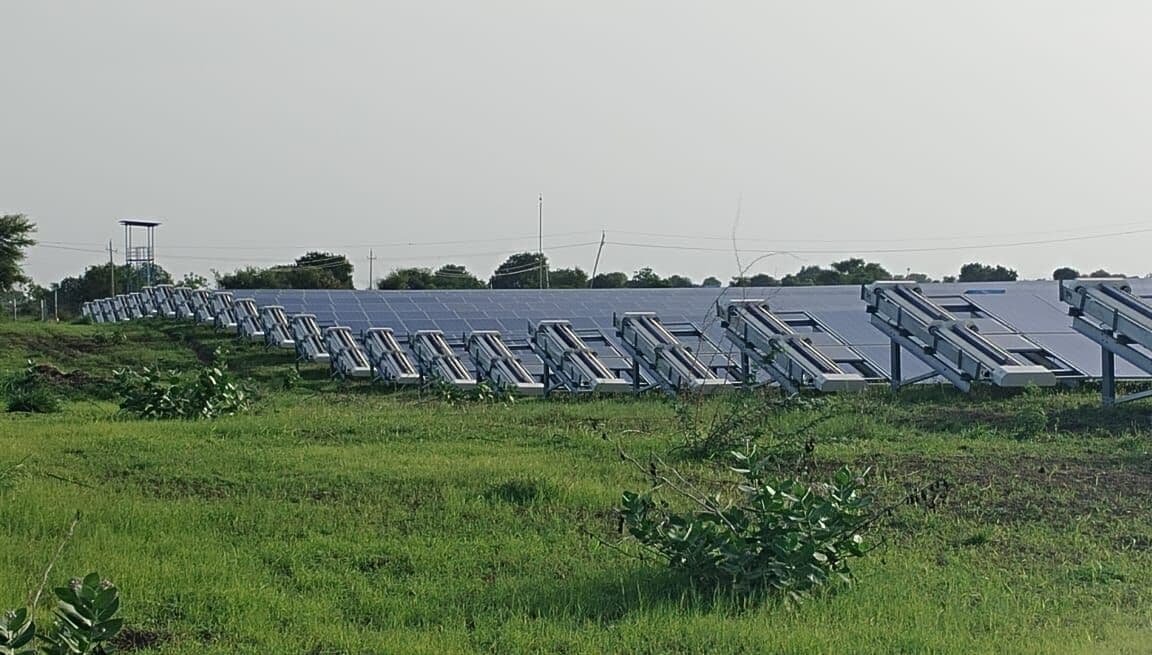
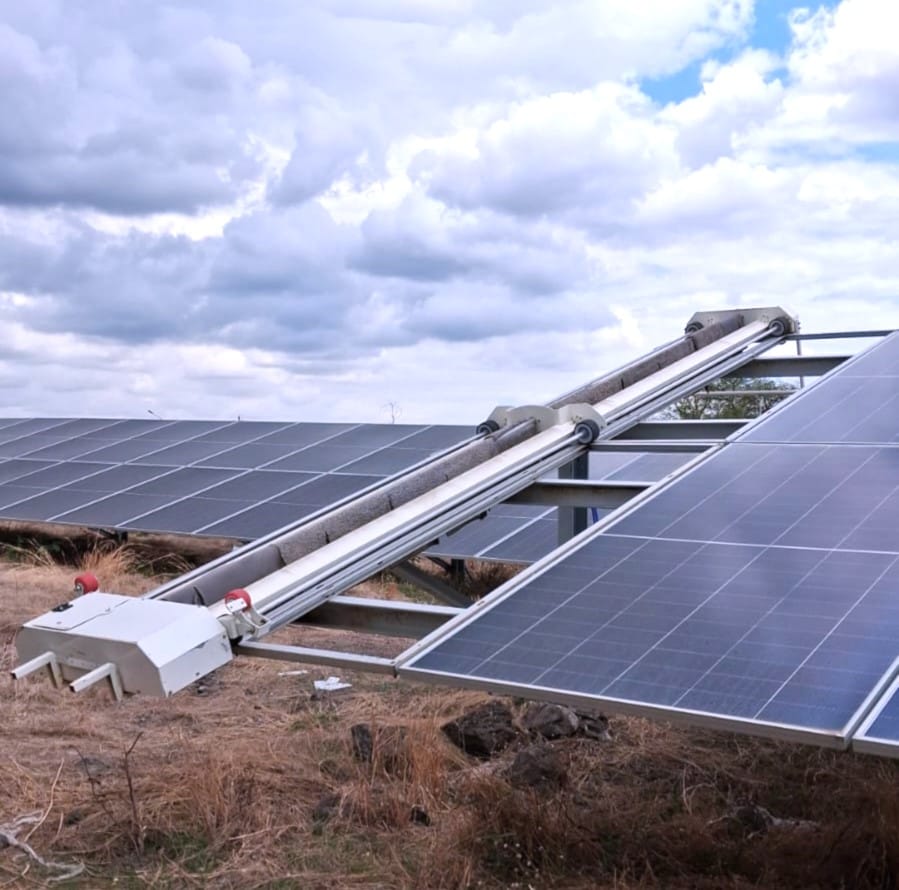
To solve these problems, Taypro deployed three HELYX semi-automatic robots. This robotic solar panel cleaning Maharashtra strategy changed how the plant operates. The facility moved from inconsistent manual cleaning to a precise maintenance cycle. The robots perform systematic dry cleaning cycles. These cycles typically occur 3 to 10 times per month. This frequency depends on site conditions and access. The switch to Taypro’s waterless PBT brush technology has worked well. It has recovered 300 MWh of additional clean generation every year. The project also saved 1.1 million litres of water per year. This demonstrates a sustainable model for large utility plants in dusty regions.
Environment and soiling at Ahmadnagar- Mandavgan
Environmental Challenges and Soiling at Ahmadnagar-Mandavgan
The 300 MW ground-mount installation in Ahmadnagar-Mandavgan deals with heavy soiling. The local geography creates a unique problem for solar owners. Most plants face uniform dust, but this site is different. It experiences highly non-uniform soiling at the string level. This happens because of the plant's location.
The facility is near many active agricultural zones. These farms release light, organic dust into the air. This dust settles intermittently across the solar array. It is not a smooth layer. Instead, it creates patches of dirt on the glass. At the same time, the site is near busy transit corridors. These roads carry heavy traffic. The vehicles kick up road grit. This grit is heavier and more abrasive than farm dust. It deposits on the modules and creates a sticky layer.
The regional weather in Maharashtra adds another layer of difficulty. The area goes through frequent humidity cycles. When the air is humid, the dust and grit get damp. This moisture acts like a binder. It turns the loose dust into a hard, stubborn crust. This crust is very difficult to remove with standard methods. It significantly degrades the energy output of the modules. This is a major concern for a 300 MW facility.
The site layout also creates logistical hurdles for O&M teams. Managing the cleaning process is not just about the dust. It is about managing the site environment. Previous maintenance efforts faced several bottlenecks:
- Night crew scheduling often clashed with other work. Cleaning teams had to compete with vegetation management and civil maintenance teams.
- Water logistics were difficult to manage. Moving enough water to a large site is expensive and slow.
- Supervisors could not verify cleaning quality. They lacked granular proof of which strings were actually serviced. This led to uneven coverage across the site.
To fix these issues, the site adopted a robotic solar panel cleaning Maharashtra strategy. They deployed three HELYX semi-automatic robots. This approach allows for precise, per-block verification. The team can now schedule 3 to 10 dry cleaning cycles per month. These cycles are tailored to the actual soiling levels. This data-driven method has recovered 300 MWh of annual generation. It has also saved 1.1 million litres of water. This proves that robotics can solve complex soiling problems in utility-scale environments.
O&M before Taypro
Operational Hurdles and Manual Cleaning Constraints
Before Taypro arrived, the 300 MW Ahmadnagar-Mandavgan project used a manual O&M model. This model relied heavily on human labor. Maintaining a site of this size is very difficult with manual methods. The team struggled to keep energy yields at their peak. This was because manual cleaning often conflicted with other plant needs.
Logistical friction was a constant problem for site managers. The team had to schedule night crews for manual cleaning. However, these schedules often overlapped with other critical tasks. For example, vegetation control and civil maintenance also needed access to the site. Because these teams worked in different ways, they often competed for space and time. This made it hard to maintain a steady cleaning rhythm.
The lack of a verification system was another major weakness. Site supervisors had no way to track the cleaning work accurately. They did not have block-level data. They could not see which specific strings had been cleaned. This led to several recurring issues that hurt the plant's bottom line:
- Cleaning quality was inconsistent. Manual teams found it hard to cover such a large area uniformly. Some sections were clean, while others remained dirty.
- Water consumption was too high. Traditional cleaning methods require a lot of water. This was expensive and not sustainable for the long term.
- There were major visibility gaps. Managers did not know the true status of module cleanliness. This made it impossible to optimize energy generation.
The plant was always at risk from the local environment. The agricultural dust and road grit of Maharashtra create uneven grime. Without a way to monitor the work, the plant suffered from avoidable energy losses. The team needed a more reliable way to work. They needed a framework that could provide proof of service. This need led to the shift toward a robotic operations model.
Fleet and deployment at 300 MW
Fleet and Deployment Strategy at the 300 MW Ahmadnagar-Mandavgan Project
The project team decided to address the soiling challenges with a clear plan. They chose a Capex procurement model. This means they invested in a robotic fleet to own the technology. The deployment centers on three HELYX units. These are semi-automatic, pick-and-place robots. They are designed to navigate the site effectively. By moving from manual labor to this semi-automatic model, the owner secured a verifiable cleaning schedule.
This fleet is a direct response to the dust in Maharashtra. The robots handle the uneven grit and dust patterns very well. The operational framework focuses on high-precision maintenance. The 300 MW site is massive. To manage it, the fleet executes between 3 and 10 scheduled dry cleaning cycles per month. The timing of these cycles is not random. The team adjusts the schedule based on local humidity and dust events. This ensures the panels are always clean enough to produce maximum power.
Commissioning the fleet also improved operational transparency. In the old manual model, supervisors had no visibility. They did not know if a block was truly clean. Now, each cleaning cycle is logged and verified. This provides several key advantages for the asset owner:
- The team can target heavily soiled blocks specifically. They do not waste time on clean areas. This is part of a controlled, site-specific cadence.
- Robots reduce the struggle for resources. They do not compete with the night crews used for vegetation or civil work. This makes the whole O&M schedule smoother.
- The investment delivers measurable results. The site now recovers 300 MWh of energy every year. It also saves 1.1 million litres of water annually.
The transition to a Capex-based robotic deployment was a smart move. It replaced unverified manual labor with a consistent program. The Ahmadnagar-Mandavgan site is no longer guessing about its cleaning status. Robotic solar panel cleaning in Maharashtra is now a controlled part of their operations. This investment ensures high energy output despite the harsh environment.
Operations and monitoring
Optimizing cleaning cadence and operational oversight in Maharashtra
The Ahmadnagar-Mandavgan project faces many challenges common to agricultural zones. The mixture of agricultural dust, road grit, and humidity is a difficult combination. These factors create uneven soiling on individual strings. Traditional, unverified cleaning methods simply could not keep up. Supervisors often could not hold teams accountable. They had no proof of which blocks were actually serviced.
To close these gaps, the site implemented a structured program. They use three HELYX robotic units for semi-automatic cleaning. This changed the project from a high-labor model to a predictable one. They no longer rely on massive water logistics. Instead, they use a dry cleaning cadence that is easy to audit. The team can now align robotic work with existing O&M windows. This means cleaning does not disrupt vegetation or civil maintenance. It makes the whole site run more efficiently.
The fleet follows a strict schedule. It performs between 3 and 10 dry cleaning cycles every month. This frequency is based on real-time data. The team looks at local humidity and dust levels before deciding. This ensures the robots do not run more than necessary. It also protects the module surfaces from unnecessary wear. Unlike manual cleaning, this robotic approach uses the NECTYR fleet portal. This portal is a key part of the operation.
The NECTYR portal allows managers to track everything. They can see exactly which strings have been cleaned. This provides several operational benefits:
- Accountability is much higher. The system provides granular, per-block cleaning logs.
- Deployment is more efficient. The site avoids the delays caused by water procurement. It also avoids the issues of managing large night crews.
- Energy recovery is continuous. The site recovers 300 MWh per year. It also saves 1.1 million litres of water every year.
- Maintenance is predictable. The schedules protect the long-term health of the assets.
By using robotic solar panel cleaning in Maharashtra, the plant has improved its strategy. It has moved from reactive labor management to proactive asset care. The site is now data-informed and highly efficient.
Results and impact
Transforming O&M Efficiency in Ahmadnagar
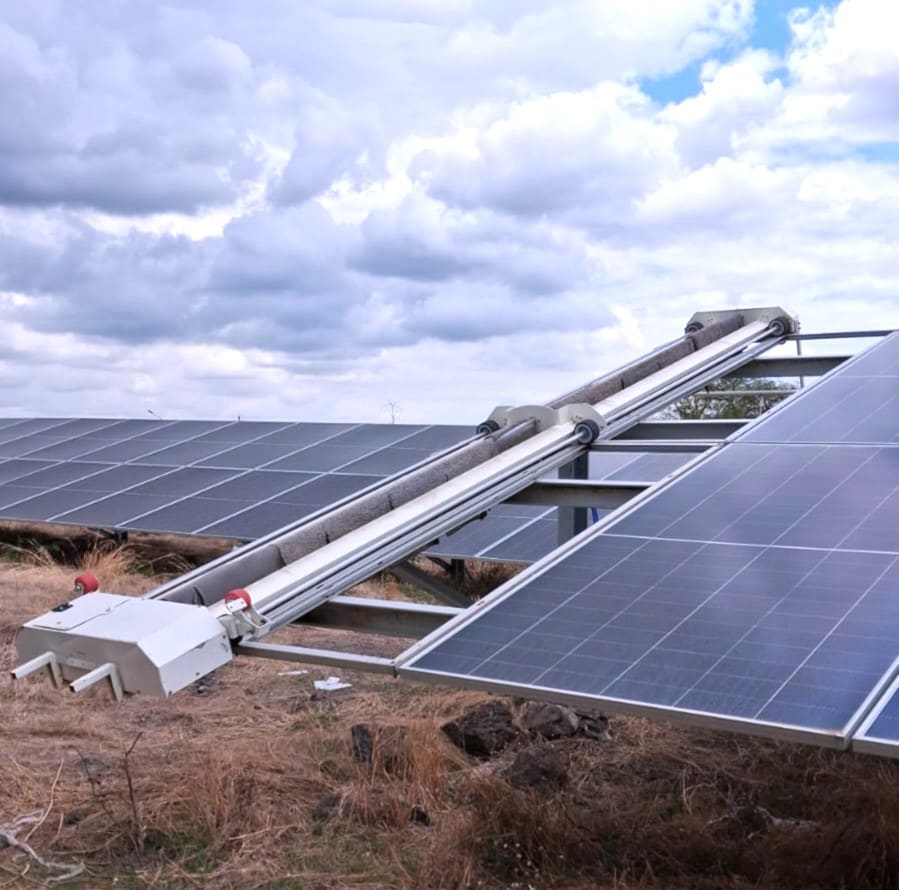
The shift to a semi-automatic robotic cleaning fleet has changed everything. It has set a new standard for the Ahmadnagar-Mandavgan project. The site replaced old manual methods with three HELYX units. This move decoupled cleaning from the problems of water logistics. It also removed the need for complex night crew management. Now, the maintenance team can plan better. They integrate cleaning cycles into existing civil and vegetation management windows. This makes the entire site more stable.
The impact on performance is very clear. In the past, supervisors struggled to verify work. They did not know if manual teams had cleaned specific blocks. Now, they rely on the NECTYR fleet portal. This portal provides granular logs for every task. This transparency is vital. It ensures the cleaning cadence is highly targeted. The robots focus on the uneven soiling patterns caused by dust and grit. The ability to monitor progress in real-time is a game changer. It has turned an opaque process into a data-driven strategy.
The environmental and operational outcomes are impressive. They show the true value of this robotic investment:
- The water footprint has decreased significantly. This is due to the waterless cleaning method.
- Energy generation has recovered. The site captures power that was previously lost to dust.
- Asset longevity is improved. Consistent cleaning helps the modules stay healthy despite humidity cycles.
- Accountability is now digital. All cleaning activities are verified through per-block logging.
The project team optimizes the cleaning frequency carefully. They run 3 to 10 dry cycles per month. This number is based on the actual soil density on the panels. This approach ensures maximum uptime for the 300 MW capacity. It balances the need for frequent cleaning with the practical needs of managing a massive site in Maharashtra.
Peer comparison and planning checklist
Peer Comparison: Balancing Capacity and Site Logistics
The Ahmadnagar-Mandavgan project shows how to transition to robotic cleaning. It serves as a great example for large-scale sites in Maharashtra. We can compare it to the 375 MW Ahmadnagar-Jalalpur project. The Jalalpur project uses more automated systems. It manages very large agricultural dust profiles with high-density automation. In contrast, the Mandavgan site offers more operational flexibility. It uses three HELYX units to address specific, block-level soiling. This is a different but effective strategy.
The Mandavgan approach is also similar to the 14 MW Yavatmal-Kupti site. In Yavatmal, cleaning is decentralized. They use a portable, pick-and-place strategy to handle different blocks. By using the HELYX semi-automatic system, the Mandavgan team solves the problem of uneven soiling. They manage the local agriculture and road grit effectively. They do not need the full automation used at mega-sites. This allows them to control specific blocks. This is perfect for sites where vegetation and civil work dictate access. This method maintains high energy recovery without extreme capital costs. It proves that localized robotics can optimize yield in complex environments.
Planning Checklist for Robotic Solar Cleaning
- Audit the intensity of regional soiling. Decide if you need autonomous or semi-automatic robots.
- Sync your cleaning cycles with existing O&M windows. Include civil, vegetation, and electrical maintenance.
- Set clear cleaning verification protocols for every block. Ensure your data matches your scheduled activities.
- Check your water logistics and night crew limits. Identify areas where robots can replace manual labor.
- Use NECTYR telemetry to guide your decisions. Adjust cycle frequency based on real-time dust and energy loss.