Executive summary
robotic solar panel cleaning Maharashtra, The 112.5 MW Ahmadnagar-Manik Daundi project is a large ground-mount solar facility. It is located in Maharashtra. This site faced many operational problems due to the local environment. Agricultural dust and road grit were very common in the area. Local humidity cycles also added to the difficulty. These factors created uneven soiling patterns across the panels. This soiling often happened at the string level. Traditional manual cleaning methods could not solve these issues effectively.
Plant supervisors also faced many logistical hurdles. They had to coordinate water-based cleaning with other tasks. These tasks included vegetation control and civil maintenance. These different jobs often competed for the same time and resources. Additionally, supervisors lacked clear proof of cleaning. They could not easily verify which strings were cleaned during each cycle. This lack of data made management very difficult.
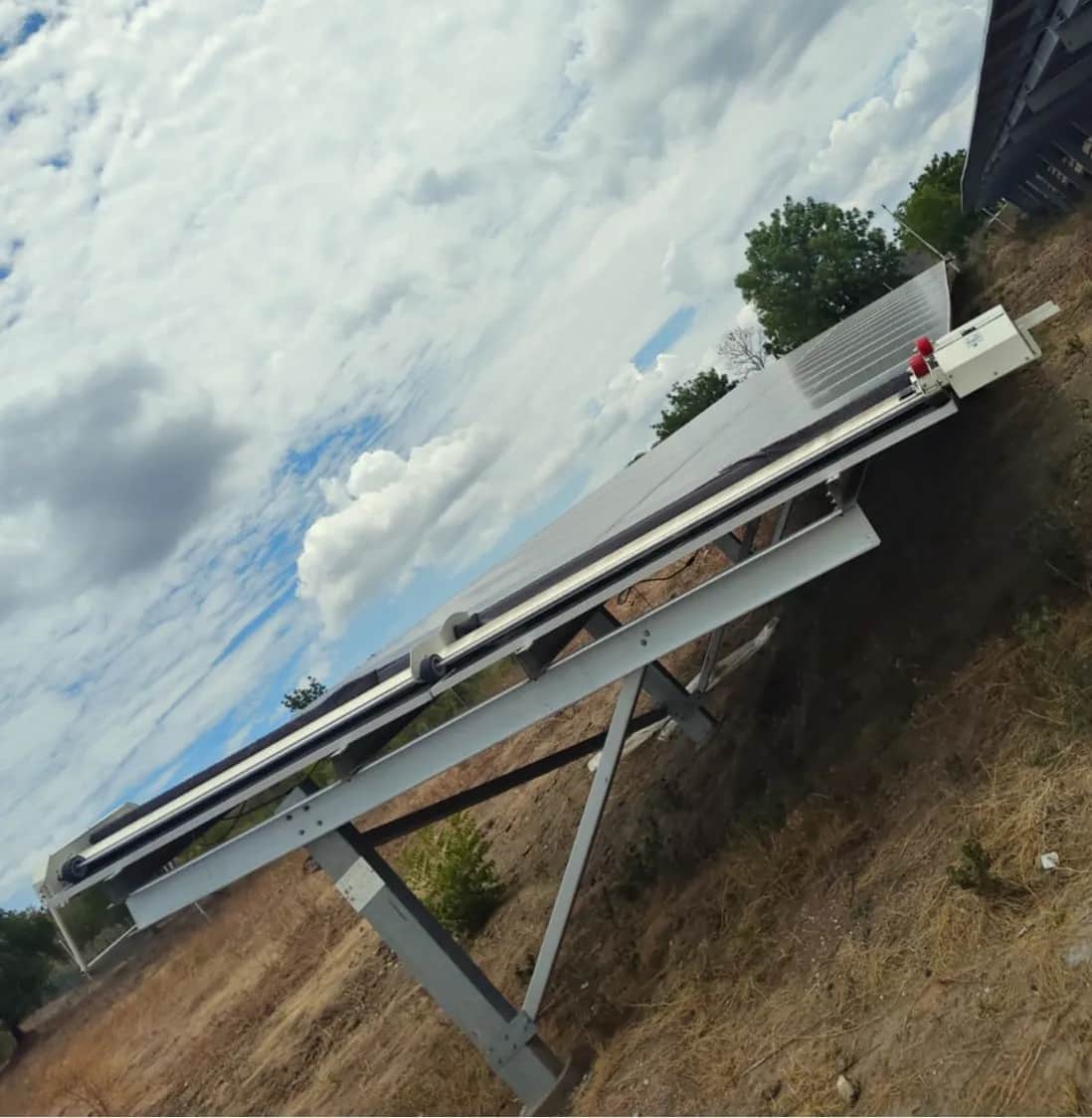
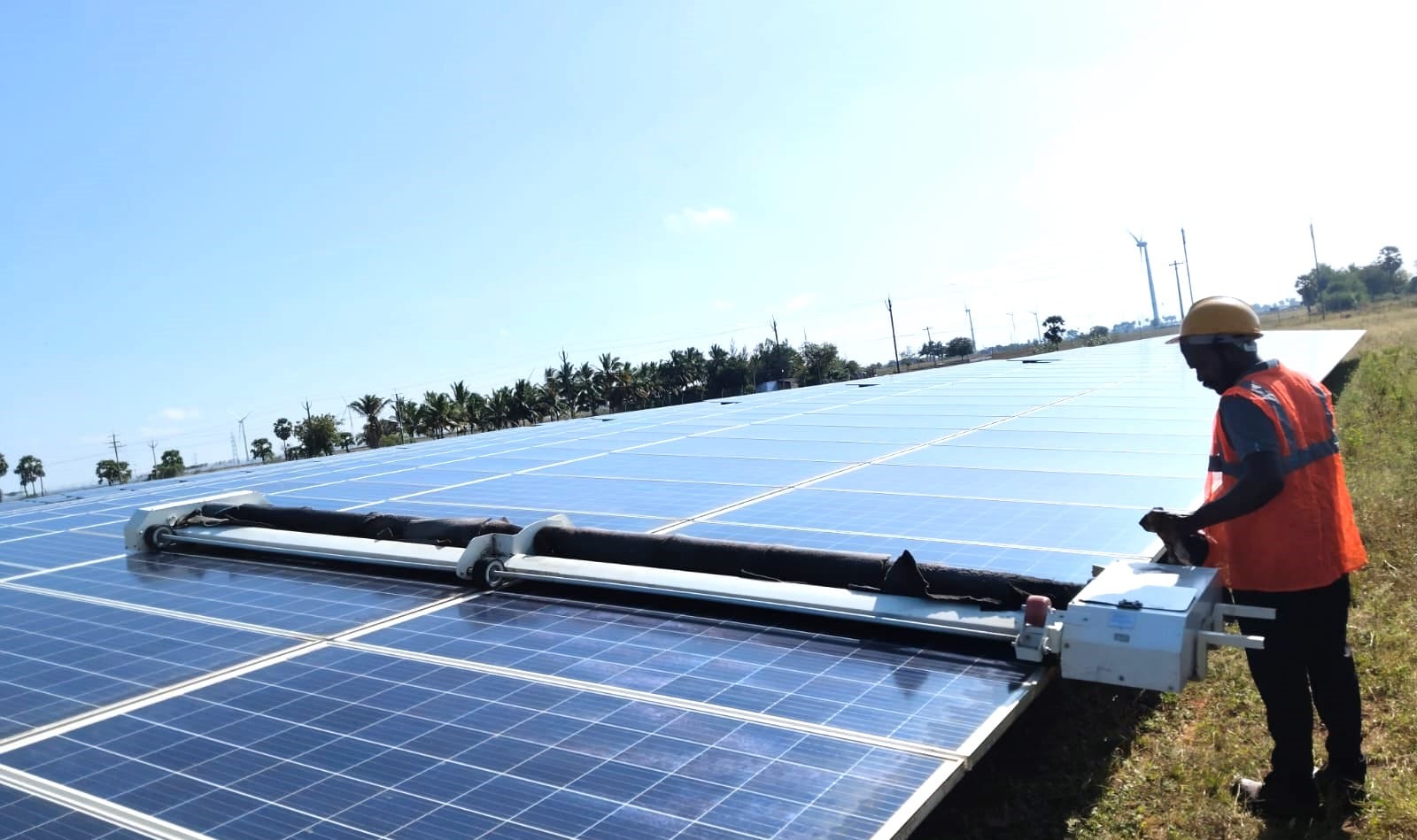
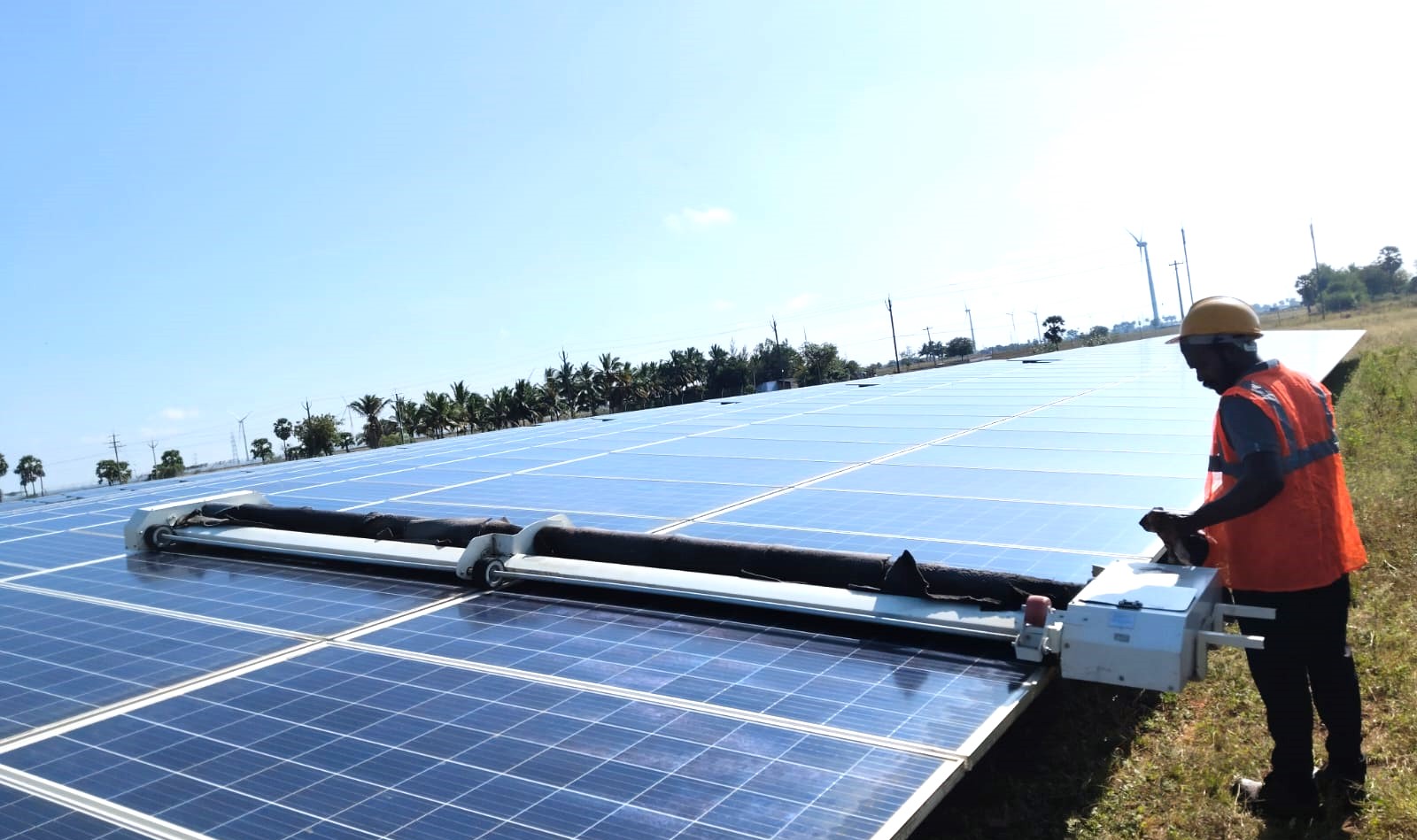
To solve these problems, the facility moved to a robotic cleaning program. They deployed two NYUMA semi-automatic robots. This was a CAPEX-based investment. The robots allow for targeted, waterless cleaning cycles. These cycles typically occur 3 to 10 times per month. The team manages everything through the NECTYR operations portal. This gives the site great visibility into its performance. The shift has been very successful. It recovered 112.5 MWh of extra energy every year. It also saved 420 thousand litres of water annually. This is a major win for robotic solar panel cleaning Maharashtra.
Environment and soiling at Ahmadnagar- Manik Daundi
Environment and soiling at Ahmadnagar-Manik Daundi
The 112.5 MW Ahmadnagar-Manik Daundi project is in a unique region. The seasonal climate here changes often. These shifts change how the solar panels perform. The site faces three main environmental challenges. First, there is agricultural dust from nearby crops. Second, fine grit blows in from rural roads. Third, high humidity occurs during morning cycles. These three factors create a stubborn film on the panels.
This dust is not the same everywhere. It does not settle in a uniform way. Instead, it creates uneven soiling across the array. This is often seen at the string level. Some module strings experience heavy shading. Other sections of the array remain relatively clear. This variability makes manual cleaning very hard. A standard cleaning schedule does not work well here. The intensity of the dirt changes across the plant geography.
Managing a 112.5 MW plant requires high precision. The site has many dispersed blocks. Cleaning crews must manage many different tasks at once. They handle water logistics and night-shift schedules. They also manage vegetation and civil maintenance. Before using robotic solar panel cleaning in Maharashtra, supervisors had no clear data. They could not prove which strings were cleaned. They did not have a way to verify cleaning standards. The NYUMA robotic system changed this. It provides a repeatable and waterless process. It works well despite the local grit and humidity.
O&M before Taypro
Operational challenges of manual cleaning at 112.5 MW
The 112.5 MW Ahmadnagar-Manik Daundi facility had many bottlenecks. These problems existed before the switch to robotic cleaning. Manual cleaning crews struggled to manage water logistics. The site is a vast ground-mount installation. Moving water across such a large area is very hard. This created conflicts with other O&M activities. For example, cleaning often clashed with vegetation management. It also interfered with civil infrastructure maintenance.
Scheduling night crews added more complexity. Teams had to clean at night or in the early morning. This was done to avoid panel overheating. It was also done for worker safety. However, these limited windows were hard to manage. They required a lot of oversight from supervisors. Even with these efforts, the cleaning was not consistent. The quality of the cleaning varied across the large array.
Supervisors also faced a major audit gap. They lacked verifiable proof of cleaning performance. The manual process did not show which strings were serviced. This happened during every cleaning cycle. This lack of transparency was a serious issue. It was impossible to track progress accurately. Managers could not verify if high-priority areas were clean. The combination of dust and poor oversight caused performance gaps. The NYUMA robotic system solved these issues. It replaced manual uncertainty with a data-backed regimen. Now, every string meets the required operational standards.
Fleet and deployment at 112.5 MW
Fleet and deployment at 112.5 MW
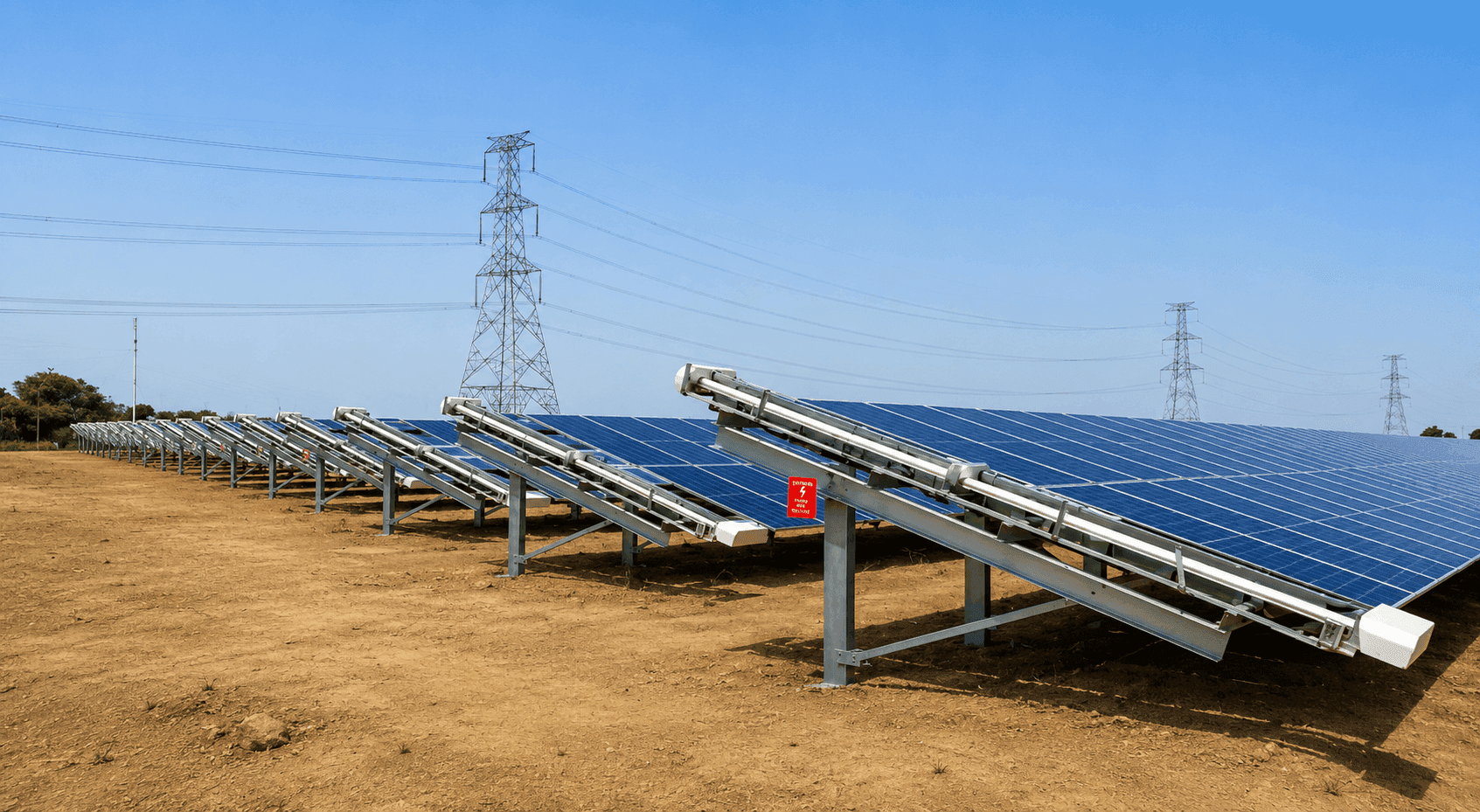
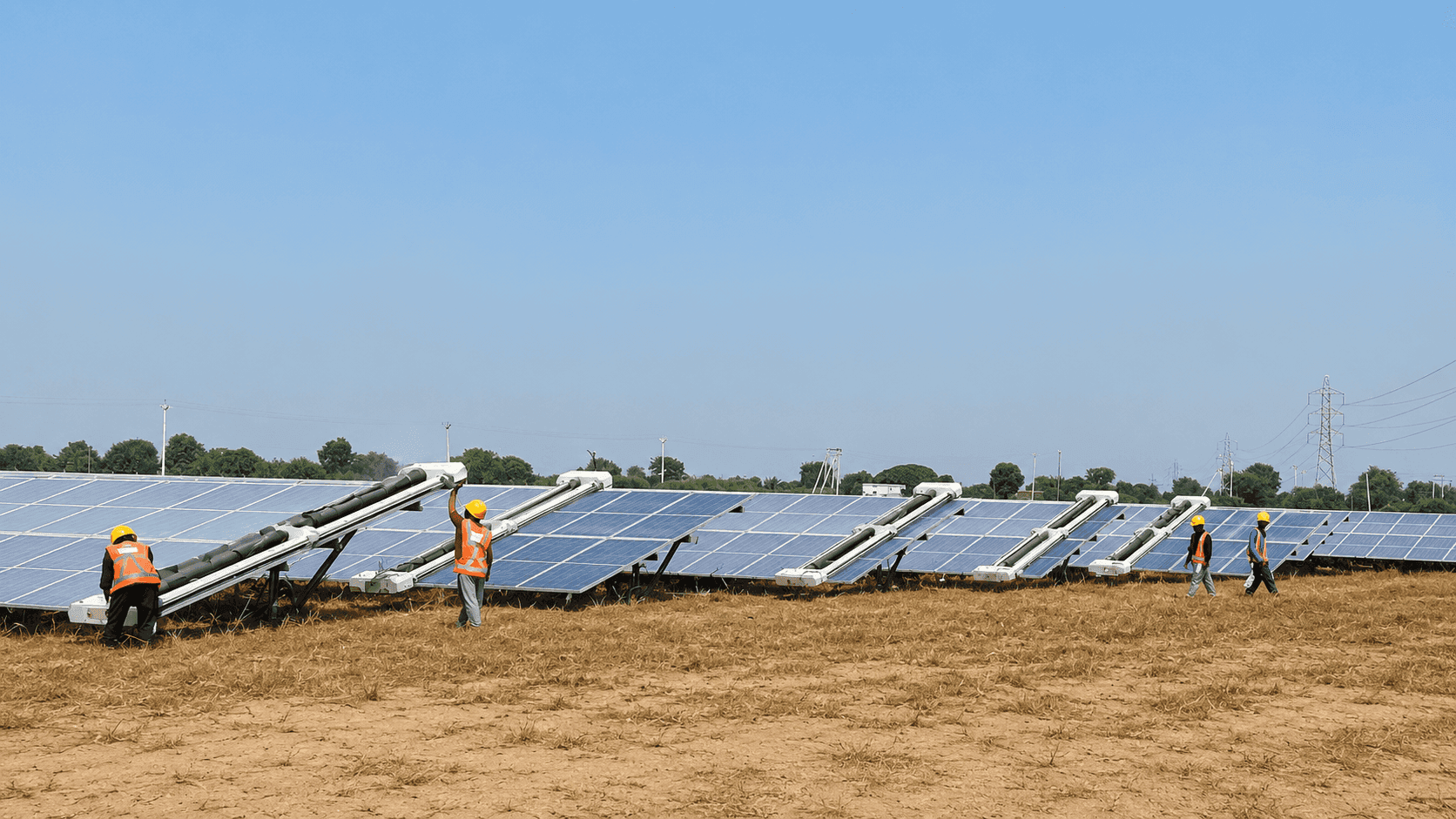
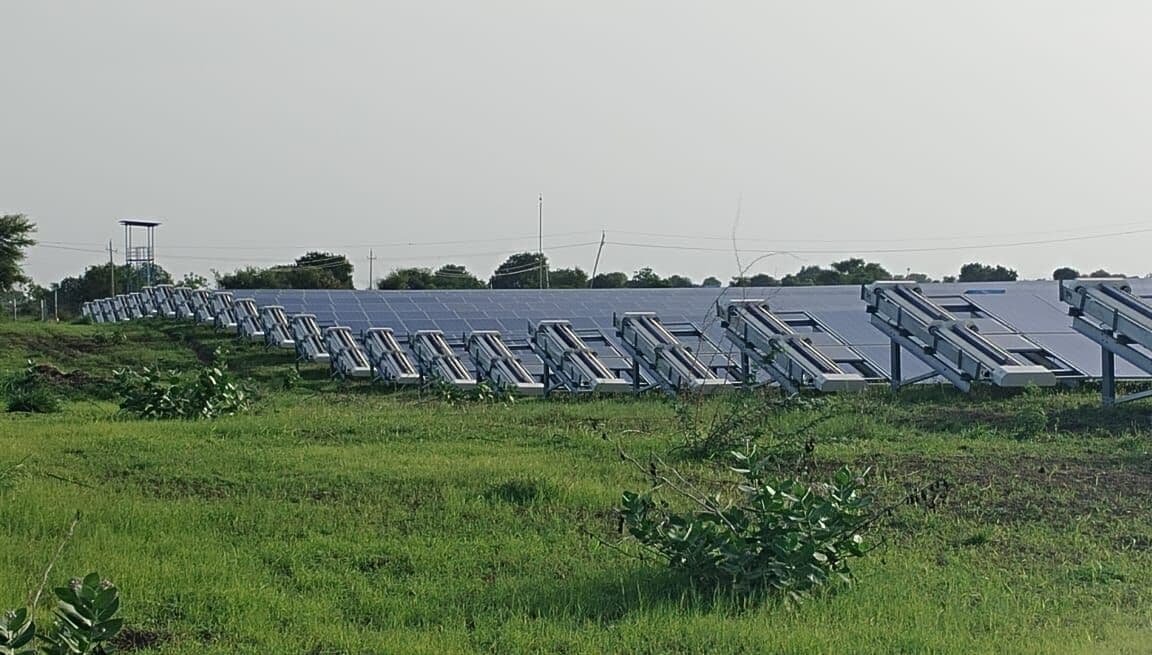
The 112.5 MW project needed a new strategy. It had to deal with agricultural dust and humidity. To solve this, the site used a Capex procurement model. We deployed two NYUMA robotic units. These robots are built for fixed-tilt ground-mount arrays. They offer high efficiency for large plants. This investment replaces unpredictable manual labour. It provides a very precise and waterless cleaning programme.
The NYUMA system uses a single-pass PBT brush. This technology delivers consistent results. It works across the entire array. The NYUMA units are highly autonomous. This means they do not rely on the old logistics. They do not need the same night crew support. Here are the key deployment highlights:
- The site uses a Capex model for long-term control.
- Waterless cleaning stops competition for water resources.
- It does not interfere with vegetation or civil maintenance.
- The robots perform dry cleaning cycles to maximize light.
- This helps overcome road grit and humidity issues.
- The NECTYR platform provides precise data for every block.
Commissioning was a major focus for the team. We integrated the robots into the existing setup. This automation helps manage the local climate. The facility now avoids common performance losses. It has saved 420 thousand litres of water every year. It also recovered energy that was lost to soiling. This method is very scalable. It works for large sites like this one. It also works for smaller sites like the 10 MW Ahmadnagar-Jalalpur or 14 MW Yavatmal-Kupti projects.
Operations and monitoring
Optimising operations and cleaning accountability
The Manik Daundi site once had many issues. Cleaning logs were often inconsistent. Managing logistics was also very expensive. We fixed this by using the NECTYR fleet portal. This provides a structured monitoring programme. It gives managers visibility into every single row. NECTYR removes the guesswork from cleaning. Supervisors no longer rely on manual reports. They receive real-time data on every cycle. This ensures the 112.5 MW capacity is managed well.
The cleaning plan uses a waterless routine. Our NYUMA robots work autonomously. This avoids scheduling conflicts. Cleaning does not get in the way of vegetation management. It also does not block civil maintenance. This is very important in Maharashtra. High humidity and dust create constant soiling problems. If you do not clean regularly, performance drops. By using robotic cleaning, the site maintains high energy yields. It is a consistent and data-backed approach.
Some people think intermittent cleaning is enough. This is not true for utility-scale assets. The NECTYR dashboard provides real accountability. It allows for inspection-led management. O&M teams can monitor robot health easily. They can see deployment cycles at the string level. The system also handles extreme weather. It allows for controlled wind holds to keep equipment safe. This rigorous approach protects the plant. It reduces water dependency while preventing soiling losses.
Results and impact
Results and Impact: Sustaining Yield in Ahmadnagar
Autonomous cleaning has transformed the 112.5 MW Manik Daundi facility. It has changed how O&M works in Maharashtra. We moved away from manual cleaning methods. This change has brought many quantifiable benefits. The project has seen better resource conservation. It has also seen higher energy output. The biggest change is the move to waterless cleaning. This has removed the need for large water logistics. As a result, annual water consumption has dropped significantly.
The deployment has also secured more power. There is a consistent uplift in annual generation. The robots fight the uneven soiling from dust and grit. They keep the modules clear all year long. The main outcomes for the Manik Daundi site are:
- A direct and reliable increase in annual power generation.
- A massive reduction in annual water usage.
- Better performance uniformity across all module strings.
- No more scheduling conflicts with other site tasks.
- Full accountability through NECTYR data tracking.
Manik Daundi shows that large assets can stay efficient. They can overcome fluctuating environmental conditions. Our autonomous NYUMA systems make this possible. The project now has predictable and high-yield energy production. It remains resilient against local soiling cycles.
Peer comparison and planning checklist
Peer Comparison and Planning for Maharashtra Scale
The 112.5 MW Manik Daundi plant is a major step forward. It expands our footprint in Maharashtra. The site uses a strategic approach. By using semi-automatic units, it bridges a gap. It sits between small projects and large automatic plants. For example, it is larger than the 10 MW Ahmadnagar-Jalalpur plant. It is also different from the Soyegaon solar project. The Manik Daundi setup handles high-variability soiling very well.
This hybrid approach is very effective for managers. It handles agricultural dust and road grit. It does not require the same capital as a full-scale array. However, it still uses NECTYR for monitoring. This allows operators to track real progress. They can see cleaning at the string level. This ensures that water savings are real. It also ensures the 112.5 MWh/yr generation increase is met. This provides a blueprint for other sites in Maharashtra.
- Assess how seasonal dust moves across your site.
- Determine the best cleaning frequency for your location.
- Audit your current water and labour costs.
- Compare these costs against a robotic investment.
- Map out your high-soiling string clusters.
- Prioritize these areas for robot deployment.
- Check NECTYR connectivity in every block.
- Ensure you have transparent proof of cleaning.
- Sync robot schedules with civil maintenance windows.