Executive summary
robotic solar panel cleaning Maharashtra. The 75 MW Ahmadnagar-Mungashi solar plant in Maharashtra faces many environmental hurdles. Dust from nearby farms settles on the panels every day. Road grit and humidity cycles also create heavy dirt layers. These layers cause uneven soiling across the solar strings. This makes energy production inconsistent and harder to manage. Previously, the O&M team used manual cleaning methods. This method was difficult to track and monitor. Supervisors did not know which specific strings were actually clean. Water logistics also caused many delays. Cleaning schedules often clashed with vegetation and civil maintenance. This created a lot of operational friction.
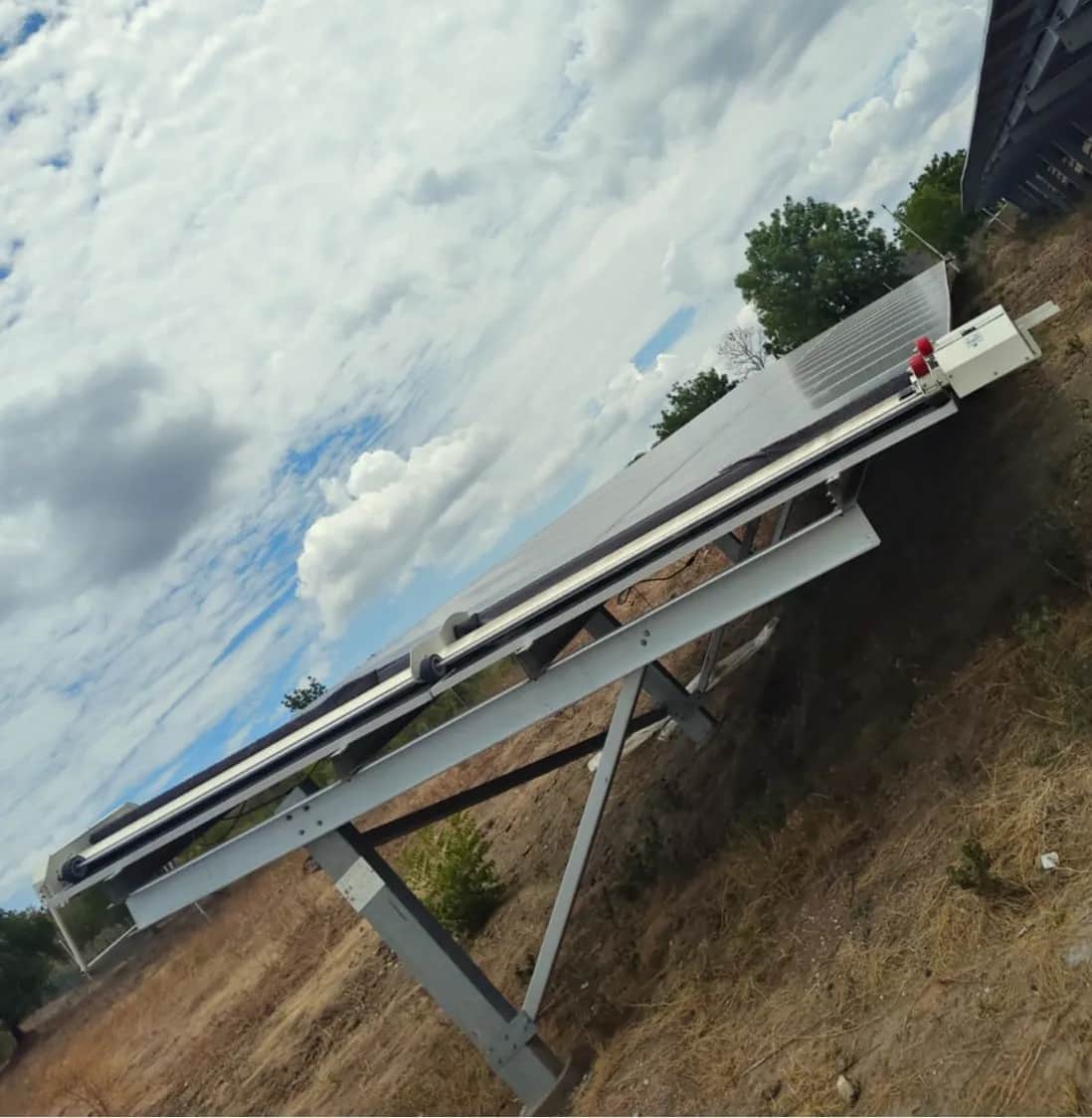
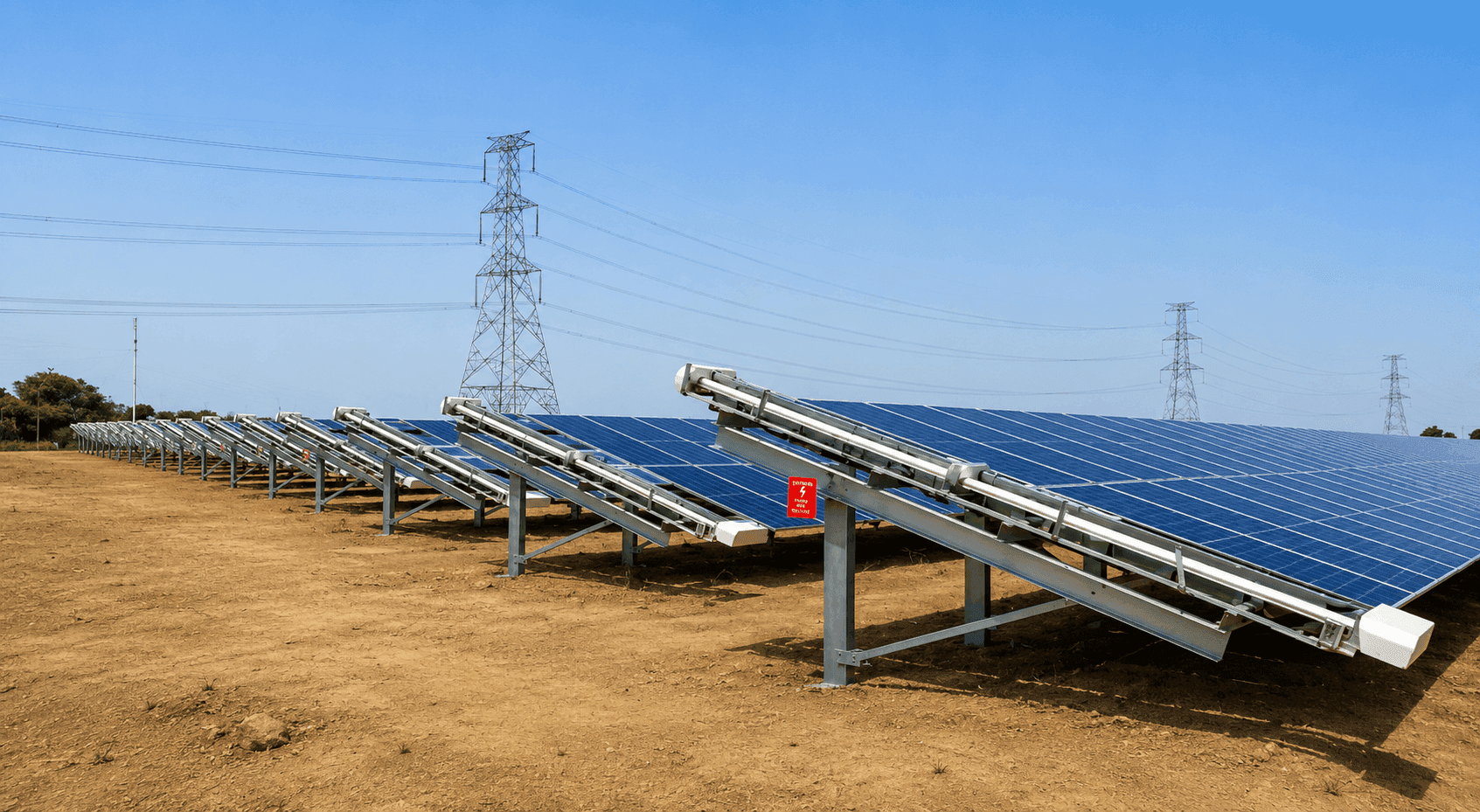
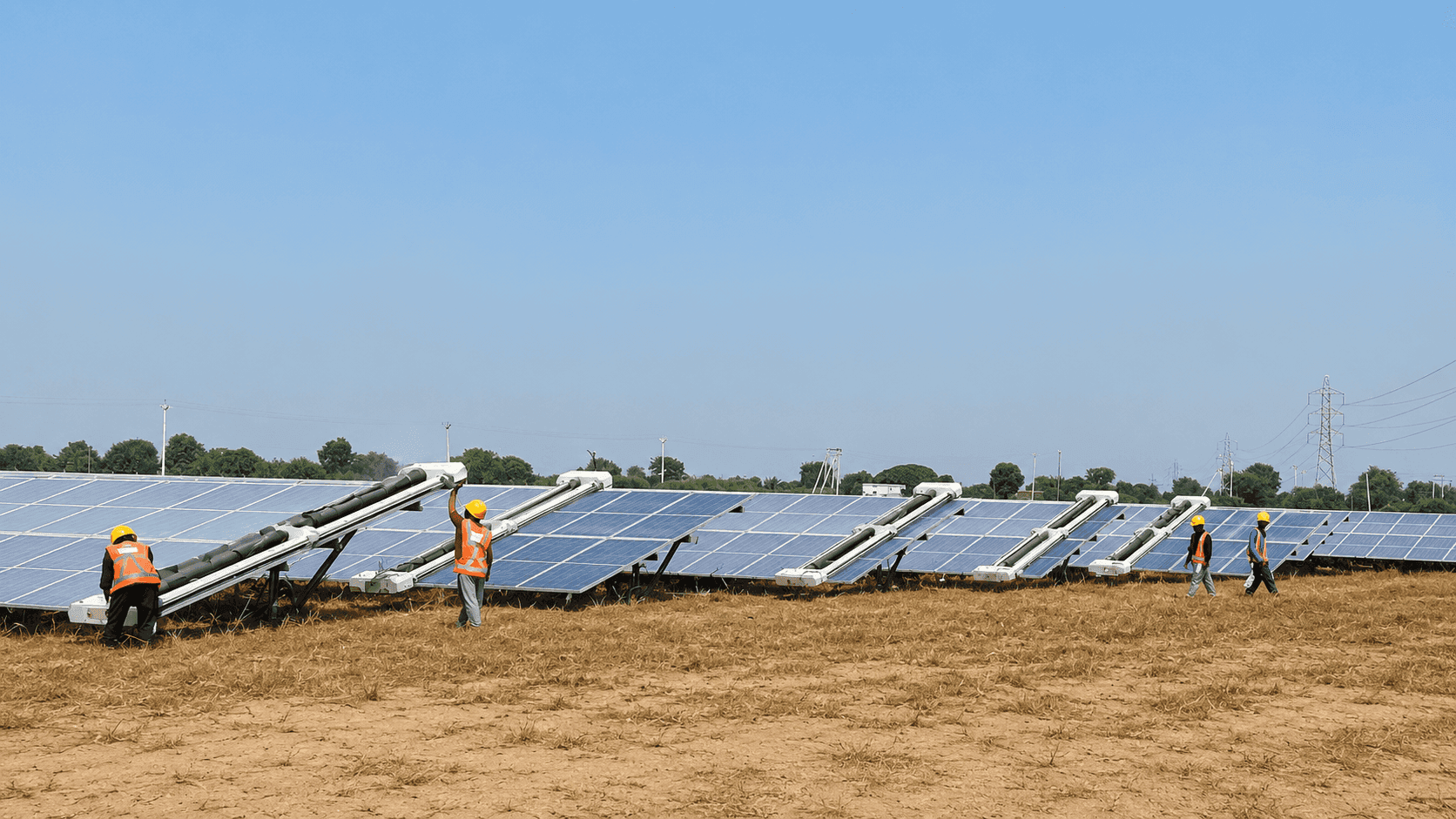
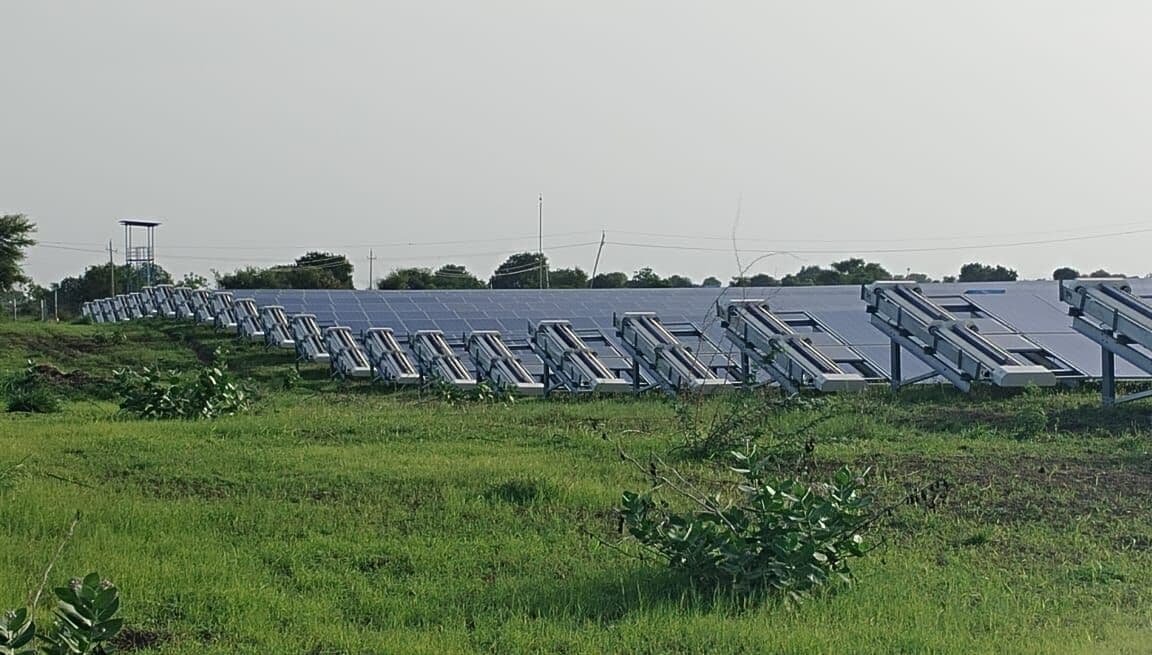
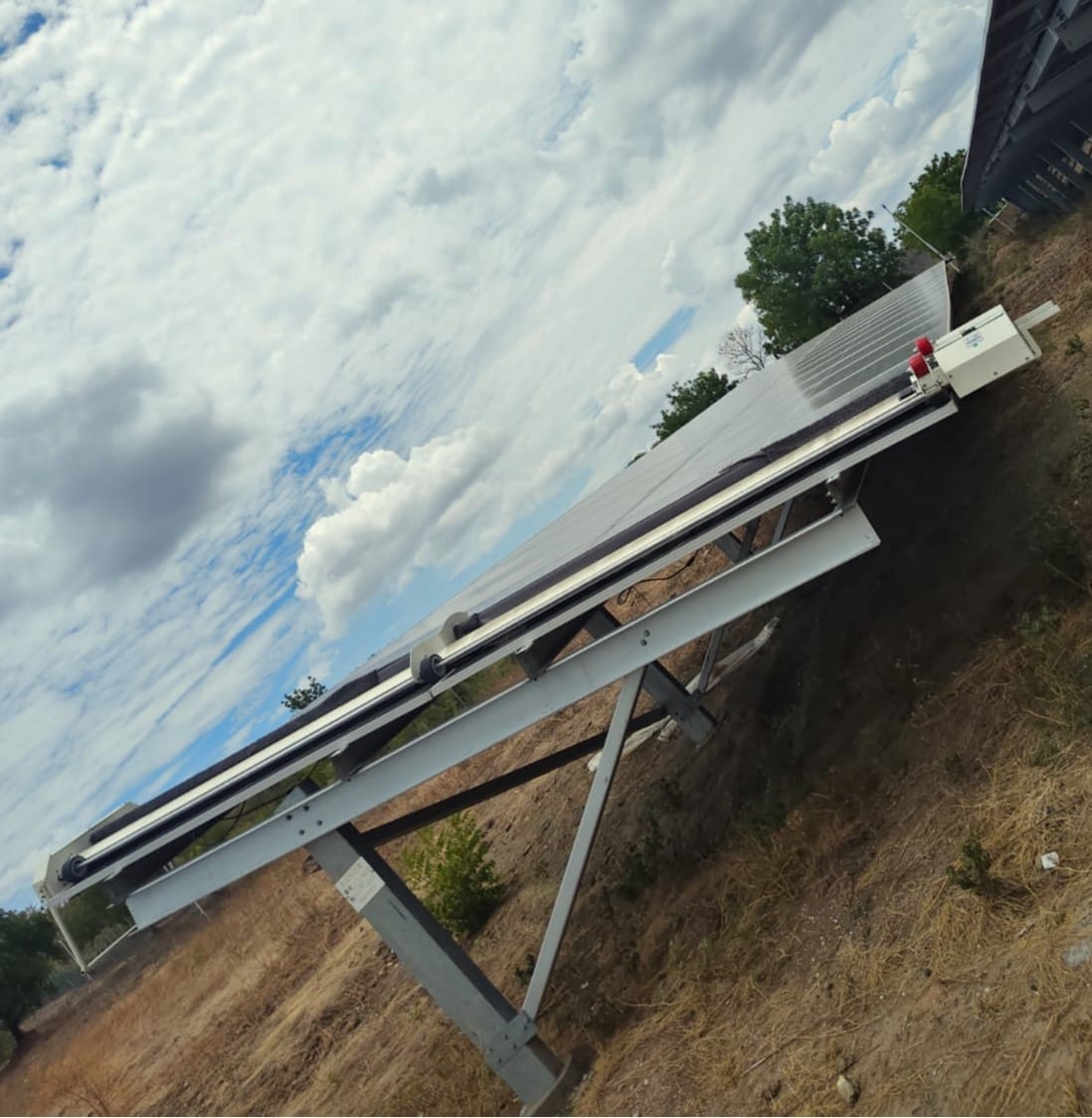
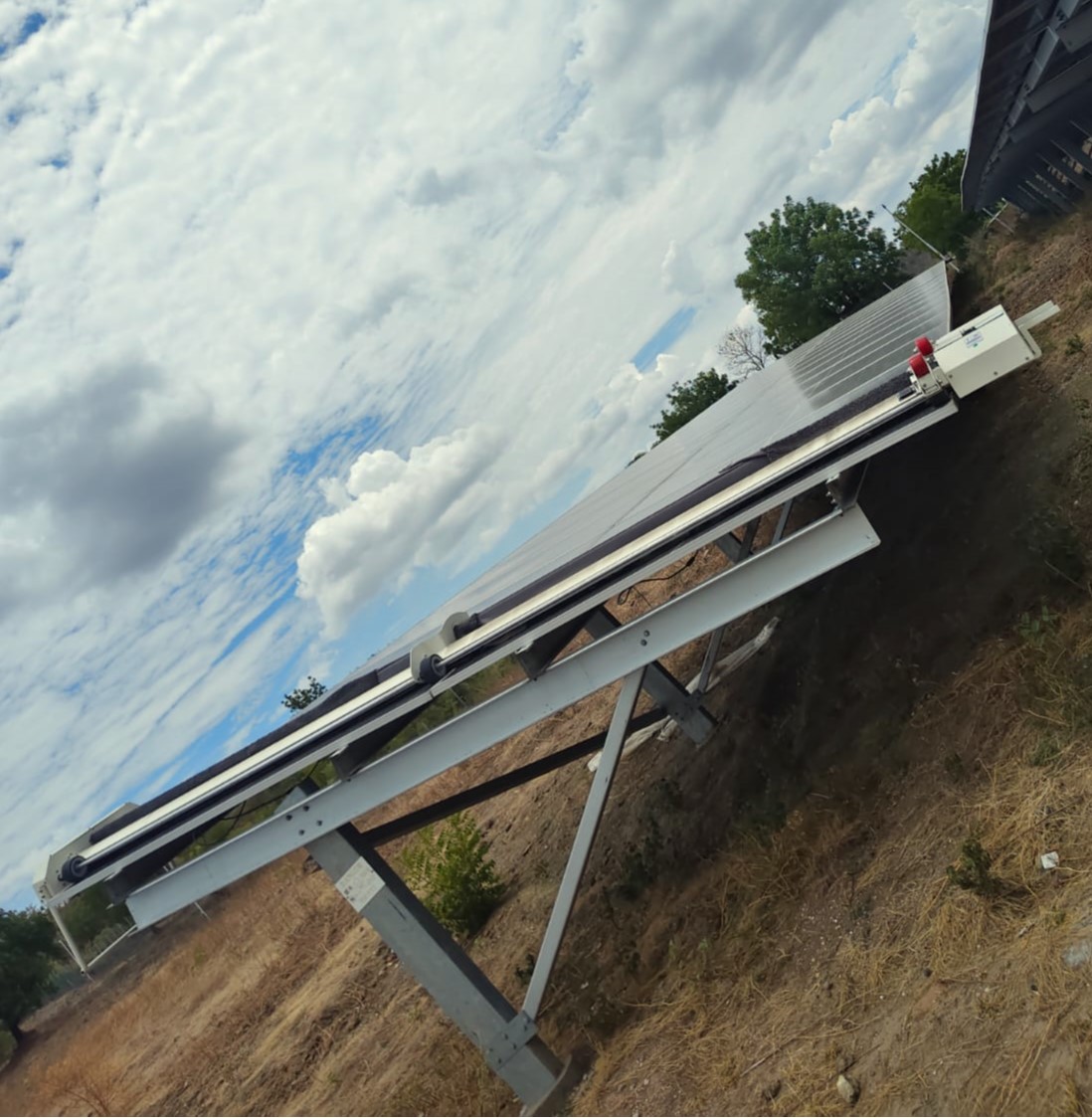
To fix these issues, Taypro deployed two semi-automatic robots to the site. The fleet includes the NYUMA system and HELYX units. This transition moved the plant toward a targeted, waterless cleaning model. The new system manages uneven soiling very effectively. It has recovered 75 MWh of extra power every year. The plant also saves 280,000 litres of water annually. This case study shows how robotic solar panel cleaning Maharashtra can improve plant performance. It also shows how to save vital resources at a large scale.
Environment and soiling at Ahmadnagar- Mungashi
Managing agricultural dust and road grit at Ahmadnagar-Mungashi
The 75 MW facility at Ahmadnagar-Mungashi deals with a unique micro-climate. This climate is shaped by nearby farm fields and major roads. Agricultural dust is a constant issue for this site. This dust is very fine and settles on the panels daily. At the same time, heavy road grit comes from regional transport corridors. This grit contains abrasive particles that stick to the module surfaces. These particles do not settle in a uniform way. They interact with local humidity cycles to create a major problem. The moisture turns the dust into hard, crust-like deposits. These deposits vary significantly between different strings and module rows.
This uneven soiling pattern makes maintenance very difficult. Traditional cleaning cycles often fail to solve the problem. Dirt accumulation is tied to local wind and traffic patterns. Because of this, cleaning is hard to standardize. Some strings may be over-cleaned by mistake. Other strings may remain heavily shaded by thick dirt. This imbalance causes large gaps in energy production. It also makes the plant's performance harder to predict.
Previously, the plant O&M team relied on manual labour. This was difficult to track at the block level. Supervisors lacked definitive proof of which strings were cleaned. This led to wasted water and lost energy. To solve these challenges, the site used a semi-automatic strategy. They deployed two NYUMA and HELYX units. This targeted approach focuses cleaning where it is needed most. It avoids the problems of blanket manual schedules. It also prevents clashes with vegetation and civil maintenance. Moving to a data-backed robotic cleaning programme has stabilized the plant. It has improved the overall transparency of all operations.
O&M before Taypro
Managing agricultural dust and road grit at Ahmadnagar-Mungashi
Managing the 75 MW Ahmadnagar-Mungashi site before Taypro was a major task. The O&M team had to deal with complex environmental factors. The agricultural dust and road grit were hard to manage manually. These particles created uneven patterns across the solar array. This unevenness meant that some areas were always dirtier than others. Manual cleaning could not always target these specific areas. It was a reactive process rather than a proactive one.
The team also faced huge logistical problems. Coordinating water supply was a constant struggle. Water logistics often conflicted with other important site work. For example, vegetation management and civil maintenance need site access. When cleaning crews were working, other tasks had to wait. This competition created operational friction and delays. The plant needed a way to clean without heavy water use. It also needed a way to track cleaning progress digitally. The old manual system provided no real proof of work. Supervisors could not verify if every row was cleaned properly. This lack of oversight led to inconsistent energy yields.
The transition to a robotic cleaning programme solved these problems. It replaced manual uncertainty with reliable, data-backed operations. The new system ensures consistent cleaning at the string level. It also resolves the historical competition for site access. The team no longer has to fight for water resources. This shift has made the entire operation much smoother. It has allowed the staff to focus on other vital tasks. The plant is now more efficient and easier to manage.
Fleet and deployment at 75 MW
Fleet and deployment strategy for 75 MW robotic solar panel cleaning
To optimize the 75 MW Ahmadnagar-Mungashi facility, the project used a Capex model. This capital expenditure model allowed for direct ownership of the technology. The investment focused on specialized robotic solar panel cleaning Maharashtra tools. The team chose the NYUMA system for this deployment. This system is proven to work well in fixed-tilt environments. It is ideal for large, utility-scale solar plants. The fleet includes two semi-automatic units to manage the site. This includes both NYUMA and HELYX robot models.
The deployment strategy focused on scheduled dry cleaning cycles. This is very different from traditional manual cleaning. Manual cleaning is often unreliable and hard to schedule. The NYUMA and HELYX deployment provides a repeatable protocol. This protocol is based on actual data rather than guesswork. By using this hardware, the team can manage cleaning windows independently. They no longer have to wait for water trucks or night crews. This makes the entire cleaning process much more predictable.
Key deployment priorities for the 75 MW site include:
- Strategic fleet allocation: Using two semi-automatic robots to handle uneven soiling across the ground-mount array.
- System configuration: Using the NYUMA system for reliable, single-pass PBT brush cleaning.
- Operational consistency: Implementing 3 to 10 scheduled dry cleaning cycles per month. This matches the specific soiling rates of the Mungashi area.
- Resource efficiency: Reducing water use by 280 thousand litres per year. This also recovers 75 MWh of energy annually.
This deployment creates a clear audit trail for all maintenance. Supervisors now receive verified data on cleaning progress. They no longer have to guess about the status of specific blocks. This ensures that every row receives the necessary care. It sustains the peak generation capacity of the entire 75 MW plant. The use of PBT brushes ensures the panels stay safe and clean. This hardware-focused model is built for long-term reliability.
Operations and monitoring
Optimizing robotic solar panel cleaning in Maharashtra: A transition to semi-automatic scheduling
Operations at the 75 MW Mungashi plant are much more efficient now. The site has moved away from manual, water-intensive cleaning. In the past, supervisors struggled with complex logistics. They had to coordinate water, night crews, and other maintenance tasks. This was a very difficult balancing act. A lack of transparency was a major issue. O&M teams could not verify which array blocks were actually cleaned. This meant some strings stayed dirty for too long.
The site now uses a semi-automatic fleet to ensure accountability. This includes both NYUMA and HELYX units. These robots allow for a much more organized schedule. By using NECTYR for fleet monitoring, the plant has improved oversight. Site managers have replaced subjective reports with objective digital data. NECTYR provides a digital audit trail for every cleaning session. This system offers proof of coverage for every single block. It ensures the cleaning protocol is consistent across the whole array.
Operational improvements at the Mungashi site include:
- Scheduled dry cleaning cadence: Performing 3 to 10 dry cleaning cycles per month to fight dust and grit.
- Enhanced oversight: Using NECTYR for inspection-led accountability. Managers can verify cleaning status remotely.
- Wind and safety protocols: Using automated wind holds within the NECTYR dashboard. This protects the robots during high winds.
- Reliable output: Removing humidity-caked deposits that previously caused power drops.
This semi-automatic model removes the need for daily water-based washing. Many people believe that dust requires daily water washing. However, data shows that scheduled dry cleaning is more effective. It maximizes equipment longevity and reduces costs. The team now uses real-time soiling data to plan their work. This makes the entire operation much more cost-effective.
Results and impact
Results and impact: Sustaining output at the 75 MW Mungashi plant
The NYUMA robotic system has fundamentally changed the Mungashi plant. The site has moved from reactive maintenance to a data-backed model. By addressing regional agricultural dust, the project has stabilized power output. The 75 MW array now performs much more consistently. The transition to robotic cleaning has yielded many quantifiable improvements. These results directly impact the plant's bottom line.
The transition to robotic cleaning has provided several key benefits:
- Increased annual energy generation: The fleet has recovered a large amount of MWh every year. This comes from cleaning previously underperforming strings.
- Water resource conservation: The site has moved to a waterless robotic protocol. This saves 280,000 litres of water annually and eases local pressure.
- Operational visibility: NECTYR has solved the problem of proving cleaning coverage. Supervisors receive real-time, block-specific verification for every task.
- Streamlined site logistics: The plant relies less on night-shift crew scheduling. This allows O&M teams to focus on essential civil and vegetation work.
This robotic implementation is a scalable blueprint for solar farms. It works well for other utility-scale sites in Maharashtra. By aligning cleaning cycles with actual soiling levels, the plant protects its revenue. The Mungashi site successfully manages the impact of humidity and road grit. It also maintains high efficiency without wasting precious water. This is a win for both the operator and the local environment.
Peer comparison and planning checklist
Peer comparison and project planning
The 75 MW Mungashi installation uses a semi-automatic deployment. This is different from the fully autonomous fleets seen in other Maharashtra projects. For example, the Ahmadnagar-Mandavgan site uses automatic robots. Those larger sites use daily waterless cleaning cycles. In contrast, the Mungashi plant uses two HELYX units. This is a flexible, pick-and-place solution. It is perfect for navigating agricultural dust and uneven soiling. The team maintains a cadence of 3 to 10 dry cleaning cycles per month. This model balances site logistics with the need for clean panels. It is a very effective way to minimize water dependency.
Transitioning to a high-efficiency robotic operation requires careful coordination. You must align your resources with your technical goals. Use this checklist to help plan your own project deployment:
- Assess your site-specific soiling profiles. Look at road grit and humidity levels.
- Determine your optimal cleaning frequency based on that data.
- Evaluate the trade-off between automatic fleets and semi-automatic models.
- Consider the CAPEX requirements for your specific project scale.
- Integrate fleet monitoring software like NECTYR. This ensures per-block verification.
- Align cleaning schedules with your vegetation and civil maintenance windows.
- Standardize your data logging to track energy and water savings.
A good plan will ensure a high return on investment. It will also protect your solar assets for many years. By following these steps, you can achieve similar success to the Mungashi plant.