Executive summary
robotic solar panel cleaning Maharashtra, The Ahmadnagar-Nagalwadi solar project is a massive 300 MW facility. It uses ground-mount arrays located in Maharashtra. This site faces serious issues with panel performance. The main cause is localized environmental factors. Specifically, the area suffers from uneven soiling at the string level. This soiling comes from agricultural dust and road grit. It is also made worse by frequent humidity cycles. These conditions make it hard to maintain steady energy output.
The plant also faced a major management problem. Supervisors could not verify if every block was cleaned. They lacked real proof of cleaning coverage. This made manual cleaning crews hard to manage. It also created conflicts with other site tasks. Water-based cleaning also caused logistical headaches for the team.
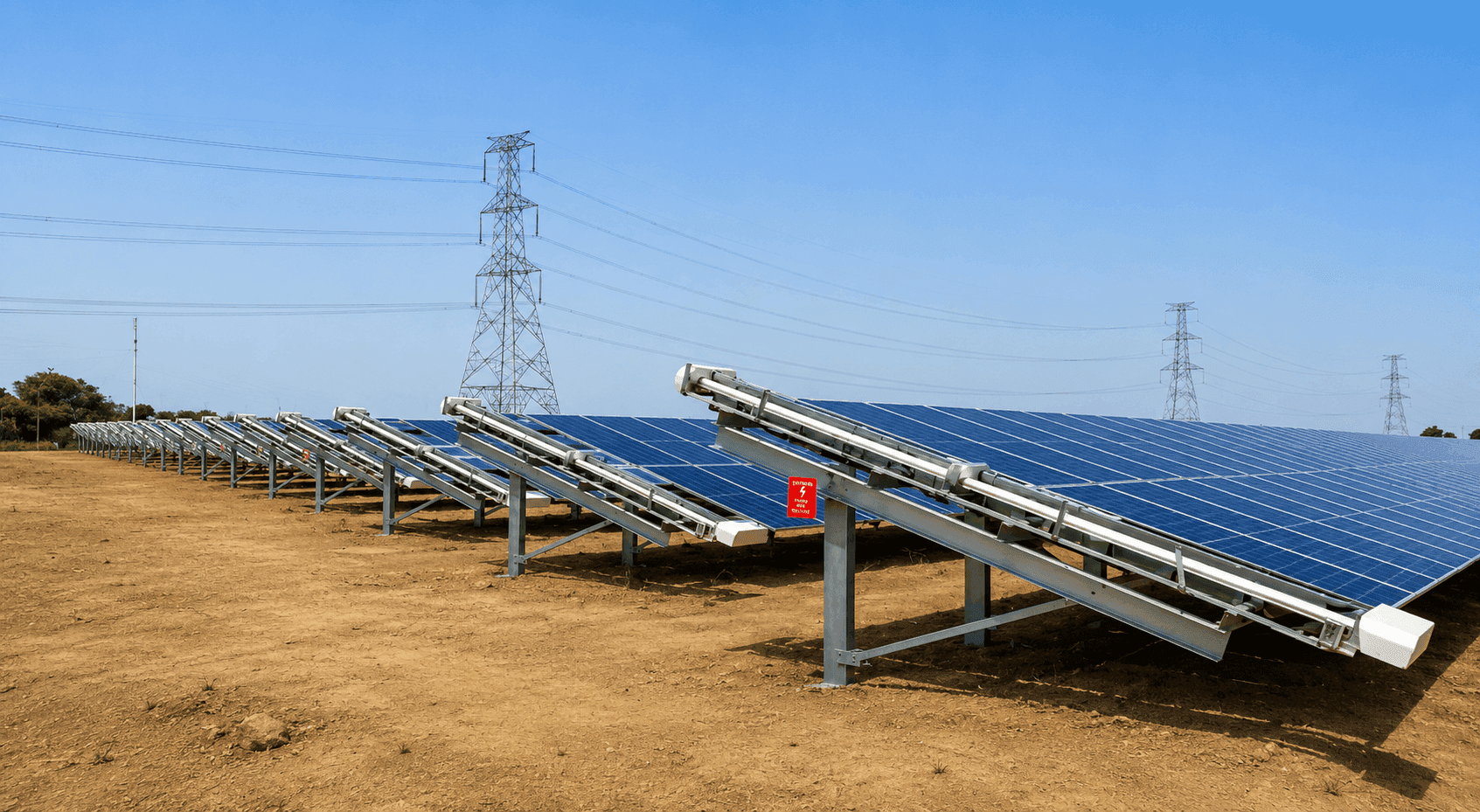
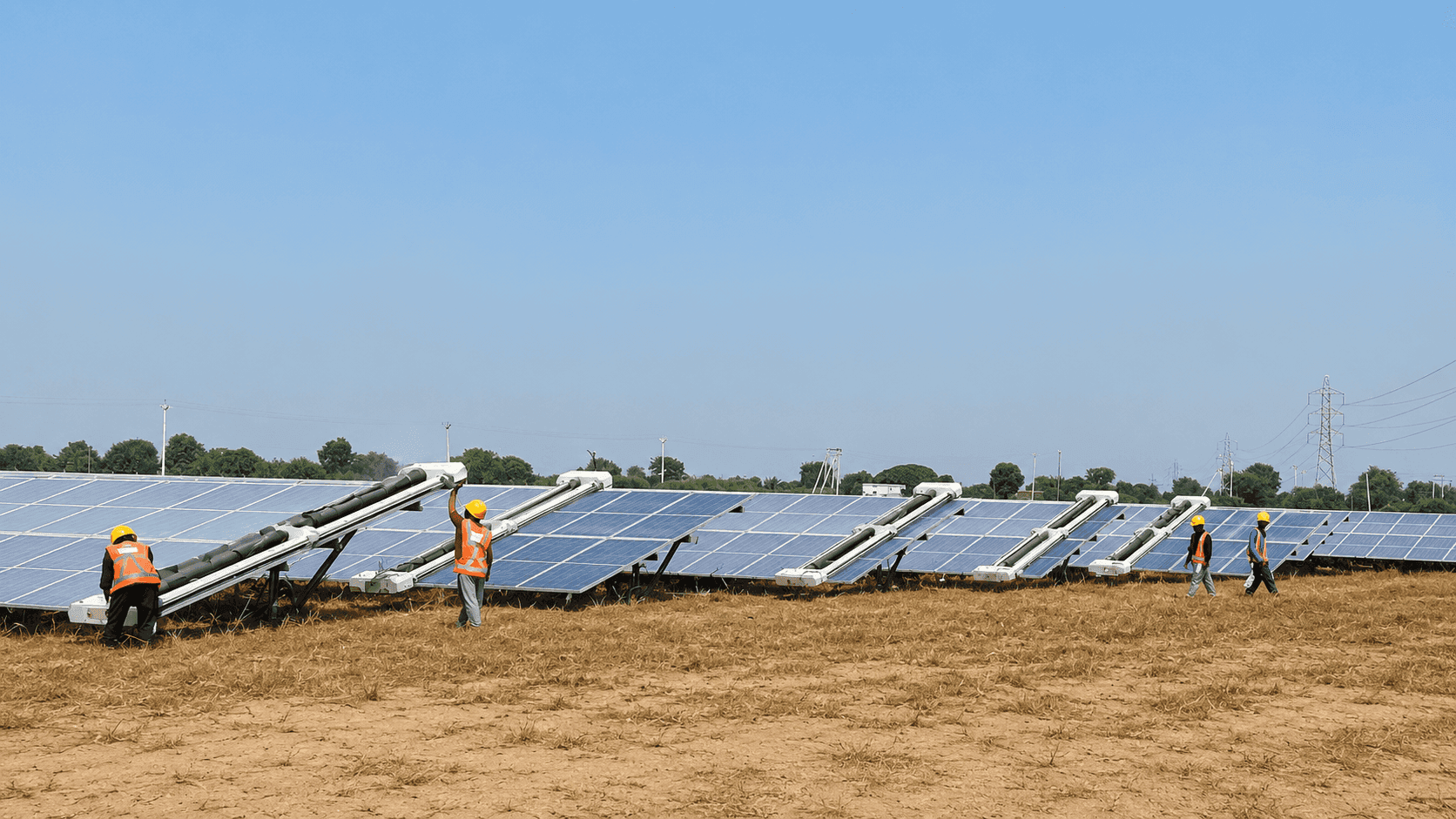
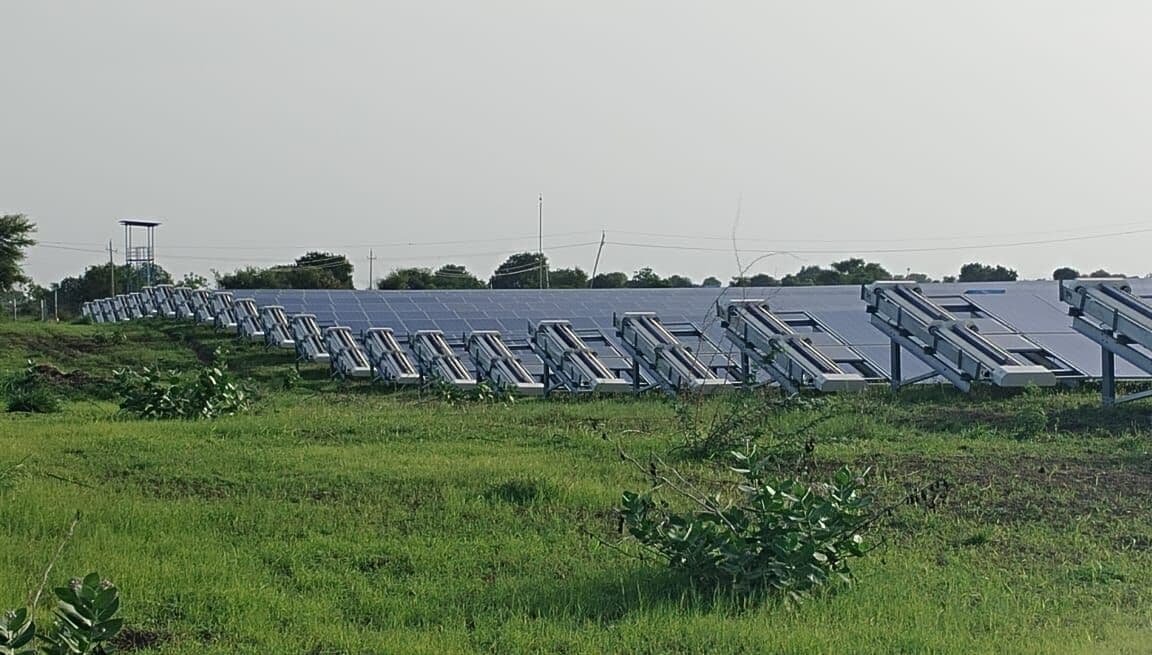
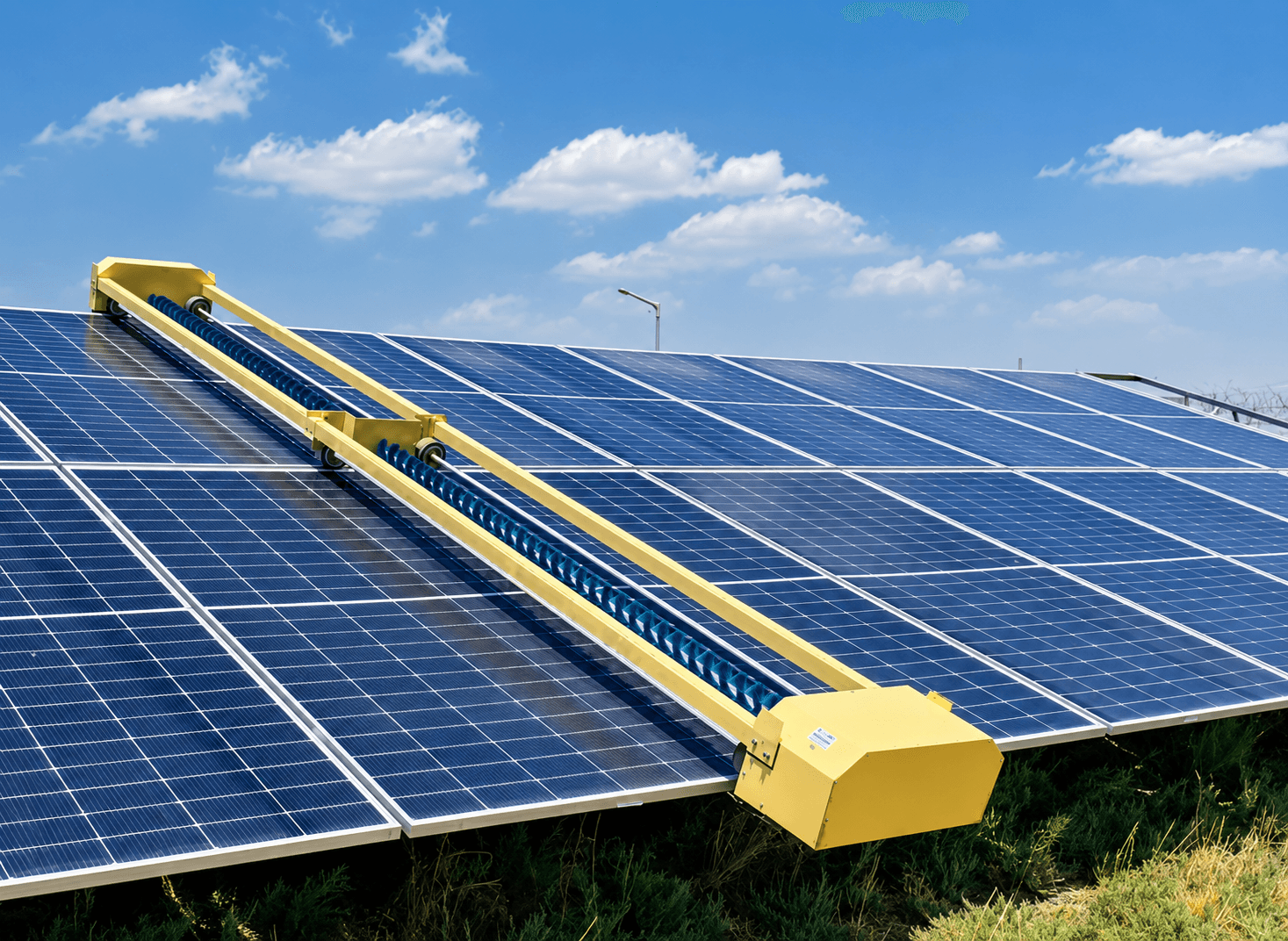
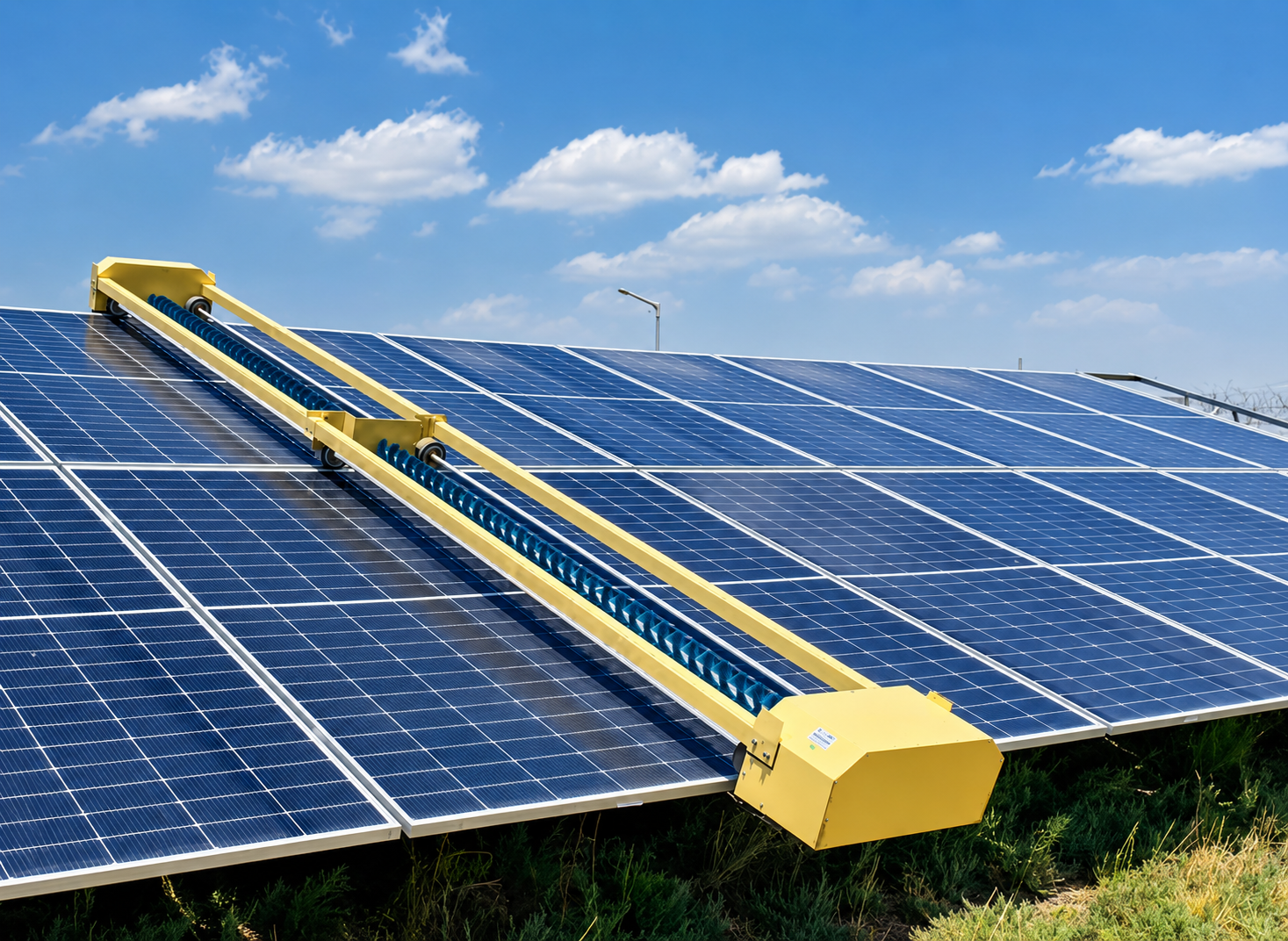
To fix these issues, the project chose a Capex-based robotic cleaning strategy. The site deployed three semi-automatic NYUMA robots. The team moved to a specific cleaning cadence. This involves 3 to 10 dry cleaning cycles per month. This new method removed conflicts with civil and vegetation maintenance. It also reduced the need for heavy water logistics.
The results have been very positive. The NYUMA system has recovered 300 MWh of extra generation every year. It has also saved 1.1 million litres of water annually. This project shows how robotic solar panel cleaning Maharashtra can improve utility-scale efficiency. It provides the data-backed proof that plant managers need for high-performance assets.
Environment and soiling at Ahmadnagar- Nagalwadi
Managing Site-Specific Soiling at the 300 MW Ahmadnagar-Nagalwadi Plant
The 300 MW Ahmadnagar-Nagalwadi array sits in a unique environment. The surrounding landscape in Maharashtra is mostly agricultural. This means the site faces constant dust from nearby farms. There is also heavy dust from vehicles on adjacent roads. This mix of agricultural dust and road grit is very problematic. It creates a thick, abrasive layer on the solar modules.
The weather also plays a large role in soiling. The region experiences regular humidity cycles. This humidity makes the dust particles stick to the glass. Instead of blowing away, the grime becomes a hard layer. This layer is difficult to remove with simple methods. It requires a consistent and robust cleaning plan to keep the panels clear.
One of the biggest problems is that soiling is not uniform. It does not cover the whole site the same way. Instead, it creates uneven patterns at the string level. Some strings stay cleaner than others. This unevenness makes it hard to predict energy output. It also makes maintenance much more complex for the onsite team.
The environmental challenges for the team include several factors:
- Variable Soiling Patterns: Dust levels change based on how close a block is to a road. Seasonal farming also changes the dust profiles.
- Logistical Constraints: Moving water around the site is difficult. Cleaning often clashes with vegetation and civil work schedules.
- Verification Gaps: It was hard to prove which strings were actually cleaned. This led to uncertainty in plant performance.
The site solved these issues by using three semi-automatic NYUMA robots. These robots perform targeted dry cleaning cycles. They typically run between 3 and 10 times per month. This schedule matches the local micro-climate trends. This shift to robotic solar panel cleaning Maharashtra ensures a more resilient operation. The team now uses NECTYR data to verify cleaning coverage for every block in the 300 MW plant.
O&M before Taypro
Operational Challenges and Accountability Gaps in Large-Scale O&M
Before the robotic fleet arrived, the O&M team struggled. They relied mostly on manual labor to clean the panels. Managing a large manual workforce is very difficult. The plant relied on seasonal workers to keep up with the dust. This introduced many management problems. Supervisors had to deal with constant scheduling friction.
One major issue was the use of night crews. Manual cleaning crews often worked at night. This created conflicts with other important site work. For example, vegetation management or civil repairs might happen at the same time. These overlaps often meant that some rows were skipped. It also led to inconsistent cleaning across the vast 300 MW array.
The site also suffered from a lack of accountability. Supervisors had no way to verify the cleaning work. They lacked granular logs for individual strings. They could not prove which blocks were actually serviced. This made it impossible to optimize energy generation. It also made it hard to link maintenance spending to actual performance gains.
The manual approach also had several weaknesses:
- Accountability Deficits: Managers could not confirm if every string was clean. This left the plant vulnerable to human error.
- Resource Competition: Water logistics and night shifts often disrupted other O&M tasks. This lowered overall plant productivity.
- Environmental Complexity: Manual cleaning could not keep up with the heavy dust and grit. The site needed more frequent and reliable interventions.
The transition to the NYUMA system was necessary. It replaced human-reliant processes with data-backed cycles. This gave the site the visibility it needed. The team can now maintain true operational control over the entire facility.
Fleet and deployment at 300 MW
Fleet procurement and deployment for 300 MW robotic solar panel cleaning in Maharashtra
To solve the soiling problem, the project moved to a Capex model. The facility invested directly in three semi-automatic NYUMA robots. This ownership model gives the site long-term control. It also removes the high overhead of managing manual crews. By owning the fleet, the facility can manage its own maintenance schedules.
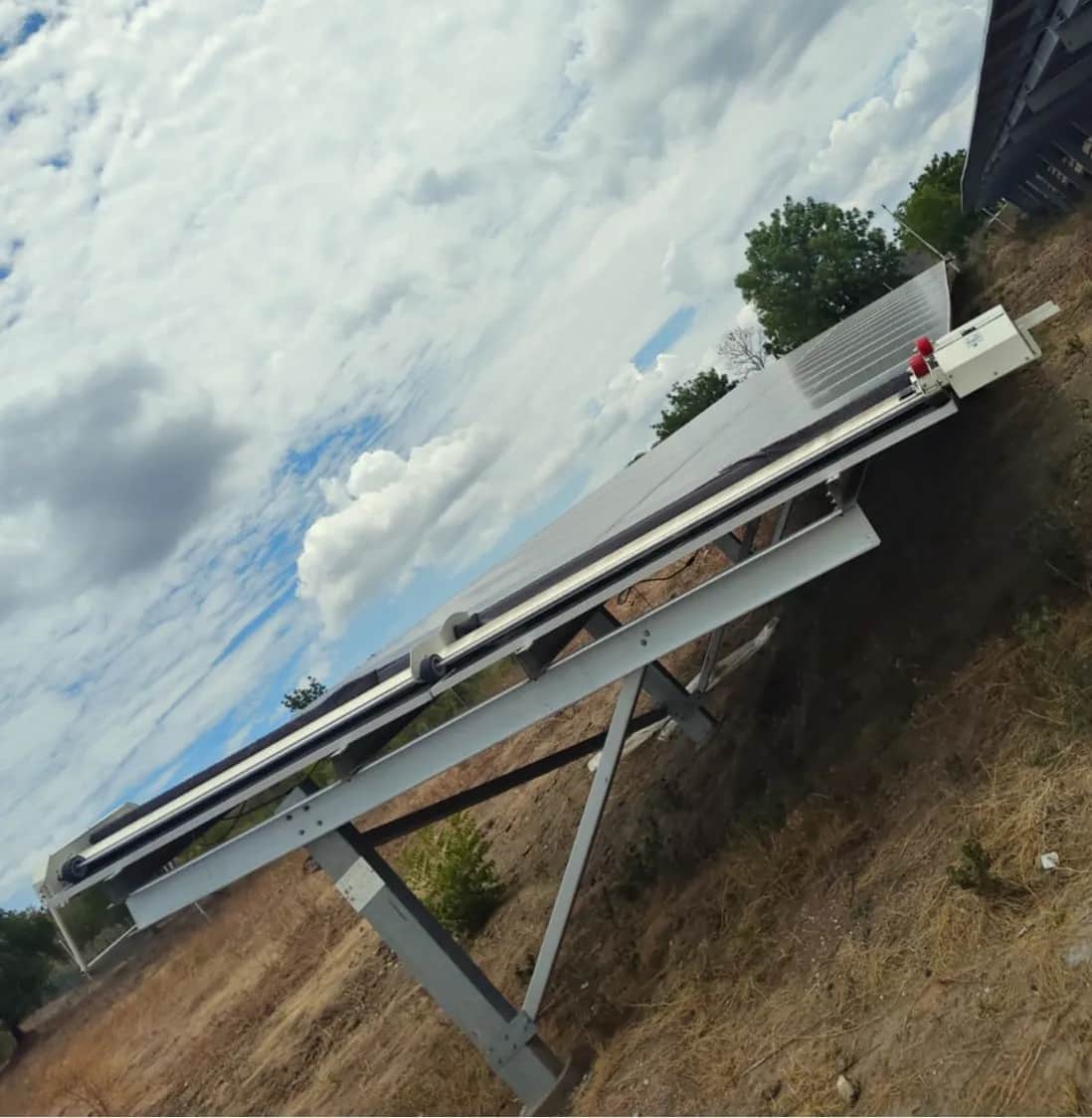
The NYUMA robots were chosen for their specific technology. They use single-pass PBT brush technology. This is a waterless cleaning method. It is perfect for managing the mix of agricultural dust and road grit. The PBT brushes provide a consistent clean without using any water. This avoids the heavy costs of water logistics. It also prevents the waste of local water resources.
The deployment is designed to be highly efficient. The robots operate on a semi-automatic basis. This allows the O&M team to stay in control. They can schedule cleaning sessions based on real-time needs. Typically, the robots run 3 to 10 cleaning sessions per month. This frequency is adjusted based on how much dust has built up on the modules.
Key benefits of this deployment include:
- Capex Investment: Owning the NYUMA fleet eliminates monthly service fees. This provides better long-term value for the 300 MW asset.
- PBT Technology: The single-pass PBT brush provides a scratch-free clean. It is highly effective against the tough grime found in Maharashtra.
- Strategic Deployment: Semi-automatic mode lets the team plan cleaning around other tasks. This removes previous scheduling conflicts.
This robotic approach has a massive impact on resources. It has reduced water consumption by 1.1 million litres per year. It also helps the plant recover 300 MWh of generation annually. The use of a standardized protocol brings reliability to the site. It provides the performance metrics that were impossible under manual management.
Operations and monitoring
Operations and Monitoring: Aligning Robotic Cleaning with Site Maintenance
Managing a 300 MW site requires very precise coordination. The team must ensure cleaning does not block other O&M tasks. The three NYUMA robots make this easier. The team can balance cleaning with vegetation management and civil works. They no longer deal with the bottlenecks caused by manual night shifts. They also avoid the heavy burden of moving water across the site.
The cleaning schedule is very flexible. The robots perform 3 to 10 dry cycles every month. This frequency is not random. It is based on real-time monitoring and inspections. The team looks at how the dust and humidity are affecting the panels. They then schedule the robots to clean exactly when needed. This keeps the cleaning efforts efficient and cost-effective.
Monitoring is handled through the NECTYR fleet portal. This is a critical part of the operation. NECTYR gives supervisors complete visibility into the robot fleet. They can track every cleaning event in real time. This replaces old manual logs with accurate digital records. They now have proof of which strings were cleaned during each cycle.
The operation relies on three main pillars:
- Integrated Scheduling: Cleaning cycles are timed to match routine site inspections. This allows the team to manage rows without disrupting other work.
- Accountability and Proof: NECTYR provides granular data for every block. This ensures that cleaning is actually completed as planned.
- Optimized Resource Use: The dry-cleaning approach saves time and money. It removes the need for water transport and large night crews.
By using this inspection-led model, the team maximizes impact. They concentrate cleaning efforts where they will increase energy yield the most. This data-driven strategy protects the integrity of the 300 MW array. It ensures the robots are only used when they are truly needed.
Results and impact
Delivering Operational Efficiency at the 300 MW Ahmadnagar-Nagalwadi Plant
The move to robotic cleaning has changed the plant's operations. The Ahmadnagar-Nagalwadi site is now much more efficient. The three NYUMA robots have mitigated the losses from dust and humidity. They have replaced inconsistent manual labor with a predictable system. Now, cleaning is both measurable and reliable.
The biggest result is the recovery of lost energy. Before, soiling caused significant power drops. Now, the 300 MW array captures much more energy throughout the year. The robots keep the panel surfaces clean and transparent. This directly increases the annual energy output. The plant now recovers an extra 300 MWh every year.
This performance boost comes without the usual costs. The site no longer struggles with water logistics. It also does not have the friction of managing large manual crews. The plant is more profitable and easier to run.
The main impacts of the project are:
- Significant Resource Conservation: The site has saved 1.1 million litres of water annually. This removes the need for complex water procurement.
- Increased Energy Yield: Higher module transparency leads to massive yearly generation gains. This improves the plant's bottom line.
- Improved Operational Oversight: NECTYR provides the data needed for total control. Supervisors can now verify every cleaning cycle across all blocks.
The robotic programme has also simplified general site maintenance. The team can focus on vegetation and civil works. They no longer have to coordinate around night-shift cleaning crews. By securing these gains in power and water, this project is a model for Maharashtra. It shows how to achieve high efficiency in utility-scale solar.
Peer comparison and planning checklist
Peer Comparison and Planning Checklist
The Ahmadnagar-Nagalwadi site is a benchmark for large plants. It handles complex soil types very well. We can compare it to other successful projects. For example, the soyegaon-solar-project uses fully autonomous systems. It manages consistent agricultural dust very effectively. Our 300 MW site uses a strategic semi-automatic approach instead. This is better for handling the diverse and uneven soiling patterns found in these large blocks.
Other projects like ahmadnagar-jalalpur-10-mw and yavatmal-kupti-14-mw are different. They use smaller fleets to achieve high-frequency cycles. Our Ahmadnagar project shows a different way to scale. It proves that even massive 300 MW assets can save water and gain energy. We do this by optimizing the robot-to-area ratio and using NECTYR oversight.
If you are an O&M lead, you should plan carefully. We recommend this checklist for successful robotic cleaning implementation:
- Audit Soiling: Study regional dust patterns. Decide if you need specific PBT brush configurations.
- Evaluate Costs: Look at your current water and labor costs. Use these numbers to justify your CAPEX investment.
- Map Schedules: Check your civil and vegetation maintenance windows. Find times when robots can work without interference.
- Verify Connectivity: Ensure your site has the connectivity needed for NECTYR. This is vital for real-time monitoring and proof of cleaning.
- Use ROI Tools: Consult our ROI calculator. This helps you align your procurement with energy and water goals.
By following these steps, you can ensure a smooth transition. Robotic cleaning is a powerful tool for utility-scale solar. It brings transparency, efficiency, and higher yields to your operations.