Executive summary
robotic solar panel cleaning Maharashtra, The 375 MW Ahmadnagar-Nanduri Dumala solar facility in Maharashtra faces a difficult environment. The site uses ground-mount arrays to capture solar energy. However, the plant deals with complex and uneven soiling patterns. These patterns come from local agricultural dust and road grit. High humidity cycles in the region also make the problem worse. This uneven dirt buildup makes it hard for O&M teams to keep energy output steady.
The site also struggled with a major management problem. Supervisors had a "supervisory blind spot." They lacked verifiable proof that specific solar arrays were actually cleaned. This lack of data caused many inefficiencies. It led to poor water logistics and difficult night-crew scheduling. Management could not confirm which blocks were clean and which were still dirty.
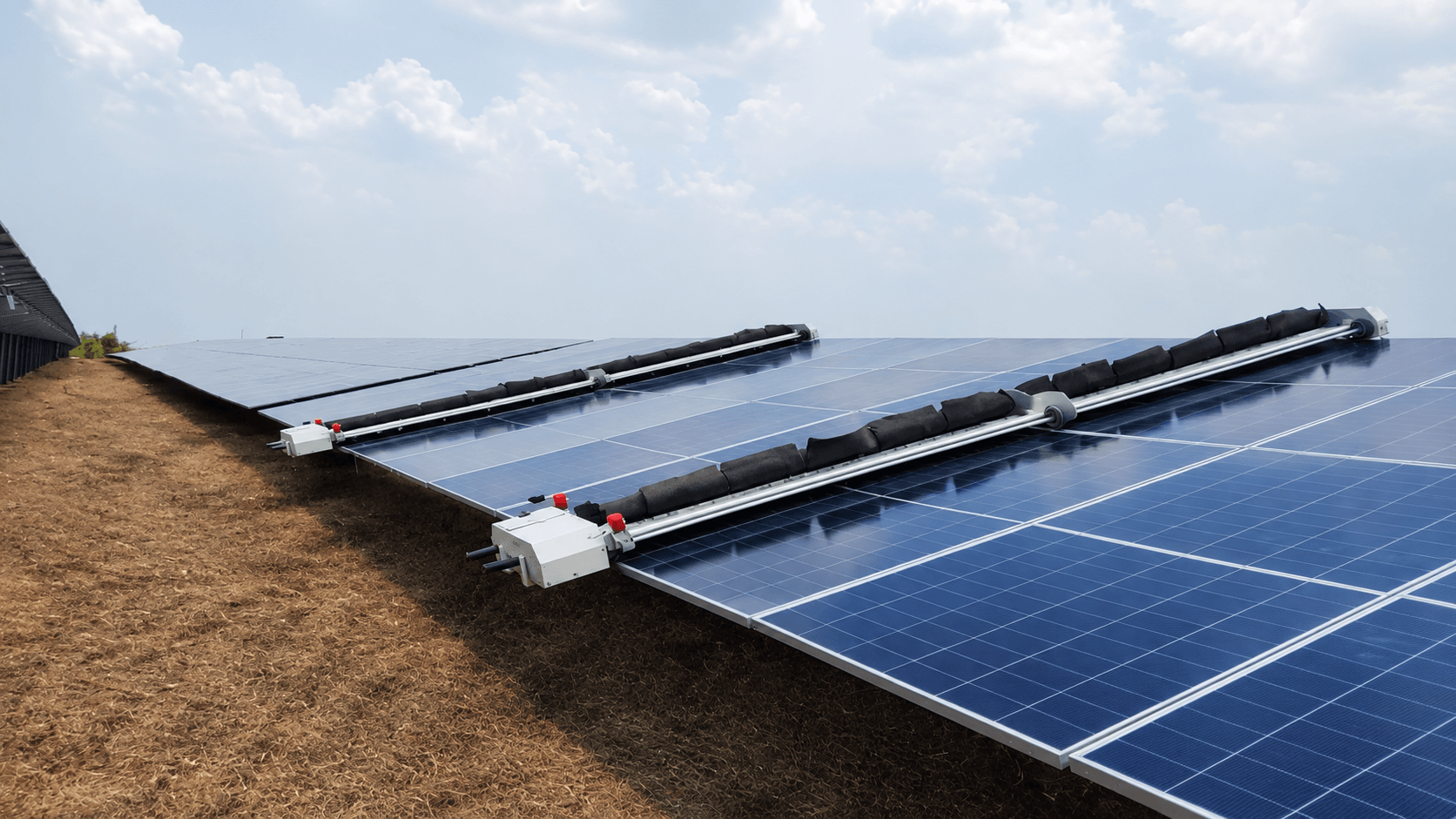
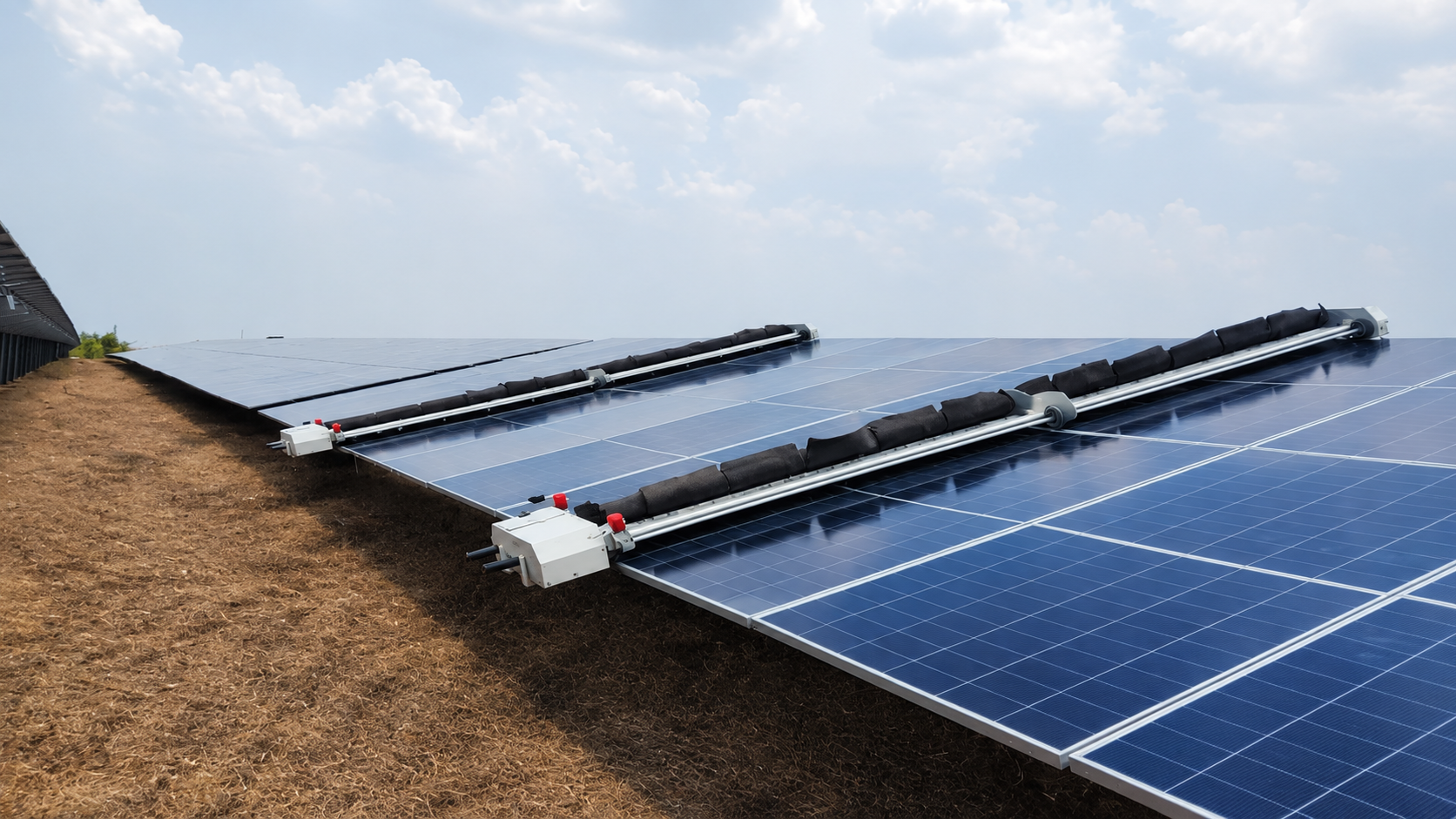
Taypro solved these issues by deploying 4 HELYX semi-automatic robots. This transition moved the site from manual cleaning to a structured programme. The facility now uses 3 to 10 scheduled dry cleaning cycles every month. This robotic solar panel cleaning Maharashtra deployment eliminated the management blind spot. It ensures every block receives high-quality cleaning without disrupting other maintenance tasks. The project now generates an extra 375 MWh per year. It also saves 1.4 million litres of water annually. This case study shows how robotics can overcome harsh environmental conditions.
Environment and soiling at Ahmadnagar- Nanduri Dumala
Environmental Challenges and String-Level Soiling at Ahmadnagar-Nanduri Dumala
The 375 MW Ahmadnagar-Nanduri Dumala solar project is located in a unique micro-climate. This area has intense agricultural activity. It is also very close to major regional transport corridors. These two factors create a very difficult soiling profile. This profile is much different from standard dust accumulation models. The site faces two main types of debris. First, it deals with airborne particulates from nearby crop cycles. Second, it deals with fine road grit carried by the wind. These factors create thick and uneven layers of grime on the solar arrays.
The humidity in the area makes this dust even more problematic. The site experiences regular diurnal humidity cycles. During the night and early morning, moisture deposits on the panels. This moisture then reacts with the agricultural dust. The dust and water create a semi-adhesive film. This film is very stubborn. It does not wash away with wind or light rain. The grime becomes a thick layer that resists natural cleaning. This process makes the soiling much harder to manage than dry dust.
The deposition of this dirt is not uniform. Some rows are closer to local access roads. Other rows are near vegetation buffers. Because of this, the soiling is highly irregular. It creates "string-level" degradation. This means some strings of panels lose much more power than others. Traditional plant-wide monitoring systems often miss these local variations. If you only look at the total plant output, you might miss specific dirty blocks. This makes granular maintenance essential for the site.
Effective O&M in this region requires a very specific approach. Before implementing robotic solar panel cleaning in Maharashtra, the site struggled. They could not easily match maintenance schedules to these humidity-driven soiling spikes. The local environmental burden includes these key factors:
- Active agricultural lands cause seasonal spikes in organic dust.
- Road-adjacent rows accumulate grit much faster than interior blocks.
- Nightly humidity cycles turn loose dust into a sticky film.
- The lack of string-level data prevented precise cleaning targets.
- Traditional cleaning methods could not address the uneven grime layers.
O&M before Taypro
Managing the Audit Gap in Manual Solar Cleaning
Before the switch to robotics, the 375 MW project used manual labour. This model faced many logistical hurdles. The biggest problem was the difficulty of verifying work quality. The site is massive. Because of its size, supervisors could not check every panel. They could not confirm if specific blocks or strings were actually cleaned. This created a persistent "audit gap." Managers could not prove that their manual teams were actually doing the work. They also could not link team deployment to power generation recovery.
Manual crews also created operational friction. Water logistics were a major headache. The plant had to schedule complex water transport to remote sections. Moving water tankers across a 375 MW site is difficult and expensive. These water requirements often clashed with other important tasks. For example, cleaning crews often competed with vegetation management teams. They also competed with civil maintenance schedules. This competition led to delays in critical O&M windows.
The workforce also faced scheduling challenges. Many cleaning tasks had to happen at night. This was done to avoid the extreme daytime heat. However, night-shift scheduling added more complexity. It was hard to coordinate crews, water, and lighting. This often resulted in inconsistent cleaning across the array. Some blocks were cleaned frequently, while others were neglected. This lack of consistency led to unpredictable energy losses. The plant could not direct crews to the most heavily soiled segments. This resulted in a constant struggle to maintain peak performance.
- The manual audit gap made per-block verification impossible.
- Water logistics competed directly with vegetation and civil works.
- Night-shift scheduling added layers of operational complexity.
- Unverifiable documentation led to unpredictable energy losses.
- Crews could not target the most heavily soiled string segments.
- Manual methods were highly dependent on weather and water availability.
Fleet and deployment at 375 MW
Fleet Deployment and Robotic Solar Panel Cleaning in Maharashtra
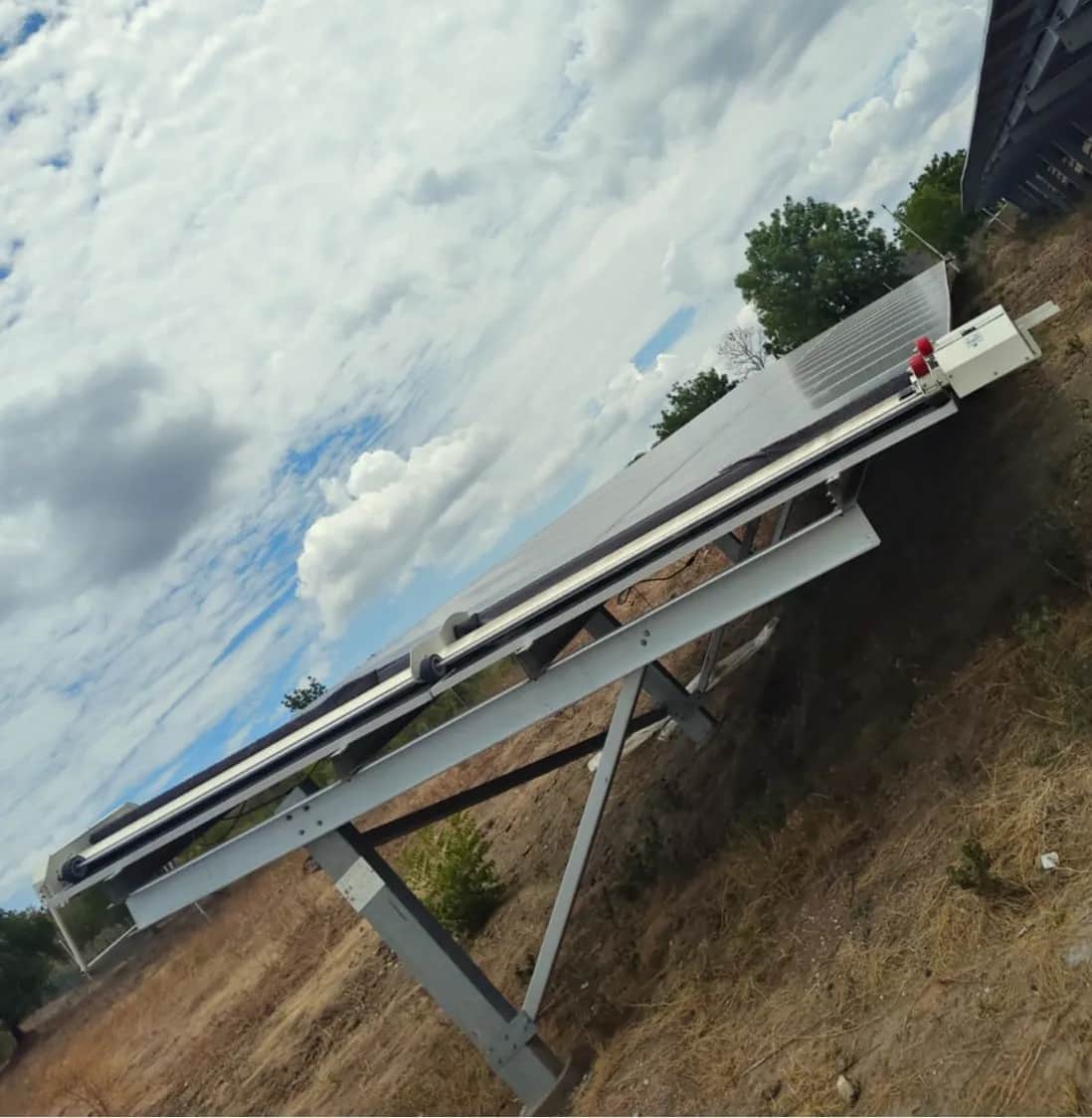
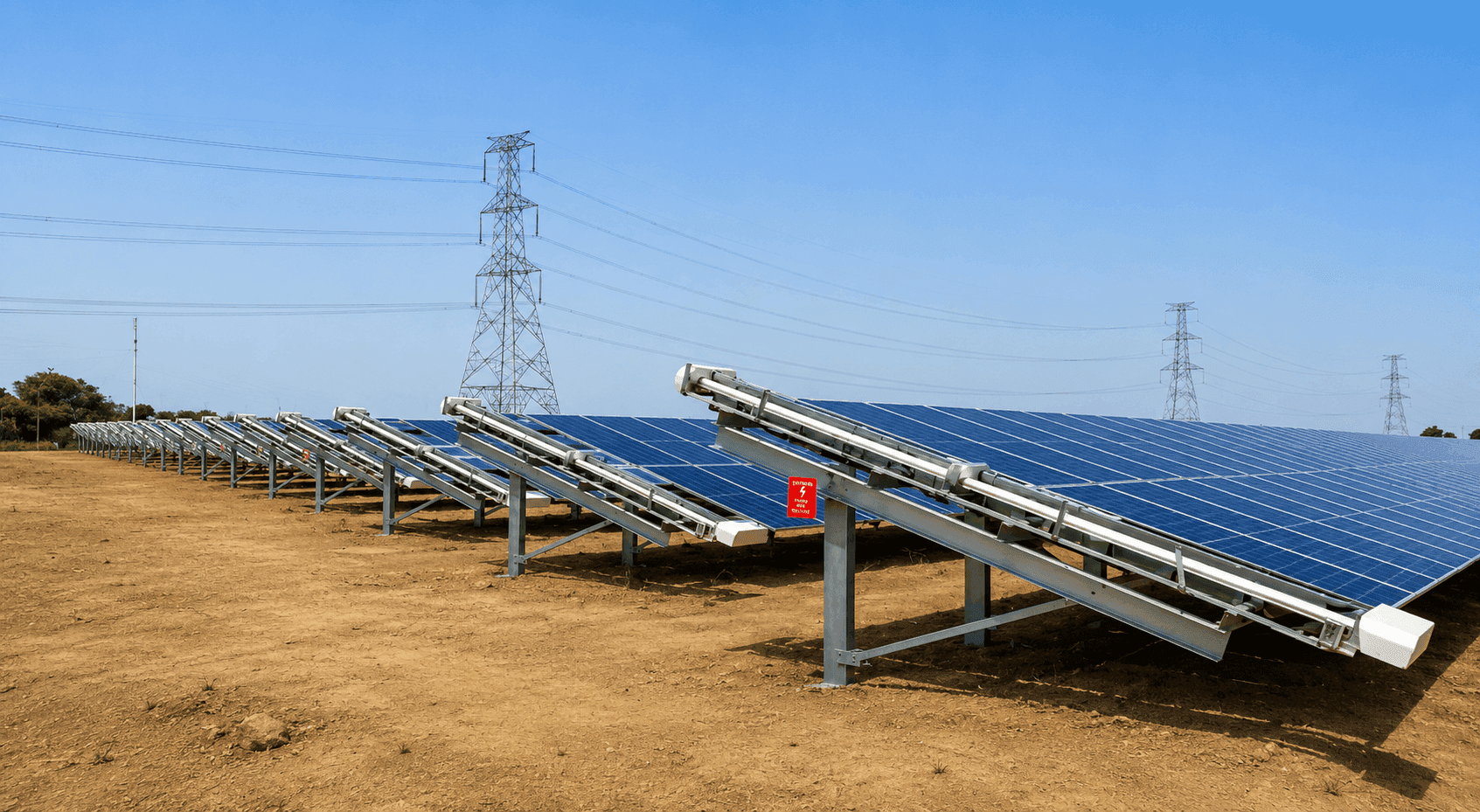
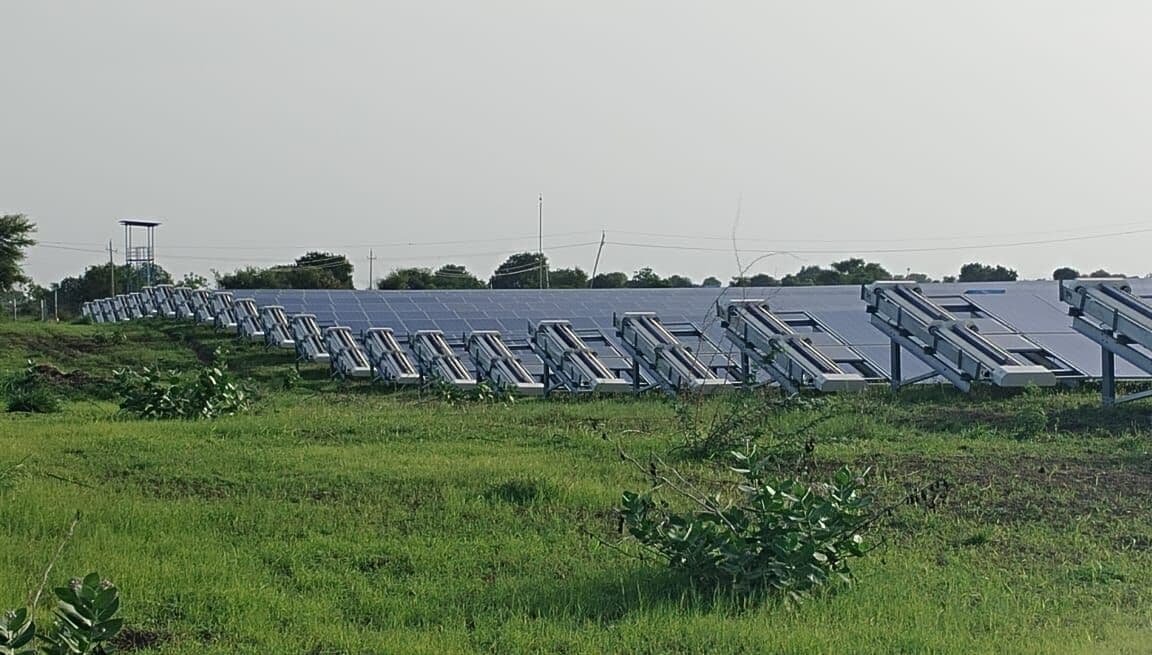
Taypro deployed a fleet of 4 HELYX semi-automatic robots to fix these issues. This deployment uses a CAPEX procurement model. This model gives the asset owner a durable, site-owned solution. The robots are designed for the specific needs of ground-mount arrays. By moving away from manual labour, the site has gained a data-backed regimen. This new system eliminates the need for unpredictable night-crew scheduling. It provides a much more stable operational foundation.
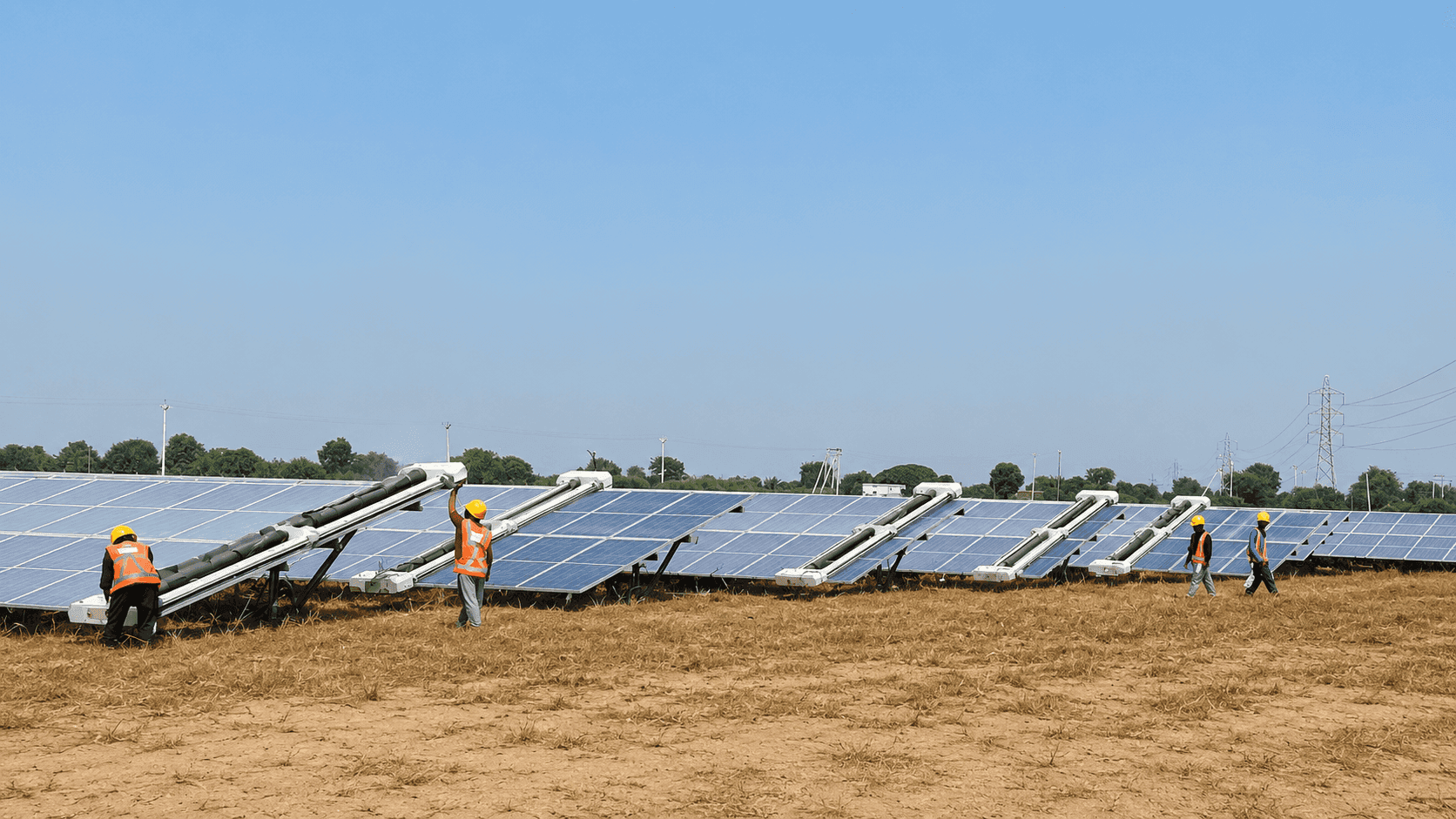
The HELYX robots are ideal for this specific site. They use single-pass PBT brush technology. This technology is engineered for scattered and distributed utility-scale layouts. The robots are very easy to move. They use a "pick-and-place" method for deployment. This allows the O&M team to move the fleet across different blocks quickly. They can do this without interfering with vegetation or civil maintenance. This flexibility is vital for a site as large as 375 MW.
The cleaning cadence is now highly structured. The site uses a schedule of 3 to 10 dry cleaning cycles per month. This allows the team to respond to uneven soiling patterns. If a specific block gets hit by road grit, the robots can target it. This prevents the "blind spots" seen in the manual era. This robotic solar panel cleaning in Maharashtra has also saved a massive amount of water. By using waterless dry cleaning, the site saves 1.4 million litres of water every year. It is a much more sustainable way to manage a large-scale plant.
This transition also empowers the site supervisors. They now have access to verified cleaning logs for every string. In the past, cleaning completion remained unrecorded. Now, the deployment allows for precise coordination. Managers can match cleaning cycles with plant performance data. This systematic approach ensures the 375 MW array stays consistent. The robots target the most heavily soiled segments first. This strategy has successfully added 375 MWh of generation per year.
- The HELYX fleet uses single-pass PBT brush technology.
- Deployment follows a cadence of 3 to 10 dry cycles per month.
- Pick-and-place portability allows for easy movement between blocks.
- The waterless method saves 1.4 million litres of water annually.
- The CAPEX model ensures long-term asset ownership and durability.
- Robots can be deployed without disrupting vegetation management.
Operations and monitoring
Optimizing Cleaning Cadence and Operational Accountability
At the 375 MW Ahmadnagar-Nanduri Dumala project, robotics has solved many logistical bottlenecks. The HELYX fleet is now part of the standard O&M framework. This allows supervisors to align cleaning cycles with specific environmental events. For example, they can schedule cleaning after a period of heavy agricultural dust. They can also react to shifts in humidity. This semi-automatic approach is very flexible. It provides 3 to 10 dry cleaning cycles per month. This keeps the panels clean without the heavy burden of water logistics.
Accountability is now a core part of the operation. The NECTYR portal provides inspection-led accountability. This replaces old, unverifiable manual reports. Now, the system provides digital logs. These logs confirm exactly which strings have been cleaned. This level of detail was impossible with manual crews. It gives asset managers total transparency. They can see the exact state of the plant at any time. This digital oversight is a major upgrade for the facility.
The workflow also helps with site-wide scheduling. Robot deployment is now planned around other maintenance. It no longer competes with vegetation or civil works. This prevents the scheduling conflicts that once plagued the site. The system also eliminates the need for expensive water logistics. The site no longer relies on hauling water tankers across the large facility. This allows the plant to scale its maintenance independently. It is no longer limited by water availability or transport bottlenecks.
- NECTYR provides digital logs to confirm cleaning completion.
- Cleaning cycles are scheduled around vegetation and civil maintenance.
- Water-intensive logistics are eliminated through waterless cleaning.
- Supervisors can target the most heavily soiled segments directly.
- Digital oversight provides high visibility for all stakeholders.
- The system allows for scaling maintenance without increasing water use.
By shifting to this robotics-led model, the plant has eliminated many inefficiencies. The HELYX robots are a durable, CAPEX-based solution. They fit perfectly into the existing ground-mount array layout. This integration allows the site to reclaim 375 MWh of generation every year. It also saves 1.4 million litres of water. With NECTYR-driven oversight, the cleaning standard is very high. The process is now transparent, predictable, and highly efficient for asset managers.
Results and impact
Quantifiable Operational Results at Ahmadnagar–Nanduri Dumala
The deployment of semi-automatic robotic cleaning has changed the site's operational profile. The 375 MW project has moved away from unpredictable manual maintenance. By replacing manual crews with a HELYX fleet, the project is now much more scalable. The plant's performance no longer depends on the availability of water or night crews. This shift ensures a consistent energy output. The system handles the uneven agricultural dust and road grit with ease. It is a robust solution for the Maharashtra climate.
The results of this change are easy to measure. First, the facility achieves significant generation recovery every year. This reclaimed energy was previously lost to soiling. Second, water usage has dropped by over a million litres per year. This reduces the logistical burden of hauling water tankers. Third, NECTYR integration provides granular proof of work. Supervisors can now verify individual string-level cleaning. They can compare cleaning logs against scheduled maintenance intervals to ensure compliance.
The impact of this CAPEX investment is long-term. It extends beyond just immediate power gains. By standardizing the cleaning cadence, the site manages humidity-driven soiling better. In the past, manual interventions were often reactive and incomplete. Now, the approach is proactive and structured. This allows asset managers to maintain higher uptime. It also ensures predictable performance across the entire ground-mount array. This case study proves the advantage of waterless robotics for large-scale utility projects.
- Significant annual generation recovery is achieved via robotic cleaning.
- Water usage is reduced by over 1.4 million litres per year.
- NECTYR provides verifiable proof of cleaning for every string.
- Operational overhead is minimized through better scheduling.
- The site manages humidity-driven soiling through a structured cadence.
- Predictable performance is maintained across the entire 375 MW array.
Peer comparison and planning checklist
Peer Comparison and Operational Planning for Large-Scale Sites
The 375 MW Nanduri Dumala project has a unique profile in Maharashtra. It uses a semi-automatic approach that differs from other sites. For example, the 10 MW Ahmadnagar-Jalalpur plant uses a fully automated NYUMA fleet. That site uses daily waterless cleaning. In contrast, Nanduri Dumala uses a versatile HELYX fleet. This semi-automatic method is better for sites with massive footprints. It offers high adaptability for the road grit and humidity issues found here.
We can also compare this site to the 14 MW Yavatmal-Kupti facility. Yavatmal-Kupti uses a different deployment logic for its specific terrain. Nanduri Dumala, however, benefits from a high-capacity cleaning schedule. This schedule preserves local vegetation windows. The site optimizes the robot-to-row ratio very effectively. This allows for high energy recovery without the high costs of permanent rails. This comparison shows that selecting the right level of autonomy is key to ROI. Whether you choose fully automatic or pick-and-place, the goal is water savings and performance.
For managers planning similar large-scale deployments, we suggest this checklist. Following these steps will help maximize the impact of robotic cleaning:
- Audit your current soiling rates to find the right cleaning frequency.
- Coordinate robot windows with vegetation and civil maintenance schedules.
- Use NECTYR fleet monitoring to get high-visibility proof of work.
- Set up clear storage and charging protocols at block-level staging areas.
- Review energy recovery data regularly to refine your cleaning cycles.
- Match your robot choice (HELYX vs NYUMA) to your specific plant layout.
- Evaluate the local humidity and dust types to plan your cleaning cadence.
Selecting the right technology is the most important decision for an IPP. A semi-automatic HELYX fleet is a great choice for scattered utility blocks. It provides the flexibility needed for large, complex sites. By planning carefully, you can ensure your 375 MW asset reaches its full potential.