Executive summary
robotic solar panel cleaning Maharashtra, The 150 MW Ahmadnagar-Ratnapur solar facility in Maharashtra faces difficult cleaning conditions. The plant uses ground-mount arrays. These arrays suffer from complex and localized soiling. Agricultural dust, road grit, and humidity cycles create stubborn patterns. This soiling is often uneven at the string level. These conditions made previous O&M schedules very difficult to manage.
Water logistics and night crew scheduling were major issues. These tasks often competed with vegetation control and civil maintenance. Furthermore, site supervisors had a significant visibility gap. They lacked per-block proof that every string was actually cleaned. They could not verify the quality of each maintenance cycle easily.
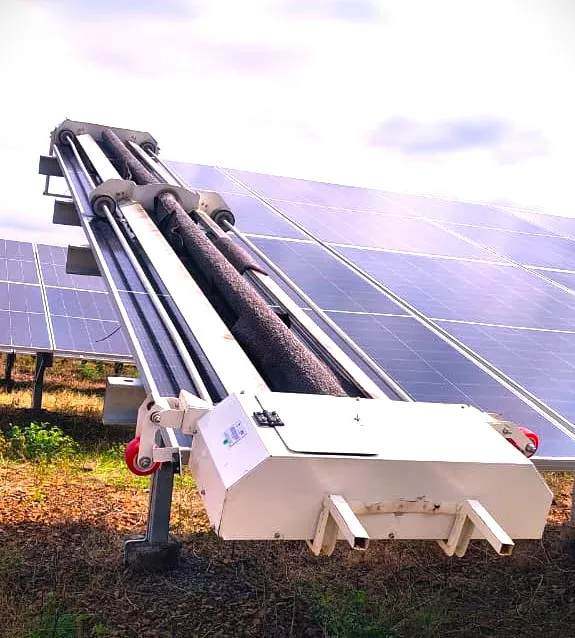
To fix these issues, the plant deployed two NYUMA semi-automatic cleaning robots. The facility used a Capex procurement model for this deployment. This targeted robotic solar panel cleaning Maharashtra solution optimized the cleaning cadence. The site now performs 3 to 10 dry cycles per month. This number depends on site access and local weather. This method removed the need for heavy water use. It also reduced the dependency on manual labor in hard-to-reach areas.
The results are measurable and significant. The plant recovered 150 MWh of additional generation annually. It also saved 560,000 litres of water in Maharashtra. This project proves that robotic cleaning works for large-scale utility sites. It helps overcome tough environmental barriers through automation.
Environment and soiling at Ahmadnagar- Ratnapur
Managing Site-Specific Soiling at the Ahmadnagar-Ratnapur 150 MW Facility
The Ahmadnagar-Ratnapur project has a unique environmental profile. It is located on the interior plains of Maharashtra. This site is different from coastal or desert locations. It sits between intense seasonal farming and busy transport routes. This location creates a complex layer of dust on the panels.
The soiling is both abrasive and sticky. Nearby agricultural activities release fine organic dust into the air. This dust settles on the photovoltaic modules during calm periods. When this dust meets high humidity, a problem occurs. The humidity from the monsoon and post-monsoon cycles turns the dust into a film. This film can feel like a thin layer of cement on the glass.
Road grit also adds to the problem. Heavy vehicles on nearby roads carry silica-rich particles. These particles are very hard. If they are not cleaned correctly, they can cause micro-abrasions on the module surface. This combination of factors makes manual cleaning very difficult and inconsistent.
These environmental factors create uneven soiling at the string level. The ground-mount arrays do not get dirty in a uniform way. This creates several key challenges for the site team:
- Light transmission loss is not uniform across individual strings.
- Organic agricultural debris mixes with humidity to create sticky layers.
- Manual cleaning schedules often clash with vegetation management tasks.
- Civil maintenance windows are often interrupted by cleaning needs.
- The team lacks data on exactly how much dust sits on specific strings.
The facility moved toward robotic solar panel cleaning in Maharashtra to solve this. By using semi-automatic NYUMA units, the team changed its approach. They moved away from broad manual strokes. Now, they use a data-informed method. This ensures that cleaning intensity matches actual performance. It neutralizes the impact of local road dust and seasonal agricultural buildup. This method ensures high-quality results across the entire 150 MW site.
O&M before Taypro
Operational Friction and Audit Gaps in 150 MW Solar Maintenance
Before using Taypro, this 150 MW facility relied on manual cleaning crews. These crews managed the heavy soiling of the Ahmadnagar-Ratnapur region. The landscape is defined by thick agricultural dust and transport grit. These factors create irregular soiling patterns. Because humidity levels fluctuate, the degradation of individual strings is hard to track.
The manual O&M strategy faced three major logistical hurdles. These issues prevented consistent energy generation:
- Water and Labour Logistics: Getting water to the site was a huge burden. Coordinating water delivery for manual crews took a lot of time. These teams also competed with vegetation and civil crews for site access. This led to scheduling conflicts. These conflicts often delayed vital cleaning cycles.
- Night Crew Inefficiencies: The plant often used night crews for cleaning. However, low visibility made this difficult. It was hard to maintain a uniform standard across the huge array. Manual labor lacks the precision needed to fix uneven soiling patterns.
- Verification and Audit Gaps: This was the biggest operational challenge. Supervisors had no reliable way to verify cleaning. They lacked per-block proof of which strings were actually serviced. This created a massive visibility gap. The team could not easily find underperforming strings. They also could not optimize future routes based on real-world data.
The site needed a scalable solution. Transitioning to semi-automatic NYUMA units solved these problems. Automating the process removed the reliance on inconsistent manual labor. It also significantly reduced water consumption. The O&M focus shifted from reactive manual cleaning to a structured, verifiable schedule. The plant moved from guesswork to a data-driven maintenance model.
Fleet and deployment at 150 MW
Optimizing 150 MW Deployment with NYUMA Robotic Cleaning
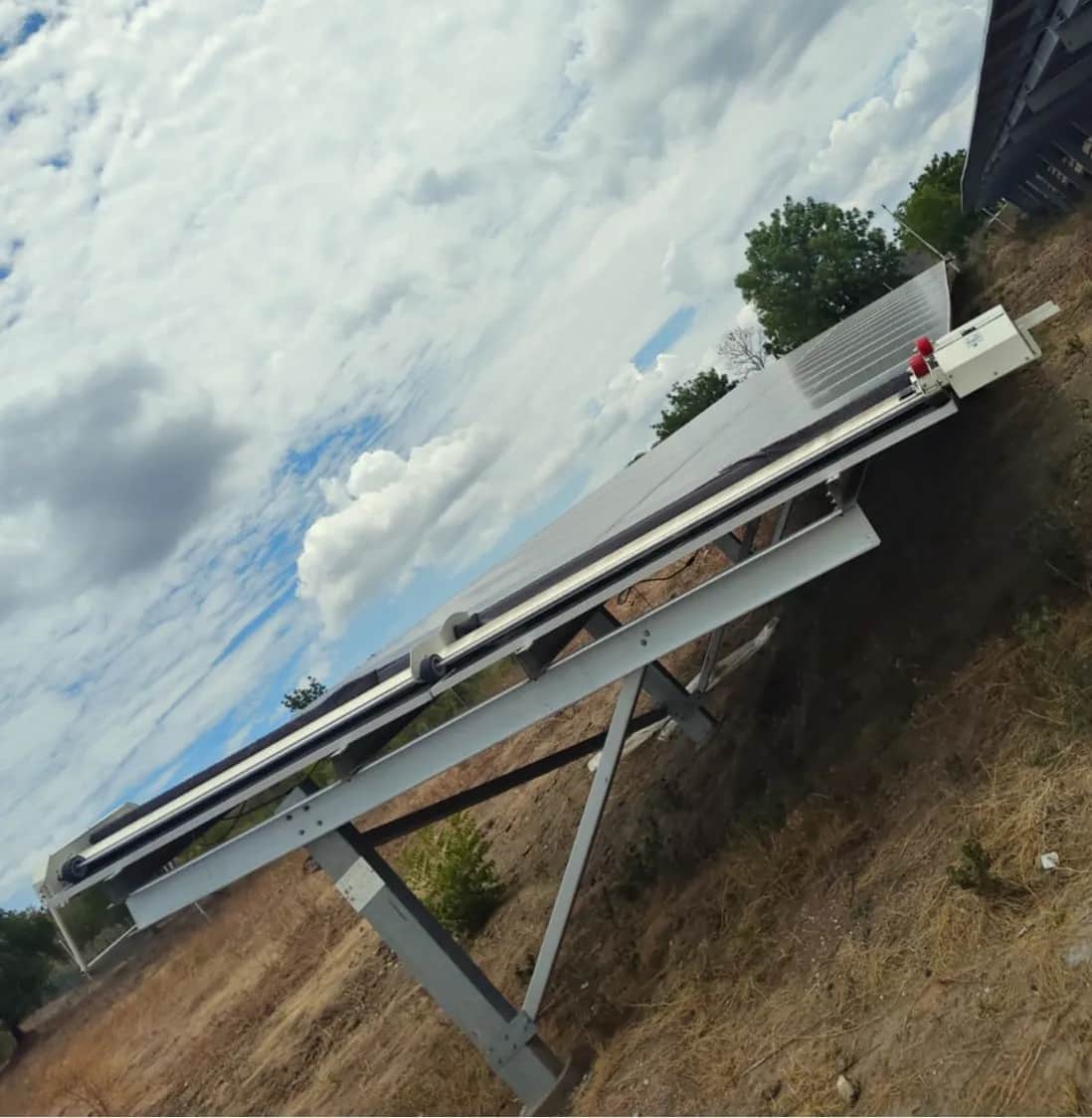
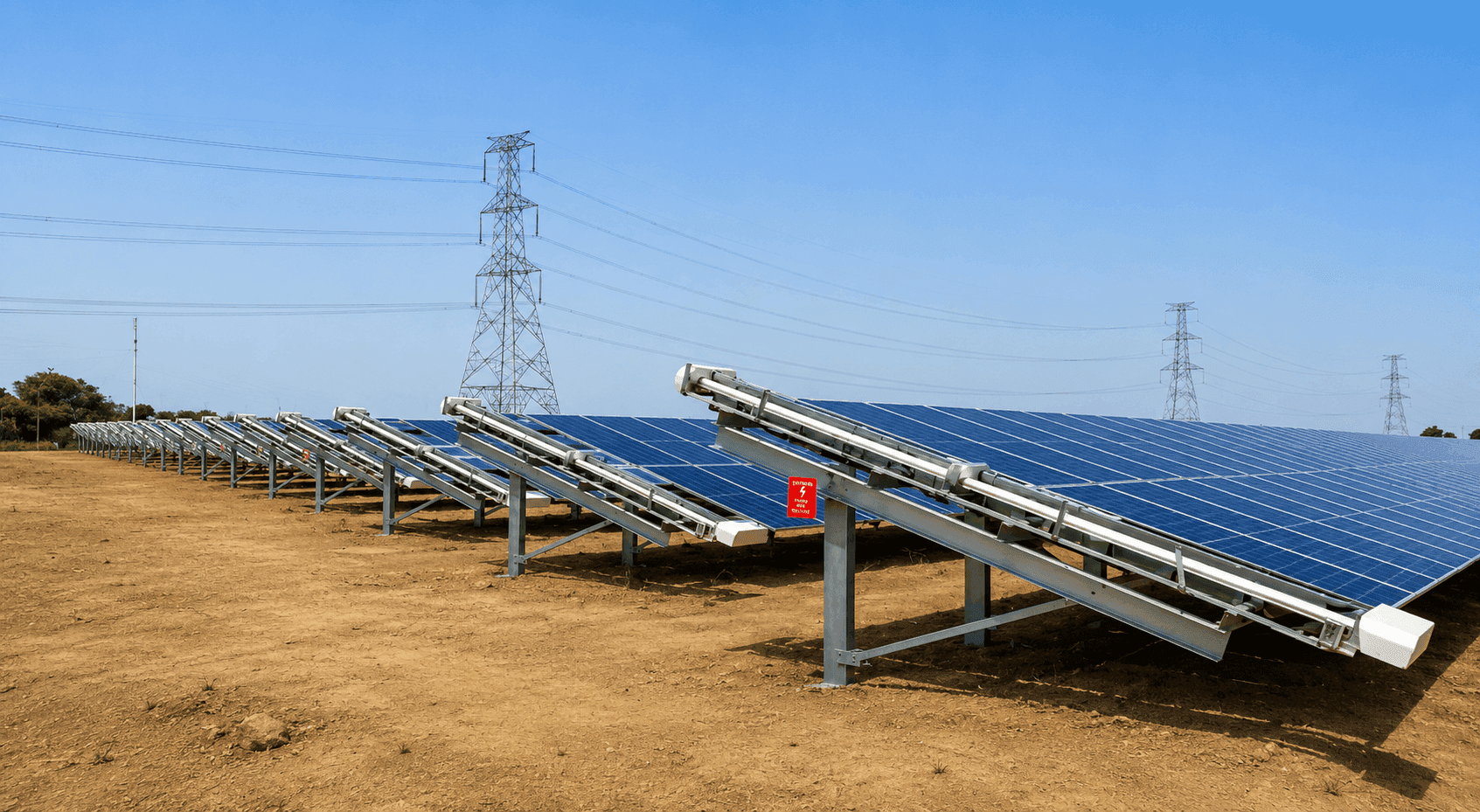
The 150 MW Ahmadnagar-Ratnapur site required a smart, capital-efficient strategy. The soiling from agricultural dust and road grit was not uniform. To address this, we used a CAPEX procurement model. This investment provided two NYUMA robotic units. These units provide scalable coverage for the large site layout.
The NYUMA system was the best choice for this site. It uses single-pass PBT brush technology. This technology provides reliable dry cleaning. It does not require water or liquid surfactants. This is ideal for the Maharashtra region. The deployment follows a structured cleaning cadence. The robots perform 3 to 10 dry cycles per month. These cycles are scheduled to match local soiling and humidity patterns.
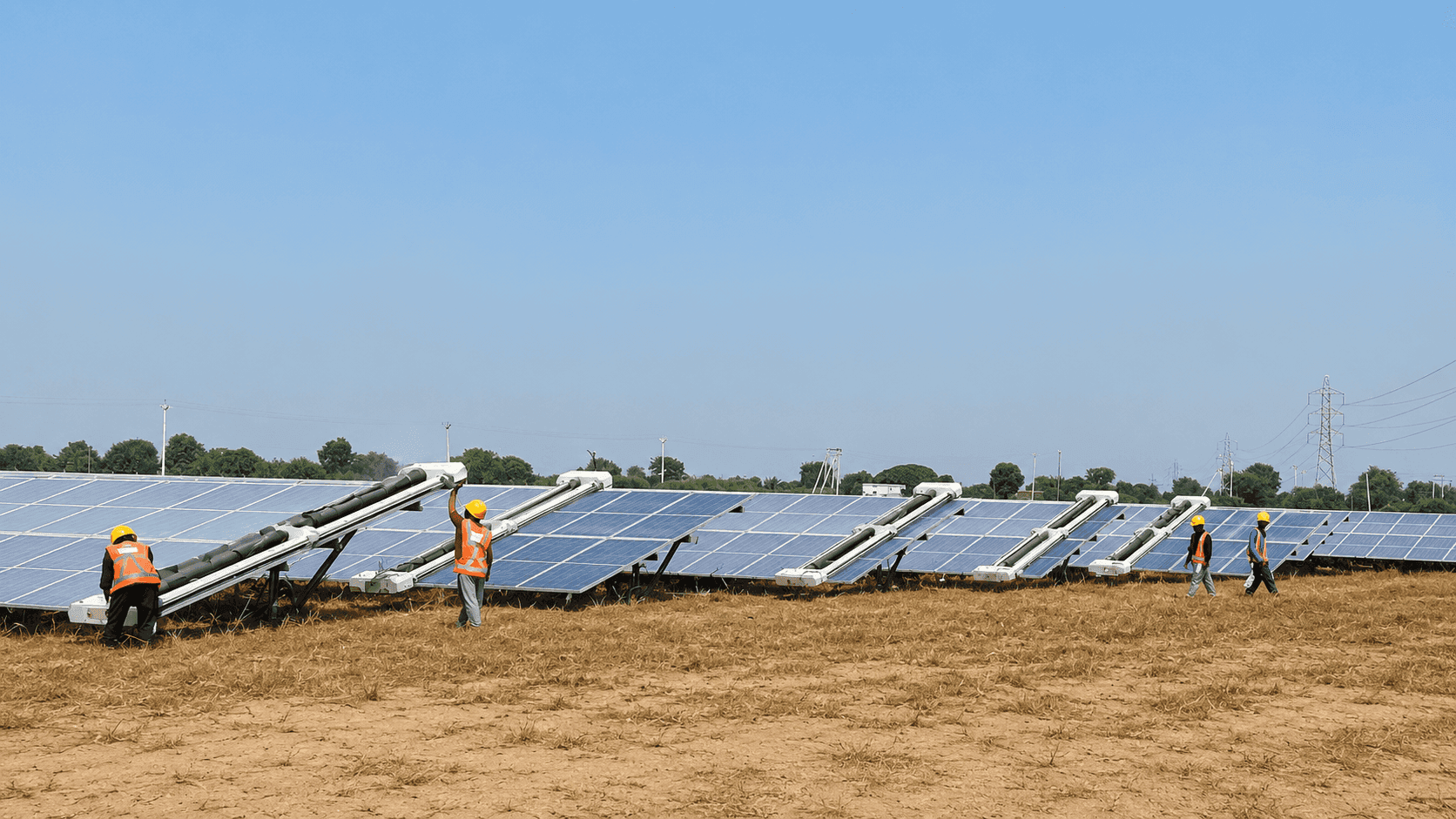
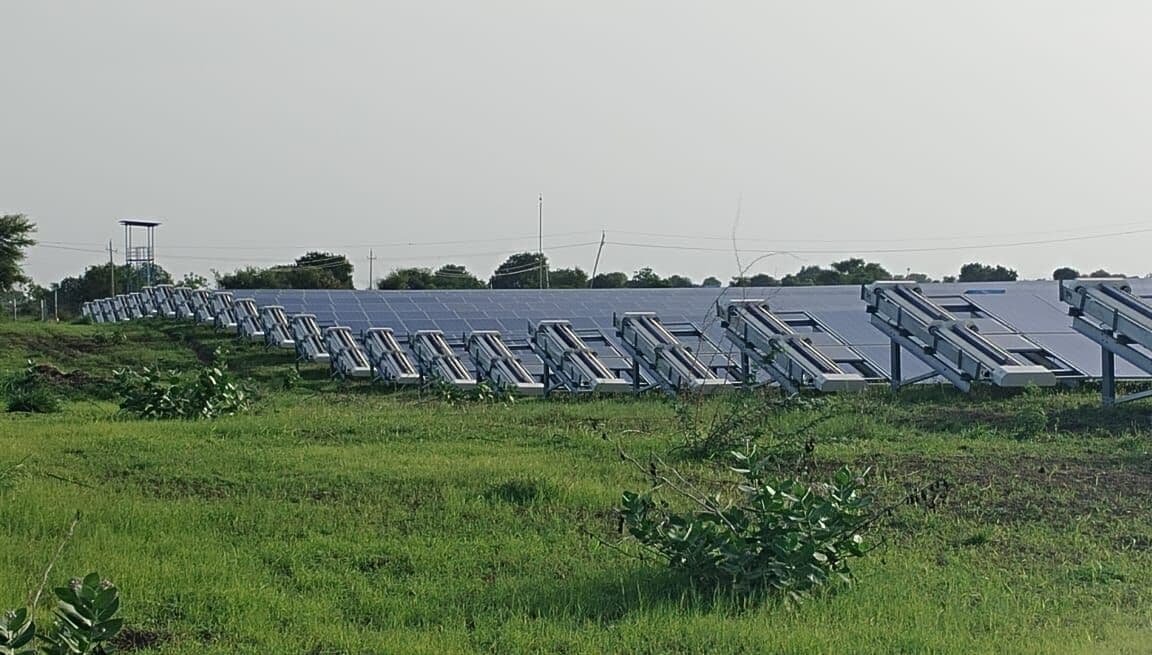
- Strategic Fleet Mix: The two-unit fleet offers high mobility. The O&M team can move the robots to the most impacted blocks. This ensures every string gets consistent maintenance. It also helps manage the uneven soiling caused by local transport grit.
- Commissioning and Integration: We focused the commissioning on efficient docking. We also cleared paths across the site topography. By mapping specific routes, the team ensured the NYUMA robots work well. They can operate alongside existing civil O&M tasks without delays.
- Verifiable Operations: The NYUMA fleet provides actionable data. Supervisors now have data for every cleaning session. This removes the old audit gaps. There is now clear proof of coverage for every block. These robots act as a force multiplier for the site. They help recover about 150 MWh of generation every year.
- Resource Efficiency: This transition shows the benefits of robotic cleaning in Maharashtra. The plant no longer manages heavy water logistics. This helps the plant save 560,000 litres of water every year. It supports sustainability goals and reduces the total OPEX burden.
Operations and monitoring
Operations and Monitoring at the Ahmadnagar-Ratnapur 150 MW Facility
Running a 150 MW site in Maharashtra is a balancing act. Managers must handle complex O&M schedules and unpredictable soiling. Agricultural dust and road grit create uneven accumulation. Moisture and humidity also play a large role. Previously, the project used unverified manual crews. These crews struggled to coordinate with other site tasks. The lack of performance proof made it hard for supervisors to act quickly.
The site solved these gaps with a semi-automatic strategy. They used two NYUMA robotic units. The plant now follows a structured cadence of 3 to 10 dry cleaning cycles per month. This frequency changes based on real-time NECTYR telemetry. The system ensures robots go where soiling is highest. This optimizes the use of the hardware. It also provides auditable, string-level data for the entire site.
- Robotic Accountability: The shift to semi-automatic cleaning improves reliability. Every module is serviced according to verified logs. This is much better than unreliable visual estimates from manual crews.
- Constraint Management: The NYUMA system handles site constraints well. It works within the existing cleaning windows. This allows for efficient, waterless cleaning. It does not disrupt the overall plant uptime.
- Wind and Safety Protocols: Safety is a priority during every cycle. Cleaning is integrated with site-specific wind holds. This protects the robots and the panels during the weather volatility common in Maharashtra.
- Resource Impact: The plant avoids the burden of night-crew scheduling. It also avoids the need for water procurement. Using PBT brush technology saves 560,000 litres of water annually.
Results and impact
Results and Impact
The move to semi-automatic cleaning changed the facility. The Ahmadnagar-Ratnapur site now has a new operational structure. By using NYUMA robotic systems, the site managed regional dust and humidity. The results are very clear. The plant saw a significant increase in annual energy output. It reclaimed much of the generation capacity lost to soiling.
The impact goes beyond just power. The shift to waterless technology improved the resource profile of the plant. Removing water logistics streamlined all maintenance. Site managers can now align cleaning with vegetation and civil O&M tasks. Everything works together more seamlessly now.
- Generation Recovery: Robotic cleaning unlocked 150 MWh of extra annual energy. This directly fixed the production drops caused by uneven soiling.
- Resource Conservation: The project preserves local water reserves. Moving away from water-based cleaning is vital in drought-prone regions. This underscores the value of the robotic model.
- Operational Transparency: The NECTYR software provides definitive proof. Supervisors can see exactly when and where cleaning happened. This moves the site from guesswork to data-backed verification.
- Maintenance Efficiency: The site no longer needs to schedule manual night crews. This reduces administrative stress. The team can now focus on high-value tasks while keeping modules in peak condition.
Peer comparison and planning checklist
Peer Comparison and Planning Checklist
The Ahmadnagar-Ratnapur project is a benchmark for robotic solar panel cleaning Maharashtra. We can compare it to other regional projects. The 10 MW Ahmadnagar-Jalalpur site uses a concentrated semi-automatic strategy. The 150 MW Ratnapur plant shows a much larger scale. It uses the NYUMA system to handle complex, uneven soiling across a massive area. The 14 MW Yavatmal-Kupti project also deals with agricultural dust. However, Ratnapur shows the authority needed for sites over 100 MW.
The Ratnapur project learned from Soyegaon and Jalalpur. It successfully moved from manual maintenance to a robotic O&M model. This deployment proves that robots outperform traditional cycles. This is especially true in regions with road grit and high humidity. Planning for similar sites in Maharashtra requires a detailed approach. You must focus on site logistics and data-backed schedules.
- Assess Soiling Profiles: Run a month-long analysis. Map how agricultural dust and road grit affect string-level energy performance.
- Verify Site Connectivity: Set up NECTYR integration across all blocks. This guarantees real-time visibility into all cleaning activities.
- Synchronize O&M Windows: Align robotic cycles with vegetation management. This prevents scheduling conflicts between different crews.
- Define Cleaning Cadence: Create a recurring schedule based on local weather. This ensures modules stay clean without needing manual help.
- Evaluate Infrastructure Needs: Check if end-row clearance is sufficient. Ensure the mounting hardware supports your chosen robot fleet.