Executive summary
robotic solar panel cleaning Maharashtra. The 225 MW Sakegaon solar project is located in Ahmadnagar, Maharashtra. This site faced major issues with energy performance. The ground-mount arrays suffered from uneven soiling. This soiling was caused by agricultural dust and road grit. Frequent humidity cycles also made the problem worse. These factors made maintenance very difficult. Traditional cleaning schedules could not keep up with the local dirt patterns. This caused constant losses in energy generation.
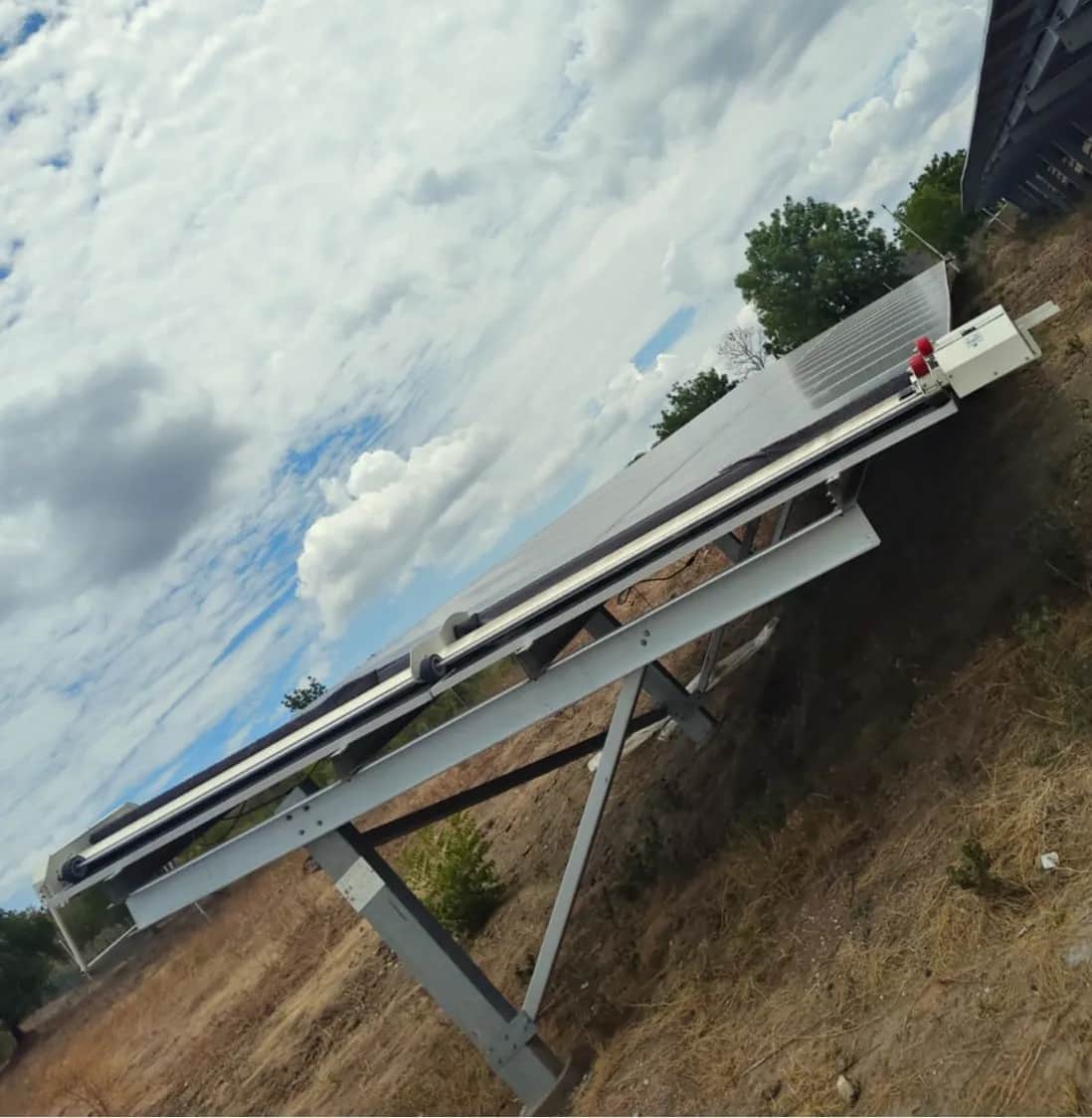
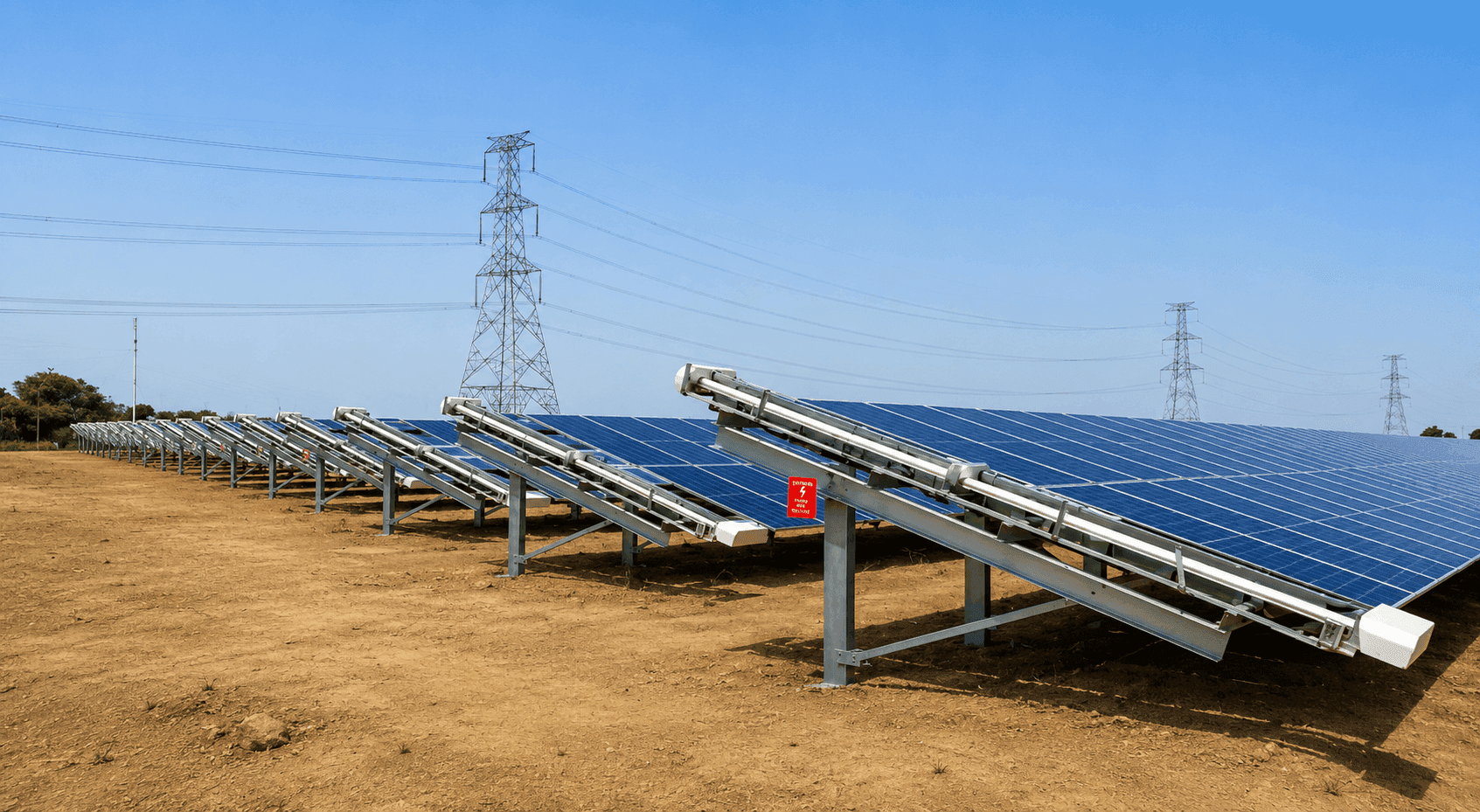
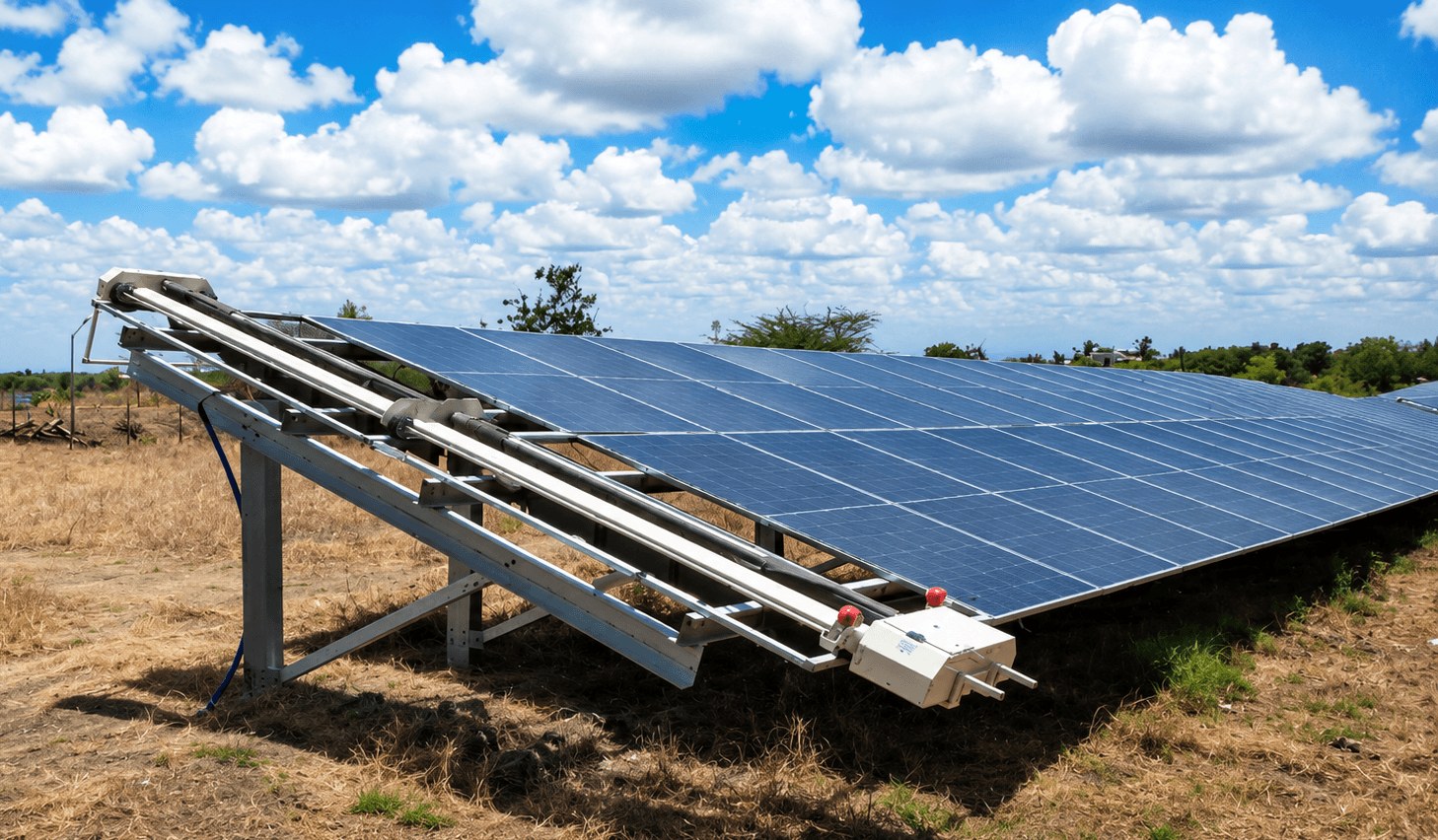
Taypro provided a solution with a semi-automatic cleaning strategy. We deployed three HELYX robotic units at the site. This deployment helped site supervisors gain much better visibility. They can now establish verified cleaning cycles for every block. This solved the previous lack of accountability in the O&M workflow. The site team no longer struggles with water logistics. They do not need to manage difficult night-shift cleaning crews. This allows staff to focus on vegetation and civil maintenance tasks.
The shift to semi-automatic robotic cleaning has brought great results. The Sakegaon facility now recovers an extra 225 MWh of energy every year. The plant also saves 840,000 litres of water annually. This success proves the value of robotic solar panel cleaning in Maharashtra. It is a scalable solution that boosts output. It also reduces resource use in water-stressed areas.
Environment and soiling at Ahmadnagar- Sakegaon
Environmental Drivers and String-Level Soiling in Sakegaon
The 225 MW Sakegaon project sits in a high-dust agricultural zone. This area in Ahmadnagar, Maharashtra, is quite harsh. The site faces a mix of airborne particles. Some dust comes from fine tilled soil in nearby farms. Other grit comes from local transport routes and roads. This creates a pattern of uneven soiling across the site. Standard cleaning methods often fail to fix these patterns.
Humidity cycles in Maharashtra make the problem worse. Moisture binds the agricultural dust to the solar modules. Dew forms on the panels overnight. The high heat during the day then evaporates the water. This process creates a hard, calcified layer on the surface. This layer is very resistant to basic manual wiping. It often results in "string-level soiling." This means specific sections of the array underperform due to uneven dirt.
These environmental factors impact the Sakegaon plant in two ways:
- Non-Uniform Accumulation: Road grit settles near the site boundaries. This causes faster soiling in peripheral rows than in central blocks.
- Manual Cleaning Gaps: Human crews often struggle with consistent pressure. They may leave behind stubborn residue that is baked on by the sun.
Before the robots arrived, supervisors had no granular proof of cleaning. They could not see if every block was truly clean. This led to steady energy losses. The O&M team has now standardized the cleaning process with HELYX robots. These units ensure every row gets the right brush contact. This removes the grit and dust crust effectively. It also mitigates the localized soiling typical of the Ahmadnagar climate.
O&M before Taypro
Logistical Constraints and Manual O&M Limitations in Sakegaon
The O&M department faced many struggles before moving to robotic solutions. Managing a 225 MW site manually is very hard. The facility required massive amounts of water for daily maintenance. This was a heavy burden in a water-stressed region of Maharashtra. Coordinating water logistics was a complex and tiring task. These tasks often clashed with other important site work. For example, cleaning schedules competed with vegetation and civil maintenance windows.
The manual labor model also caused management hurdles. Supervisors faced a major "audit trail" crisis. They lacked proof of which strings were actually cleaned during a shift. When the night crew or day labor team finished, there was no record. They could not verify if brushes reached the dirtiest sections. They also could not confirm if pressure was consistent across the entire array.
This oversight caused several operational failures:
- Resource Conflict: Water transport and cleaning crews created bottlenecks. This interrupted vital vegetation and civil maintenance.
- Audit Gaps: Without digital proof, leaders could not confirm cleaning quality. This led to hidden energy losses.
- Labour Inconsistency: Manual work is physically demanding. It is hard for crews to remove stubborn agricultural grit consistently.
By moving away from manual cleaning, the project team removed these burdens. They no longer need to oversee every individual cleaning cycle. The current semi-automatic robotic system provides the reliability they needed. The site now has the data-backed performance it lacked under the manual regime.
Fleet and deployment at 225 MW
Fleet Deployment and Robotic Solar Panel Cleaning in Maharashtra
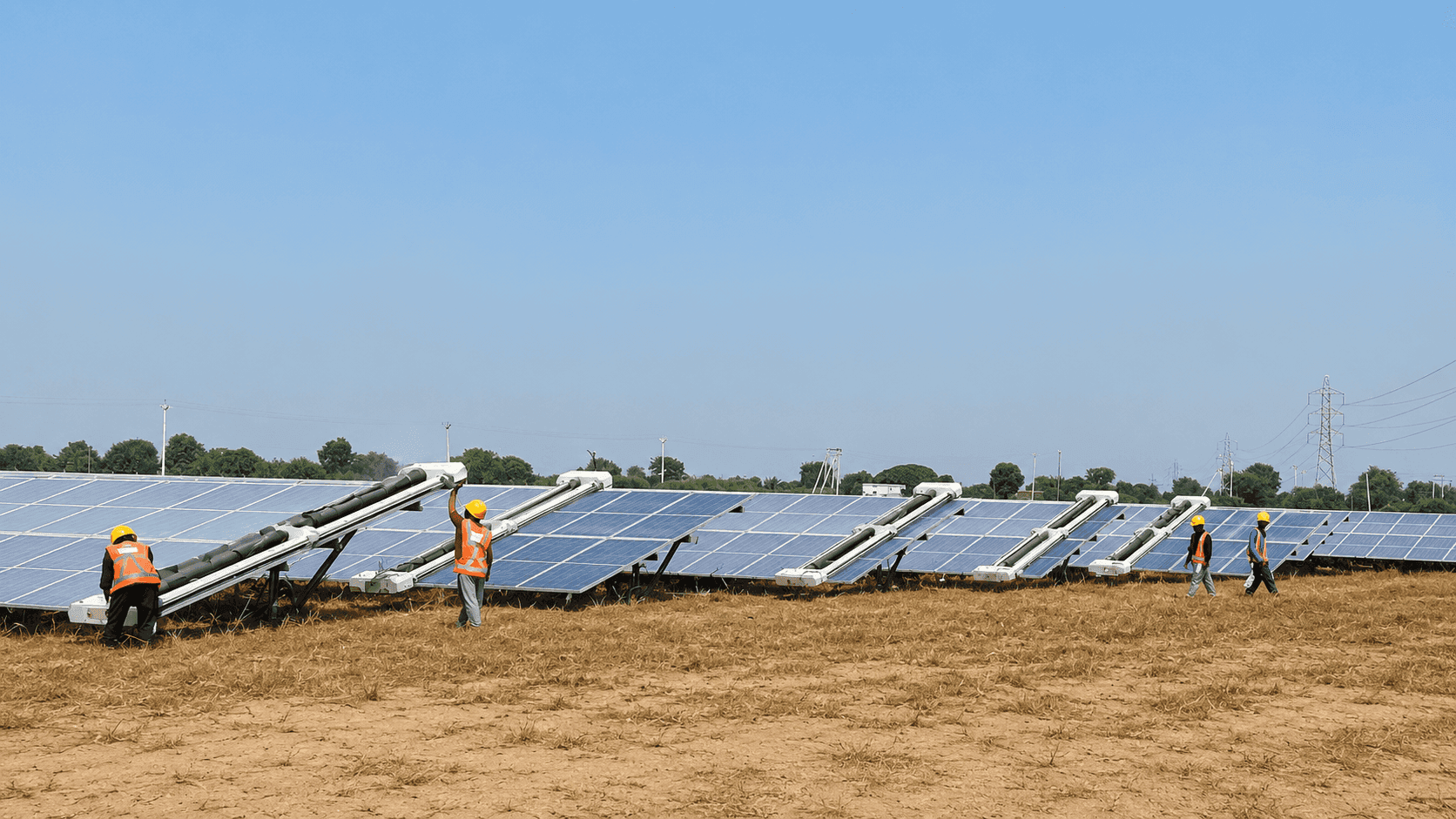
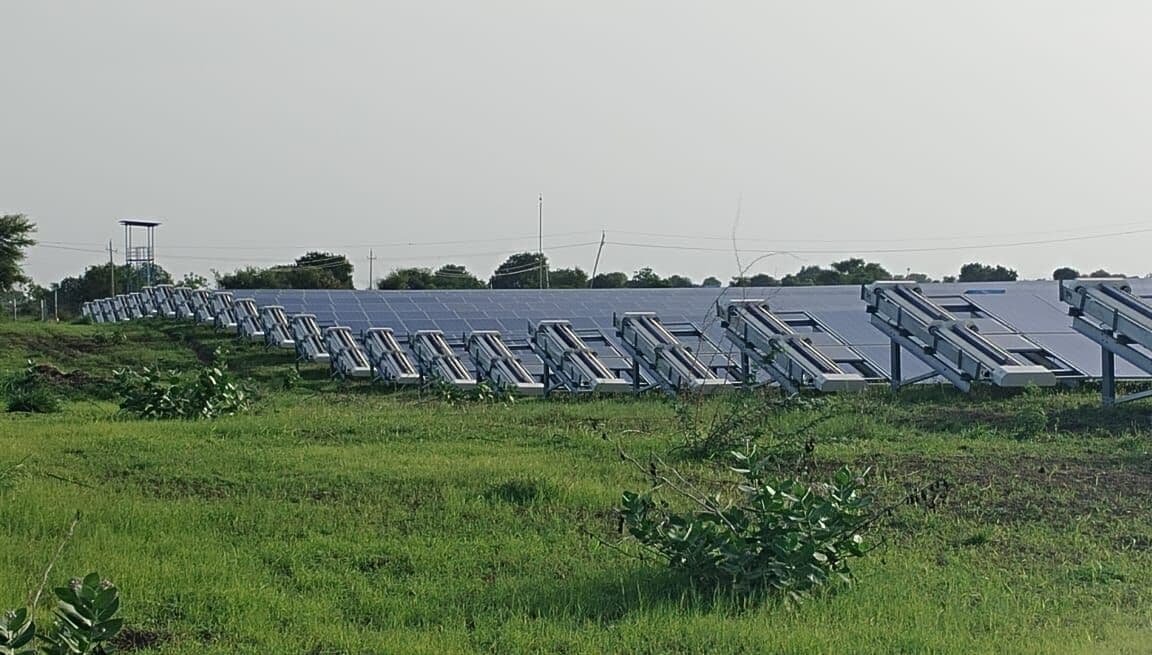
Taypro implemented a high-efficiency fleet for the 225 MW Sakegaon site. This fleet was designed for the local environment. The deployment used a CAPEX procurement model. This helped the plant move to a standard robotic cleaning regime. The fleet uses three HELYX semi-automatic robots. We chose these because they are highly portable. They can move easily across the scattered blocks of this ground-mount facility.
The HELYX system changes how the site handles soiling. It manages agricultural dust, road grit, and humidity cycles. The facility now follows a regular cleaning schedule. It performs 3 to 10 dry cleaning cycles every month. This frequency is optimized for the local area. It addresses the uneven soiling that used to hurt plant performance.
The commissioning process involved three important stages:
- Initial Site Mobilization: Engineering teams performed a full site survey. They verified the structure for robot deployment. They mapped the specific terrain of the 225 MW array.
- First Successful Pick-and-Place Cycle: The technical team ran the first test. They confirmed the HELYX units achieved full coverage. They ensured the robots did not compromise module integrity.
- Formal Handover to Plant O&M: We transitioned the fleet to the site O&M team. We provided all necessary training. They learned to integrate robotic cleaning into their regular maintenance schedules.
This deployment provided immediate operational benefits. Annual water consumption dropped by 840,000 litres. The robotic fleet also adds 225 MWh of generation every year. This framework solves the complexity of managing manual crews. It also ensures a clear audit trail for every cleaned string in the 225 MW installation.
Operations and monitoring
Optimizing Robotic Solar Panel Cleaning Maharashtra: Shifting from Reactive Logistics to NECTYR Accountability
The 225 MW Sakegaon site once struggled with low visibility. Managing such a large ground-mount facility was difficult. Supervisors could not verify which rows were serviced during manual shifts. Water-intensive cleaning also blocked essential maintenance windows. The transition to the HELYX semi-automatic system fixed these friction points.
The operations team now uses the NECTYR ecosystem. They manage a steady rhythm of 3 to 10 dry cleaning cycles per month. This schedule is tailored to the site's specific challenges. It fights the agricultural dust and road grit. Instead of unverified manual labor, they use the NECTYR portal. This provides a transparent digital audit trail for every robotic pass. Each cycle is logged in the system. This ensures the site reaches its generation recovery goals in all high-soiling zones.
The operation also follows strict safety protocols. For example, the system includes mandatory wind holds. These holds happen during high-velocity weather events. These automated safeguards protect both the equipment and the modules. This ensures that robotic deployment stays consistent even in volatile weather. This is a high-precision, data-backed approach to asset maintenance.
This systematic oversight has improved the site's performance profile. Automating the cleaning cadence avoids common mistakes. It prevents inconsistent coverage and excessive water use. The 225 MW plant is now more resilient. It uses modern monitoring to keep cleaning aligned with real-time soiling data. This protects the energy output of the entire Maharashtra installation.
Results and impact
Results and Impact: Efficiency Gains at the 225 MW Sakegaon Project
The deployment of the HELYX robotic system has transformed the Sakegaon site. It moved from a reactive, manual operation to a data-verified asset. The project has established a high-performance, waterless baseline. This baseline directly addresses the unique soiling profile of Maharashtra. The agricultural dust and humidity-driven grime are now managed effectively. Controlled robotic passes replace unpredictable manual cleaning.
The impact of this model is clear in the power generation gains. The plant captures energy that was previously lost to soiling. It also prevents energy loss from string mismatch. The shift to waterless technology also provides a sustainability benefit. Eliminating water logistics has removed a major operational burden. Site supervisors can now prioritize vegetation control and civil maintenance. They no longer have to compete with water-scheduling requirements.
Key outcomes of the project include:
- Accountability and Proof: The NECTYR portal replaced manual uncertainty. It provides a transparent digital log for every serviced block.
- Resource Optimization: The project realized massive savings in water and logistics. This supports long-term operational sustainability.
- Operational Resilience: The autonomous system is very precise. It protects the modules from abrasive road grit and agricultural dust.
- Performance Consistency: Clean panels lead to stable energy output. This prevents the historical performance drops caused by uneven soiling.
This transition proves that large plants in Maharashtra can be self-sustaining. By integrating the HELYX system, the Sakegaon site has achieved a better balance. It offers technical efficiency, low environmental impact, and verifiable oversight.
Peer comparison and planning checklist
Benchmarking Robotic Solar Panel Cleaning Maharashtra: Performance at Scale
The 225 MW Sakegaon project is a benchmark for the region. It shows how robotic solar panel cleaning in Maharashtra works at scale. Compare it to the 10 MW Ahmadnagar-Jalapur project. Jalapur is a pilot for smaller, localized grid nodes. Sakegaon shows how the system scales up. While the Jalapur site needs manual oversight, Sakegaon uses three robots. This approach handles much larger, contiguous ground-mount blocks.
The 14 MW Yavatmal-Kupti project offers another comparison. Yavatmal-Kupti has different site access constraints. Sakegaon uses a structured, multi-block cleaning rotation instead. This rotation manages the specific dust and grit cycles of the area. By using semi-automatic systems, Sakegaon fixes uneven string-level soiling. This helps all similar assets in Maharashtra. Large-scale efficiency is about more than just the number of robots. It is about integrating cleaning into the broader O&M workflow.
Operational Deployment Checklist
- Map Soil Variability: Identify blocks with high dust levels. Prioritize these areas for the robot cycles.
- Synchronize O&M Windows: Schedule cleaning to avoid conflicts. Do not overlap with vegetation or civil work.
- Verify String Performance: Use NECTYR data to audit every block. Ensure every string is cleaned during the monthly cycle.
- Optimize Water Logistics: Move manual staff to supervisory roles. Let them oversee robotic deployment and site safety.
- Establish Maintenance Logs: Use cloud-based records for all cycles. Use these logs to prove your ROI through generation gains.