
Executive summary
robotic solar panel cleaning Maharashtra. The 300 MW Sasewadi solar project is located in Ahmadnagar, Maharashtra. This large facility faced many operational problems. The main issue was the complex local environment. The area has a lot of agricultural dust. It also has heavy road grit from nearby transport routes. Frequent humidity cycles make these problems worse. This combination creates uneven dirt patterns across the solar arrays. These patterns often affect specific strings of panels rather than the whole site.
This uneven soiling causes significant energy losses. Site supervisors also faced a major management challenge. They had no way to prove which specific blocks were cleaned. They lacked real-time data on cleaning coverage. This made it hard to manage water logistics and manual labor crews. Traditional cleaning methods were often inconsistent and hard to track.
To solve these issues, Taypro deployed three HELYX semi-automatic robots. This is a Capex-based solution designed for efficiency. The robots perform targeted dry cleaning cycles. These cycles occur 3 to 10 times per month. This frequency depends on local weather and site access. The project has now recovered 300 MWh of extra generation every year. Also, the site saved 1.1 million litres of water annually. By using waterless technology, the plant has improved its yield and its sustainability.
Environment and soiling at Ahmadnagar- Sasewadi
Environment and soiling at Ahmadnagar-Sasewadi
The Sasewadi solar project operates in a very difficult micro-climate. Maintaining high efficiency here requires constant attention. The Ahmadnagar region is a hub for intense agricultural activity. This creates large amounts of fine, airborne crop dust. This dust travels easily through the air and settles on the solar panels. It forms a thin but stubborn layer over the glass surfaces.
The problem is compounded by the site's location near major roads. Heavy transport vehicles move through this area constantly. These vehicles kick up significant amounts of road grit. This grit is heavier than agricultural dust. It settles deeply into the panel surfaces. Over time, this grit can become very difficult to remove with standard cleaning methods.
The most challenging factor is the local humidity. The Sasewadi area experiences frequent humidity cycles. When moisture in the air meets the dust and grit, a reaction occurs. The water acts like a glue. It binds the particles together. This creates a hard, cement-like crust on the panels. This is not just a uniform layer of dirt. Instead, it creates uneven, string-level soiling patterns.
These patterns are dangerous for energy production. One string of panels might be very dirty, while the next is relatively clean. This causes a "mismatch" in the electrical output of the strings. Such mismatches lead to disproportionate losses in total energy yield. The site cannot reach its full potential if the soiling is not addressed precisely.
Managing this environment was previously very difficult for the O&M team. They faced three main hurdles:
- Competitive Scheduling: The team had to manage night cleaning crews. These schedules often clashed with other tasks. For example, civil maintenance and vegetation control often happened at the same time. This led to delays in cleaning.
- Water Logistics: The site relied on wet cleaning methods. This required moving huge amounts of water across 300 MW of land. Managing water tankers is expensive and slow. It is hard to scale this across such a massive area.
- Accountability Gaps: Supervisors had no way to verify the work. They could not prove which specific strings were cleaned during a cycle. This lack of data made it impossible to maintain consistent maintenance levels.
The transition to the HELYX robotic cleaning system has changed this. The semi-automatic deployment allows for precise cleaning. The team can now target the most soiled strings. Every cleaning cycle is now verifiable and backed by data. This ensures the plant handles the specific dust patterns of the Sasewadi region effectively.
O&M before Taypro
Managing O&M Challenges at the 300 MW Sasewadi Plant
Before using Taypro robots, the 300 MW Sasewadi plant struggled with efficiency. The facility uses ground-mount arrays. These arrays are directly exposed to the harsh local climate. Daily, agricultural dust and road grit settle on the modules. The frequent humidity in Maharashtra then "locks" this dirt in place. This creates a very stubborn layer of soiling.
This soiling was not uniform. It created uneven patterns across the plant. This meant some strings of panels were much dirtier than others. This caused localized shading. Localized shading is a major problem for large solar plants. It triggers string-level mismatches. These mismatches lead to significant and constant energy losses. The plant was essentially leaving money on the table every single day.
The manual O&M process could not keep up. The team faced three major operational pain points:
- High Water Costs: Using water for cleaning is a massive logistical task. The site had to transport and distribute water across a sprawling 300 MW area. This made the cost of cleaning very high.
- Staffing Conflicts: The site had to schedule night crews for cleaning. These crews often competed for space with other workers. Vegetation management and civil works often happened in the same windows. This made it hard to keep a consistent cleaning schedule.
- The Visibility Gap: This was perhaps the biggest problem for management. Supervisors had no real proof of work. They could not see which blocks were cleaned. They could not verify if every string received attention. This lack of transparency made it hard to optimize the O&M budget.
The site needed a more reliable way to maintain its arrays. They needed a system that was not dependent on water or manual oversight. The move to a semi-automatic robotic strategy was the solution. By using robots, the site moved away from unverified manual labor. They adopted a data-backed system. This system ensures every string gets the maintenance it needs to perform at its peak.
Fleet and deployment at 300 MW
Fleet Deployment and Robotic Solar Panel Cleaning Maharashtra
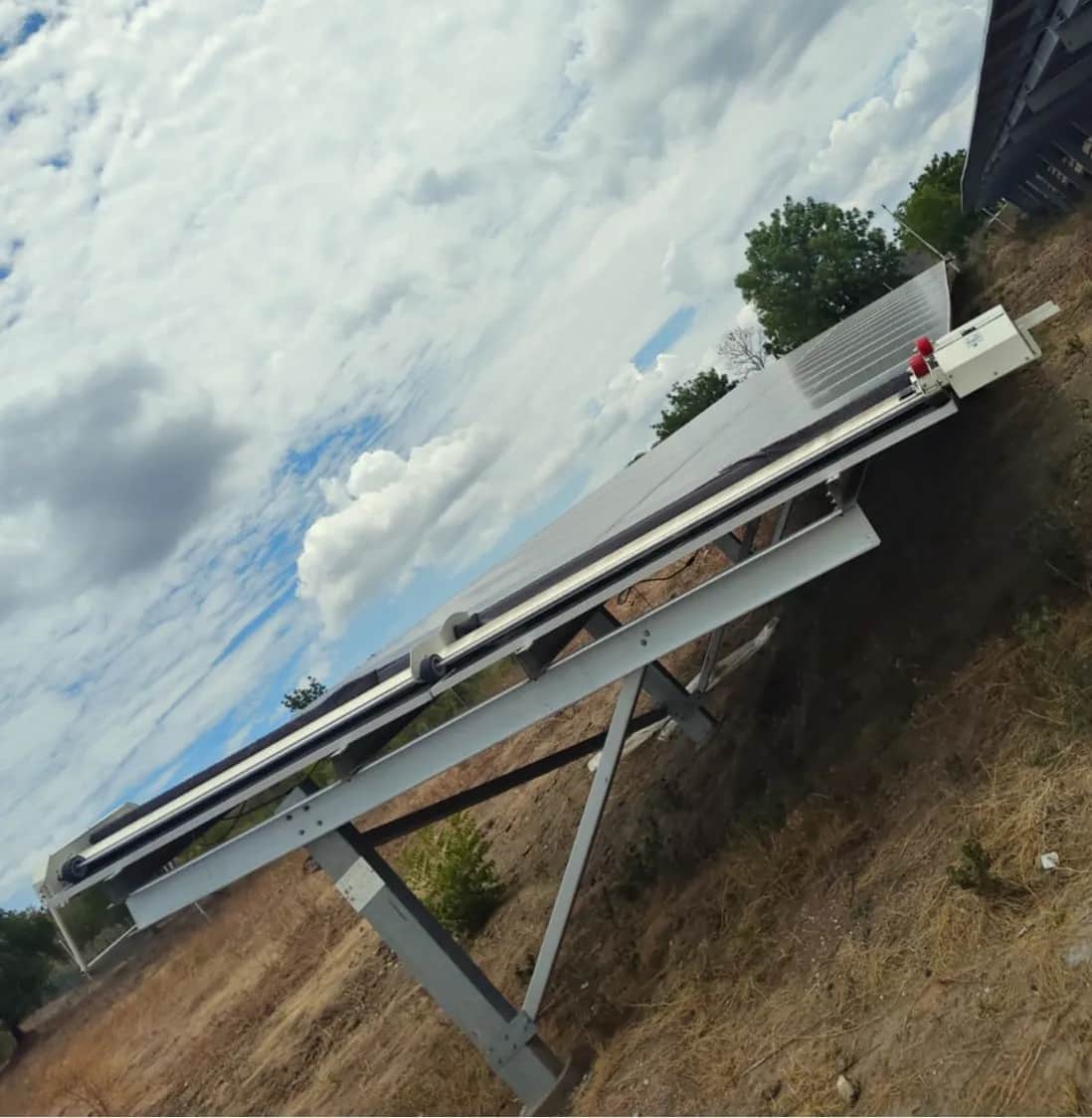
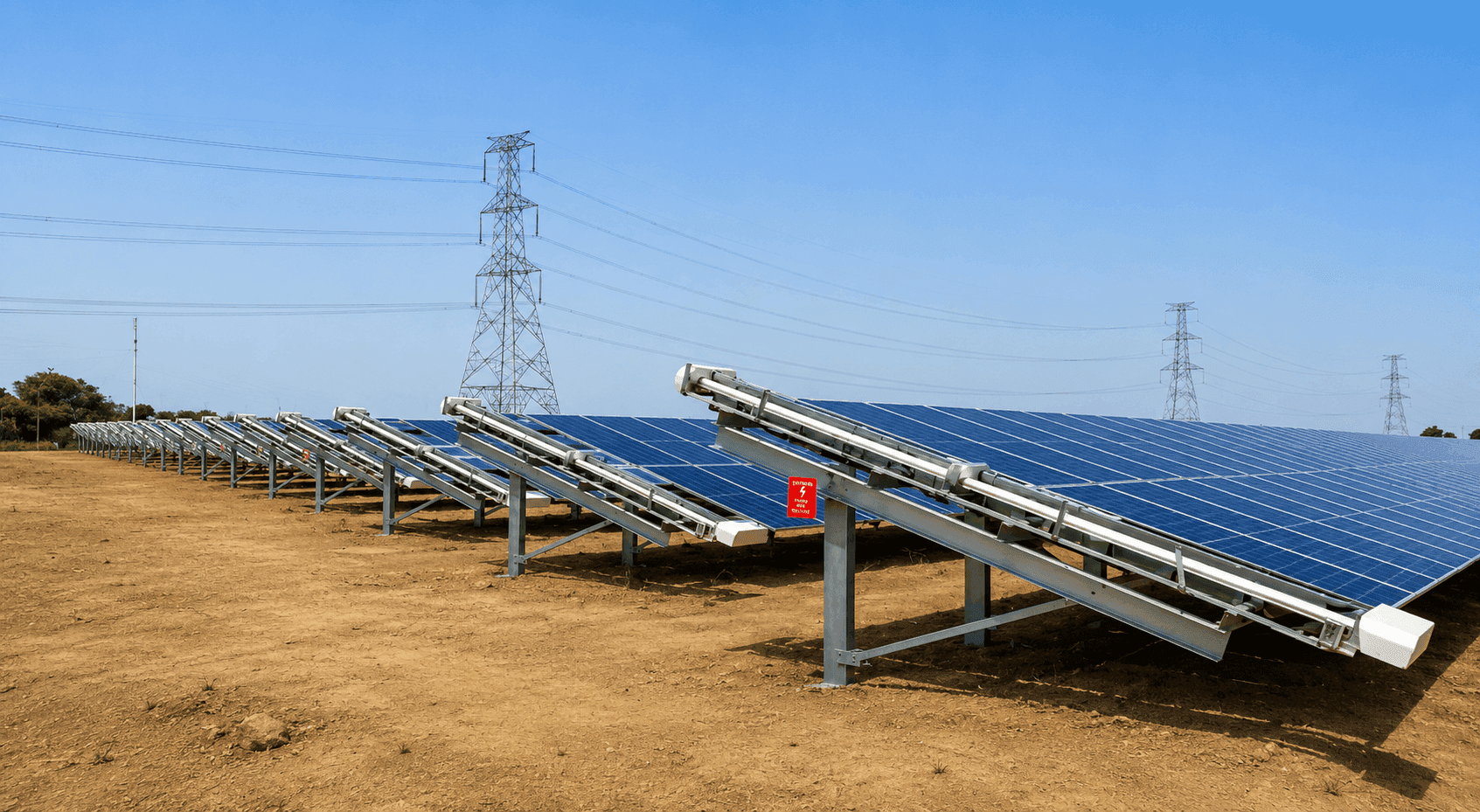
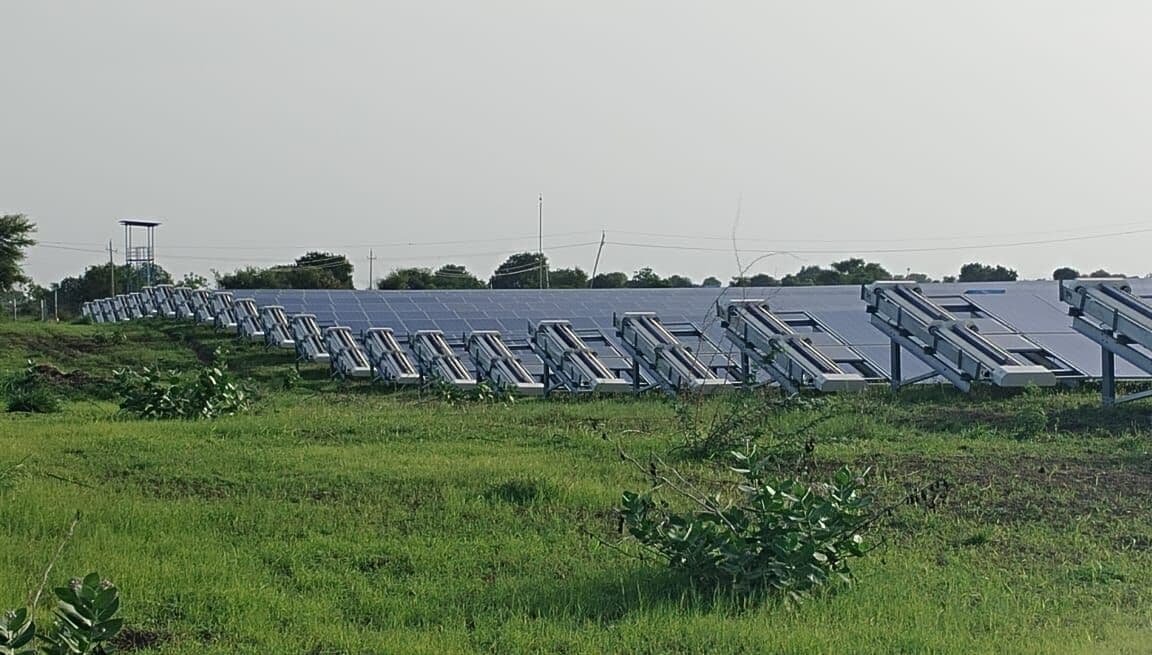
The Sasewadi project uses a specialized fleet to fight soiling. This fleet consists of three HELYX semi-automatic robots. These robots are perfect for the 300 MW ground-mount layout. The project uses a Capex procurement model. This means the site owns the robots. This allows for long-term planning and predictable maintenance costs.
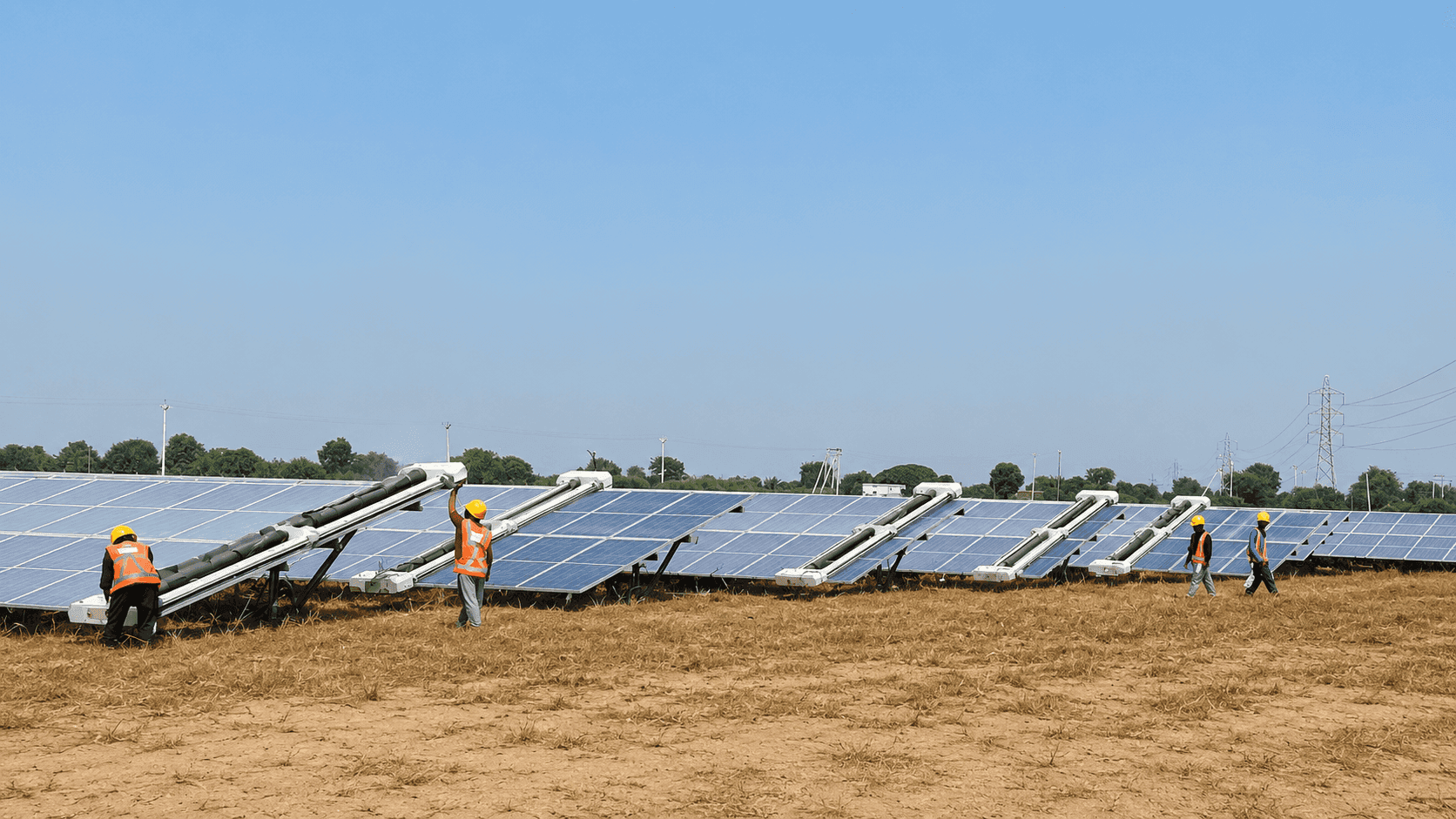
The HELYX robot was the best choice for this site. It is highly portable. This is critical for a 300 MW facility. The "pick-and-place" design allows workers to move the robots easily. They can transport the units between different solar blocks. This flexibility is vital. It ensures that cleaning resources go exactly where they are needed most. The robots can be moved to the areas most impacted by road grit or agricultural dust.
The cleaning technology is also very advanced. The HELYX uses single-pass PBT brush technology. PBT stands for polybutylene terephthalate. These brushes are UV-stable. This means they do not break down under the intense Maharashtra sun. The brushes provide a highly effective dry cleaning. This eliminates the need for water. It also removes the need for complex water transport schedules.
The deployment follows a strict maintenance cadence. The robots perform 3 to 10 scheduled dry cleaning cycles every month. This frequency is not random. It is calibrated based on real-time data. The team looks at how fast dust is building up. They also look at site accessibility. If soiling increases, the cleaning frequency can be adjusted. This keeps the plant in an optimal state without overworking the equipment.
To ensure everything runs smoothly, the site uses NECTYR. NECTYR is Taypro's fleet management portal. It provides precise, block-level verification. Every cleaning task is logged. This gives supervisors the proof they were previously missing. They can now see exactly which strings have been cleaned. This level of detail ensures the plant hits its performance targets every month.
The integration of these robots has transformed the site's operations. The project has moved from reactive, manual cleaning to proactive, robotic cleaning. This change has led to significant water savings. It has also successfully recovered large amounts of clean energy. The Sasewadi facility is now a model for efficient utility-scale solar O&M in India.
Operations and monitoring
Managing the O&M Window for Large-Scale Assets
Running a 300 MW site requires extreme precision. At the Ahmadnagar-Sasewadi site, the O&M team must balance many tasks. They have to manage robotic cleaning, vegetation control, and civil maintenance. If these tasks overlap, they create bottlenecks. To prevent this, the site uses a highly structured approach. They use NECTYR to move from reactive work to inspection-led operations.
One major benefit of the HELYX robots is the removal of water logistics. In the past, cleaning meant managing water tankers. This was a huge scheduling headache. Now, the robots are self-contained and waterless. This "decouples" cleaning from water management. It means cleaning no longer competes with other tasks for site resources. This makes the entire O&M window much smoother and more efficient.
The use of NECTYR also provides a level of oversight that was never possible before. Supervisors no longer have to rely on visual checks. Visual checks are subjective and often inaccurate. Instead, they rely on digital logs. These logs provide undeniable proof of cleaning. This creates a culture of accountability across the entire maintenance team.
Optimizing Cleaning Cadence in Maharashtra
The cleaning schedule at Sasewadi is not a "set and forget" process. It is a dynamic strategy. The team must account for the unique soiling of the Maharashtra region. They track how heavy agricultural dust and road grit are accumulating. They also monitor how humidity cycles are affecting the panels.
Based on this data, the team implements a strategic cleaning cadence. They typically aim for 3 to 10 dry cycles per month. However, this number can change. If a heavy dust storm occurs, the frequency may increase. If the weather is clean, they may reduce it to save on wear. This data-driven approach ensures maximum ROI for the cleaning activity.
Operational excellence is maintained through four main pillars:
- NECTYR-verified reporting: This provides the block-level proof required for high-level audits.
- Weather-sensitive scheduling: The team incorporates wind holds. This ensures the robots operate safely and do not get damaged by high winds.
- Strategic robot rotation: The three HELYX robots are moved across scattered plant blocks to ensure even coverage.
- Standardized inspection: Digital data replaces subjective visual checks, ensuring a consistent standard of cleanliness.
By adopting this structured model, the site avoids the common mistakes of manual cleaning. The result is a consistent and high-yield generation. This proves that systematic, data-backed maintenance is the only way to succeed at the 300 MW scale in Maharashtra.

Results and impact
Quantifying the Operational Value of Robotic Solar Panel Cleaning in Maharashtra
The switch to waterless robotic operations has changed the Sasewadi site. The results are visible in both resource use and power output. By using the HELYX semi-automatic fleet, the site has neutralized production losses. The robots effectively clear away the stubborn agricultural dust and road grit. This ensures the panels remain in an optimized state. The energy that was once lost to soiling is now being captured and sent to the grid.
The impact on sustainability is also very clear. The site has moved away from water-intensive cleaning. This has led to a massive reduction in water consumption. Specifically, the site saves 1.1 million litres of water every year. This is a huge win for local water conservation. It also helps the project meet environmental compliance goals. In a water-stressed region like Maharashtra, this is a vital advantage.
Furthermore, the Capex investment in Taypro technology is delivering a high return. The costs of water procurement and manual labor are dropping. The risk of manual damage to the panels is also reduced. The facility is now a cleaner, safer, and more predictable environment. The project has successfully turned cleaning from a cost center into a driver of performance.
Key achievements of the deployment include:
- High Generation Recovery: The site achieves consistent power output by preventing string-level mismatches.
- Water Conservation: 1.1 million litres of water are saved annually through waterless technology.
- Improved Accountability: NECTYR provides verifiable cleaning logs for every block on the site.
- Stable O&M Costs: The site is no longer reliant on expensive water tankers or volatile labor schedules.
For large-scale IPPs in India, the Sasewadi project provides a clear roadmap. It shows that waterless robotics offer a quantifiable way to optimize asset health. Combining targeted cleaning with automated monitoring is the best path for utility-scale success.
Peer comparison and planning checklist
Peer Comparison and Operational Scaling
The 300 MW Sasewadi project is part of a growing landscape of robotic solar cleaning in Maharashtra. It is helpful to compare it to other regional projects. For example, the Soyegaon solar project uses different automated configurations. The Ahmadnagar-Jalalpur 10 MW site is much smaller in scale. At Sasewadi, the focus is on a semi-automatic fleet. This is a strategic choice for a 300 MW plant.
While fully automated plants use daily waterless cycles, Sasewadi uses 3 to 10 cycles per month. This frequency is specifically chosen for this site. It targets the unique agricultural dust and humidity cycles of the Ahmadnagar area. It provides a balance between cost and performance. This approach is often more practical for very large sites where complete automation might be too expensive initially.
We can also compare Sasewadi to the Yavatmal-Kupti 14 MW project. That site uses a higher density of automation. By comparing these, we see the trade-offs in CAPEX and flexibility. The Sasewadi model shows that semi-automatic systems are a great "middle ground." They provide a buffer for sites with complex maintenance windows. They bridge the gap between manual labor and high-cost, fully automatic systems.
Planning Checklist for Large-Scale Robotic Deployment
If you are planning a large-scale robotic deployment, use this checklist to guide your decisions:
- Analyze Soiling: Determine your specific soiling patterns. Do you have dust, grit, or salt? This will help you choose the right robot and cleaning frequency.
- Map Maintenance Windows: Look at your vegetation and civil work schedules. Ensure your cleaning plan does not conflict with these critical tasks.
- Prioritize Integration: Implement NECTYR or similar fleet monitoring early. You need real-time, block-level verification to replace manual logs.
- Standardize Protocols: Move to waterless cleaning as soon as possible. This eliminates water logistics costs and prevents panel abrasion.
- Future-Proof the Site: Evaluate your site topography. Consider if you will need row-transfer solutions like CRADYL as the site grows or changes.
- Calculate ROI: Look beyond just the cost of the robot. Include savings in water, labor, and the value of recovered MWh.