
Executive summary
Are you looking for an effective solar panel cleaning robot India solution? This 187.5 MW ground-mount solar project in Ahmadnagar-Shirapur, Maharashtra, provides a clear answer. The site faced many performance hurdles. These challenges came from harsh environmental conditions. The region has high levels of agricultural dust. It also has heavy road grit and humidity cycles. These factors caused uneven soiling across the solar arrays. This soiling happened at the string level. Traditional manual cleaning could not fix these uneven patterns efficiently.
O&M supervisors also faced many logistical problems. They lacked a way to prove which blocks were cleaned. They also struggled to manage water logistics. They had to balance water transport with night-shift crew schedules. They also had to manage vegetation and civil work windows. To solve these issues, Taypro deployed two HELYX semi-automatic robots.
This project used a Capex procurement model. The HELYX units offer reliable, waterless single-pass PBT brush cleaning. This method fits the site's specific layout perfectly. As a result, the project now gains about 187.5 MWh of extra generation every year. The site also saves 700,000 litres of water annually. The transition to robotic cleaning ensures consistent performance. It provides a verified and scheduled cleaning cadence that meets all site needs.
Environment and soiling at Ahmadnagar- Shirapur
Addressing Patchwork Soiling in Ahmadnagar-Shirapur
The Ahmadnagar-Shirapur region is a tough place for large solar assets. The environment creates a unique "patchwork" soiling profile. This is different from the uniform dust found in deserts. This area is near active agricultural fields. It is also near heavy road traffic. These two sources create a mix of different debris. You will find fine organic dust from the farms. You will also find coarse road grit from the nearby transit routes.
This debris settles unevenly across the solar array. Humidity cycles throughout the year make the problem worse. The moisture acts as a binding agent. It turns loose dust into a hard, stubborn layer of grime. This grime is difficult to remove. Because the accumulation is not uniform, it causes string-level irregularities. It does not just create a simple film over the whole module. Instead, it creates "hot spots" of dirt. These spots degrade the performance of the entire system.
The local climate also makes O&M work very complex. Cleaning teams must coordinate with vegetation management. They must also manage access for civil site works. Often, water-dependent cleaning crews clash with these other tasks. This competition for site resources creates a major gap in accountability. In the past, supervisors could not prove which strings were actually clean. They had no empirical evidence of cleaning quality.
To fix this, the site moved to a waterless robotic strategy. They deployed HELYX units to manage the dust. The project now uses scheduled dry cleaning cycles. These cycles specifically target the localized grime patterns. This method replaces unpredictable manual labor with a consistent process. It also removes the need for heavy water transport. It eliminates the stress of coordinating night-shift crews in a rural landscape. The result is a much more stable and predictable operation.
O&M before Taypro
The Visibility Void: Challenges in 187.5 MW Plant O&M
Before using Taypro solutions, the 187.5 MW Ahmadnagar-Shirapur facility faced many bottlenecks. The plant infrastructure relied on semi-automatic cleaning methods. However, these methods lacked granular visibility. Supervisors worked in what we call a "visibility void." They could not see the real progress of the cleaning teams. They lacked per-block proof of which strings were cleaned in each cycle.
This lack of certainty led to three main O&M challenges:
- Water and Labor Friction: Moving water to thousands of panels is hard. Managing water logistics and night-crew schedules were constant burdens. These tasks often clashed with vegetation and civil maintenance. This made it very hard to keep a steady cleaning schedule.
- Audit Gaps: The site lacked digital logs. There was no way to track cleaning at the string level. Because of this, managers could not verify if teams hit the soiling hotspots. This led to uneven cleaning coverage. Large amounts of dust were often left behind.
- Environmental Variability: The site faces mixed soiling. Agricultural dust and road grit create complex layers. When humidity hits, these layers become very stubborn. Manual cleaning methods often miss these uneven patterns.
The plant previously relied on manual intervention. This method could not provide the accountability a 187.5 MW site needs. The facility needed a way to bridge the gap between maintenance and performance. By switching to verifiable robotic cleaning, they have closed that gap. Supervisors no longer have to guess if a row is clean. They can now ensure every row is accounted for. This optimizes cleaning resources across the entire capacity of the plant.
Fleet and deployment at 187.5 MW
Fleet and Deployment: Scaling Semi-Automatic Cleaning for 187.5 MW
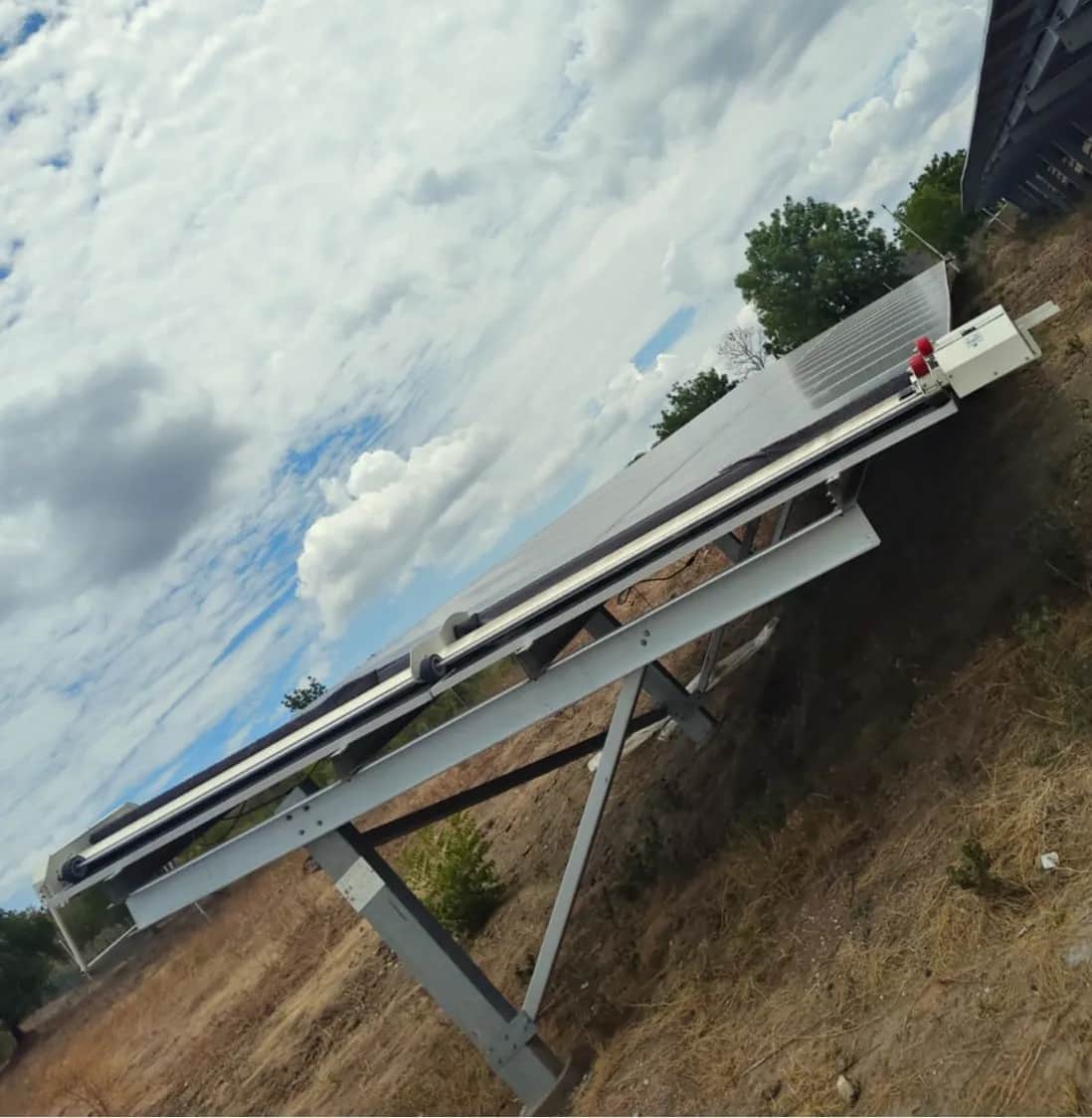
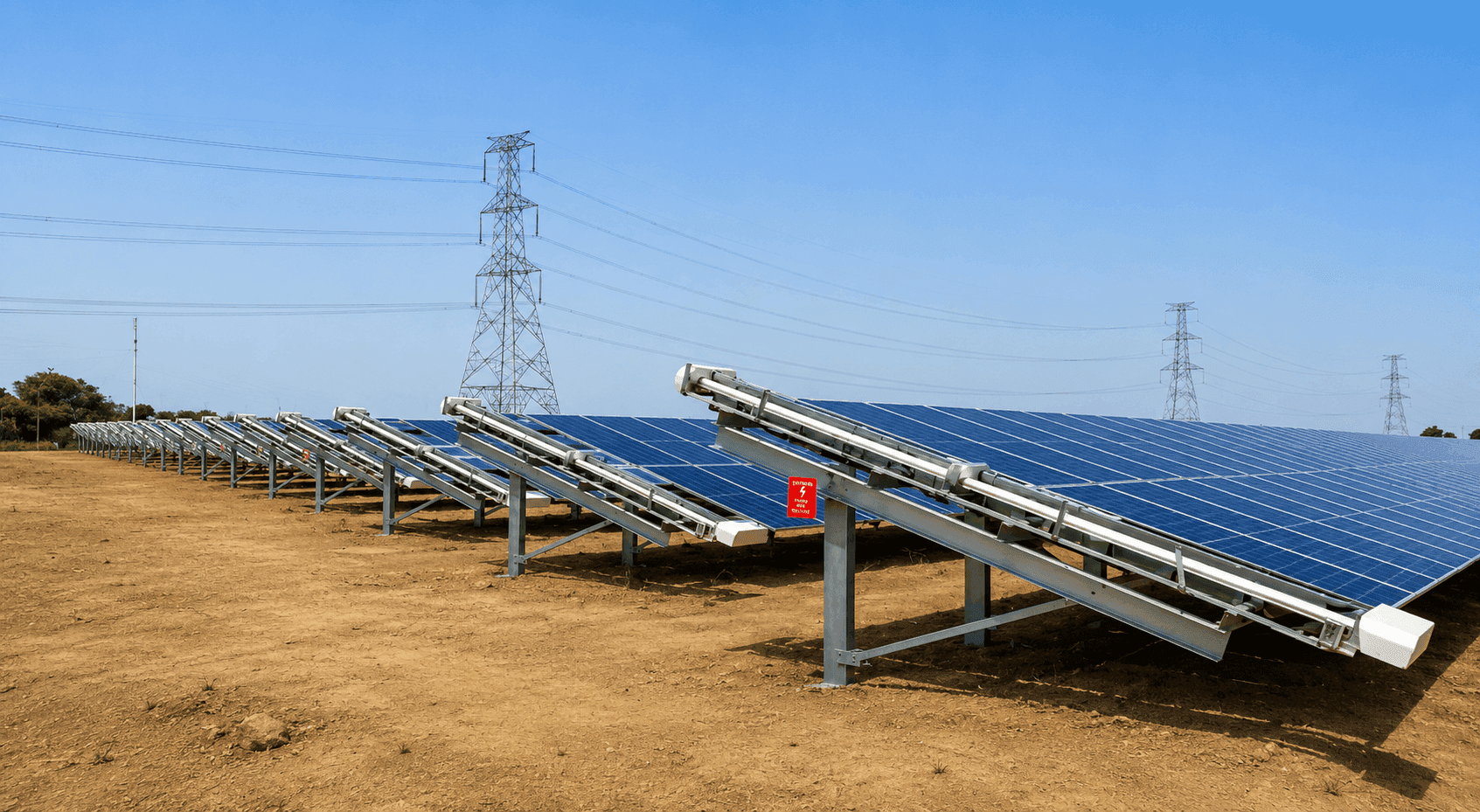
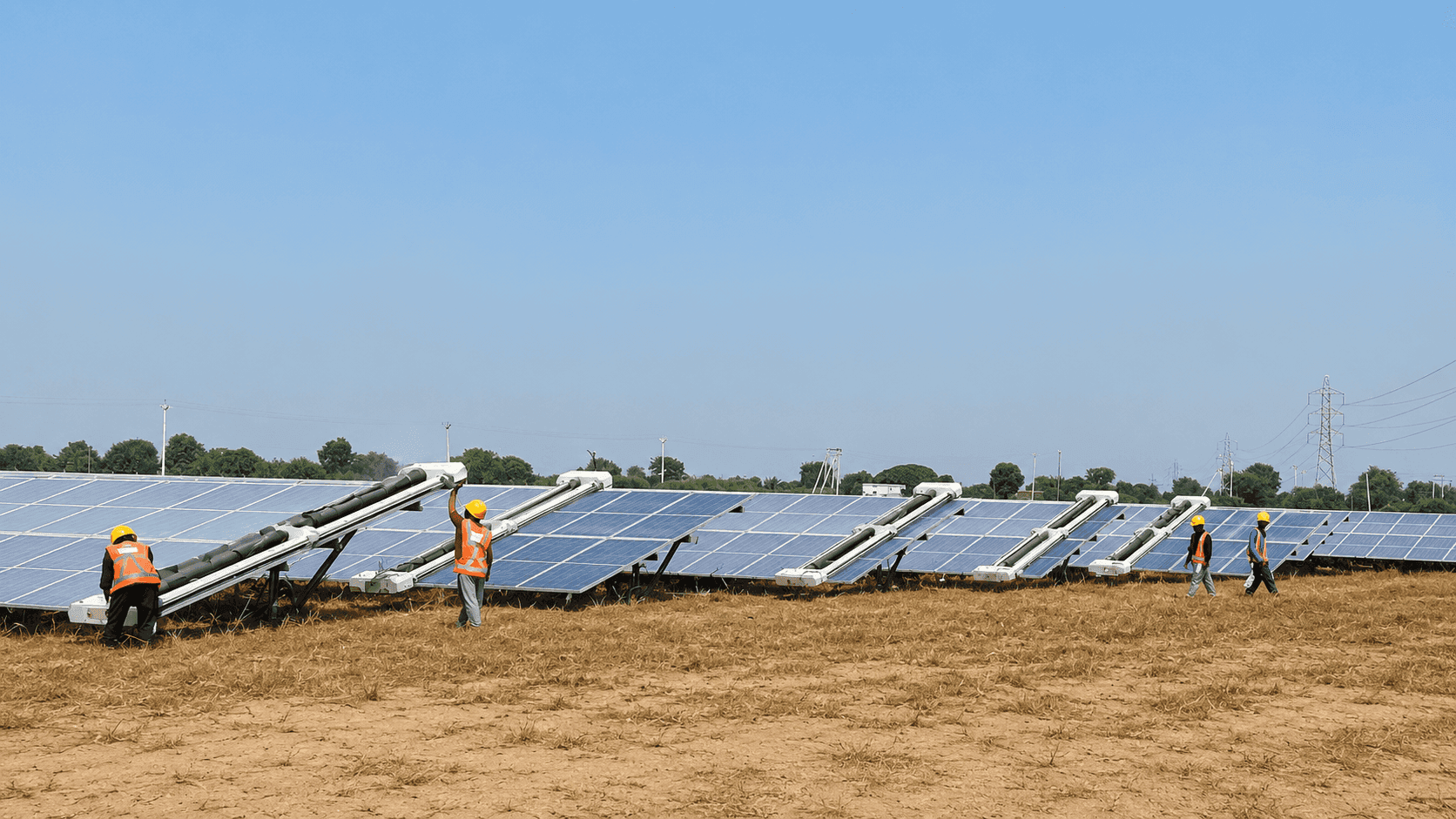
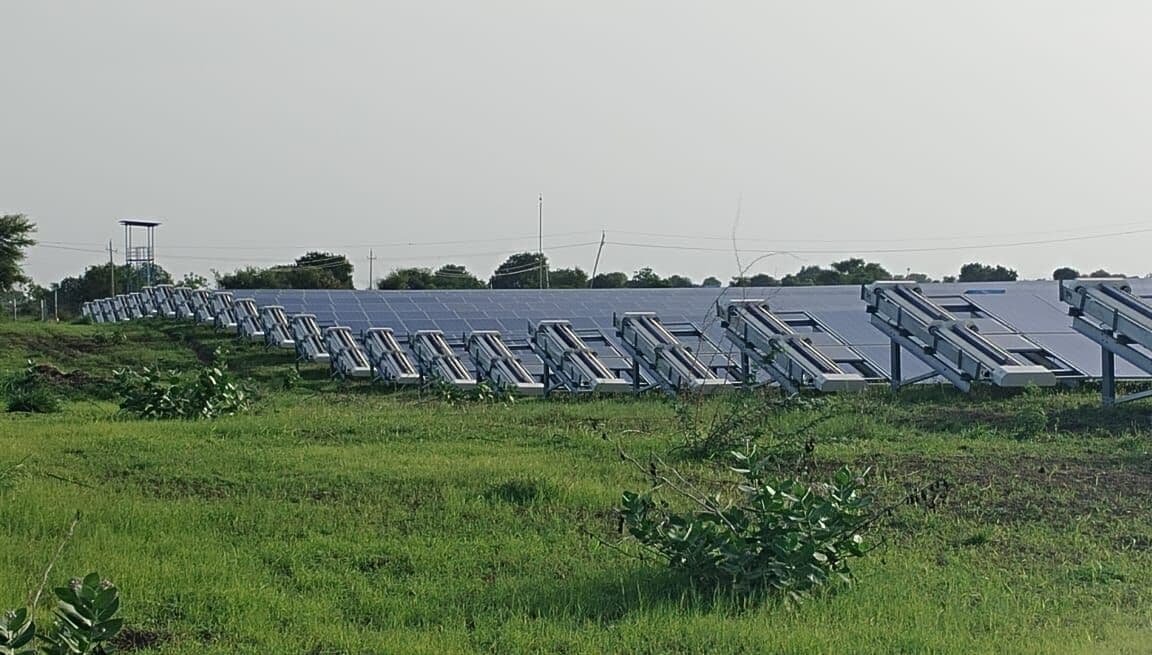
The 187.5 MW Ahmadnagar-Shirapur site has specific logistical needs. To meet these needs, the site uses two HELYX semi-automatic robots. This deployment uses a CAPEX procurement model. This allows the site team to own the hardware directly. They can then integrate the robots into their existing routines. The HELYX system is perfect for targeting distributed blocks. It reaches the areas where road grit and agricultural dust build up most.
The cleaning cadence is carefully planned. It aligns with the site's vegetation and civil maintenance windows. Since the site needs to use labor efficiently, the HELYX robots are used for scheduled dry cycles. These cycles typically happen 3 to 10 times per month. This frequency provides a perfect balance. It maintains high panel performance without overworking the staff. It also respects the operational realities of a large utility site.
The commissioning process focused on three main areas:
- Pick-and-Place Flexibility: HELYX units are easy to move. They are ideal for scattered arrays. The team can move them to where soiling is most severe. This ensures resources are used where they matter most.
- Operator Workflow: We trained the night-shift crews. They moved from heavy manual labor to managing the pick-and-place robots. This shift removed the need for complex water logistics.
- Performance Validation: The robots use single-pass PBT brush technology. This ensures a thorough clean. It does so without the burden of using water.
This semi-automatic deployment has changed the plant. The 187.5 MW facility has recovered significant energy production. The waterless transition saves 700,000 litres of water every year. This means cleaning no longer conflicts with other O&M tasks. The deployment offers a stable and predictable schedule. It directly improves the total yield in the difficult Maharashtra environment. It turns a difficult task into a streamlined process.
Operations and monitoring
Managing cleaning logistics in Ahmadnagar Shirapur
The 187.5 MW Shirapur plant shows the reality of utility-scale O&M in Maharashtra. Managing water for thousands of panels used to be a massive task. It consumed a lot of night-shift labor. It also fought for time against vegetation and civil maintenance. Supervisors often felt they were working in the dark. They could not confirm if specific strings were actually cleaned.
The site solved these inefficiencies with a semi-automatic strategy. They now use two HELYX robots. This shift removes the need for water transport. By removing water, the cleaning process is decoupled from rigid delivery constraints. Site managers can now plan robot deployment alongside other tasks. This prevents operational bottlenecks and keeps the site running smoothly.
Accountability is now handled through NECTYR. This platform provides digital oversight of all cleaning progress. It replaces manual guesswork with real, verified data. The current operational rules for the Shirapur facility include:
- Cleaning Cadence: Robots follow a scheduled dry cleaning rotation. This happens 3 to 10 times per month. The schedule is optimized for local dust and humidity.
- Inspection-Led Oversight: Supervisors use NECTYR to check progress. They can verify that specific strings have been serviced. This ensures consistent coverage across the 187.5 MW array.
- Strategic Wind Holds: The team pauses operations during high winds. This protects the hardware. It ensures the robots stay safe in their docking areas.
This transition has proven a key point. It has ended the myth that you need daily washing. Instead, it proves that targeted, high-frequency dry cycles work better. These cycles provide better performance than irregular manual efforts. By optimizing the cleaning path, the plant avoids conflicts with civil maintenance. This ensures steady energy generation. It also reduces the overall complexity of daily O&M duties.

Results and impact
Results and Impact of Robotic Solar Panel Cleaning
The use of semi-automatic robotic cleaning has transformed the Shirapur facility. It has replaced labor-intensive manual cleaning. The site now uses a targeted dry-cleaning approach. This has created a sustainable balance. The site achieves high energy yields and conserves resources. Because water logistics are gone, the O&M schedule is much cleaner. Management can now focus on civil maintenance and vegetation control. This streamlines the entire upkeep of the plant.
The results are measurable and significant. The project has secured a large recovery in annual energy generation. This directly fights the performance drops caused by agricultural dust. The waterless technology is also a huge win for the environment. The site saves a massive volume of water every year. This improves the environmental footprint of the plant in Maharashtra. These wins show the real value of specialized robotic hardware.
The biggest success is the ability to verify cleaning. Before, supervisors relied on verbal reports from crews. Now, they use NECTYR integration. The software provides granular, string-level evidence. It proves that cleaning cycles were performed across the 187.5 MW array. This digital oversight is a game changer.
This technology ensures the entire fleet meets a uniform standard. It eliminates the "blind spots" found in old cleaning models. The combination of verified coverage and autonomy is powerful. It has turned solar panel cleaning in India from a reactive burden into a proactive strategy. It is now a predictable and data-driven pillar of the plant's long-term success. The facility is more efficient and more reliable than ever before.
Peer comparison and planning checklist
Peer Comparison and Scaling: From 10 MW Pilots to 187.5 MW Portfolios
The Shirapur project shows how Taypro's solutions scale. We see this across many different utility tiers. Smaller sites, like the Ahmadnagar-Jalalpur 10 MW project, have different needs. Those sites often focus on improving basic labor workflows. They use localized semi-automatic fleets. However, the 187.5 MW Shirapur facility needs a much more rigorous strategy. A larger plant must manage more logistical friction. It must coordinate vegetation management with much larger cleaning windows.
Comparing these sites reveals different priorities. At the 10 MW scale, the goal is often simple. The goal is to find a reliable, waterless baseline. This replaces manual scrubbing. In contrast, the Shirapur plant manages a vast footprint. It must handle string-level soiling across many kilometers. By using a high-capacity deployment, the 187.5 MW plant gains massive oversight. This level of data is essential for multi-megawatt environments. It ensures performance benchmarks are always met. Taypro technology adapts to these needs. It works for both compact pilots and major regional utility arrays.
Peer Comparison and Planning Checklist
If you are planning a robotic deployment, use this checklist:
- Audit Soiling Patterns: Check your regional dust levels. Determine if you need daily cycles or periodic semi-automatic intervention.
- Assess O&M Logistics: Calculate your current water transport costs. Check the availability of your night crews. Use this to find your break-even timeline.
- Review NECTYR Requirements: Ensure you have the connectivity needed for real-time verification. You must be able to see coverage across all blocks.
- Define Your Procurement Model: Decide between Capex and Opex. Capex is better for long-term ownership. Opex is better for managed service contracts.
- Coordinate Schedules: Plan your robotic cleaning around vegetation and civil maintenance. This prevents operational bottlenecks.
- Calculate Your ROI: Use the ROI price calculator. This helps you align your deployment scale with your energy recovery targets.
By following these steps, you can ensure a successful transition. Moving from manual to robotic cleaning is a major strategic step. It requires careful planning and the right technology. The Ahmadnagar-Shirapur project serves as a model for this transition. It proves that even the largest plants can achieve higher efficiency with the right tools.