Executive summary
robotic solar panel cleaning Maharashtra. The Ahmadnagar-Supa solar project is a 225 MW ground-mount facility. It is located in Maharashtra. This region is known for its complex soiling profiles. The plant faces many environmental challenges. These include agricultural dust and heavy road grit. High humidity cycles also affect the site. These factors create uneven soiling across the solar arrays. This soiling makes it hard to maintain high performance.
In the past, maintenance teams struggled to keep the panels clean. They could not ensure consistent clarity across the whole site. Supervisors also faced a major verification gap. They lacked the data to prove that every string was cleaned. There was no easy way to check the work of manual crews. This lack of proof made operations difficult to manage.
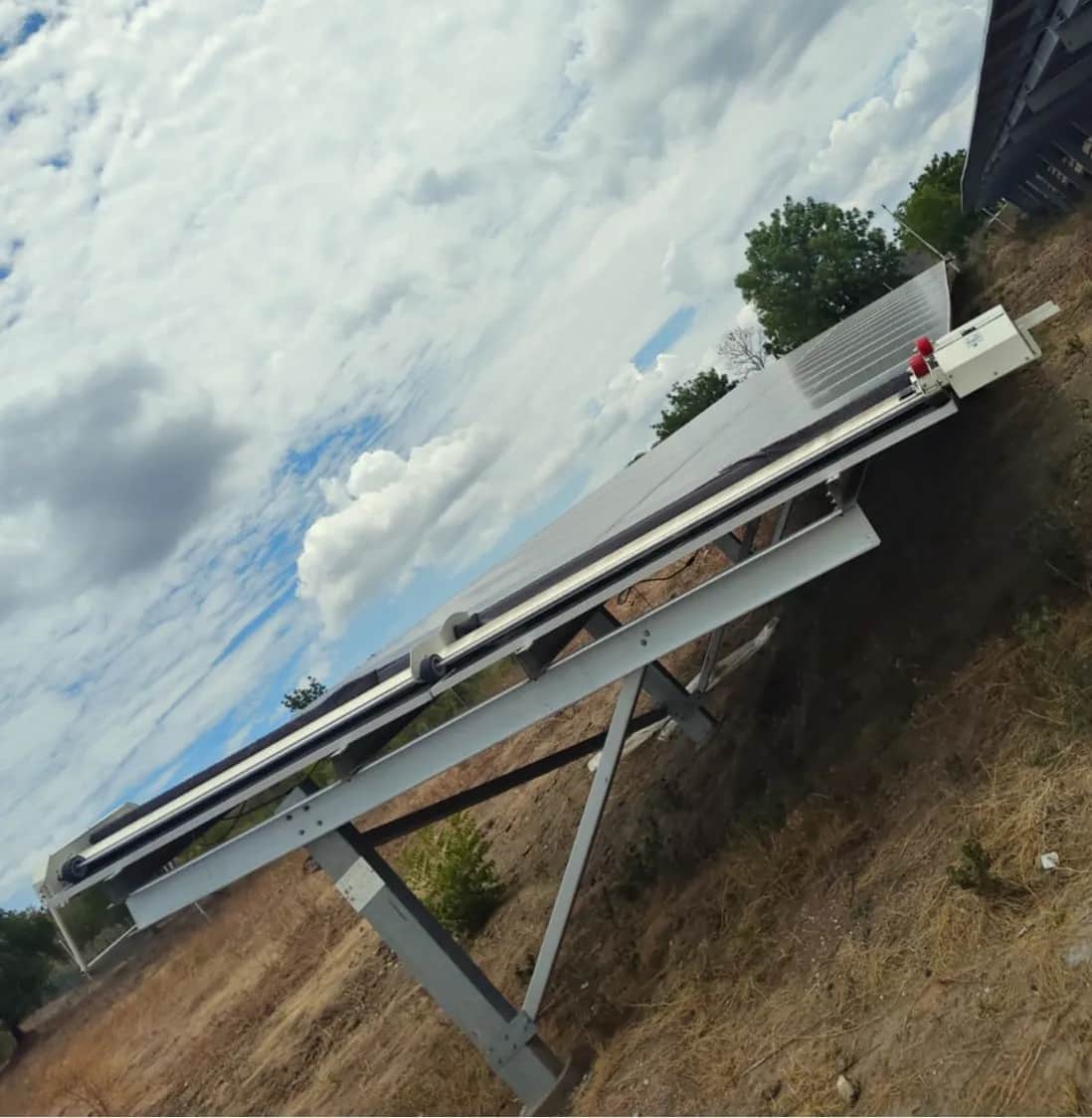
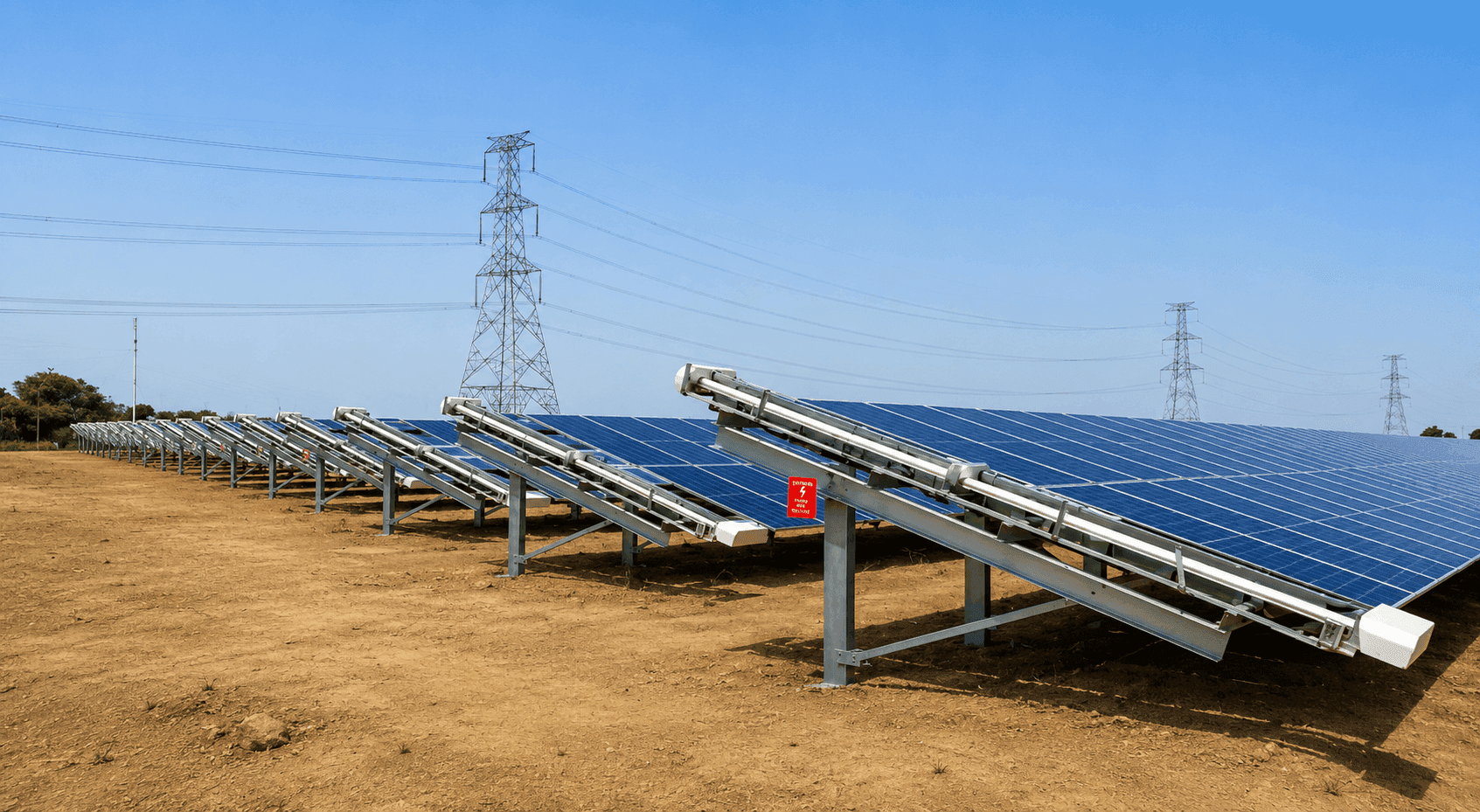
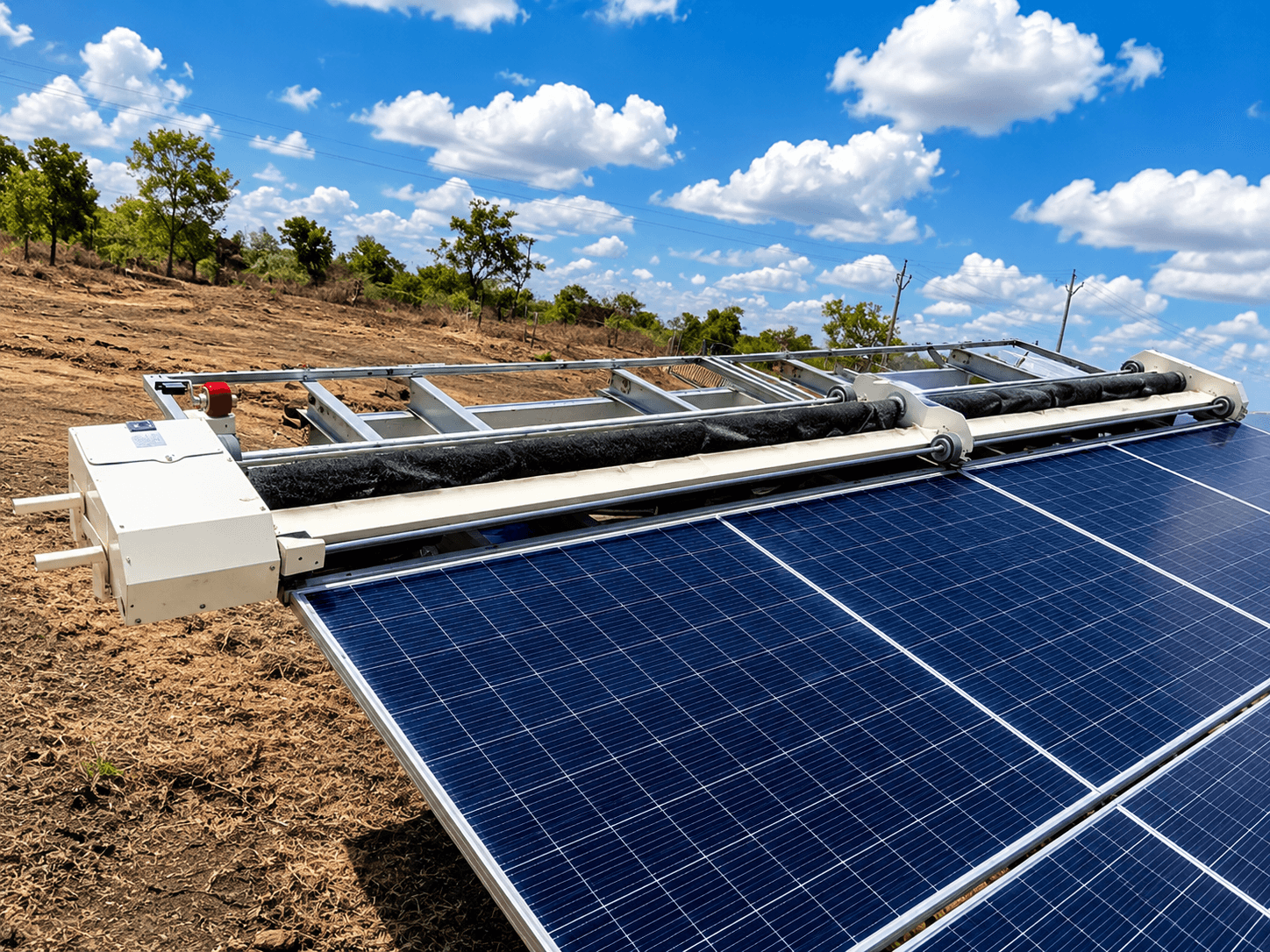
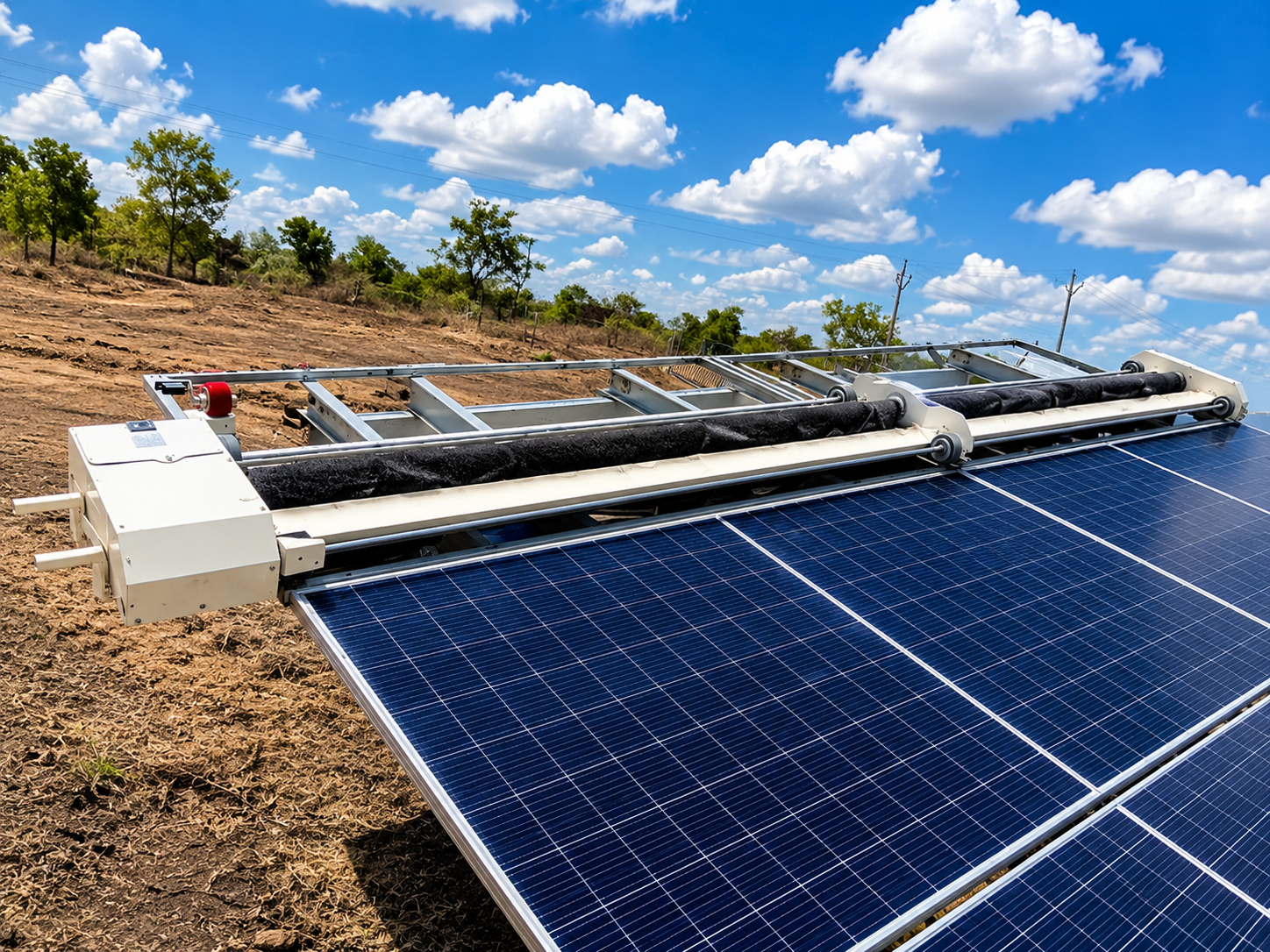
To solve these problems, the site deployed 3 NYUMA semi-automatic robots. This deployment uses a Capex procurement model. The robots perform semi-automatic cleaning cycles. These cycles occur 3 to 10 times per month. The frequency depends on local weather and site access. This move away from manual labor has changed the site. It has removed the old gaps in work verification. The robotic system has improved performance significantly. The plant now gains an additional 225 MWh of generation every year. It also saves 840,000 litres of water annually. This case study shows how robotic solar panel cleaning in Maharashtra can optimize large-scale solar farms.
Environment and soiling at Ahmadnagar- Supa
Environmental Challenges and Soiling Profiles at Ahmadnagar-Supa
The Ahmadnagar-Supa region has a very specific micro-climate. This climate impacts the energy yield of the 225 MW ground-mount plant. The site deals with a mix of local factors. Agricultural activities in the area create a lot of dust. Regional topography also plays a role in how dust settles. These factors result in a thick, persistent soiling layer on the modules.
Dust particles come from nearby seasonal farming. These particles mix with airborne road grit. Together, they form a tough and abrasive film on the solar panels. This film is difficult to remove with standard methods. It can damage the surface of the modules over time if not managed.
Humidity cycles in Maharashtra make the problem worse. The moisture levels change frequently. This often happens during early morning hours. It also happens after the monsoon season. This moisture binds the loose dust to the module surfaces. It creates a semi-hardened crust of grime. This process leads to uneven soiling patterns at the string level. These patterns are often hard to see with the naked eye. However, they cause severe localized losses across the array strings.
Maintaining clean panels used to be a difficult task. O&M teams had to manage many logistical trade-offs. They had to balance cleaning with other site needs. They had to manage vegetation growth and civil maintenance windows. The main operational hurdles included:
- Irregular Soiling Layers: The mix of agriculture and road grit requires frequent cleaning. Manual labor cannot maintain the high frequency needed for this site.
- Verification Gaps: Before the robots, supervisors could not confirm which strings were cleaned. They had no way to track the work of every crew.
- Resource Competition: Managing water and night crews was a struggle. These tasks often conflicted with other essential plant maintenance.
The facility now uses NYUMA robotic systems. This has created a more predictable cleaning schedule. The site can now use data-backed maintenance. This approach addresses the unique dust and grime of the Ahmadnagar-Supa area. It also prevents the performance drops caused by humidity.
O&M before Taypro
Operational Challenges and the Accountability Gap in Ahmadnagar
Managing a 225 MW ground-mount plant requires a strict maintenance plan. This is especially true in the Ahmadnagar-Supa region. The site must fight intense agricultural dust and road grit. Before the site used semi-automatic robots, it faced many hurdles. The main issues were consistency and verification. The O&M team lacked visibility into their own operations. Supervisors had no reliable proof of which strings were serviced. They could not verify if the cleaning was actually effective.
This lack of accountability was a major problem. Logistical conflicts made the situation even worse. The team had to manage the water supply for cleaning. They also had to coordinate schedules for night crews. These tasks often competed with other vital work. Vegetation management and civil maintenance were also priorities. These bottlenecks led to uneven cleaning across the large array. Some blocks were clean, while others remained covered in dust.
The site faced three main operational gaps:
- Resource Allocation Conflicts: Water logistics and labor availability were limited. This limited how often the team could clean the panels.
- Verification Blind Spots: There was no standardized logging system. The O&M team could not verify the status of individual blocks. They could not confirm if string-level goals were met.
- Sustainability Constraints: Traditional water-based cleaning uses too much water. This high consumption is not sustainable for long-term site health.
The project owners changed this by deploying NYUMA robots. This semi-automatic deployment allows for better dry cleaning. The team can now execute planned cleaning cycles more easily. This shift helps maintain uniform cleanliness across all modules. It also saves hundreds of thousands of litres of water every year. This supports both the performance and the long-term value of the asset.
Fleet and deployment at 225 MW
Fleet and Deployment Strategy for 225 MW Infrastructure
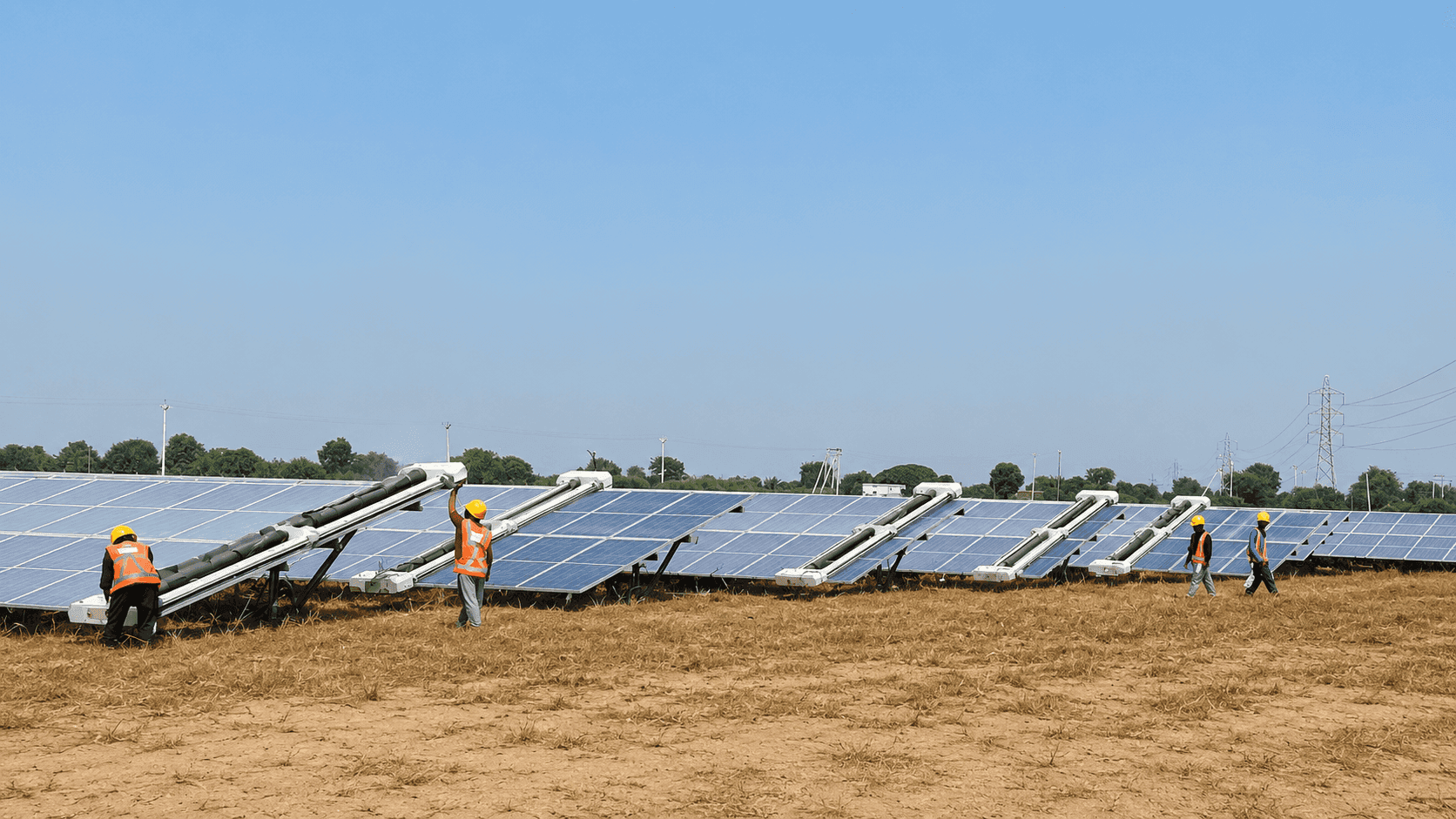
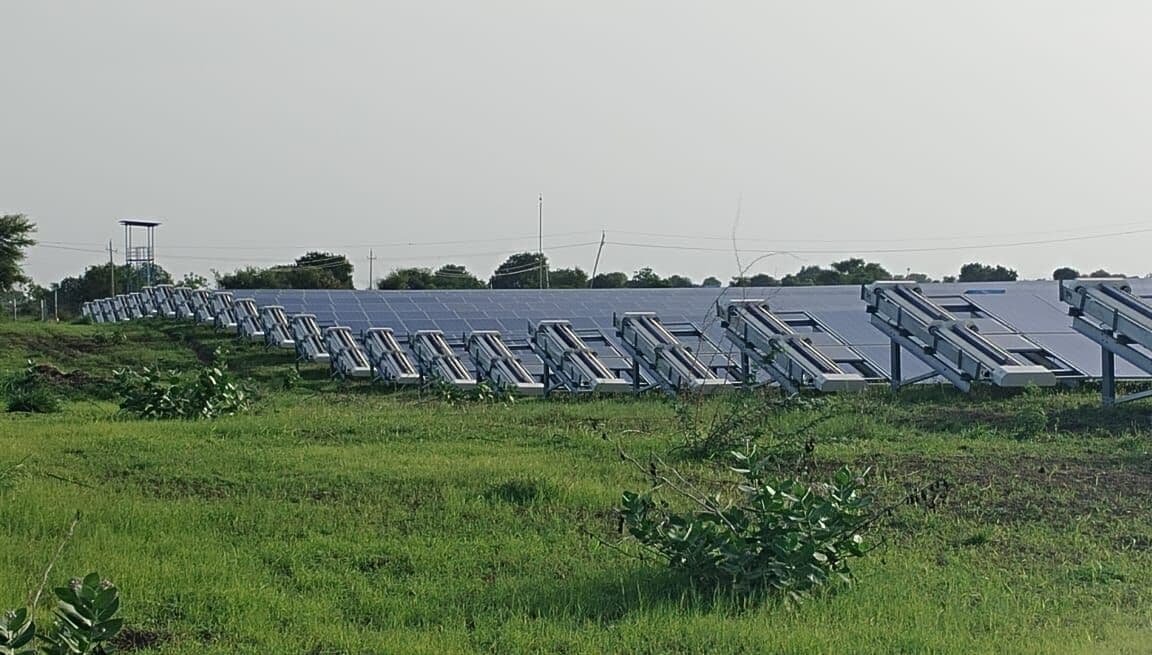
The 225 MW plant uses a smart fleet of three NYUMA robots. This strategy addresses the uneven soiling in the Ahmadnagar-Supa region. The site uses a Capex procurement model. This means the plant owners own the cleaning assets long-term. The team uses a semi-automatic pick-and-place method. This allows them to target specific high-soiling blocks. They can focus on areas most affected by farm dust and humidity.
The cleaning schedule is tailored to the environment. The robots perform 3 to 10 dry cleaning cycles per month. This frequency is a balance. It meets the need for performance recovery. It also respects the logistics of a massive ground-mount site. By moving to waterless cleaning, the project saves 840 thousand litres of water annually. This eliminates the costs of transporting and managing water.
Key details of the deployment include:
- Fleet Composition: Three NYUMA robots form the core fleet. They are optimized for single-pass PBT cleaning on fixed-tilt arrays.
- Deployment Model: The pick-and-place method allows for easy rotation. The team can move robots between blocks to ensure full coverage.
- Operational Impact: The fleet has recovered 225 MWh of additional generation per year. This makes the plant's energy output much more consistent.
- Commissioning Focus: The initial rollout focused on integration. Robotic schedules are now part of the standard O&M windows. This helps track and verify all serviced blocks.
The NYUMA system is very safe for the panels. Each cleaning cycle is performed without water. This means there is no risk of water spotting. There is also no risk of panel damage from heavy equipment. This robotic deployment turns maintenance into a scheduled process. It is no longer a reactive or labor-intensive chore. The site now aligns its maintenance with its sustainability goals in Maharashtra.
Operations and monitoring
Optimising Robotic Solar Panel Cleaning in Maharashtra
Operations at the 225 MW Ahmadnagar-Supa site are now data-driven. The site uses high-frequency cleaning audits. These audits are verifiable. In the past, agricultural dust and road grit caused inconsistent soiling. Manual, water-based cleaning was difficult to manage. It often clashed with vegetation and civil maintenance schedules. The site has now moved past these issues.
The facility integrates the NECTYR platform for fleet oversight. This provides a digital-first approach to management. Supervisors now have access to clear dashboards. These dashboards replace manual guesswork with real data. Every cleaning cycle is logged with proof of completion. This ensures the NYUMA fleet goes where it is needed most. It targets the uneven soiling patterns effectively. NECTYR provides a transparent audit trail for the entire plant. Managers can see how cleaning events impact performance in real time.
The operational benefits include:
- Accountability and Auditing: NECTYR provides granular verification for every row. Supervisors can monitor progress without needing physical inspections.
- Strategic Scheduling: Cleaning is coordinated with other tasks. This prevents robotic activity from interfering with other site maintenance.
- Operational Discipline: The plant no longer relies on night crews or water logistics. This removes the risk of human scheduling errors.
- Environmental Resilience: The system follows wind hold protocols. This ensures robot safety during high winds without hurting site health.
This systematic approach keeps the 225 MW asset at peak potential. The site team treats cleaning as a measurable process. They have standardized maintenance quality across all blocks. This ensures the plant runs efficiently all year long.
Results and impact
Results and Impact of Robotic Solar Panel Cleaning in Maharashtra
The semi-automatic robotic cleaning at the Ahmadnagar-Supa site has changed everything. It has fundamentally transformed the O&M profile of the 225 MW facility. The project has moved away from manual, water-based labor. This shift has created major operational gains. The site no longer deals with heavy water logistics. It also no longer needs complex night crew schedules. These changes have streamlined all maintenance windows. Civil and vegetation teams can now work without interference.
The NYUMA fleet provides consistent energy recovery. Its impact is most visible in the steady power output. The system stops uneven soiling from hurting the plant. In this region, dust, grit, and humidity create tough grime. The robots clean this grime regularly. This ensures that string-level performance stays high. The plant no longer suffers from the delays found in manual cleaning. Human error is no longer a factor in panel cleanliness.
Key impacts of the project include:
- Water Conservation: The waterless solution has eliminated massive water needs. This helps the site meet its environmental sustainability goals.
- Resource Optimization: The fleet allows for a predictable schedule. Personnel can now focus on high-value electrical and civil tasks.
- Output Recovery: Cleaner modules mean better energy capture. The plant avoids the generation losses caused by uneven soiling.
- Standardized Performance: The deployment ensures uniform cleanliness. Road grit and dust no longer cause long-term performance drops.
This deployment sets a new benchmark for Maharashtra. It shows how to maintain utility-scale solar plants. By matching cleaning to local soiling cycles, the plant has stabilized its yield. It has also reduced its reliance on seasonal water. The site is now more resilient and more profitable.
Peer comparison and planning checklist
Peer Comparison and Implementation Planning
The Supa 225 MW site operates in a complex environment. Its needs are different from other projects in Maharashtra. For example, the 14 MW Yavatmal-Kupti plant uses similar semi-automatic protocols. However, the Supa site is much larger. It must manage much higher capacity and more dust. The 10 MW Ahmadnagar-Jalalpur site has a smaller footprint. The Supa project requires a more robust fleet to handle its scale. It also differs from the fully autonomous Soyegaon-Solar-Project. That site uses high-density robotic grids to fight constant dust. In contrast, the Supa site uses targeted cleaning blocks. This helps them manage vegetation and civil maintenance windows more efficiently.
The 225 MW deployment optimizes labor costs. It does this without the high cost of a fully automatic system. This strategy avoids the trouble of managing water tankers. It is a very effective model for large, ground-mount sites. If a site has uneven soiling, semi-automatic cleaning is a great choice. It is a scalable and cost-effective way to maintain energy output. It also protects local water resources.
Strategic Deployment Checklist
- Assess seasonal soiling and agricultural dust. Use this to define your high-priority cleaning blocks.
- Coordinate cleaning schedules with other site work. This prevents interference with vegetation or civil maintenance.
- Use NECTYR to set clear verification protocols. Ensure 100% of panels are serviced during each cycle.
- Set up dedicated storage and charging stations. This minimizes downtime when moving robots between rows.
- Check site topography against robot slope ratings. This ensures safe and efficient navigation across the array.
- Review water savings and energy recovery data. Use these metrics to justify the continued O&M budget.