
Executive summary
robotic solar panel cleaning Maharashtra, The 262.5 MW Ahmadnagar-Wanjoli solar facility in Maharashtra faces complex operational challenges due to its unique environment. Ground-mount arrays at this site endure uneven soiling from high volumes of agricultural dust and road grit. Humidity cycles interact with these particles to create sticky deposits. These factors hinder energy production and complicate efforts to maintain uniform output across the massive array.
Site supervisors previously struggled with inefficient water logistics and the coordination of night cleaning crews. These manual tasks often conflicted with essential vegetation management and civil maintenance windows. To solve these bottlenecks, the facility implemented three NYUMA semi-automatic robots through a Capex procurement model. These units provide a targeted cleaning solution for scattered site blocks. They operate on a scheduled cadence of roughly 3 to 10 dry cleaning cycles per month, depending on real-time soiling accumulation.
Shifting to this waterless cleaning system has delivered a major operational recovery for the plant. The site has retrieved 262.5 MWh per year in additional power generation. This transition also provides significant sustainability gains. It saves nearly one million liters of water annually while reducing the carbon footprint by 130 metric tons. This deployment ensures every string receives consistent maintenance. It gives supervisors the visibility and reliability required for large-scale utility solar operations in the Maharashtra region.
Environment and soiling at Ahmadnagar- Wanjoli
Managing agricultural dust and road grit at Ahmadnagar-Wanjoli
The 262.5 MW Ahmadnagar-Wanjoli solar facility operates within a specific micro-climate. It is characterized by intense agricultural activity and proximity to high-traffic rural transport routes. The primary challenge here is the composition of local particulate matter. Dust originates from seasonal crop cycles. This combines with heavy road grit lifted by regional vehicle movement. Together, they create a persistent layer of grime on the panels.
These particles often carry organic residues. They become sticky during the frequent night-time and early-morning humidity cycles common in Maharashtra. This environmental interaction results in highly uneven soiling patterns across the ground-mount arrays. In many areas, the moisture and dust lead to hardened deposits. Traditional manual cleaning methods often fail to remove these deposits effectively. The varying density of these deposits at the string level also makes traditional scheduling unpredictable and inefficient.
Without standardized cleaning, the plant experienced localized output drops. These were difficult to track or reconcile against standard SCADA telemetry because the soiling was not uniform across the entire site. The Taypro robotic cleaning strategy addresses these variables through systematic, waterless maintenance:
- Targeted deployment of semi-automatic robots allows for high-frequency cleaning on blocks affected by road-side dust.
- Single-pass PBT brush technology effectively clears the specific combination of road grit and dried organic debris without the need for water.
- Robot-driven cleaning schedules replace manual labor, ensuring that all strings receive consistent maintenance regardless of localized dust density.
- Waterless operation prevents the formation of "mud-crusts" that often occur when minimal water is used on high-dust surfaces.
By moving away from manual water-based cycles, the site eliminated the logistical conflict between cleaning and vegetation management. The result is a stabilized generation curve that accounts for the unique soil profile of the Ahmadnagar-Wanjoli landscape.
O&M before Taypro
Managing O&M Logistics at the 262.5 MW Ahmadnagar-Wanjoli Facility
Before the integration of robotic technology, maintaining the 262.5 MW Ahmadnagar-Wanjoli plant was a complex logistical challenge. The O&M team struggled to balance water-intensive manual cleaning with essential vegetation management. These activities shared the same operational windows, creating constant conflicts in labor scheduling. These disruptions often led to deferred cleaning. Consequently, layers of agricultural dust and road grit accumulated beyond acceptable thresholds, impacting the plant's performance ratio.
Beyond scheduling constraints, the lack of granular data created a major audit gap. Supervisors were unable to verify precisely which strings were cleaned during any given cycle. This made it difficult to correlate maintenance effort with actual energy output. The operations team had to manage the site based on general observation rather than precise, field-level evidence. The following operational pain points defined the pre-Taypro environment:
- Resource competition: Water logistics and manual crew scheduling consistently clashed with routine civil and site maintenance duties, such as road repair or vegetation control.
- Visibility deficits: Management lacked reliable, block-specific confirmation of cleaning completion, preventing accurate performance analysis and making it difficult to satisfy lender-pack reporting requirements.
- Inconsistent output: Uneven soiling patterns caused by high humidity and dust were not addressed with required frequency, leading to unpredictable energy yield.
- High OPEX volatility: The cost of sourcing, transporting, and managing water for cleaning crews created unpredictable operational expenses.
Without automated verification, the team remained reactive to power drops. This manual reliance prevented the plant from achieving the high, predictable efficiency levels required for a utility-scale installation in Maharashtra.
Fleet and deployment at 262.5 MW
Fleet Deployment and Procurement Strategy for the 262.5 MW Ahmadnagar-Wanjoli Asset
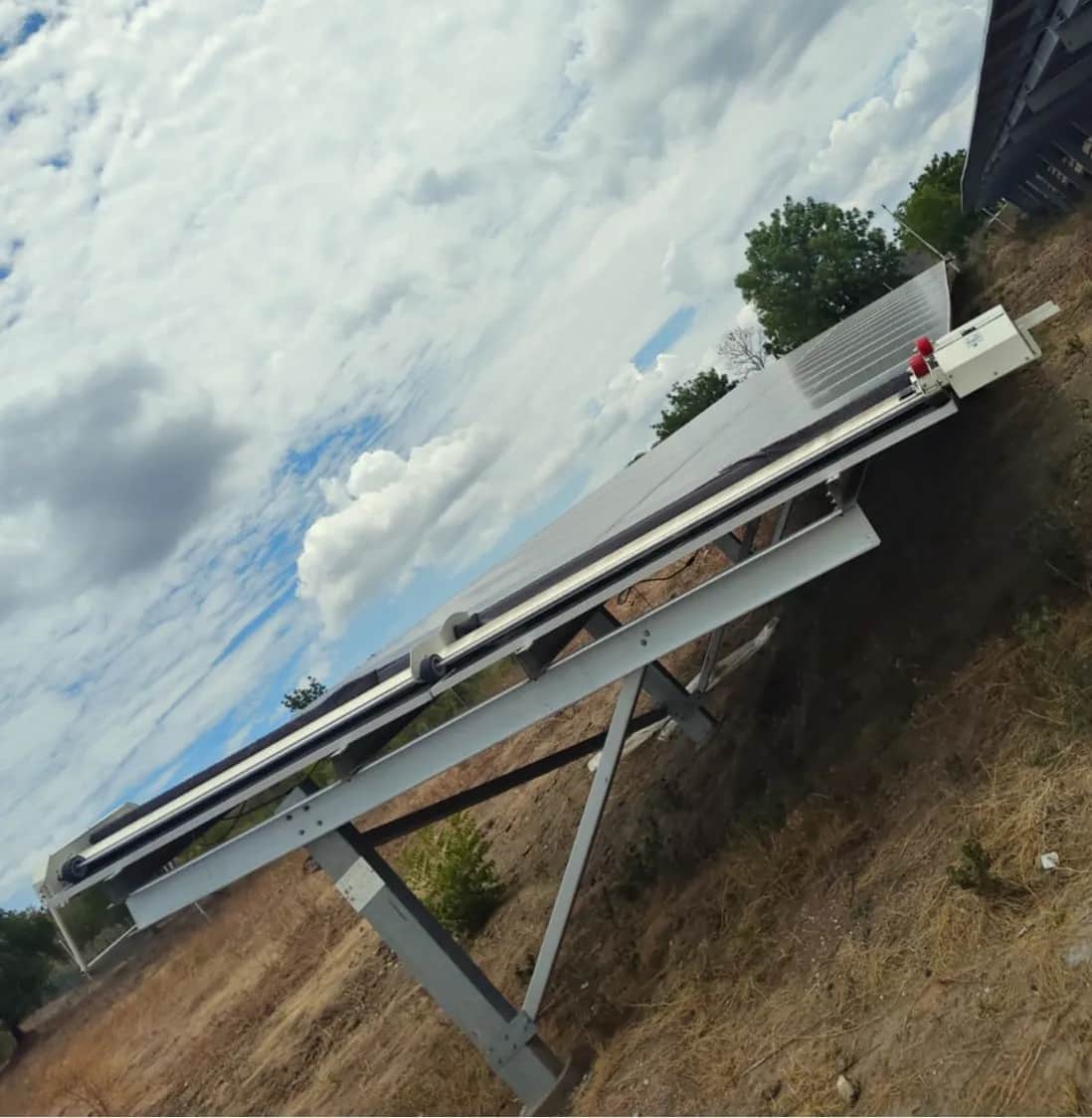
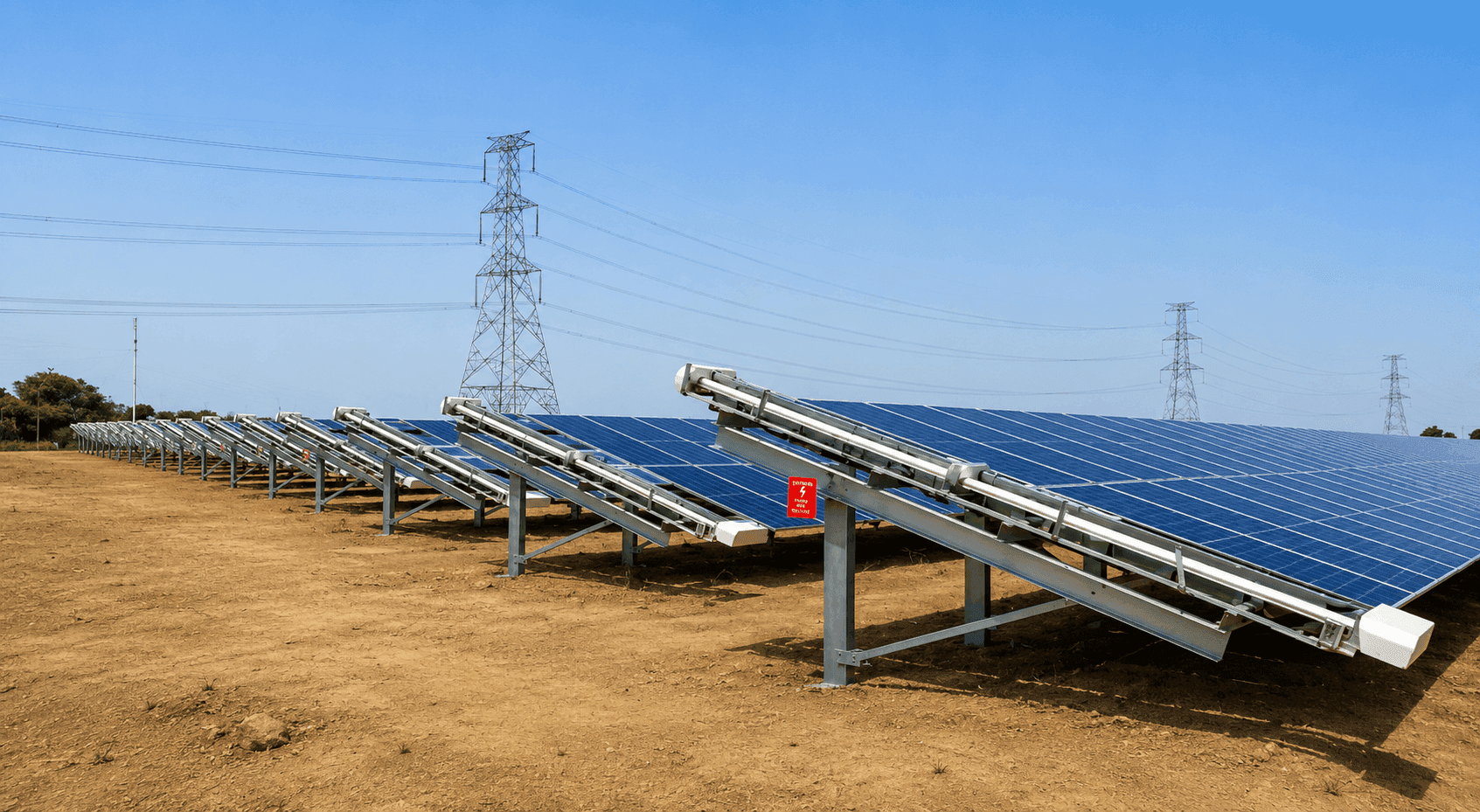
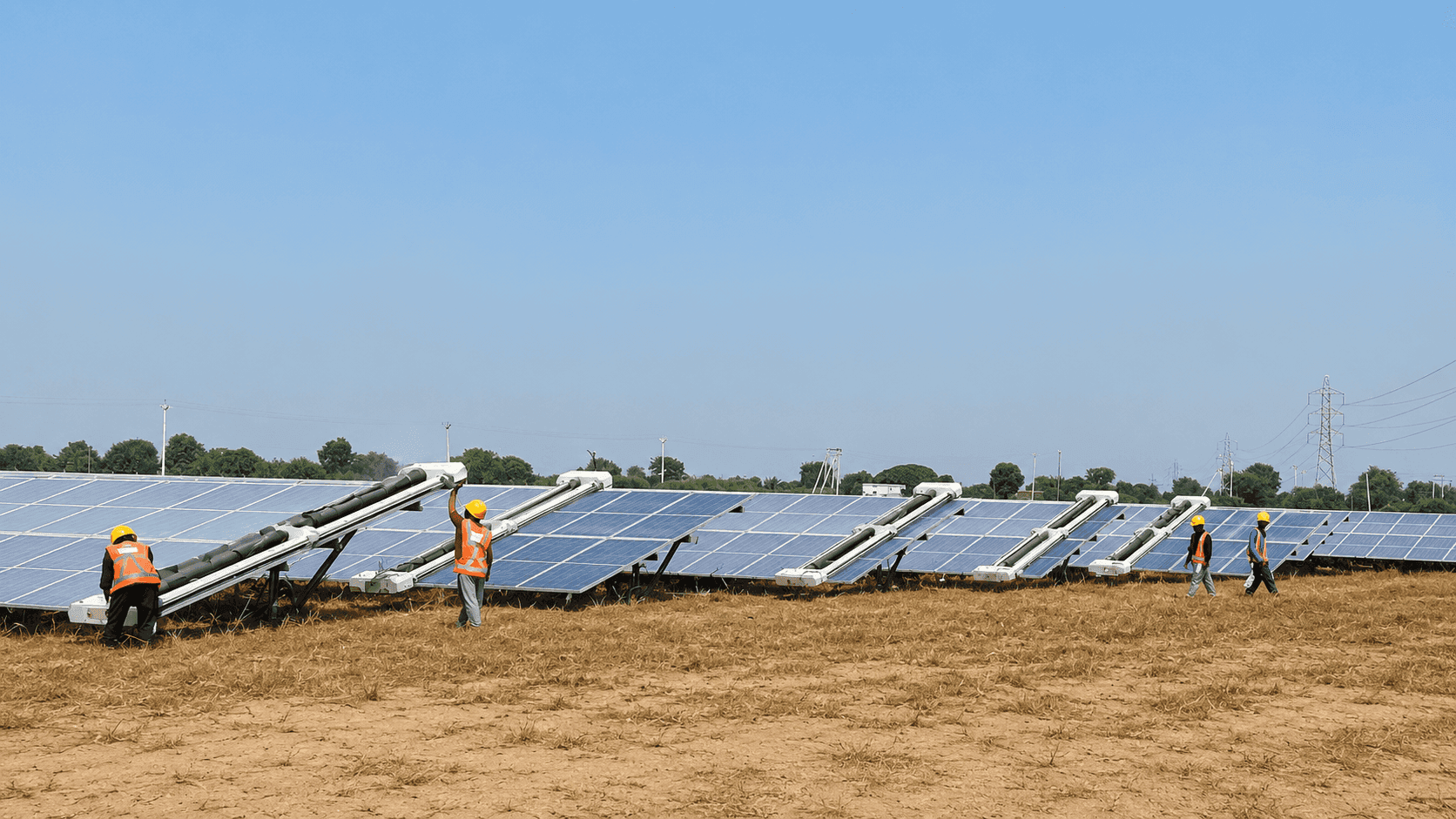
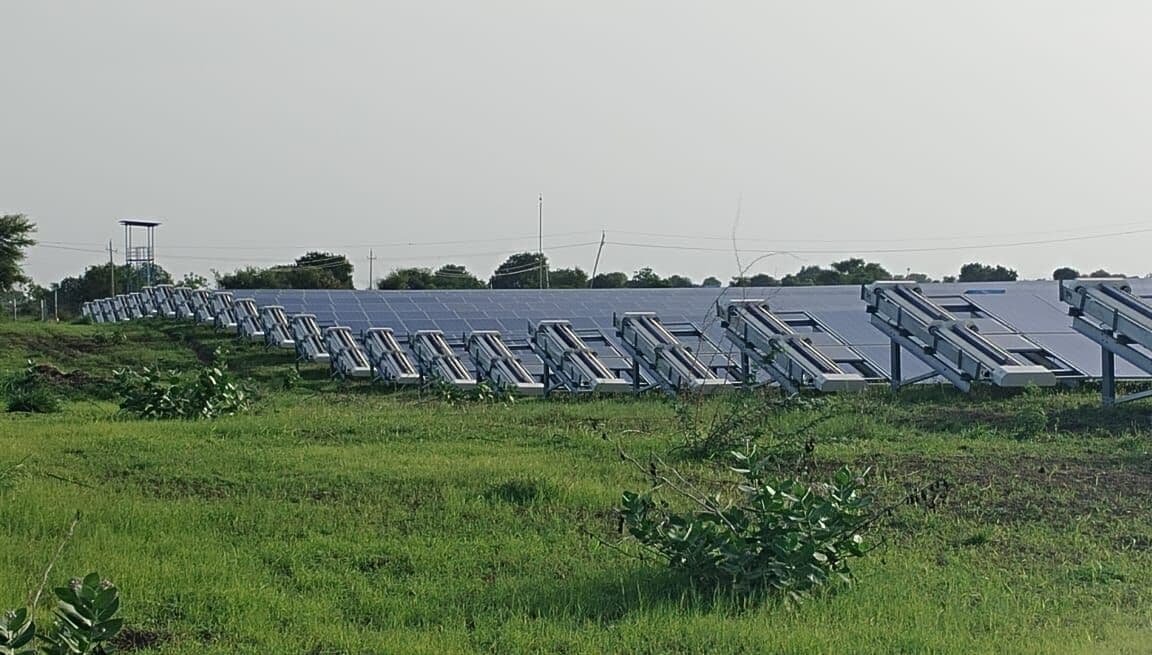
To address systemic soiling challenges, Taypro implemented a Capex-model procurement strategy. This involved a specialized fleet of three NYUMA semi-automatic robots. This selection was driven by the site layout. The plant features scattered blocks that require a flexible, portable cleaning solution rather than a full-scale automated installation of continuous tracks. The NYUMA units allow O&M teams to deploy single-pass PBT cleaning across these distributed sections, ensuring high-quality results on ground-mount arrays.
The transition to a semi-automatic model represents a fundamental shift in the site’s procurement philosophy. By investing in the NYUMA hardware via a Capex model, the facility owner gains total control over the cleaning infrastructure. This also eliminates the long-term dependency on manual water-based labor and the associated rising costs of water logistics. The deployment is specifically tailored to the following operational parameters:
- Fleet composition: Three NYUMA units, chosen for their single-pass PBT brush technology and ability to handle the specific soil profile of the region.
- Deployment cadence: Scheduled dry cleaning cycles, typically ranging between 3 to 10 cycles per month depending on real-time accumulation and local weather patterns.
- Procurement model: A direct Capex investment that replaces recurring manual cleaning costs with a durable, high-efficiency robotic asset.
- Cleaning method: The use of UV-stable PBT brushes provides a single-pass, waterless solution that is gentle on the modules but effective against road grit.
This localized robotic strategy mitigates the impact of humidity-induced soiling. Panels are cleaned with precision and reliability. The deployment of these three units saves 980,000 liters of water annually and reduces site CO2 emissions by 130 metric tons. By centralizing management of these robots through the NECTYR portal, supervisors gain verifiable proof of performance. This visibility ensures that the 262.5 MW facility maintains an additional 262.5 MWh of generation per year.
Operations and monitoring
Operations and Monitoring at the Ahmadnagar-Wanjoli 262.5 MW Plant
Effective fleet management at the Ahmadnagar-Wanjoli facility moves beyond simple hardware deployment. The integration of three NYUMA units requires a structured approach to overcome the complexities of regional agricultural dust. By transitioning away from manual cleaning, the site avoids unpredictable scheduling conflicts between night crews and civil O&M tasks. This allows the O&M team to focus on high-value tasks while the robots maintain the module surfaces.
The operational framework relies on a disciplined cleaning cadence of 3 to 10 dry cleaning cycles per month. This frequency is dynamically adjusted based on localized soiling accumulation patterns and real-time humidity data. Unlike traditional manual washing, which often relies on inconsistent claims of "cleaning completed," our robotic waterless method focuses on targeted, measurable intervention. This maximizes performance while protecting the long-term integrity of the solar modules.
Accountability is maintained through NECTYR, the Taypro fleet monitoring portal. Historically, plant supervisors lacked per-block proof to verify if specific strings were cleaned during a shift. NECTYR solves this by logging every pass and generating precise digital reports for each robot path. This granular visibility ensures that the 262.5 MW installation consistently hits its performance targets and provides the data necessary for accurate asset management.
- Verification: NECTYR provides per-block accountability that confirms robot activity for every row, providing an audit trail for site managers.
- Scheduled Maintenance: Cleaning cycles are integrated into the wider O&M schedule to ensure they do not interfere with vegetation or civil works.
- Proof of performance: Digital data logs translate directly into validated yield recovery statistics, replacing guesswork with empirical, site-level data.
- Operational transparency: Supervisors monitor fleet status and location in real-time, enabling faster responses to uneven soiling patterns caused by wind or rain.

Results and impact
Delivering Sustainability and Energy Yield at the Ahmadnagar-Wanjoli 262.5 MW Facility
The implementation of robotic solar panel cleaning in Maharashtra has transformed the Ahmadnagar-Wanjoli site. It changed from a challenge of unpredictable manual logistics into a model of consistent energy efficiency. By deploying a fleet of semi-automatic robotic units, the site neutralized performance degradation caused by local agricultural dust. The primary success of this project lies in replacing labor-heavy, inconsistent washing with a precise, waterless cleaning methodology that ensures module clarity.
The impact of this transition is measured through significant environmental and operational gains. By eliminating the need for traditional water-intensive cleaning, the project has conserved substantial water resources. These resources were previously diverted from other essential regional needs in Maharashtra. Furthermore, the systematic reduction in carbon emissions aligns with the plant's commitment to cleaner power generation and ESG compliance. Beyond these environmental metrics, the removal of heavy soiling layers led to a notable recovery in annual energy generation.
- Resource conservation: Adoption of waterless technology eliminates the logistical burden and costs associated with sourcing large volumes of cleaning water from local supplies.
- Yield restoration: Regular cleaning cycles prevent the accumulation of uneven string-level soiling, directly resulting in an additional 262.5 MWh of generation each year.
- Carbon footprint reduction: The shift to robotic operations provides a tangible reduction in greenhouse gas emissions by optimizing fleet efficiency and reducing manual vehicle movement.
- Process efficiency: Robotic deployment ensures uniform coverage across the 262.5 MW installation, providing consistent power output regardless of regional humidity levels.
- LCOE Optimization: Moving to a Capex-based robotic model helps stabilize the Levelized Cost of Energy by making maintenance costs more predictable and lower over the long term.
Peer comparison and planning checklist
Peer Comparison and Operational Planning
The Ahmadnagar-Wanjoli project operates at a 262.5 MW scale, positioning it as a significant installation within Maharashtra. Similar to the Soyegaon-solar-project, this facility contends with complex agricultural dust and humidity-driven soiling. While the Soyegaon site prioritizes fully automated row-based cleaning, the Wanjoli site utilizes three semi-automatic robotic units. This semi-automatic approach provides the flexibility needed to address localized soiling patterns where manual oversight was previously required to confirm string-level cleanliness.
Comparing this to the Ahmadnagar-jalalpur-10-mw deployment reveals distinct scalability strategies. The Jalalpur project serves as a pilot for dense utility-scale operations. Wanjoli applies these robotic cleaning principles across a much larger capacity. Both sites demonstrate that replacing manual labor with waterless robotic systems significantly stabilizes energy output. By migrating from erratic manual crew schedules to predictable robotic cycles, both sites reduced the logistical friction associated with civil O&M windows and improved overall plant reliability.
Strategic Deployment Checklist
- Audit regional soiling profiles to identify peak agricultural dust and humidity cycles across all plant blocks.
- Assess current water-delivery logistics to calculate the immediate OPEX savings gained by transitioning to waterless robotic cycles.
- Establish a clear per-block proof of work by integrating NECTYR reporting to track cleaned strings versus pending zones.
- Coordinate robot charging schedules with existing vegetation and civil O&M windows to minimize operational interference.
- Verify array-type compatibility for your specific ground-mount configuration before finalizing fleet procurement.
- Evaluate the financial benefit of a Capex model versus an OPEX model based on your long-term site ownership strategy.