Executive summary
The 360 MW Akhadana solar plant is located in Rajasthan. It sits on the edge of the Thar Desert. This site faces extreme environmental stress every day. The area suffers from constant dust and heavy sandstorms. These conditions cause rapid dust buildup on the solar panels. Fine particulates often cause performance ratio (PR) dips in downwind rows. These drops often happen before the dust is visible to the eye. In this region, water is a very scarce resource. Traditional wet cleaning with water tankers is difficult to manage. It is also very expensive for a plant of this size. Manual cleaning crews also face many challenges. They struggle to clean such a massive area on a regular basis. They also cannot provide clear proof of work for every module.
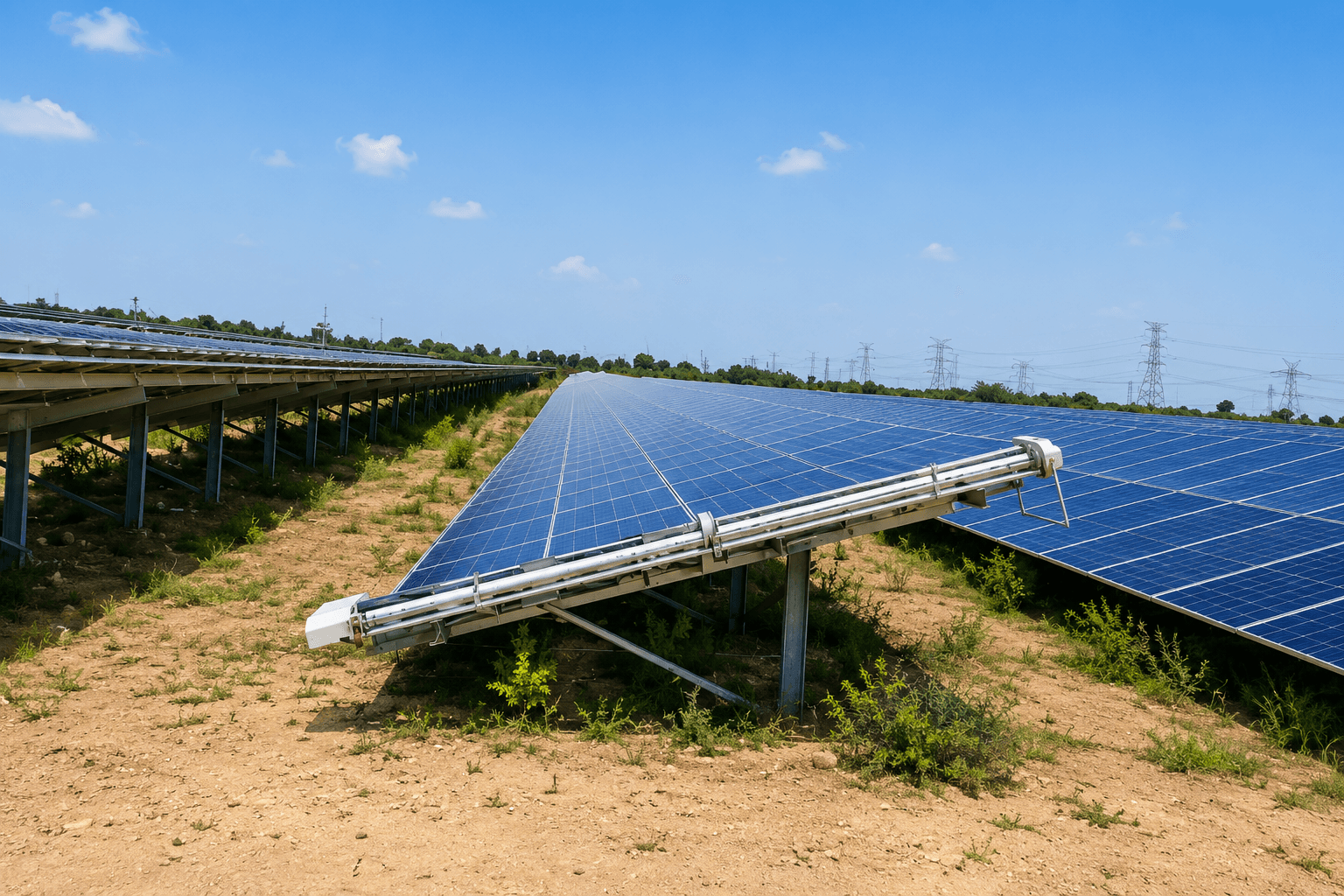
To solve these problems, the plant deployed 80 NYUMA semi-automatic robots. This deployment follows a strategic Capex model. The robots use a waterless cleaning method. This allows for consistent, scheduled dry cleaning cycles. This method keeps the modules clear despite the harsh desert air. By removing the need for water, the plant has seen huge gains. It has recovered 13.50 GWh of additional generation every year. The transition to robotic cleaning also saves 50.4 million litres of water annually. This makes the plant more sustainable and efficient. It provides a reliable maintenance solution for large-scale solar in Rajasthan.
Environment and soiling at Akhadana, Rajasthan
Managing Thar-edge Soiling and PR Losses at 360 MW Akhadana
The 360 MW Akhadana facility is a ground-mount solar plant. It operates under very tough environmental conditions. The site is located near the Thar Desert. This position means the plant faces constant dust from regional storms. Fine sand and particulates move easily through the air. These particles settle quickly on the solar modules. This causes a rapid buildup of soil on the glass surfaces.
One major issue is the behavior of downwind rows. These rows often suffer more than others. The dust accumulates heavily in these specific areas. This can lead to rapid performance ratio (PR) dips. These dips are often invisible to the human eye. A technician might look at the panels and see nothing. However, the actual energy output is already dropping. This "invisible soiling" is a major risk for large plants. It can cause significant revenue loss if not caught quickly.
The climate also makes water-based cleaning very hard. Rajasthan is a water-scarce state. Relying on water tankers is a logistical nightmare. It is difficult to find enough water for a 360 MW site. Moving tankers across the desert is also expensive and slow. The combination of heavy dust and low water makes traditional cleaning ineffective. The plant needed a way to clean without using water. It also needed a way to fight the dust more frequently.
- High dust density: Fine particulates from the Thar Desert settle on modules daily.
- Invisible PR dips: Downwind rows show energy loss before dust is visible.
- Water scarcity: Local conditions make water-based cleaning unreliable and costly.
O&M before Taypro
Managing Thar-edge Soiling and PR Losses at 360 MW Akhadana
Before the Taypro deployment, the site used manual cleaning methods. These methods relied heavily on human crews and water. This approach created several operational gaps. First, the water logistics were highly unpredictable. The plant struggled to secure enough water for wet washing. Tanker deliveries were often delayed or inconsistent. This meant the panels were not cleaned on a steady schedule. This inconsistency led to uneven energy production.
Second, manual crews could not cover the entire site effectively. The Akhadana plant has a very large number of blocks. It is difficult for human teams to maintain high frequency across such a vast area. Manual workers often miss certain rows or sections. This leaves some parts of the plant underperforming. Without a strict schedule, dust accumulates to dangerous levels. This causes the energy losses mentioned earlier.
Third, there was a lack of verifiable data. Manual cleaning lacks granular completion proof. Plant managers could not be sure if every module was actually clean. There were no digital logs to confirm the work. This made it impossible to hold crews accountable. The plant needed a system that provided proof of work. It also needed a way to clean without depending on water. The move to NYUMA robots solved these three major issues.
- Logistical failures: Water tanker reliance led to unreliable cleaning schedules.
- Coverage gaps: Manual teams could not match the required cleaning frequency for all blocks.
- Lack of accountability: Managers lacked digital proof that every row was cleaned.
Fleet and deployment at 360 MW
Fleet and Deployment: Scaling Robotic Operations at 360 MW
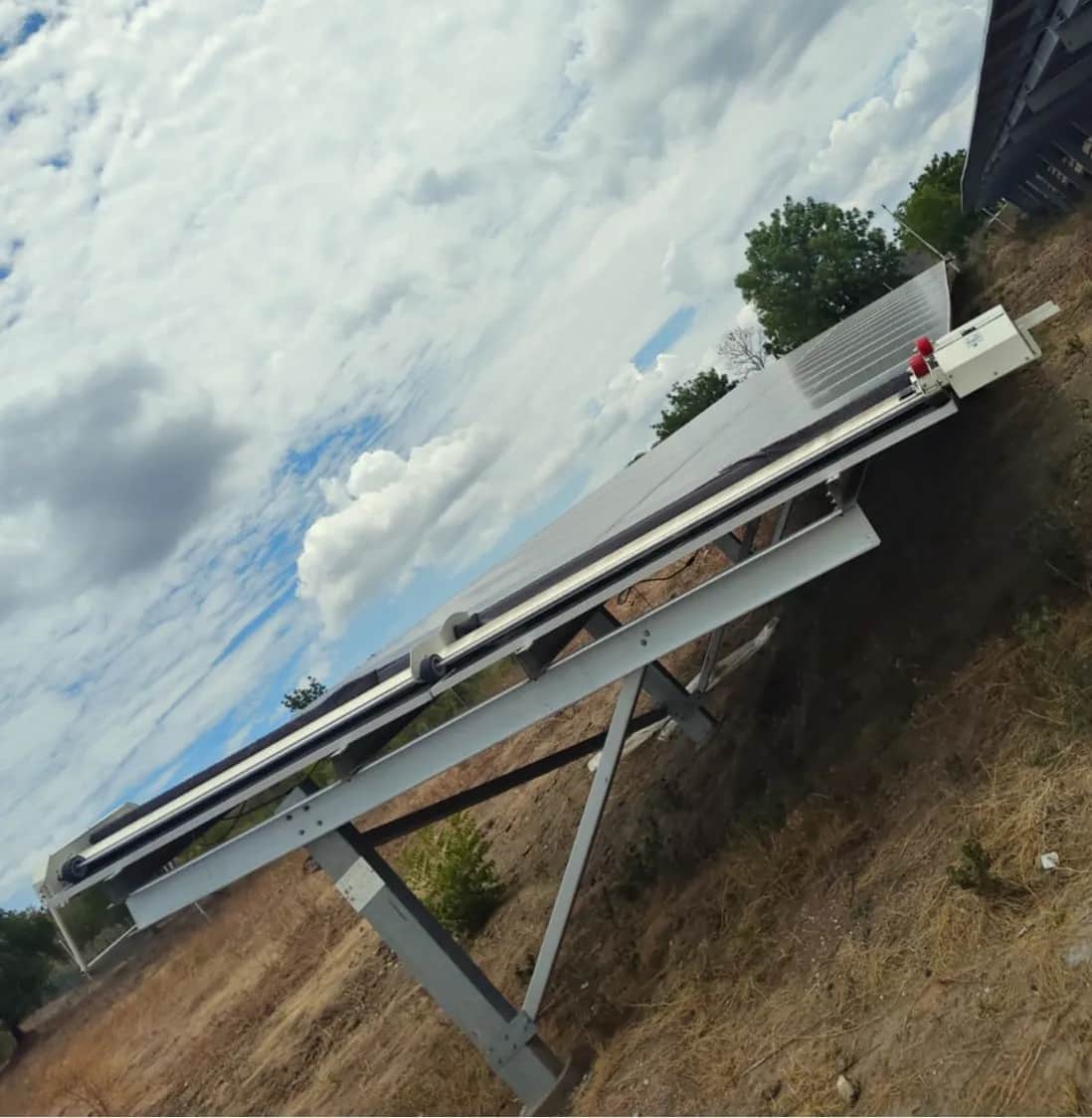
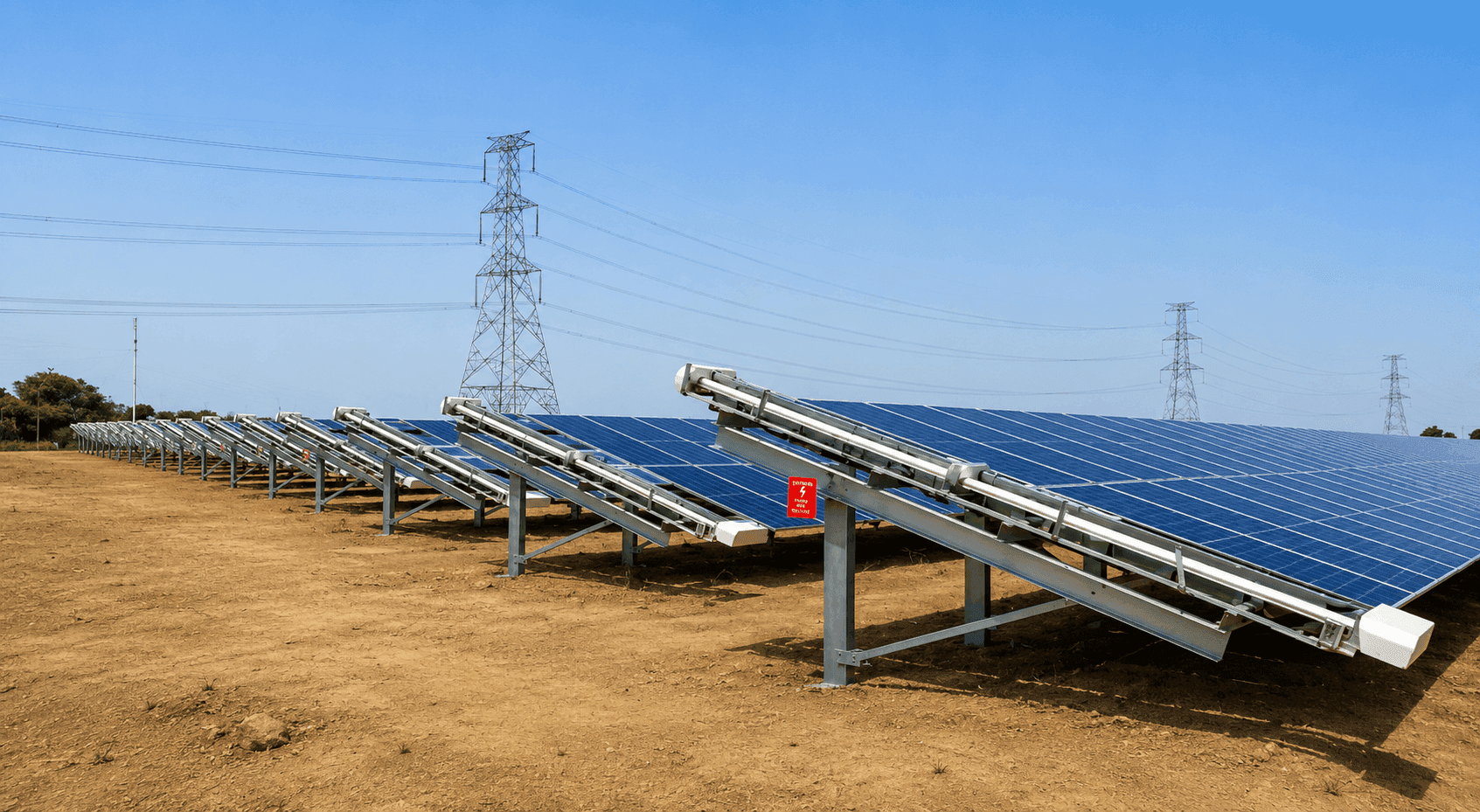
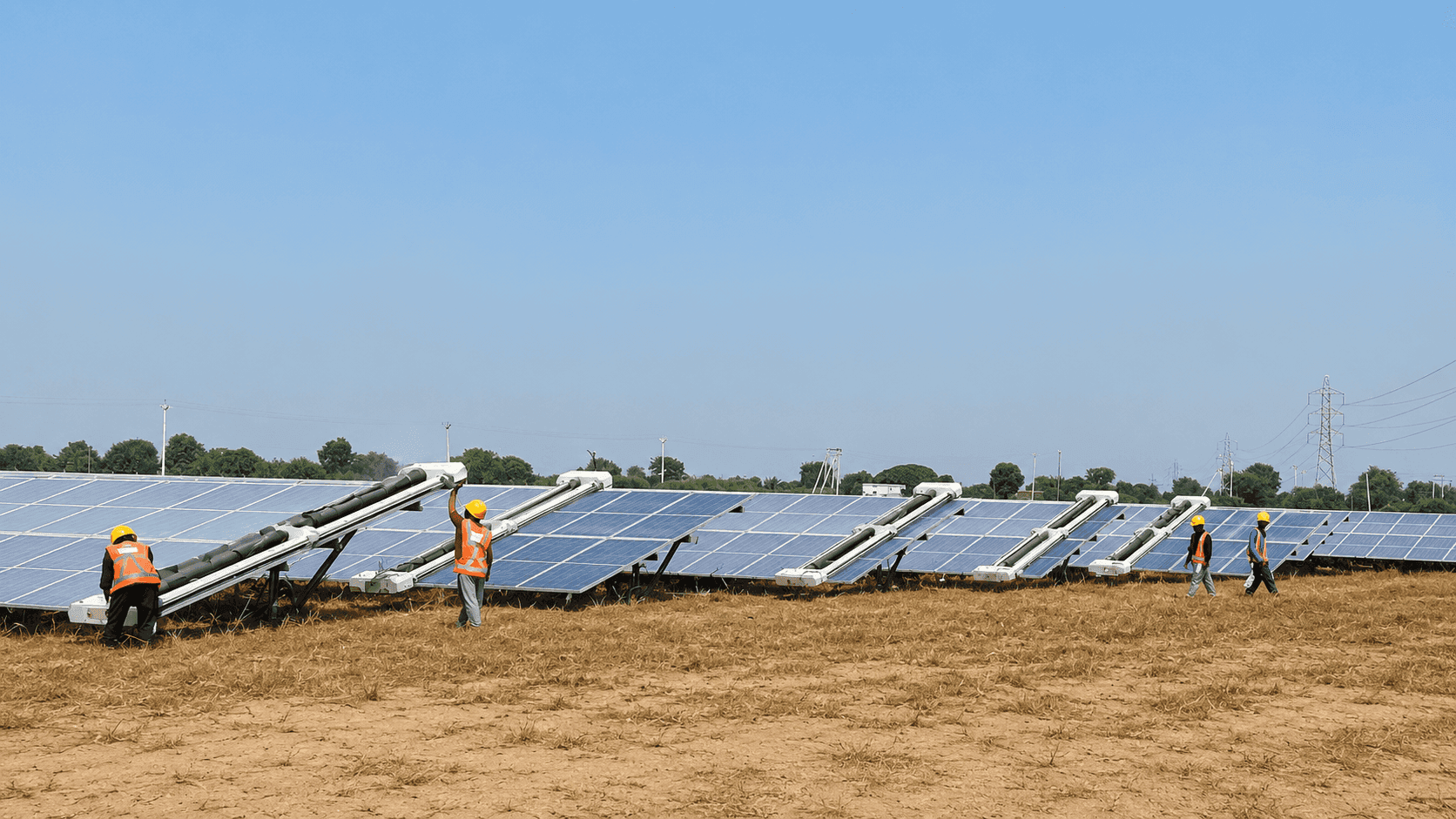
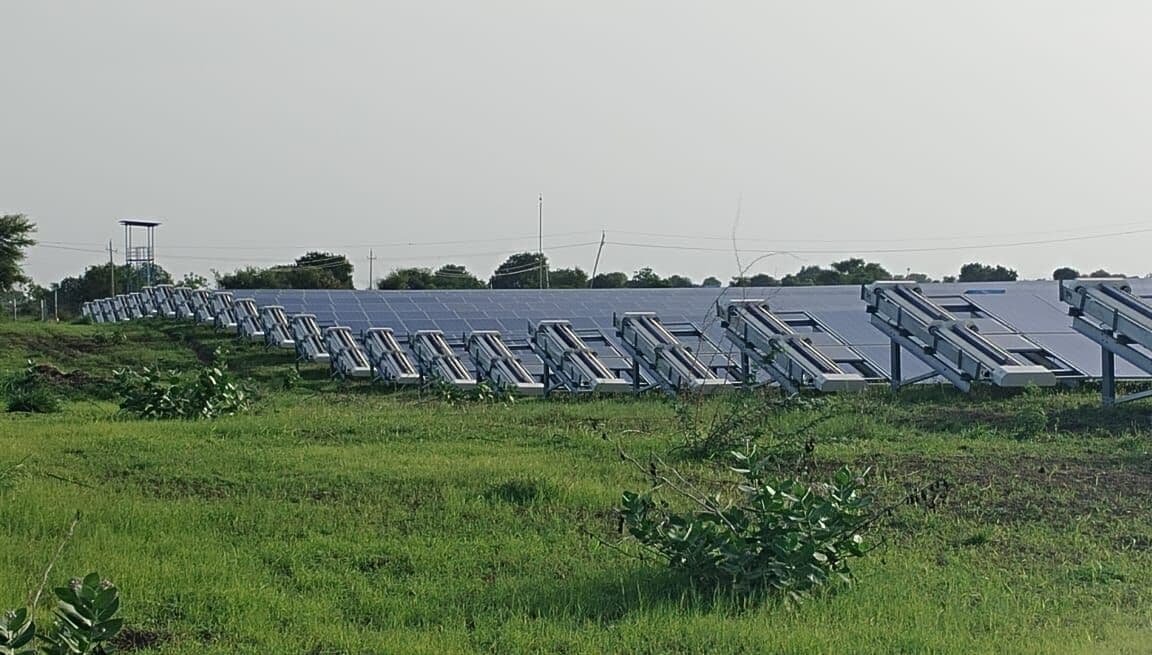
The Akhadana facility uses a structured Capex model for its robot fleet. This means the plant owners own the cleaning assets directly. They have deployed 80 semi-automatic NYUMA units. These robots are designed for large-scale ground-mount arrays. The fleet size was carefully chosen for a 360 MW site. It provides enough coverage to manage the vast amount of solar modules. This deployment creates a scalable infrastructure for long-term use.
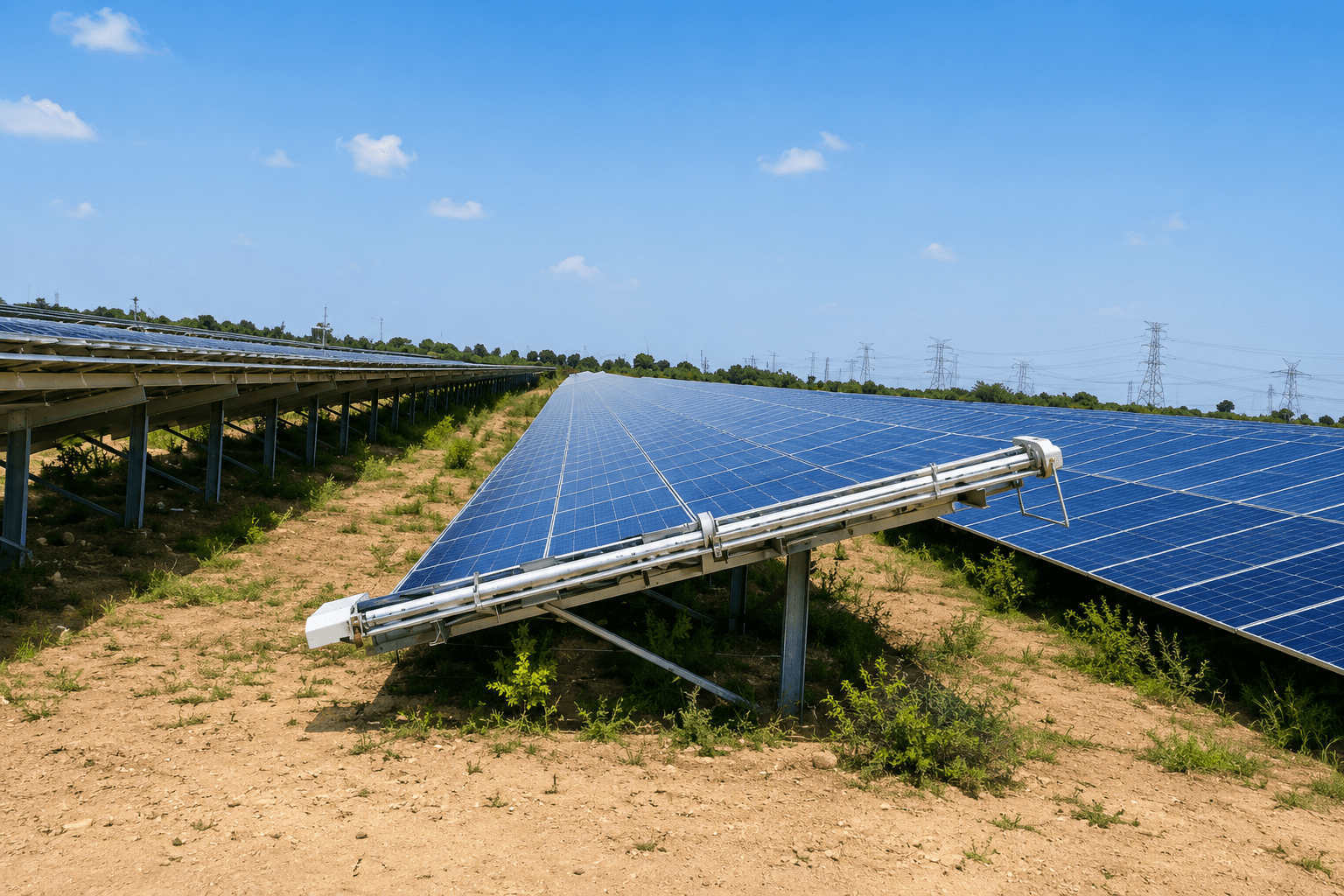
Each NYUMA robot uses single-pass PBT brush technology. PBT stands for Polybutylene Terephthalate. These brushes are UV-stable and very durable. They are perfect for the harsh Rajasthan sun. The robots perform a single-pass cleaning motion. This is highly effective at removing dry dust. Because they are semi-automatic, they can be moved between different rows. This "pick-and-place" capability is very useful for large sites. It allows the fleet to reach all parts of the plant efficiently.
The Capex model provides many advantages for the plant. It removes the need for expensive third-party service contracts. It also removes the reliance on water tanker logistics. By owning the robots, the plant gains total control over its maintenance. This leads to more predictable operating costs. The site team can plan cleaning around the specific needs of the plant. This ensures high uptime and consistent module cleanliness.
The deployment also improves block-level reliability. The NYUMA units are built to handle high temperatures. They can operate in environments up to 90°C. This is vital for a site in the Thar-edge region. The integration of these robots ensures that every row is serviced. This methodical approach prevents the performance dips seen with manual cleaning. The scale of 80 robots ensures the plant stays productive year-round.
- Robot Model: 80 NYUMA semi-automatic units.
- Technology: Single-pass UV-stable PBT brush cleaning.
- Procurement: Capex model for long-term asset control.
- Durability: IP65 rated for harsh, dusty environments.
Operations and monitoring
Optimizing Cleaning Cadence: NECTYR-Led Accountability at 360 MW
Managing 80 robots across a 360 MW site requires smart software. The Akhadana facility uses the NECTYR fleet portal. This system provides complete visibility for the entire plant. Site managers can monitor every robot from a single dashboard. NECTYR allows for precise, block-level accountability. It provides the digital proof of completion that manual crews cannot offer. This is a key part of the plant's high-yield strategy.
The cleaning schedule is not based on a fixed calendar. Instead, it is an inspection-led approach. The team uses NECTYR to monitor real-time soiling conditions. They deploy the NYUMA robots for 3 to 10 dry cleaning cycles per month. This cadence is adjusted based on the actual dust levels. If a storm occurs, the cleaning frequency can increase. This prevents dust from building up into a hard layer. It keeps the module transparency at its highest possible level.
This data-driven approach also saves money. The plant avoids the "daily washing" myth. You do not need to wash panels every single day to get good results. Instead, you clean when the data shows a performance drop. This surgical approach reduces wear on the equipment. It also maximizes the life of the solar modules. NECTYR tracks every single robot pass and logs it. This creates a perfect audit trail for the plant owners.
- Smart Scheduling: 3 to 10 dry cleaning cycles per month based on real-time data.
- Digital Proof: NECTYR provides logs to verify every cleaning cycle.
- Remote Management: Site managers monitor the entire fleet via the NECTYR portal.
- Adaptive Logic: The schedule responds to weather events and dust levels.
Results and impact
Optimizing Generation and Resource Efficiency in the Thar Desert
The switch to Taypro robotic cleaning has delivered massive results. The most important impact is the boost in energy production. The Akhadana plant now recovers 13.50 GWh of electricity every year. This is a huge gain for a 360 MW facility. The NYUMA robots keep the modules clear of fine sand. This prevents the energy losses caused by downwind soiling. The plant can now maintain a much higher performance ratio.
The environmental impact is also very significant. The plant has saved 50.4 million litres of water annually. In a dry state like Rajasthan, this is a major achievement. By using waterless cleaning, the plant protects local water resources. It also removes the need for complex water tanker logistics. This makes the entire operation much more sustainable and eco-friendly.
Operational reliability has also improved greatly. The NECTYR portal provides total accountability. Managers no longer have to guess if a row was cleaned. They have digital logs for every single robot pass. This makes the O&M process much more efficient. It also allows for better long-term planning. The plant has successfully stabilized its energy yields. It has done so in one of the toughest environments in India. The transition from manual to robotic cleaning was a major success.
- Energy Gain: 13.50 GWh/yr of additional clean generation recovered.
- Water Savings: 50.4 million litres of water saved every year.
- Yield Stability: Consistent performance even during heavy dust seasons.
- Audit Readiness: Complete digital logs for all cleaning activities via NECTYR.
Peer comparison and planning checklist
Benchmarking 360 MW Robotic Deployment Against Rajasthan Peers
The Akhadana project is a massive operation. It manages 360 MW with 80 NYUMA robots. This is a higher density of robots than smaller plants. For example, the 150 MW Chhayan plant has a smaller footprint. The 300 MW Bhadla plant also uses different management strategies. However, the Thar-edge environment makes Akhadana unique. The rapid dust buildup requires more frequent, targeted cleaning. This is why the 80-robot fleet is so effective here.
Unlike fully automatic sites, this semi-automatic model is very efficient. It uses the "pick-and-place" method to cover vast blocks. This provides high-frequency cleaning without the cost of a robot on every single row. It is a perfect balance of cost and performance. By comparing Akhadana to its peers, we see the value of this approach. It is essential for maintaining stability in high-dust, water-scarce regions.
Planning Checklist for Large-Scale Robotic Cleaning
- Map Soiling Zones: Identify which rows (like downwind rows) collect the most dust.
- Check Water Logistics: Calculate the cost and reliability of water tankers at your site.
- Choose the Right Model: Decide between Capex (ownership) or Opex (service) models.
- Set a Data-Driven Cadence: Plan for 3 to 10 dry cycles per month based on dust.
- Prioritize Monitoring: Ensure you have a portal like NECTYR for digital proof of work.
- Evaluate Robot Type: Match the robot (like NYUMA) to your specific array type.