
Executive summary
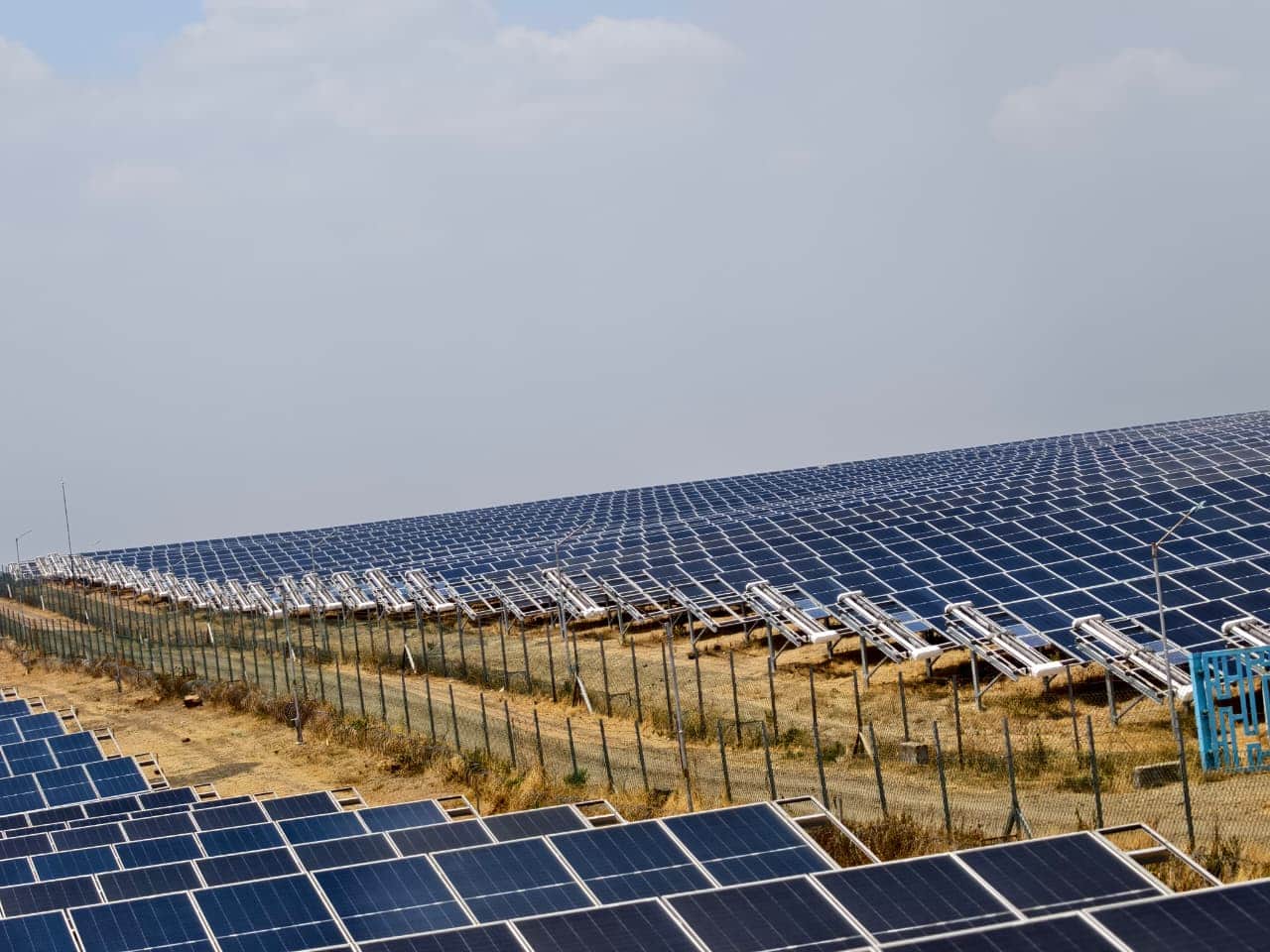
The 70 MW ground-mount solar plant in Banda, Uttar Pradesh, faces tough operational hurdles. The site deals with intense post-harvest particulate loads that vary significantly throughout the year. These environmental conditions often hurt the performance of downwind strings and modules near site infrastructure. Dust also accumulates heavily near access-road edges. This creates volatile fluctuations in the Performance Ratio (PR) and makes revenue forecasting difficult. Previously, the site used wet-cleaning programmes. These methods relied heavily on water tankers. Tanker logistics struggled to scale with the block count during peak dust weeks. This created major bottlenecks for O&M teams and increased operational costs.
Additionally, finance departments needed better data. They required a reliable, attributable cleaning baseline. They needed to separate cleaning results from weather variations or grid curtailment. Taypro solved these challenges with a 160-unit mixed robotic fleet. The deployment includes 106 automatic robots and 54 semi-automatic robots. This shift to a waterless CAPEX model removes tanker dependence. It also ensures a consistent cleaning cadence across the whole facility. The automatic GLYDE units perform daily waterless cleaning cycles. Meanwhile, the semi-automatic HELYX fleet optimizes the cleaning of distributed blocks. This strategy has secured a major performance boost. The plant now gains 2.63 GWh in additional annual generation. It also saves 302 metric tons of CO2 every year. By using advanced automation, the project stabilized long-term output. It also drastically reduced water use by 9.8 million litres per year.
Environment and soiling at Banda, Uttar Pradesh
Managing Post-Harvest Particulates and Road-Side Dust in Banda
The 70 MW Banda site has a unique soiling profile. This profile is driven by its location in Uttar Pradesh. The site does not just face uniform airborne dust. Instead, it is heavily influenced by local agricultural cycles. Post-harvest activities create a high concentration of airborne particulates. These particles settle unevenly across the solar array. This creates localized areas of high soiling, particularly in specific blocks. These particulates are often fine and can become embedded on the module surface if not removed quickly.
Access roads create a second soiling challenge. Frequent vehicle movement generates fine dust. This dust accumulates rapidly on modules near the site infrastructure. It specifically affects downwind strings and road-adjacent rows. This creates a non-uniform soiling pattern across the plant. Traditional manual washing schedules often fail to fix this. They cannot react quickly enough to localized dust spikes. By the time a tanker arrives, the soiling level has already impacted the power output of those specific strings.
The specific cleaning challenges at this site include:
- Heavy particulate loads during peak harvest weeks in Uttar Pradesh.
- Increased soiling on perimeter and downwind strings due to wind patterns.
- Dust accumulation caused by constant access-road activity and vehicle traffic.
- Difficulty in scaling wet-cleaning tankers to meet sudden increases in dust load.
- The risk of micro-abrasion if dry dust is not managed via proper cleaning methods.
For O&M teams, these factors made management difficult. It was hard to isolate soiling losses from other factors. For example, it was hard to distinguish dust from seasonal curtailment. It was also hard to separate dust from weather patterns. The deployment of 160 robotic units changed this. The 106 automatic GLYDE robots perform daily waterless cleaning cycles. This combats the continuous dust load on critical strings. The 54 semi-automatic units manage the distributed segments. This targeted approach ensures high-impact areas stay clean. It avoids the logistics of old tanker programmes and provides more predictable performance.
O&M before Taypro
Overcoming O&M Bottlenecks in the Banda Utility Site
Before the robotic transition, the Banda facility used traditional wet-cleaning. These methods relied on water tankers. This approach was difficult to scale as the plant grew. During peak dust weeks, the workload grew too large. The number of cleaning blocks outpaced the water fleet. This led to inconsistent panel cleanliness. It also caused deferred maintenance tasks, which compounded the soiling problem.
The O&M team also faced pressure from finance departments. They needed better capital efficiency and data. Manual cleaning logs were often inconsistent. They were easily impacted by weather events. They were also affected by grid-side curtailment. This made it hard to create an attributable cleaning baseline. Site managers could not prove the exact impact of cleaning. This made it hard to track the true Return on Investment (ROI). Lenders often require precise data to validate asset health, and manual logs were insufficient for this purpose.
The move to a robotic fleet solved three main problems:
- Water dependence: Tankers caused operational strain. This was most severe during high dust periods in Uttar Pradesh. It also created challenges in securing water rights for cleaning.
- Labour volatility: Scaling human teams was difficult. It was hard to match the speed of post-harvest dust buildup. It also created safety risks for manual workers on large sites.
- Audit gaps: Manual logs lacked transparency. Finance teams could not distinguish between soiling losses and planned downtime. This lack of data clarity hindered long-term financial planning.
The project replaced tanker schedules with autonomous, waterless cleaning. This removed the link between site access and panel output. It provided the verifiable data needed for better budgeting. Now, the facility ensures consistent energy yields all year, backed by digital logs.
Fleet and deployment at 70 MW
Fleet Deployment Strategy for 70 MW Capacity
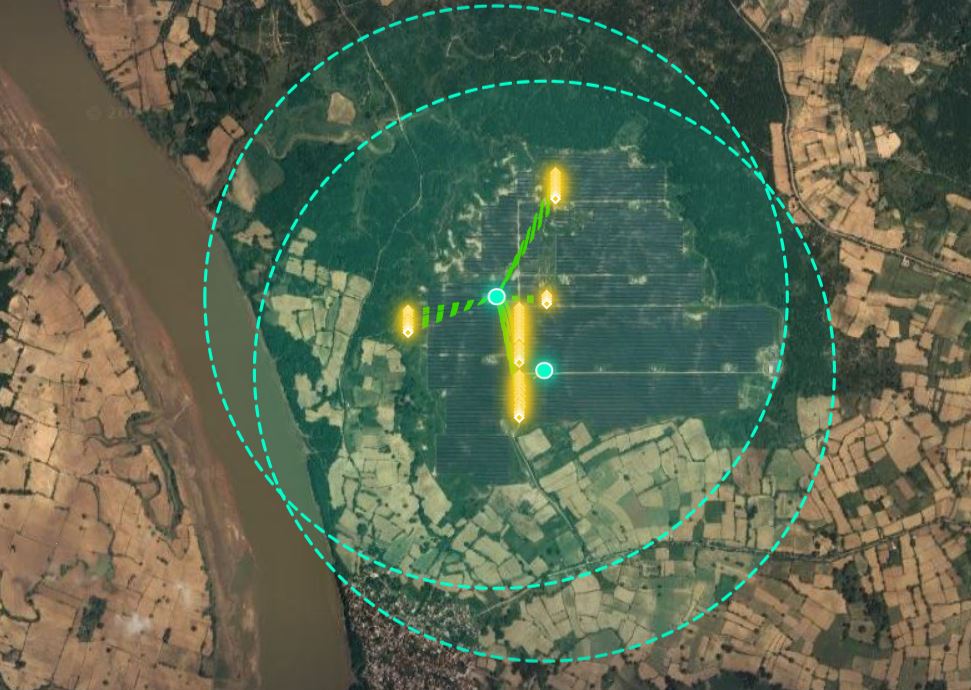
The 70 MW Banda facility uses a mixed-mode cleaning strategy. This strategy addresses the different particulate loads across the site. The fleet uses 106 GLYDE robots and 54 HELYX robots. This combination ensures full coverage of all ground-mount blocks. By using different types of robots, the site achieves both high-frequency cleaning and wide-area coverage.
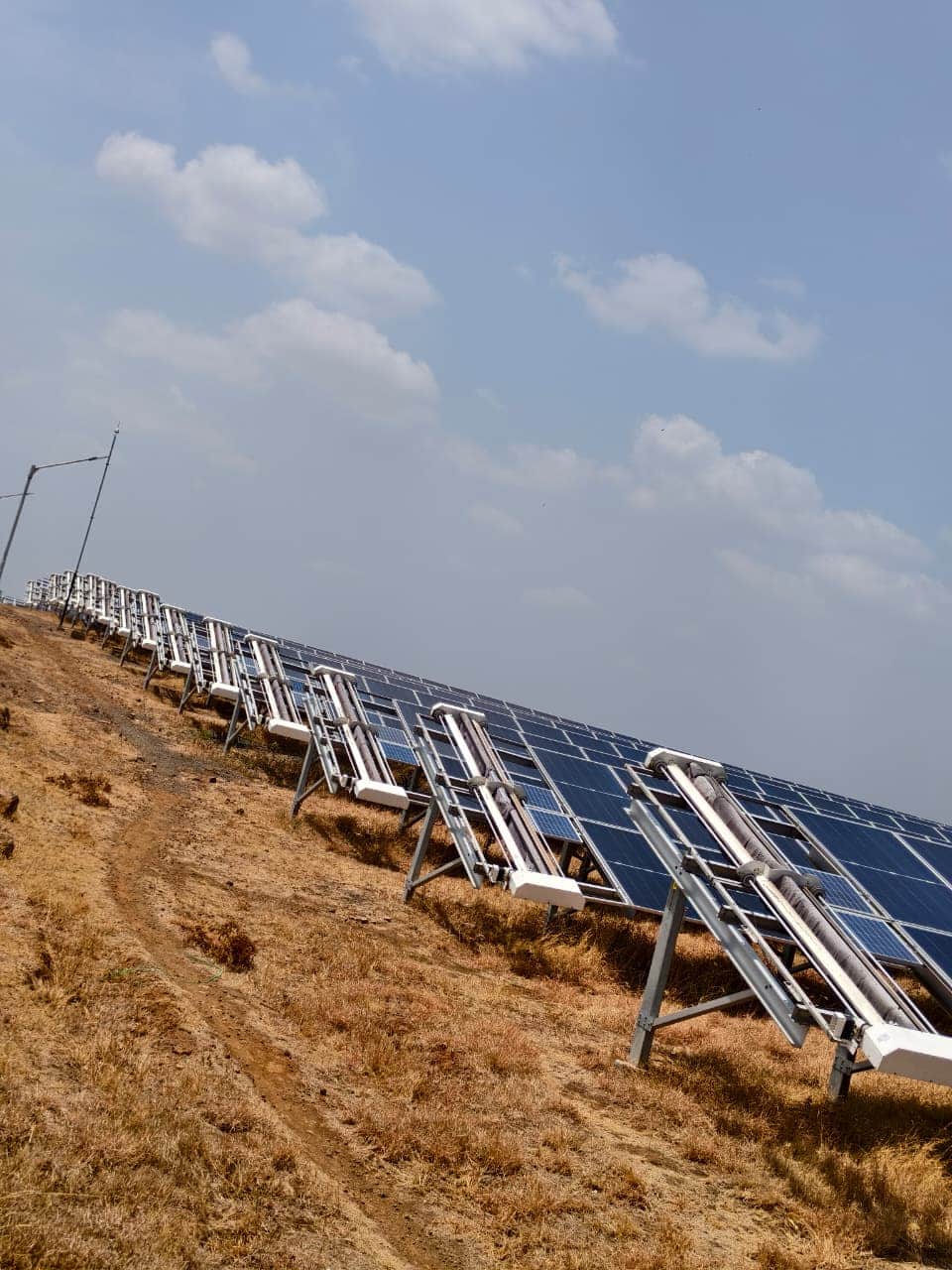
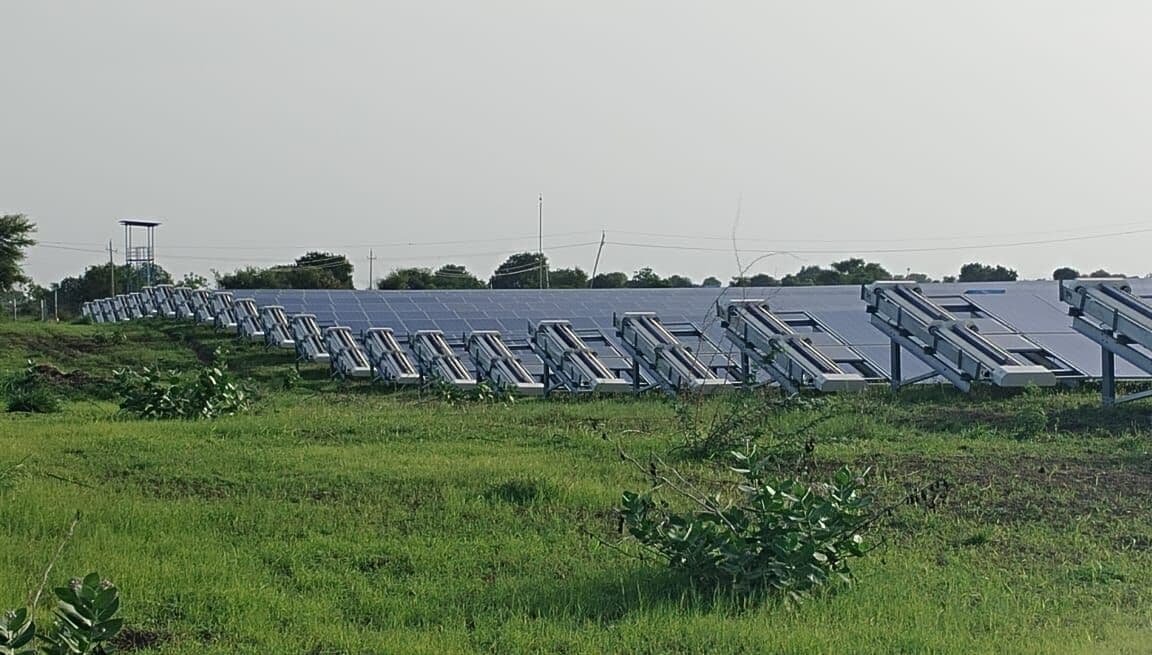
The 106 GLYDE robots handle the fully automatic cleaning. They perform daily waterless cleaning cycles. These units use patented dual-pass microfiber technology. This method maintains high module transparency by using a combination of airflow and microfiber. By cleaning every day, the system prevents dust buildup. It specifically protects downwind strings and road-adjacent rows. These areas are most at risk from post-harvest particulates. The daily cadence ensures that soiling never reaches a level that causes significant PR decay.
The 54 HELYX robots complement the automatic fleet. They are assigned to scattered or distributed sections of the site. These units use a pick-and-place model. They are semi-automatic. They perform scheduled maintenance cycles. These cycles occur between 3 and 10 times per month. This allows the O&M team to use labour efficiently. They focus on areas where dust does not require daily cleaning. This mixed approach optimizes the CAPEX spent on the fleet.
The project uses a Capex procurement model. This gives the owner full control over the robots. During commissioning, the team focused on NECTYR integration. The entire fleet is connected to the NECTYR operations portal. Site managers can track all robots through one dashboard. They can monitor the daily GLYDE units and the scheduled HELYX units. This creates clear, attributable cleaning baselines. The facility can now separate generation gains from grid curtailment or weather events. This level of digital oversight is essential for large-scale utility management.
Operations and monitoring
Operations and Monitoring at the 70 MW Banda Site
The 70 MW Banda facility uses a mixed robotic fleet. This fleet targets fine dust and post-harvest particulates. These particles concentrate near access roads and downwind strings. The site replaced water tankers with a technology-led model. This has created more consistent power output. It also manages local environmental changes effectively through automated scheduling.
The site uses two distinct cleaning cadences:
- Daily Waterless Cleaning: The 106 GLYDE units follow a daily schedule. They use patented dual-pass microfiber technology. This keeps the modules clean and transparent. This automatic cycle prevents labour shortages from affecting performance.
- Scheduled Maintenance Cycles: The 54 HELYX units manage scattered blocks. These semi-automatic robots follow a programmed schedule. They clean 3 to 10 times per month. This is optimized for areas with lower dust rates.
All operations are integrated into the NECTYR platform. This central portal gives the O&M team live updates. It also provides detailed cleaning logs. Managers can map robot activity against generation data. This helps the finance team establish cleaning baselines. They can clearly see the gains from maintenance. They can also separate these gains from weather or grid issues. This data-driven approach allows for predictive maintenance rather than reactive cleaning.
This approach ensures the Capex investment works. The robots deliver higher energy yields. The project shows 99% cleaning efficiency. It also saves 9.8 million litres of water annually. The Banda project proves that data-driven, autonomous operations work at scale. It provides a blueprint for other large utility plants in high-soiling regions.
Results and impact
Quantifying Results at the 70 MW Banda Site
The shift to waterless robotic cleaning has improved the Banda site. The site replaced heavy tanker operations with the GLYDE and HELYX fleet. This created a reliable cleaning cadence. The robots maintain module transparency even during heavy dust seasons. This is vital for the Uttar Pradesh climate, where dust loads can spike without warning. The transition from manual to robotic has significantly reduced operational risk.
The main driver for ROI is the recovery of energy. Traditional cleaning often suffered from delays. These delays caused performance dips that lasted for days. The new robotic system eliminates those dips. The project now yields millions of extra kilowatt-hours every year. This extra production boosts the plant's bottom line. It provides a stable energy baseline during high-soiling months. This stability is crucial for meeting Power Purchase Agreement (PPA) obligations.
Sustainability is another major success. The site now uses waterless maintenance. This has saved millions of litres of water every year. It also removed the cost of running water tankers. This shift also lowers the site's annual carbon footprint. This supports the facility's long-term sustainability goals and environmental compliance. The removal of heavy tankers also reduces the wear and tear on site access roads.
Finally, NECTYR has transformed the O&M workflow. It provides precise and attributable data. Finance teams can now see the exact impact of cleaning. They can separate robot performance from external variables. This includes weather and grid curtailment. This visibility ensures the Banda site stays competitive. It delivers consistent yields through efficient, data-backed maintenance.

Peer comparison and planning checklist
Peer Comparisons and Operational Benchmarking
The 70 MW Banda project is a key Taypro site in North India. It works alongside the 50 MW Prayagraj and 60 MW Deoria plants. All three sites face similar dust loads in Uttar Pradesh. However, the Banda site uses a unique mixed fleet. This handles complex site logistics better than single-technology deployments. Unlike the Prayagraj plant, which is purely automatic, Banda is hybrid. It uses 106 automatic robots and 54 semi-automatic units. This allows for daily cleaning on primary rows. It also uses HELYX units for edge-row and scattered blocks.
These sites show a major trend in utility-scale O&M. Plants larger than 50 MW are moving toward autonomy. This helps them avoid the risks of tanker-dependent cleaning. The Banda project shows the benefit of a combined fleet. GLYDE and HELYX robots provide better coverage than manual models. By matching the cleaning mode to the array layout, managers ensure better performance. This is especially true during the post-harvest dust season when cleaning needs are highest.
Planning Checklist for Large-Scale Deployments
- Measure total row length and inter-row spacing. This helps balance GLYDE and HELYX units.
- Use NECTYR to set cleaning baselines. This isolates robot productivity from weather and grid issues.
- Calculate regional dust loads. Use this to set daily cleaning frequencies for different strings.
- Check site connectivity for NECTYR. This ensures real-time reporting for all zones.
- Plan power infrastructure for end-row locations. This supports docking and charging for the fleet.
- Evaluate the impact of access roads on soiling. Plan for higher frequency cleaning on perimeter rows.
- Review procurement models. Consider Capex for full control over cleaning schedules and data.