
Executive summary
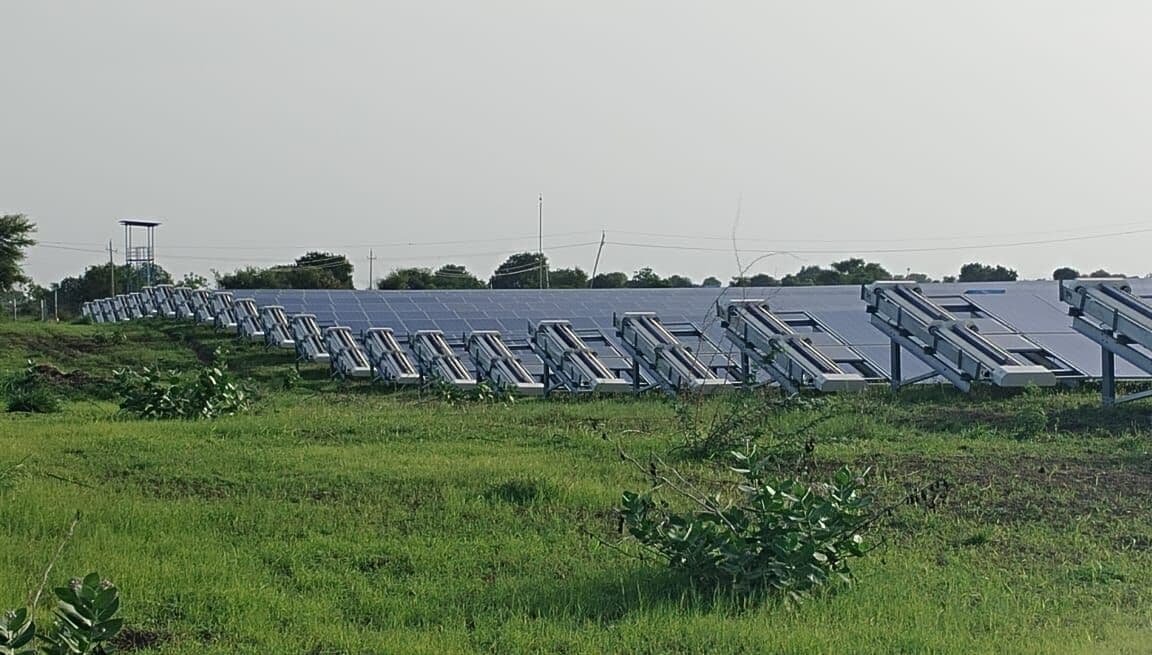
The 50 MW ground-mount solar array is located in Yadgir, Karnataka. This site faces difficult operational hurdles. These problems come from the local environment. The area has heavy red-soil dust. It also experiences short, sudden rain showers. These two factors create a "rinse-and-spot" pattern on the solar modules. This pattern leaves streaks of dirt on the glass. This dirt blocks sunlight and reduces power output.
Before the upgrade, the O&M teams used manual wet washing. This method caused many logistical problems. It required large amounts of water. This was a conflict because the local region in Karnataka has water supply constraints. Also, managing manual cleaning during the rainy season was hard. It was difficult to track the Performance Ratio (PR) accurately. The site needed a more reliable way to maintain its energy yield.
To solve this, the facility moved to a mixed-mode robotic cleaning plan. The project used a CAPEX procurement model. Taypro deployed two types of robots to handle the site. The fleet includes 96 fully automatic GLYDE robots. It also includes 19 semi-automatic HELYX units. The GLYDE robots perform daily waterless cleaning cycles. The HELYX robots handle distributed blocks with scheduled dry cycles. This approach helps manage the site's unique cleaning needs.
The results have been very positive. The project now gains an extra 1.88 GWh of energy every year. It also saves 7 million litres of water annually. This deployment proves that waterless robots are essential for high-soiling regions. The site now has stable energy production despite the tough local weather.
Environment and soiling at Yadgir, Karnataka
Managing Red-Soil Rinse-and-Spot Patterns in Yadgir
The 50 MW Yadgir project operates in a unique micro-climate. The main issue here is red-soil particulate matter. This soil is very fine and stays in the air. During the dry season, these particles settle on the solar panels. They build up quickly to create a thick layer of dust. This dust layer is very hard to remove with standard methods.
The climate in this part of Karnataka adds more complexity. There is intense heat and sporadic rainfall. These rains are often very short. They do not last long enough to wash the panels clean. Instead, they cause a "rinse-and-spot" effect. The rain moves some of the red dust around. Then, the heat causes the water to evaporate very quickly. This leaves behind uneven streaks and mineral deposits on the glass. These spots are very difficult to see but they block a lot of light.
This unpredictable pattern makes O&M planning very difficult. Standard manual cleaning cannot keep up with these changes. Previously, the facility relied on manual wet-washing. This was not enough to manage the varied soiling levels. Data showed that rain would partially clear some sections of the plant. At the same time, it would make the soil worse on other sections. This led to very inconsistent energy generation across the site.
To handle these environmental variables, the site moved to a mixed-mode robotic fleet. The fleet uses two different cleaning strategies:
- 96 GLYDE Robots: These units provide daily autonomous waterless cleaning. They work on the primary rows to stop red-soil buildup before it becomes a thick layer.
- 19 HELYX Robots: These units are used for pick-and-place cleaning. They cover distributed blocks that do not need daily cleaning. They follow a schedule of 3 to 10 cycles per month.
- NECTYR Integration: The fleet management portal tracks everything. It gives the team real-time data on cleaning efficacy. This helps the site manage the impact of unpredictable weather on the PR.
Moving to a waterless robotic model has stabilized the output. The Yadgir site no longer struggles with the complex local weather. This change has recovered 1.88 GWh of annual generation. It has also significantly reduced the amount of water used at the plant.
O&M before Taypro
Managing Red-Soil Soiling and Resource Competition at the Yadgir 50 MW Plant
Before using Taypro robots, the 50 MW Yadgir plant was not efficient. The facility relied on manual wet cleaning. This method struggled with the local red-soil dust. The soil creates a very stubborn layer on the module glass. Because the rains in this region are light and infrequent, they do not help. Instead, the moisture creates a rinse-and-spot pattern. This leaves calcified mineral deposits on the panels. These deposits cause extreme volatility in the Performance Ratio (PR).
This soiling made site management reactive rather than proactive. Managers were always trying to catch up with the dust. Manual cleaning crews had a hard time covering the whole site effectively. Logged data showed that rain would often clear some blocks but make others worse. This inconsistency meant that the plant operators could not forecast energy production accurately. They never knew exactly how much power the plant would make from one day to the next.
There was also a major problem with resources. The plant needed huge amounts of water for manual cleaning. This created a conflict with the local community. Karnataka has strict water supply constraints. Using so much water for solar maintenance was not sustainable. Additionally, relying on manual labor caused logistical bottlenecks. High water use and inconsistent cleaning quality led to lost revenue. To fix these gaps, the plant moved to an autonomous, waterless infrastructure:
- Daily Waterless Cleaning: The plant deployed 96 GLYDE robots. They perform fully autonomous, daily cleaning cycles. This keeps the modules free of red-soil buildup regardless of the weather.
- Strategic Supplemental Cleaning: The site uses 19 HELYX robots for distributed sections. These provide flexible, pick-and-place cleaning. They maintain a steady 3 to 10 cycle monthly cadence.
- Operational Oversight: The NECTYR platform provides real-time visibility. Managers can see the status of every robot. This replaced the guesswork of manual cleaning with real, actionable data.
The transition to this robotic fleet changed everything. It eliminated the need for water-intensive maintenance. This shift stabilized the site performance. It also delivered significant gains in annual energy generation.
Fleet and deployment at 50 MW
Fleet Deployment and Hybrid Cleaning Strategy
The 50 MW Yadgir project uses a hybrid fleet strategy. This strategy is designed to fight the red-soil dust in Karnataka. The site uses two different robotic cleaning modes. This allows for high-frequency cleaning on the main arrays. It also allows for cost-effective cleaning on harder-to-reach blocks. This combination ensures the entire 50 MW site stays clean.
The main part of the fleet consists of 96 GLYDE units. These robots follow a daily waterless cleaning schedule. They work on the primary ground-mount rows. The GLYDE robots use patented dual-pass microfiber technology. This technology is very effective. It ensures the module glass stays clear. It specifically stops the rinse-and-spot patterns caused by the local rain. By cleaning every day, the robots prevent mineral deposits from building up. This keeps the Performance Ratio stable.
To support the GLYDE fleet, the project deployed 19 HELYX robots. These robots handle scattered or access-limited sections of the plant. Because of the plant layout, these sections are harder to reach. The HELYX units use a semi-automatic, pick-and-place model. They do not need to be on the rows every day. Instead, they follow a schedule of 3 to 10 cleaning events per month. This ensures that every panel on the 50 MW site stays within optimal performance limits. It does this without using any water or much manual labor.
The commissioning process focused on NECTYR integration. Every robot is connected through an RF mesh. This connects them to the NECTYR operations portal. Site managers can see live telemetry and completion data. This visibility is much better than old manual cleaning logs. It allows for precise tracking of cleaning efficiency. It also makes it easier to see when PR is recovering. By using a CAPEX model, the project owners have long-term control. They have reduced their annual water use and increased their total energy yield.
Operations and monitoring
Data-Driven Operations: Diagnosing PR Fluctuations
The Yadgir 50 MW plant faces unique challenges. The red-soil dust adheres very firmly to the module glass. When short rains hit this dust, it creates stubborn rinse-and-spot patterns. These patterns block light from hitting the cells. This leads to localized drops in the Performance Ratio (PR). Traditional SCADA systems often cannot explain why these drops happen. They see the power loss but do not know the cause.
To solve this, the project uses the NECTYR operations portal. This portal is a central diagnostic tool for the site. The 96 GLYDE robots log the completion data for every single cycle. This gives the operations team a clear view of the entire array. NECTYR helps the team correlate rain events with PR changes. This allows them to see if a drop in power is a system fault. Or, they can see if it is just a temporary soiling pattern from a light rain. This level of detail is vital for smart O&M.
The team uses an inspection-led approach. They do not just rely on estimated cleaning logs. Instead, managers review NECTYR data to confirm robot performance. They check that robots have successfully navigated all array blocks. This provides a clear and honest record of the site status. This forensic approach removes the guesswork from the O&M schedule. Managers no longer have to guess if a row is clean.
Operational stability is also protected by wind protocols. The robot systems include integrated sensors. If wind speeds exceed certain limits, the robots trigger an automatic safe-docking protocol. This protects the equipment during the gusty seasonal shifts in Karnataka. By replacing "myth-based" maintenance with real data, the site has succeeded. The Yadgir site has achieved a sustainable cleaning cadence. This maximizes energy yield and saves water. It delivers 1.88 GWh of additional generation every year.
Results and impact
Yield and Resource Recovery at the Yadgir 50 MW Plant
The move to waterless robotic cleaning has transformed the Yadgir 50 MW site. The facility's operational profile is much better now. By using 96 GLYDE robots and 19 HELYX units, the project saw a massive uplift in energy. This consistent recovery of energy shows the value of robots. It is especially true in the arid landscapes of Karnataka. Moving away from water-intensive cleaning was the right choice.
The project also helped solve a local problem. It helped mitigate the local water crisis. The new system eliminates the need for large-scale water transport. You no longer need to bring in huge amounts of water for cleaning. This results in massive annual water savings. This conservation effort helps the plant follow regional environmental rules. It also protects the project's bottom line by reducing water costs.
The success of the Yadgir project is seen in three main areas:
- Enhanced Generation: Daily autonomous dry cleaning keeps the panels clear. This prevents red-soil buildup and increases annual energy growth.
- Water Autonomy: Switching to waterless cleaning saves millions of litres of water. This protects the site from local water shortages and regulations.
- Operational Reliability: NECTYR software makes cleaning schedules precise. This allows the O&M team to maintain a peak Performance Ratio (PR).
The Yadgir site proves that large solar plants can be both high-performing and sustainable. You do not have to exhaust local water resources to get high energy yields. The robotic infrastructure is a scalable, long-term solution. It maintains output at the highest possible efficiency levels.
Peer comparison and planning checklist
Peer Comparison and Implementation Planning
The Yadgir 50 MW installation is a new standard for solar in Karnataka. It is similar to the larger 75 MW KMF Karnataka project. Both sites show how robotic deployment scales well across different terrains. The KMF site manages more modules, but the Yadgir site uses a mixed-fleet approach. This specific mix addresses the unique red-soil patterns in this area. Both projects show that manual, water-intensive cleaning is outdated. Automated waterless solutions are now essential for stability in the Deccan Plateau region.
For IPPs (Independent Power Producers) looking to switch to robots, planning is key. Success depends on matching the right technology to the local site. You must look at local constraints and soiling patterns. Good planning ensures that the deployment meets water security rules. It also ensures that you hit your energy recovery targets.
Use this checklist when planning your robotic deployment:
- Conduct a pre-deployment soiling audit. Map how the red soil builds up. See how light rains create rinse patterns.
- Define your fleet ratio. Look at block density and row access. This helps you choose between automatic and semi-automatic units.
- Verify your site connectivity. Ensure you have the infrastructure for NECTYR. You need real-time telemetry for all robot sub-fleets.
- Set a maintenance schedule for charging docks. This ensures the robots can perform daily cleaning through the dry season.
- Audit your current costs. Compare your existing water-use permits and manual cleaning costs. This will help you find the immediate ROI for the CAPEX model.
By following these steps, solar operators can ensure a high return on investment. They can move from reactive maintenance to proactive, data-driven operations.