Executive summary
robotic solar panel cleaning Maharashtra, The 8.4 MW solar plant in Bheewandi, Maharashtra, faced major problems with power output. The local environment was the main cause of these issues. Constant agricultural dust and road grit covered the panels. Local humidity cycles also made the problem worse. These factors created uneven soiling patterns on different solar strings. This made traditional maintenance very hard to plan. Managers also struggled with water logistics and night crew schedules. These tasks often clashed with other site maintenance needs. Managers could not verify which sections were actually clean. This led to inconsistent energy yields across the site.
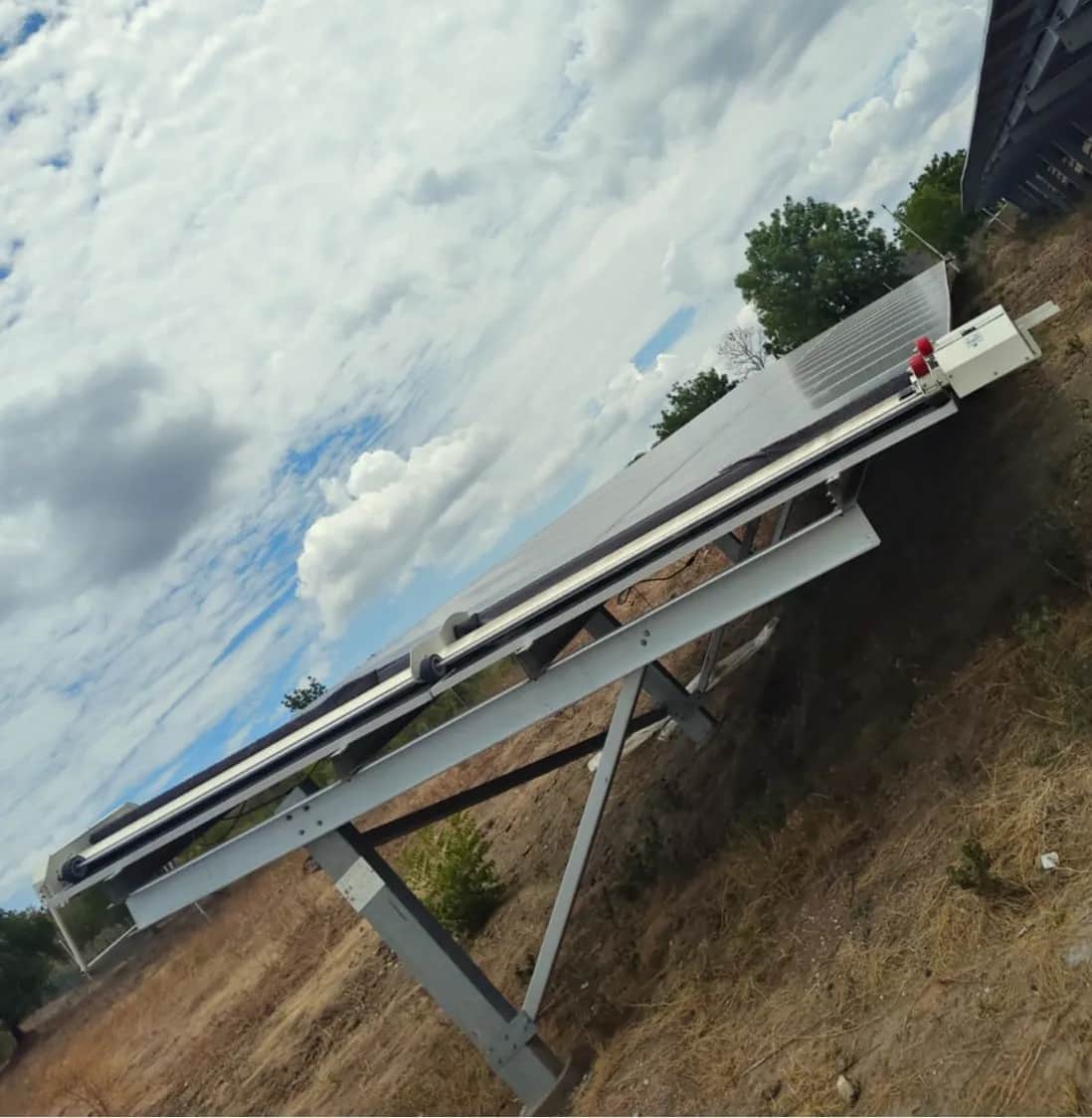
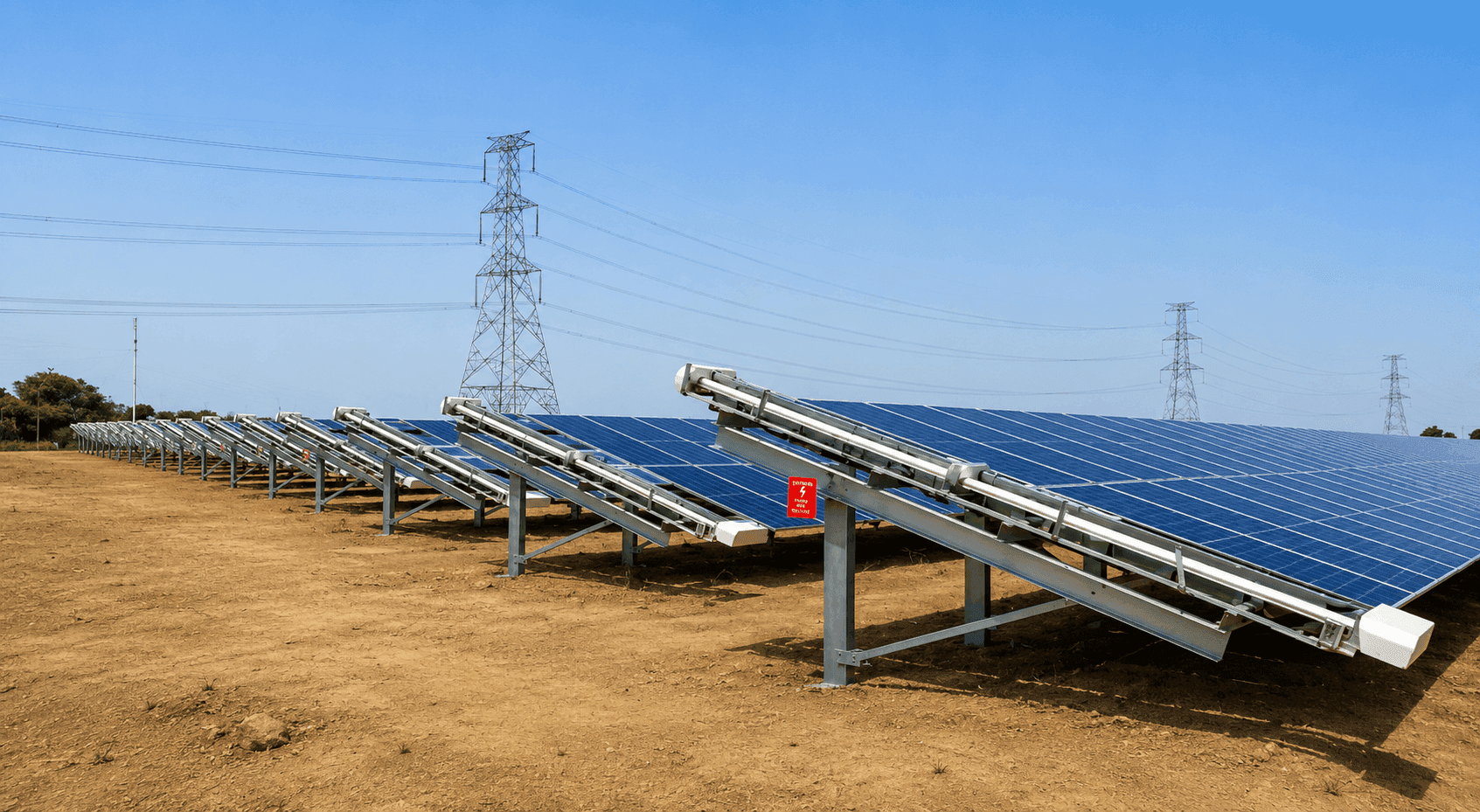
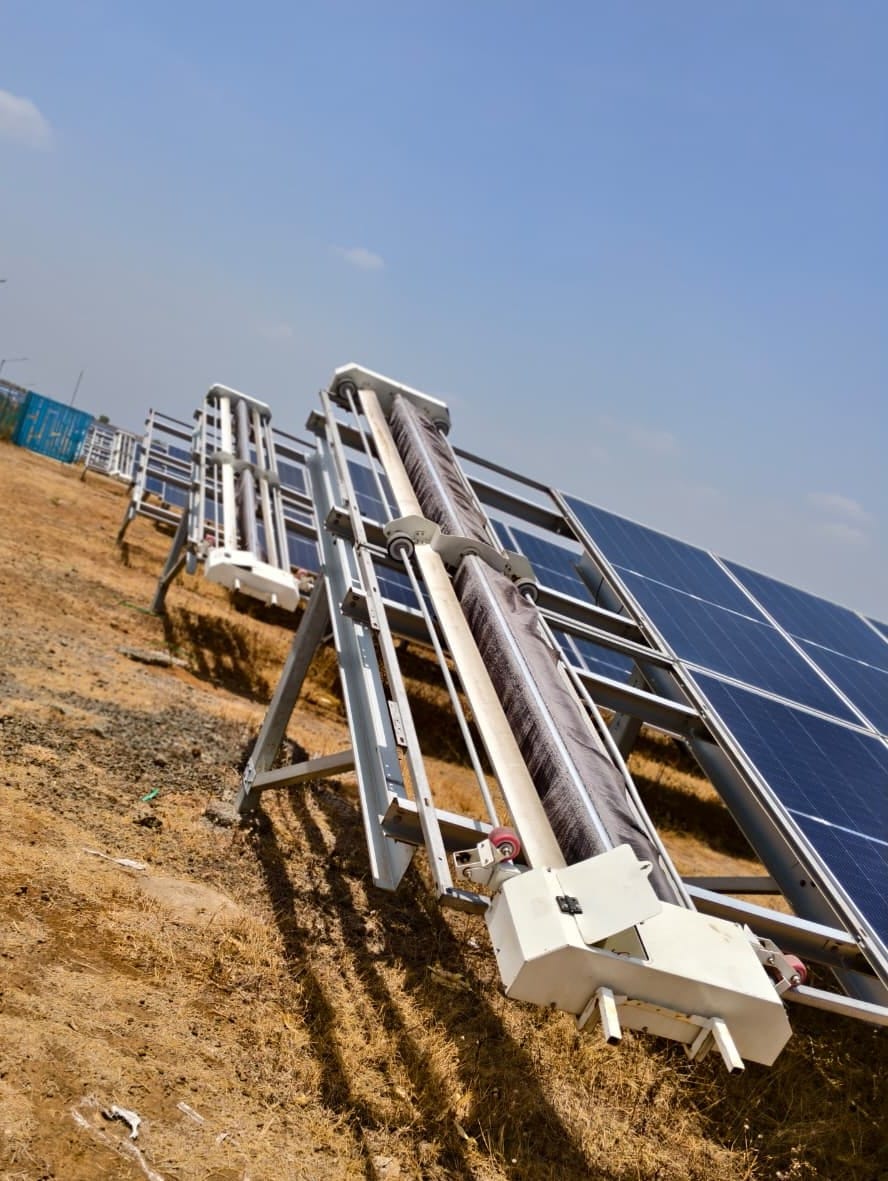
To fix these problems, the site moved to a semi-automatic robotic cleaning solution. They deployed the Taypro NYUMA system. This pick-and-place method allows for precise and targeted maintenance. It works well across distributed plant blocks. Since the change, the site has recovered 8.4 MWh of extra generation every year. The site also saves 32,000 litres of water every year. This switch to waterless robotic solar panel cleaning in Maharashtra has removed the need for manual water use. It also reduced the plant's carbon footprint by 4 metric tons annually.
Environment and soiling at Bheewandi
Environment and soiling at Bheewandi
The 8.4 MW Bheewandi facility deals with a very tough environmental profile. This profile makes standard O&M schedules very difficult to follow. The site faces constant agricultural dust from nearby fields. This dust is very fine and travels easily on the wind. It combines with abrasive road grit to form a dense, uneven layer on the panels. These deposits are made worse by frequent humidity cycles. The moisture causes the dust to turn into a thick crust. This crust bonds to the module surfaces in inconsistent patterns. These patterns appear at the string level rather than across the whole plant.
Before using the NYUMA system, this uneven soiling caused huge energy swings. Manual cleaning teams could not easily see where the dust was heaviest. They struggled to identify which specific strings needed the most attention. This led to a poor use of cleaning resources and wasted time. The integration of robotic solar panel cleaning in Maharashtra has changed this process. The robot ensures the uniform removal of all abrasive particles. By using waterless robotic cycles, the site no longer relies on manual labor. This ensures all strings stay at peak performance despite the local weather challenges.
O&M before Taypro
Managing O&M complexity at the Bheewandi solar project
Managing the 8.4 MW Bheewandi site was very complex before Taypro. Manual cleaning teams faced many operational hurdles. They had to manage complex water delivery logistics. They also had to organize expensive night-shift crews. These tasks often competed with vegetation management and civil maintenance. This competition made the cleaning schedule very unreliable. These delays resulted in erratic panel performance across the entire site.
Audit gaps were also a major concern for the management team. There was no digital way to track cleaning progress accurately. Supervisors lacked reliable proof of which strings were actually cleaned during each cycle. This left the plant at risk of invisible performance losses. These losses were caused by uneven soiling patterns that went unnoticed. By shifting to robotic solar panel cleaning in Maharashtra, the site solved these problems. They replaced manual uncertainty with verifiable and high-efficiency autonomous maintenance.
Fleet and deployment at 8.4 MW
Fleet and deployment at 8.4 MW
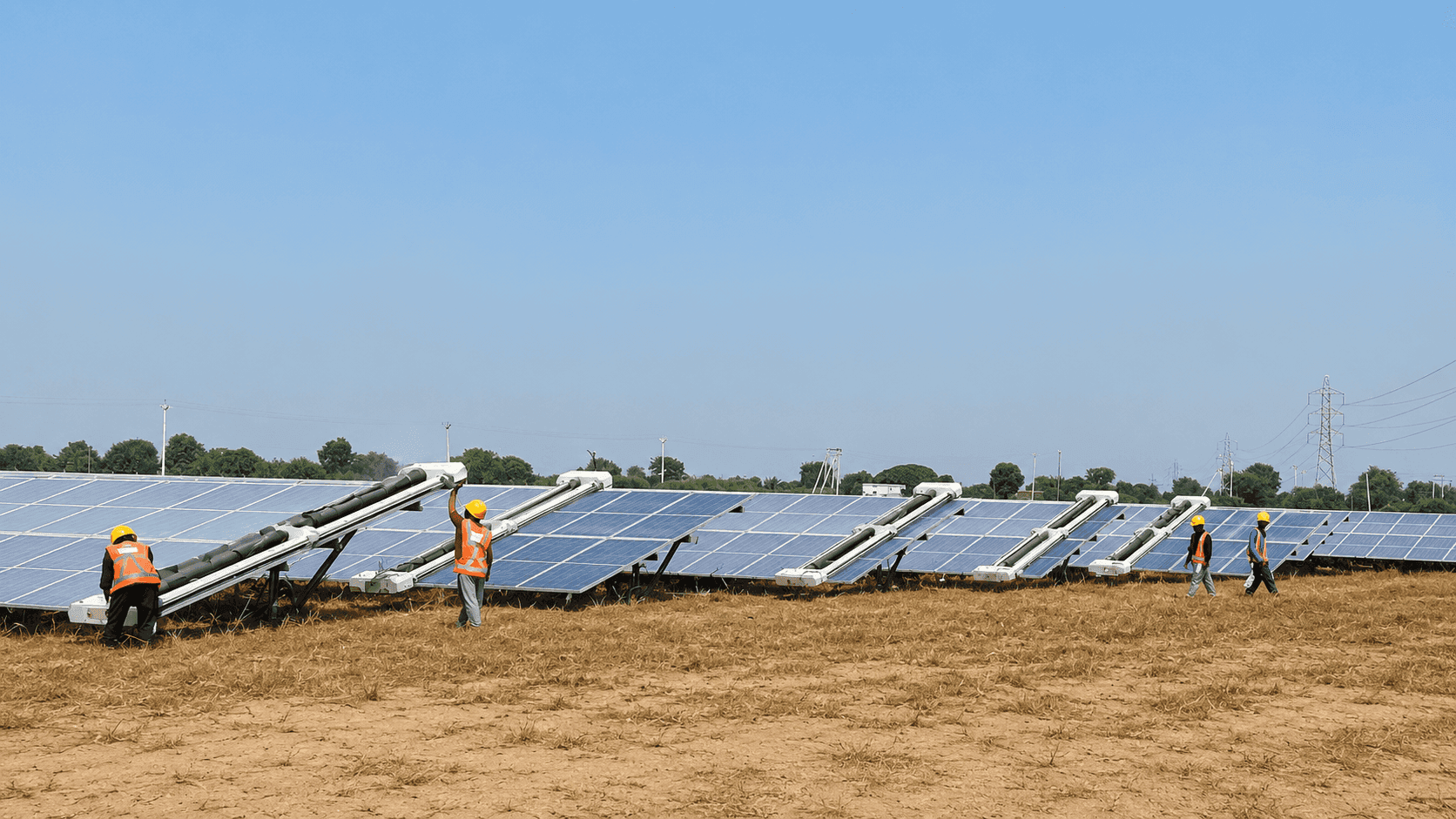
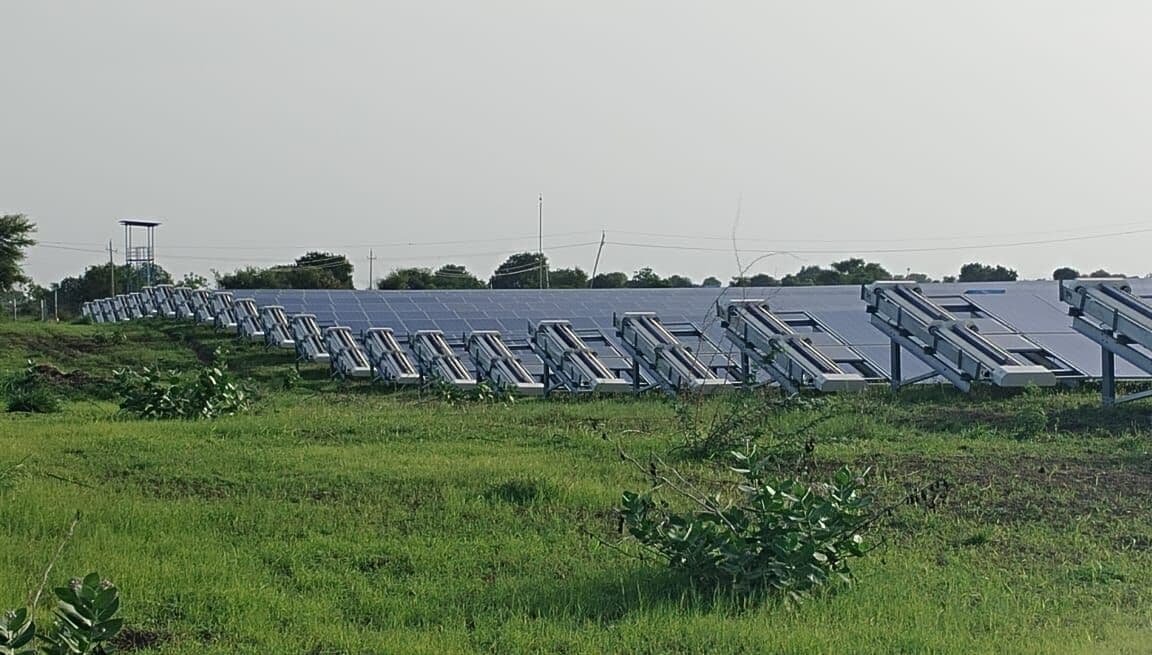
Taypro used a tailored deployment strategy for this 8.4 MW Bheewandi site. The fleet uses the NYUMA system. This is a semi-automatic solution for distributed utility blocks. It is perfect for sites where fixed infrastructure is not practical. The pick-and-place model allows the operations team to be very efficient. They can rotate the unit across different segments of the array. This allows them to target areas most impacted by road grit and agricultural dust.
The project used a Capex procurement model. This allows the facility to own the asset directly. It also makes it easy to integrate the robot into existing workflows. The team focused on optimizing site-specific cleaning cycles. These cycles typically range from 3 to 10 dry passes per month. This frequency depends on the local soiling severity. This deployment removes the need for night-crew scheduling and water logistics. The facility now ensures consistent module performance. They achieve 32 thousand litres of water savings and 8.4 MWh of extra generation every year.
Operations and monitoring
Optimizing Operations with NECTYR and Scheduled Dry Cleaning
Robotic solar panel cleaning in Maharashtra requires a very steady schedule. The Bheewandi site moved from manual labor to a predictable regime. The NYUMA fleet operates with 3 to 10 dry cleaning cycles per month. This frequency is carefully chosen to fight road grit and dust buildup. It does not require daily intervention from the staff. This shift removes the risk of missed panels. It also ensures uniform energy generation across every single string.
The site maintains high accountability through NECTYR. This platform provides digital logs for every single deployment. Supervisors now have granular proof of all cleaning activity. They can see exactly which blocks were serviced at the block level. This replaces old and outdated manual reporting methods. The NECTYR portal also helps the team manage wind holds. This protects the equipment during peak weather events in the region. This digital integration ensures that operations are never slowed by water or labor issues. The project achieves consistent maintenance and protects its 8.4 MW output.
Results and impact
Quantifiable Operational Gains for Bheewandi Solar
The implementation of the NYUMA cleaning system has transformed maintenance at Bheewandi. The site now uses a consistent and autonomous waterless cleaning cycle. This has stopped the erratic energy losses caused by dust and grit. The modules now maintain optimal transparency. This leads to a direct and tangible increase in annual energy generation. The site can now rely on steady power output regardless of the weather.
Beyond the energy gains, the project delivers huge environmental benefits. The removal of water-intensive cleaning preserves local water resources. This is a major win for the local community. The consistent performance of the panels also reduces the need for manual site visits. These factors help the plant meet its long-term sustainability goals. The project has effectively reduced the carbon footprint of the plant. This is achieved through cleaner and more reliable power production for the grid.