Executive summary
robotic solar panel cleaning Maharashtra, The BU Bhandari Satana solar facility is located in Nashik, Maharashtra. This site has a total capacity of 112.5 MW. It faced many operational hurdles due to the local environment. Agricultural dust and road grit were constant problems. Seasonal humidity cycles also made the situation worse. These factors caused uneven soiling patterns across the plant. This buildup led to performance gaps at the string level. It also made maintenance planning very difficult. These issues reduced the overall energy yield of the facility.
To solve these problems, the project team used the NYUMA robotic cleaning system. They chose a Capex procurement model for this deployment. This system replaced the old manual cleaning methods. Manual cleaning often clashed with other important site tasks. It competed with vegetation management and civil maintenance. By using semi-automatic robotics, supervisors gained much better control. They can now verify cleaning for every block effectively. This shift to waterless cleaning has been very successful. It has recovered 112.5 MWh of additional generation every year. It also saves 420,000 liters of water annually at this Maharashtra site.
Environment and soiling at BU Bhandari Satana Nashik
Managing agricultural dust and road grit at BU Bhandari Satana
The BU Bhandari Satana site is located in the Nashik region. This area has a complex micro-climate. It sits near many large farms. It also sits near busy transport roads. These two things create a unique soiling problem. Seasonal dust moves from the surrounding farmlands constantly. This dust settles on the solar modules as a fine layer. At the same time, vehicles on local roads kick up grit. This grit mixes with the agricultural dust. The resulting layer is very abrasive. It is also difficult to remove with old cleaning methods.
The local weather adds a second challenge. The area has frequent humidity cycles. Morning dew and evening moisture hit the panels every day. This moisture interacts with the dust and grit. It creates a cementing effect on the glass surface. The dust becomes stuck to the panels. This process leads to uneven soiling patterns. These patterns are rarely the same across the entire array. These irregular deposits are hard for manual crews to handle. Manual teams often struggle to get consistent coverage in these conditions.
Operational tasks at this site are very complex. Cleaning schedules must work with other O&M needs. The following environmental factors drove the choice for a semi-automatic robotic strategy:
- Agricultural particulates: Heavy dust levels require a consistent cleaning method. This prevents the dust from forming a hard crust.
- Road-derived grit: Local road dust is very abrasive. The site needs contact-based cleaning to keep panels scratch-free and clear.
- Variable humidity: Moisture cycles create streaks and patches. Manual crews often miss these, leading to energy losses at the string level.
- Logistics overlap: Night-time crew schedules and water logistics used to clash with other tasks. This included vegetation management and civil works.
O&M before Taypro
Operational Gaps and Labour Constraints at BU Bhandari Satana
The 112.5 MW BU Bhandari Satana project faced many inefficiencies before Taypro arrived. The biggest challenge was a lack of visibility. Supervisors could not see the true cleaning performance. They lacked proof for each block. They did not know which strings were actually cleaned in each cycle. This audit gap was a major issue. It led to many differences between reported work and actual plant performance.
Logistical friction also slowed down site productivity. Moving water around the site was difficult. Scheduling night crews was also a struggle. These tasks often clashed with essential maintenance. For example, crews needed to manage vegetation. They also needed to complete civil O&M tasks. These conflicts forced managers to make hard choices. They often had to delay cleaning to finish other work. This allowed dust and grit to settle on the panels for longer periods.
The reliance on manual methods created several major pain points:
- Lack of verification: Supervisors could not confirm cleaning status for every block. This made it hard to track performance at the string level.
- Resource competition: Moving water and managing night labor clashed with core site tasks. These tasks included clearing vegetation.
- Audit gaps: Managers could not track cleaning cycles easily. This meant localized soiling often went unaddressed for a long time.
- Variable coverage: Manual teams struggled with erratic soiling. Regional humidity and farming activity made cleaning very inconsistent.
Fleet and deployment at 112.5 MW
Fleet and deployment at 112.5 MW
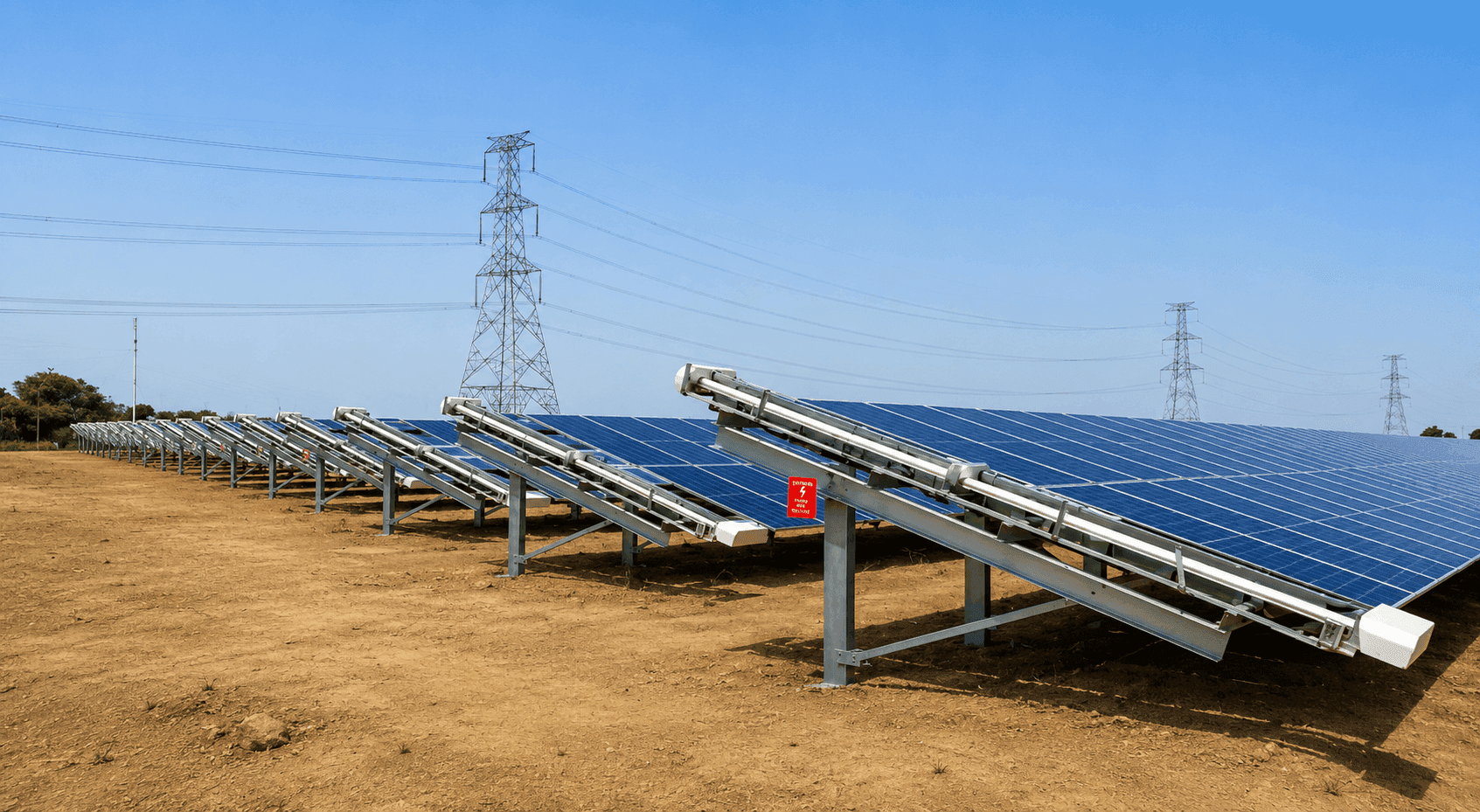
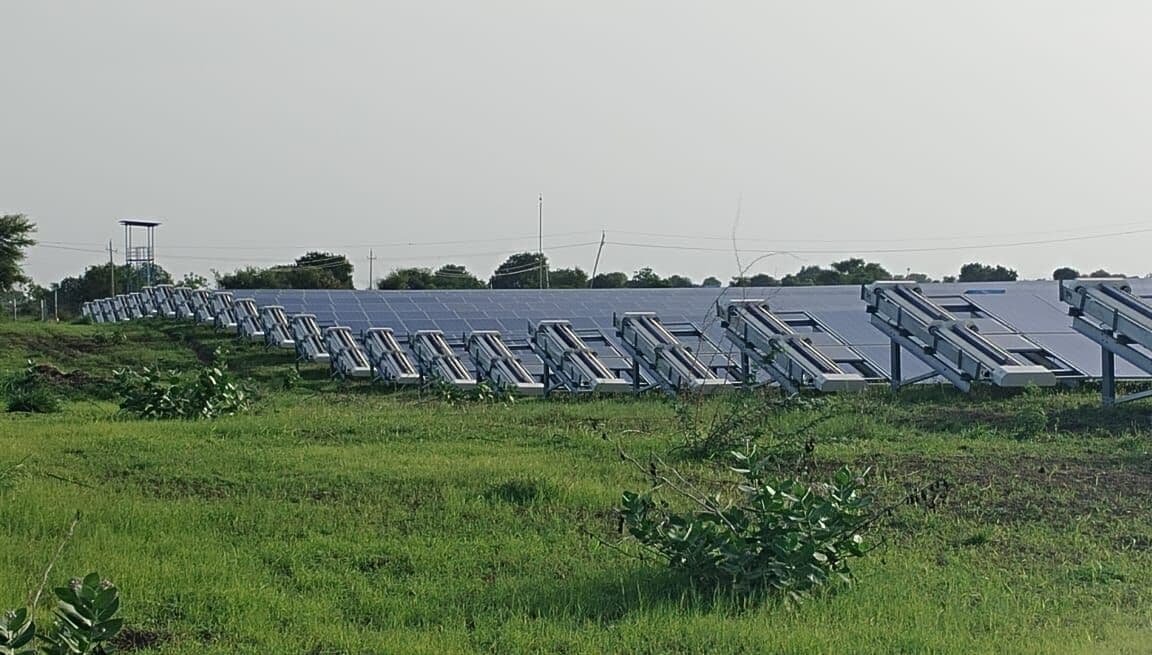
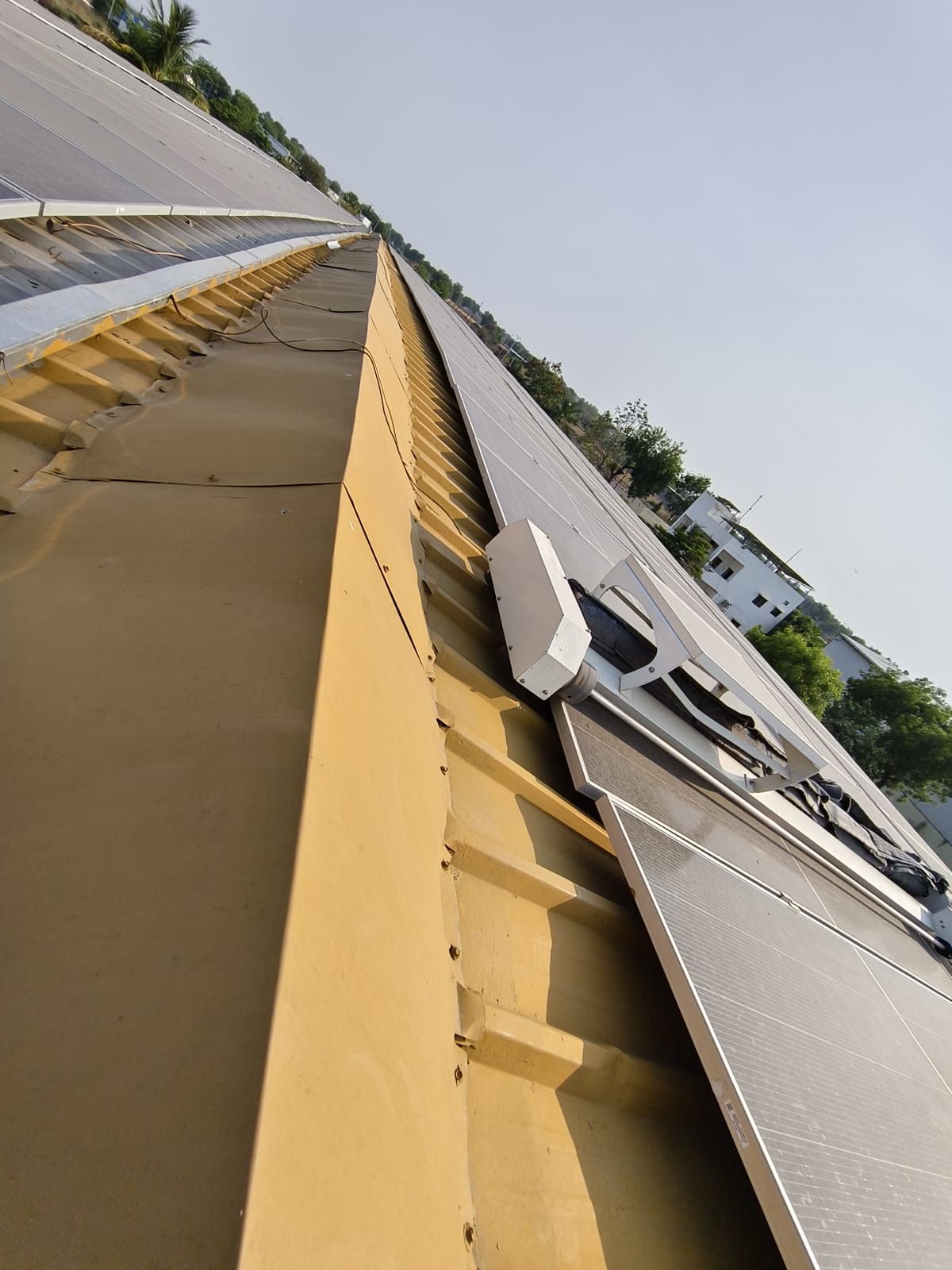
The project team used a Capex procurement model to solve the soiling problems. They deployed the NYUMA robotic system at the BU Bhandari Satana facility. This was a strategic move for the 112.5 MW ground-mount array. This investment provides a permanent and scalable cleaning structure. It moves the site away from manual methods. The site now uses a specialized robotic fleet. This fleet provides high-frequency maintenance. It also works without the friction of managing night crews.
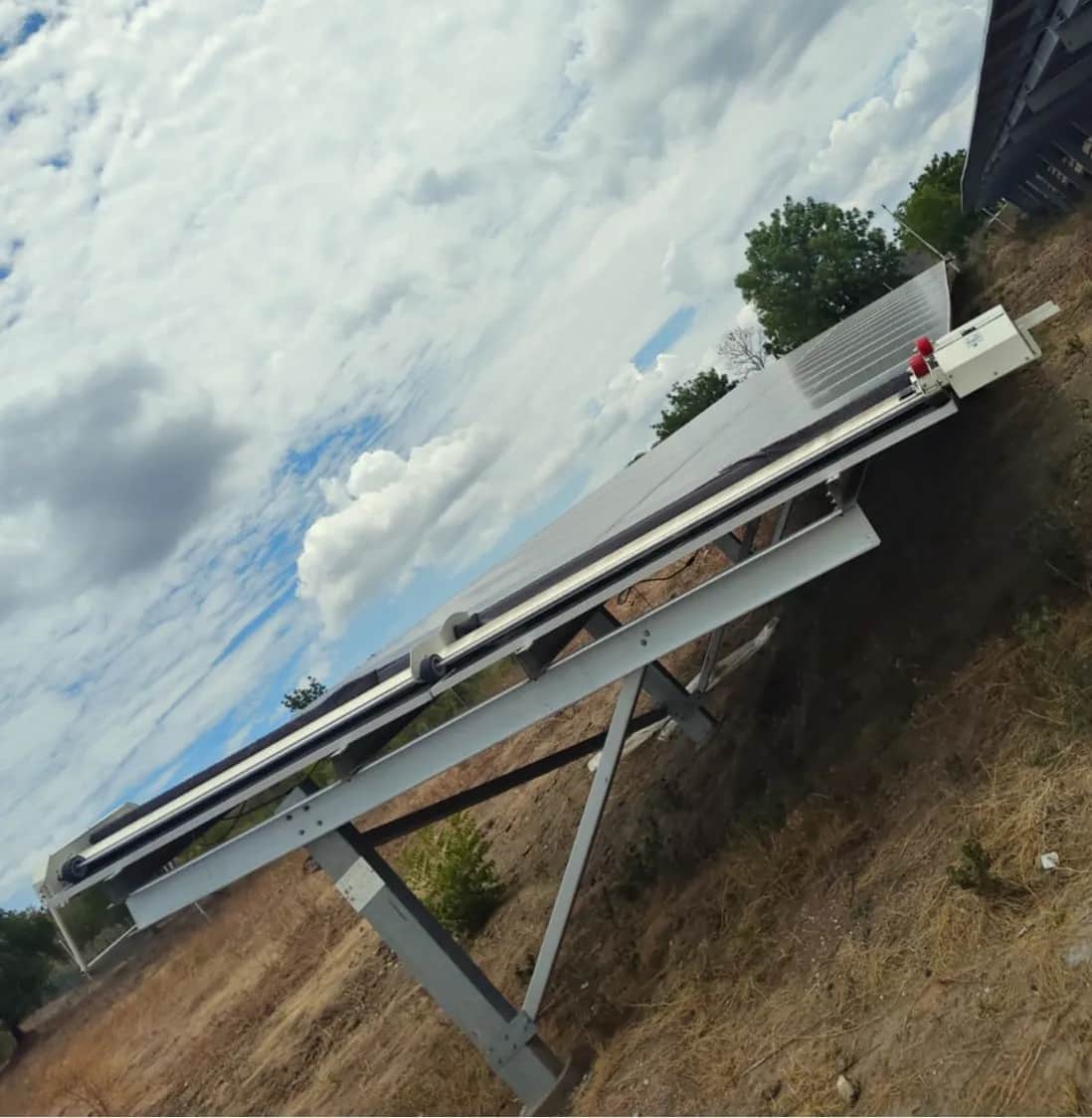
The deployment focuses on reliable and autonomous performance. This helps mitigate the uneven soiling from agricultural dust and road grit. The NYUMA system uses a single-pass PBT brush. This brush ensures efficient cleaning of the surfaces. It also keeps power consumption low across the massive array. Because the system is autonomous, the cleaning is very predictable. It is not affected by human scheduling limits. It is also not limited by water supply constraints.
The commissioning of the fleet included integration with the NECTYR portal. This connectivity is vital for the site managers. It provides precise data for every block. This eliminates the old visibility gaps. Managers no longer wonder if a string was cleaned. Key highlights of this deployment include:
- Systemic Efficiency: One semi-automatic unit supports the initial coverage. Meanwhile, the core automated NYUMA robots provide daily waterless cleaning cycles. This ensures consistent energy output.
- Resource Recovery: The waterless operation removes the need for water logistics. This saves 420 thousand litres of water every year.
- Performance Verification: Integration with NECTYR allows for real-time auditing. This ensures every block maintains its expected performance.
- Annual Gains: The new system is projected to deliver 112.5 MWh of extra generation each year. This happens by stabilizing cleaning against humidity-driven soiling.
This deployment shows how effective robotic cleaning can be in Maharashtra. It proves that large utility projects can move away from manual O&M. They can do this through technology-led asset management.
Operations and monitoring
Operations and Monitoring at BU Bhandari Satana
The operational strategy for this 112.5 MW plant is very clear. It focuses on removing the friction of manual cleaning. In the past, water logistics and night shifts caused many problems. These tasks often clashed with vegetation management and civil O&M. The transition to a robotic fleet has fixed this. It replaces unpredictable manual work with a data-driven schedule.
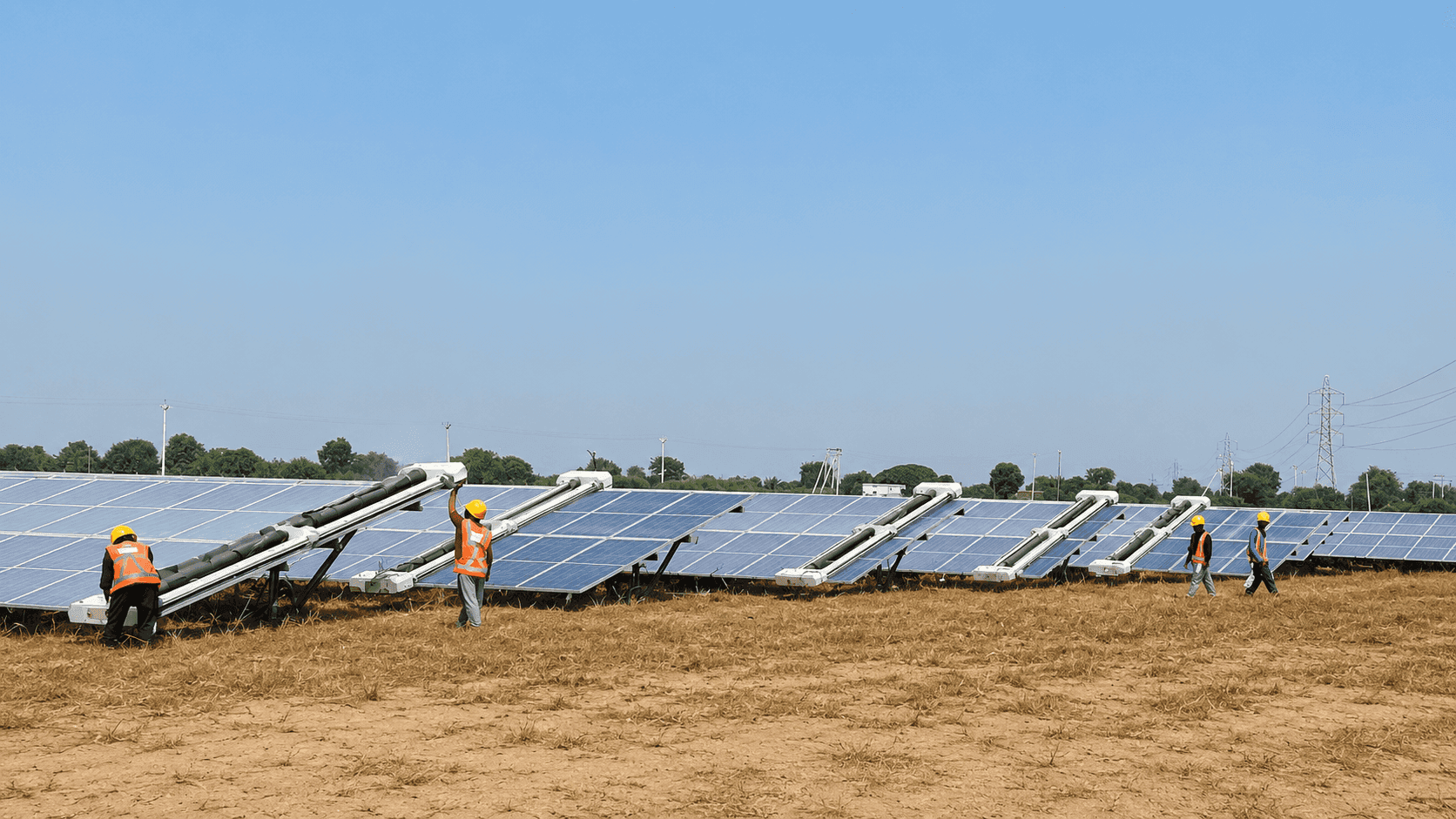
The site uses a dual-maintenance approach to ensure full coverage. The core fleet of NYUMA robots performs daily waterless cleaning cycles. This ensures consistent output for the fixed-tilt arrays. A daily cadence is very important. It stops agricultural dust and road grit from building up. It also prevents humidity from baking the dirt into hard layers. For other distributed sections, the site uses semi-automatic cleaning. These deployments are scheduled for 3 to 10 cycles per month. These cycles are timed to avoid interference with other site work.
Accountability is managed through the NECTYR platform. This gives the site the visibility it was missing. Supervisors no longer have to guess if a string is clean. They do not rely on visual intuition. Instead, they use NECTYR to confirm progress in real time. They can see every block on their dashboard. This digital oversight is much better than manual checks. It allows O&M leads to plan maintenance breaks easily. They can plan around wind or other site needs without breaking the schedule. This automated and digital approach has secured a better operational framework. It is a more water-positive way to manage robotic solar panel cleaning in Maharashtra.
Results and impact
Quantifiable Operational Improvements
The switch to robotic solar panel cleaning has changed the plant. The BU Bhandari Satana facility has a new operational profile. By using semi-automatic robotic systems, the project achieved huge gains. It saw a significant recovery in annual energy generation. This happened because the robots remove stubborn dust and grit. This steady cleaning works even during peak humidity cycles. The power output stays high and stable.
The move to waterless technology also solved water scarcity issues. The project now conserves many hundreds of thousands of litres of water every year. This move helps the local environment. It also removes the heavy logistical strain of moving water. Staff no longer spend time managing water resources. They can now focus on critical maintenance and civil engineering tasks instead.
- Enhanced Yield: The plant secured a large increase in annual energy production. This was done by stopping uneven soiling patterns.
- Resource Efficiency: The site eliminated water-based cleaning. This led to massive annual water conservation.
- Operational Reliability: The site replaced manual cleaning with a disciplined cycle. This cycle aligns perfectly with site-wide O&M schedules.
This case study confirms the value of robotic cleaning in Maharashtra. It delivers measurable value through output recovery. It also delivers value through resource preservation. By removing the need for manual labour, the plant is more scalable. It has established a sustainable framework for all future operations.
Peer comparison and planning checklist
Peer Comparison and Operational Planning
The 112.5 MW Satana installation marks a strategic shift in Maharashtra. It is much larger than other regional projects. For example, the 10 MW Ahmadnagar-Jalalpur project is much smaller. The 14 MW Yavatmal-Kupti site is also smaller. The Satana plant needs a much more robust strategy. It must handle complex agricultural dust and road grit. Many regional sites struggle with water logistics. They also struggle with inconsistent coverage at the string level. The use of semi-automatic systems provides the mobility needed. This helps address scattered arrays that fixed systems might miss.
This semi-automatic approach is better than some other methods. It offers a clear advantage over fully autonomous fixed-tilt sites like Soyegaon. By using pick-and-place robotics, operators stay in control. They can target high-soiling hotspots specifically. They can ensure cleaning cycles match local humidity patterns. This is better than using a rigid, automated schedule. This method optimizes how labour is used. It also consistently recovers energy across the large 112.5 MW area.
- Assess seasonal soiling to set your monthly cleaning frequency. Aim for 3 to 10 dry cycles.
- Identify high-priority strings. Look for those affected by road grit and agricultural residue.
- Coordinate your HELYX deployment windows. Avoid overlapping with vegetation or civil maintenance crews.
- Establish NECTYR logs for every block. This provides verifiable proof that cleaning is complete.
- Train your site staff on safety protocols. This will maximize the robot throughput per shift.
- Audit your annual water savings. Use this data to justify the move to waterless technology.