Executive summary
solar panel cleaning robot India, The 9 MW ground mount solar facility in Chandrapur, Maharashtra, faced significant performance challenges due to severe regional soiling. The accumulation of heavy dust layers on the modules led to consistent energy generation shortfalls and unsustainable manual maintenance requirements. To address these operational constraints and eliminate the reliance on scarce water resources for site cleaning, facility management initiated a transition to a Capex-driven waterless maintenance strategy.
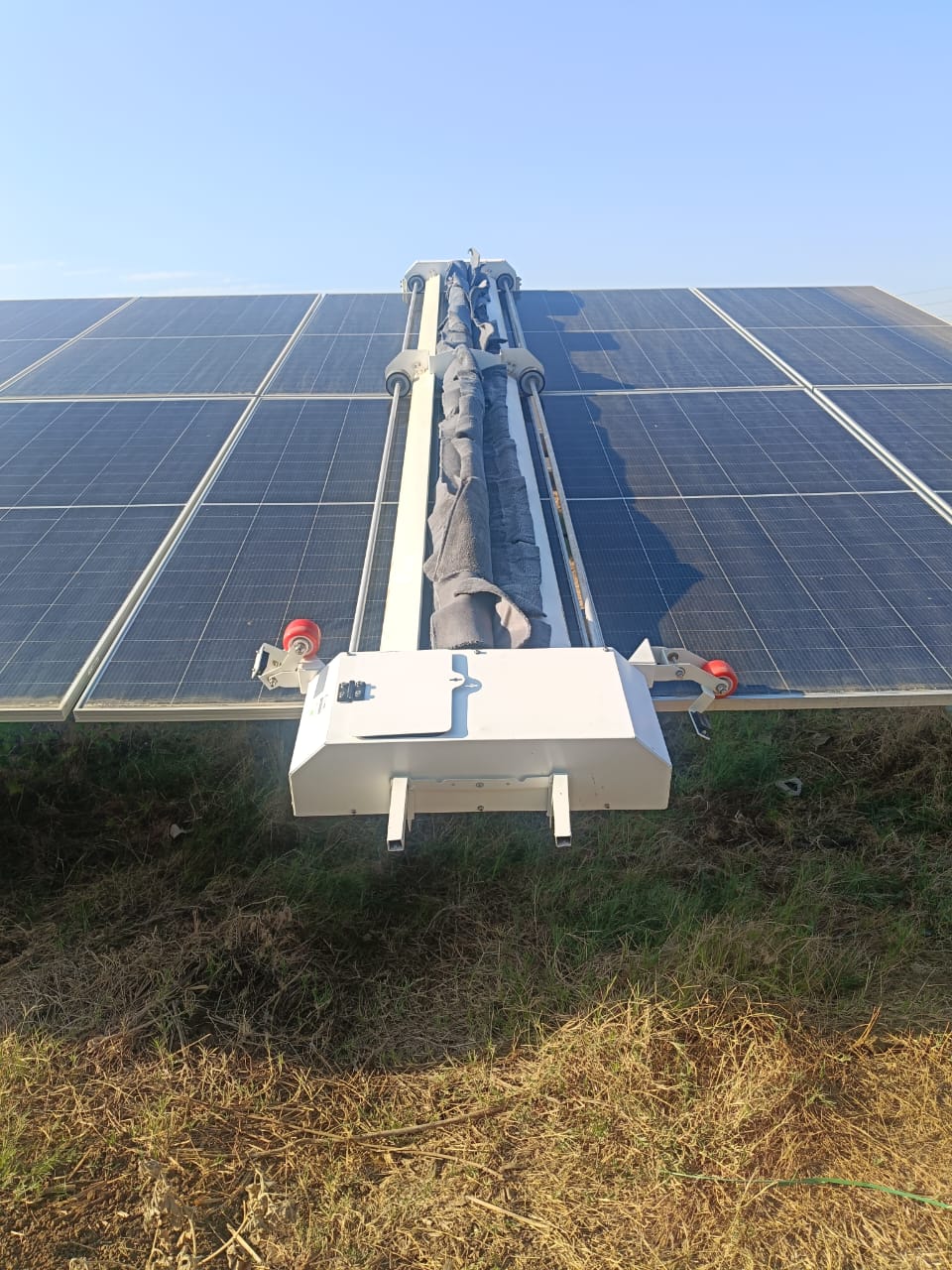
The deployment featured a NYUMA semi-automatic cleaning system designed for utility-scale fixed-tilt installations. By integrating this specialized robotic technology, the facility successfully moved away from inefficient manual washing to a precise, dry-cleaning cadence. This strategic shift resulted in the annual recovery of 9 MWh of energy generation and saved 34,000 litres of water, proving the effectiveness of adopting a dedicated solar panel cleaning robot in India for high-soiling environments.
Environment and soiling at Chandrapur MH
Environmental Context and Regional Soiling Challenges in Chandrapur
Chandrapur is situated in a region characterized by intense industrial activity and coal-based power generation. This environment produces persistent airborne particulate matter that settles rapidly on solar arrays. The local soil composition, combined with industrial emissions, creates a tenacious, abrasive layer that rapidly diminishes module transparency.
Traditional cleaning methods often fail here because simple rinsing cannot remove this baked-on industrial dust. These conditions require a mechanical, waterless approach to prevent micro-scratching while ensuring maximum light absorption. The specific environmental profile of this 9 MW site includes:
- Continuous exposure to fine, soot-like industrial particles.
- High ambient temperatures that accelerate the hardening of dust layers on glass surfaces.
- Extreme regional water scarcity, which renders water-intensive cleaning impractical and costly.
By deploying the NYUMA cleaning system, the facility effectively combats these harsh conditions. The robot uses specialized PBT brush technology to remove abrasive buildup safely, maintaining peak output despite the severe dust loads characteristic of the Chandrapur region.
O&M before Taypro
Operational Hurdles and Manual Cleaning Constraints
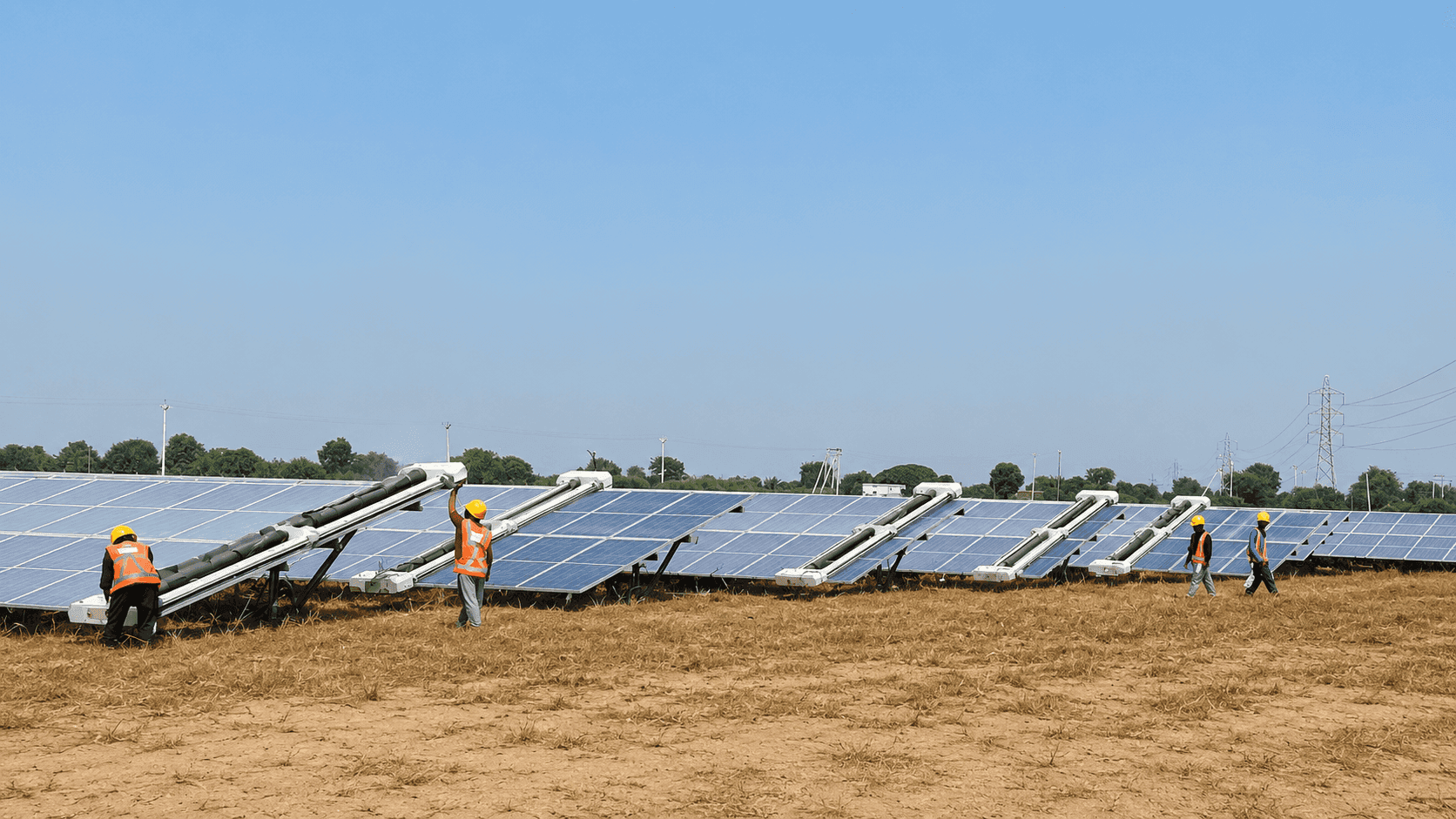
Before integrating the NYUMA cleaning system, the 9 MW ground mount facility in Chandrapur relied entirely on manual labor for module maintenance. This traditional approach presented significant audit gaps, as there was no standardized way to verify that cleaning was performed consistently or correctly across the entire array. Without a centralized system to track performance, asset owners faced unpredictable energy losses due to variable soiling coverage.
Manual washing also proved highly inefficient regarding resource management. The process demanded intensive labor, which often led to safety risks and inconsistent output recovery. Furthermore, the reliance on water for manual cleaning was unsustainable given local water scarcity. These operational constraints forced the site to seek a more reliable, autonomous, and water-efficient methodology to stabilize generation and improve overall O&M accountability.
Fleet and deployment at 9 MW
Fleet and deployment at 9 MW
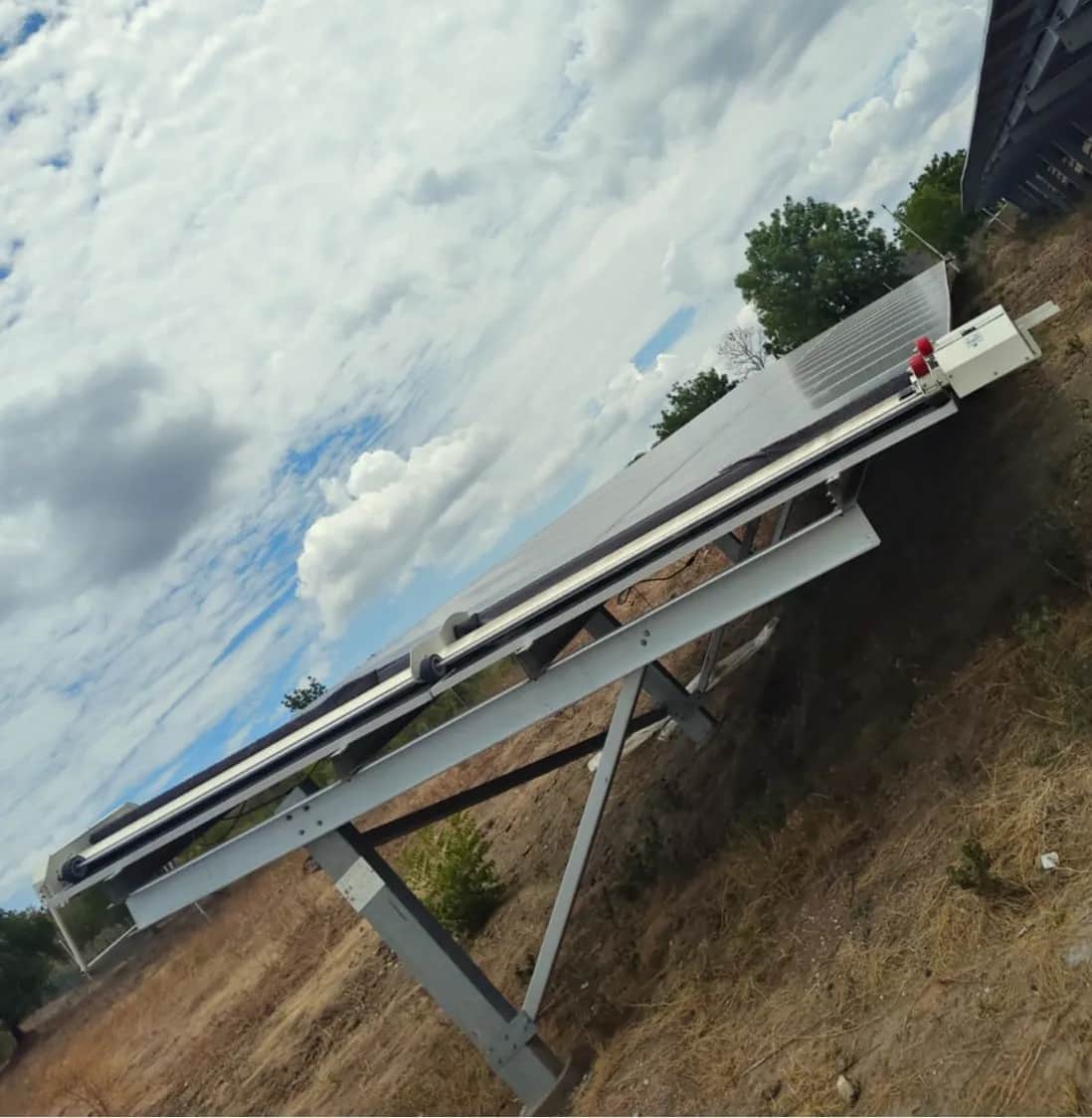
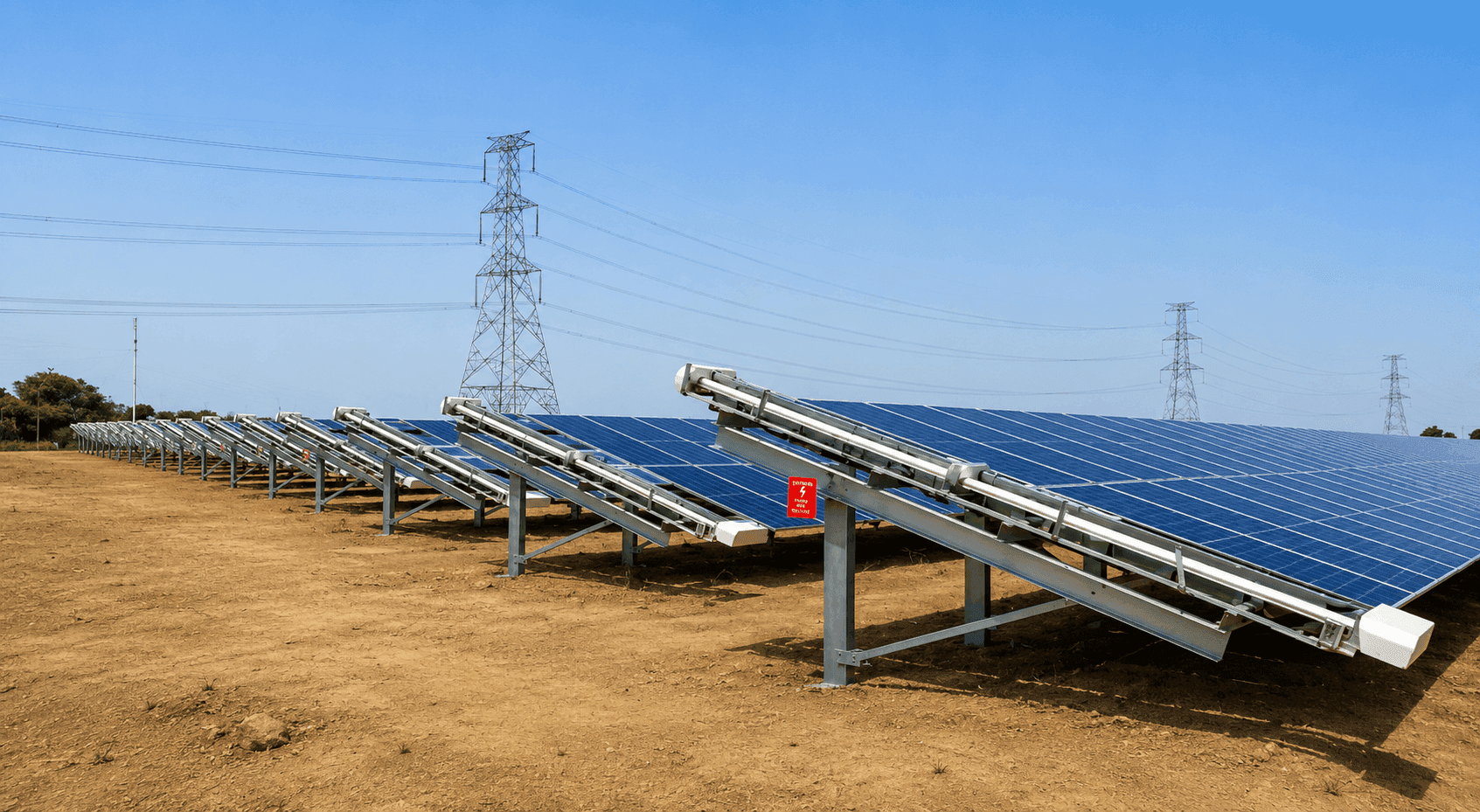
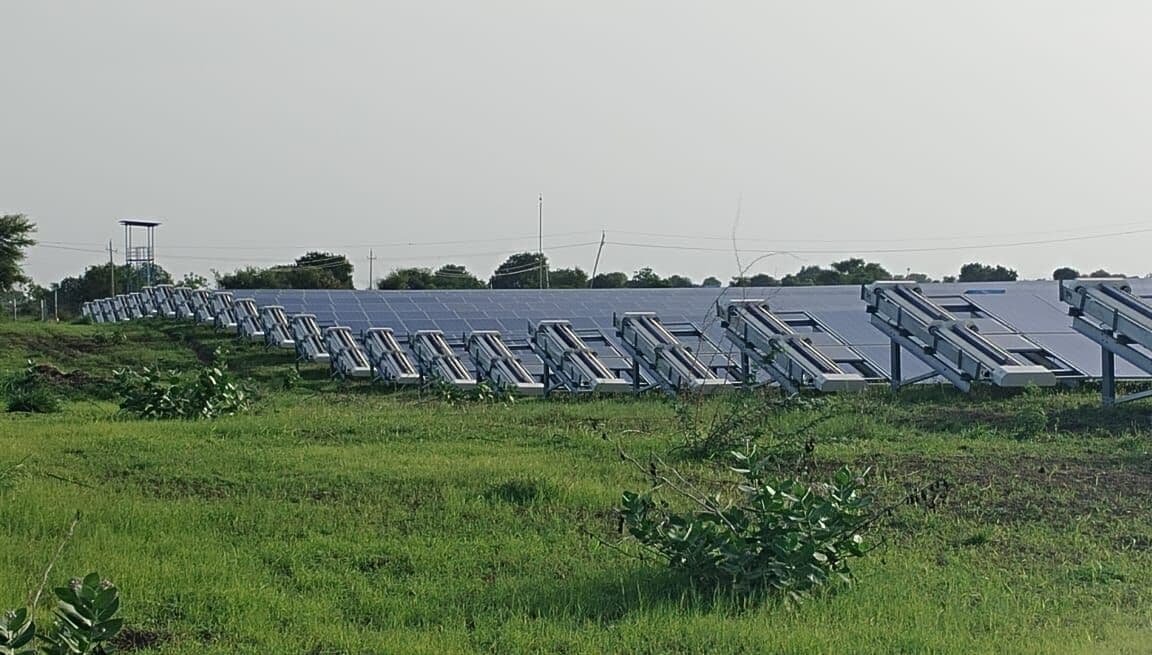
For the 9 MW ground mount solar installation in Chandrapur, the deployment strategy centers on a fleet of HELYX robots. The facility utilized a Capex procurement model to secure these units, ensuring full ownership and long-term control over site maintenance assets. By selecting the HELYX system, the project team addressed the need for a versatile cleaning solution capable of handling distributed blocks without excessive infrastructure investment.
The commissioning phase prioritized precise unit mobilization and technical integration with the site layout. The process began with systematic robot deployment across the array, followed by rigorous testing of the initial ground mount array to ensure path accuracy. Following these validation checks, the fleet successfully executed its first dry cleaning cycle. This commissioning sequence confirmed the robot's ability to navigate the local terrain safely. Moving forward, the site maintains a consistent schedule of 3–10 dry cleaning cycles per month, weather and access permitting, to maximize energy output while saving 34,000 litres of water annually.
Operations and monitoring
Operations and monitoring: optimizing the 9 MW Chandrapur array
Operational control at the Chandrapur site relies on NECTYR, our fleet monitoring portal, to maintain accountability and performance standards. Through this platform, the site team tracks every cleaning cycle, ensuring the HELYX robot fleet follows a disciplined schedule. By utilizing inspection-led accountability, operators verify that each cleaning cycle achieves required results without the need for manual oversight.
The facility follows a routine of 3–10 scheduled dry cleaning cycles per month. This frequency is optimized for local soiling conditions, providing consistent energy recovery while avoiding the myth of daily wash requirements. The deployment adheres to strict wind hold protocols, ensuring robot safety during high-wind events. This data-driven approach maintains peak generation at the 9 MW ground mount plant.
Results and impact
Delivering sustainable performance at the Chandrapur site
The implementation of the HELYX fleet has fundamentally transformed O&M standards at this 9 MW facility. By moving away from manual, resource-intensive cleaning, the site now benefits from a consistent, waterless approach that protects module integrity while maximizing uptime. The switch to robotic operations ensures that energy production remains stable, successfully recovering significant generation capacity that was previously lost to soiling.
Beyond the technical gains, the project serves as a key environmental milestone for the site. The reduction in water consumption significantly eases local resource strain, aligning the plant with modern ESG requirements. This deployment proves that high-performance solar energy production is compatible with sustainable, low-impact maintenance protocols across the Chandrapur region.