Executive summary
solar panel cleaning robot India. This 375 MW ground mount solar facility is located in Chennai, Tamil Nadu. The plant faces unique operational challenges due to its coastal position. The environment creates a complex mix of soiling agents. These include inland coastal film dust and grit from local traffic. This grit is most heavy at the border rows of the plant. These conditions caused significant energy losses in the past. Traditional cleaning methods struggled to keep up with the rapid dust buildup.
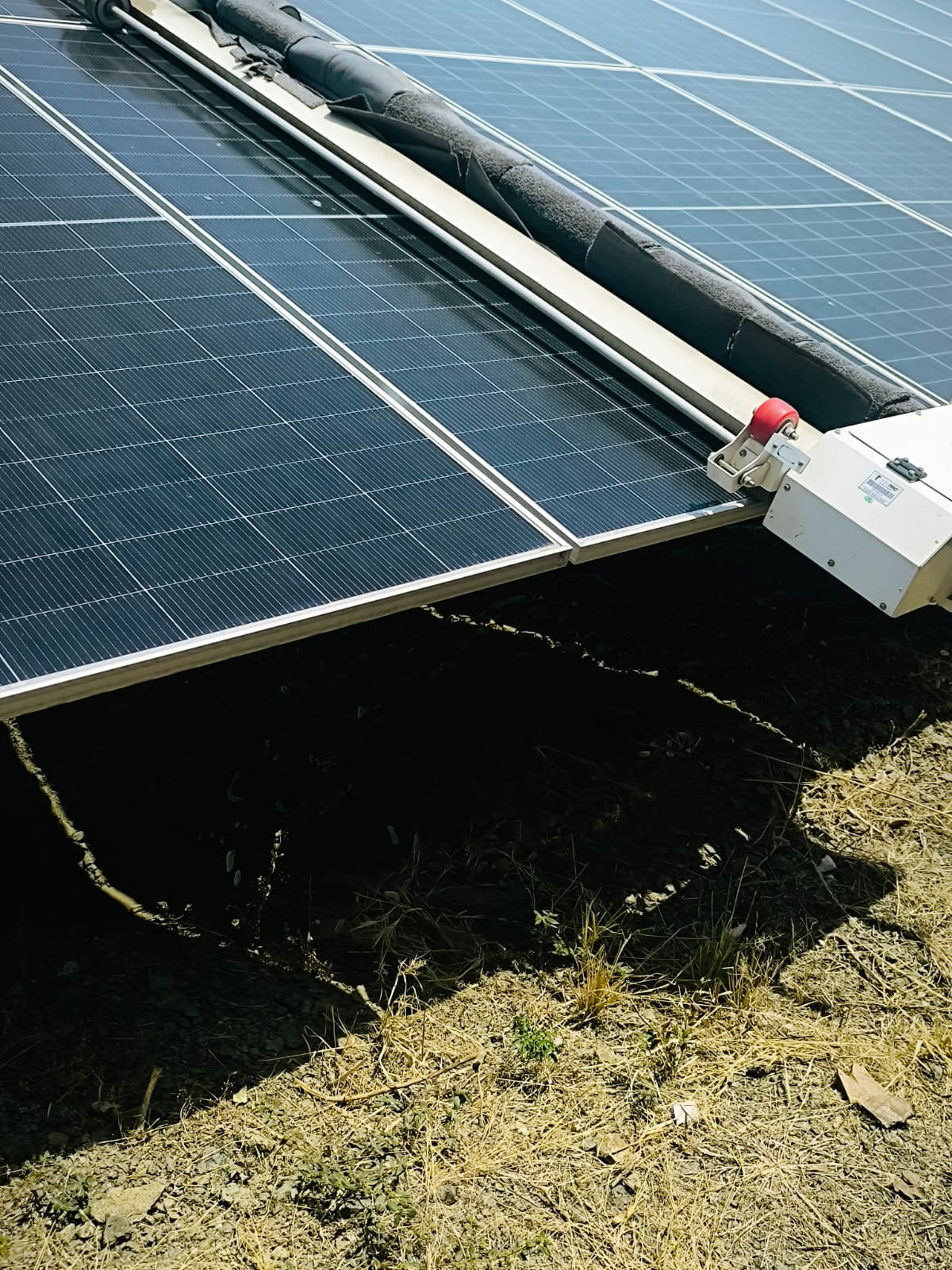
To solve these problems, the site management moved to a new strategy. They chose a Capex-driven maintenance model. This model focuses on waterless technology. The site deployed two semi-automatic NYUMA units. These robots target the high-impact border rows. This approach avoids the risks of water management. It also solves concerns regarding salt and salinity. The semi-automatic system is very efficient. It coordinates cleaning cycles with grid export schedules. It also aligns with the plant maintenance calendars. This ensures the site remains productive during peak hours.
The new robotic strategy has brought great success. The facility replaced manual cleaning with controlled, waterless robotic cycles. This change has recovered 375 MWh of additional generation every year. The facility also saves 1.4 million litres of water annually. This proves that robotic maintenance works well in coastal environments. It is a smart solution for high-soiling sites in India.
Environment and soiling at Chennai
Environmental Challenges and Border-Row Soiling in Chennai
The 375 MW facility in Chennai deals with harsh environmental stresses. These stresses are common in coastal Tamil Nadu. The air has high humidity levels. The air also carries a lot of salt. This salt creates a "coastal film dust" on the solar modules. This film is very fine and quite sticky. It adheres easily to the glass surface. Once it sticks, it acts like an adhesive. It helps other particles like dust and grit stay on the panels.
The geography of the site also plays a role. The layout creates a specific soiling pattern. We call this "border-row accumulation." Grit and debris blow in from local traffic corridors. This debris drifts toward the edges of the plant. As a result, the outermost rows suffer much higher soiling rates. The interior blocks are usually cleaner. This creates a gradient of dirt across the site. It makes maintenance difficult because the whole plant does not get dirty at the same rate.
Managing this site requires a careful approach. We must manage both moisture and mineral buildup. Several key factors guide our robotic deployment strategy:
- Coastal Salinity: The atmosphere has high salt content. This makes dry cleaning the best choice. Traditional water-based washing can be harmful. When water evaporates, it leaves behind mineral deposits. These deposits can degrade the module glass. They also make the panels get dirty even faster later on.
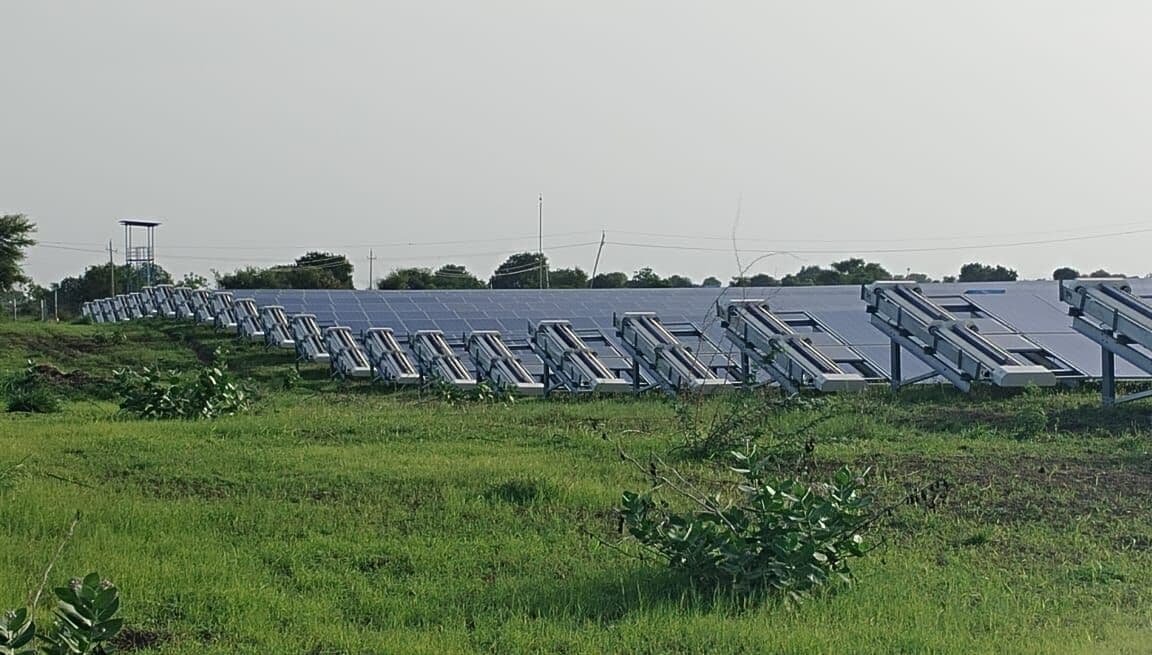
- Border-Row Concentration: We focus our semi-automatic fleet on the edge zones. These zones have the highest impact on performance. By cleaning these rows, we stabilize the entire plant's output. We directly address the grit patterns from local roads.
- Operational Scheduling: Cleaning must be timed perfectly. We must align cycles with grid export windows. We also follow the plant's maintenance calendars. This ensures the robots do not disrupt peak energy production. It also keeps the site safe during operation.
The semi-automatic model is very effective here. It allows the facility to keep a steady energy output. It also reduces the heavy burden of water management. By moving away from water-intensive manual cleaning, the site saves money. It also avoids the downtime caused by large flooding washes. This approach protects the long-term health of the solar assets in a tough climate.
O&M before Taypro
Managing O&M constraints and water scarcity at the 375 MW Chennai facility
Before using Taypro robots, this 375 MW facility faced many hurdles. The O&M team had to manage complex soiling. They dealt with both coastal film dust and traffic grit. Manual cleaning was the main method used. However, this was not very reliable. The dust accumulated faster than the teams could clean it. This created a constant gap in energy production.
The facility struggled with three major operational problems:
- Resource Management: The air in Chennai is very salty. This made water-based cleaning a major risk. Frequent flooding washes left mineral crusts on the glass. These minerals created secondary soiling risks. This forced the team to clean even more often. It became a cycle of constant maintenance.
- Labor and Safety: The plant is massive. Managing large manual crews across 375 MW is difficult. It introduces many safety risks for the workers. It also creates high overhead costs. It was nearly impossible to keep the cleaning quality consistent across every block.
- Grid Synchronization: The plant must follow strict grid export rules. This made scheduling cleaning very hard. Teams had to work in very narrow time slots. Often, they had to clean at night. Supervising and auditing night cleaning is very difficult. It also makes it hard to ensure the quality of the work.
These problems led to constant energy losses. Even with manual efforts, the plant could not reach its full potential. The shift to a semi-automatic model changed everything. The plant now uses two robots to support its operations. This allows for much better efficiency. The facility now uses targeted, dry cleaning cycles. This avoids the risk of salt-based corrosion. It also helps the team manage the complex schedule of a large-scale plant.
Fleet and deployment at 375 MW
Fleet composition and deployment at the 375 MW Chennai site
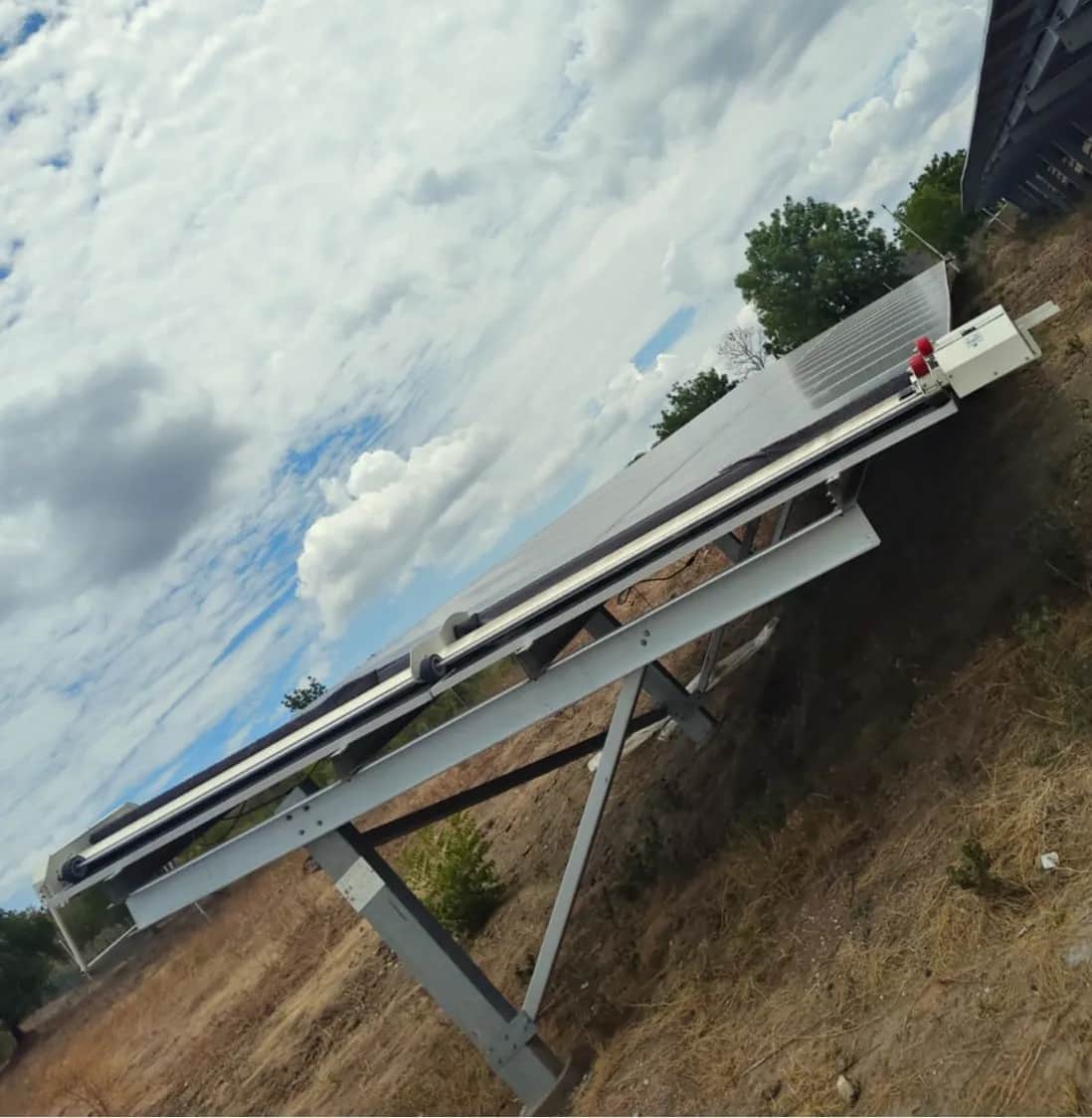
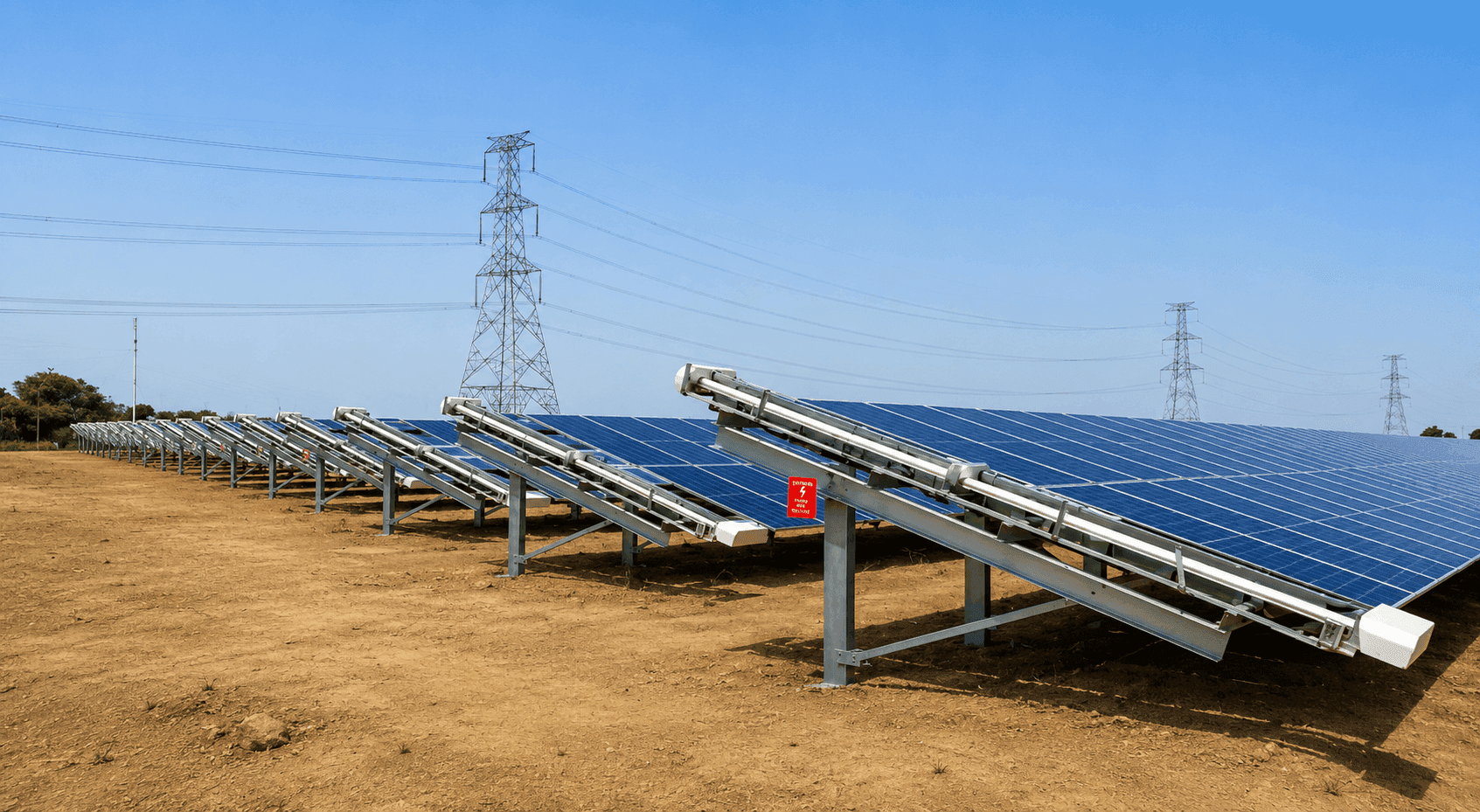
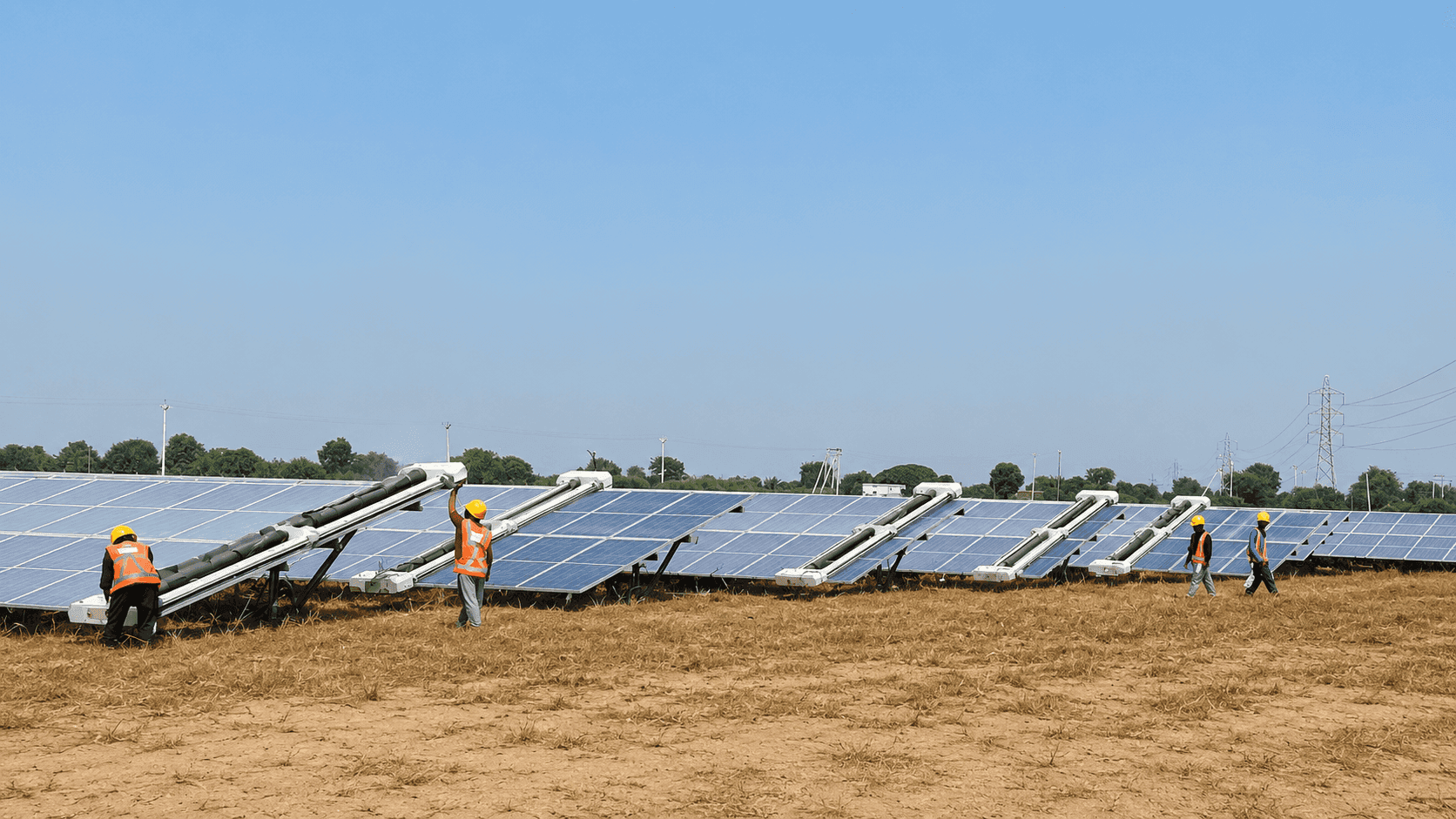
To cover the 375 MW footprint, the facility chose a smart plan. They used a Capex procurement model. They bought two NYUMA semi-automatic robots. This deployment is very strategic. The robots focus on high-impact areas. These are the rows where coastal film and traffic grit are most common. The robots help the site manage large-scale maintenance with high precision.
The Capex model gives the operations team total control. They can manage the NYUMA fleet across the whole site. Commissioning was focused on movement optimization. We ensured the robots work well within the ground mount array. The cleaning paths are designed to match grid export calendars. They also follow the plant's maintenance needs.
The operational deployment follows these clear rules:
- System Selection: We chose the NYUMA system for a specific reason. It uses single-pass PBT brush technology. This brush is very durable. It can handle the abrasive nature of local dust and road grit. It cleans effectively without damaging the glass.
- Cleaning Cadence: These are semi-automatic robots. They follow site-specific dry cleaning schedules. This ensures each block gets regular care. Typically, they perform 3 to 10 dry cycles per month. The exact number depends on how much dust is on the panels.
- Resource Efficiency: The facility avoids water-based cleaning entirely. This removes the risk of mineral buildup from salt. This change has already saved 1.4 million litres of water each year. It has also added 375 MWh of generation per year.
- Grid Synchronization: All schedules are managed through the NECTYR portal. This ensures the robots do not interfere with the grid. They do not get in the way of peak export windows. They also stay out of the way of standard maintenance work.
Using two semi-automatic robots is a very efficient choice. It allows the 375 MW plant to fix localized soiling. It does not require the huge cost of manual crews. It also avoids the issues of heavy water use. This model provides a scalable and waterless foundation. It is designed to meet the high demands of utility-scale energy production.
Operations and monitoring
Optimizing Operational Cadence for Coastal Chennai Solar Assets
The 375 MW Chennai plant needs a precise maintenance plan. It must fight coastal film dust and traffic grit. The site has replaced unreliable manual methods with the NYUMA fleet. This gives the management team direct control. They can now set the exact cleaning intervals they need. This method removes abrasive contaminants safely. It also removes the stress of managing water in a salty region. Water-based cleaning can be hazardous for the long-term health of the modules.
The site maintains efficiency through a structured framework. This framework is based on inspections and data:
- Targeted Maintenance Cycle: The plant uses a set schedule of 3 to 10 dry cleaning cycles per month. This frequency is perfect for the Chennai climate. It keeps the modules clean. At the same time, it prevents unnecessary mechanical wear on the equipment.
- Fleet Accountability via NECTYR: The NECTYR operations portal tracks all activity. Every cleaning task is logged in the system. This lets the O&M team see robot progress in real-time. They can adjust the cycles based on actual dust levels. This ensures full accountability across the 375 MW site.
- Strategic Wind Holds: The NECTYR system includes weather-based wind holds. This is a vital safety feature. It protects the robots during high winds. It also ensures the safety of the entire robotic fleet during coastal storms.
- Resource Management: Moving to a waterless model has huge benefits. The plant saves 1.4 million litres of water every year. This shift protects the module coatings. It also prevents salt damage. Most importantly, it drives an extra 375 MWh of generation per year.
This model is much better than traditional methods. It moves past the myth that you must wash panels daily with water. Instead, it uses high-impact, data-driven dry cleaning. These cycles align perfectly with grid needs and site maintenance calendars.
Results and impact
Results and Impact: Optimizing Coastal Solar Maintenance in Chennai
The move to a robotic waterless model has changed everything. It has transformed the performance of this 375 MW site. By using the NYUMA fleet, the plant removed the loss caused by soiling. Coastal film dust and traffic grit no longer stop energy production. The cleaning is high-precision. It respects the module structure. It also respects the grid export rules of Tamil Nadu.
The project has delivered clear, measurable results. These improvements cover resources and energy yield:
- Significant Resource Preservation: The plant no longer relies on heavy water use. This has led to a massive reduction in annual water consumption. This makes the site more sustainable. It also prevents the corrosive effects of salt on the modules.
- Substantial Generation Recovery: Regular, data-backed cleaning has increased energy output. The plant now sees a marked uplift in annual generation. This consistent regime keeps the panels at near-peak efficiency. It overcomes the soiling problems common to Chennai.
- Enhanced Operational Control: The NECTYR portal gives leaders great visibility. They can see exactly where the fleet is moving. This allows for better site-wide accountability. Managers can easily align cleaning with weather forecasts and maintenance schedules.
- Mechanical Longevity: Dry brushing is much safer for the modules. It preserves the sensitive anti-reflective coatings. Manual washing often damaged these coatings. This strategic shift protects the long-term performance of the plant.
The site has moved away from the risks of manual labor. It has adopted a tech-enabled strategy instead. This model proves that robots are essential for large plants. This is especially true for coastal sites with high soiling. The 375 MW plant is now a leader in efficient solar O&M.
Peer comparison and planning checklist
Peer Deployment Comparison and Operational Planning
The 375 MW Chennai plant is a benchmark for coastal solar. It serves as a model for other utility assets. We can compare it to the 10 MW Nayveli plant. The Nayveli plant also uses semi-automatic protocols. However, it deals with moderate dust rather than heavy salt. The 375 MW site has a much higher need for salinity mitigation. We can also compare it to the 10 MW Chennai-based project. That project uses a lot of manual labor for its border rows. In contrast, the 375 MW site uses two semi-automatic robots. This ensures uniform coverage. It prevents the uneven performance seen in smaller sites.
Switching to waterless robotic brushing is a smart move for this capacity. It solves the problems of manual scrubbing. It especially prevents the damage caused by salt and moisture. By centralizing operations, the project avoids high labor costs. This is a common problem in large Tamil Nadu installations. To help with your own planning, we have provided a checklist below. This list helps with the adoption of robotic cleaning in high-soiling areas.
- Perform a baseline soiling assessment: Find your high-impact zones first. Look for areas near fences or roads. These areas get the most grit. Use this data to plan your robot routes.
- Sync cleaning windows with plant exports: Do not clean during peak production. Coordinate robot times with your grid export and curtailment schedules. This maximizes your total output.
- Implement a standardized training program: Train your staff on pick-and-place safety. This is vital for semi-automatic models. It ensures the integrity of the panel surfaces during robot moves.
- Integrate fleet monitoring via NECTYR: Use a central portal to log every cycle. This allows you to track real-time yield improvements. It also makes it easy to schedule robot maintenance.
- Establish a water-saving verification protocol: Measure how much less water you use. Quantify the reduction in water truck costs. This helps you prove the ROI to your stakeholders.