In the evolving landscape of Indian utility-scale solar, balancing performance ratio (PR) with operational expenditure is a critical challenge. The 97.612 MW project in Ratlam, Madhya Pradesh, serves as a prime example of how large-scale solar assets can utilize strategic automation to mitigate soiling losses while maintaining a lean operational profile. As an engineer focused on tracker geometry and site logistics, I view the Ratlam deployment as a benchmark for scaling cleaning operations efficiently.
The Challenge: High-Volume Maintenance at 97.612 MW
Operating a site of nearly 100 MW presents unique logistical hurdles. In the semi-arid climate of Madhya Pradesh, dust accumulation is not merely a surface annoyance; it is a direct contributor to daily energy yield degradation. For a 97.612 MW asset, the sheer scale of the module surface area makes manual, water-intensive cleaning inefficient and unsustainable. Relying solely on legacy manual cleaning methods leads to inconsistent coverage, high water costs, and potential micro-cracking risks due to human handling.
The Taypro Solution: Targeted Semi-Automatic Deployment
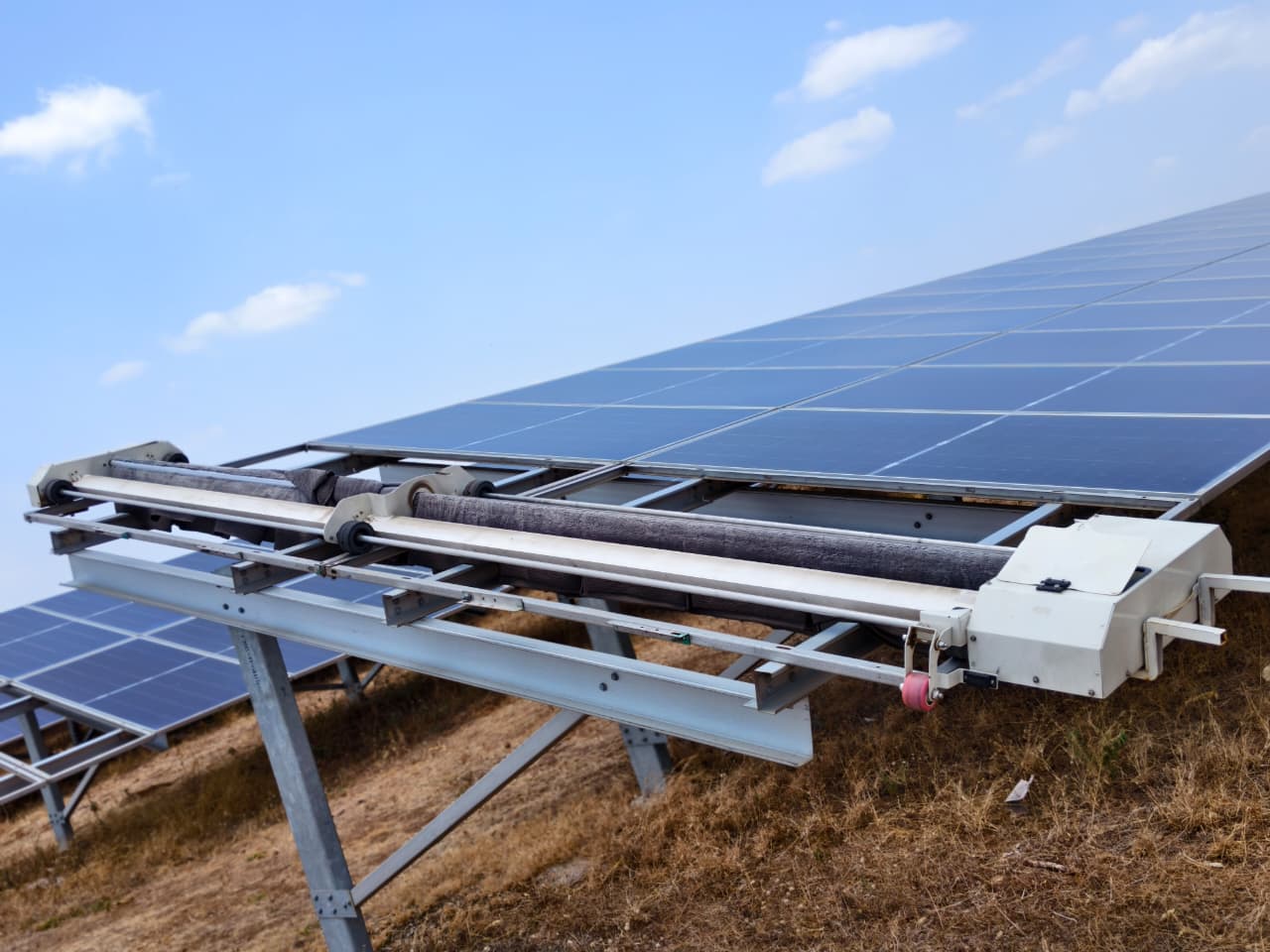
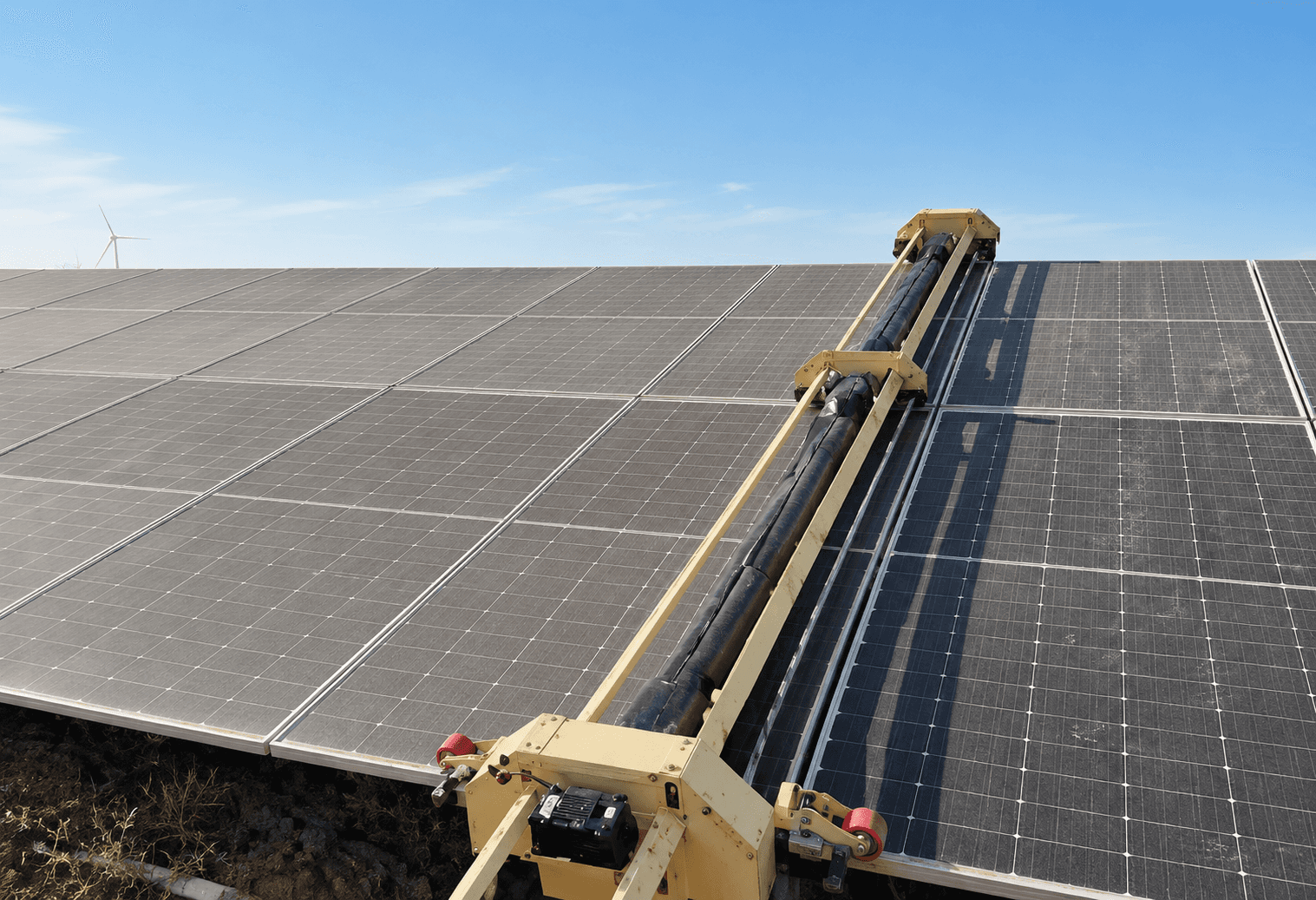
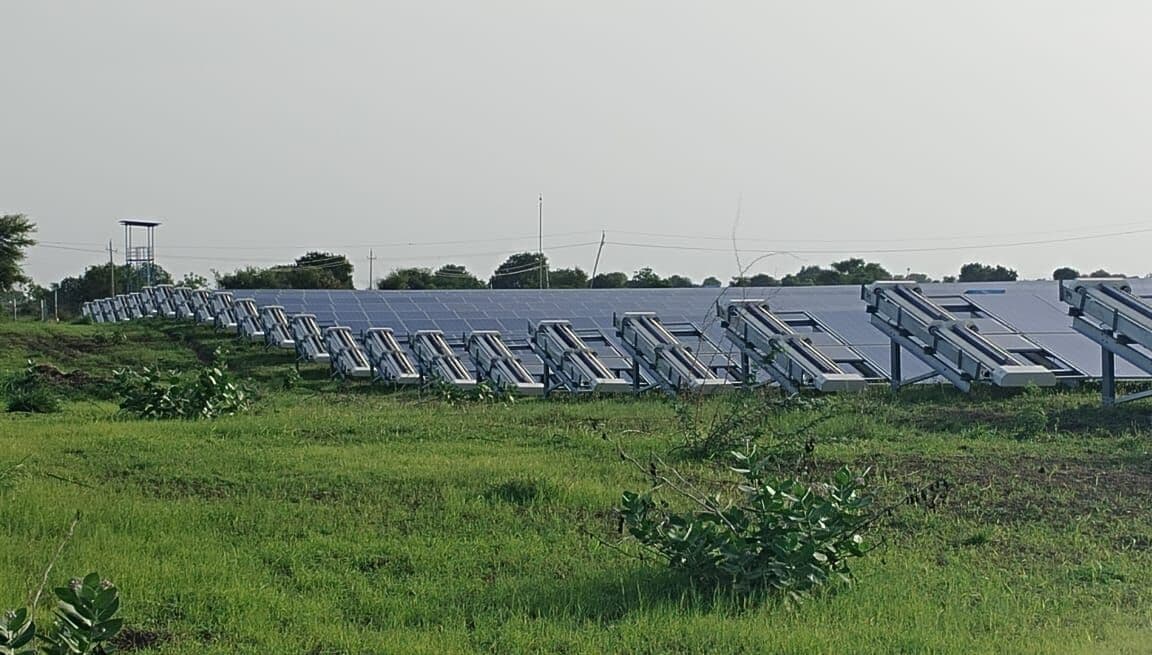
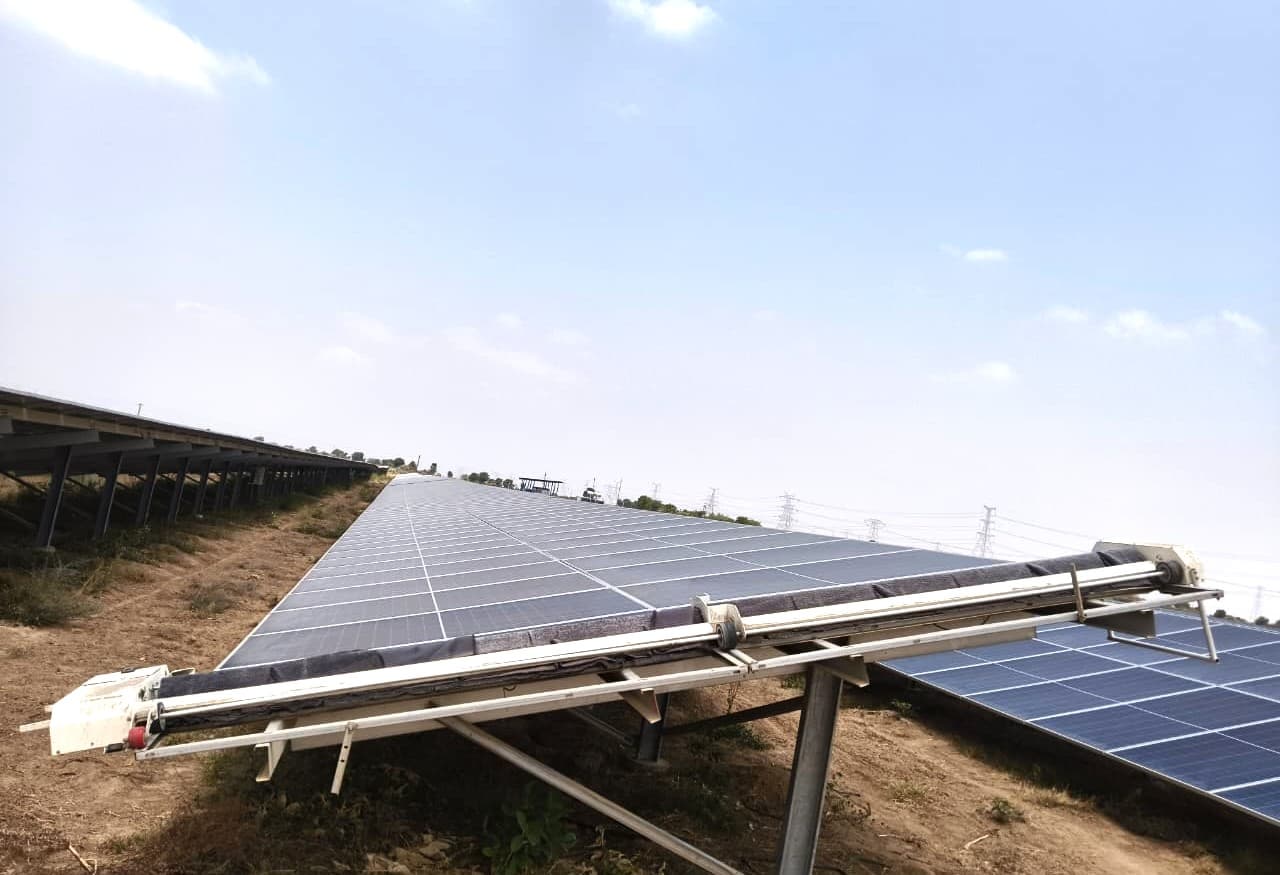
For the Ratlam site, the project scope required a robust approach that addressed high-frequency dust patterns while optimizing the deployment of robotics. We integrated 11 units of our HELYX robot to manage the cleaning requirements. By employing a semi-automatic, pick-and-place strategy, the O&M team can focus cleaning efforts where they are needed most, rather than deploying resources uniformly across all plant blocks regardless of soiling density.
The HELYX robots deployed at this site utilize our proven single-pass PBT brush technology. Given the site layout, the portability of the HELYX allows the O&M crew to move between scattered blocks efficiently, ensuring that the 97.612 MW capacity is covered without the need for a full-row, permanent robotic installation on every single string.
Implementation and Operational Workflow
The success of the Ratlam deployment lies in the integration of hardware with operational scheduling. The 11-robot fleet is managed through our NECTYR platform, which provides the visibility necessary to track where cleaning has occurred and which sections require attention based on environmental feedback. This data-driven approach shifts the O&M team from reactive maintenance to a proactive schedule.
For owners and EPCs evaluating similar scales, it is important to understand the difference between fixed-tilt and tracker cleaning requirements. While this site focuses on semi-automatic efficiency, the choice of equipment is always tethered to the physical constraints of the plant. Understanding robotic cleaning systems and how they integrate into existing SCADA frameworks is the first step in long-term performance management.
Why This Matters for 100 MW Class Plants
The Ratlam project demonstrates that automation does not always require a one-robot-per-row model to be effective. By tailoring the fleet size and cleaning mode to the site's unique requirements, asset owners can achieve a significant ROI compared to traditional, water-heavy cleaning services. For those currently exploring the financials of such a transition, our ROI calculator provides a framework for estimating the payback period based on localized soiling rates and labour costs.
Key Outcomes
- Optimized Resource Allocation: The deployment of 11 robots allows for targeted cleaning cycles across the 97.612 MW capacity, prioritizing high-soiling zones.
- Water Conservation: By switching to waterless PBT-based cleaning, the site significantly reduces the operational burden of transporting and treating water in the Ratlam region.
- Enhanced PR Stability: Consistent, automated cleaning reduces the variance in daily energy yield, protecting the asset's overall performance ratio throughout the high-dust seasons.
- Fleet Intelligence: The use of NECTYR allows for real-time monitoring and reporting, ensuring the maintenance team is always informed of the cleaning status across the entire plant.
As we continue to support utility-scale projects across India, the lessons from Ratlam underscore that the future of O&M lies in the thoughtful, data-backed integration of robotic cleaning technology. For more technical deep dives on how we optimize cleaning paths for different terrains, explore our full range of cleaning technology solutions.