Executive summary
solar panel cleaning robot India, The 52.5 MW ground mount facility in Dakuni faced major operational hurdles. Heavy regional soiling caused these issues. Also, water availability for manual panel maintenance was very limited. Relying on manual cleaning methods created inconsistent performance. It also caused unsustainable overhead costs. These problems led to large energy generation gaps across the site. To fix this, plant management chose a Capex maintenance strategy. They deployed a robotic cleaning solution.
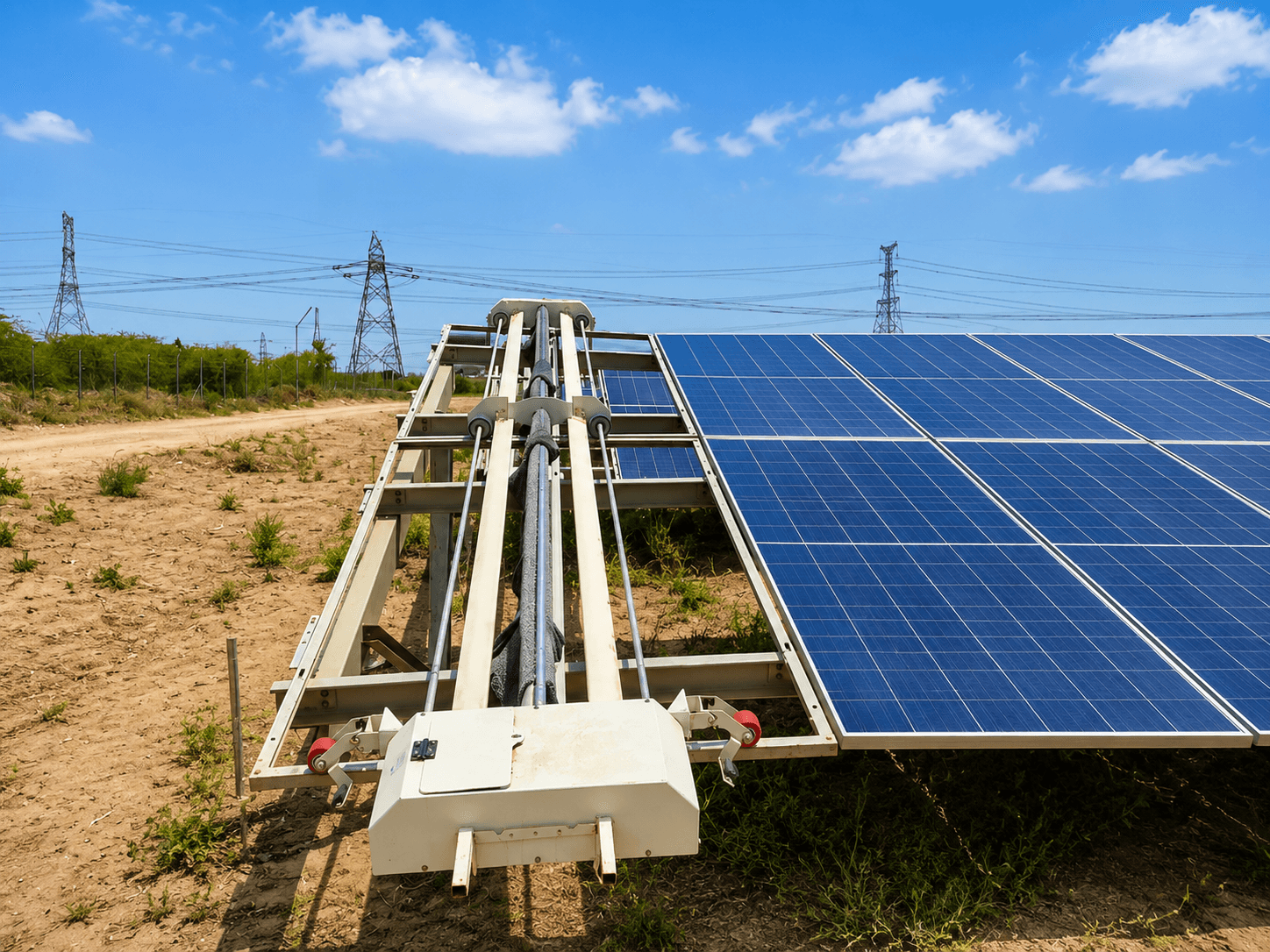
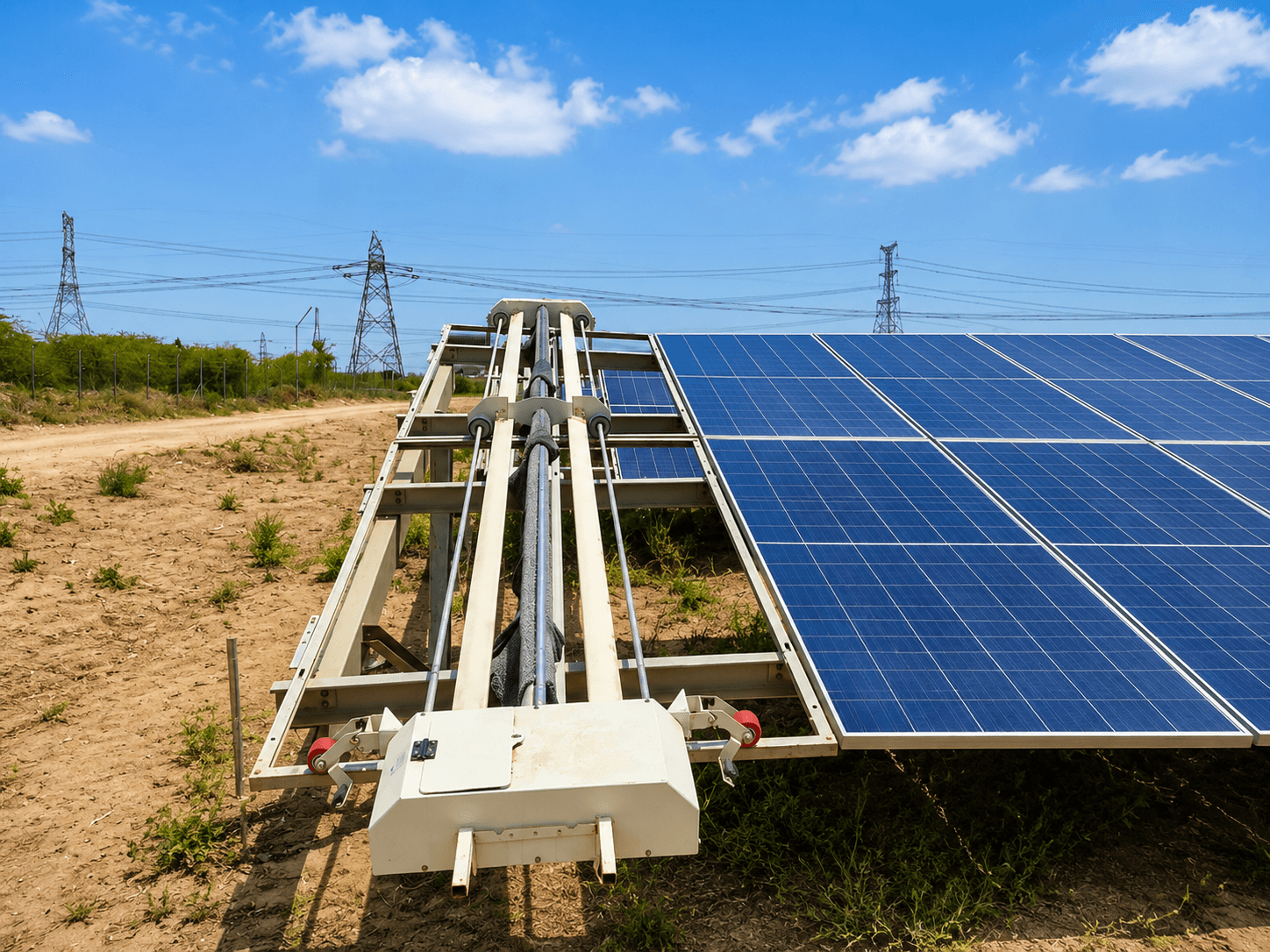
The implementation of the NYUMA solar panel cleaning robot in India provided a decisive shift. The facility moved toward high-efficiency, waterless operations. The site adopted a semi-automatic cleaning cadence. This method helped stop heavy soiling buildup. It also removed the need for water-intensive washing. This strategic investment has delivered measurable operational gains. The site saves 196,000 litres of water every year. It also recovers 52.5 MWh of additional generation annually. This project shows the real impact of robotics on solar productivity and sustainability.
Environment and soiling at Dakuni
Environmental pressures and localized soiling at Dakuni
The 52.5 MW Dakuni site faces distinct environmental challenges. These issues are common to the region. Particulate matter and regional dust accumulate on the modules. This buildup significantly reduces module transparency. The Dakuni landscape is not like an arid desert. The soil here has a specific composition. It forms a stubborn and adhesive film on the glass surfaces. This film creates persistent power degradation. Traditional and infrequent manual cleaning methods cannot address this effectively.
The facility uses a ground mount configuration. This setup makes the problem worse. Wind-blown debris settles unevenly across the arrays. Without a consistent cleaning regimen, these soiling losses compound. This impacts the plant's energy yield. It also lowers the overall ROI. To combat these regional pressures, the site uses a semi-automatic approach. This approach is tailored to the specific dust profile of the area:
- Scheduled dry cleaning cycles are deployed strategically. These cycles maintain panel sensitivity without using water.
- The NYUMA robot uses PBT brush technology. This technology specifically targets the regional dust profile to ensure high output.
- Operations are tuned to local weather and dust density patterns. This balances maintenance frequency with the needs of the 52.5 MW installation.
O&M before Taypro
Operational constraints: The high cost of manual cleaning at 52.5 MW
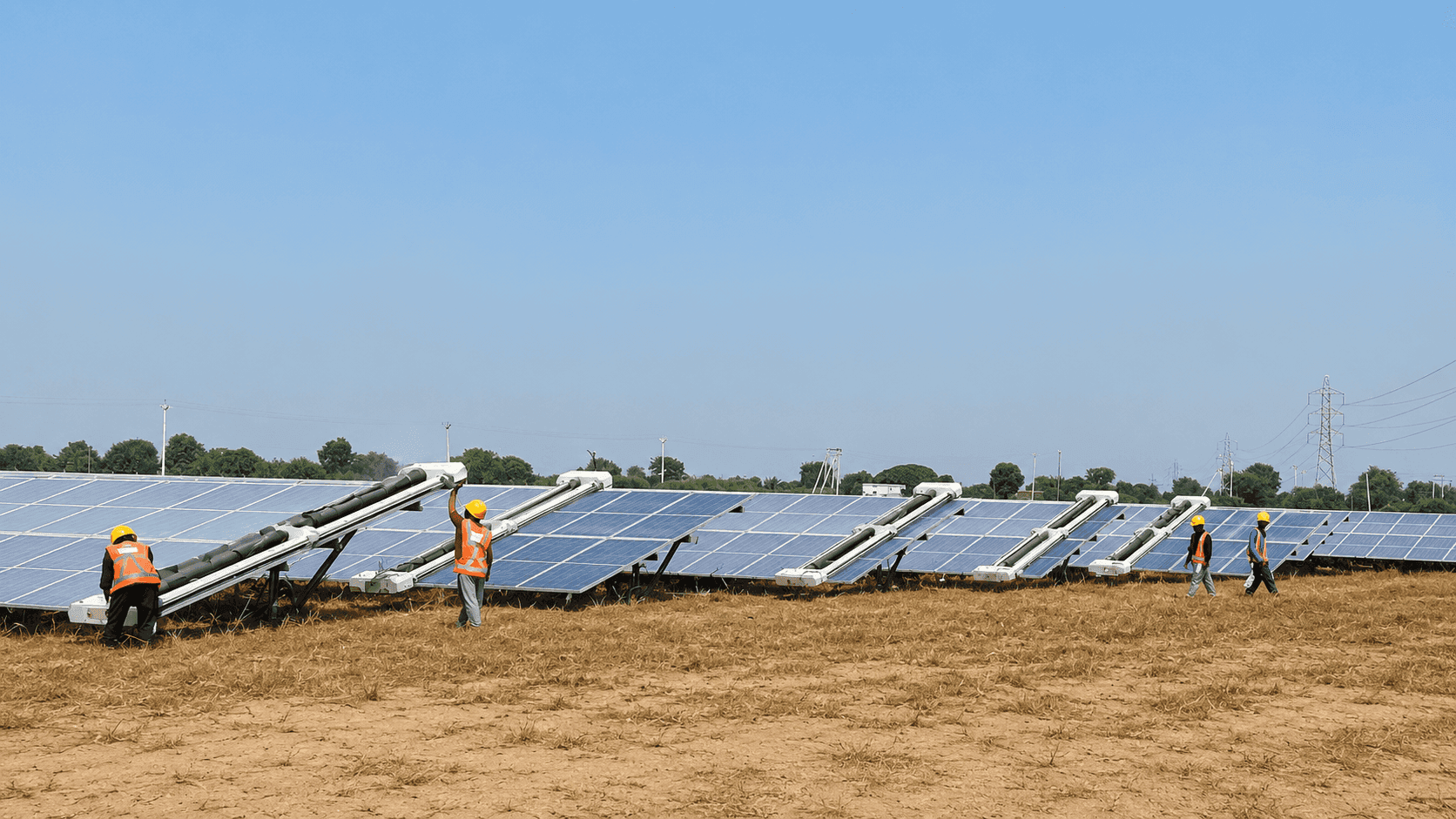
Before integrating robotic solutions, the Dakuni facility relied on manual labor. Workers addressed persistent soiling losses by hand. This traditional approach presented significant logistical hurdles. It impacted the bottom line and operational stability. Deploying large cleaning crews across a 52.5 MW footprint was difficult. It required extensive coordination. This made it hard to maintain a consistent or efficient schedule across the vast array.
Water logistics further compounded these challenges. The site faced high recurring costs for water. Management had to transport water tankers to remote rows. This was a necessity for water-based manual scrubbing. Beyond the expense, the process lacked transparency. There were no standardized or auditable cleaning logs. Asset managers struggled to verify completion rates. They could not easily measure the effectiveness of labor. This manual dependency created unpredictable energy gaps. The plant was vulnerable to rapid soiling cycles. Simple or sporadic human intervention could no longer manage the site effectively.
Fleet and deployment at 52.5 MW
Fleet and deployment at 52.5 MW: Integrating the NYUMA solar panel cleaning robot India
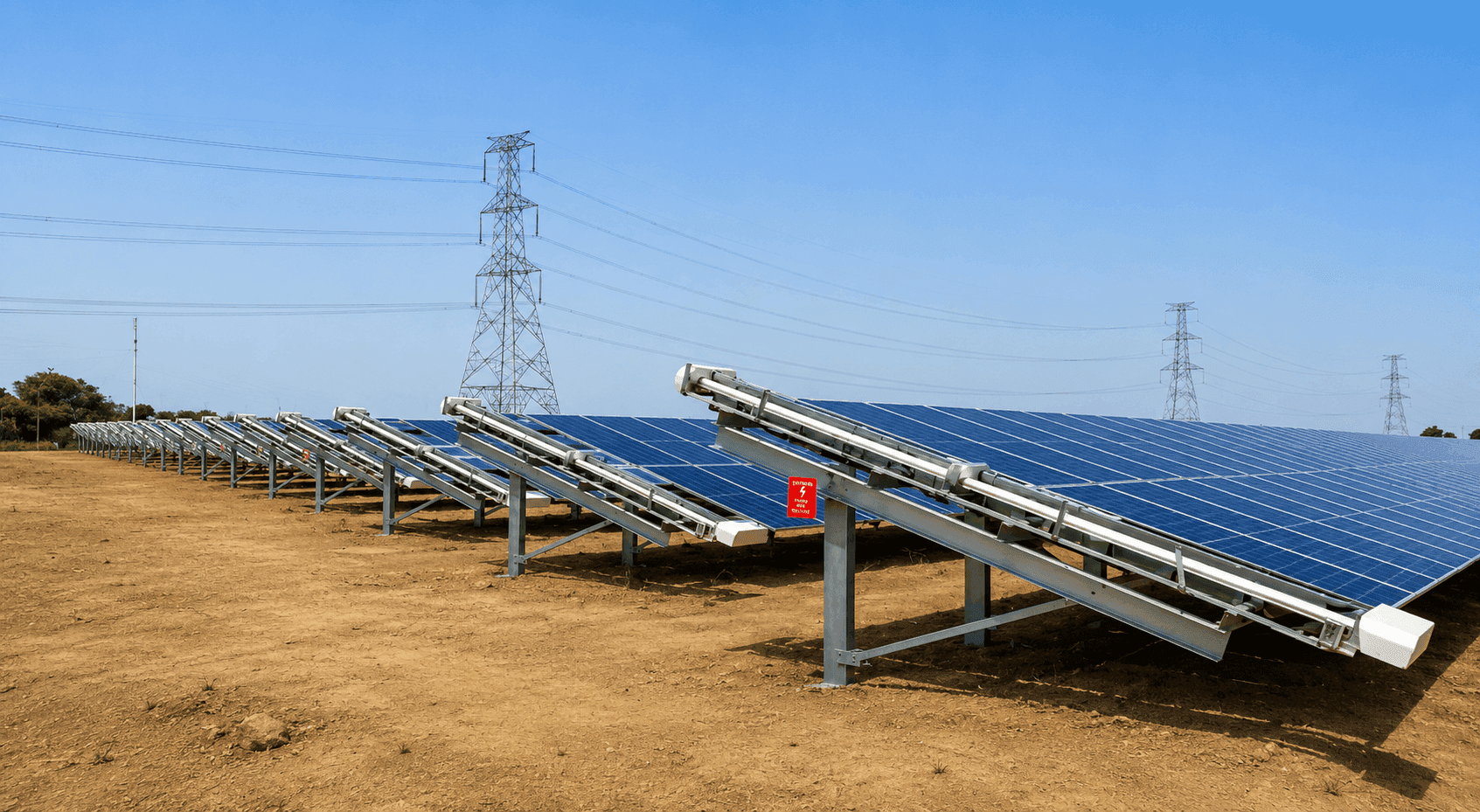
The Dakuni project represents a strategic shift toward automated asset protection. This occurs within a 52.5 MW ground mount array. Management opted for a Capex-based procurement model. They secured full ownership of the NYUMA robotic system. This investment ensures long-term control over cleaning logistics. It also controls O&M expenditures. There are no recurring service fees for the facility.
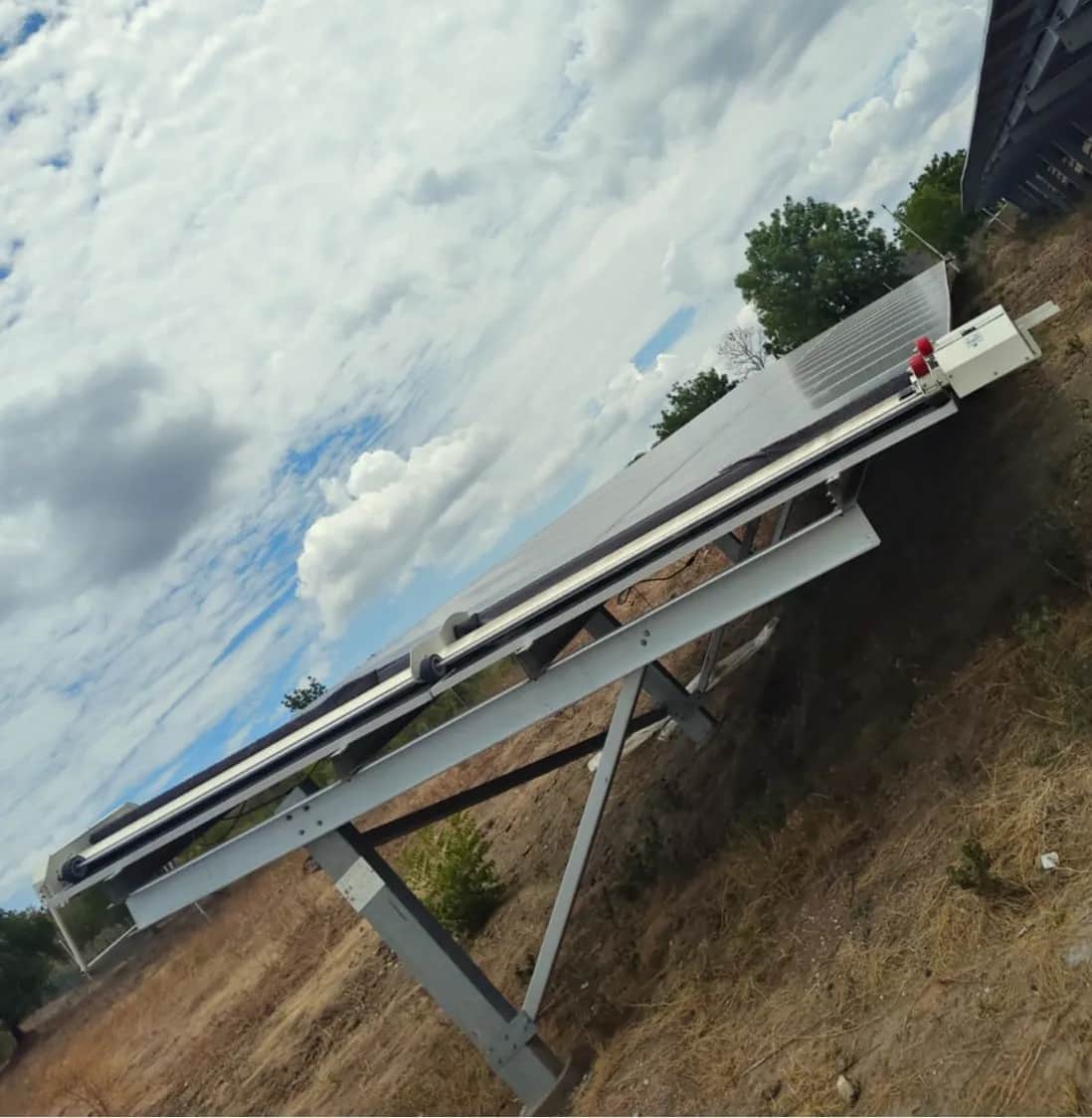
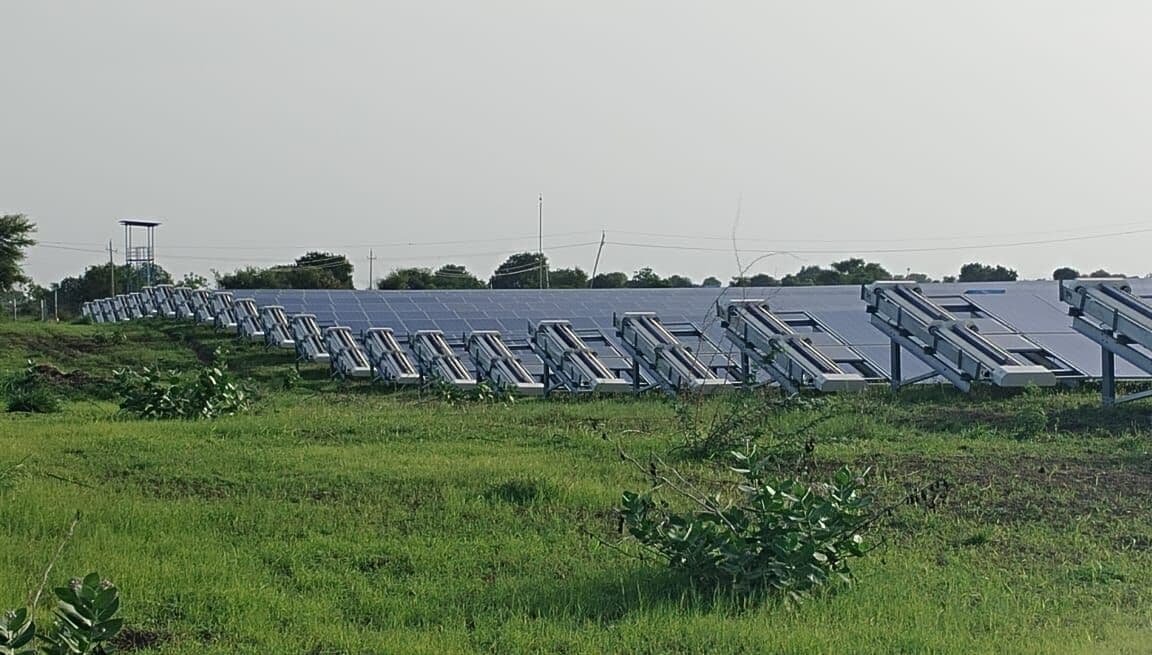
The deployment focuses on a semi-automatic cleaning cadence. The NYUMA robot navigates the fixed-tilt rows efficiently. The technical integration process prioritized several operational objectives:
- Targeted cleaning: The NYUMA single-pass PBT brush technology is calibrated for Dakuni. It addresses the specific soiling profile of the site.
- Logistical efficiency: The semi-automatic approach achieves significant conservation. The site saves 196,000 litres of water annually.
- Performance recovery: The fleet provides a reliable mechanism for recovery. It recovers 52.5 MWh per year in additional generation.
Commissioning the NYUMA unit required precise alignment. It had to work with the existing ground mount structures. This ensures seamless movement across the array. The system now functions as a core component of the site O&M strategy. It provides auditable and data-backed cleaning cycles. The Dakuni plant has successfully stabilized its energy yield. It has also reduced its reliance on human-intensive maintenance routines.
Operations and monitoring
Optimizing cleaning frequency with NECTYR at the 52.5 MW Dakuni plant
Operational success at Dakuni relies on a disciplined cleaning cadence. This schedule is tailored to regional soiling patterns. The plant does not use ineffective manual schedules. Instead, it employs a semi-automatic model. This model uses 3–10 dry cleaning cycles per month. This interval is determined by real-time site conditions. All activity is monitored through the NECTYR fleet operations portal. This ensures that every brush pass is logged and verified.
The transition from manual labor has established a new standard. The team no longer relies on inconsistent human cleaning. They use the NYUMA robot for scheduled dry cleaning cycles. This eliminates guesswork. It also removes the safety risks associated with human cleaners. The deployment incorporates the following operational safeguards:
- Accountability: NECTYR provides granular reporting for each block. It confirms exactly when rows were serviced.
- Wind protection: Robotic operations follow strict wind holds. Units are docked during high-velocity events to prevent structural risks.
- Performance focus: The system avoids the myth of daily washing. It prioritizes precision, dry-contact cycles. These cycles maximize panel life and energy output.
The Dakuni management team now uses an inspection-led maintenance strategy. They can correlate cleaning frequency directly to energy performance data. This precision prevents unnecessary wear. It also maintains optimal generation across all modules.
Results and impact
Sustainable resource recovery at the 52.5 MW Dakuni plant
The NYUMA semi-automatic system changed asset management at Dakuni. It represents a shift toward resource-efficient operations. The site replaced water-heavy cleaning with a waterless robotic solution. This successfully eliminated the need for massive water volumes. This transition supports regional sustainability goals. It also lowers the long-term operational footprint of the ground mount installation.
The site has also seen a substantial improvement in energy yield. Controlled, semi-automatic dry cleaning cycles keep the modules clear. This prevents the dust accumulation that hindered performance in the past. The facility now recovers a significant amount of energy annually. It turns formerly lost potential into consistent power output.
- Resource efficiency: Waterless robotics remove the costs of water logistics. There is no need to transport water to the site.
- Energy optimization: Targeted robotic passes ensure modules operate at peak efficiency. They recover lost generation throughout the year.
- Operational stability: Standardized cleaning routines provide reliable performance metrics. This helps asset owners manage the plant.
Peer comparison and planning checklist
Peer Comparison and Implementation Planning for Dakuni
The 52.5 MW Dakuni installation highlights Taypro's versatility. We have deployed over 5 GW of capacity across 150+ live sites in India. Different plants require different solutions. For example, fully automatic systems like the GLYDE-X use patented dual-pass microfiber. This is optimized for tracker performance. However, the Dakuni plant utilizes the NYUMA system. This is because Dakuni has a fixed-tilt architecture. Unlike the pick-and-place HELYX model, NYUMA is designed for larger rows. It provides the site-wide consistency required for unified fixed-tilt layouts. This configuration balances capital expenditure with operational gains.
Use this planning checklist to evaluate your solar panel cleaning robot India deployment:
- Assess site topography and module tilt. Select between PBT brush or microfiber cleaning technologies.
- Define row length and total MW capacity. This helps determine the optimal robot-to-block ratio.
- Confirm local grid connectivity requirements. This is needed for NECTYR fleet monitoring and automated scheduling.
- Audit annual water costs and manual labor overhead. Use this to calculate your CAPEX project ROI.
- Establish a clear maintenance pathway. Plan for charging, docking, and peripheral unit storage.