Executive summary
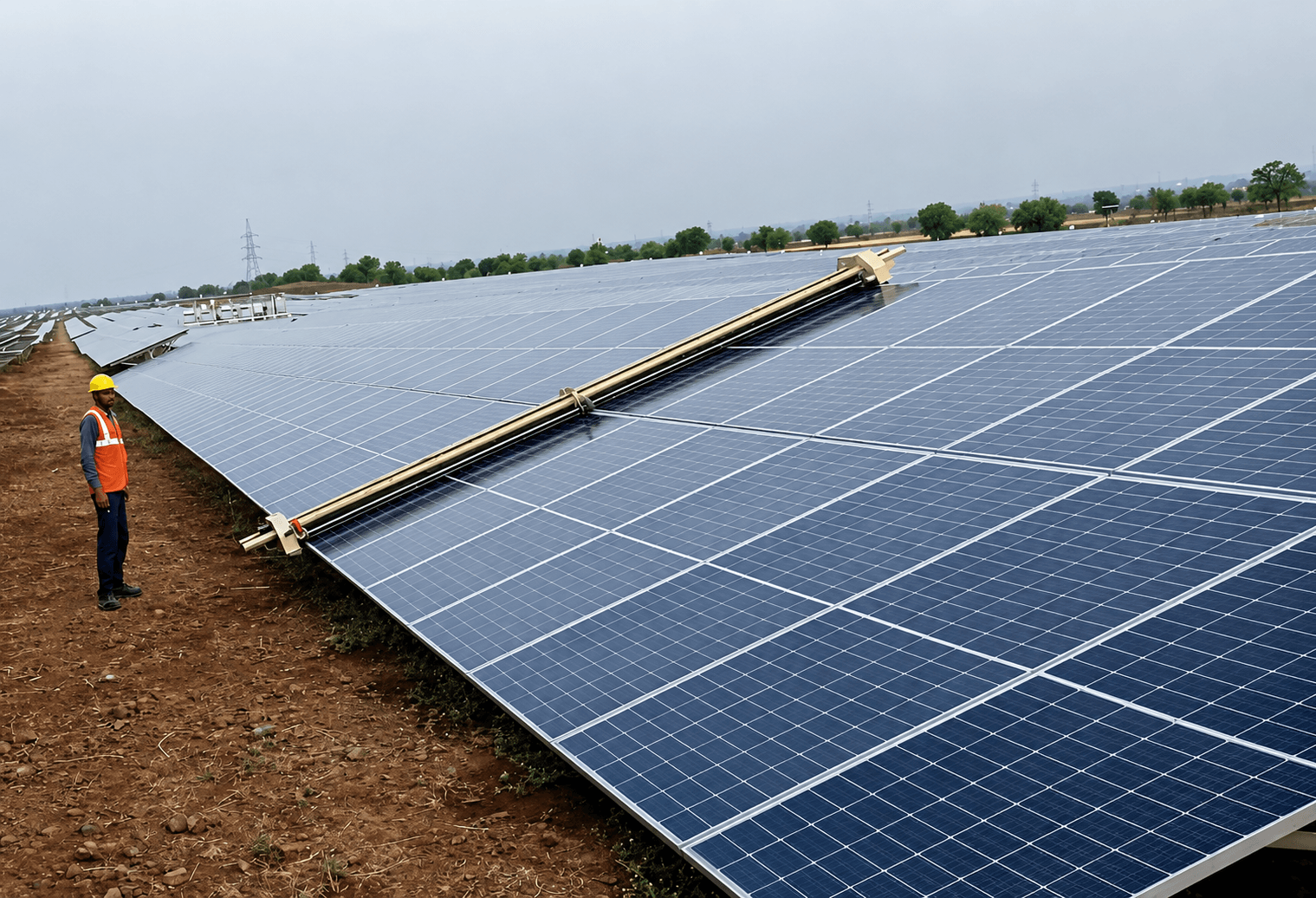
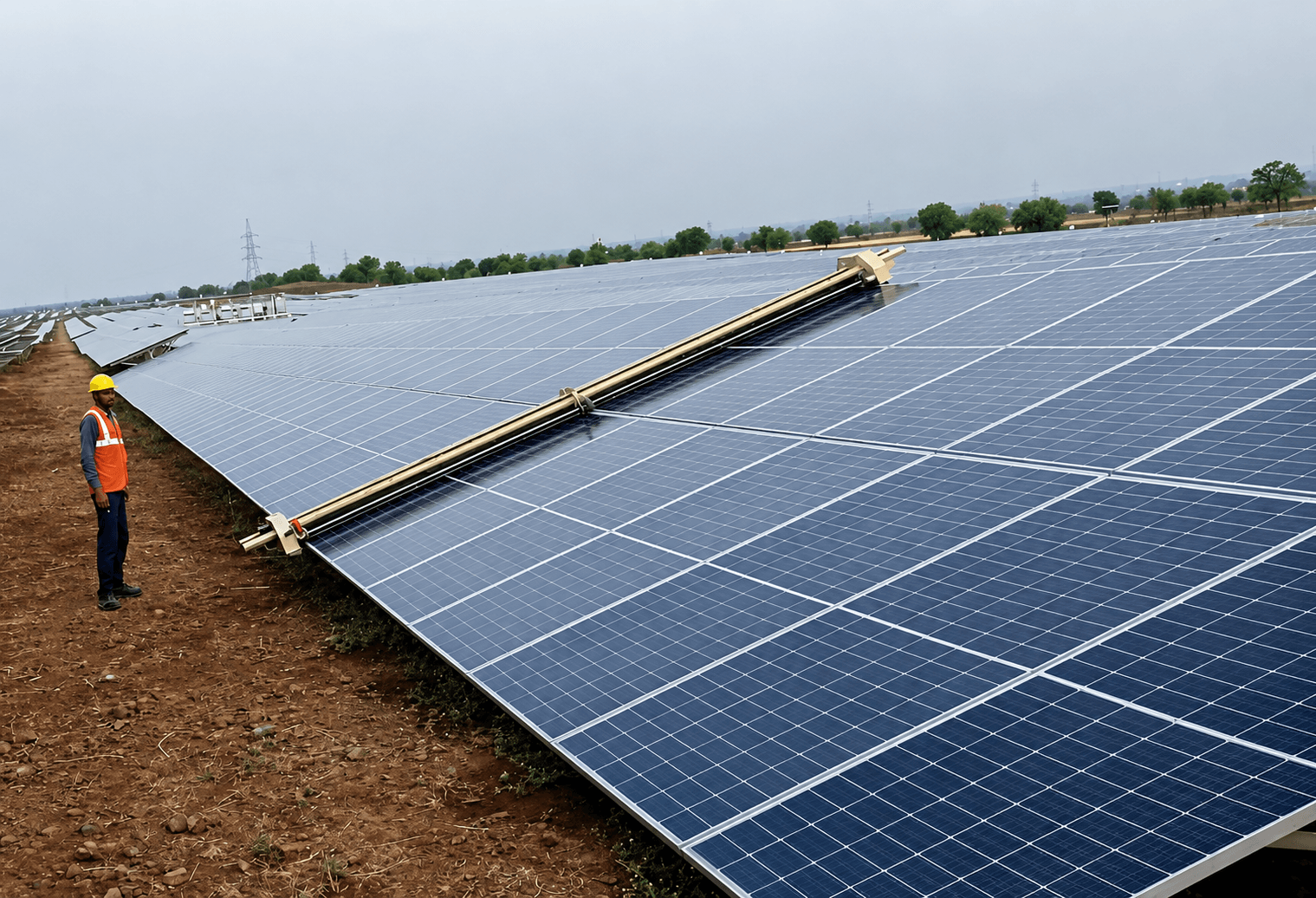
Searching for a reliable solar panel cleaning robot India? This 558.8 MW ground-mount solar plant in Haryana provides a perfect case study. The facility faced major performance swings due to extreme soiling. It is located near the NCR belt. This area has heavy agricultural and construction dust. This dust builds up fast on exposed module rows.
Local water supplies are also very limited. Traditional wet-washing methods were not sustainable for this large site. Also, the plant has many scattered blocks. This makes it hard for manual labor teams to move around. These logistical issues led to irregular cleaning. This caused constant losses in energy generation.
To fix these problems, the site moved to a Capex-driven maintenance model. They chose a waterless cleaning strategy. The team deployed the HELYX semi-automatic pick-and-place robot. This system is great for distributed utility-scale layouts. It allows for efficient cleaning across scattered blocks. It does not require heavy infrastructure.
The results have been excellent. The plant recovered 558.8 MWh of additional generation every year. The shift to waterless technology also helped the environment. The facility saves 2.1 million litres of water each year. It also prevents 277 metric tons of CO2 emissions annually. This project shows how robotic tools can fix high-dust challenges. It also helps optimize long-term performance for Indian solar plants.
Environment and soiling at Haryana
Environmental Context and Soiling Dynamics in Haryana
The 558.8 MW plant sits in a busy corridor. This area covers the agricultural and industrial zones of the Haryana-NCR belt. This region has a very difficult soiling profile. Both organic and inorganic particles build up on the panels constantly. This creates a heavy layer of dust that blocks sunlight.
The harvest seasons create specific problems. During these times, agricultural residue and airborne biomass settle on the modules. This creates a thick, sticky film on the glass. Traditional cleaning methods often struggle to remove this residue. If the dust stays too long, it becomes very hard to clean.
Construction is another major factor. The NCR zone is growing very fast. This expansion creates a constant flow of construction dust. These particles are very fine and abrasive. When they meet local humidity, they can form thin crusts on the panels. These crusts increase light scattering. This leads to significant energy absorption losses.
On large ground-mount arrays, these issues are magnified. The environmental mix requires a strong maintenance response. Without it, the glass coating can degrade over time. This leads to long-term efficiency drops. The site must manage these risks to stay profitable.
The main environmental challenges at this site include:
- Agricultural Particulates: Seasonal crop residue and field-burning aerosols. These create sticky, heavy soiling that resists light cleaning.
- Construction Dust: Fine and mineral-rich debris from nearby building projects. This requires thorough and non-abrasive removal methods.
- Site Layout Constraints: The plant consists of many scattered blocks. This makes it hard to move large, heavy machinery between rows.
- Resource Scarcity: Water is hard to find in this region. This makes dry, mechanical solutions much better than wet washing.
The facility uses the HELYX semi-automatic robot to fight these issues. This robot uses a waterless approach. Its portable design is a huge advantage. Maintenance teams can move the unit between scattered blocks quickly. This allows for high-frequency cleaning in critical areas. This method keeps the energy yield high despite the heavy dust in Haryana.
O&M before Taypro
Managing O&M Logistics and Water Scarcity at a 558.8 MW Haryana Solar Site
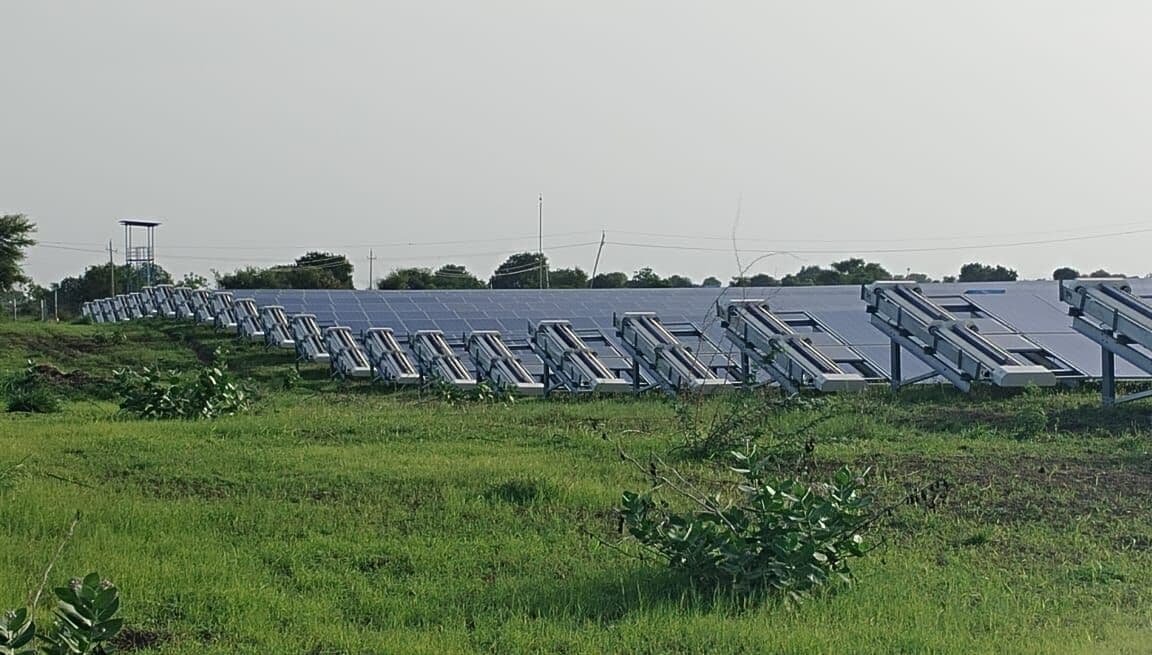
Before using robots, the 558.8 MW site struggled with logistics. Maintaining scattered plant blocks was a massive burden. The site covers a huge amount of land. This made manual cleaning very difficult. Crews had to move heavy equipment across many disconnected sections. The scale of the facility made consistent coverage nearly impossible.
Water scarcity was another major obstacle. This part of the NCR belt has very little water. Finding enough water for conventional wet cleaning was difficult. It was not just a logistical problem. It was also an environmental problem. Using large amounts of water put too much strain on local resources.
Manual labor models also created inconsistent results. There were often gaps in the cleaning schedule. These gaps caused uneven energy production. This led to direct revenue losses for the plant. It was hard to ensure every module was cleaned on time.
The main operational pain points included:
- Labor Mobilization: It was hard to coordinate teams across widely scattered plant blocks.
- Water Constraints: Local water was too limited for high-volume manual washing.
- Inconsistent Performance: Manual processes created audit gaps. This led to irregular cleaning and lower energy output.
- Environmental Exposure: High levels of dust required frequent cleaning. Manual labor could not provide this reliably at such a large scale.
The project needed a more sustainable way to work. They needed to move away from manual processes. A robotic model was the best solution. This shift removed the need for large-scale water transport. It also lowered the costs of managing labor in remote areas.
Fleet and deployment at 558.8 MW
Fleet Deployment and Procurement Strategy for the 558.8 MW Haryana Installation
To solve these logistical issues, the site chose a Capex procurement model. Management decided to invest directly in high-performance equipment. This allowed the plant to move away from expensive manual labor teams. Investing in the fleet provides long-term operational control. It also helps standardize cleaning quality across the entire site.
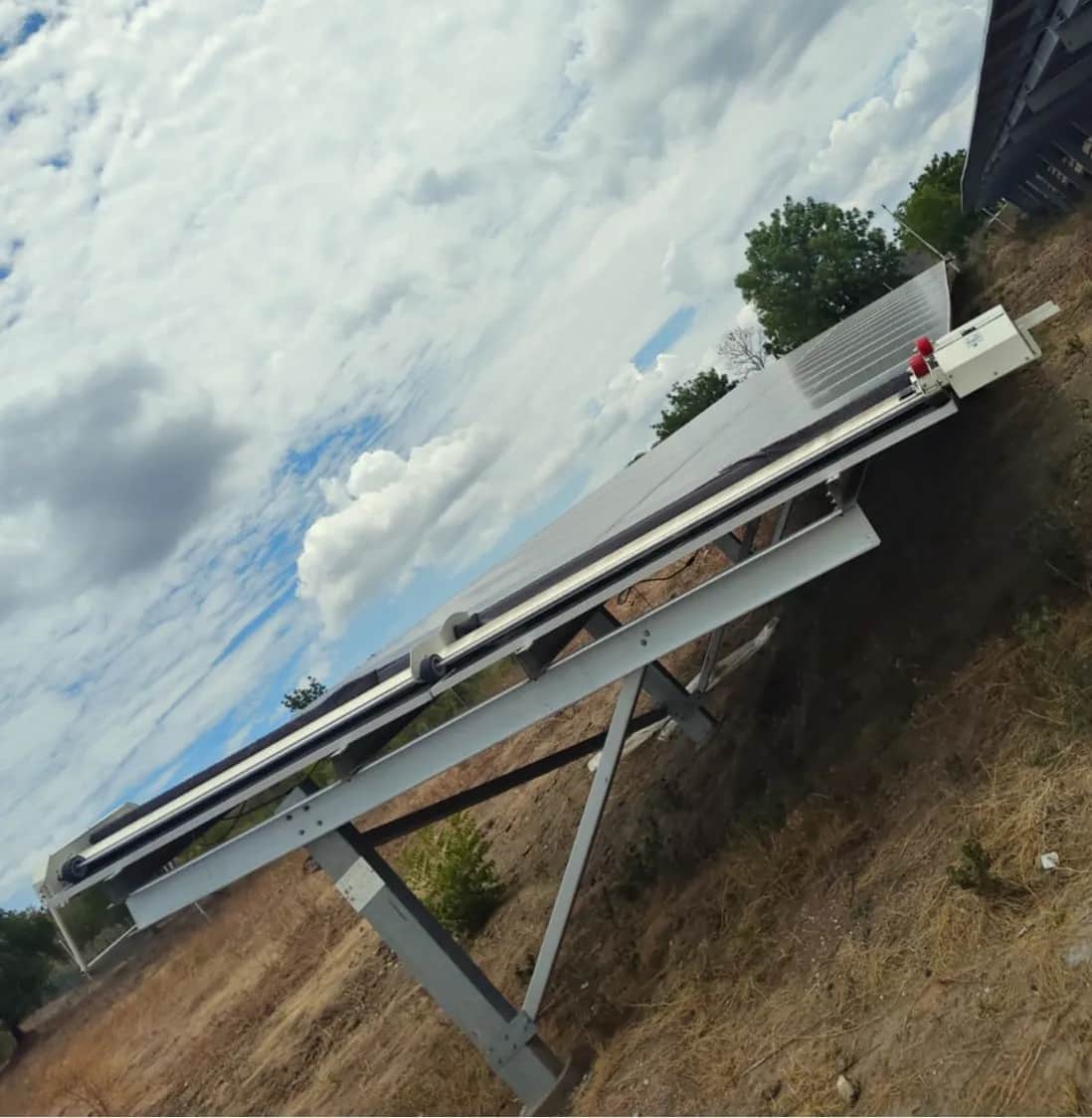
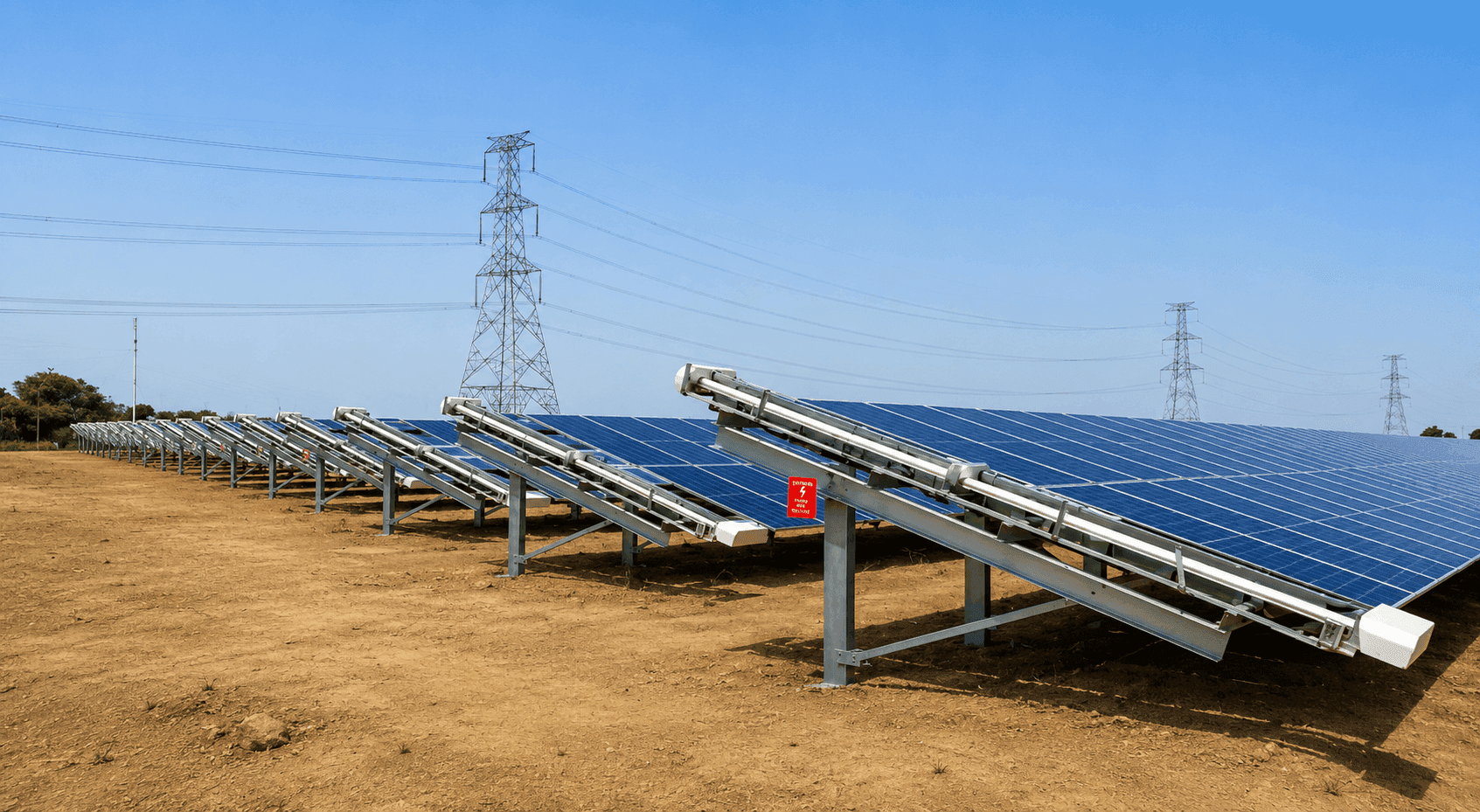
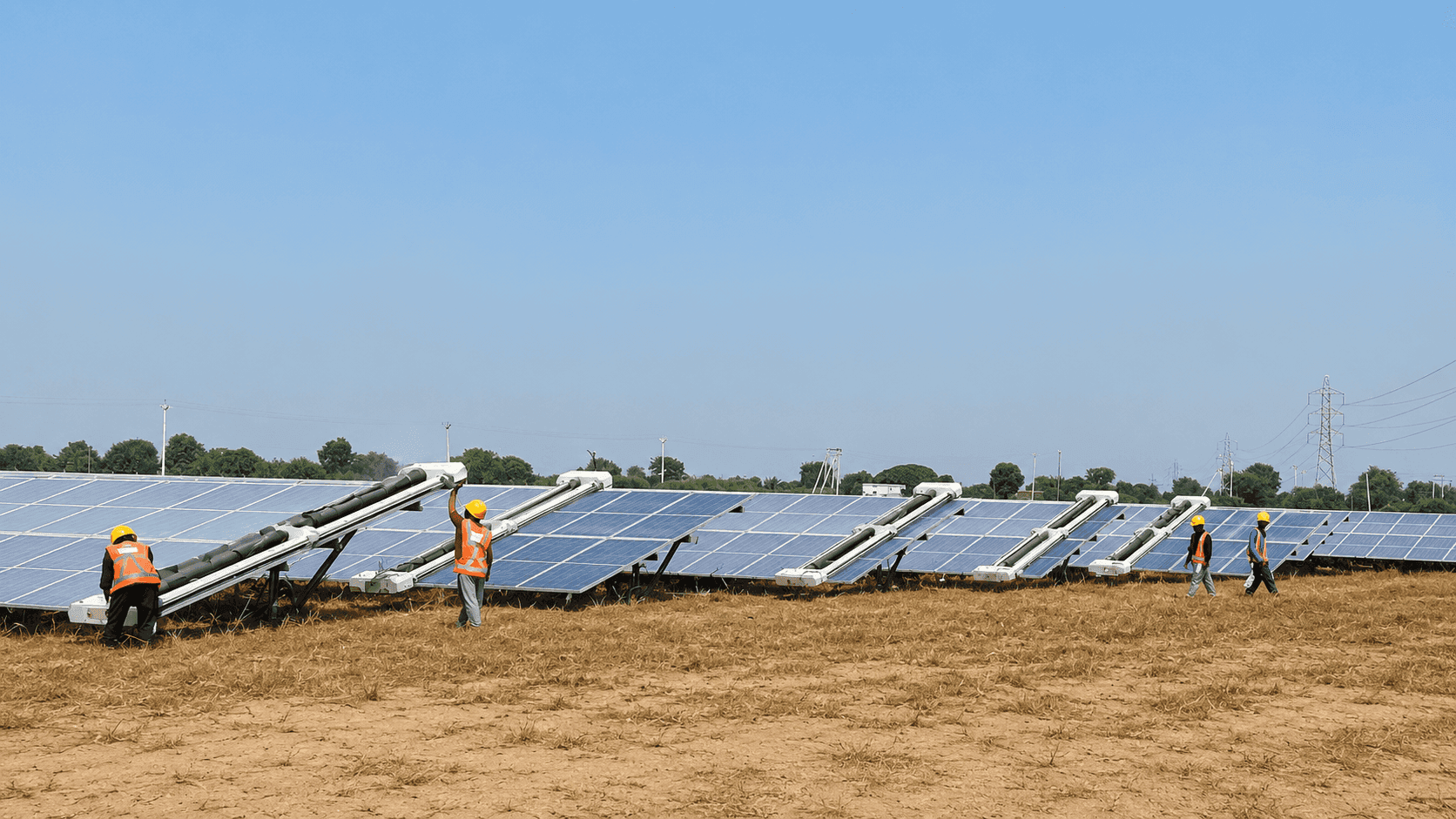
The deployment uses the HELYX robot. This is a semi-automatic, pick-and-place system. It was chosen because it is very versatile. The plant blocks are scattered and hard to reach. Heavy, fixed-row machinery would be too difficult to move. The HELYX is portable and efficient. Operators can quickly transfer the unit between different rows.
This mobility reduces the need for large labor teams. It makes the cleaning process much smoother. The implementation includes several key steps:
- Targeted Deployment: The HELYX is used for semi-automatic cycles. This allows for flexible scheduling across the different sections of the plant.
- Optimized Cadence: The site follows a specific schedule. They typically perform 3 to 10 dry cleaning cycles per month. This happens as weather and access allow.
- Waterless Technology: The robot uses single-pass PBT brushes. This cleans the panels without using any water. This helps preserve local water tables.
- Logistical Efficiency: The pick-and-place design of the HELYX is perfect here. It avoids the limits of traditional, fixed robotics in scattered layouts.
This combination of technology and strategy works well. The plant maintains high cleanliness even with heavy dust. The NCR belt is a tough environment. However, the HELYX manages the risks of manual cleaning gaps. This leads to better energy performance. It also reduces the annual water consumption significantly.
Operations and monitoring
Optimizing Performance Through Semi-Automatic Operations
The 558.8 MW facility in Haryana must deal with constant soiling. Agricultural and construction dust build up quickly. To keep performance high, the site needs a disciplined cleaning strategy. Since water is scarce, the HELYX robot is the best choice. It provides a scalable solution to keep energy generation steady.
The team manages accountability through NECTYR. They use an inspection-led scheduling system. This means they analyze real-time data first. They also look at site observations. This helps them decide exactly which blocks need cleaning. The cleaning cycles are scheduled to perform 3 to 10 dry cleaning sessions per month. This frequency is based on dust levels and row access. It keeps the Performance Ratio (PR) within target limits.
The cleaning method uses single-pass PBT brush technology. PBT stands for Polybutylene Terephthalate. This material is very effective for waterless cleaning. It removes abrasive dust particles safely. Standardizing this method helps avoid the mistakes of manual cleaning. It also removes the need for daily wet washing. The system provides several key benefits:
- Accountability: NECTYR logs every cleaning cycle. This gives management full visibility over every block in the plant.
- Flexibility: The semi-automatic workflow is very adaptable. Teams can prioritize rows that have the most dust.
- Safety: Robotic cleaning is much safer. It removes the need for crews to walk on the arrays. This reduces the risk of panel damage and injury.
- Wind Management: The site has strict safety protocols. Robotic operations stop during extreme weather. This protects both the hardware and the solar asset.
Results and impact
Environmental and Economic Results of Robotic Cleaning
The use of Taypro's semi-automatic robots has changed this site. The O&M strategy is now much more effective. By moving away from water-intensive manual cleaning, the project saved many resources. The transition to waterless PBT brushes was a key step. This technology solves the problem of limited local water. It also ensures the plant stays clean across its large area.
The economic impact is very clear. The plant has seen a measurable recovery in power generation. The robotic fleet fights the dust from the NCR belt. This keeps the modules at high efficiency all year. Consistent cleaning means more energy is produced. This directly improves the revenue of the plant. It also lowers the cost of each unit of energy generated.
The environmental benefits are also large. The project has preserved millions of litres of water. This water would have been used for manual washing. By saving water, the project helps local agricultural stability. Furthermore, the improved energy capture helps the planet. The facility has significantly reduced its annual CO2 emissions.
Key achievements include:
- Resource Conservation: Local water supplies are protected for regional use.
- Carbon Mitigation: Annual carbon emissions are lower due to better energy capture.
- Operational Efficiency: The plant has lower costs for labor mobilization. This is vital for 558.8 MW scattered installations.
- Sustainable Yield: The Performance Ratio remains stable thanks to disciplined cleaning cycles.
Peer comparison and planning checklist
Peer Comparison and Implementation Planning
This 558.8 MW installation is a major project in Haryana. It follows the same logic as the 149 MW Haryana site. However, this larger plant is more optimized. It uses a hybrid model to manage costs. It balances the agility of semi-automatic robots with large-scale efficiency. This helps the site manage its massive footprint.
We can also compare this to smaller sites. For example, the 3 MW Shri Ganesh Industries plant and the 1 MW Suresh Cotton site are much smaller. Those projects use high-frequency manual oversight. They do not have the scale of a 558.8 MW site. This large installation uses the HELYX system to get standardized results. Moving from manual work to a centralized robotic strategy lowers the cost per MW. It also keeps module performance very consistent.
If you are an O&M lead, use this checklist. It is designed for large deployments in the Haryana NCR belt:
- Evaluate Soiling: Check the local dust density. Decide if semi-automatic robots can handle your high-traffic rows.
- Map Grid Access: Plan your robot movement routes. This minimizes travel time between rows and ensures full coverage.
- Use NECTYR: Integrate fleet monitoring software. This allows you to adjust cleaning frequency based on the weather.
- Assess Water-Free Needs: Compare waterless cleaning against your local dust patterns. This helps maximize yield during harvest seasons.
- Verify Charging Stations: Ensure your docking positions are correct. This supports efficient cleaning cycles for all automated units.