Executive summary
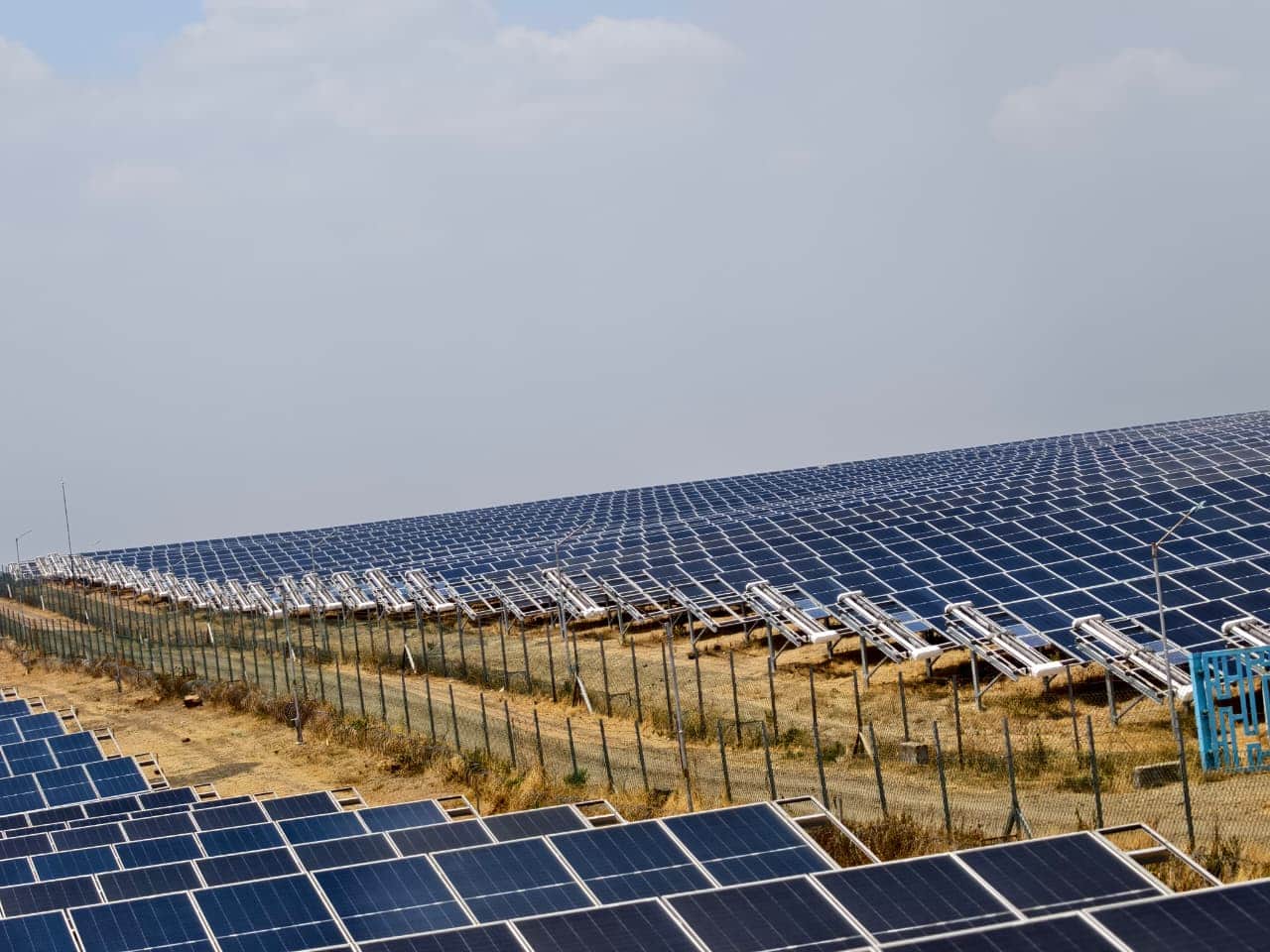
solar panel cleaning robot India, This case study focuses on a 334 MW utility-scale solar plant in Rajasthan, India. This facility is located in an arid and extremely dusty region. The plant sits near the edge of the Thar Desert. This location creates a major problem for solar energy production. Constant wind and desert storms cause rapid dust buildup on the panels. This dust accumulation happens very quickly. It leads to significant drops in the plant's Performance Ratio (PR).
The soiling patterns are often uneven. Rows located downwind from the wind direction suffer the most. Often, the performance drops before the dust is even visible to the human eye. Before Taypro, the plant relied on manual cleaning crews. They used water tankers to transport water for wet washing. This method was very expensive and highly unreliable. It was also difficult to manage across such a massive 334 MW site. Manual crews could not clean the modules frequently enough to maintain peak output.
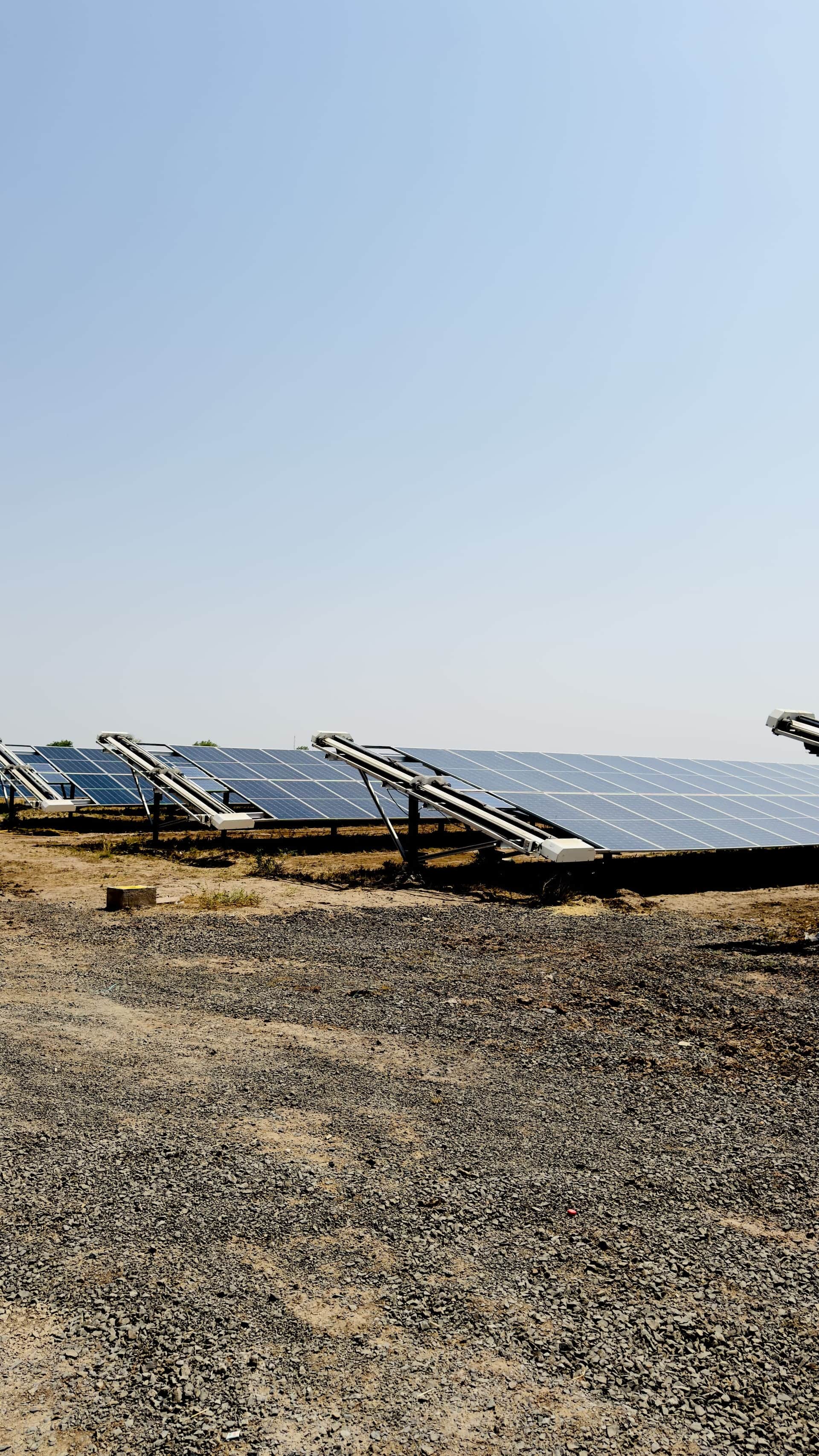
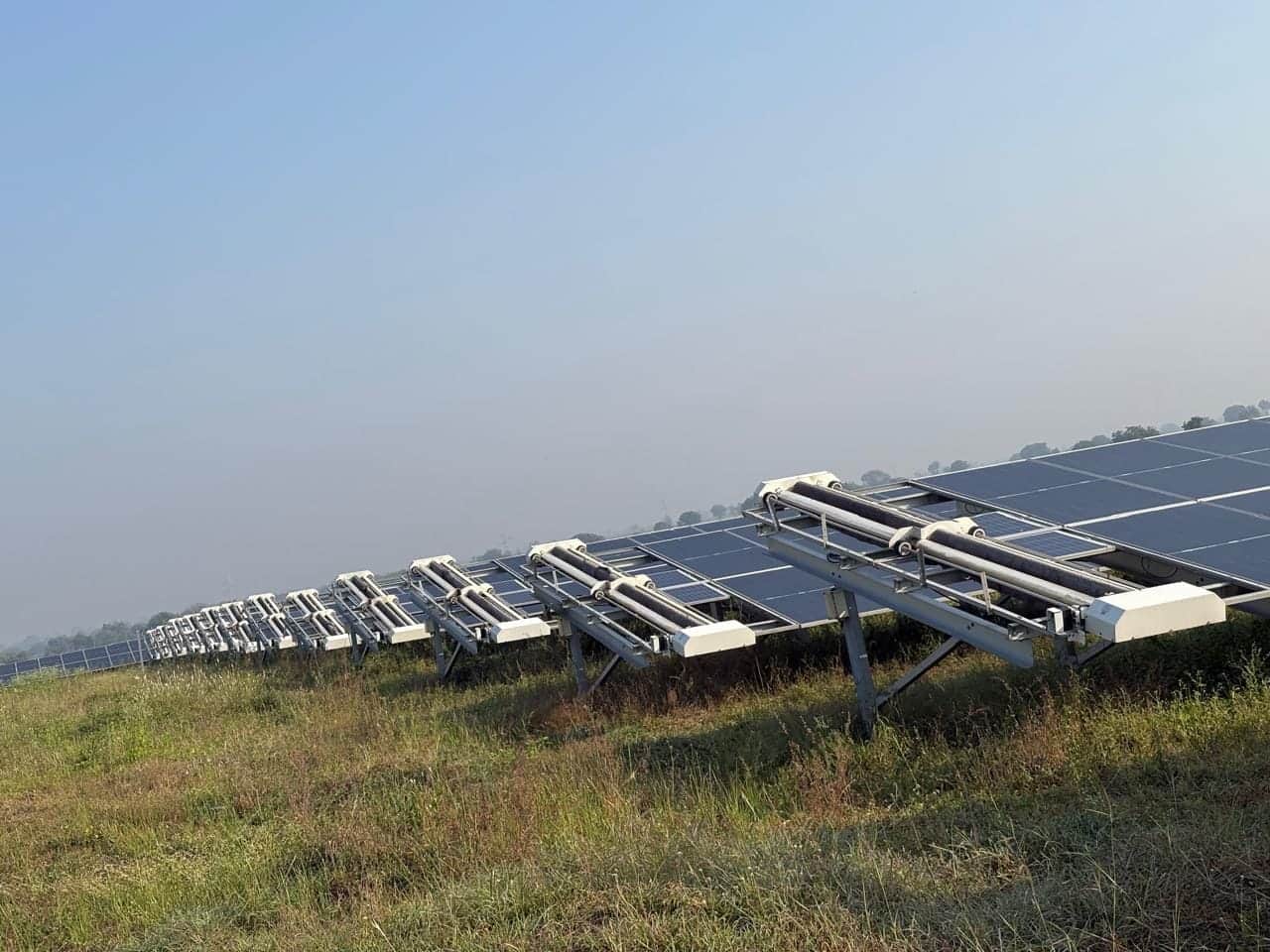
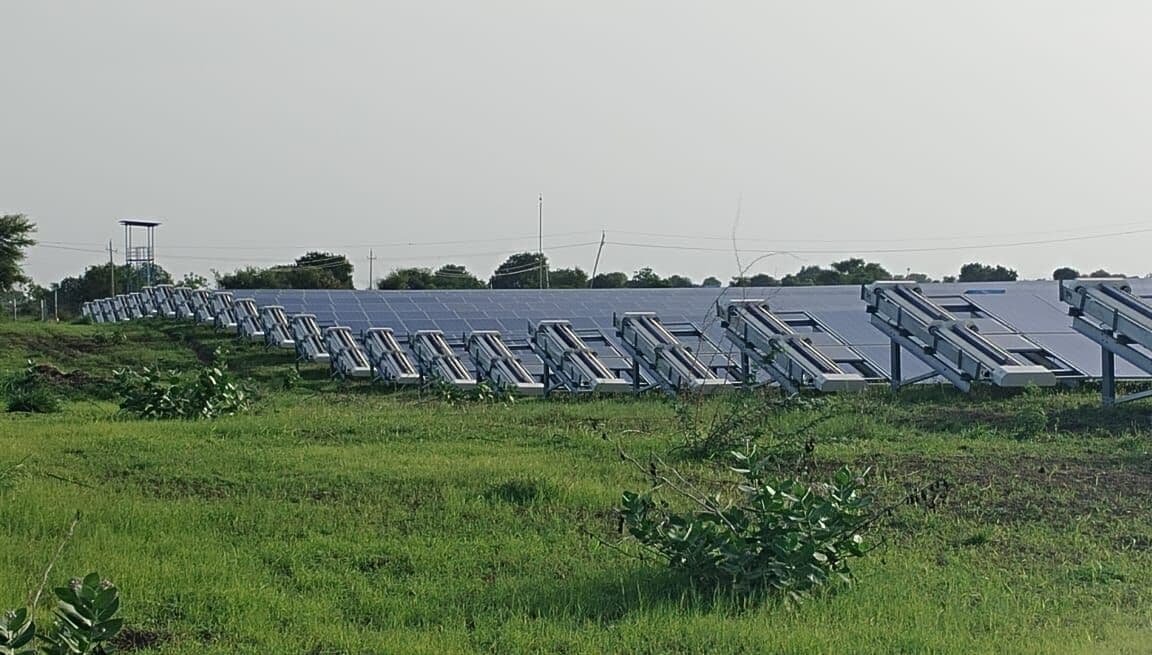
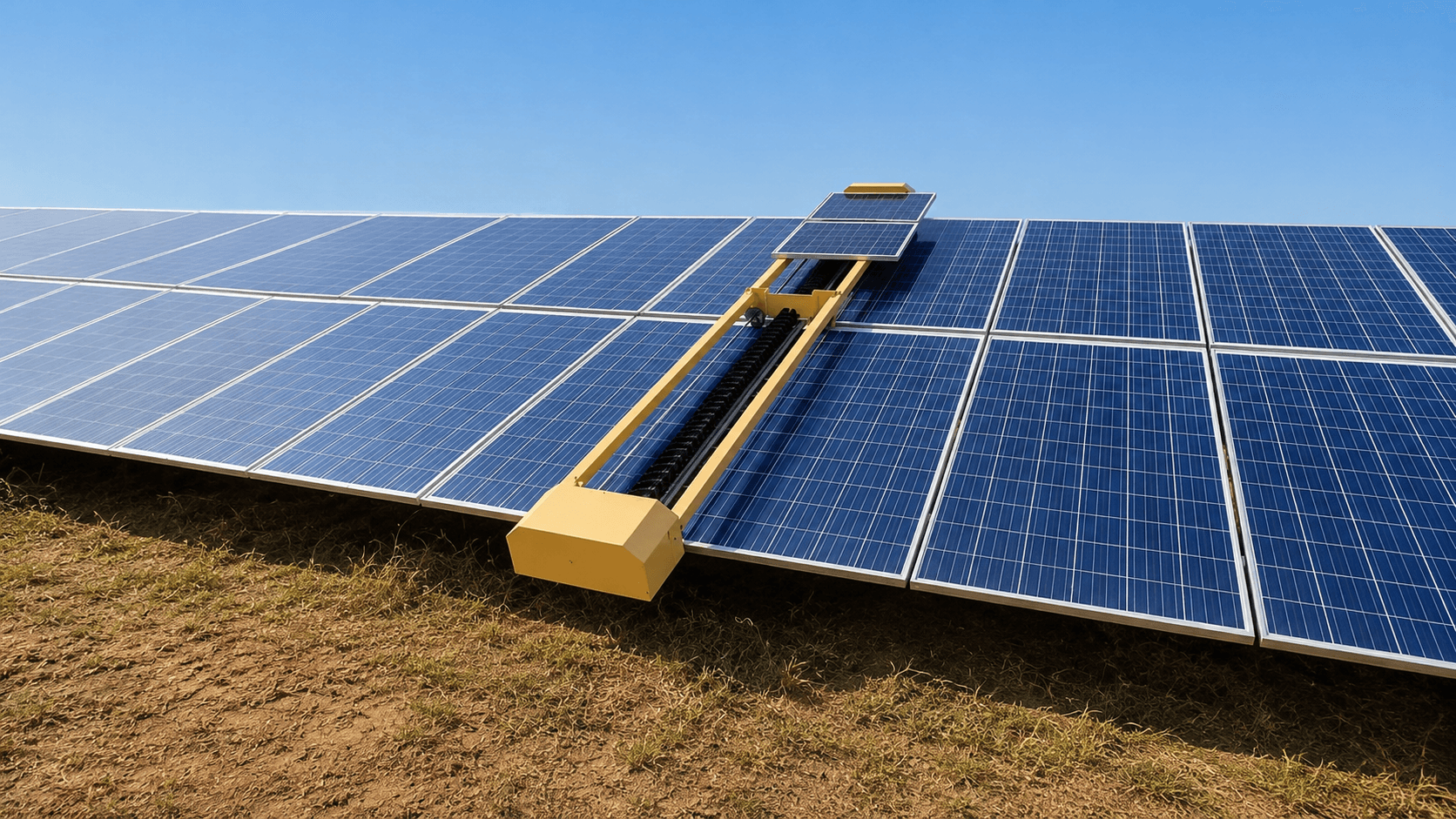
To fix these issues, Taypro deployed a fleet of autonomous robots. We provided a fully automatic solar panel cleaning robot India solution. This fleet includes GLYDE and NYUMA models. The robots are integrated with our NECTYR fleet monitoring portal. The plant now performs daily waterless cleaning cycles. This transition has eliminated the need for costly water logistics. It also removes the reliance on unpredictable manual labor. The result is consistent cleanliness and maximized energy generation.
Environment and soiling at Rajasthan, India
Arid Thar-edge Exposure: Addressing Rapid Soiling Dynamics
The 334 MW facility operates at the edge of the Thar Desert. This region has very high winds and extreme temperatures. These environmental factors create a constant flow of fine, abrasive dust. This dust settles unevenly across the entire solar array. The environment does not create uniform dust layers. Instead, it creates complex soiling patterns. These patterns change with the seasons and local wind shifts. Frequent desert storms also add more dust to the modules very quickly.
The site faces two main technical challenges due to this harsh environment. The first challenge is accelerated soiling accumulation. Wind-driven particles build up on the glass almost every day. This buildup can reduce the Performance Ratio (PR) in just a few days. Traditional cleaning schedules cannot keep up with this speed. The second challenge is hidden PR degradation. Data from the NECTYR portal shows a specific pattern. Downwind rows often show lower irradiance absorption very early. This happens even when the panels still look clean to the eye.
The human eye often fails to see these micro-layer deposits. Because of this, manual cleaning crews often miss critical soiling events. If the dust is not visible, the crew might skip that row. This leads to unexpected energy losses. In a water-scarce district like Rajasthan, relying on manual tankers is a major risk. Moving water across hundreds of megawatts is a massive logistical task. It is often slow and very expensive. The cleaning frequency is usually too low to offset the rapid re-soiling of the Thar-edge zone. A fully autonomous, waterless cleaning fleet solves this. It replaces human-dependent schedules with precise, daily cleaning cycles. This ensures the array stays at peak capacity despite the desert environment.
O&M before Taypro
Operational Gaps in Manual Cleaning at Scale
Managing a 334 MW site requires consistent and data-backed maintenance. Before switching to robots, the plant used manual labor crews. This approach was not enough to maintain the necessary cleaning frequency. The scale of the 334 MW layout made manual work very difficult. The plant faced three main structural failures under the manual O&M model.
The first failure was a total lack of accountability. Manual crews could not provide block-level completion proof. Site managers had no way to verify the work in real time. They could not prove if specific strings or rows were actually cleaned. This led to inconsistent performance across the entire site. The second failure was the heavy logistical burden of water. Rajasthan is a water-scarce region. Using water tankers for wet washing was extremely expensive. It was also very unreliable. Moving heavy tankers across a massive site created many operational bottlenecks. This cost was simply too high for a project of this capacity.
The third failure was the inability to match soiling rates. The Thar-edge environment causes dust to accumulate very fast. Manual labor cannot scale to meet this rapid need. As a result, significant PR dips occurred in downwind rows. These rows often stayed dirty for weeks at a time. Without the ability to verify daily progress, the plant lost energy every day. The shift to an autonomous, waterless fleet changed everything. It eliminated the unpredictability of manual labor. Now, every row receives scheduled care. Every cleaning task is backed by a digital audit trail.
Fleet and deployment at 334 MW
Fully Autonomous Fleet Deployment at 334 MW
The 334 MW Rajasthan project required a complete change in operations. The site moved from manual work to a fully autonomous architecture. To fight rapid dust buildup, the project deployed a large fleet of robots. This fleet includes GLYDE and NYUMA models. These robots are designed for daily waterless cleaning cycles. They ensure every row maintains high energy output. This automation removes the human errors found in manual maintenance.
The procurement strategy for this site focused on large-scale deployment. The goal was to replace expensive water tanker logistics with robots. By using a standardized fleet, the site no longer relies on manual crews. The commissioning process focused on several key integration steps. First, we used deployment mapping. Each robot is assigned to a specific zone. We use NECTYR connectivity to synchronize movement across the vast plant. This ensures the robots work together efficiently.
Second, the project moved to digital-first operations. We replaced manual paper checklists with automated logs. Now, every cleaning cycle generates a digital record. Third, we implemented autonomous scheduling. Our AI and ML systems handle the scheduling. This allows the cleaning frequency to adapt to the environment. If the system detects a PR dip, it can trigger more frequent cleaning. Finally, the site uses advanced waterless technology. GLYDE robots use a patented dual-pass microfiber method. NYUMA robots use a high-quality, single-pass PBT brush. This removes the need for water entirely. The scale of this fleet allows for total control over the 334 MW site. Every unit logs its status directly to the NECTYR portal. Managers now have the block-level proof they need. This digital layer ensures every row is serviced consistently. It directly counters the rapid soiling cycles of the Rajasthan desert.
Operations and monitoring
Operations and Monitoring: Scaling Autonomous Cleaning at 334 MW
Maintaining a 334 MW facility in the Thar Desert requires a smart strategy. Manual crews often struggle with the massive scale of the plant. They cannot maintain a consistent cleaning frequency across so many blocks. By deploying GLYDE and NYUMA robots, this project replaced erratic manual cycles. The site now follows a rigorous regime of daily waterless cleaning. This automated approach keeps performance steady. It works regardless of how much dust the wind brings in.
The entire robotic transition is managed by NECTYR. NECTYR is our integrated fleet monitoring portal. It provides real-time visibility into every single cleaning cycle. Manual labor lacks verifiable data. NECTYR is different because it provides a granular audit trail for every row. This digital accountability is a game changer for site managers. They can monitor robot health and cleaning logs from a remote location. This turns O&M from a reactive struggle into a proactive, data-driven process. The portal ensures every module is serviced daily. It catches performance dips before the dust becomes visible to the eye.
The operations include several key features:
- Daily Autonomous Cycles: The robots follow a programmed daily schedule. This ensures constant dust removal. It exceeds anything a manual crew can achieve.
- NECTYR Accountability: We use real-time logging. This replaces manual checklists with verified digital evidence. Every robot's work is recorded.
- Operational Wind Holds: Safety is a priority. The system includes automated wind-speed monitoring. If wind speeds are too high, the robots automatically move to a safe-docking position.
- Efficiency Benchmarking: The system identifies performance drops at the row level. This allows for targeted cleaning. It prevents site-wide PR losses.
Results and impact
Stabilizing Performance and Yield at 334 MW
The most important result of this deployment is independence. The plant has decoupled its cleaning frequency from water availability. In Rajasthan, water is a scarce and expensive resource. Historically, water availability limited how often a plant could be cleaned. This created a direct link between water costs and energy yield. By using autonomous robots, the 334 MW site has broken this link. The site maintains a daily dry cleaning schedule regardless of water constraints.
This transition has stabilized the site Performance Ratio (PR). Before the robots, downwind rows suffered from rapid dust buildup. This dust would degrade output long before anyone noticed. The robotic cleaning cycles ensure fine particles are removed immediately. This stops the dust from bonding to the glass surface. It also prevents significant energy drops. The plant is no longer stuck in a reactive cleaning cycle. It now operates in a state of constant cleanliness.
The impact of the deployment includes:
- Decoupled Operations: Water-scarce environments no longer limit cleaning. Waterless technology operates independently of tankers.
- Stabilized Yield: Daily cleaning cycles stop erratic PR dips. This protects the plant from wind-driven Thar dust.
- Granular Reliability: The automated fleet provides predictable results. This applies across all 334 MW of capacity.
- Operational Resilience: The site remains efficient even during storm periods. It protects the asset from rapid, uneven soiling patterns.
Peer comparison and planning checklist
Peer Comparison: Scaling Autonomous Operations in Rajasthan
Large solar plants in Rajasthan need specialized O&M strategies. They must fight severe arid-zone soiling. This 334 MW installation follows the same trend as the 360 MW Akhadana and 300 MW Bhadla projects. All these sites are moving toward fully autonomous, waterless cleaning. While older sites used hybrid or manual models, this project uses a fully automated fleet. This is necessary for the Thar-edge environment. Traditional manual setups cannot provide block-level consistency. The autonomous integration ensures every module is cleaned precisely. This eliminates the uneven PR degradation seen in downwind rows at large facilities.
This automated method also solves labor and logistics issues. It removes the problems seen in projects like the 150 MW Chhayan site. Manual oversight and water tankers are no longer needed. Instead, the 334 MW facility achieves higher uptime and a consistent yield. This project proves that fleet-scale autonomy is a necessity in Rajasthan. Rapid dust accumulation requires daily intervention, not periodic manual visits.
Peer Comparison and Planning Checklist
Use this checklist when planning your next utility-scale deployment:
- Assess Soiling Profiles: Determine the necessary robot density for your specific environment. This is critical for Thar-edge or dust-heavy sites.
- Evaluate Water Availability: Check how reliable your water supply is. If water is scarce, transition to autonomous waterless cleaning.
- Map Block Layouts: Ensure your site layout allows for optimized robot routing. Confirm NECTYR connectivity coverage across the entire plant.
- Set Daily Schedules: Use NECTYR data to build cleaning schedules. Aim to mitigate PR dips before they become visible on string monitoring.
- Plan Infrastructure: Coordinate end-row upgrades for autonomous docking. This supports continuous and hands-free operation cycles.