Executive summary
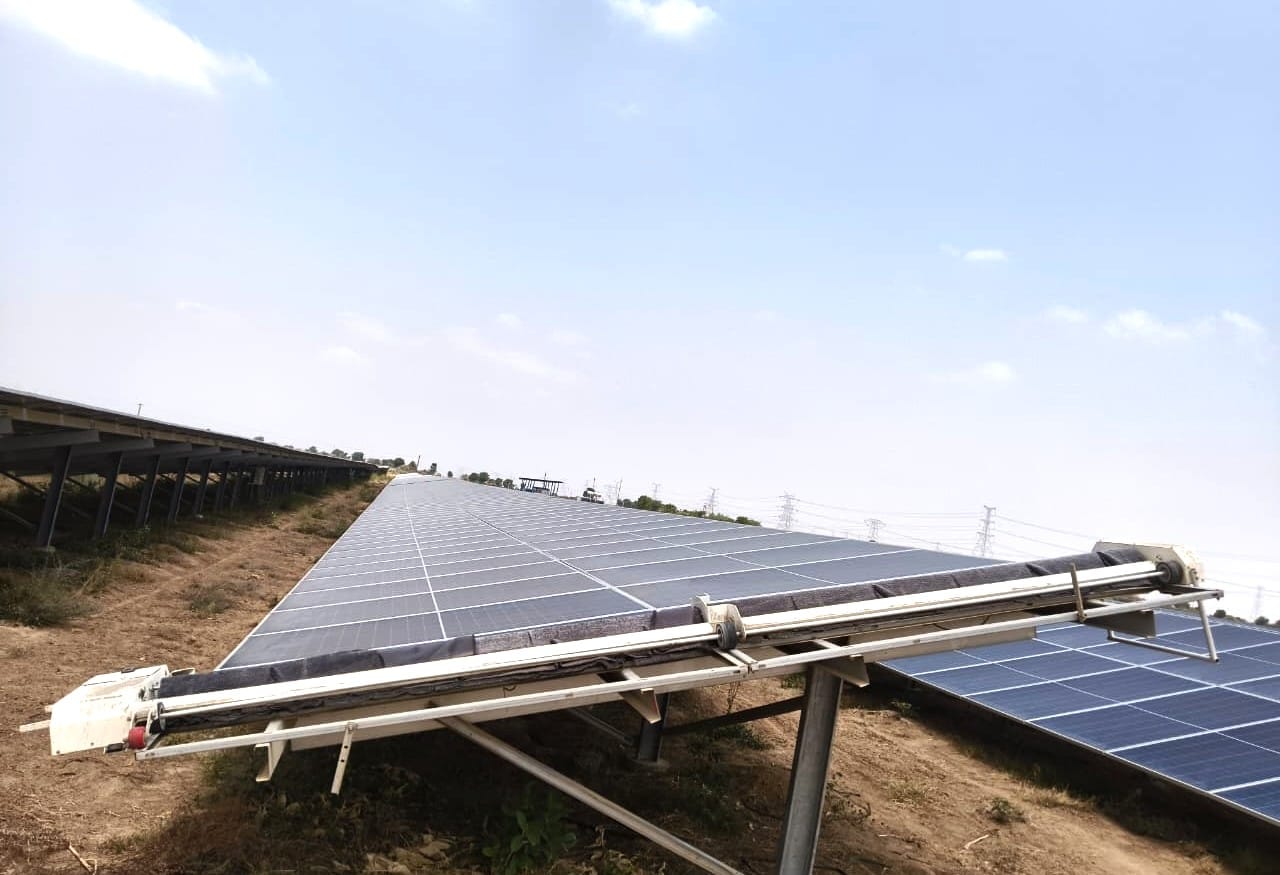
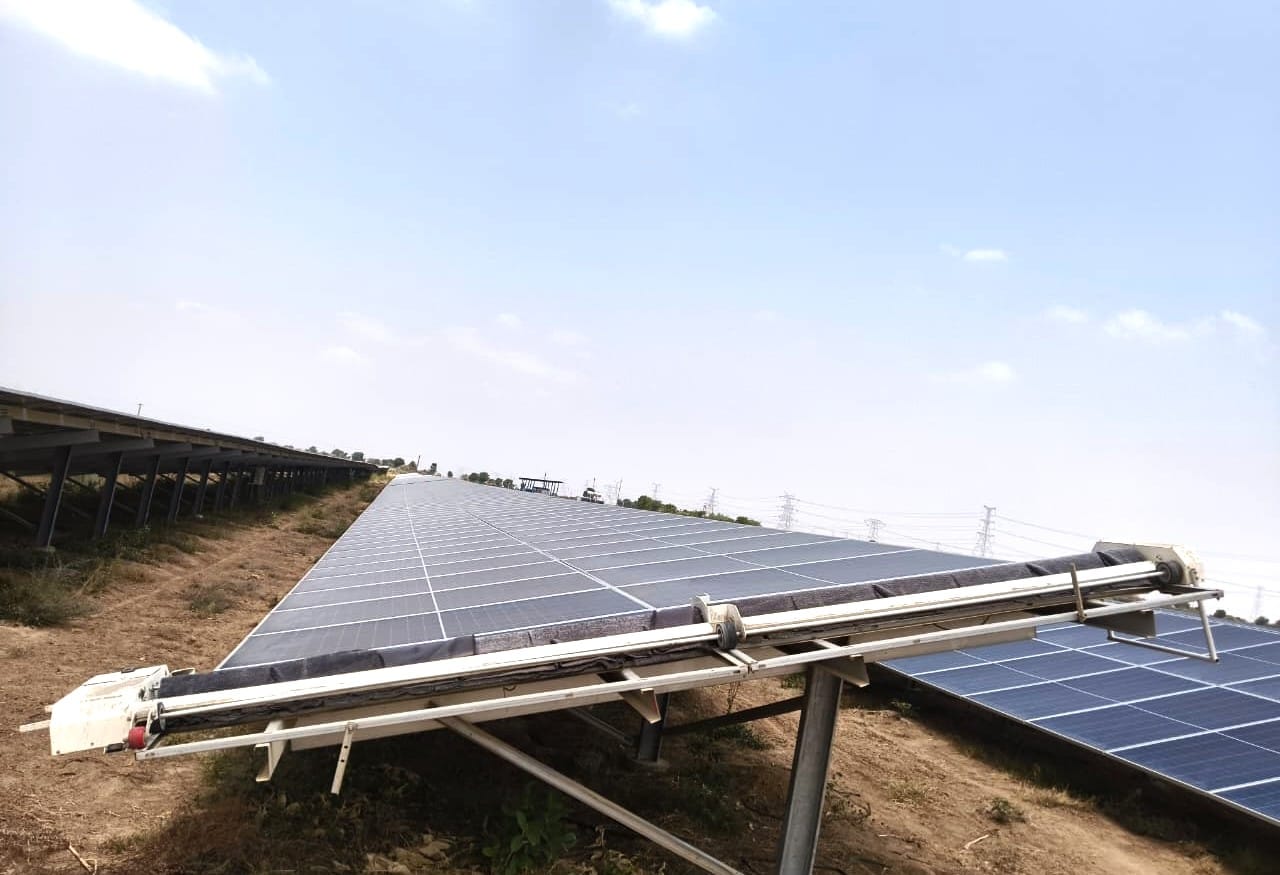
The 45 MW ground mount solar facility in Mangrol faced critical operational challenges due to high levels of regional soiling and the logistical burden of manual maintenance. Relying on traditional water-intensive cleaning methods resulted in inconsistent power output and increased operational overhead. To modernize plant maintenance and secure a more reliable generation profile, site management transitioned to a Capex-driven, waterless solar panel cleaning robot India strategy. This deployment utilized two NYUMA semi-automatic units to ensure consistent module surface cleanliness across the installation.
The transition to waterless cleaning has significantly improved site performance while eliminating the reliance on water for panel maintenance. This change successfully recovered 45 MWh per year in additional generation capacity. Furthermore, the robotic approach delivered immediate environmental benefits by saving 168,000 litres of water annually. By adopting this technology, the Mangrol facility has established a more sustainable and efficient maintenance framework that supports long-term energy production goals.
Environment and soiling at Mangrol
Regional Soiling Factors at the Mangrol Facility
The 45 MW ground mount array in Mangrol contends with specific atmospheric conditions that accelerate soiling rates. The regional topography experiences seasonal dust accumulation typical of the dry zones in the area. These particulates settle rapidly on solar modules during wind events, creating a persistent layer that degrades light transmission and lowers daily energy yield.
Because the Mangrol site lacks the infrastructure for consistent, large-scale water usage, manual cleaning often led to delays and irregular maintenance cycles. Without automated intervention, the panels would frequently reach a threshold of soiling that caused significant clipping in total energy production. The installation of two semi-automatic NYUMA robots allows the site team to manage these blocks strategically.
- Scheduled dry cleaning cycles mitigate the build-up of abrasive dust common in this region.
- Robot deployment ensures consistent module surface transparency throughout the peak sunlight months.
- Waterless operation preserves site-specific resources while maintaining high operational uptime.
By tailoring the cleaning frequency to local meteorological data, the site management effectively counters the impact of regional dust. This approach ensures the 45 MW plant maintains peak output without the logistical risks associated with traditional, water-heavy manual labor.
O&M before Taypro
Operational Struggles with Manual Cleaning and Water Scarcity
Before implementing Taypro technology at the 45 MW Mangrol site, the operations team relied on traditional manual cleaning methods. This approach created significant challenges, primarily driven by severe water scarcity in the region. Securing and transporting enough water for site-wide cleaning was both logistically complex and financially unsustainable.
Reliance on manual labor also introduced substantial audit gaps. Without a consistent cleaning schedule, panels frequently accumulated heavy dust layers that remained unaddressed for extended periods. This lack of uniformity resulted in significant energy generation losses and unpredictable performance metrics. The manual process was prone to human error, often leading to uneven cleaning coverage across the ground mount array.
- Dependence on manual labor led to inconsistent cleaning quality and periodic production clipping.
- Water shortages hindered routine maintenance, leaving panels vulnerable to prolonged soiling.
- Inaccurate record-keeping made it difficult to verify site performance or optimize cleaning intervals.
The transition to a robotic cleaning model addressed these pain points by introducing precision and efficiency to the site maintenance routine.
Fleet and deployment at 45 MW
Fleet Deployment and Procurement Strategy for the 45 MW Site
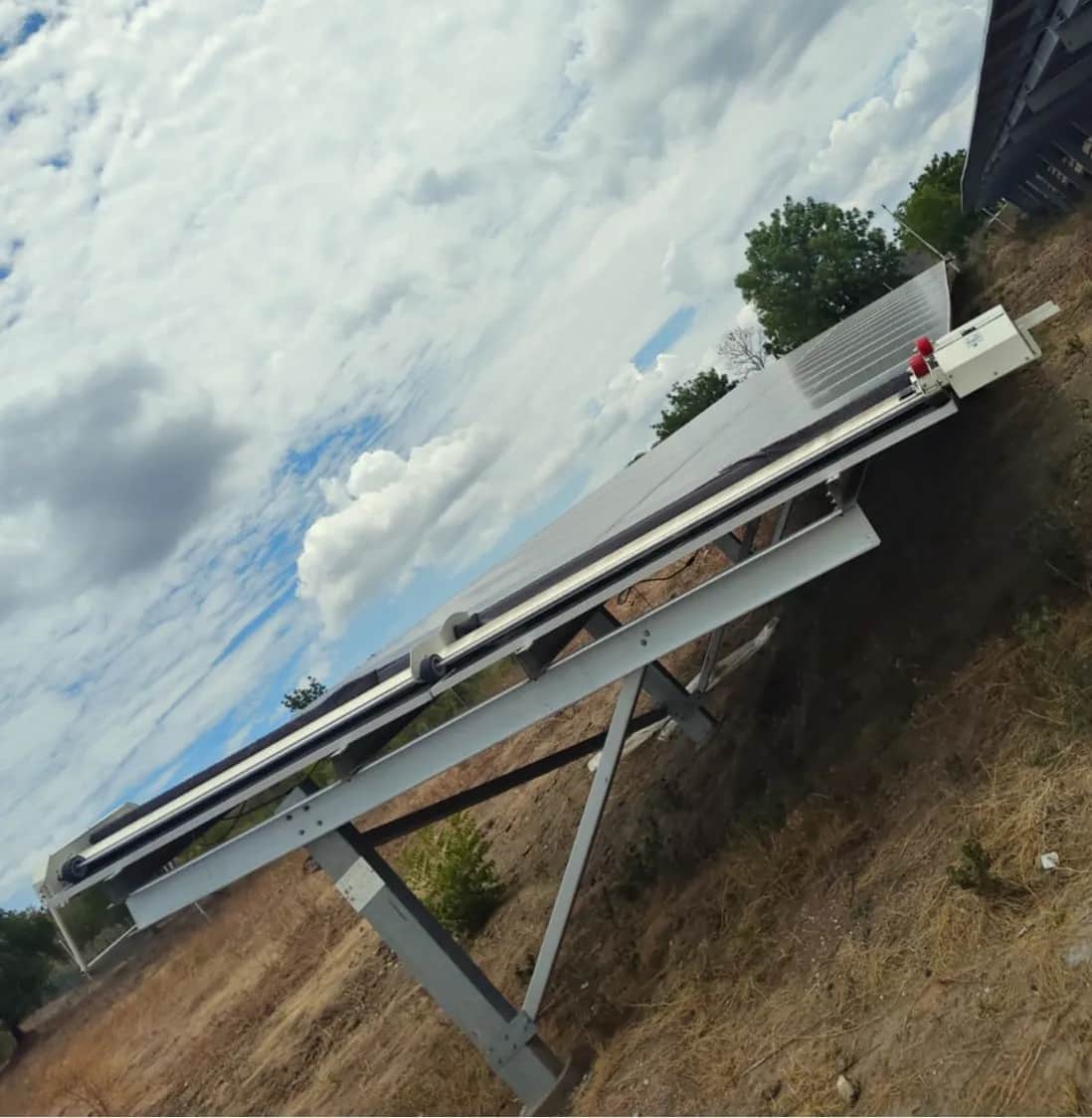
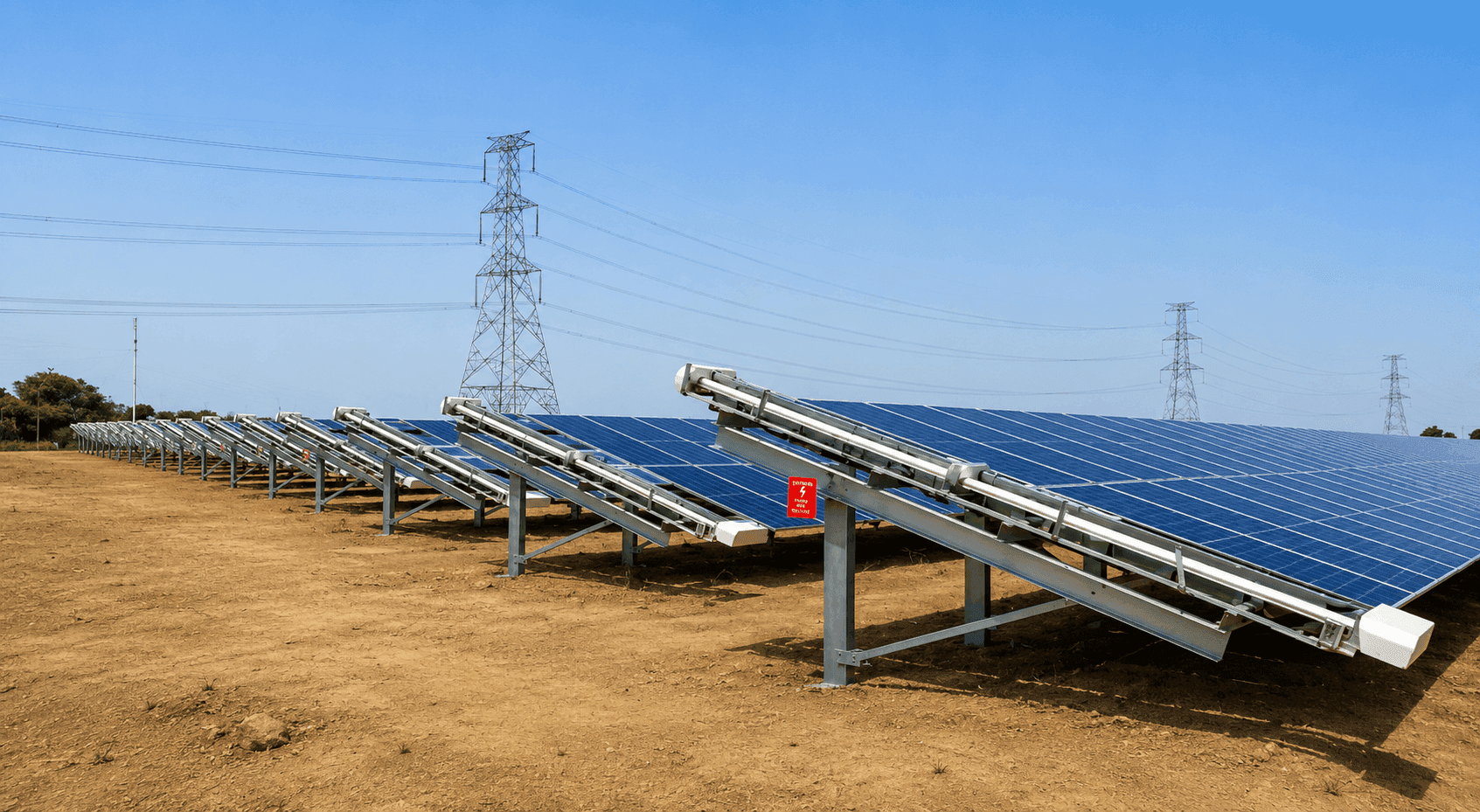
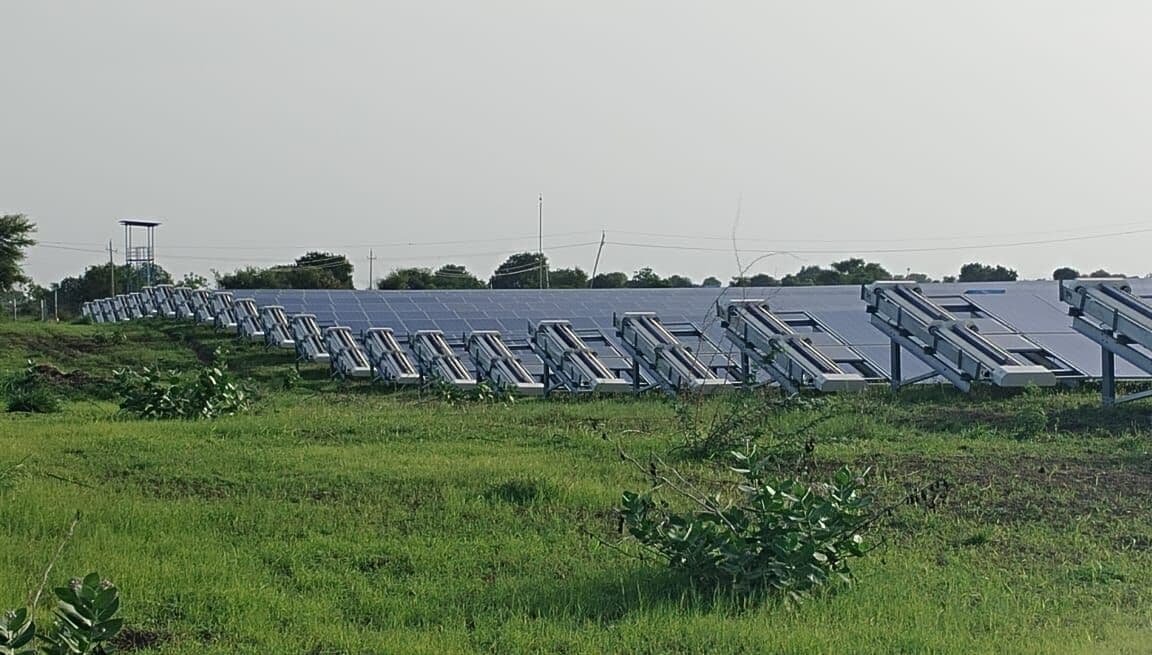
The 45 MW Mangrol ground mount facility utilizes a fleet of 2 HELYX semi-automatic robots to maintain its solar array. By adopting a Capex procurement model, the project stakeholders secured full ownership of the robotic equipment. This capital investment strategy aligns with the plant's long-term O&M requirements, allowing for immediate control over the deployment schedule without recurring service contract fees.
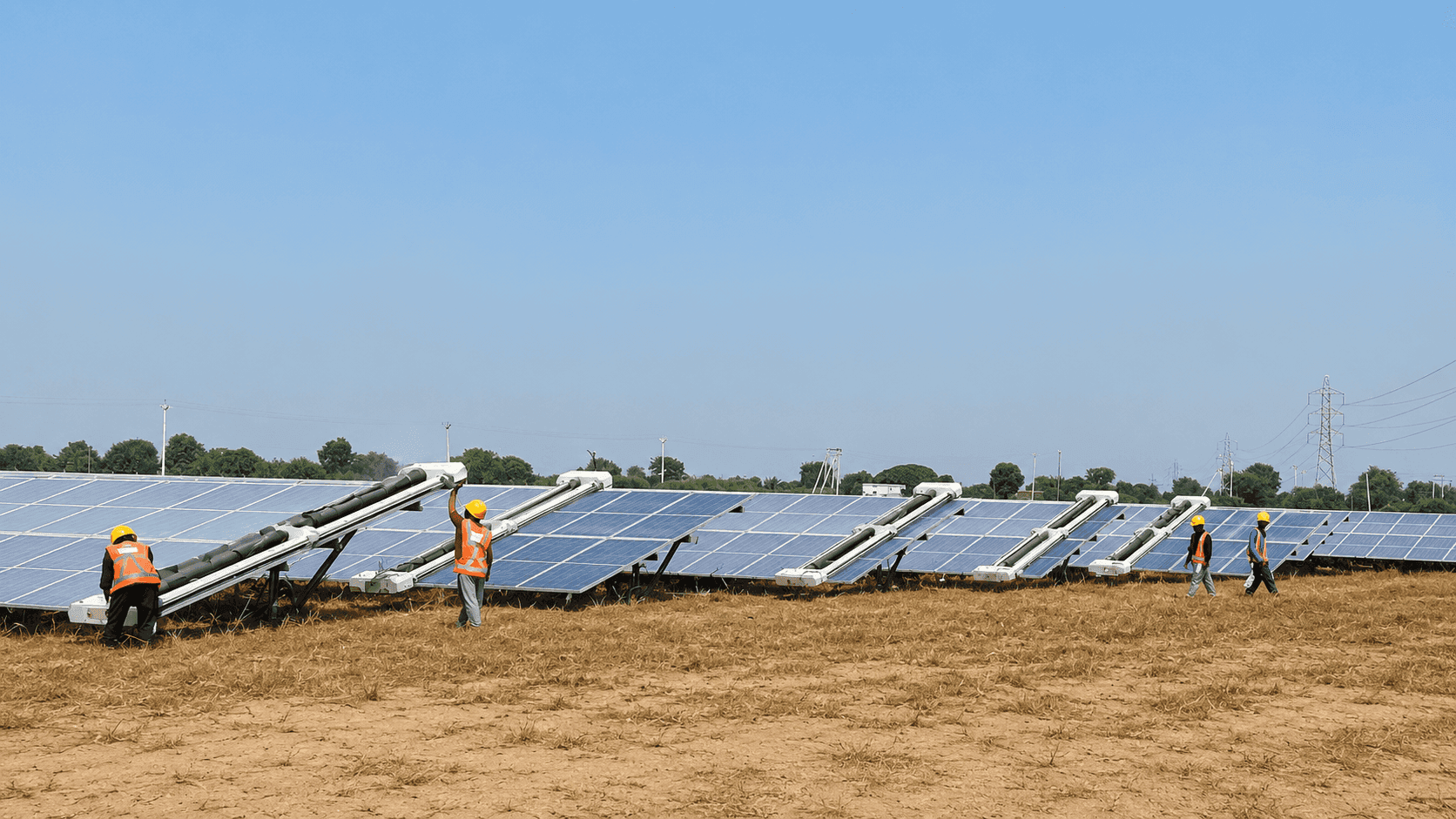
The HELYX system was selected for its versatility in managing distributed ground mount layouts. Because the units are semi-automatic, the on-site team facilitates their movement across the rows. This pick-and-place approach is optimized for the plant's specific terrain and layout, ensuring that all panels receive consistent maintenance.
- The fleet includes 2 HELYX units operating under a direct Capex ownership model.
- Robots are deployed in scheduled cycles, typically ranging from 3 to 10 dry cleaning passes per month.
- Commissioning focused on mapping site-specific row layouts to maximize the efficiency of the semi-automatic workflow.
- The deployment contributes to a significant annual reduction in water consumption and supports an increase in yearly energy generation.
Rigorous commissioning of the HELYX fleet ensured that the robots maintain safe and effective contact with the panels during every pass. By integrating this robotic layer, the Mangrol site has moved away from the logistical burden of manual cleaning. The current setup delivers a repeatable, high-efficiency cleaning standard that protects the site's total generation capacity.
Operations and monitoring
Optimizing Cleaning Cadence Through NECTYR-Led Accountability
The 45 MW Mangrol plant utilizes NECTYR to transition from reactive, manual cleaning schedules to a data-driven, inspection-led maintenance model. By integrating this digital operations layer, site managers gain clear visibility into cleaning performance, replacing inconsistent manual labor records with precise, verified logs of every robotic pass.
The operational framework for the 2 HELYX units is built around a structured cadence of 3 to 10 scheduled dry cleaning cycles per month. This frequency is determined by real-time soiling assessments and site inspections, ensuring robots are deployed exactly when needed to mitigate performance degradation. This targeted approach prevents unnecessary wear on equipment while maintaining optimal panel cleanliness across the 45 MW array.
- NECTYR provides centralized logging to verify that every cleaning cycle is completed according to the established site schedule.
- Site managers utilize inspection data to dynamically adjust the frequency of the 3 to 10 monthly dry cleaning passes.
- The operational strategy includes strict wind holds to protect the robots during extreme weather events.
- Automated reporting eliminates manual verification errors and simplifies SLA compliance for O&M teams.
The Mangrol site proves that robotic cleaning is not about continuous, daily washing myths. Instead, it relies on scheduled, high-efficiency waterless cycles managed by NECTYR to ensure consistent generation recovery throughout the year.
Results and impact
Quantifiable Operational Gains at the Mangrol Solar Site
The integration of the semi-automatic robotic cleaning solution at the 45 MW Mangrol ground-mount facility has successfully addressed the dual challenges of operational downtime and resource scarcity. By shifting away from manual cleaning, the site has achieved a substantial boost in annual energy generation. This improvement underscores the effectiveness of our waterless cleaning technology in recovering capacity that was previously lost to soiling-related degradation.
Beyond the direct increase in energy output, the site has realized significant environmental and logistical benefits. The robotic system eliminates the necessity for water-based cleaning, resulting in a considerable volume of water saved per year. This transition not only secures a sustainable maintenance path for the Mangrol project but also ensures consistent, high-efficiency cleaning that protects the asset’s performance baseline.
- The deployment has delivered a marked annual increase in additional clean generation across the site.
- Site management has successfully eliminated water usage for panel maintenance, conserving resources annually.
- Robotic efficiency has stabilized energy yields, ensuring that the 45 MW plant operates closer to its theoretical maximum potential.
- The CAPEX investment has provided a reliable, long-term solution for maintaining module transparency in the Mangrol climate.
Peer comparison and planning checklist
Peer Comparison and Implementation Planning
The 45 MW Mangrol deployment reflects a strategic shift in Indian utility-scale operations. When compared to a similar 50 MW fixed-tilt site utilizing a fully automatic NYUMA fleet, the Mangrol project demonstrates the efficiency of targeted semi-automatic deployments for specific site topographies. While the fully automatic site benefits from daily scheduled waterless cleaning cycles, the Mangrol site optimizes its two-robot semi-automatic configuration to achieve an estimated 3–10 dry cycles per month per row. This approach mirrors the performance seen in comparable distributed-block projects, where pick-and-place mobility effectively balances CAPEX with yield recovery. This project contributes to Taypro’s nationwide success, which now encompasses over 5 GW of deployed capacity and 150+ live sites across India.
- Audit existing soiling patterns to determine the optimal number of robots for your specific site block layout.
- Select a cleaning frequency that aligns with regional dust accumulation rates and operational budget targets.
- Integrate NECTYR fleet monitoring to centralize log data and track performance metrics across all active cleaning shifts.
- Coordinate site access and path clearance to ensure smooth inter-row movement for semi-automatic robot transitions.
- Schedule routine maintenance checks to ensure hardware longevity and consistent brush contact with solar modules.