Executive summary
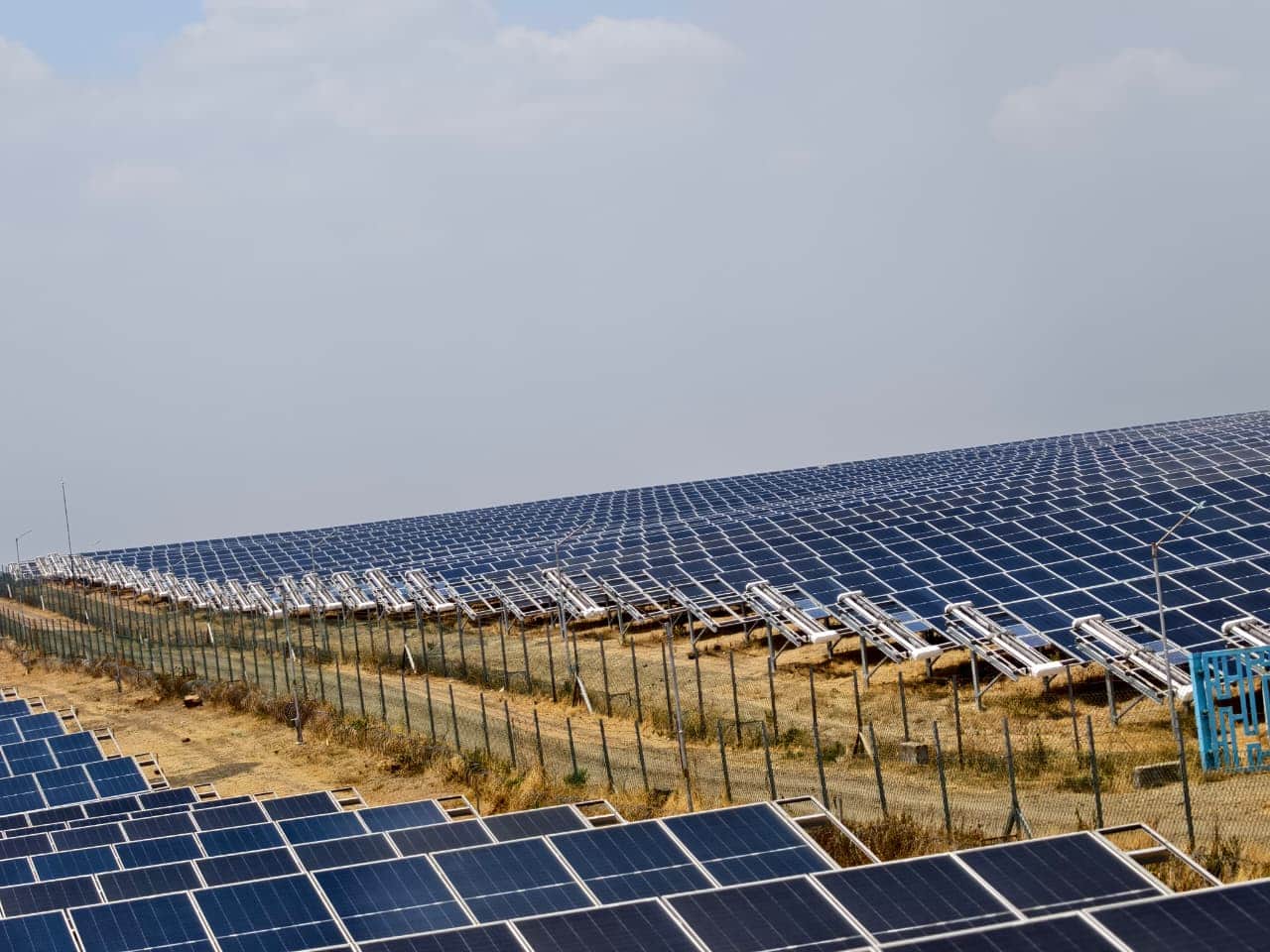
The 50 MW Maya solar plant is located in Maya, Gujarat. This ground-mount project faces very harsh environmental conditions. The site deals with two distinct types of dust. It faces heavy, cementitious dust from nearby quarries. It also faces light, sticky coastal film dust. These particles cause rapid and uneven degradation across the solar array. This uneven soiling makes maintenance planning very difficult. It also causes large shifts in the Performance Ratio (PR) every month.
To solve these issues, Taypro implemented a hybrid robotic fleet. This was a Capex-funded project. The fleet includes 44 fully automatic GLYDE units. It also includes 50 semi-automatic HELYX units. The GLYDE robots perform daily waterless cleaning cycles. This maintains a steady energy output. The HELYX robots handle scattered blocks through scheduled dry cleaning. This deployment has seen massive success. The project recovers 1.88 GWh of additional generation every year. It also saves 7 million litres of water annually. Finally, it reduces CO2 emissions by 930 metric tons each year.
Environment and soiling at Maya, Gujarat
Managing Dual-Dust Profiles at the Maya 50 MW Project
The 50 MW Maya project sits in a unique environment in Gujarat. The site deals with a dual-soiling profile. First, heavy cementitious dust comes from local quarrying. This dust is abrasive and builds up quickly. Second, coastal film dust arrives via regional winds. This film is light and very sticky. This combination creates a highly uneven soiling pattern across the array.
The impact is not even across the site. Strings near haul roads and quarries degrade much faster. These high-traffic areas see rapid performance drops. This volatility causes inconsistent energy yields for the plant. It creates a constant struggle for asset managers. They must address frequent month-to-month Performance Ratio (PR) changes.
For large IPP portfolios, these fluctuations are a major problem. They make financial reporting very complex. It is hard to separate weather impacts from cleaning quality. This obscures the true revenue impact of seasonal dust. The Taypro solution fixes this through a smart hybrid strategy. The 44 GLYDE units handle the main array. They perform daily waterless cleaning to fight heavy dust buildup. Meanwhile, the 50 HELYX robots manage scattered blocks. They follow a set schedule to handle the lighter film dust. Every event is logged through the NECTYR portal. This gives finance teams the transparent data they need. They can now explain generation performance with ease.
O&M before Taypro
Operational Hurdles: Labour Constraints and Audit Gaps in Gujarat
Before Taypro arrived, the Maya project used traditional cleaning methods. These methods could not keep up with the environment. The plant faced serious operational limits. Groundwater is scarce in the Gujarat region. Managing water tanker fleets is also very difficult and expensive. These logistics often caused delays. Wet cleaning cycles were frequently skipped during the peak dust months.
The facility dealt with two main O&M problems:
- Operational Inconsistency: Manual cleaning teams could not reach every row often enough. This led to deep and uneven soiling. Strings near quarry roads suffered the most. Their performance dropped much faster than the rest of the plant.
- Financial Audit Gaps: Asset managers lacked granular and digital cleaning records. This made it hard to explain monthly PR changes to investors. Manual logs were often incomplete or inaccurate. This created a gap in the financial audit trail. It was hard to prove that cleaning spend actually recovered revenue.
Fleet and deployment at 50 MW
Layered Defense: A Hybrid Fleet Strategy for the 50 MW Maya Plant
Taypro used a layered defense strategy at the Maya project. This approach overcomes the variable soiling of Gujarat. The fleet uses two different technologies. This helps manage both dense arrays and fragmented blocks. By combining automatic and semi-automatic systems, the site protects its Performance Ratio (PR). Every panel receives the correct level of attention.
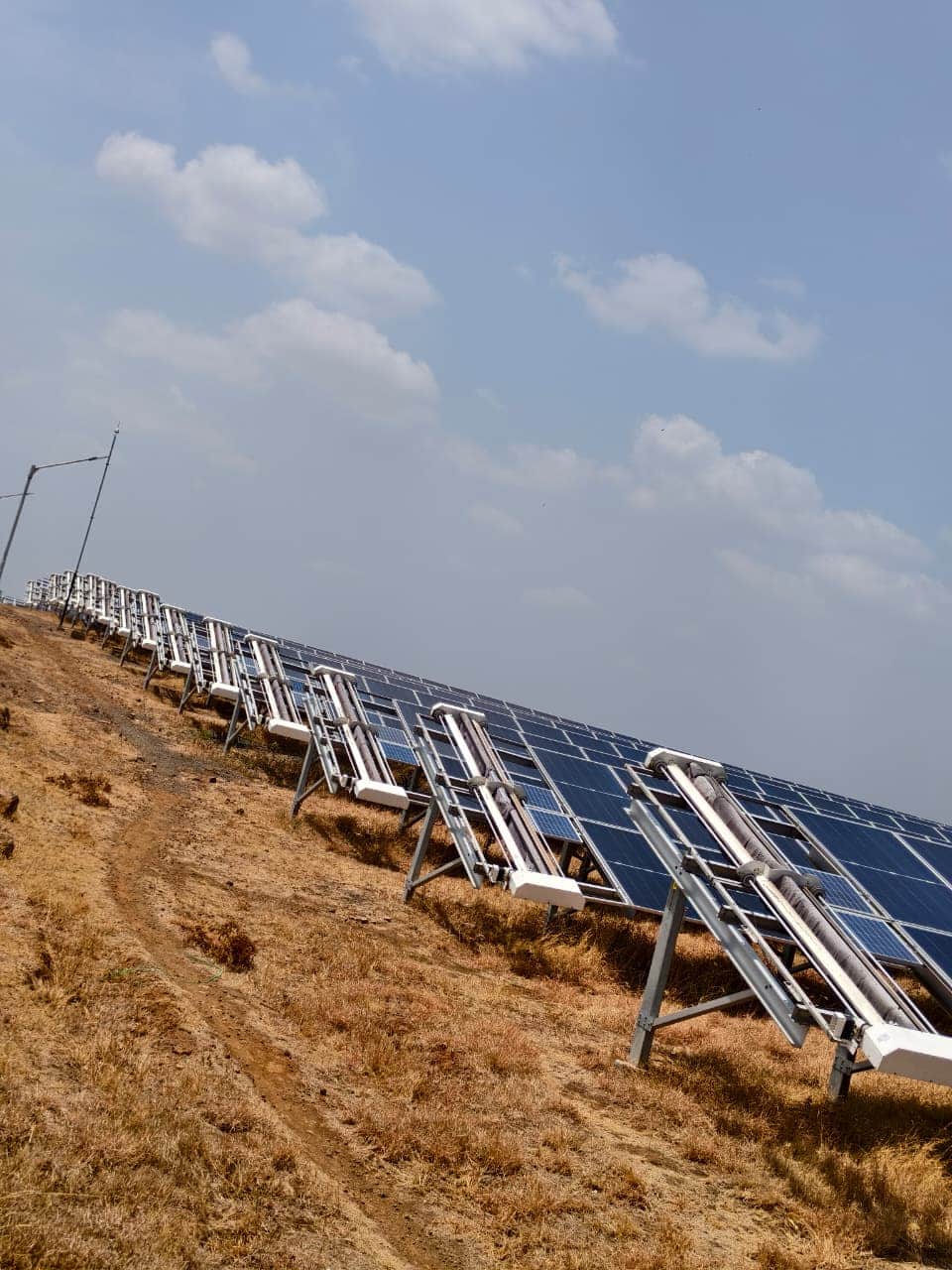
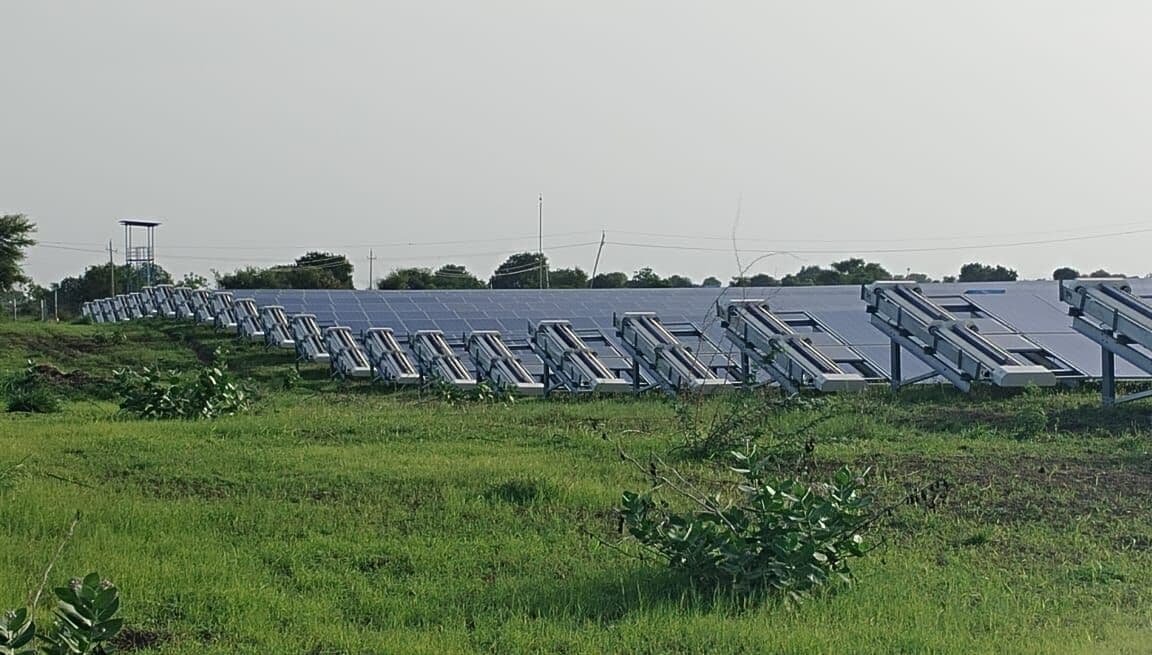
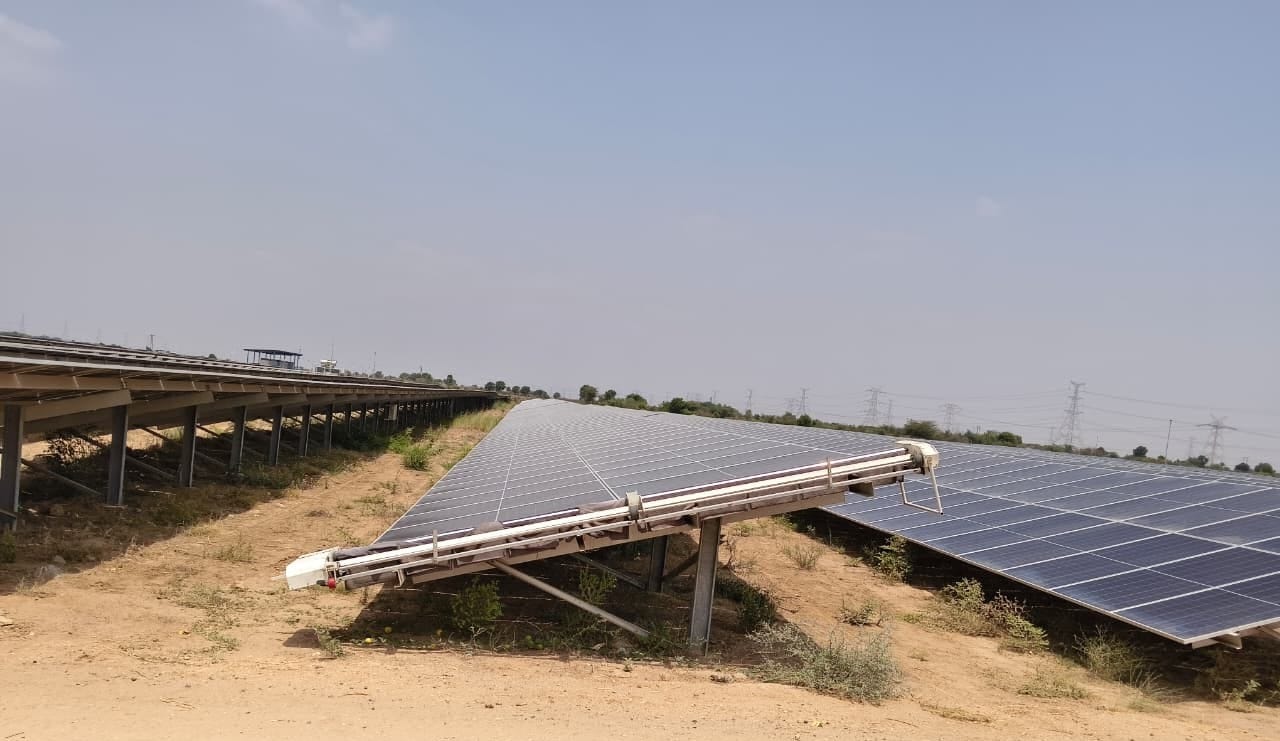
The core of the fleet is 44 GLYDE units. These provide daily waterless cleaning for fixed-tilt rows. They use patented dual-pass microfiber technology. This method safely removes both heavy dust and light films. It requires no water at all. This automation removes the risk of human error. It ensures consistent energy recovery in high-traffic areas of the plant.
The site also manages distributed blocks. These blocks are often broken up by roads or infrastructure. For these, the site uses 50 HELYX semi-automatic robots. These units work on a scheduled rotation. They typically perform 3 to 10 dry cleaning cycles per month. This manages moderate soiling effectively. The entire fleet connects to the NECTYR operations portal. NECTYR logs every single cleaning event in real time.
This digital audit trail is vital for the Maya project. It allows managers to prove maintenance success to finance stakeholders. By choosing a CAPEX procurement model, the project gains stability. It no longer relies on the unpredictable availability of water tankers. This shift has led to huge water savings and higher energy yields.
Operations and monitoring
Optimizing Cleaning Cadence for Diverse Soiling Profiles
The Maya project uses a mixed fleet strategy. This is designed for Gujarat's specific dust profiles. A single cleaning schedule would not work here. Some areas need daily cleaning, while others need less. A rigid schedule would cause either over-cleaning or energy loss.
Taypro uses a dual-cadence model. This is managed through the NECTYR operations portal. The 44 GLYDE units are on high-density arrays. They execute daily waterless cleaning cycles. This maintains maximum uptime for the plant. This consistency prevents the PR degradation caused by heavy dust. It keeps the plant at peak performance every day.
The 50 HELYX units follow a different model. This is an inspection-led accountability model. They service scattered blocks on a specific cycle. They perform 3 to 10 dry cleanings per month. This schedule is based on real-time NECTYR telemetry. This targeted approach saves time and equipment wear. It still ensures all performance benchmarks are met.
Automation is the key to this success. NECTYR provides an immutable log of all activities. The plant can now provide a clear audit trail. This helps finance teams see the direct value of the robots. They can see how every movement contributes to the 1.88 GWh of recovered energy. The data proves that the maintenance budget is working.
Results and impact
Results and Impact: Stabilizing PR at the Maya Plant
The Taypro robotic fleet has changed the Maya solar project. It replaced unpredictable manual washing with a data-driven system. The site has successfully stabilized its Performance Ratio (PR). It can now handle both cementitious dust and coastal film. The GLYDE units provide daily cleaning. The HELYX fleet provides flexible maintenance for scattered strings. This ensures high-soiling zones near roads always get cleaned. High-risk areas no longer drag down the total plant output.
The move to autonomous cleaning delivers these major benefits:
- Generation Recovery: Daily cleaning of high-risk arrays recovers huge amounts of energy. This stabilizes the PR even during the dustiest months.
- Resource Preservation: The site no longer depends on local groundwater. It also avoids the costs of water tanker logistics. This saves millions of litres of water every year.
- Operational Compliance: NECTYR creates a digital log for every cycle. This makes it easy to explain PR changes to finance teams and asset managers.
- Environmental Stewardship: The system reduces carbon emissions. It does this by removing the need for heavy transport used in manual cleaning.
Peer comparison and planning checklist
Peer Comparison and Operational Planning
The 50 MW Maya project is part of the Gujarat solar corridor. It sits near the 300 MW Bachau and 250 MW Neneva sites. The larger Bachau and Neneva sites use standard large-scale deployments. Maya is different because it uses a sophisticated mixed-mode strategy. It balances 44 automatic GLYDE robots with 50 semi-automatic units. This helps Maya deal with specific local dust types. It manages both coastal film and inland particulates. This setup allows the plant to match cleaning intensity to the local soiling level. Larger portfolios often struggle to do this without expensive manual labor.
Use this checklist to optimize your own site deployment:
- Check your site-specific soiling density first. This helps you decide the ratio of automatic to semi-automatic robots.
- Integrate NECTYR connectivity during the commissioning stage. This ensures all cleaning cycles are logged for your audits.
- Identify your high-maintenance zones. Prioritize daily automatic cycles for areas near haul roads and quarries.
- Build a waterless cleaning schedule. Align this with your local climate and dust patterns.
- Evaluate your procurement model. Compare CAPEX and OPEX against your expected energy recovery targets.
- Perform a technical site survey. This verifies that the robots work with your mounting structures and tilt.