Executive summary
solar panel cleaning robot Rajasthan, The 277.5 MW ground-mount solar installation in Nathdwara, Rajasthan, faced major operational hurdles. Its location near the Thar Desert creates a very harsh environment. Arid conditions and frequent dust storms create heavy soiling on the solar panels. These storms bring fine particulate matter that settles on the modules. This layer of dust reduces the energy output of the plant. Downwind rows often show a drop in the Performance Ratio (PR). This drop happens even before the dust is visible to the eye.
In this water-scarce district, traditional cleaning is difficult. Using water tankers for manual wet-wash cleaning is very expensive. It is also highly unreliable for a plant of this scale. Manual cleaning crews struggle to keep up with the rapid dust accumulation. They also cannot provide the block-level verification needed for modern O&M. Without proof of cleaning, plant managers cannot accurately track energy losses or justify maintenance spend to stakeholders.
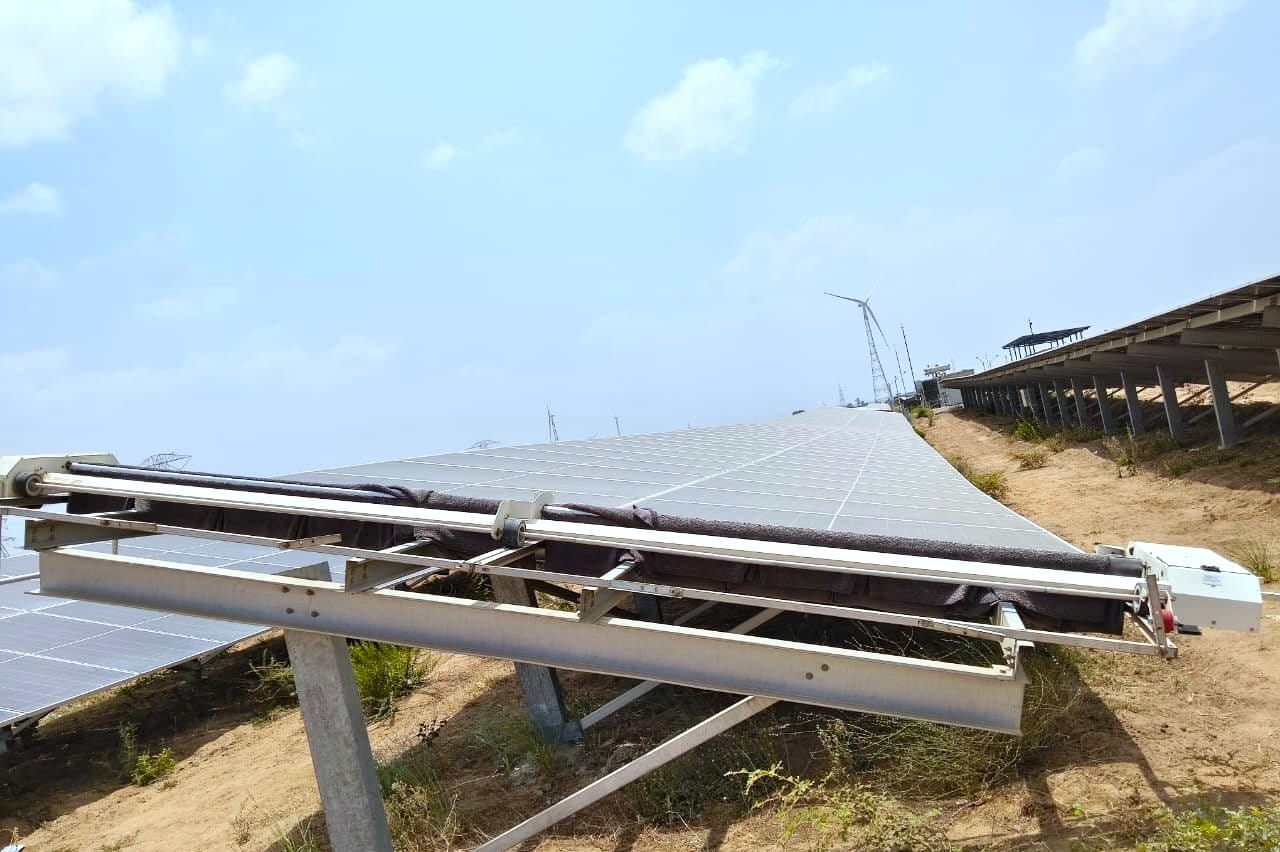
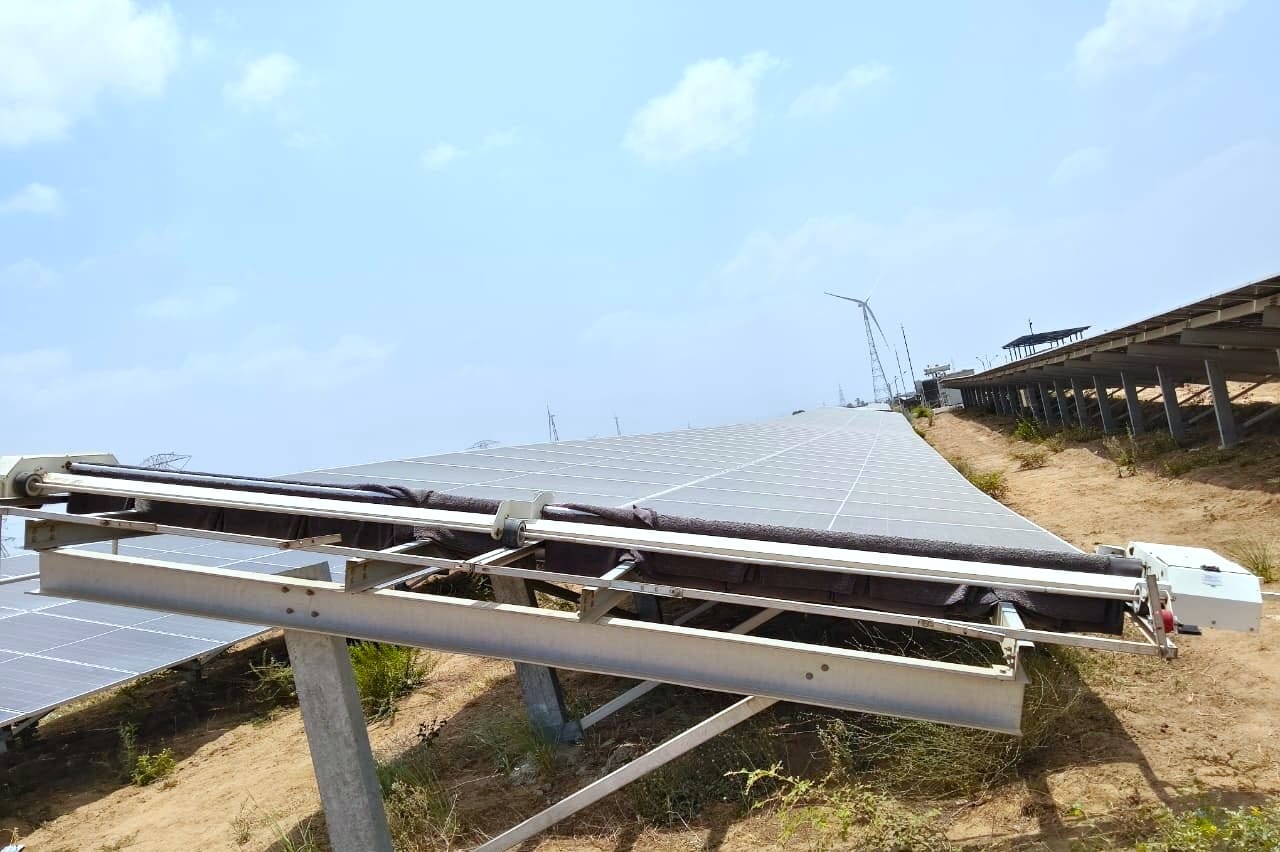
To solve these issues, the plant implemented a Capex-focused strategy. They deployed three HELYX semi-automatic robots. This system allows for precise cleaning across scattered plant blocks. The robots perform scheduled waterless dry cleaning cycles. The site typically runs 3 to 10 dry cycles per month. This frequency changes based on the local dust levels. This transition has achieved great results. The facility saves 1 million litres of water annually. It also recovers 277.5 MWh of additional solar generation every year. By using the HELYX pick-and-place method, the Nathdwara site maintains high yields through reliable and verifiable cleaning.
Environment and soiling at Nathdwara
Environmental Context and Thar-Edge Soiling Dynamics
The 277.5 MW Nathdwara facility is located in a high-risk zone. This area sits at the edge of the Thar Desert. The regional environment is very arid. The site experiences frequent and intense dust storms. These storms move fine silicates and desert particulates across the solar arrays. Because the site is at the desert threshold, these microscopic particles create a persistent film on the modules. This film is often abrasive and hard to remove.
The accumulation of dust is rarely uniform across the plant. Wind patterns cause rapid buildup on the downwind rows. This creates a significant problem for plant performance. The Performance Ratio (PR) often dips long before the panels look dirty. This "hidden soiling" makes it hard to manage the plant with visual checks alone. Managers need data to see the real impact of the dust. Unlike inland agricultural dust, these desert particles are often highly abrasive. They can cause micro-scratches if handled with incorrect wet-wash methods. By using waterless PBT brushes, the site mitigates surface degradation while maintaining clarity.
Managing this site requires a smart maintenance strategy. A generic regional plan is not enough for this location. The intensity of the dust makes manual cleaning very difficult. First, the dust returns too quickly after a standard wash. Manual labor cannot maintain the required cleaning frequency across 277.5 MW. Second, the scale of the plant makes it impossible to verify cleaning quality manually. You cannot be sure every block is clean without digital tools.
Water logistics add another layer of complexity. Rajasthan is a water-scarce state. Transporting water tankers to the plant is very costly. It also makes the supply chain unreliable. If a tanker is delayed, the cleaning schedule fails. This leads to lost energy production. By using a robotic deployment, the plant avoids these hurdles. The current framework uses the NYUMA and HELYX systems for consistent, waterless maintenance. This ensures the modules stay clear despite the airborne dust. It effectively removes the need for heavy, expensive water-based cleaning cycles.
O&M before Taypro
Operational Hurdles and Manual Cleaning Constraints
Before integrating the robotic fleet, the Nathdwara facility relied only on manual cleaning. This approach created many operational bottlenecks. The plant is a massive 277.5 MW ground-mounted array. It was physically impossible for manual crews to maintain a steady schedule. The rapid dust accumulation in this arid location was simply too fast for human workers. As a result, the plant suffered from major performance dips between cleaning cycles.
The reliance on manual labor also created verification gaps. Site managers struggled to confirm that every block was cleaned to a high standard. Manual crews do not provide digital proof of their work. Without block-level completion proof, it was impossible to track cleaning quality. Managers could not connect specific cleaning tasks to solar yield recovery. This lack of transparency meant that soiling losses stayed hidden for too long, impacting the plant's bankability and reporting accuracy.
Logistical failures made these challenges even worse. Because the district lacks water, the project faced high costs for wet-wash tankers. Coordinating many tankers for a multi-hundred-MW asset is a massive task. The supply chain for water was often unreliable. This made it hard to plan regular maintenance. By removing the need for water, the project addressed these systemic failures. The shift to a robotic model replaced inefficient labor with a scalable, data-driven system. This ensures consistent output across the entire 277.5 MW site.
Fleet and deployment at 277.5 MW
Fleet Deployment and Procurement for 277.5 MW Scale
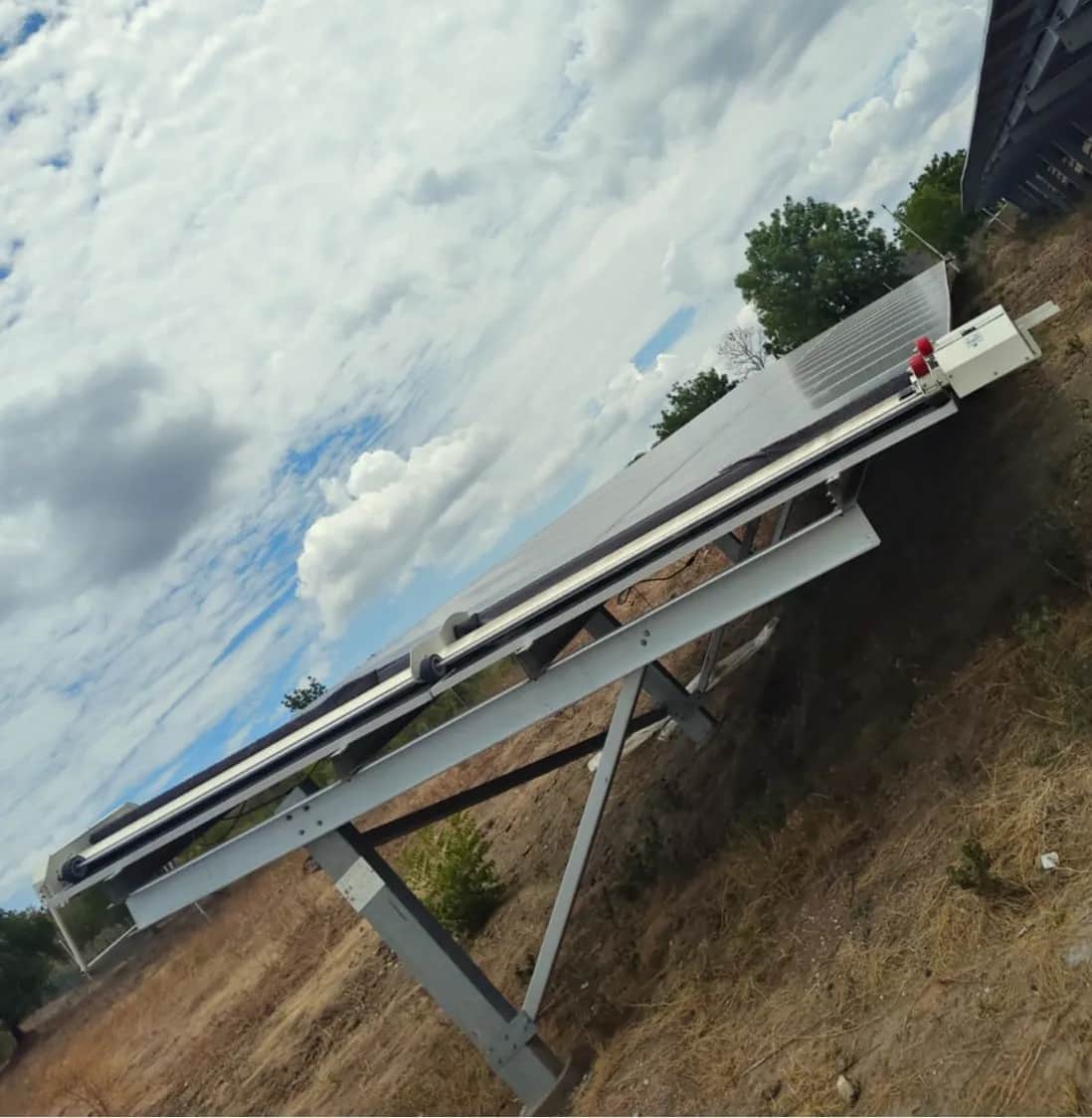
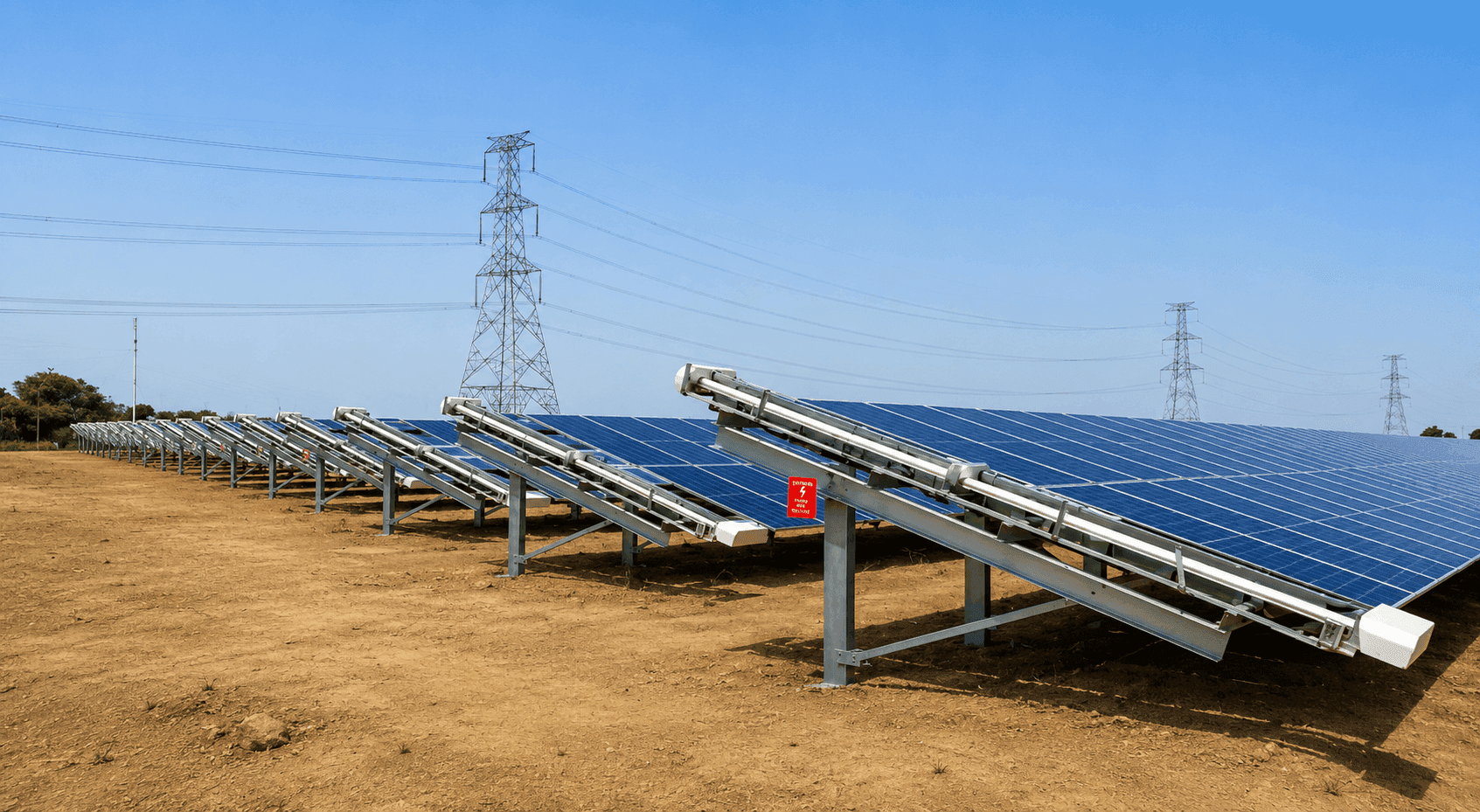
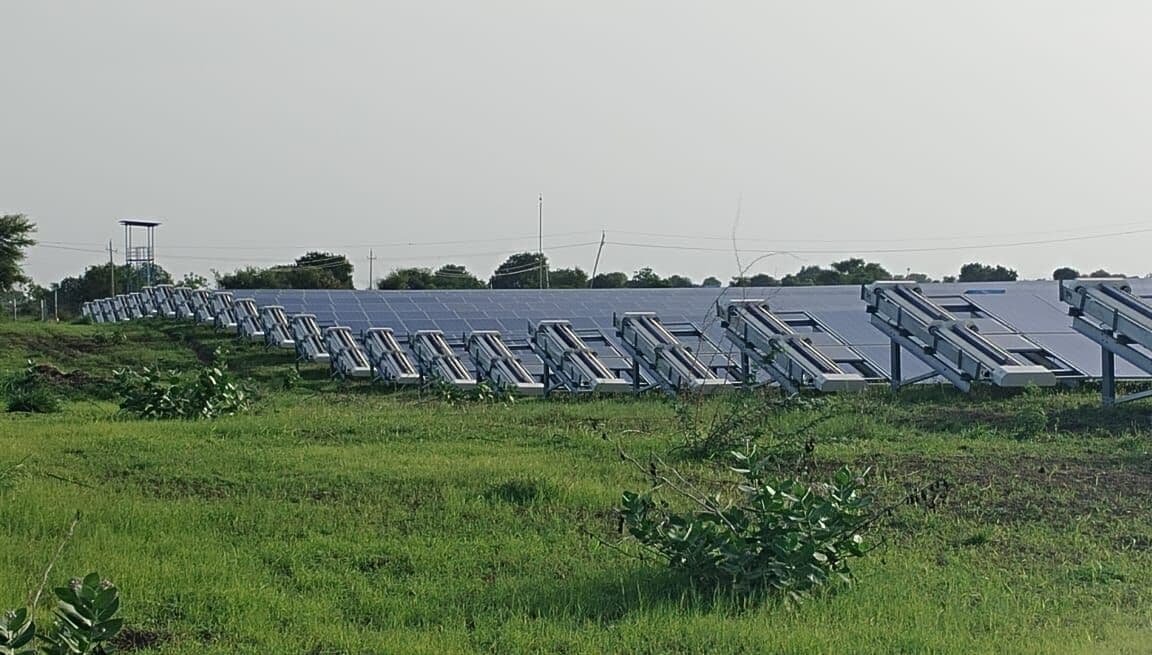
To manage the 277.5 MW array in Nathdwara, the project uses three semi-automatic HELYX units. This deployment model focuses on long-term value. The site uses a Capex procurement strategy. By investing in these high-performance robots, the owner gains full control. This approach transitions the site from unpredictable manual cleaning to a verified maintenance regime. This regime is specifically designed for the harsh Thar-edge conditions.
- Systematic Fleet Mix: The fleet uses three semi-automatic HELYX robots. These were chosen for their robust PBT brush technology. They are ideal for maintaining consistent cleaning intervals across large, fixed-tilt blocks.
- Procurement Model: A Capex approach was adopted. This allows the site owner to own the robotic infrastructure. It ensures the 277.5 MW asset remains under direct control for the long term.
- Operational Cadence: Because the fleet is semi-automatic, the site follows a set schedule. They perform 3 to 10 dry cleaning cycles per month. This frequency is adjusted based on real-time soiling and wind levels.
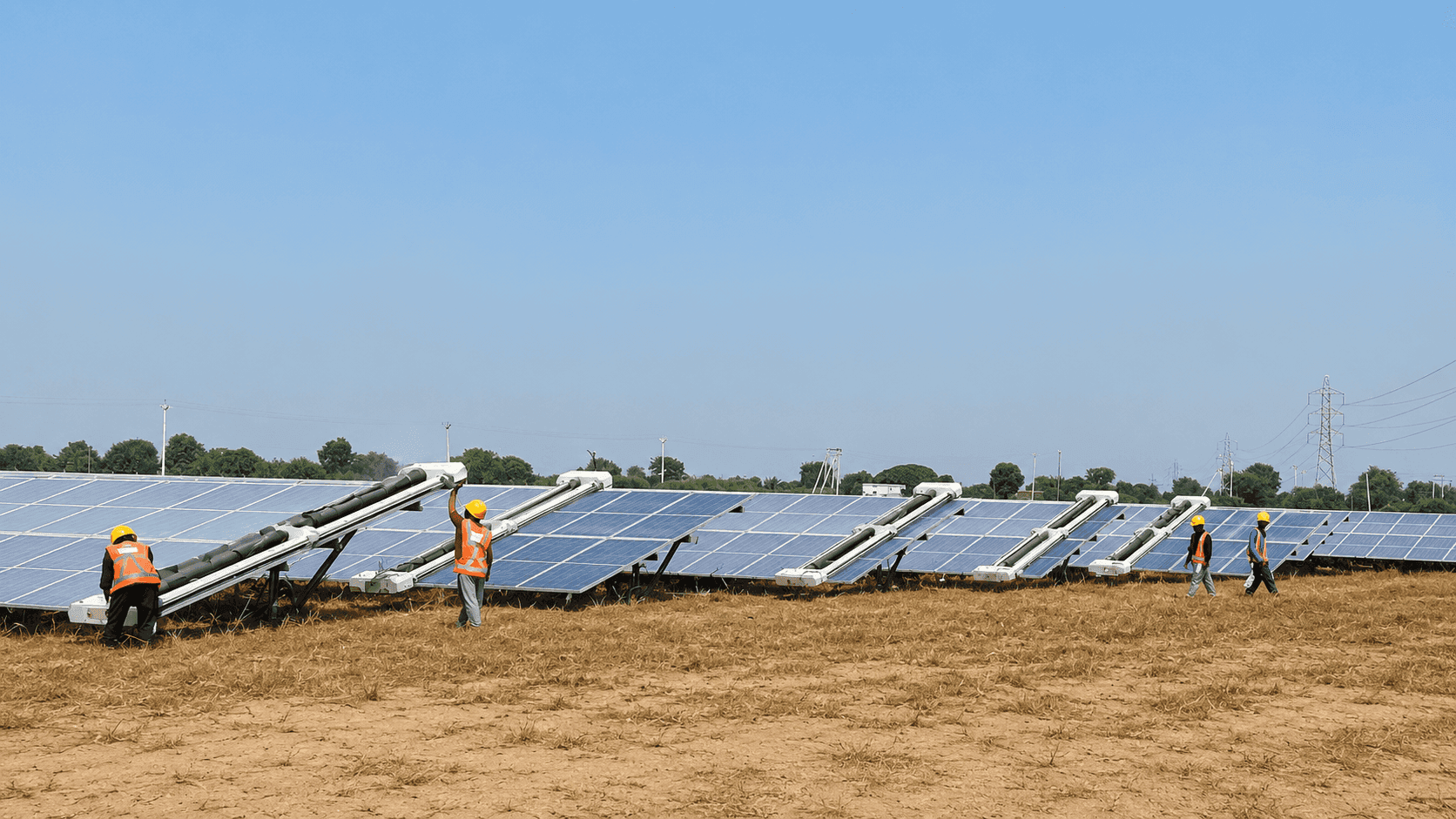
- Deployment Logic: The HELYX robot was selected specifically for its portable, pick-and-place capability. In a 277.5 MW facility, solar blocks are often separated by access roads or buffer zones. HELYX allows operators to move between these scattered areas quickly. This reduces the downtime associated with transporting heavy equipment across the site.
- Commissioning Emphasis: The initial deployment focused on the existing O&M workflow. Teams mapped the high-traffic soiling zones first. This ensures the robots recover solar yield where dust causes the biggest PR declines.
This robotic deployment is the backbone of the site's maintenance. It successfully saves 1 million litres of water every year. Beyond saving water, the fleet recovers 277.5 MWh of extra solar energy annually. The robots maintain a clean surface that resists fine, abrasive dust. This shift has eliminated the risks of manual water-wash crews. It provides a reliable and repeatable solution for the entire 277.5 MW project footprint.
Operations and monitoring
Operations and Monitoring: Driving Accountability in Rajasthan
At the 277.5 MW Nathdwara project, NECTYR governs all operations. NECTYR is the central monitoring system for the robotic fleet. Manual cleaning lacks verifiable proof of work. In contrast, NECTYR provides full visibility into the status of every robot. This system ensures that supervisors can see every completed task. They can verify that the cleaning schedule is being met. This is critical for fighting the fine, abrasive dust of the Thar desert.
- Verified Cleaning Cycles: The site follows a schedule of 3 to 10 dry cleaning cycles per month. NECTYR logs every completed row. This gives supervisors objective proof of performance. It replaces the need for inconsistent manual reports.
- Wind-Driven Operational Protocols: Rajasthan is known for severe dust storms. The site uses NECTYR to manage wind-related risks. When wind speeds are too high, the robots are docked safely. This protects the equipment while maximizing uptime during calm periods.
- Accountability Through Data: The transition to a robotic fleet removes the risk of missed rows. Each robot deployment is timestamped. This ensures that high-soiling zones always receive the attention they need.
- Lender-Ready Reporting: NECTYR does not just log tasks. It provides a digital audit trail for lenders and asset owners. This level of transparency is essential for high-capacity utility plants. It bridges the gap between physical maintenance and financial reporting.
This data-driven approach removes the guesswork from O&M. By pairing HELYX PBT technology with NECTYR monitoring, the plant maintains 95%+ to 99%+ dust removal per cycle (by robot model). This method ensures that every dry cleaning cycle is optimized. It reliably recovers solar yield while conserving 1 million litres of water every year.
Results and impact
Results and Impact: Sustaining Yield in Rajasthan
The HELYX robotic fleet has changed how the Nathdwara facility operates. The site has moved from reactive maintenance to a proactive model. Before, the plant reacted to dust after performance dropped. Now, the plant prevents losses through regular, scheduled cleaning. By replacing unreliable water tankers with a semi-automatic system, the site has stabilized its output.
- Water Conservation: The project eliminates the need for heavy water-dependent logistics. This results in massive annual water savings. This supports the sustainability goals of the site in a water-scarce region.
- Yield Recovery: Maintaining cleaner module surfaces has unlocked extra energy. The site recovers 277.5 MWh of additional generation per year. This directly improves the return on investment for the owners.
- Operational Efficiency: The system provides a verifiable, block-level completion record. This audit trail is something manual crews could never achieve. Managers can now confirm that all 277.5 MW of the array is clean.
- Long-term Asset Health: The use of waterless PBT cleaning reduces the risk of mineral scaling caused by hard water. This preserves the anti-reflective coating on the modules for the duration of the plant's life.
The Nathdwara project proves that PBT brush technology is effective. It also shows that the NECTYR platform creates a scalable O&M framework. The robotic cleaning cycles have stabilized the plant's energy output. This provides a long-term solution for managing soiling in large Rajasthan installations. The approach removes logistical complexity and ensures maximum uptime for the entire solar farm.
Peer comparison and planning checklist
Peer Comparison and Planning Checklist
The Nathdwara deployment follows the high standards seen in our Rajasthan portfolio. It is similar to the 360 MW Akhadana and 300 MW Bhadla sites. These regional peers also deal with the volatile Thar-edge environment. They all face fine particulate matter and sudden dust storms. While the 360 MW Akhadana site uses a large automated fleet, the 277.5 MW Nathdwara site uses a precise HELYX strategy. This approach is optimized for the specific block density and logistics of the Nathdwara array. It mirrors the success of the 150 MW Chhayan plant in balancing cost and cleaning frequency.
Successful robotic integration in Rajasthan requires careful planning. Use this checklist to align your O&M strategy with Taypro standards:
- Verify Site Connectivity: Ensure NECTYR can reach all blocks. You need consistent communication with the central dashboard.
- Assess Row Geometry: Check the clearance at the end of each row. This supports safe and efficient robot movement.
- Review Soiling Profiles: Analyze your historical PR drop data. Determine which rows need the most frequent cleaning.
- Logistics Coordination: Move away from water-heavy tanker reliance. Plan your maintenance around autonomous, waterless operations.
- Performance Baseline: Establish a clear PR baseline before you deploy robots. This helps you quantify the MWh recovery.
- Procurement Alignment: Decide between Capex or Opex models early. This influences your long-term asset management and cash flow planning.