
Executive summary
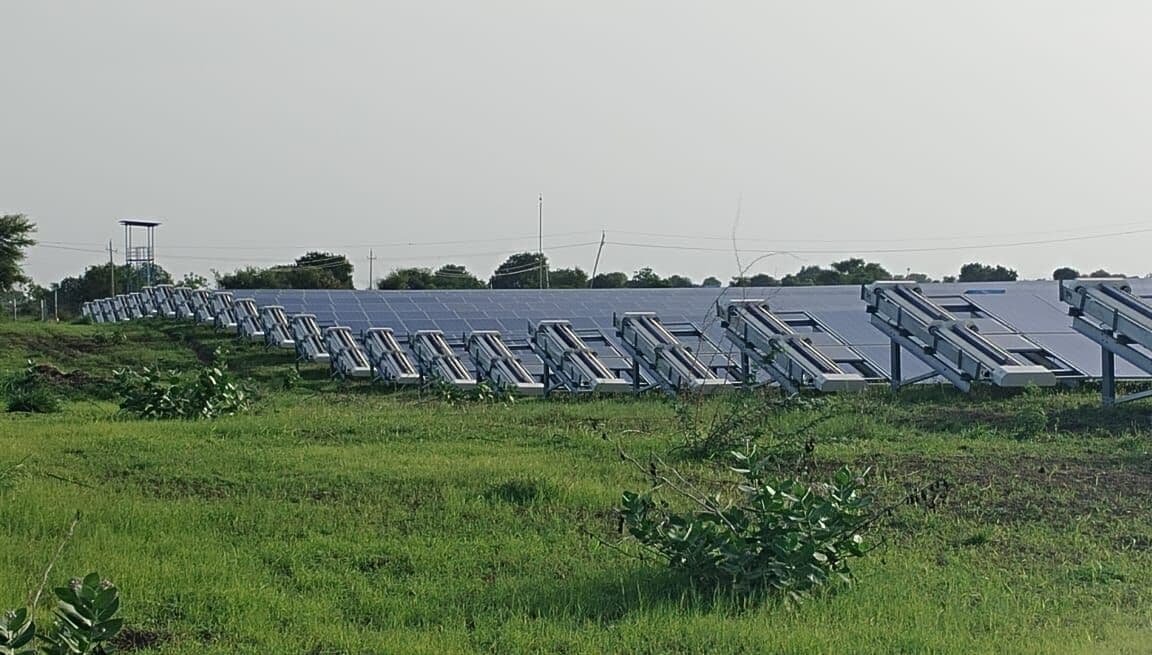
This case study details a large-scale robotic solar panel cleaning Gujarat strategy. The project is located at a 937.5 MW ground-mount facility in Rajkot. The site faced difficult operational hurdles. These issues came from very uneven soiling patterns. The area has two main types of dust. First, there is heavy inland cementitious dust. Second, there is a thin coastal film residue. This combination creates uneven degradation across the solar array. Problems were most severe near the site haul roads and quarry-adjacent strings. This uneven dust caused inconsistent power output. Such inconsistency makes it hard for finance teams to model plant performance.
In addition to dust, the site faced water scarcity. Finding enough groundwater was difficult. Using water tankers for manual cleaning was also a logistical challenge. These issues prevented the consistent maintenance needed for peak performance. To solve these problems, Taypro deployed a mixed-fleet solution. We installed 51 GLYDE automatic robots for primary cleaning. We also added three semi-automatic HELYX robots for targeted cleaning in difficult zones. The GLYDE units follow a strict daily waterless cleaning schedule. This ensures clear modules and reliable energy harvest. This deployment has recovered 937.5 MWh of additional generation every year. The NECTYR fleet management system provides detailed cleaning logs. This data helps the O&M team explain month-to-month PR variance to finance stakeholders. Cleaning is now a data-backed operational investment rather than an unpredictable expense.
Environment and soiling at Rajkot, Gujarat
Environment and soiling at Rajkot, Gujarat
The 937.5 MW Rajkot facility operates in a very complex environment. The site faces two different types of pollutants. These pollutants come from both inland and coastal sources. The first type is heavy, cementitious dust. This is common in inland Gujarat. This dust settles into a hard, stubborn layer on the panels. It can accelerate module degradation if not removed quickly. The second type is airborne residue from coastal wind patterns. This creates a thin, sticky film. This film binds other dust particles to the glass surface.
This hybrid soiling profile leads to uneven performance across the site. Robotic cleaning must account for these specific variations. Some areas of the plant get dirty much faster than others. For example, strings near unpaved haul roads face heavy grit. Strings near local stone quarries also experience rapid soiling. Without automated cleaning, these localized power drops happen frequently. This unevenness compromises the overall Performance Ratio (PR) of the entire portfolio.
Operational logistics are also hard due to regional resource scarcity. Groundwater is very limited in this part of Gujarat. Many sites must rely on water tankers for cleaning. However, tanker-based cleaning creates a major logistical bottleneck. It is difficult to scale this method to meet high cleaning demands. The specific challenges at the Rajkot site include:
- Cementitious inland dust that requires mechanical action for removal.
- Coastal film residue that needs consistent, non-abrasive cleaning.
- High-traffic haul roads that cause rapid and non-uniform soiling.
- Extreme water scarcity that makes wet cleaning methods unreliable.
To manage these risks, we use the GLYDE system. It performs daily waterless cleaning cycles. This prevents the dust from hardening into a cement-like layer. By automating the process, the O&M team keeps the modules clear. This method avoids the waste of water used in wet washing. The NECTYR system provides a precise audit trail. This allows management to link cleaning events to actual power yield. It makes financial reporting much more accurate.
O&M before Taypro
Managing Soiling and Resource Constraints in the Rajkot Portfolio
Operating a 937.5 MW solar portfolio requires very tight control. This is necessary to meet the financial reporting needs of IPPs. Before using the robotic fleet, the site used manual wet cleaning. This method was often unpredictable. The site relied heavily on groundwater and water tankers. This created friction during peak dust months. The local water supply could not keep up with the plant's needs. Scaling manual cleaning to such a large site was nearly impossible.
The facility faced two main threats from dust. First, inland cementitious dust created a thick layer. Second, coastal film residue created a sticky surface. These pollutants caused localized power drops across the array. It was hard to isolate these drops without clean logs. Manual cleaning lacked a verified schedule. Because of this, site managers struggled to explain PR variance to stakeholders. It was difficult to tell if a power drop was a module fault or just dust.
The transition to robotic cleaning addressed these three gaps:
- Resource Dependence: The site was too dependent on groundwater and tankers. This made it vulnerable during dry, dusty months.
- Audit Deficiencies: Manual crews could not provide high-frequency data. They could not provide the logs needed for PR analysis.
- Operational Inconsistency: There was no standardized routine. Strings near roads and quarries suffered more than others.
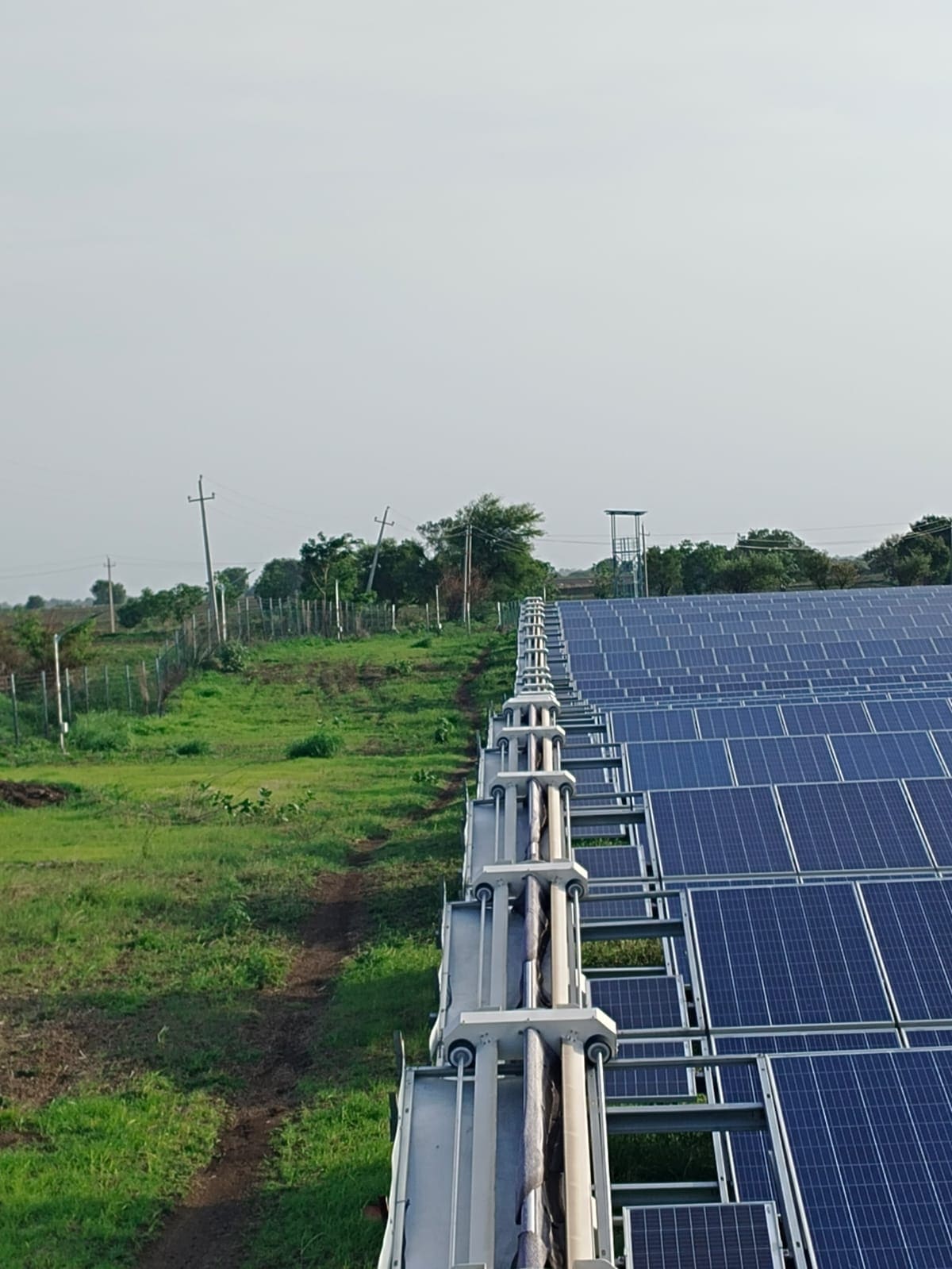
The shift to a fully automatic fleet changed everything. The O&M team now has full control over site hygiene. The 51 GLYDE robots and 3 semi-automatic units provide an autonomous solution. Every cleaning event is now recorded and verifiable. This meets the high standards of large-scale IPP management.
Fleet and deployment at 937.5 MW
Fleet and deployment at 937.5 MW
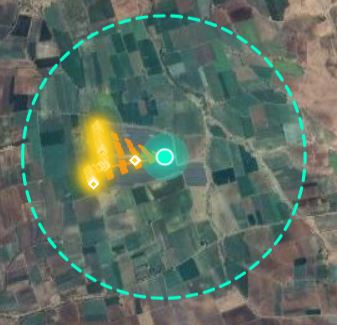
The 937.5 MW Rajkot site uses a mixed-mode deployment strategy. This strategy addresses the various soiling profiles in Gujarat. We combine autonomous and semi-autonomous hardware. This provides a scalable solution for different parts of the project. Some areas are high-density arrays. Other areas are scattered or more difficult to reach.
The core of the fleet is 51 GLYDE robots. These units perform daily waterless cleaning cycles. They cover the primary ground-mount arrays. The GLYDE robots use patented dual-pass technology. This includes both airflow and microfiber cleaning. This method is perfect for removing cementitious dust and coastal film. These units are fully automatic. They are integrated with the NECTYR fleet portal. This ensures a consistent cleaning cadence. It also provides the data that finance teams need to monitor PR variance.
We also deployed 3 semi-automatic HELYX robots. These are used for scattered arrays. They are also used for sections with difficult topography. These units work on a pick-and-place basis. They execute 3 to 10 scheduled cleaning cycles per month. This flexible approach is very efficient. It allows operators to target specific strings. We focus on rows near haul roads and quarries. These areas experience faster soiling. Using HELYX ensures these high-risk zones stay optimized. It does this without needing a permanent robot in every low-yield zone.
The project follows a Capex procurement model. This gives the asset owner full control. They control the maintenance schedule and data reporting. During commissioning, we focused on seamless integration. The robots work with the existing ground-mount structure. No modifications to the solar modules are required. This dual-layered strategy makes robotic solar panel cleaning in Gujarat highly efficient. It results in measurable generation recovery across the entire 937.5 MW portfolio.
Operations and monitoring
Operations and monitoring for a 937.5 MW portfolio
Managing a 937.5 MW site requires more than just hardware. It requires a transparent operational framework. The plant uses the NECTYR fleet portal for this purpose. NECTYR bridges the gap between cleaning and finance. It logs every single cleaning event. This creates an immutable digital audit trail. Asset managers can use this data to explain PR fluctuations. They can provide precise facts to stakeholders instead of just estimates.
The cleaning cadence is matched to the Rajkot environment. The 51 GLYDE robots perform daily waterless cleaning cycles. This prevents cementitious dust from hardening on the glass. It also stops coastal film from building up. Daily cleaning is essential for this site. It prevents the steady degradation seen with infrequent cleaning. Some people think daily cleaning is unnecessary. However, in high-soiling regions, daily removal is the only way to stabilize PR levels.
We maintain high accountability through inspection-led monitoring. NECTYR flags any issues with robot performance. It also detects potential mechanical problems. This allows for fast, targeted interventions. The system also manages wind holds. It automatically pauses operations during high-speed wind events. This protects both the hardware and the solar panels. This combination of daily cleaning and digital oversight is powerful. It ensures the Rajkot facility achieves maximum energy recovery. Cleaning is now a predictable and high-performance asset.
Results and impact
Results and Impact of Robotic Solar Cleaning
The Taypro GLYDE fleet has transformed the Rajkot facility. It replaced the old manual wet-washing processes. Manual cleaning was often stopped by water scarcity. It was also slowed down by tanker logistics. By moving to a waterless autonomous schedule, the site is now independent. It no longer relies on inconsistent water supplies. The project now has a reliable operational backbone. This system works regardless of regional water availability.
The most important impact is the increase in energy recovery. This recovery comes from removing stubborn dust layers. The robots remove both cementitious and coastal dust. Because the robots clean every day, the site avoids cumulative losses. In many plants, delayed cleaning leads to massive energy drops. The Rajkot site avoids this. The shift has also smoothed out the month-to-month PR variance. This stability is critical for financial planning and stakeholder reporting.
Key achievements include:
- Energy Recovery: Achieved significant annual generation recovery by stopping soiling degradation.
- Water Conservation: Eliminated annual water consumption for cleaning. This helps solve local water scarcity.
- Operational Shift: Moved from an intermittent manual task to a reliable, automated daily schedule.
- Logistical Relief: Reduced the need to coordinate water tankers during dusty months.
- Data Transparency: Created a digital audit trail via NECTYR for precise performance verification.
By using 51 GLYDE robots, the project ensures every module is serviced. This proactive approach keeps the plant at optimal efficiency. It proves that automated cleaning is a core driver of performance for large portfolios.
Peer comparison and planning checklist
Peer Comparison and Operational Planning
The 937.5 MW Rajkot facility is much larger than previous regional projects. For example, the 250 MW Neneva project set a baseline for robotic integration. However, the Rajkot site uses a much more complex mixed-fleet strategy. It must manage much larger array blocks. This is different from the 50 MW Maya installation. The Maya project uses a smaller, simpler fleet. In contrast, Rajkot must handle complex dust profiles across a massive footprint.
Large-scale portfolios need precise documentation. You must correlate cleaning frequency with PR variance. By using 51 GLYDE robots for daily cleaning, Rajkot maintains high consistency. Manual cleaning or small-scale deployments cannot match this level of control. This high-capacity deployment provides a repeatable cleaning cadence. It allows finance teams to forecast revenue with more accuracy. This project sets a new benchmark for large IPP management in Gujarat.
Deployment Planning Checklist
- Assess Soiling: Study site-specific dust profiles. Determine the right mix of GLYDE robots and manual support for outlier strings.
- Plan Space: Ensure end-row space is available for CRADYL docking stations. This helps with autonomous row-to-row transfers.
- Connect NECTYR: Integrate NECTYR connectivity during commissioning. This establishes real-time logging and audit trails.
- Check Water Logistics: Review groundwater and tanker availability. Identify areas where dry cleaning offers the best ROI.
- Maintain Brushes: Set a regular maintenance schedule for microfiber brushes. This ensures consistent cleaning during high-dust seasons.