
Executive summary
The 97.612 MW solar facility in Ratlam, Madhya Pradesh, faced significant operational hurdles due to the volatile environmental conditions of Central India. The region's semi-arid climate triggers sharp, unpredictable pre-monsoon soiling swings, where fine dust accumulation rapidly degrades module efficiency after dry spells. Previous attempts to manage these losses through episodic manual washing proved ineffective, as the site struggled with complex logistics, including high-volume water tanker requirements and inconsistent performance across its hundreds of hectares.
To stabilize the site’s Performance Ratio (PR), Taypro deployed an OPEX-based semi-automatic cleaning regime centered on the HELYX robotic system. By transitioning from reactive manual labor to a scheduled, waterless cleaning cycle, the plant now benefits from consistent maintenance tailored to local dust patterns. This deployment typically facilitates 3–10 dry cleaning cycles per month, weather and access permitting, effectively mitigating soiling losses while eliminating the need for water transport and minimizing manual site intervention.
Environment and soiling at Ratlam, Madhya Pradesh
Environmental Challenges and Soiling Dynamics in Ratlam
The 97.612 MW site in Ratlam experiences the distinct environmental profile of the Central India semi-arid belt. This region is defined by significant temperature fluctuations and high-frequency soiling swings. Particularly during the pre-monsoon season, fine, abrasive dust particles circulate rapidly across the landscape. Once these particles settle on the module surface, they form a stubborn layer that drastically reduces light transmittance and overall plant yield.
Managing this accumulation at such a large scale presented significant logistical challenges. The site's previous dependency on episodic manual washing was unsustainable for several reasons:
- Logistical strain of coordinating long-distance water tanker routes.
- Ineffective coverage across hundreds of hectares using manual labor.
- High water consumption and the associated risks of runoff management.
- Difficulty in stabilizing Performance Ratio (PR) amid rapid dust re-accumulation.
Unlike coastal or humid environments where salt spray or moisture creates a caked film, the Ratlam site faces high-velocity dry dust accumulation that demands a persistent maintenance strategy. The shift to a waterless, semi-automatic cleaning regime ensures that the cleaning frequency is decoupled from the resource-intensive requirements of traditional washing. By deploying the HELYX robotic fleet, the site now maintains a consistent cleaning cadence of 3–10 dry cycles per month. This approach effectively keeps pace with the local dust cycle, protecting the plant against the sharp efficiency drops typical of this arid geography.
O&M before Taypro
Overcoming Manual Cleaning Logistical Failures in Ratlam
The 97.612 MW Ratlam facility operates within the challenging semi-arid belt of Madhya Pradesh. Before transitioning to a robotic solution, the plant relied entirely on episodic manual cleaning. This traditional approach struggled to manage the sharp, unpredictable soiling swings caused by regional dust storms and frequent dry spells.
Manual operations created significant logistical and financial bottlenecks:
- High operational costs due to complex, long-distance water tanker logistics.
- Unreliable Performance Ratio (PR) stability caused by the inability to maintain coverage across hundreds of hectares.
- Audit gaps stemming from inconsistent manual cleaning logs and poor oversight of team deployment.
- Resource-intensive water requirements and the associated difficulty of managing site runoff.
Manual crews could not achieve the necessary cleaning cadence to keep pace with fine dust accumulation. This failure led to frequent dips in energy generation, particularly during the critical pre-monsoon period. Episodic washing proved insufficient, as dust re-accumulation rates far outpaced the speed of manual deployment. By integrating HELYX robots, the facility shifted from labor-intensive, reactive cycles to a structured maintenance model. This transition effectively eliminated water dependency and provided the reliable, consistent cleaning frequency required to protect the site against significant soiling losses.
Fleet and deployment at 97.612 MW
Fleet Deployment and Commissioning at the 97.612 MW Ratlam Site
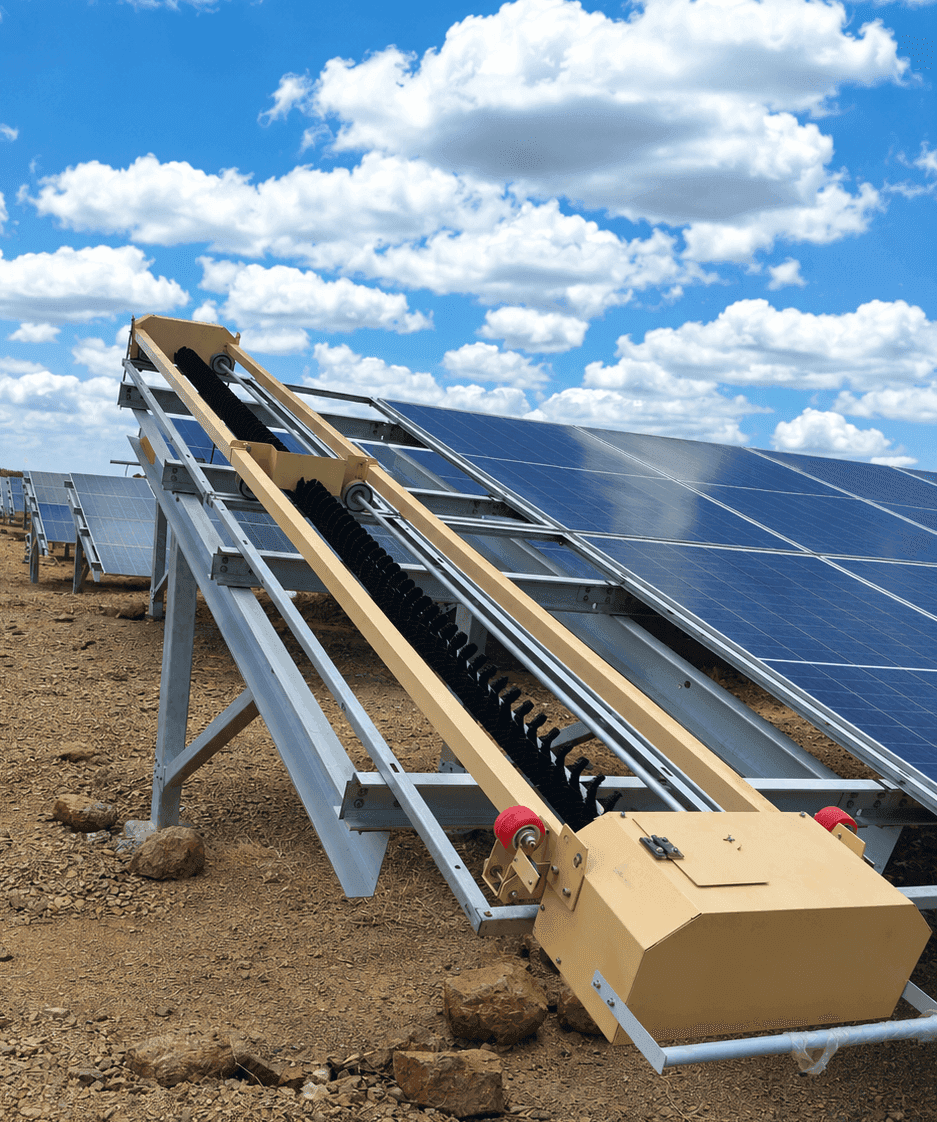
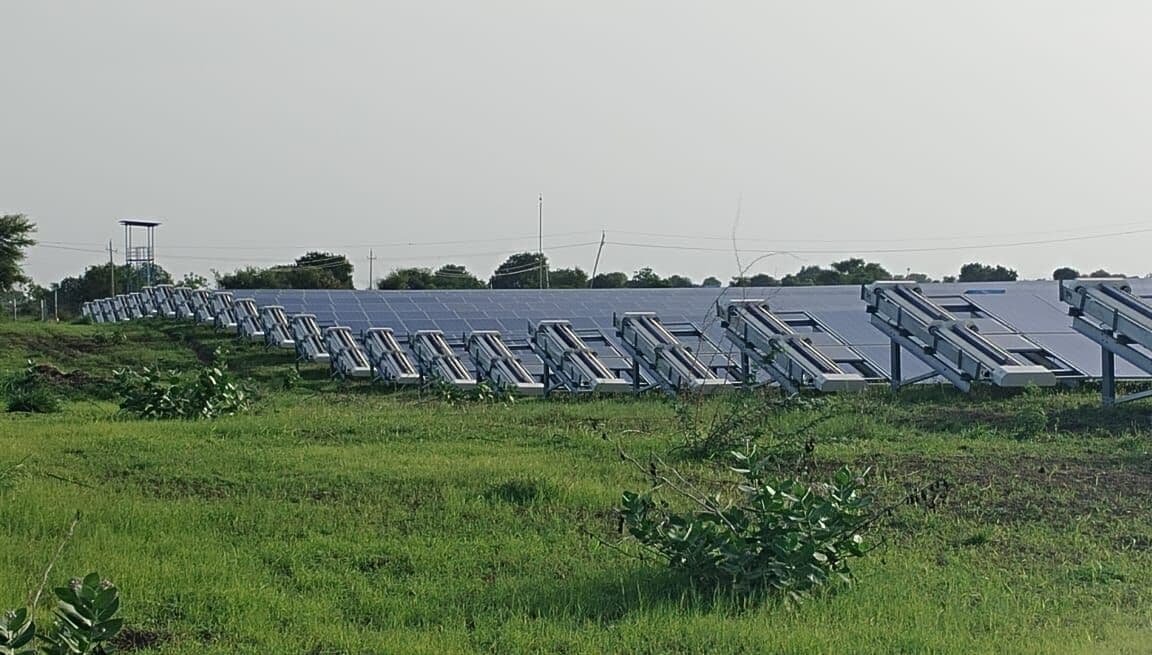
The 97.612 MW Ratlam facility deployment focuses on a flexible, semi-automatic cleaning architecture designed for the region’s distributed topography. To address the persistent challenges of fine dust accumulation and logistics, the fleet consists of HELYX robotic units. This procurement model utilizes an OPEX framework, allowing the project to scale cleaning capacity alongside evolving site requirements without capital-heavy equipment investments.
The commissioning process followed a structured, three-stage timeline to ensure seamless integration into the site’s existing O&M schedule:
- Mobilization: The complete fleet of HELYX units arrived at the Ratlam site, where units were verified for battery health, firmware alignment with NECTYR, and brush integrity.
- Pilot Testing: Teams conducted row-coverage testing across diverse sections of the array to calibrate sensor responsiveness and fall-prevention protocols against specific local terrain slopes.
- Full-Scale Integration: Following successful pilot validation, the robots were formally integrated into the site's O&M schedule to manage the pre-monsoon soiling cycle.
Each HELYX robot employs single-pass PBT brush technology, providing a waterless cleaning method that remains effective in the semi-arid environment of Madhya Pradesh. By deploying this fleet, the project maintains a consistent cleaning cadence of 3–10 dry cycles per month. This frequency is specifically calibrated to counteract the rapid return of fine dust after dry spells. Unlike manual efforts, this robotic deployment ensures consistent, documented, and traceable cleaning outcomes, providing the site with a stable performance ratio across its hundreds of hectares.
Operations and monitoring
Optimizing Operations via Pick-and-Place Robotic Cycles
Operating a 97.612 MW site in the semi-arid belts of Ratlam requires a robust strategy to overcome rapid dust accumulation. The facility utilizes a pick-and-place workflow centered on the HELYX robotic fleet, which avoids the pitfalls of sporadic, manual labor. By moving away from episodic manual washes, the site achieves a repeatable and verifiable cleaning standard across hundreds of hectares.
The operational framework for this plant is managed through NECTYR. This platform provides inspection-led accountability by logging every cleaning cycle and monitoring the real-time location of the HELYX units. This digital oversight ensures that every module array is accounted for, eliminating the guesswork associated with traditional manual cleaning crews.
- Cleaning Cadence: Robots follow a schedule of 3–10 dry cleaning cycles per month, optimized to tackle the fine, abrasive dust common in Central India.
- Wind Holds: Operations are dynamically adjusted based on regional wind data, with automated hold protocols preventing deployment during high-velocity weather events.
- Steady-State Workflow: The pick-and-place model allows the O&M team to prioritize high-soiling zones, ensuring that waterless cycles are deployed exactly where and when they are required.
This approach moves beyond the myth that daily washing is mandatory for all solar assets. Instead, the team at Ratlam relies on precision dry cycles that maintain the performance ratio without the logistical burden of heavy tanker routes or site-wide water management.

Results and impact
Stabilizing Performance in Ratlam Through Data-Driven Cleaning
The transition from unpredictable manual cleaning to a structured robotic cadence has transformed operations at the 97.612 MW Ratlam facility. Previously, episodic manual washing could not keep pace with the sharp pre-monsoon soiling swings common in this semi-arid region. The introduction of the HELYX pick-and-place fleet has provided the consistency required to stabilize the plant performance ratio across its extensive land area.
By shifting to a controlled, waterless cleaning regime, the site has eliminated the logistical challenges of long tanker routes and complex runoff management. The deployment is governed by NECTYR, which integrates the site-specific soiling profile into the scheduling logic. This ensures that cleaning occurs at optimal intervals, protecting the modules from the abrasive fine dust that returns rapidly after dry spells.
- Operational Reliability: Robotic cycles replace fragmented manual labor with a repeatable, high-efficiency cleaning standard that is fully logged and verified.
- Resource Efficiency: The elimination of water-heavy manual washing has significantly reduced the site reliance on external water procurement.
- Targeted Intervention: The HELYX system allows the O&M team to prioritize high-soiling zones, ensuring that robots are deployed where they provide the greatest impact on energy yield.
This systematic approach has effectively neutralized the impact of seasonal soiling. The result is a resilient operational model that maintains maximum uptime and peak energy recovery without the variability of traditional manual workforces.
Peer comparison and planning checklist
Benchmarking Robotic Performance Against Manual Operations
The 97.612 MW Ratlam solar facility requires a high-performance cleaning standard to manage the sharp pre-monsoon soiling swings typical of Central India. Comparing this site to the 40 MW agar-solar-project highlights the transition from erratic manual labor to consistent, autonomous workflows. While the agar-solar-project utilizes fixed-tilt autonomous cleaning to maintain PR across high-density terrain, the Ratlam site employs a semi-automatic HELYX strategy. This approach addresses the specific logistical constraints of remote, semi-arid belts where water availability is volatile and tanker-dependent manual washing fails to provide a stable yield.
Both sites demonstrate that waterless robotics are essential for long-term stability in Madhya Pradesh. By deploying HELYX fleets, Ratlam achieves the precision cleaning that manual crews cannot sustain during rapid dust accumulation cycles. The transition away from episodic, water-intensive washing directly counters the regional challenge of fine dust return. This creates a predictable performance curve that supports the site operational objectives.
- Assess seasonal soiling patterns to determine the optimal HELYX cycle frequency.
- Establish automated NECTYR monitoring to track PR improvements across all site blocks.
- Audit existing tanker routes to replace water-dependent intervals with scheduled dry cycles.
- Align robot deployment schedules with peak solar irradiance windows to minimize output variability.
- Integrate fall prevention and safety protocols into daily robot pick-and-place operations.