Executive summary
The search for an effective solar panel cleaning robot India often leads to the challenges faced by large-scale installations. The 225 MW ground mount facility located in Sangali-Asangi Jat is a prime example of these challenges. The site faced significant operational hurdles due to heavy regional dust. This dust caused extremely high soiling levels on the solar modules. Additionally, traditional manual cleaning required unsustainable amounts of water. This created a massive logistical burden for the site operators. Relying on manual labor also led to inconsistent cleaning quality and high operational overhead costs.
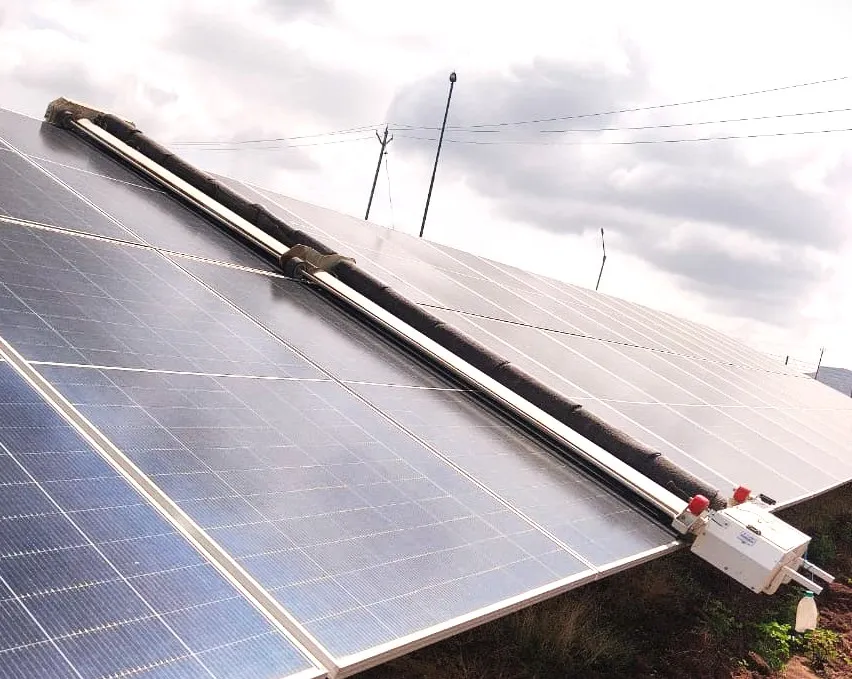
To resolve these issues, management transitioned to a Capex-driven strategy. They chose a waterless robotic cleaning method to protect their assets. Taypro deployed three NYUMA semi-automatic robots to manage the site. These units allow for more efficient and predictable maintenance. The facility now follows a schedule of regular dry cleaning cycles. This method effectively stops soiling losses without using water. This transition has delivered massive benefits to the entire facility.
The plant now recovers 225 MWh of extra energy every year. It also saves 840,000 litres of water annually. This project demonstrates how specialized robots can optimize utility-scale plants. It makes solar farms in India more sustainable and productive. The use of NYUMA robots ensures long-term asset protection. It also provides a reliable maintenance schedule for all plant managers.
Environment and soiling at Sangali- Asangi Jat
Environment and soiling at Sangali-Asangi Jat
The 225 MW installation at Sangali-Asangi Jat operates in a unique environment. It is located within a semi-arid climate zone. This region is defined by specific agricultural dust patterns. The local environment creates a very high-soiling profile for the solar arrays. Fine particulate matter from nearby plains settles on the module surfaces. This dust accumulation is constant and difficult to manage. Local wind patterns further exacerbate the issue. Wind drives fine dust into the solar array blocks during the dry seasons.
Managing this level of soiling is a major operational challenge. It directly impacts the local water-energy nexus. Water is an extremely limited resource in this specific region. Many local sites must rely on expensive water tankers to clean panels. These tankers are often unreliable and hard to schedule. Using water for a 225 MW plant creates high operational volatility. Tanker availability changes based on seasonal water shortages. Furthermore, the transport costs for these tankers consume a large part of the maintenance budget.
The environment impacts the plant in two specific ways:
- High soiling rates lead to rapid energy loss and lower daily yields. This requires frequent and reliable maintenance.
- Manual water-based cleaning relies on a shaky and expensive supply chain. This makes consistent cleaning almost impossible.
The site management addressed these issues through technology. They moved to a semi-automatic robotic cleaning strategy. They utilize the NYUMA system for this critical task. This approach decouples plant performance from local water scarcity. The site now uses scheduled dry cleaning cycles. These cycles occur 3 to 10 times per month. The exact frequency depends on real-time soiling conditions. The plant no longer needs to rely on water tankers. This makes the maintenance schedule much more predictable. It also lowers the operational carbon footprint. The plant remains efficient even during seasonal water fluctuations in the Sangali-Asangi Jat area.
O&M before Taypro
The Logistics and Audit Gap at Sangali-Asangi Jat
Before the Taypro intervention, the 225 MW facility relied on manual labor for all cleaning tasks. This traditional approach caused many logistical hurdles. Managing hundreds of workers across such a massive site is difficult. It is hard to coordinate large teams effectively over long distances. Plant managers frequently faced issues with manual cleaning teams. Absenteeism was a common problem. Additionally, varying skill levels led to inconsistent cleaning quality. This meant that the modules were rarely truly clean.
Audit gaps also created significant performance issues. The site contains thousands of solar panels. Verifying that every single module was cleaned correctly was nearly impossible. This lack of transparency led to hidden soiling losses. Large sections of the array often stayed dirty for weeks at a time. This directly reduced the total energy output and the plant's overall PR (Performance Ratio).
Water logistics were the final major problem. The plant relied on a very shaky water supply chain. Constant tanker traffic was required to sustain manual cleaning routines. This created several operational inefficiencies:
- Unreliable water delivery caused frequent delays in maintenance schedules.
- High tanker costs increased the total cost of ownership for the asset.
- Manual water usage was extremely wasteful and environmentally taxing.
The site has now moved away from these inefficient methods. They have eliminated most of the operational volatility. The NYUMA system provides a structured and data-driven approach. It replaces human guesswork with consistent and logged cleaning cycles. The plant now has a reliable way to maintain high performance and provide verifiable data to stakeholders.
Fleet and deployment at 225 MW
Strategic Capex Integration: Fleet and Deployment at 225 MW
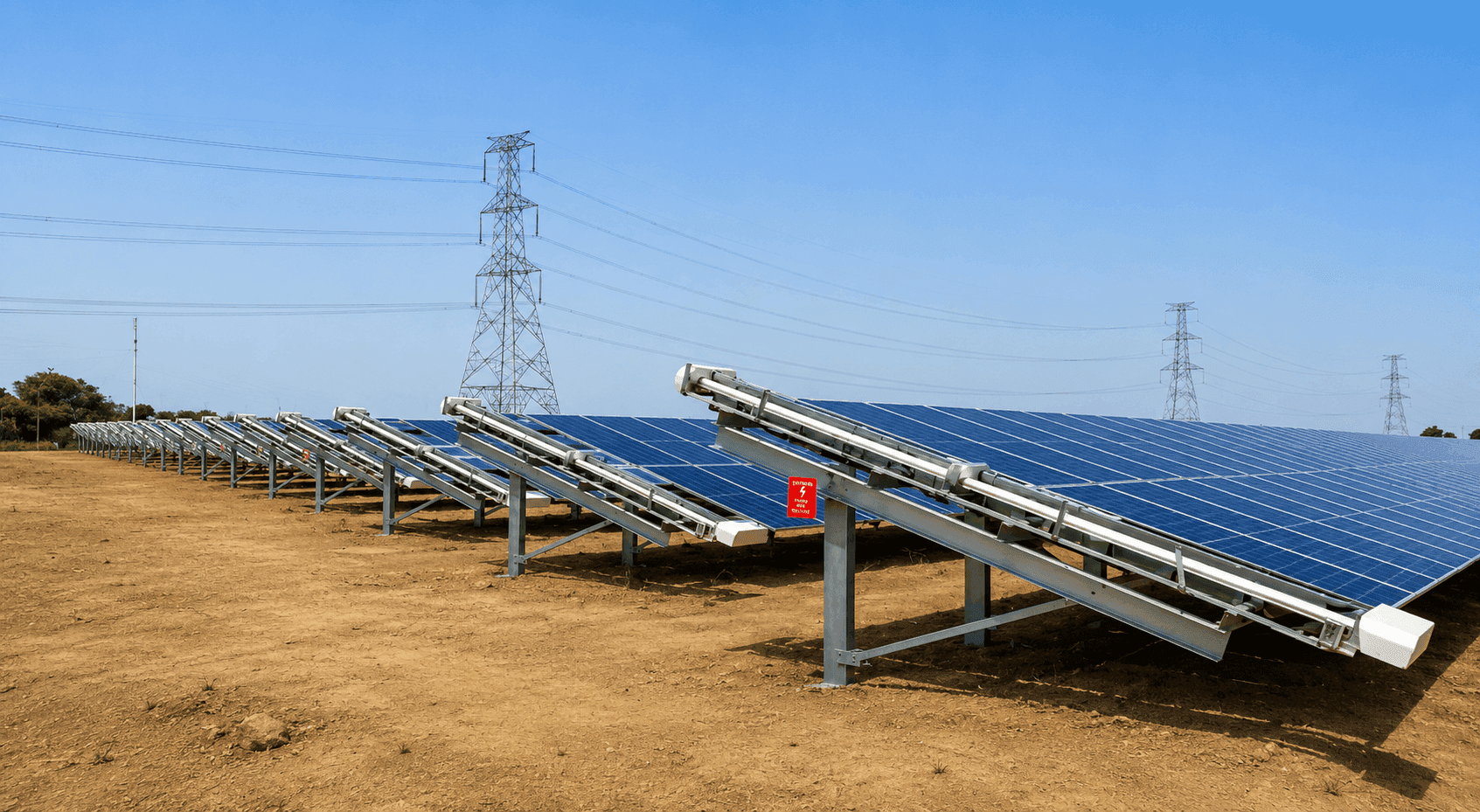
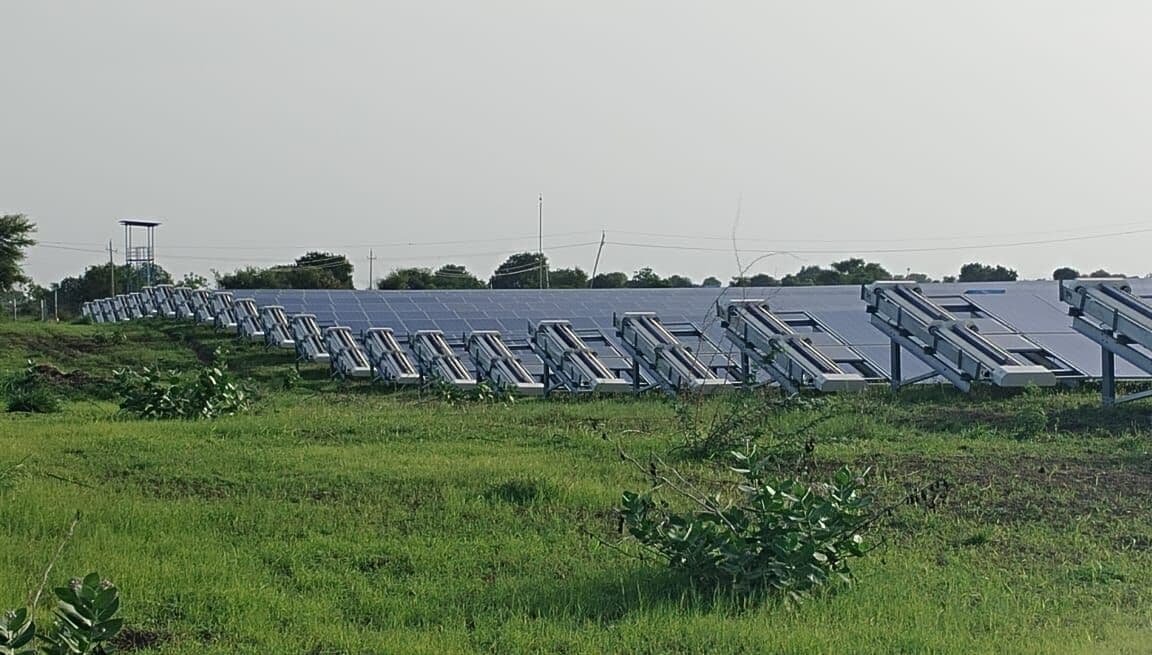
Project leaders wanted to build a more sustainable operation. They chose a targeted Capex procurement model for the site. This involved the purchase of three NYUMA units. These units were integrated into the ground mount array. The plant shifted from variable labor costs to fixed robotic assets. This investment secures a permanent and high-quality cleaning method. It removes the volatility found in traditional, manual O&M teams.
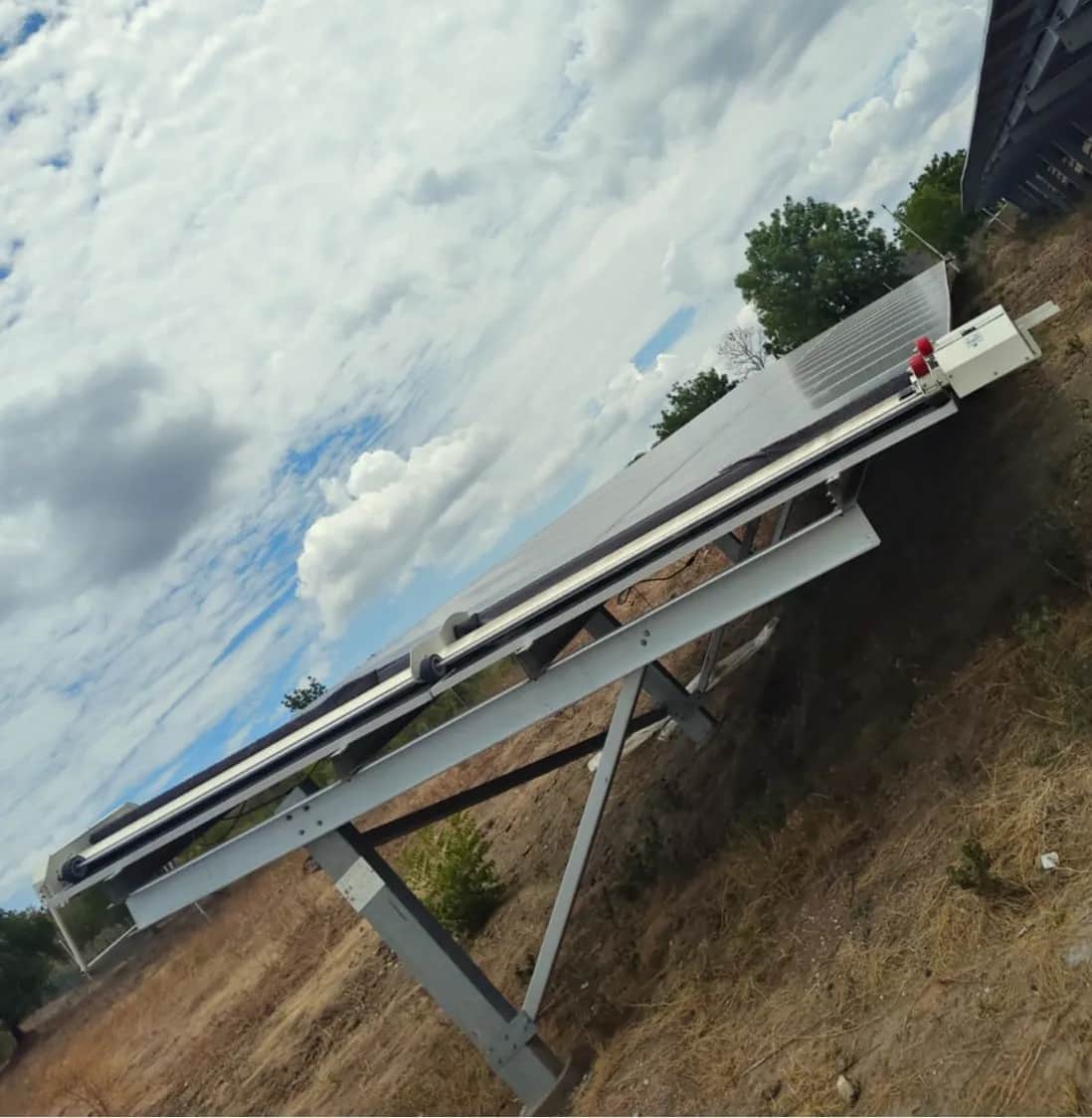
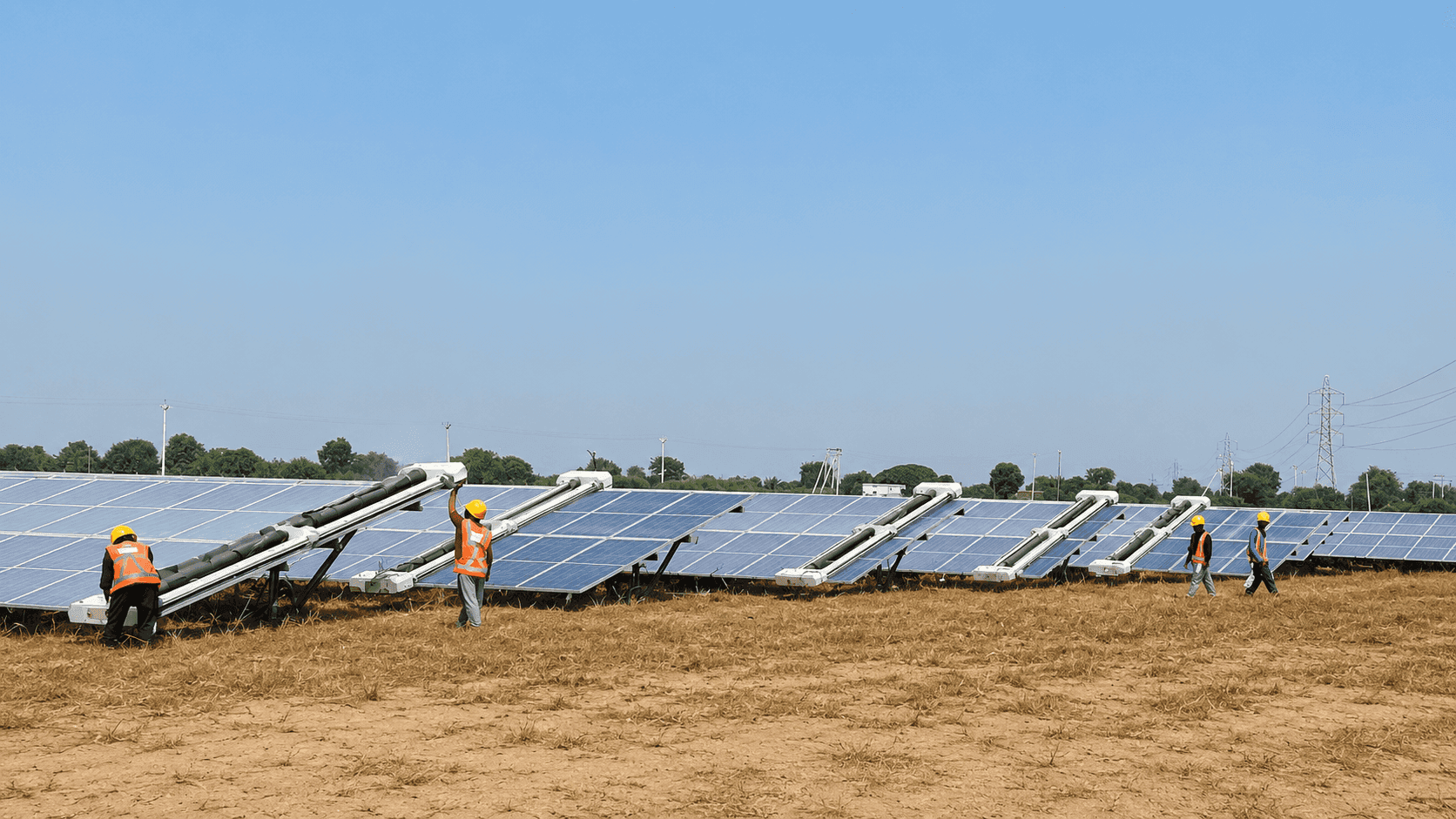
The NYUMA units act as a vital bridge for the facility. They move the site from manual labor to advanced technical infrastructure. The fleet is designed for high operational efficiency. The semi-automatic deployment allows operators to maintain direct oversight. This model provides the reliability of robotics. It also keeps the flexible control needed for a large-scale site. Operators can manage the cleaning schedule with ease.
Deployment at the Sangali-Asangi Jat site is highly strategic. The robots focus on high-impact zones to maximize return. This ensures that cleaning cycles fight dust accumulation effectively. The primary goals for this deployment are very clear:
- Conserve resources to save 840 thousand litres of water per year.
- Recover lost energy to add 225 MWh of generation per year.
- Create a predictable maintenance cadence of 3 to 10 dry cleaning cycles per month.
- Standardize cleaning quality across the entire ground mount array.
Investing in robots as a capital asset transforms the plant. It changes how the site handles heavy soiling. The NYUMA robots offer a highly scalable solution. They integrate directly into the existing site workflow. This ensures that the 225 MW capacity works at its maximum potential. This shift represents the future of O&M in India. Technology-led maintenance is the best way to protect long-term asset performance. It moves the entire industry toward modern, automated standards.
Operations and monitoring
Operations and Monitoring: Shifting to Scheduled Precision
The operational style at Sangali-Asangi Jat has changed completely. It no longer relies on traditional, labor-heavy cleaning methods. Manual cleaning often led to safety concerns and unpredictable energy yields. By adding three NYUMA units, the 225 MW facility is now more precise. It has moved to a model of scheduled precision. This replaces reactive maintenance with a rigorous, proactive cleaning cadence.
Site managers now use the NECTYR fleet operations portal. This portal helps them orchestrate a systematic cleaning rhythm. The facility follows a cadence of 3 to 10 scheduled waterless dry cycles per month. This frequency is managed using real-time data. The team aligns robot use with actual soiling levels. They do not rely on outdated, fixed calendars. The site avoids the inefficiency of unnecessary washing. This is much better for fixed-tilt ground mount structures. It ensures a better return on both labor and capital.
Accountability is now built directly into the system. Each NYUMA robot logs every single cleaning cycle. This provides a transparent and digital audit trail. Manual labor cannot offer this level of detail or verification. The system also respects critical weather-based rules. For example, it includes automated wind holds. These holds pause the robot during high wind events. This protects both the hardware and the solar modules from damage. NECTYR connectivity and mechanical reliability ensure high standards. The site maintains a 99% cleaning efficiency standard. The Sangali-Asangi Jat project is now a benchmark for high-performance solar operations in India.
Results and impact
Quantifiable Resource Recovery and Energy Gains
The NYUMA waterless cleaning system delivers highly measurable results. It has transformed the efficiency of the Sangali-Asangi Jat site. By moving away from manual labor, the 225 MW facility has boosted its annual energy yield. This gain comes from high-frequency and consistent cleaning. The NYUMA platform ensures panels stay free of heavy dust. This prevents energy-robbing soil buildup throughout the entire year.
The project also provides major environmental benefits. It achieves sustainability through massive water conservation. The NYUMA system removes the need for liquid-based cleaning. This results in a huge reduction in annual water use. These outcomes show the impact of waterless cleaning on large assets:
- Asset Optimization: Consistent cleaning minimizes soiling losses. This helps the plant reach its peak capacity every year.
- Resource Stewardship: The waterless model protects the site from water scarcity. It also reduces the environmental impact of maintenance.
- Operational Reliability: The three semi-automatic units create a predictable loop. This improves uptime and reduces the hidden costs of manual work.
The site management secured long-term cost control. They did this by using a Capex framework. This case study confirms a key fact for the industry. For utility-scale solar in India, robots are the superior choice. Combining robotic technology with a data-driven strategy is essential. It leads to superior energy yields and sustainable resource management. The plant is now more resilient and much more profitable.
Peer comparison and planning checklist
Peer Comparison and Planning Checklist
It is important to compare the Sangali-Asangi Jat site to industry benchmarks. Taypro has a proven scale of 5 GW+ deployed. We have worked across more than 150 live sites. This provides the confidence needed for large utility operations. A 100 MW site using manual cleaning often suffers from poor coverage. It also uses far too much water. In contrast, the Sangali-Asangi Jat facility shows much better resource efficiency. Our semi-automatic approach is also very versatile. It works well across distributed blocks and maintains high uptime in the Indian climate.
Are you an IPP or an O&M lead? Use this checklist to plan your transition to robotics:
- Assess Soiling Profiles: Find your site-specific dust types. This helps you pick the right cleaning frequency.
- Evaluate Water Availability: Check local water scarcity levels. This helps you justify the ROI for waterless systems.
- Map Infrastructure Needs: Check site access and row lengths. Decide if you need pick-and-place units or row-based robots.
- Define Procurement Model: Choose between Capex and Opex. Base this on your project lifecycle and budget.
- Integrate Fleet Intelligence: Connect all robots to NECTYR. This allows for real-time monitoring and data auditing.
For more information on costs, visit our robot price guide India. You can also use our ROI price calculator to see your potential savings.