Executive summary
This case study examines the use of a solar panel cleaning robot India at the Sangali-Palaskhel facility. This site is a large 187.5 MW ground mount solar plant. The facility faced major operational hurdles due to heavy regional soiling. Constant dust buildup on the modules led to low energy generation. Manual cleaning methods were also inconsistent and hard to manage at this scale. Additionally, the site struggled with a lack of local water resources.
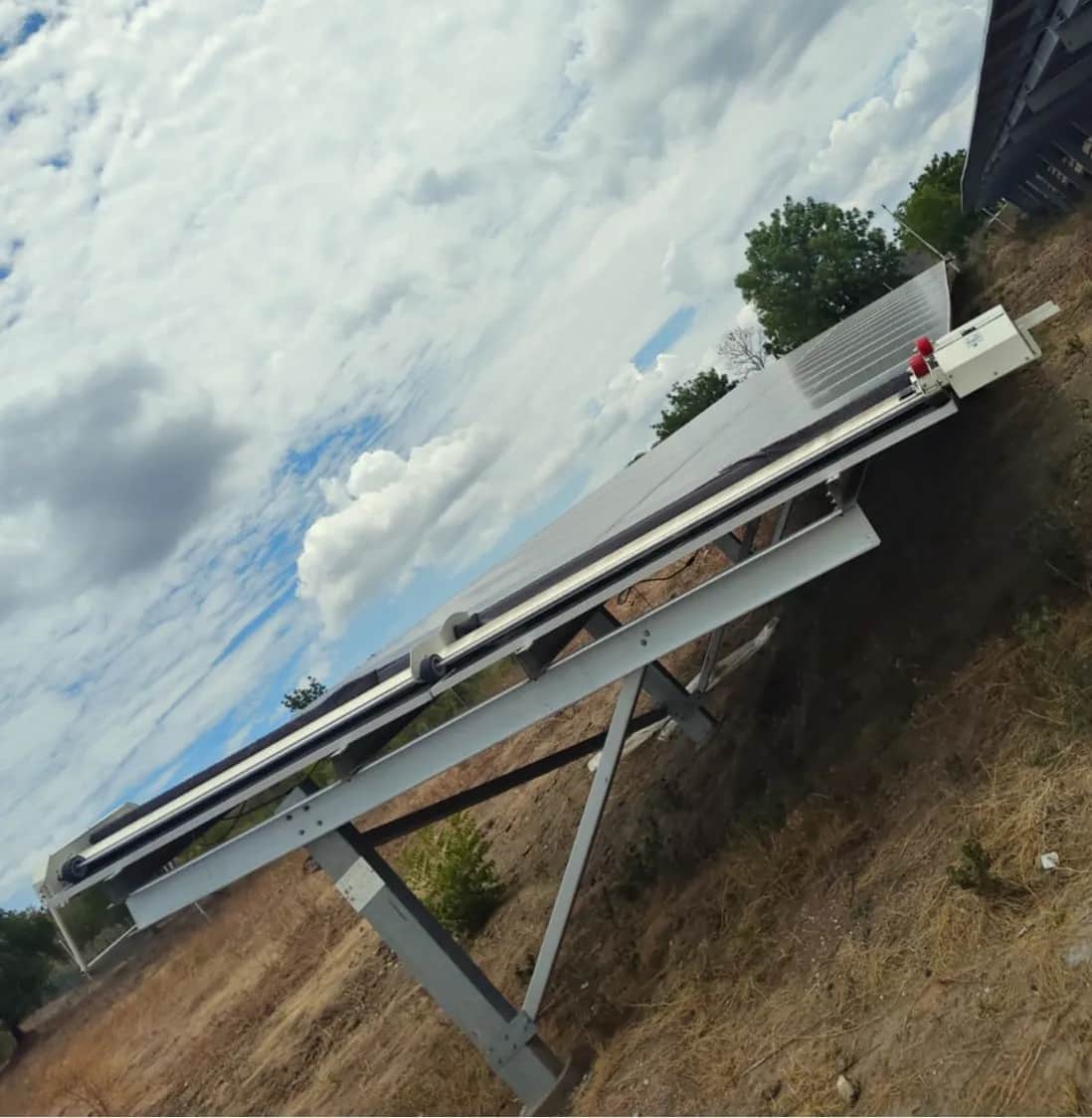
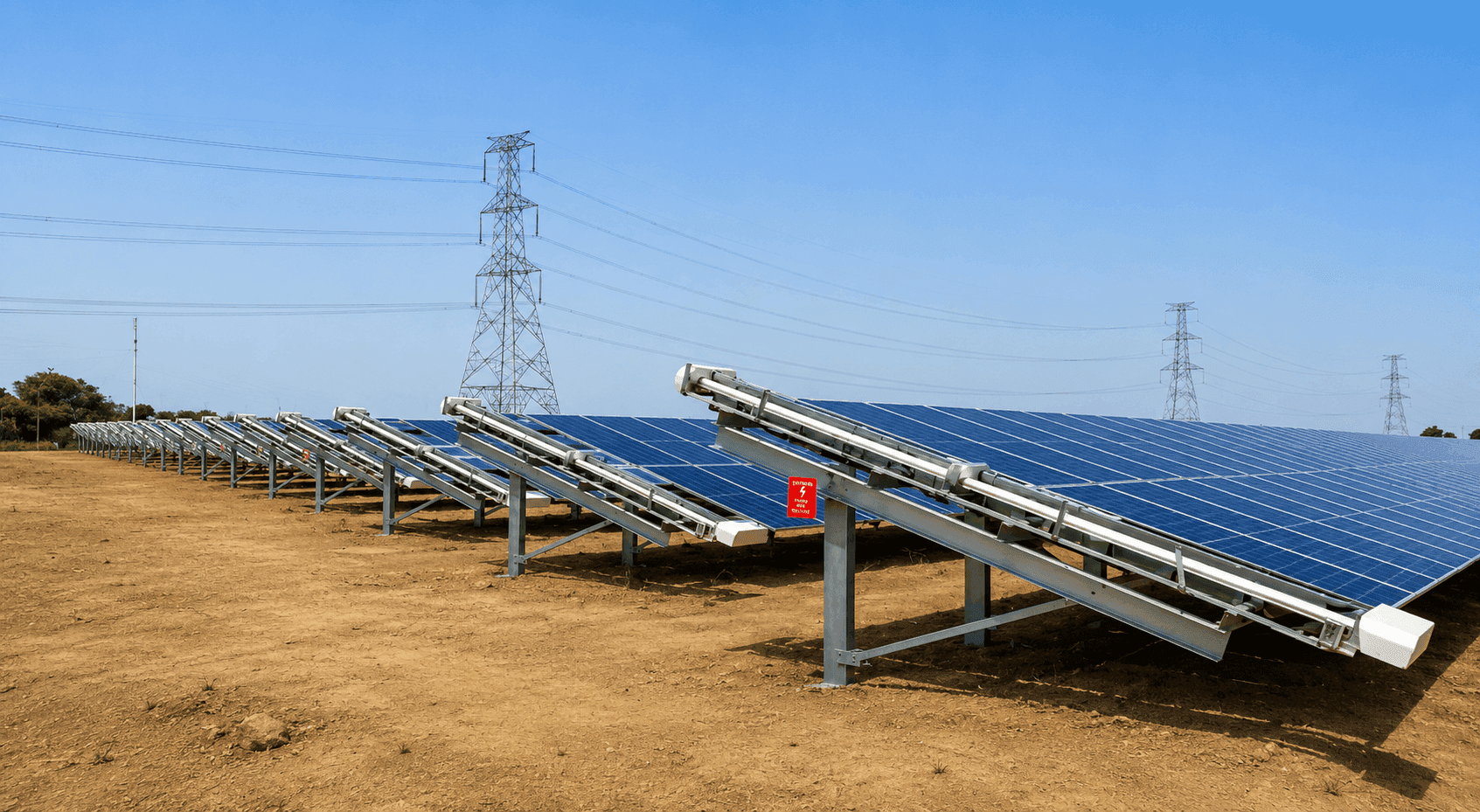
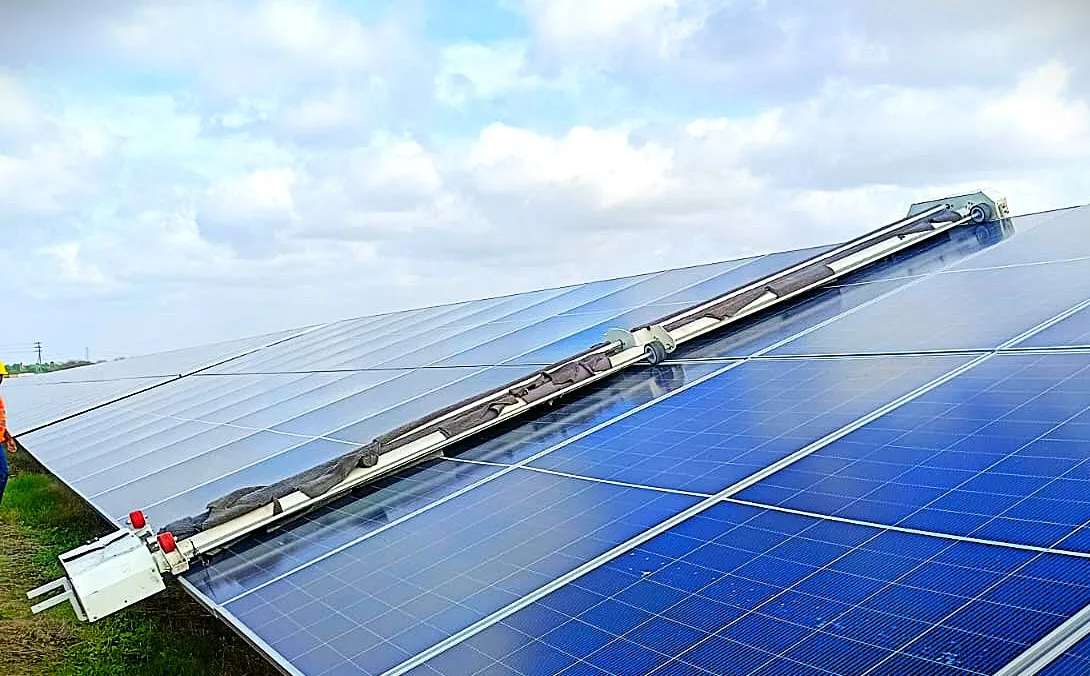
To solve these issues, the plant management moved to a waterless maintenance strategy. They deployed two semi-automatic NYUMA units to handle the cleaning. These robots perform precision dry cleaning cycles. These cycles typically occur 3 to 10 times per month. This schedule depends on site access and local dust levels. The new system has helped the plant recover 187.5 MWh of additional energy every year. This is a significant boost to the total annual yield.
The shift to robotic cleaning also saved 700,000 litres of water annually. This helps the plant operate sustainably in a water-scarce region. By using the NYUMA system, the facility has optimized its long-term operational costs. The 187.5 MW asset now benefits from a reliable and efficient cleaning routine. This deployment serves as a model for large-scale solar operations in India.
Environment and soiling at Sangali-Palaskhel
Managing Regional Soiling at the 187.5 MW Sangali-Palaskhel Utility Plant
The Sangali-Palaskhel facility is a massive utility-scale site. It is much larger than the small commercial and industrial (C&I) plants found in urban areas. At 187.5 MW, the plant has a huge amount of land and module surface area. This scale requires a very disciplined approach to maintenance. The site is often exposed to dry, wind-borne dust. This dust is common in this part of the region. It settles across the large solar arrays and creates a thick film. This film blocks sunlight and reduces the amount of energy the panels can collect.
This ground mount installation faces much harsher conditions than urban rooftop projects. Rooftop projects often exist in more controlled environments. In contrast, this site has constant exposure to the elements. The vast terrain makes dust accumulation a major problem. Traditional manual cleaning methods struggle to cover so many rows effectively. Because this site uses a semi-automatic cleaning setup, timing is critical. The team must be precise to avoid gaps in energy production.
The deployment of NYUMA technology helps manage these environmental risks. It ensures every row gets consistent care without using heavy amounts of water. The system provides several key operational benefits:
- Scheduled dry cleaning cycles occur 3 to 10 times per month. This counteracts the local rate of dust buildup.
- The single-pass PBT brush provides waterless cleaning. This ensures the safety of the massive 187.5 MW array.
- The NECTYR fleet portal offers centralized oversight. It helps optimize robot movement across the large plant blocks.
The site has found a balance between performance and resource management. By moving away from manual labor, the plant stays sustainable. This transition manages regional soiling on a massive scale. It also provides a scalable model for other utility-sized assets in the state.
O&M before Taypro
Managing Soiling Losses in 187.5 MW Solar Arrays
Running a 187.5 MW solar plant in Sangali-Palaskhel is a major challenge. Managers must find ways to keep energy levels high. They cannot afford the cost of a fully automated fleet for every single row. At the same time, manual cleaning is too risky and inefficient. Before they used Taypro robots, the site relied on manual labor. This labor was used to fight constant dust and dirt.
The old manual model created many operational gaps. Large teams were needed to clean the panels by hand. This required a lot of water. Water is becoming very scarce in this region. Relying on manual cleaning was not a sustainable long-term plan. Furthermore, manual cleaning is often inconsistent. Human teams cannot clean every panel with the same level of detail. This lack of uniformity caused major energy losses. Dust would pile up on many modules between cleaning sessions.
The facility suffered from what we call a "Scale-Efficiency Gap." Manual cleaning could not keep up with the massive surface area. Meanwhile, full automation for the entire site required too much capital. The plant faced several specific pain points before adopting the NYUMA system:
- Inconsistent maintenance across the ground-mount array led to constant soiling losses.
- Heavy reliance on manual labor increased safety risks and variable costs.
- High water consumption raised concerns about environmental impact and local supply.
- A lack of real-time data made it hard to track cleanliness and energy recovery.
The facility bridged this gap by switching to a semi-automatic model. The two NYUMA units replaced intensive manual work. This new approach is systematic and waterless. It protects the long-term health of the solar modules while improving output.
Fleet and deployment at 187.5 MW
Surgical Maintenance Strategy: Fleet and Deployment at 187.5 MW
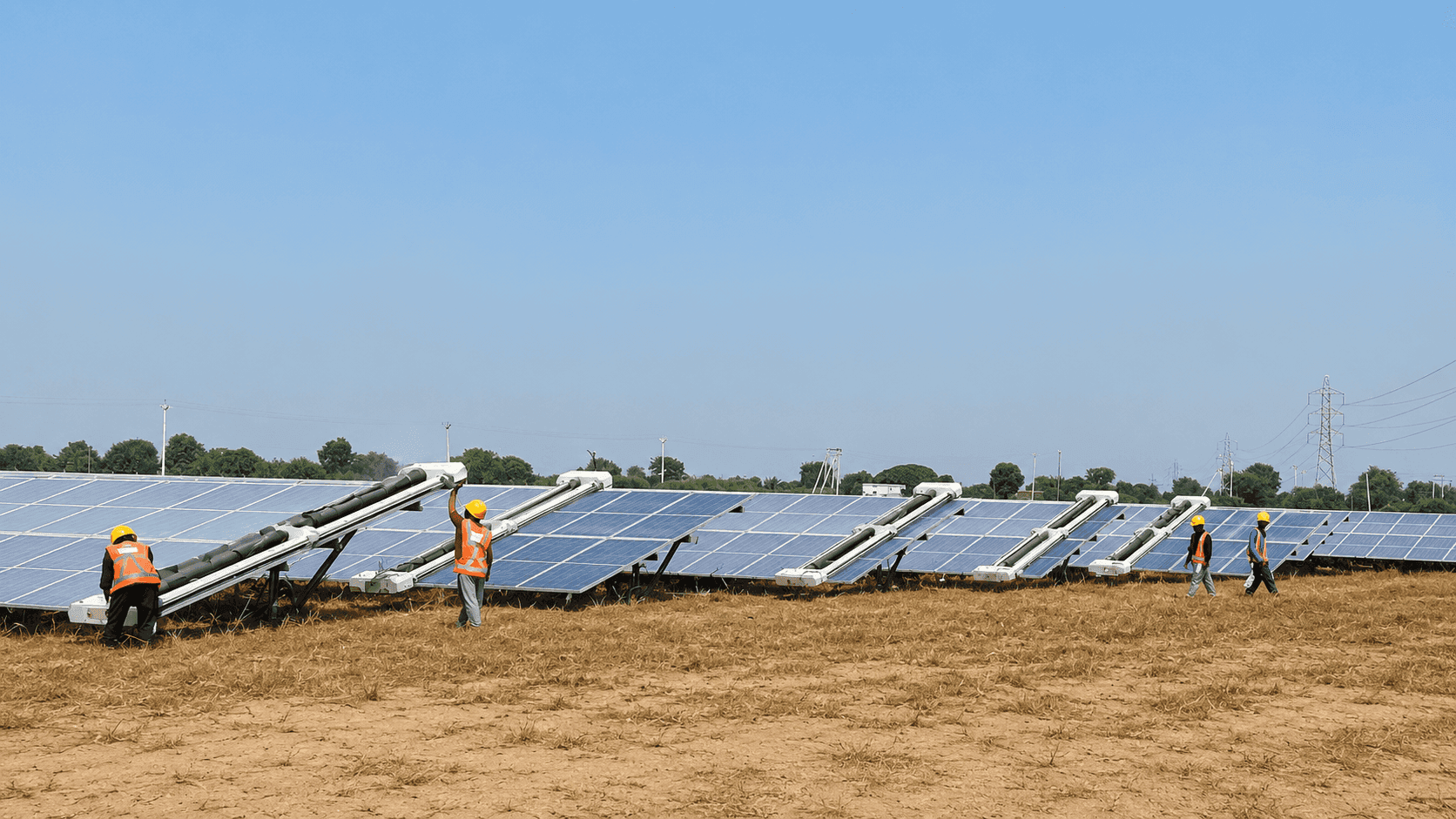
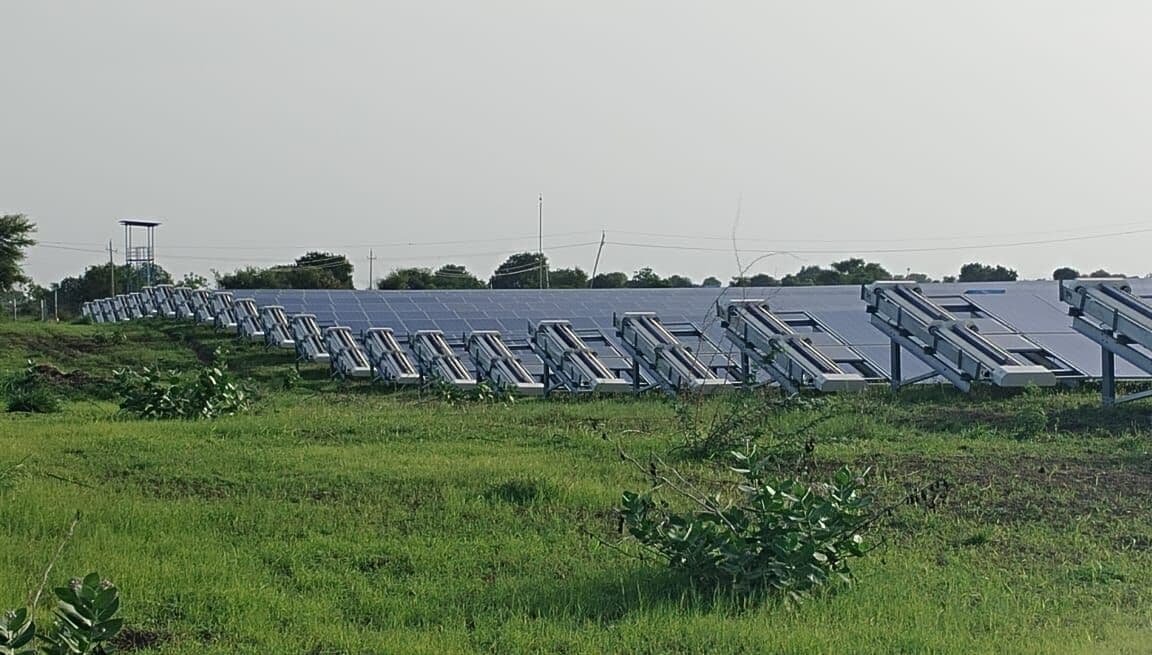
The deployment at Sangali-Palaskhel uses a surgical maintenance strategy. The team does not try to clean the entire facility at once. Instead, the fleet uses two semi-automatic NYUMA units. These robots are assigned to target high-soiling blocks. By focusing on these critical zones, the team uses resources wisely. They address the areas with the largest energy losses first.
The site uses a Capex procurement model. This means the asset owner keeps full control over the maintenance. They can manage the schedule and integrate it into their O&M plans. This approach helps the owner avoid the rising costs of manual labor. It also provides the flexibility needed for a project of this size. The NYUMA system uses a pick-and-place movement pattern. This allows the two robots to move across scattered arrays. They can treat specific zones as soon as dust levels become a problem.
The commissioning process focused on easy integration. The robots work with the existing site infrastructure. They do not require invasive changes to the solar farm. This deployment emphasizes several key efficiencies:
- Precision cleaning targets high-impact modules. Pick-and-place movements reduce local soiling interference.
- Dry cleaning cycles are scheduled 3 to 10 times per month. This is tailored to real-time dust levels.
- Resource strain is greatly reduced. The waterless cycle saves 700,000 litres of water each year.
- Energy recovery is measurable. The site gains 187.5 MWh per year from targeted cleaning.
The site achieves a high cleaning standard through this robot-led approach. The NYUMA units act as high-efficiency tools. They turn maintenance from a burden into a predictable cycle. This data-driven method ensures every robot movement helps maximize power output. It transforms how the plant manages its daily operations.
Operations and monitoring
Operations and Monitoring at Sangali-Palaskhel
The 187.5 MW Sangali-Palaskhel facility uses the NYUMA solar panel cleaning robot India to stay efficient. The site integrates the NECTYR fleet operations portal into its daily workflow. This allows managers to move away from reactive, labor-heavy cleaning. Instead, they use an inspection-led model. NECTYR provides real-time visibility into the entire fleet. Managers can monitor robot health and battery status easily. They can also track task completion across the large ground mount array.
Scheduling is centralized within the NECTYR platform. This ensures the cleaning rhythm matches local soiling patterns. The semi-automatic NYUMA units operate in specific cycles. The target is 3 to 10 dry cleaning cycles per month. This strategy optimizes the cleaning window. The robots target specific blocks only when dust reaches a certain level. This prevents unnecessary work. It also eliminates the need for daily manual labor. This allows the two-robot fleet to work effectively without massive logistical overhead.
The workflow also includes weather resilience. NECTYR monitors environmental conditions constantly. The system can automatically pause operations during high-wind events. This protects both the robots and the solar array. Some believe that a constant daily wash is necessary for clean panels. However, our data shows this is not true. A data-driven approach focuses on high-impact cycles instead. By avoiding unnecessary passes, the system reduces mechanical wear. It also ensures the panels stay clear of the dust that hurts generation.
This framework turns routine maintenance into a high-precision activity. The NECTYR oversight works perfectly with the NYUMA single-pass PBT technology. This combination directs resources where they matter most. It secures 187.5 MWh of extra generation every year. It also preserves 700,000 litres of water for the local community.
Results and impact
Results and Impact at Sangali-Palaskhel
The transition to the Taypro semi-automatic model has changed the site profile. The 187.5 MW Sangali-Palaskhel facility is now more efficient. By replacing manual, water-heavy cleaning with robots, the plant has reclaimed lost energy. It has successfully recovered generation that was previously lost to thick dust layers.
The NYUMA robotic fleet has delivered clear gains. These gains appear in both efficiency and resource conservation. The key impacts include:
- The plant recovered significant annual generation capacity. Consistent soiling losses are now reliable yields.
- Annual water consumption has dropped significantly. The site no longer relies on traditional washing methods.
- Cleaning precision has improved. This ensures consistent performance across the entire ground mount array.
- Site safety has increased. There is less need for manual, water-reliant interventions.
This implementation proves that large utility sites in India can reach peak performance. They just need the right robotic cleaning cadence. By matching the cleaning schedule to the environment, the facility stays efficient. It avoids the mechanical fatigue of constant scrubbing. At the same time, it maintains high panel transparency. The result is a resilient and sustainable O&M strategy. It protects local water resources while maximizing energy output. Taypro provides a clear blueprint for other utility-scale operators. This model balances performance with the reality of regional dust and water scarcity.
Peer comparison and planning checklist
Peer Comparison and Planning Checklist
Utility-scale operators must make smart choices when choosing a solar panel cleaning robot India. They must balance CAPEX costs against their operational needs. At Sangali-Palaskhel, the semi-automatic approach was a strategic choice. It is an alternative to a fully automatic deployment. For example, a plant could use 187.5 MW of GLYDE units for full automation. Fully automatic plants use continuous, scheduled cycles to keep irradiance at its peak. In contrast, the NYUMA semi-automatic setup allows for a tiered investment. This is a very effective strategy for specific site profiles.
Use the following checklist to plan your ground-mount installation:
- Check your site-specific soiling density. Decide if you need daily autonomous cycles (GLYDE/NYUMA) or periodic semi-automatic cleaning (HELYX/NYUMA).
- Evaluate your CAPEX budget. Semi-automatic systems often provide a faster return on investment for segmented plant blocks.
- Audit your local water availability. Prioritize waterless technology to avoid the costs of water trucking.
- Confirm that your terrain is suitable for robots. Ground mount systems need clear access at the end of each row.
- Analyze the availability of O&M labor. Semi-automatic models need onsite technicians. Fully automatic systems minimize human contact.
- Verify your connectivity requirements. Ensure your robot model integrates with NECTYR for real-time tracking and scheduling.
Following these steps ensures you choose the right technology for your goals. A well-planned deployment will maximize your energy yield and protect your assets.