Executive summary
solar panel cleaning robot India, Searching for an efficient solar panel cleaning robot in India? This case study looks at the 187.5 MW Snagali-Belondgi ground mount site. This facility faced major operational hurdles. Heavy regional soiling was a constant problem. Also, the site had very limited access to water resources. These issues made manual cleaning very difficult.
Relying on manual cleaning led to two big problems. First, power generation was inconsistent. Second, overhead costs continued to rise. The plant needed a more sustainable way to maintain its modules. To fix this, management chose a Capex-driven model. They integrated robotic technology to stabilize energy output. This also helped them stop relying on scarce water supplies.
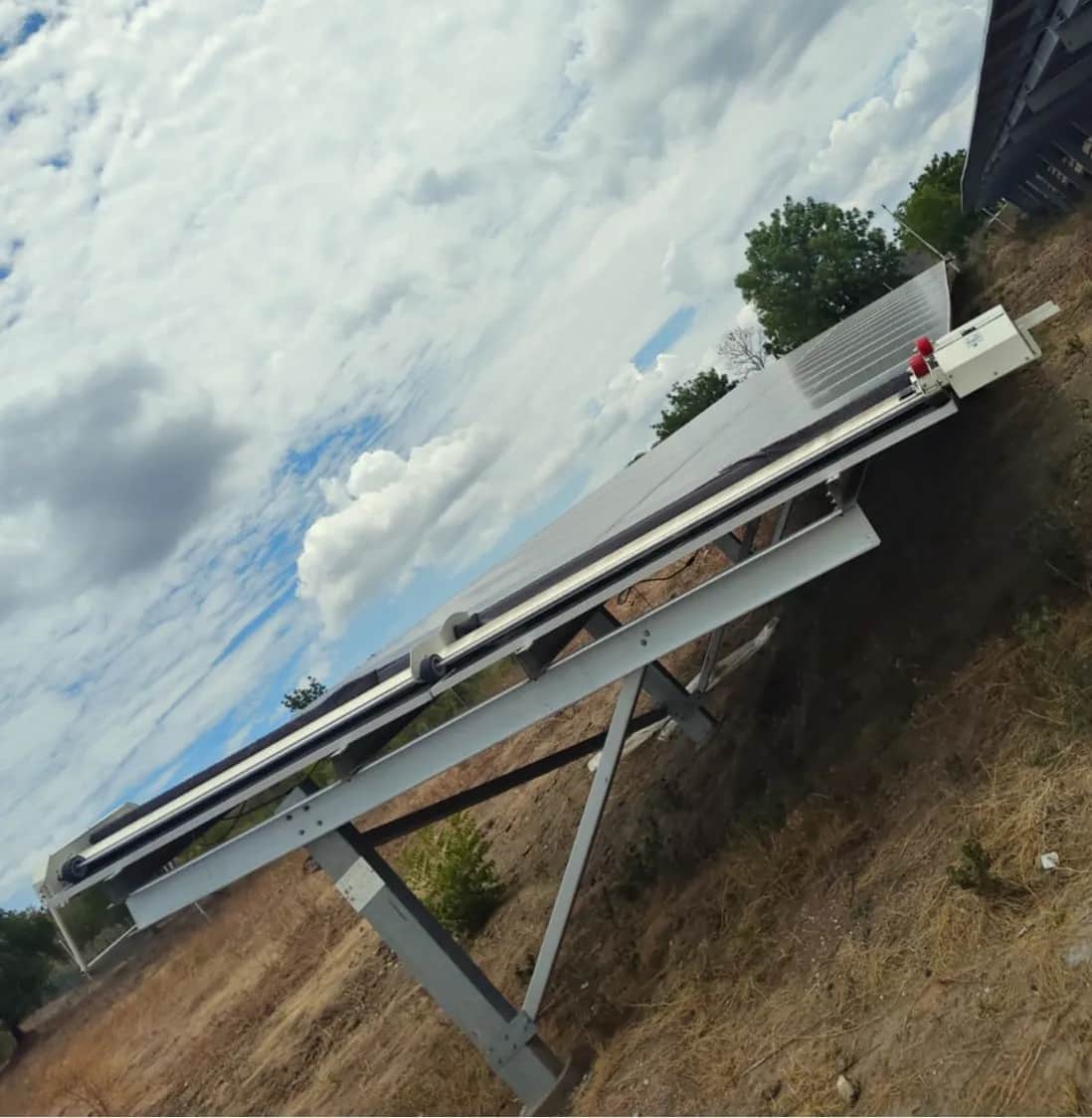
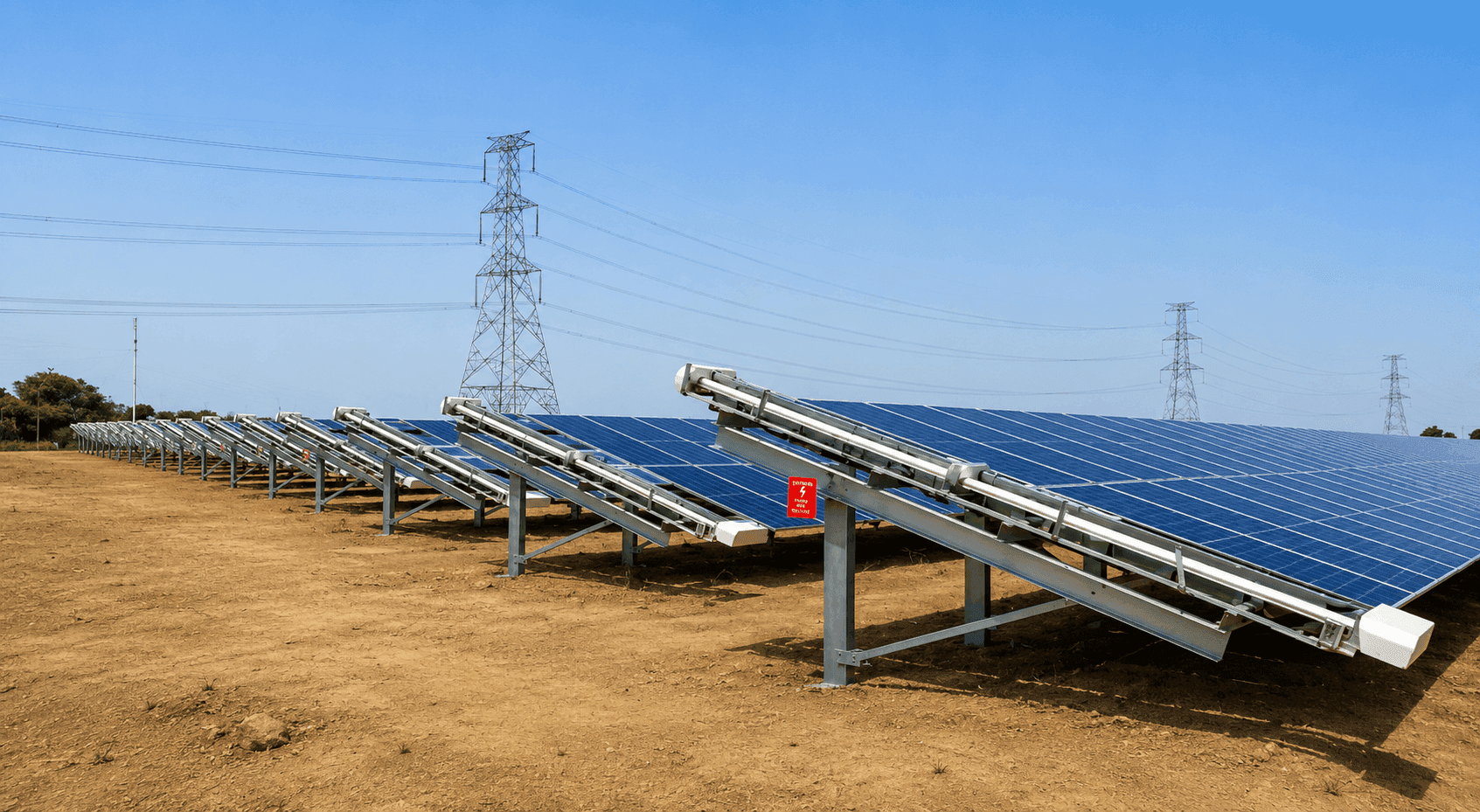
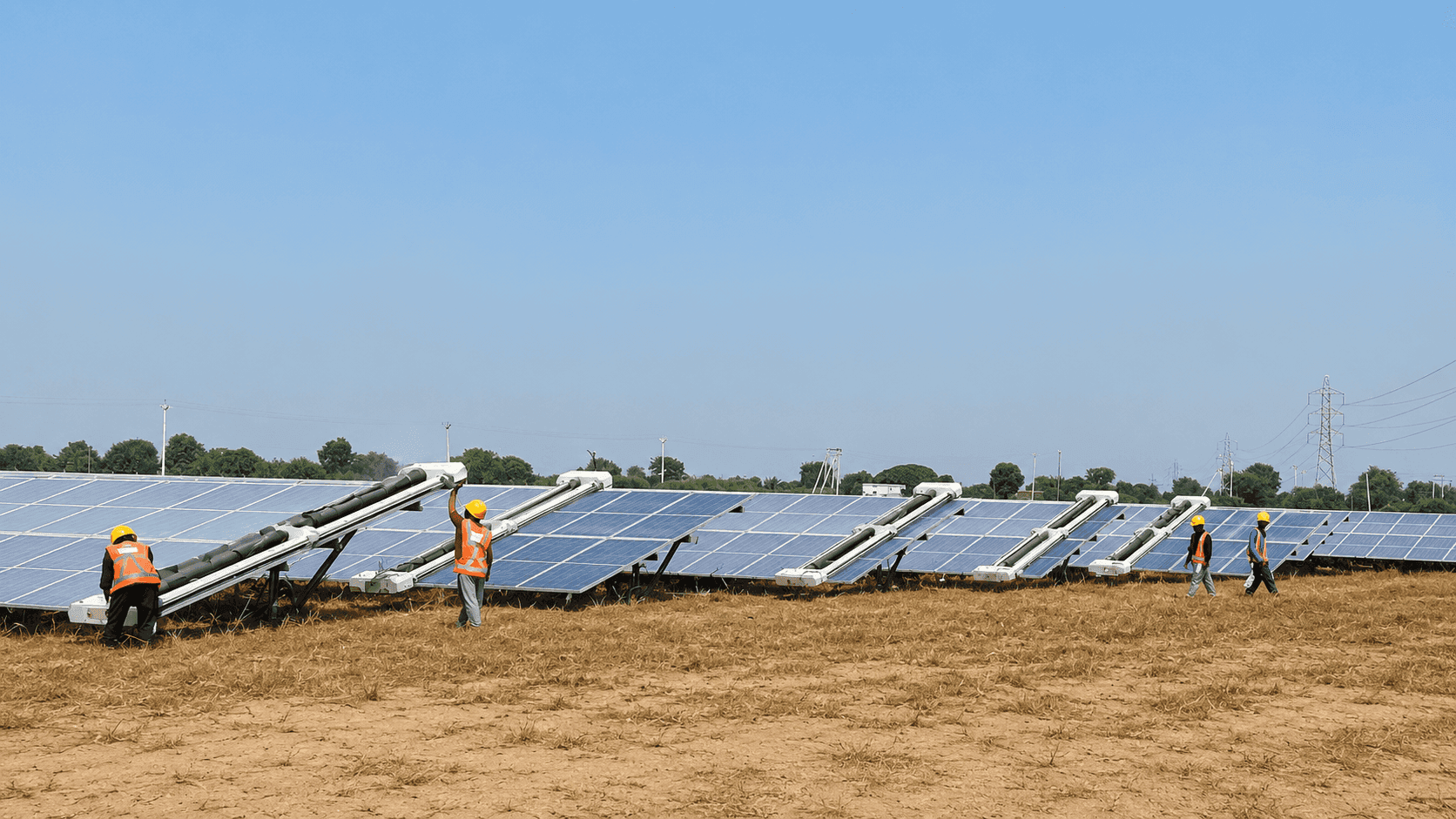
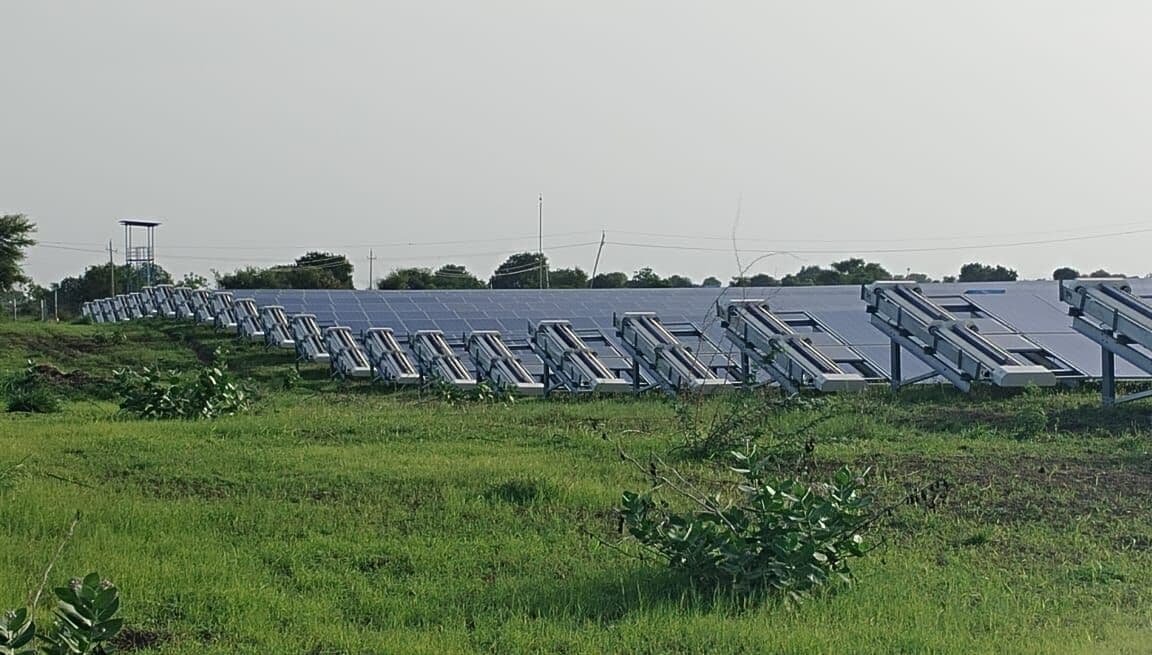
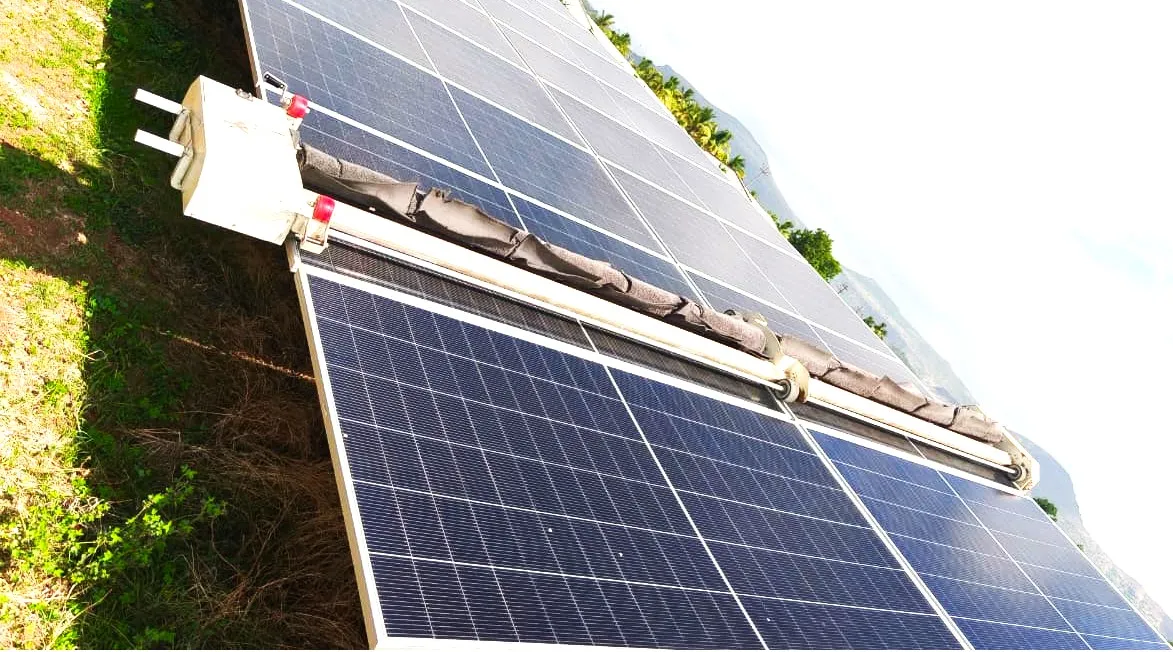
The project deployed two NYUMA semi-automatic robots. These robots use a pick-and-place method. They are perfect for cleaning scattered utility-scale blocks. The robots use single-pass PBT brush technology. They perform scheduled dry cleaning cycles. These cycles happen 3 to 10 times per month. This depends on the local weather and dust levels.
The results have been very positive. The site now generates an extra 187.5 MWh every year. It also saves 700,000 litres of water annually. This transition shows how robots can optimize utility-scale assets. It also proves that resource conservation is possible in large-scale solar operations.
Environment and soiling at Snagali-Belondgi (Bellundagi)
Managing Soil Deposition and Environmental Conditions in Bellundagi
The Bellundagi region has a unique environment. This environment impacts solar module efficiency. Every solar site has its own weather patterns. For example, coastal sites deal with salt spray. Desert sites deal with fine sand. Snagali-Belondgi is different. It faces seasonal atmospheric dust and agricultural particles.
Local wind patterns play a big role here. During the summer and pre-monsoon months, the wind carries dry silt. This silt comes from nearby fallow lands. The dust settles quickly on the ground-mounted arrays. This creates a thick layer of dirt on the modules. If left alone, this dirt blocks sunlight and lowers power output.
The soiling profile at this site requires a special approach. Traditional manual cleaning can be risky. The local dust is often abrasive. If workers do not manage it correctly, they can cause micro-scratches on the glass. These tiny scratches damage the modules over time. We must avoid this to protect the long-term health of the plant.
Thermal changes also affect the site. The regional climate has high temperature swings. Intense daytime sun can bake the dust onto the modules. This creates a hard layer of "caked" dirt. If cleaning does not happen often enough, the energy degradation increases. The cleaning frequency must match how fast the dust accumulates.
We have identified three key environmental factors for this 187.5 MW site:
- Agricultural Particulate Matter: Surrounding fields produce seasonal biomass residue. This residue and soil dust can stain the glass if not removed.
- Thermal Caking: High heat and fine dust create a hard layer. This requires dry, non-abrasive cleaning to prevent surface damage.
- Topographical Dust Trapping: The fixed-tilt ground mount layout creates micro-climates. Dust tends to settle in specific areas under the rows.
The facility now uses an autonomous, waterless cleaning strategy. This solves the site-specific problems. It removes the need for water-heavy cleaning cycles. This is important because water is scarce in this region. The new strategy ensures the PV modules stay clean during high-irradiation months.
O&M before Taypro
Overcoming Manual Cleaning Constraints at the 187.5 MW Snagali-Belondgi Site
Managing the 187.5 MW Snagali-Belondgi site used to be very hard. The plant relied on an intensive manual O&M strategy. This strategy struggled to keep up with the huge size of the facility. Coordinating a massive workforce is a major logistical challenge. It is difficult to move people across such a large footprint.
Before the robots arrived, the site had zero fully automatic systems. Instead, the plant used fragmented manual efforts. These efforts were often inconsistent. This led to major audit gaps. Large sections of the array often sat under thick dust. These dusty sections could not produce full power. This directly hurt the plant's total energy output.
Manual labor also caused water problems. Securing enough water for 187.5 MW of panels is difficult. Transporting water across the site is very expensive. It is also not sustainable for the local environment. The site faced local water scarcity issues. This scarcity created an operational bottleneck. Because water was hard to get, the team could not clean the panels often enough.
This lack of cleaning left the plant vulnerable. Performance would drop significantly during peak soiling periods. The operational workflow faced three main failures:
- High Labour Costs: Large-scale manual cleaning requires many workers. This leads to unpredictable costs. It also increases safety risks for the workers.
- Inconsistent Performance Audits: Manual cleaning logs are often not reliable. It is hard for O&M teams to track cleanliness. It is also hard to link cleaning to real-time power gains.
- Resource Strain: Using too much water is an environmental problem. It is also a financial liability. It makes routine maintenance more complex and costly.
The plant has now moved past these manual limits. They have switched to a technology-integrated strategy. The new waterless, robotic system is much more controlled. It uses a data-backed approach to maintenance. This eliminates audit gaps. It also reduces annual water consumption by 700 thousand litres.
Fleet and deployment at 187.5 MW
Fleet and deployment at 187.5 MW
The transition to a robotic framework was a strategic move. The Snagali-Belondgi site used a Capex procurement model. They purchased two NYUMA semi-automatic robots. The goal was to replace inconsistent manual methods. They wanted a consistent, waterless cleaning standard. The NYUMA system offers great mobility.
The project team focused on the specific needs of a 187.5 MW facility. They wanted to ensure environmental sustainability. They also wanted to save water. The deployment followed a strict three-phase timeline. This ensured the robots integrated well with existing operations.
Phase 1: Site Mobilization
The team began with a full audit. They looked at the array topography. They also checked the row spacing. This was to ensure the robots would fit perfectly. They planned the storage logistics for the hardware. This phase built the foundation for efficient handling across the massive site.
Phase 2: Pilot Row Coverage Proof
The team did not roll out everything at once. They started with intensive testing on select rows. This was a proof-of-concept phase. They needed to validate the NYUMA single-pass PBT brush technology. They confirmed the robots could navigate the array effectively. They also proved the robots could reach the required cleanliness levels without human help.
Phase 3: Handover to Plant O&M
The final stage was about people. The team trained the on-site staff. They taught them how to deploy the robots. They also covered robot maintenance and fleet management. This handover was vital. It allowed the O&M team to run the scheduled dry cleaning cycles independently. These cycles happen 3 to 10 times per month.
This robotic integration offers a scalable model. It provides long-term operational efficiency. The plant has already seen a consistent boost in generation. They recovered 187.5 MWh of energy that was previously lost to dust. This case study proves that large-scale solar operations in India can combine high performance with resource conservation.
Operations and monitoring
Optimizing 187.5 MW Plant Performance via NECTYR-Driven Operations
Success at the Snagali-Belondgi site depends on data. The plant uses a data-first approach to fleet management. They have integrated the NECTYR platform. NECTYR gives plant managers real-time visibility. They can see exactly what the semi-automatic fleet is doing. This is essential for managing a 187.5 MW site.
NECTYR centralizes all fleet logs. It also tracks hardware health data. This allows the O&M team to be proactive. They no longer have to react to problems after they happen. Instead, they use an inspection-led model. Every robot deployment is tied to measurable generation gains. This ensures the cleaning is always worth the effort.
The site uses a structured cleaning cadence. This schedule is tailored to the local environment. Personnel manage 3 to 10 dry cleaning cycles per month. This number is optimized based on how fast dust builds up. It also considers site access. Some people believe you need daily washing. This is a common myth. The team focuses on high-frequency, precision dry cleaning instead. This keeps the panels clear without wasting water.
Key operational features include:
- Fleet Oversight: NECTYR tracks every movement. It monitors battery status and completion records. This provides total transparency across the 187.5 MW array.
- Strategic Cleaning: The 3 to 10 cycle monthly interval is efficient. It balances MWh recovery with smart labour use.
- Environmental Protection: The site avoids water-heavy methods. This saves 700 thousand litres of water every year. This helps meet national sustainability goals.
- Operational Safety: The robots work with site-specific wind protocols. If winds are too high, the robots stay safely docked. This prevents hardware damage.
This inspection-led schedule helps the team maintain 95%+ to 99%+ dust removal per cycle (by robot model). It removes the risks of manual labor. It also maximizes the return on the initial CAPEX investment. The plant now uses reliable, performance-linked management.
Results and impact
Maximising 187.5 MW Plant Performance Through Waterless Robotics
The move to waterless maintenance has changed everything. The Snagali-Belondgi facility is much more efficient now. They replaced manual labor with a smart robotic strategy. This has recovered significant energy. Previously, heavy regional soiling caused large energy losses. The precision cleaning of the NYUMA robots has fixed this.
The impact goes beyond just more energy. The project also meets critical sustainability goals. The facility has drastically reduced its need for local water. This proves that large utility plants can be environmentally responsible. They can still hit high performance targets. The successes at Snagali-Belondgi are clear:
- Significant Energy Recovery: Systematic cleaning has unlocked more power. It proves that robotic consistency fights the effects of soiling.
- Resource Conservation: The project has saved hundreds of thousands of litres of water. This creates a sustainable plan for regional water management.
- Operational Reliability: The combination of NECTYR and NYUMA has standardized performance. Cleaning is now driven by data, not by guesswork.
- Safety and Scalability: Robotic cleaning has removed human safety hazards. This allows for a more predictable and scalable O&M framework.
The NYUMA system has transformed the site. It moved the plant from uncertainty to predictability. The plant now has higher power output. It also has zero water waste from cleaning. This provides a clear roadmap for other asset owners. They can optimize their solar portfolios using modern robotic tools.
Peer comparison and planning checklist
Peer Comparison and Scalable Benchmarking
The 187.5 MW deployment at Snagali-Belondgi is a benchmark. It shows how semi-automatic solar operations work in India. To understand this, we must look at other types of sites. We can compare it to manual sites and fully automatic sites.
A standard 50 MW fixed-tilt site often uses manual labor. These sites often struggle with inconsistent cleaning. They might have high variable costs. They also face a 3% to 5% performance gap. This happens because manual cleaning is not always even. It is often interrupted or skipped.
On the other hand, a 200 MW fully automatic plant is different. These plants use NYUMA robots for daily waterless cleaning cycles. This removes the human variable entirely. The Snagali-Belondgi site is a middle ground. It uses a semi-automatic approach with two robots. It targets high-soiling zones to get big gains. This shows that semi-automatic scaling is a great bridge for large IPPs.
If you are planning to scale your robotic operations, use this checklist:
- Evaluate Soiling: Study your site-specific soiling profiles. Decide if you need semi-automatic or fully automatic units.
- Analyze CAPEX: Conduct a procurement analysis. Align your robot fleet size with your energy recovery goals.
- Check Topography: Ensure your site slope and tilt meet the requirements for NYUMA or HELYX systems.
- Set Up Data: Establish a NECTYR-integrated data pipeline. Use it to monitor performance and schedule cleaning.
- Review Team Capacity: Assess your O&M team. Make sure they can oversee robot deployment and basic maintenance.