Executive summary
robotic solar panel cleaning Maharashtra, The 187.5 MW solar asset is located in Sangli-Madgyal, Maharashtra. This large ground-mount site faced several difficult operational hurdles. The local environment causes major problems for energy production. The area has constant agricultural dust and road grit. It also faces frequent humidity cycles. These factors create highly uneven soiling patterns across the solar strings.
Traditional manual cleaning was not enough for this site. Manual schedules were often unpredictable and ineffective. O&M supervisors struggled to track cleaning progress. They could not easily verify which blocks were actually serviced. Additionally, water logistics were very difficult to manage. Coordinating night cleaning crews often clashed with other site needs. These tasks competed with vegetation management and civil maintenance windows.
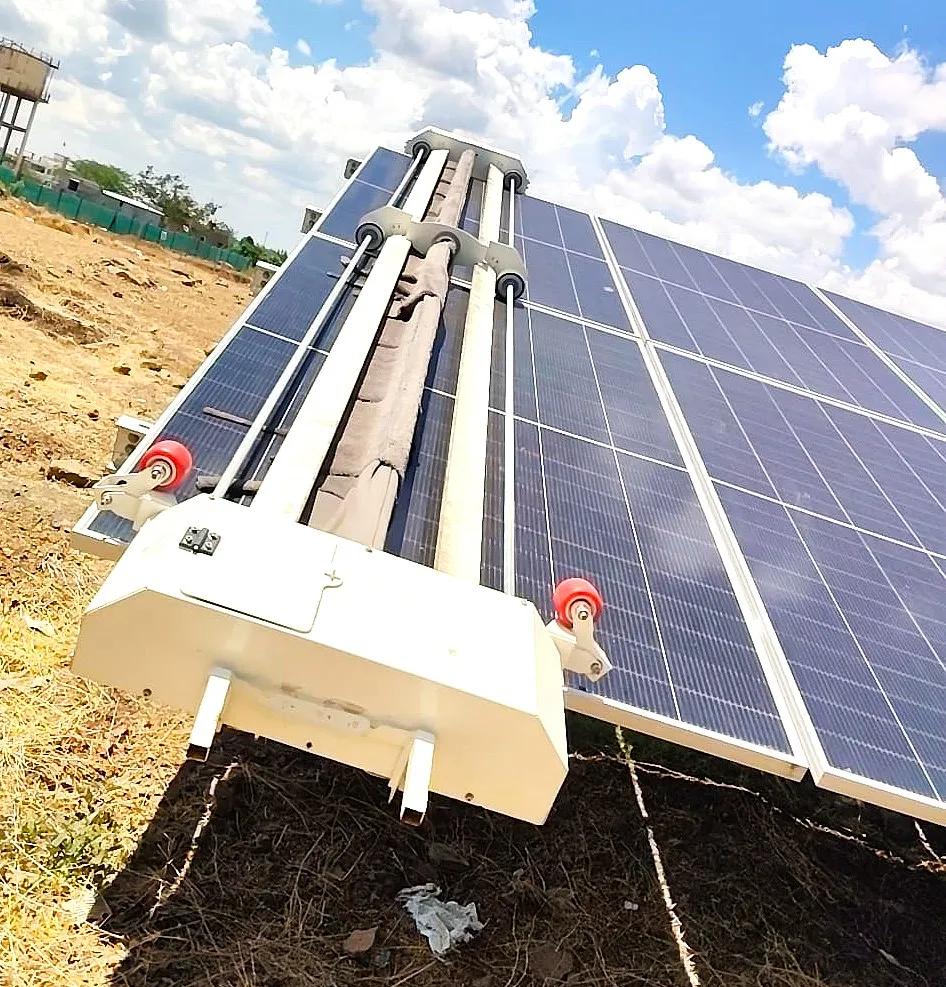
To solve these problems, Taypro deployed two HELYX semi-automatic units. This was done under a Capex procurement model. This robotic solar panel cleaning Maharashtra solution provides the precision needed for scattered arrays. The site has now moved to a systematic semi-automatic approach. This helps manage the challenges of uneven soiling. The deployment has brought huge operational improvements. The site recovered 187.5 MWh of additional generation every year. It also saved 700,000 litres of water annually. This HELYX system shows how utility-scale operators can optimize yield and save resources.
Environment and soiling at Sangli-Madgyal
Environmental Drivers and Soiling Dynamics in Sangli-Madgyal
The Sangli-Madgyal region has a complex environment. This environment directly affects how much dust settles on the 187.5 MW solar asset. The facility sits in an active agricultural area. This area creates large amounts of organic airborne dust during cultivation cycles. Nearby roads also add fine grit to the environment. When this dust and grit combine, they form a layer on the modules. This layer is both adhesive and abrasive.
Humidity cycles in Maharashtra act as a catalyst. These cycles make the soiling much worse. At night, the panels absorb moisture from the air. This moisture "bakes" the dust and grit onto the glass. The loose dry matter turns into a hard, cement-like film. This process prevents natural rainfall from cleaning the panels. Rain often fails to wash away this hardened layer. Instead, it creates uneven soiling patterns at the string level.
This site-specific soiling created many operational challenges. These issues made robotic solar panel cleaning Maharashtra a necessity:
- String-Level Inconsistency: High-humidity mornings cause residue to build up in specific spots. This leaves O&M teams with unpredictable power levels across different blocks.
- Logistical Constraints: Regular cleaning cycles often clash with other site work. These tasks include civil work and vegetation management. Water logistics also put a strain on resources.
- Lack of Verification: Managers lacked automated logging tools. Without these, they could not confirm if manual crews cleaned every string. This led to undetected performance gaps.
The plant now uses an autonomous, waterless cleaning method. This approach targets humidity-driven soiling at the source. It allows for consistent dry cleaning. This prevents grit and moisture from bonding to the glass. As a result, the energy yield remains stable across the 187.5 MW array.
O&M before Taypro
Operational Hurdles Before Robotic Solar Panel Cleaning in Maharashtra
The O&M department faced many logistical hurdles before the new solution. The 187.5 MW Sangli-Madgyal site relied on manual cleaning teams. This created a lot of volatility in the maintenance schedule. Managing these crews was a constant struggle. The team had to coordinate water logistics and night shift rotations. These tasks often clashed with critical site needs. For example, cleaning often competed with vegetation control and civil maintenance windows.
Plant managers were also worried about the supervision gap. This gap made operational accountability very difficult. In a site this large, verification is nearly impossible. Managers could not be sure if manual crews covered every string. This lack of proof for each block created audit failures. Supervisors could not track which arrays were serviced. They also could not identify where cleaning was missed due to bottlenecks.
- Audit Gaps: Supervisors lacked documented proof for block cleanings. This made it hard to know if power drops were caused by soiling or technical failures.
- Resource Competition: Manual cleaning requires a lot of water. Coordinating this required balancing scarce site access hours. This often delayed cleaning during high-soiling periods.
- Variable Performance: The O&M team lacked precise data logs. They could not maintain a consistent cleaning cadence. This resulted in uneven energy output across the 187.5 MW array.
The transition to a robotic cleaning strategy fixed these gaps. It replaced manual uncertainty with controlled, systematic cycles. Now, every module receives attention based on a specific schedule.
Fleet and deployment at 187.5 MW
Fleet Deployment and Semi-Automatic Integration at the 187.5 MW Site
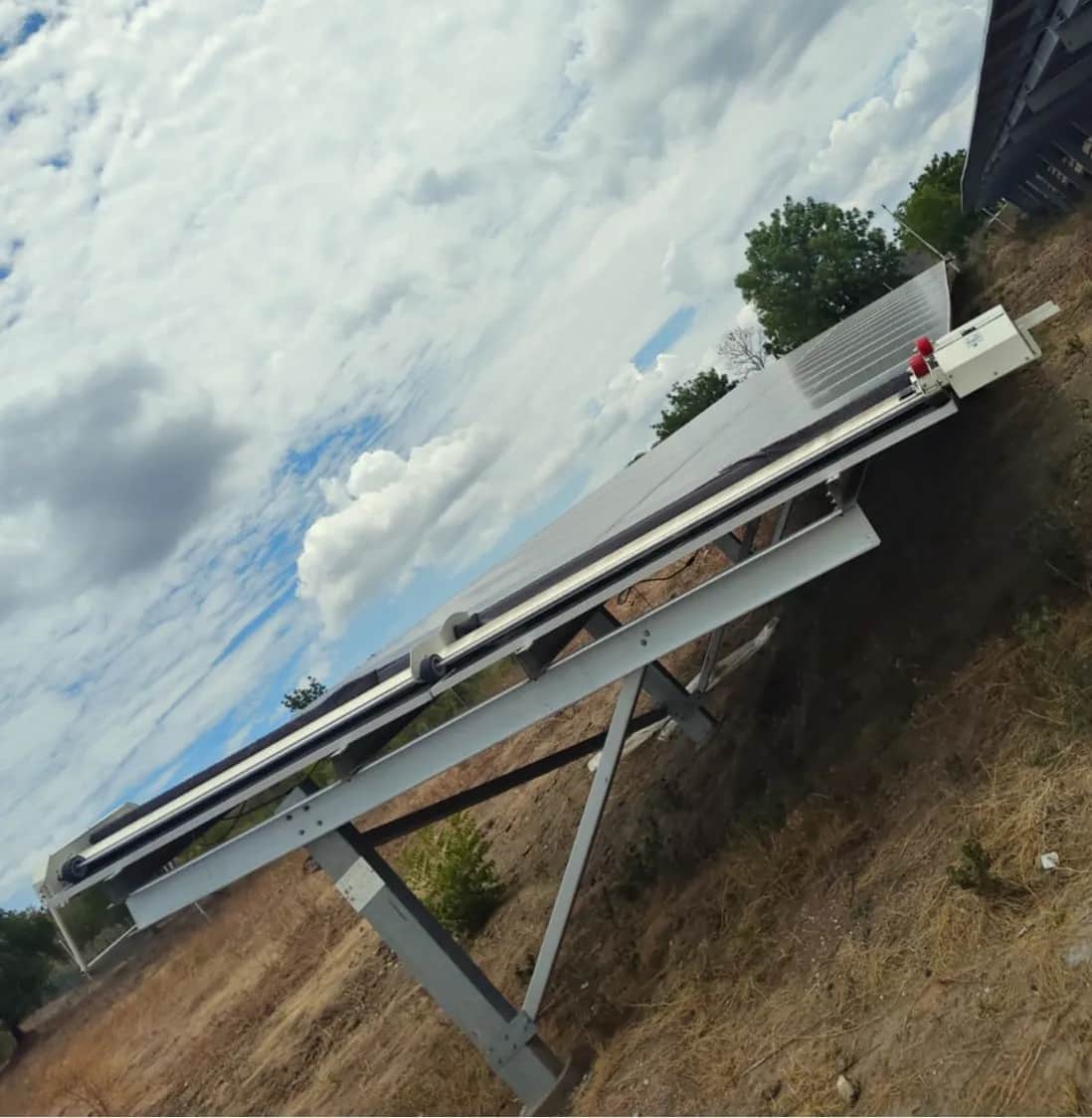
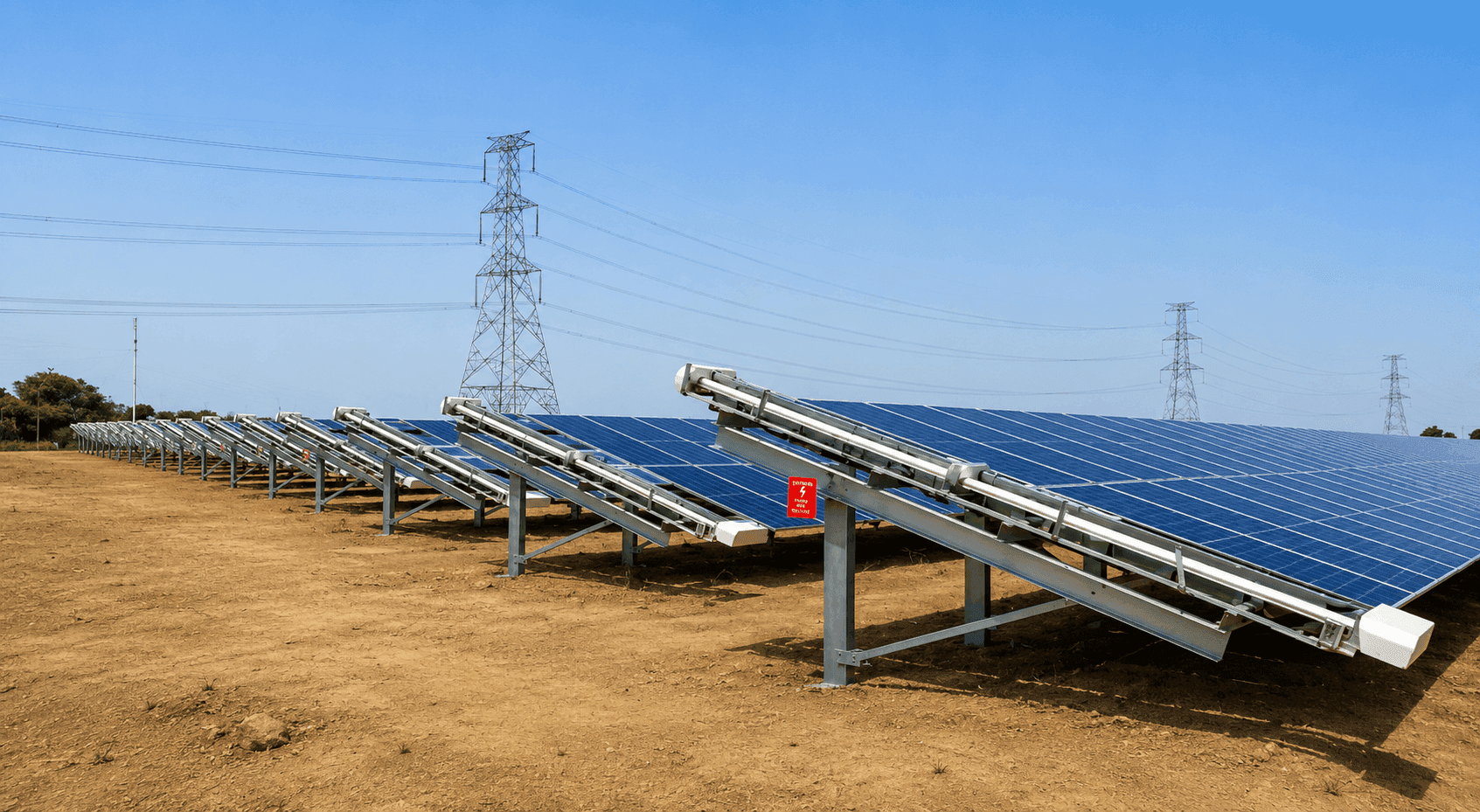
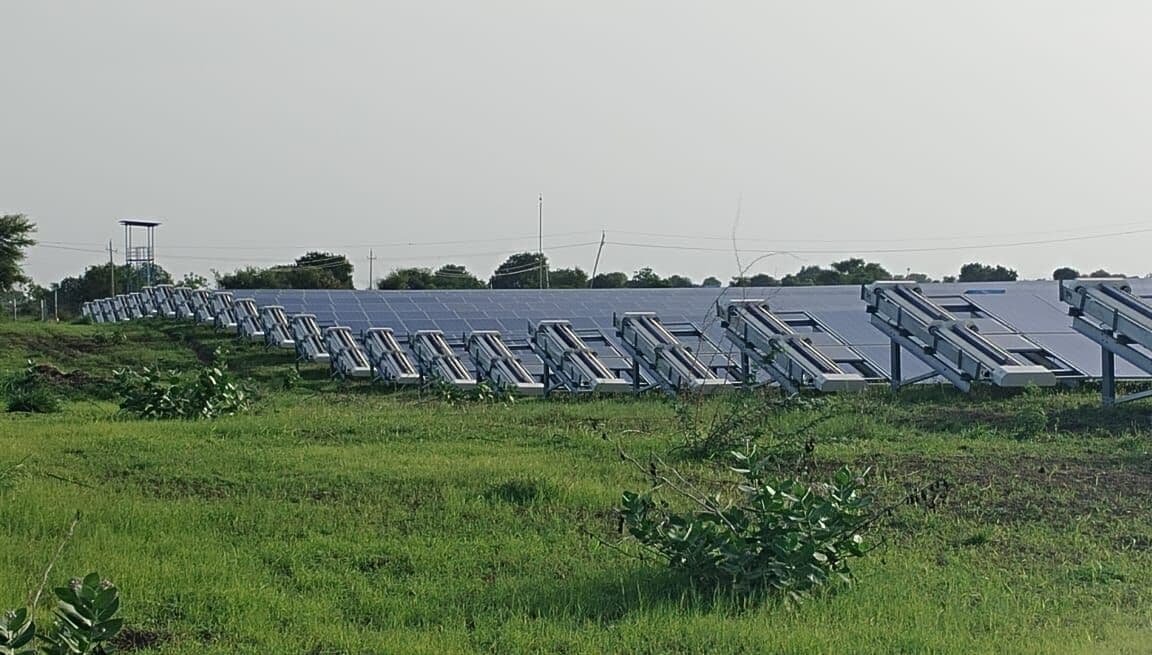
Taypro used a targeted fleet strategy for this 187.5 MW project. We focused on controlled, semi-automatic maintenance. The site uses two HELYX pick-and-place robots. These were deployed through a Capex-based procurement model. This setup helps solve the problems caused by agricultural dust and road grit. It also manages the moisture cycles of the region.
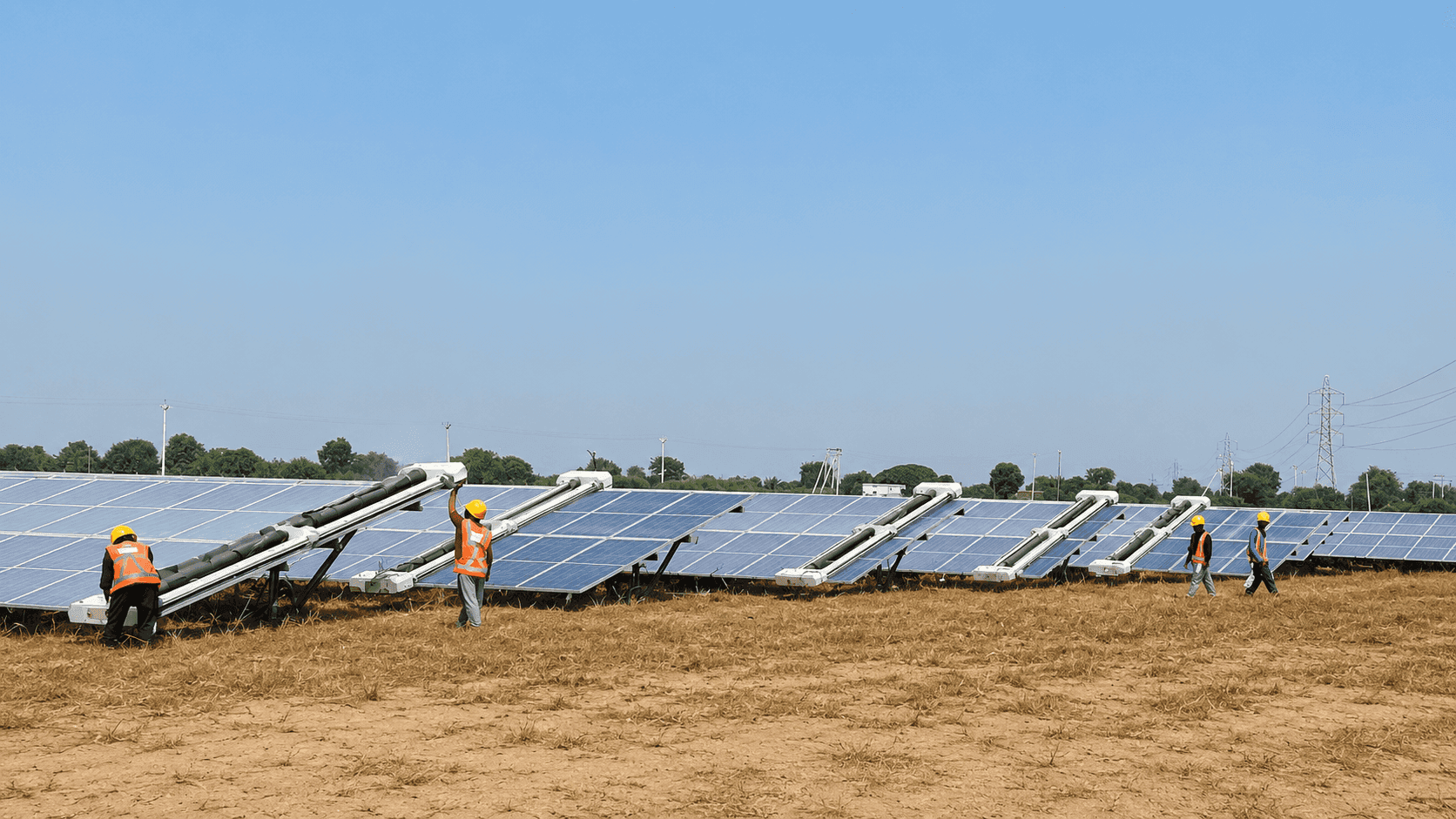
The HELYX system is a high-efficiency cleaning solution. It is specifically designed for distributed utility-scale layouts. This semi-automatic approach is much better than manual methods. It allows the O&M team to run structured cleaning cycles. The team rotates the two robots across the site. This maintains a steady cadence of 3 to 10 dry cleaning cycles per month. This frequency is based on real-time soiling levels. It also considers site access. This ensures maximum energy recovery without the scheduling conflicts of water-based crews.
- Robotic Fleet: The site uses two HELYX units. They use single-pass PBT brush technology. This is safe and waterless for panel contact.
- Procurement Model: The Capex model centralizes O&M assets. This allows the site to have direct ownership and long-term control.
- Deployment Strategy: The pick-and-place model is very flexible. It allows robots to move between scattered blocks. This is perfect for the uneven soiling in Maharashtra.
- Performance Verification: Robotic cleaning removes manual uncertainty. It provides a documented, high-efficiency process. This saves 700,000 litres of water every year.
The HELYX robots have impressive technical specs. Each unit weighs 39 kg. They move at a speed of 10 to 15 metres per minute. They can clean for up to 3 km on a single charge. The brushes are made of UV-stable PBT material. This material is designed for single-pass cleaning. This method is highly effective for removing debris. The site now achieves a more reliable O&M window. The robots clear agricultural debris and grit reliably. This leads to an additional 187.5 MWh of generation per year.
Operations and monitoring
Operations and Monitoring: Managing Semi-Automatic Cleaning at the 187.5 MW Sangli-Madgyal Plant
Operating a 187.5 MW site in Maharashtra requires strict coordination. Cleaning cycles must work alongside other site maintenance. The Sangli-Madgyal plant uses two HELYX robots to fight soiling. These robots handle the road grit and agricultural dust. This deployment replaces unpredictable manual crews. Instead, it uses a structured model. This model is supported by NECTYR fleet oversight.
Logistical planning is a key part of the operation. The team balances 3 to 10 scheduled dry cleaning cycles per month. They must also account for vegetation management and civil works. Because the site uses pick-and-place robots, supervisors use NECTYR to map cleaning paths. This ensures every string gets consistent attention. It also prevents the scheduling conflicts that bothered the old manual teams.
- Accountability and Proof: NECTYR provides digital logs for every block. These logs verify which strings were serviced. This removes any ambiguity regarding performance.
- Wind Holds and Safety: The O&M team uses weather-triggered wind holds. This ensures robot safety during high-velocity gusts. This is vital for the local climate.
- Resource Optimization: The site avoids the "daily wash" myth. By using data-driven intervals, the site preserves water. It also avoids the strain of managing large night crews.
- Systemic Efficiency: The robots can bypass active vegetation zones. This ensures the 187.5 MWh of extra generation is captured. The operation is reliable and maintenance-free.
An inspection-led model helps managers maintain high uptime. The integration of semi-automatic robotic solar panel cleaning in Maharashtra is a success. It proves that consistent, predictable dry cleaning works. It is the best way to fight complex environmental soiling at scale.
Results and impact
Results and Impact of Robotic Solar Panel Cleaning in Maharashtra
The shift to robotic cleaning has redefined maintenance at Sangli-Madgyal. The site has moved away from manual, water-based crews. This change has reduced costs and variability. It has also removed the friction of night shift operations. Water procurement is no longer a major issue. This is vital in a region where agriculture and vegetation management compete for resources.
The main impact comes from the precision of the cleaning. NECTYR gives the O&M team granular oversight. Cleaning frequency now matches actual soiling levels. It is no longer based on arbitrary schedules. This systematic approach stops the buildup of road grit and dust. It prevents the power drops that used to plague the site.
- Substantial Water Conservation: The plant uses a waterless cleaning protocol. This has eliminated the need for local water supplies. The site achieves massive annual water savings. It also protects panels from potential calcification.
- Enhanced Power Recovery: Data-driven cleaning cycles have unlocked more energy. The site sees a boost in annual generation. The 187.5 MW capacity now operates at its intended efficiency.
- Operational Accountability: Automated logs have removed all ambiguity. Supervisors now have verified proof of completed tasks. This enables a proactive maintenance culture.
- Resource Alignment: Robotic cleaning frees up site personnel. They can now focus on civil O&M and vegetation management. This creates a streamlined workflow across the entire plant.
The Sangli-Madgyal project is a benchmark for the industry. It shows the value of robotic solar panel cleaning in Maharashtra. Combining intelligent monitoring with semi-automatic equipment works. It provides a robust, scalable solution for large solar farms with difficult environments.
Peer comparison and planning checklist
Peer Comparison and Planning for Maharashtra Utility Sites
The Sangli-Madgyal site is a major 187.5 MW benchmark. It sets a standard for robotic solar panel cleaning in Maharashtra. Let us compare it to other projects. The 14 MW Yavatmal-Kupti site is much smaller. Sangli-Madgyal uses a larger, specialized semi-automatic fleet. This allows it to handle much higher throughput. However, both sites face the same dust and humidity cycles. The Soyegaon solar project also shows how scalable these robots are. It proves that moving away from water-heavy labor is essential. This is true for all varied topographies in Maharashtra.
Use this checklist to plan your transition to automated cleaning:
- Map Soiling Density: Find the high-impact zones in your array. Look for areas with heavy agricultural dust or road grit. This helps you plan robot deployment.
- Evaluate Water Logistics: Check your current water costs. Look at how easy it is to access water on site. This will help you calculate your ROI for waterless systems.
- Assess Infrastructure Compatibility: Check your rail and row specifications. Ensure robots can move between blocks easily. Avoid manual intervention or logistical bottlenecks.
- Establish Verification Protocols: Use NECTYR-integrated monitoring. Move away from human-dependent schedules. Use performance-based, verified cleaning cycles instead.
- Coordinate O&M Schedules: Align your robot uptime with other site work. This includes vegetation and civil maintenance. This prevents conflicting activity and maximizes efficiency.