
Executive summary
solar panel cleaning robot India, The 50 MW Seci-1 ground mount solar plant in India faced serious operational hurdles. The site dealt with moderate dust and periodic agricultural soiling. These factors caused energy losses and made maintenance difficult. The plant relied on manual cleaning methods. This approach was not sustainable for a facility of this size.
Manual cleaning faced three major problems. First, water scarcity in the region made cleaning expensive. Second, rising labor costs made manual work difficult to manage. Third, high labor turnover led to inconsistent cleaning quality. These issues lowered the plant's Performance Ratio (PR). The facility needed a more reliable and efficient way to maintain its modules.
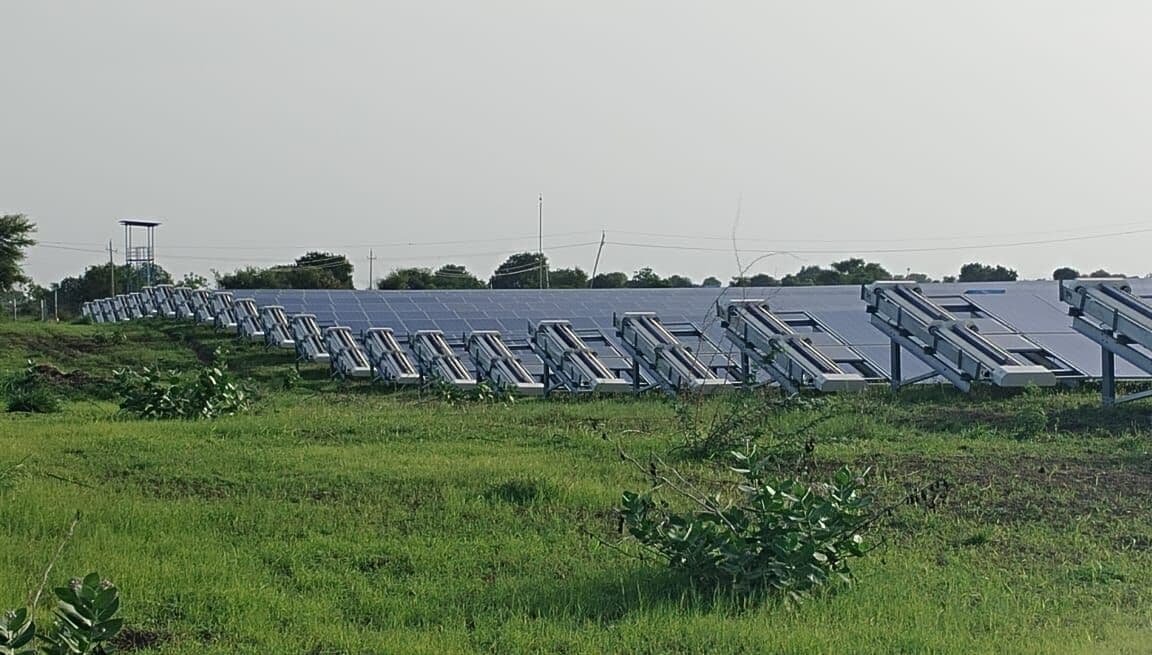
To solve these problems, site management moved to a robotic cleaning strategy. They deployed a mixed fleet managed by the NECTYR fleet operations portal. This fleet includes 44 automatic GLYDE units and 50 semi-automatic HELYX robots. The automatic units perform daily waterless cleaning on primary rows. The semi-automatic units manage distributed rows with precision.
The results of this transition have been outstanding. The facility eliminated its reliance on water for panel maintenance. This shift recovered 1.88 GWh of additional annual generation. The plant also saved 7 million liters of water every year. Additionally, the new system reduced CO2 emissions by 930 metric tons annually. Automation has proven to be a scalable solution for utility-scale solar in India.
Environment and soiling at Seci-1
Environment and Soiling Dynamics at Seci-1
The Seci-1 50 MW plant operates in a challenging environment. The site experiences moderate and persistent dust accumulation. This is not a coastal facility. Instead, it is heavily influenced by the local landscape. The plant is located near agricultural fields and local access roads. These nearby sources create a specific type of dust.
Agricultural activities in the region create seasonal surges of organic debris. This biomass can settle on the solar modules. At the same time, local traffic introduces fine mineral dust. Vehicles on adjacent roads release dust throughout the year. This combination creates a layer of soil that is hard to remove. If left unaddressed, this layer quickly degrades energy output.
Wind patterns also play a role in soiling at Seci-1. During drier months, the wind distributes particles across the ground-mount rows. These particles settle uniformly across the array. This creates a consistent soiling problem across the entire 50 MW installation. Without a strict cleaning schedule, the Performance Ratio (PR) drops rapidly.
The site-specific challenges can be summarized in three areas:
- Agricultural Particulates: Nearby tilled fields release seasonal biomass and soil dust. These particles require frequent removal to keep panels clear.
- Roadside Grit: Regional transit activity near the site perimeter causes constant mineral dust deposition. This grit is fine and abrasive.
- Maintenance Sensitivity: Soiling density varies across different blocks of the array. This requires a flexible and data-driven cleaning approach.
Taypro's mixed robotic strategy addresses these specific environmental factors. The plant uses fully automatic systems for daily cleaning on most rows. It also uses semi-automatic units for specific zones. This approach neutralizes contaminants from both agriculture and roads. This waterless method replaces the unpredictable nature of manual labor. It ensures the array remains clean regardless of the local environment.
O&M before Taypro
Overcoming Manual Cleaning Dependencies at the 50 MW Seci-1 Site
Before Taypro arrived, Seci-1 relied on a manual cleaning model. This model was becoming operationally unsustainable. The plant had a heavy dependence on local labor. This labor force faced high turnover rates. The quality of cleaning was often inconsistent. Managing a large workforce for 50 MW created huge logistical hurdles.
Inconsistent labor led to erratic cleaning schedules. This made it difficult for management to predict maintenance outcomes. Furthermore, regional water scarcity added massive pressure. Water was hard to find and expensive to move. The cost of water procurement added heavy overheads to the O&M budget. These constraints meant cleaning cycles were often delayed or shortened.
Delayed cleaning allowed dust to build up in thick layers. These layers directly suppressed the site's Performance Ratio (PR). The plant could not reach its full energy potential. The O&M team was stuck in a reactive cycle. They were always trying to catch up with the dust buildup.
The manual process also suffered from significant audit gaps. Management had no way to verify the quality of the work. They could not track cleaning progress in real-time. This lack of visibility meant resources were often wasted. Some areas received too much attention, while high-soiling zones were ignored. The manual model lacked the data needed for optimization.
Key operational weaknesses included:
- Labour Instability: High turnover and training needs caused frequent service interruptions.
- Water Scarcity: Limited water access created high costs and irregular cleaning schedules.
- Operational Opacity: A lack of automated tracking prevented data-driven maintenance.
Fleet and deployment at 50 MW
Fleet Deployment and Mixed-Mode Strategy at 50 MW
The Seci-1 deployment uses a strategic fleet mix. This mix is designed for the specific soil and layout of the site. The project uses a mixed-mode cleaning strategy. It pairs automated row-based cleaning with semi-automatic pick-and-place capabilities. This ensures the 50 MW facility is covered efficiently.
The fleet includes 44 GLYDE units. These are fully automatic robots designed for fixed-tilt rows. They provide daily waterless cleaning. These units are essential for maintaining high module transparency. They prevent the gradual PR degradation common in dusty areas. By automating these primary rows, the site removes the risks of manual labor.
The GLYDE system uses patented dual-pass microfiber technology. This is a core Taypro technology. First, the robot uses airflow to loosen the dust. Second, the microfiber pass picks up the fine particles. This process is entirely waterless. It is gentle on the solar glass and very effective. This method ensures that daily cleaning is both fast and thorough.
The second part of the fleet includes 50 HELYX units. These are semi-automatic, pick-and-place robots. They manage scattered or distributed blocks of modules. These robots handle areas where manual intervention was once required. The HELYX units perform targeted maintenance on a flexible schedule. They typically execute 3 to 10 dry cleaning cycles per month. This depends on real-time soiling conditions.
This dual-layer approach maximizes uptime. It also minimizes labor costs. The fleet is managed through the NECTYR platform. Every robot sends performance data and health logs in real-time. This connectivity allows managers to be proactive. They can optimize cleaning schedules for peak energy production. The system has successfully reduced labor dependence while boosting generation.
The deployment features these key components:
- Automated Fleet: 44 GLYDE units provide daily waterless cleaning on the main array.
- Supporting Fleet: 50 HELYX semi-automatic units provide targeted maintenance on scattered rows.
- Operational Intelligence: The NECTYR portal provides full fleet oversight and scheduling.
- Sustainability: The system saves 7 million liters of water and reduces CO2 emissions.
Operations and monitoring
Optimizing 50 MW Operations with Automated Waterless Robotics
The Seci-1 site has transitioned to high-efficiency robotic operations. This shift stabilized output levels that were previously unpredictable. The deployment uses the GLYDE system for primary arrays. It uses HELYX units for the peripheral sections. This tiered strategy ensures high-density areas get the most attention.
The 44 GLYDE robots work on a daily cadence. They perform daily waterless cleaning across the primary array. This consistent schedule keeps module transparency high. It eliminates the energy shortfalls caused by manual cleaning gaps. Because these robots are fully autonomous, the site is no longer vulnerable to labor shortages. It also works regardless of water constraints.
The 50 HELYX robots use a different model. They operate on a semi-automatic, pick-and-place basis. These units are ideal for irregular or scattered rows. They execute 3 to 10 dry cleaning cycles per month. This frequency is based on real-time soiling accumulation. This ensures that even complex zones remain clean and productive.
All operations are centralized through the NECTYR fleet portal. This portal provides digital logs for all 94 robots. Supervisors use NECTYR to monitor robot health. They can also verify that cleaning tasks are complete in real-time. This level of digital oversight creates total site-wide accountability. It allows O&M teams to move from reactive repairs to proactive maintenance.
The operational benefits include:
- Daily Cleaning: GLYDE robots ensure primary rows are cleaned every single day.
- Flexible Maintenance: HELYX robots provide scheduled cleaning for distributed zones.
- Digital Oversight: NECTYR provides real-time health diagnostics and performance logs.
- Asset Protection: Automated cleaning prevents the micro-cracks often caused by manual labor.
Results and impact
Operational Efficiency and Sustainable Performance at Seci-1
The Taypro robotic ecosystem has transformed the Seci-1 facility. The site has moved away from labor-intensive manual methods. This new strategy addresses the specific problems of agricultural dust and road debris. The high-capacity autonomous fleet has made cleaning predictable. The plant is no longer at the mercy of water scarcity or labor issues.
The primary arrays benefit from the GLYDE system. The daily autonomous execution keeps modules clean. This consistent microfiber cleaning maintains high transparency. As a result, energy generation is maximized throughout the entire year. The system recovers significant output that was previously lost to soiling. This happens without any need for human intervention.
The environmental and economic impacts are significant. The plant has achieved massive annual water conservation. By removing the need for water-based cleaning, the site meets its sustainability goals. The reduction in carbon emissions is also a major win. The combination of higher generation and lower costs validates the robotic model.
Through the NECTYR portal, operators have total control. They can track performance and schedule tasks with ease. This proactive approach safeguards the long-term profitability of the 50 MW asset. The transition proves that automation is the best path for utility-scale solar.
The key outcomes are:
- Generation Gains: Daily waterless cleaning cycles drive huge annual energy recovery.
- Water Savings: The site saves approximately 7 million liters of water every year.
- Carbon Reduction: CO2 emissions are reduced by 930 metric tons annually.
- Data-Driven O&M: Real-time tracking via NECTYR ensures peak performance.
Peer comparison and planning checklist
Peer Comparison and Implementation Planning
The Seci-1 deployment is a major part of Taypro's 5 GW plus global capacity. We can compare this site to others to see its value. For example, a 10 MW fixed-tilt site might only use HELYX units. That smaller site relies on semi-automatic, intermittent cycles. In contrast, the 50 MW Seci-1 site uses a fully automatic GLYDE-led system. This allows for daily cleaning and much higher efficiency.
We can also compare Seci-1 to a 100 MW tracker site. A tracker site might use NYUMA-X robots. While both sites use NECTYR for oversight, their needs are different. Seci-1 uses GLYDE because it is a ground-mount, fixed-tilt array. GLYDE's dual-pass microfiber method is perfect for its dust-prone environment. By matching the robot to the array type, Taypro ensures maximum recovery.
If you are planning a similar deployment, follow this checklist:
- Analyze Soil: Conduct a site soil analysis to find the best cleaning frequency.
- Check Access: Ensure end-row and inter-row paths are clear for robot movement.
- Integrate SCADA: Connect the NECTYR portal with your site SCADA system.
- Plan Maintenance: Set a schedule for robot battery charging and microfiber care.
- Safety Protocols: Create clear rules for operation during high-wind or extreme weather.
For more information on robotic cleaning, visit our [Cleaning systems overview](https://taypro.in/solar-panel-cleaning-system). You can also use our [ROI price calculator](https://taypro.in/solar-panel-cleaning-robot-price-calculator) to estimate your savings. For specific product details, see our pages for [GLYDE](https://taypro.in/solar-panel-cleaning-system/automatic-solar-panel-cleaning-system) and [HELYX](https://taypro.in/solar-panel-cleaning-system/semi-automatic-solar-panel-cleaning-system).