
Executive summary
robotic solar panel cleaning Maharashtra. The Solapur-Gulwanchi solar project is a large 262.5 MW ground-mount facility. It is located in the state of Maharashtra. This site faced major performance issues due to the regional environment. A mix of agricultural dust and heavy road grit covered the panels constantly. Local humidity cycles made these problems even worse. This created uneven soiling patterns across many solar strings. Such conditions made standard maintenance planning very difficult for the O&M team.
Site managers struggled to maintain steady energy output. They also faced challenges with water logistics. Managing night-crew schedules often clashed with other site tasks. Additionally, supervisors lacked proof of which blocks were actually cleaned. This lack of data made it hard to optimize maintenance windows. The site needed a more reliable and verifiable cleaning method.
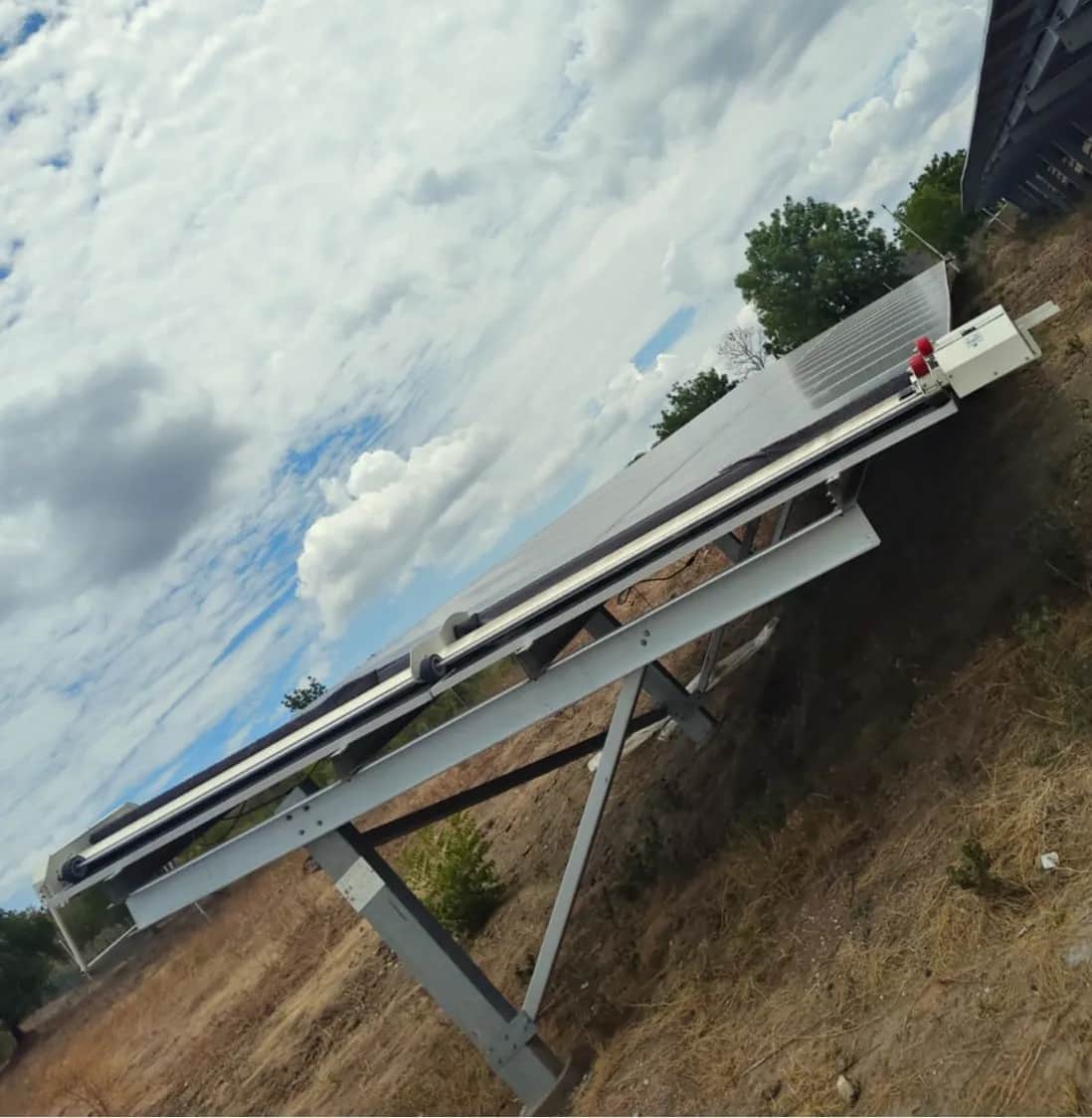
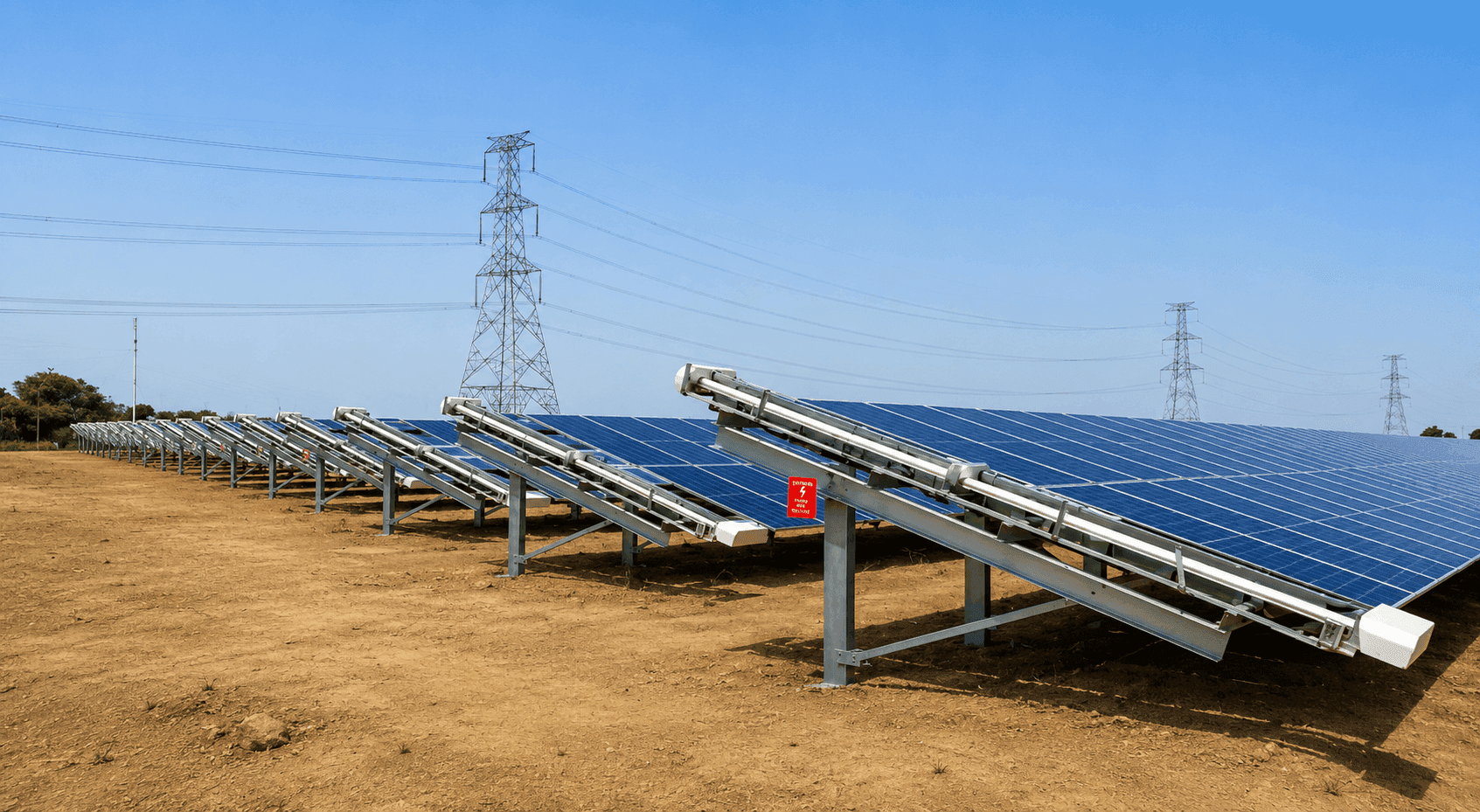
To solve these issues, Taypro deployed three HELYX semi-automatic robots. This deployment provided a targeted and waterless cleaning solution. The HELYX robots use a pick-and-place method for scattered layouts. This allowed the team to perform scheduled dry cleaning cycles. These cycles typically happen 3 to 10 times per month. This transition has added 262.5 MWh of generation per year. It also saved approximately 980,000 liters of water annually. The project now enjoys consistent performance and better operational control.
Environment and soiling at Solapur-Gulwanchi
Managing uneven soiling in the Solapur-Gulwanchi micro-climate
The Solapur-Gulwanchi project faces a very specific environmental challenge. This challenge comes from the mix of local farming and the local landscape. The site does not just deal with standard dust. It accumulates a complex layer of organic agricultural particles. It also gathers abrasive road grit from nearby transport routes. These materials settle in different amounts across the solar rows. This happens because of local wind patterns and the ground-mount layout.
The most difficult factor for O&M teams is the local humidity. Nighttime moisture and morning dew play a major role here. This moisture reacts with the layer of agricultural dust and road grit. It transforms loose particles into a hard, sticky film. This film adheres strongly to the glass surface. This hardening process is not uniform across the site. It creates irregular soiling streaks on the panels. These streaks lead to sharp differences in power output between different strings.
Humidity levels change based on nearby vegetation and drainage channels. Because of this, some sections of the 262.5 MW plant suffer more than others. Some areas see much higher performance drops due to this micro-climate. Managing this uneven soiling has been a huge logistical hurdle for the past. Traditional manual cleaning schedules often fail to solve the problem. They often lead to over-cleaning rows that are already relatively clean. At the same time, they may miss high-impact zones that need urgent attention.
The unpredictability of these patterns creates constant stress for site supervisors. Managers must balance water logistics with civil O&M maintenance windows. Previously, they lacked a way to verify if specific string blocks were truly clean. By using a semi-automatic robotic strategy, the project changed this approach. The site now uses a consistent and measurable cleaning cadence. This method directly addresses uneven deposits at the string level. It ensures a stable energy yield despite the difficult micro-climatic variations in Maharashtra.
O&M before Taypro
Operational friction and the audit gap in Solapur-Gulwanchi
Before the transition to robotic cleaning, the O&M team used a heavy manual process. Managing a 262.5 MW facility with manual methods was very resource-intensive. The operations were defined by high water consumption. They also relied heavily on manual labor. Both of these factors created major logistical constraints for the plant. Scheduling cleaning crews was a constant struggle for the management team.
Water delivery schedules often clashed with other site needs. Night-time cleaning windows frequently conflicted with vegetation management. They also clashed with essential civil O&M activities. This competition for site access led to stalled progress. It resulted in an inefficient use of limited maintenance windows. The team could not always perform cleaning when it was most needed.
A major pain point was the lack of operational visibility. Management could not see the actual cleaning performance across the massive site. With zero automatic robots, the site relied on manual checking. Supervisors could not verify which specific blocks or strings were serviced. This created a significant audit gap for the facility. The team struggled to prove that they were addressing high-soiling zones. They could not confirm if the cleaning was actually completed as planned. This meant some areas remained neglected for too long. Neglected areas caused inconsistent energy yields across the entire 262.5 MW array.
- Resource competition: Water delivery and night crew schedules caused frequent conflicts with vegetation and civil maintenance.
- Supervisory visibility: Managers lacked per-block verification. They could not audit which strings were cleaned during each rotation.
- Operational instability: The mix of agricultural dust and humidity required more precision than manual teams could provide.
Fleet and deployment at 262.5 MW
Fleet and deployment strategy for 262.5 MW ground-mount arrays
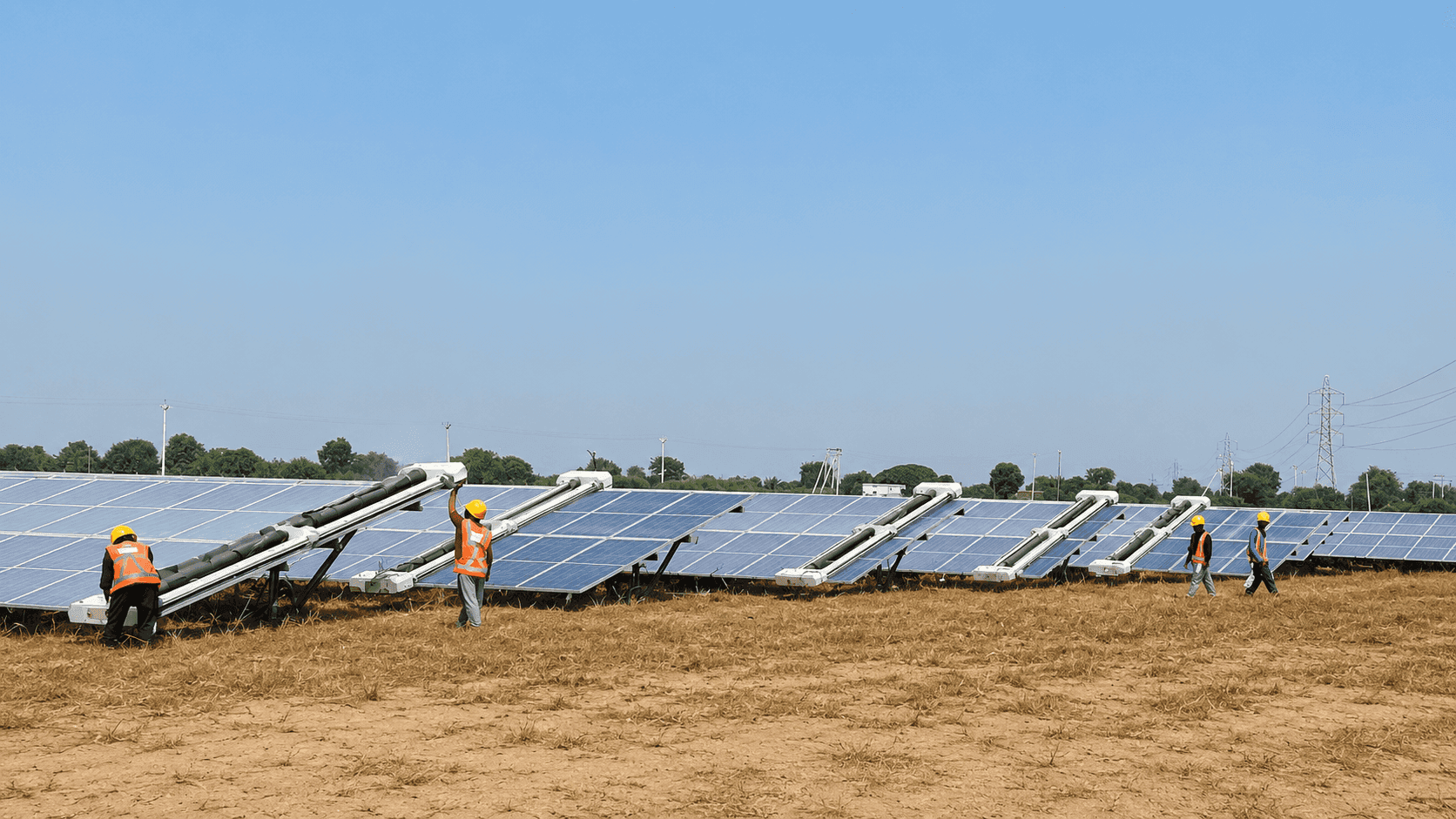
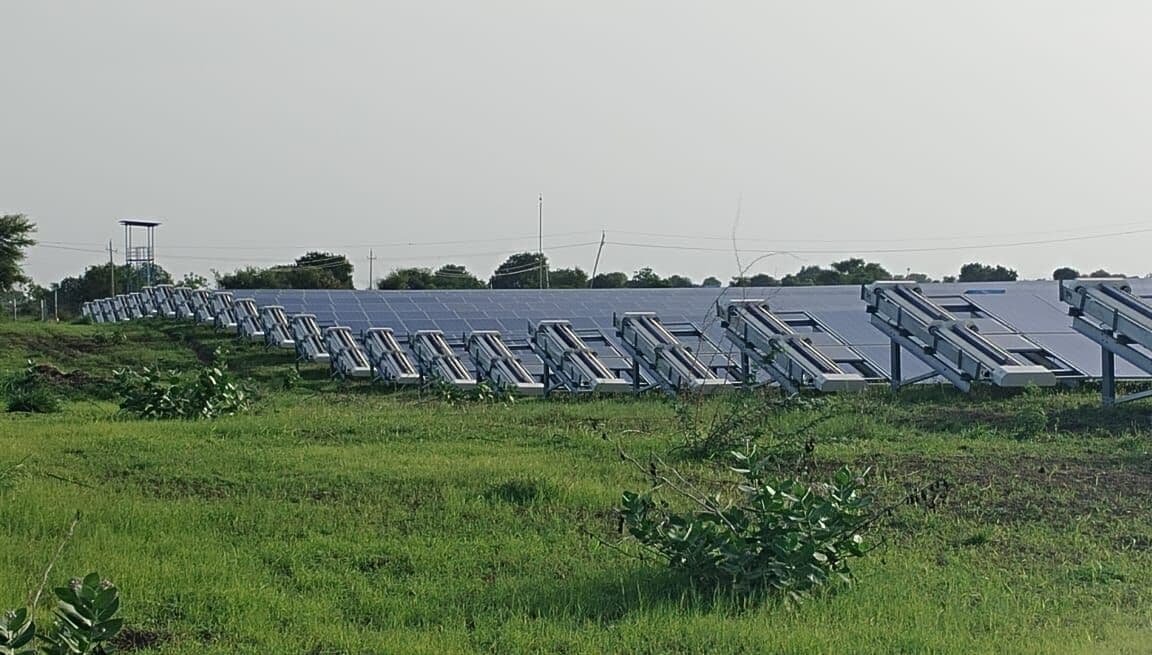
We implemented a targeted fleet strategy to manage this large site. We used three HELYX pick-and-place robots for the 262.5 MW array. This semi-automatic deployment was the best choice for this project. Large-scale projects with scattered infrastructure need portable and flexible cleaning tools. The HELYX system allows the O&M team to move units physically between blocks. This helps them target the specific areas affected by agricultural dust and road grit.
The procurement for this site used a CAPEX model. This gives the facility owner full ownership of the robotic assets. This approach helps site managers integrate the robots into their existing workflows. The HELYX units use single-pass PBT brush technology. This technology is highly effective at removing stubborn grime. It clears buildup that typical manual methods often leave behind. The robots are deployed based on site-specific needs. They typically perform 3 to 10 dry cleaning cycles per month. This frequency is based on local humidity and soiling rates.
Our commissioning process focused heavily on local crew training. We taught the team how to manage the pick-and-place transitions effectively. We emphasized a standardized rotation schedule for the three robots. This ensures they cover the most critical high-soiling zones first. This method optimizes the return on the mechanical investment. Moving away from manual labor has mitigated many scheduling conflicts. The team no longer fights for time between cleaning and civil maintenance. This controlled deployment keeps the 262.5 MW array at consistent output levels. It also provides a clear and verifiable audit trail for every block serviced.
Operations and monitoring
Operations and monitoring for the 262.5 MW Solapur-Gulwanchi site
The operational framework at Solapur-Gulwanchi focuses on a strategic cleaning cadence. This semi-automatic approach eliminates the heavy burdens of manual cleaning. By moving from night crews to three HELYX robots, the team has streamlined maintenance. This shift allows workers to prioritize vegetation management and civil repairs. They no longer have to compete constantly for site resources.
We optimize the cleaning schedule using the NECTYR fleet portal. NECTYR provides transparent and inspection-led accountability for every block. We no longer rely on inconsistent manual performance reports. Instead, supervisors receive actionable data through the digital platform. This data confirms exactly which solar strings were serviced in each cycle. We follow a structured cadence of 3 to 10 dry cleaning cycles per month. We adjust this frequency based on regional humidity and dust patterns. Real-time soiling accumulation metrics also help guide these decisions.
- Elimination of night shifts: The semi-automatic workflow removes the need for nocturnal teams. This reduces site security risks and labor overhead.
- Resource efficiency: Waterless PBT brush technology saves massive volumes of water annually. It ensures consistent panel contact without manual oversight.
- Inspection-led verification: NECTYR logs confirm service completion for every block. This provides the audit trail that manual operations lacked.
This deployment proves a key point for high-capacity plants in Maharashtra. Large sites do not need to rely on the myth of daily washing. A targeted and robot-driven approach is much more effective. It ensures that cleaning frequency matches the actual environmental soiling rates. This model provides the 262.5 MW array with reliable generation recovery. It proves that precision and smart scheduling are better than indiscriminate water usage.
Results and impact
Results and Impact: Sustained Output for a 262.5 MW Array
The switch to waterless robotic cleaning has changed the plant performance baseline. The site replaced inconsistent manual methods with structured HELYX robotic units. This move successfully addressed the issues of agricultural dust and road grit. The result is a significant recovery of generation capacity. This capacity was previously lost due to uneven string-level soiling.
The environmental impact is also very large. The use of waterless PBT technology has removed the need for heavy water logistics. This has yielded massive annual water savings for the site. The new method eliminates the risks of water procurement and transport. These risks previously complicated the entire site operation. By optimizing the cadence through NECTYR, the team maintains peak cleanliness. They do this without the resource strain of traditional wet-cleaning methods.
- Recovered Generation: Automated cleaning cycles have unlocked significant annual energy gains. This directly addresses the impact of humidity and dust on the yield.
- Resource Preservation: Waterless operations save nearly one million liters of water every year. This supports long-term sustainability in the Maharashtra climate.
- Operational Reliability: Managers now have a reliable audit trail for every block. They no longer have to rely on the guesswork of manual reports.
This implementation shows that high-capacity plants can be both efficient and high-performing. Integrating robotic cleaning into the workflow has created a stable operational state. The reduction in maintenance overhead is a major benefit. The O&M team can now focus on core civil and vegetation tasks. This ensures the 262.5 MW infrastructure remains resilient against changing soiling conditions.
Peer comparison and planning checklist
Benchmarking Robotic Solar Panel Cleaning Maharashtra
The 262.5 MW Solapur-Gulwanchi site is much larger than many regional deployments. For example, the 10 MW Ahmadnagar-Jalalpur site uses a more compact strategy. That site is better suited for smaller grid-connected clusters. Similarly, the 14 MW Yavatmal-Kupti project uses a different cadence. Its schedule is tailored to a specific topographical profile. While those projects show the value of robotic cleaning, they are smaller in scale. Solapur-Gulwanchi requires much more complex logistics for a multi-block installation.
The Soyegaon solar project also faces different conditions. It deals with different humidity and soil types than this site. Solapur-Gulwanchi must manage both heavy road grit and dense agricultural dust. By using three semi-automatic HELYX units, the site maintains a steady schedule. It performs 3 to 10 cleaning cycles per month. This balances high performance with the O&M budget. This approach provides repeatable proof of cleanliness across large arrays. This was a capability that manual teams often could not achieve in earlier regional projects.
Planning Checklist for Large-Scale Deployment
- Assess the soiling density at your specific site. Determine the right balance of semi-automatic and fully automatic robots.
- Map your water logistics and vegetation maintenance schedules. Ensure they do not interfere with robotic cleaning windows.
- Integrate the NECTYR fleet monitoring system. This establishes a verifiable audit trail for every cleaned string.
- Verify the terrain slope and the spacing between rows. This ensures robot mobility and safety across all blocks.
- Develop a scalable O&M training program. Ensure local crews can manage unit relocation and charging tasks.