Executive summary
robotic solar panel cleaning Maharashtra. The 37.5 MW Suresh Cotton solar project in Maharashtra faced serious performance drops. These drops came from local environmental challenges. The site is located in an area with heavy agricultural dust. It also faces high levels of road grit. Frequent humidity cycles in the region make these issues worse. These conditions created a thick layer of grime on the panels. Traditional manual cleaning methods could not fix this problem effectively.
The site’s O&M team also faced supervision gaps. They lacked the tools to verify cleaning success for every block. This made it hard to confirm which strings were actually cleaned. To solve these issues, management moved to a Capex-driven model. They deployed the NYUMA semi-automatic cleaning system. This strategic move helped manage uneven soiling. It also reclaimed 37.5 MWh of extra generation every year. The facility saved 140,000 litres of water annually. This change provides the transparency needed to keep the 37.5 MW plant at peak output.
Environment and soiling at Suresh Cotton
Environmental Context and String-Level Soiling at Suresh Cotton
The 37.5 MW Suresh Cotton project works in a very active region. Agricultural work and busy roads create unique soiling challenges here. This site does not just face simple dust. It deals with high amounts of agricultural particulate matter. This matter mixes with road grit from nearby transport paths. This debris settles on the solar panels in irregular patterns. It does not cover the entire site equally.
Local humidity cycles in Maharashtra make the dust harder to remove. These humidity changes turn loose dust into a tough, semi-bonded layer. Manual cleaning crews struggled to remove this grime consistently. The impact on energy production was most visible at the string level. Uneven soiling caused significant string mismatch. This led to performance degradation across the whole site. Because the soiling was not uniform, traditional cleaning rounds failed often. Some sections of the plant were always left dirty.
These complex patterns created a major hurdle for O&M teams. Supervisors lacked granular data to check their work. They could not verify which specific strings had been cleaned. This lack of data made it hard to keep plant output steady. The facility needed the precise, repeatable cleaning cycles of the NYUMA system. A new approach was necessary to handle these unpredictable soiling profiles.
O&M before Taypro
Operational Gaps and Water Logistics at Suresh Cotton
The 37.5 MW Suresh Cotton facility faced unstable O&M before Taypro arrived. The main challenge was balancing heavy manual cleaning with site logistics. Maintenance crews had to manage many moving parts. They struggled to time water transport with other essential tasks. They also had to coordinate with vegetation management and civil work. These conflicting schedules caused frequent delays in cleaning cycles.
The manual approach caused three major failure points. These failures directly degraded the performance of the asset:
- Audit and Supervision Gaps: Managers had no verified proof of cleaning for each block. There was no detailed data to confirm which strings were serviced. This created large performance blind spots across the plant.
- Resource Intensity: Managing water logistics for large manual crews was difficult. It was also very costly. Water tasks often competed for time with other critical O&M windows.
- Inconsistent Output: Logistical friction caused cleaning to be reactive. It was not a scheduled process. This led to uneven panel coverage. It failed to address the specific patterns of agricultural dust and road grit.
Fleet and deployment at 37.5 MW
Fleet and Deployment Strategy at the 37.5 MW Suresh Cotton Site
Management addressed the uneven soiling at Suresh Cotton with a new strategy. They chose a Capex-based procurement model. They selected the NYUMA semi-automatic system to solve the problem. This model treats the cleaning robot as a long-term asset. It allows the O&M team to integrate cleaning into their existing workflows. They can now work alongside civil and vegetation management easily. This avoids the rising costs of manual labor contracts.
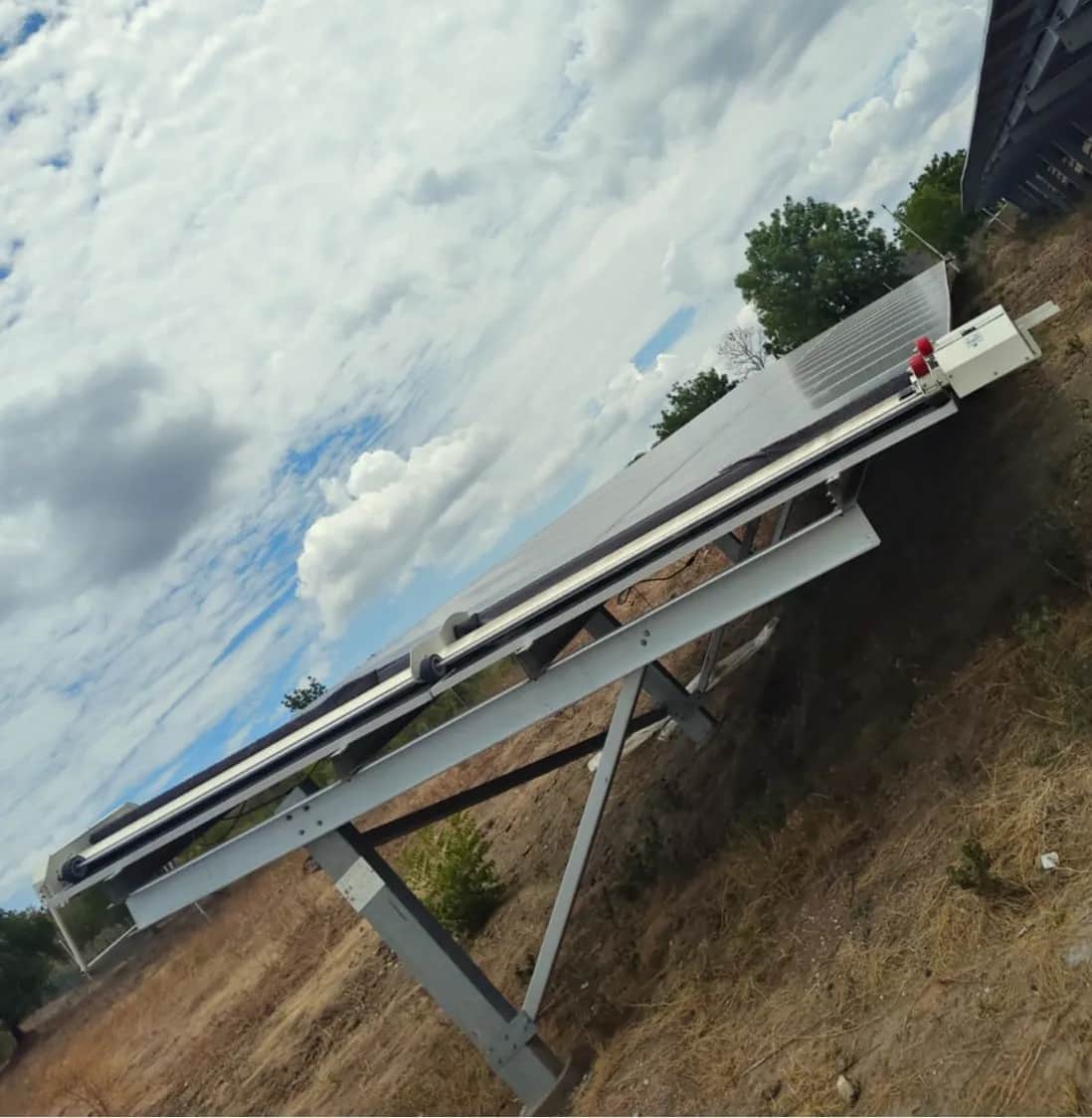
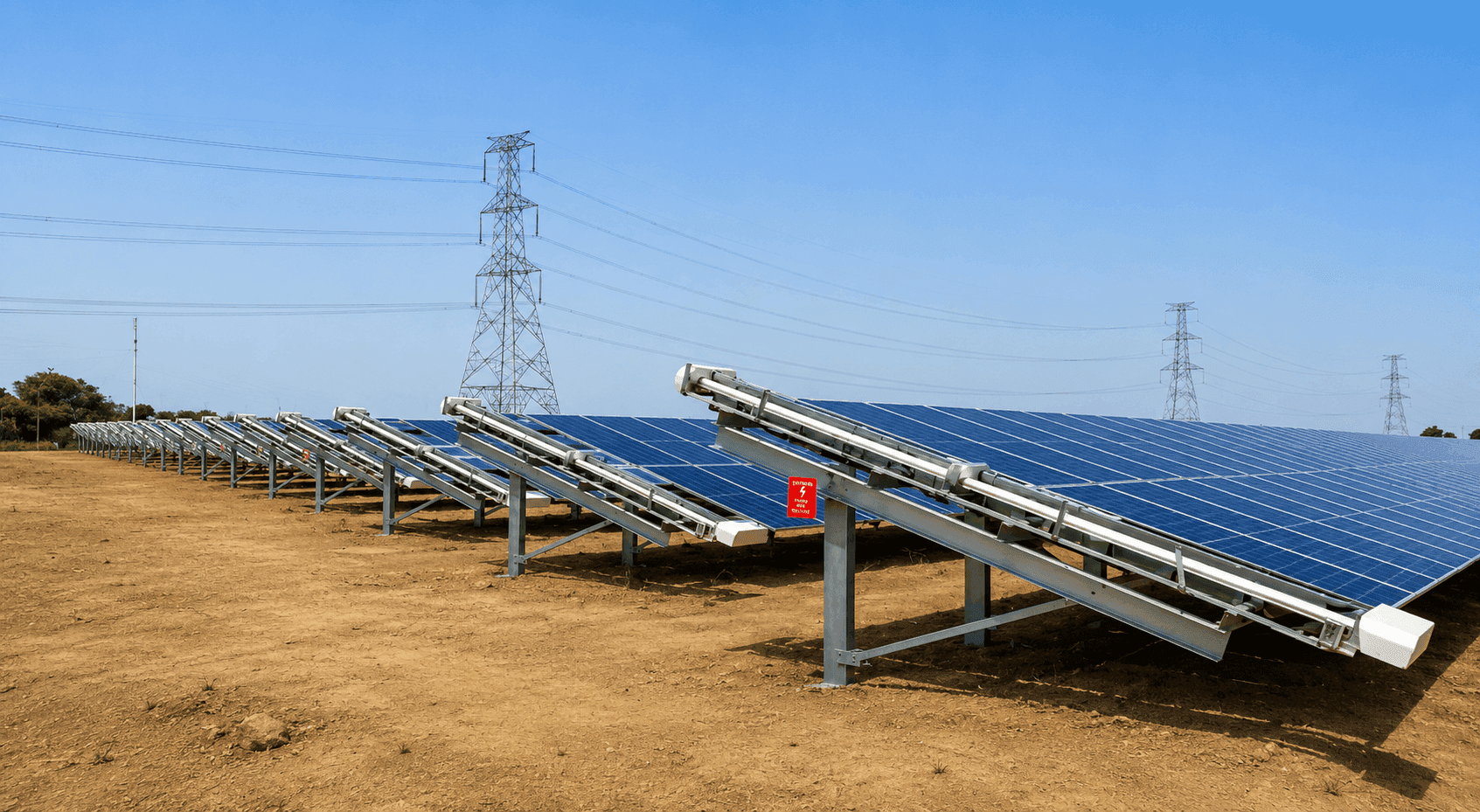
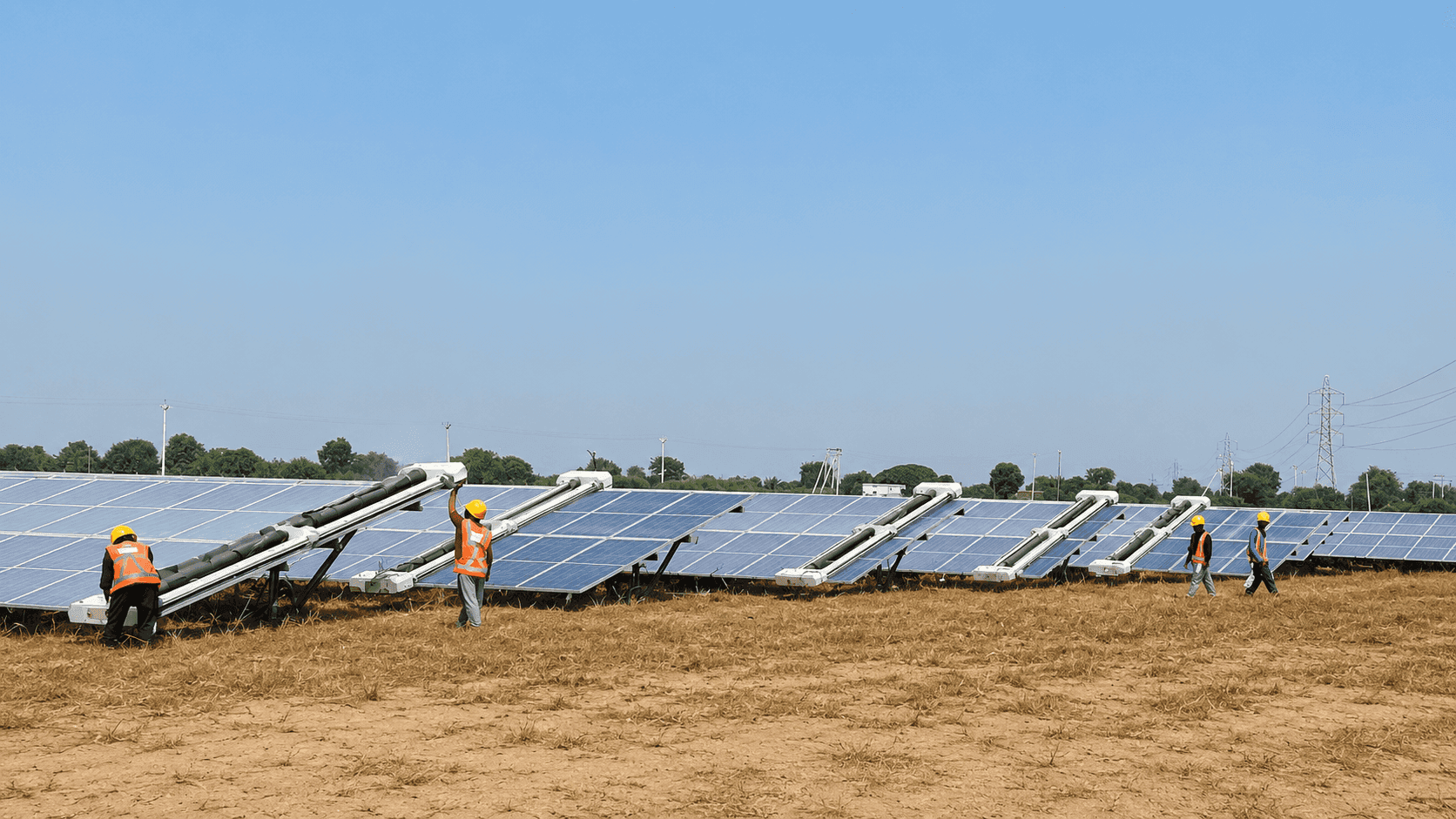
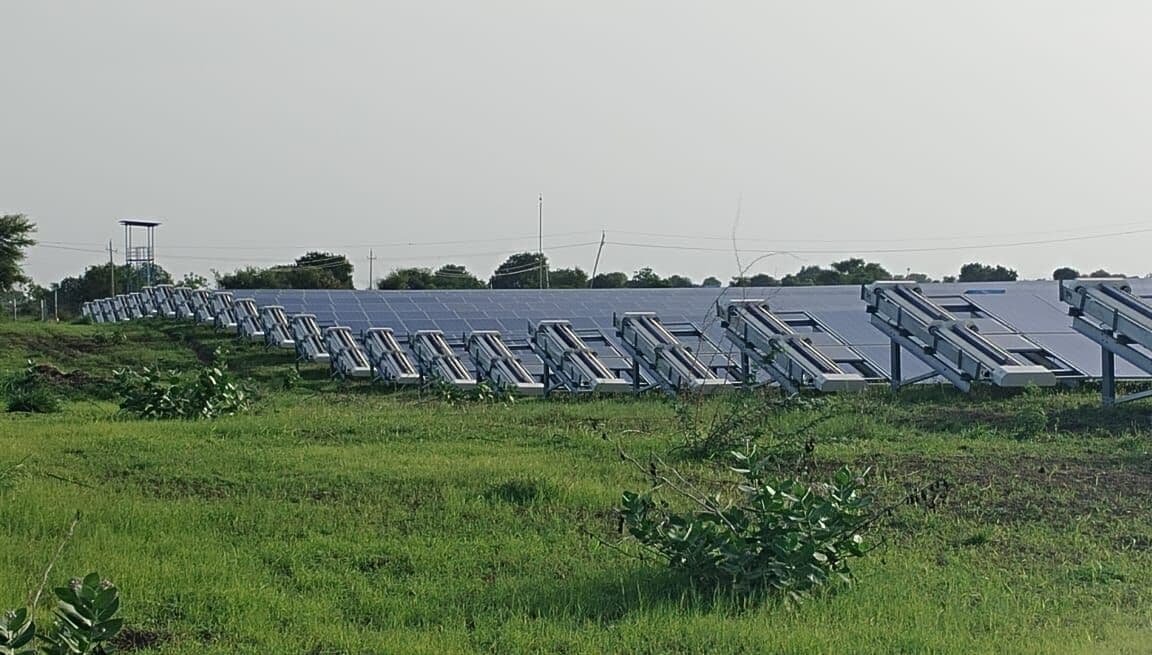
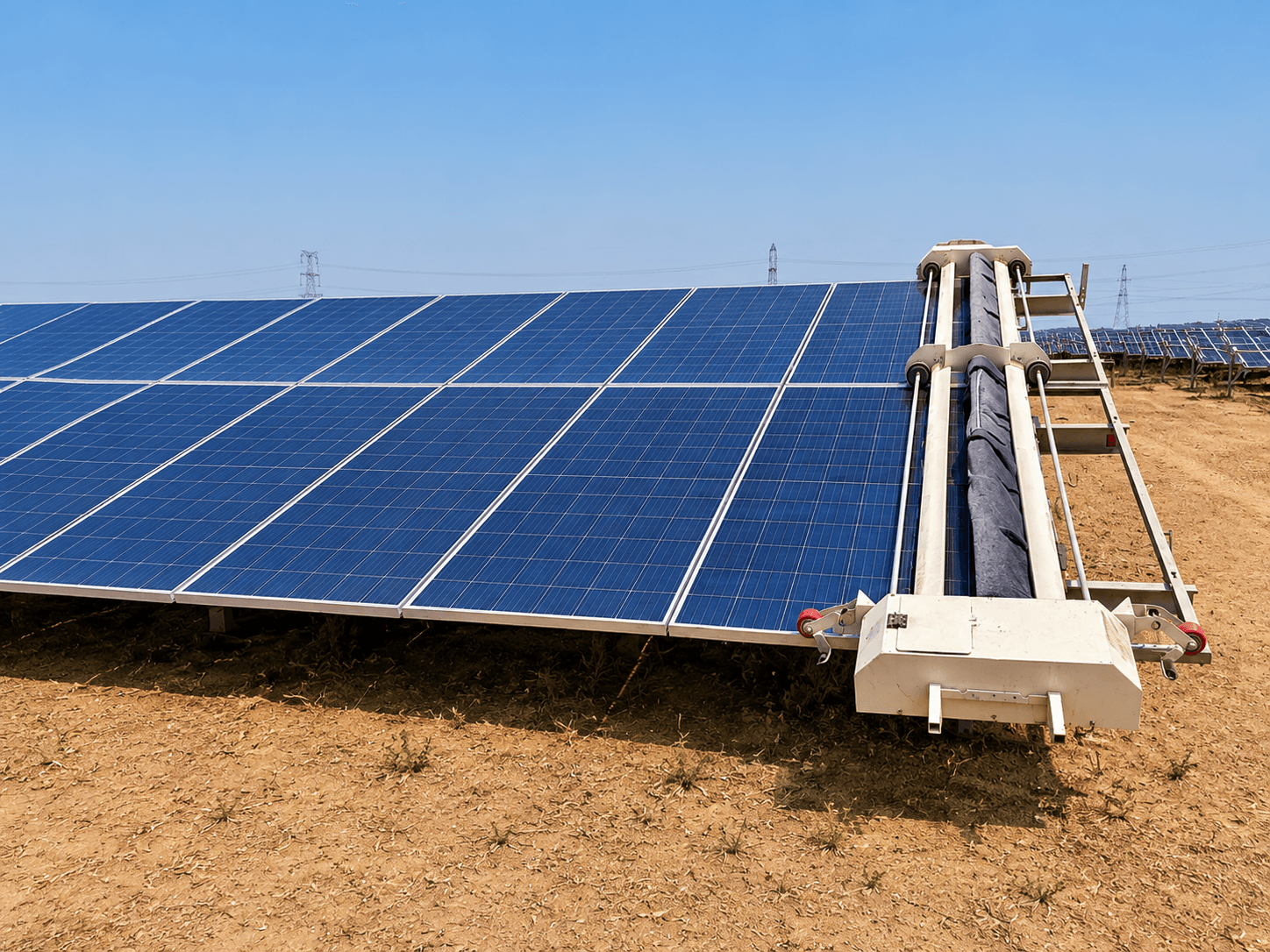
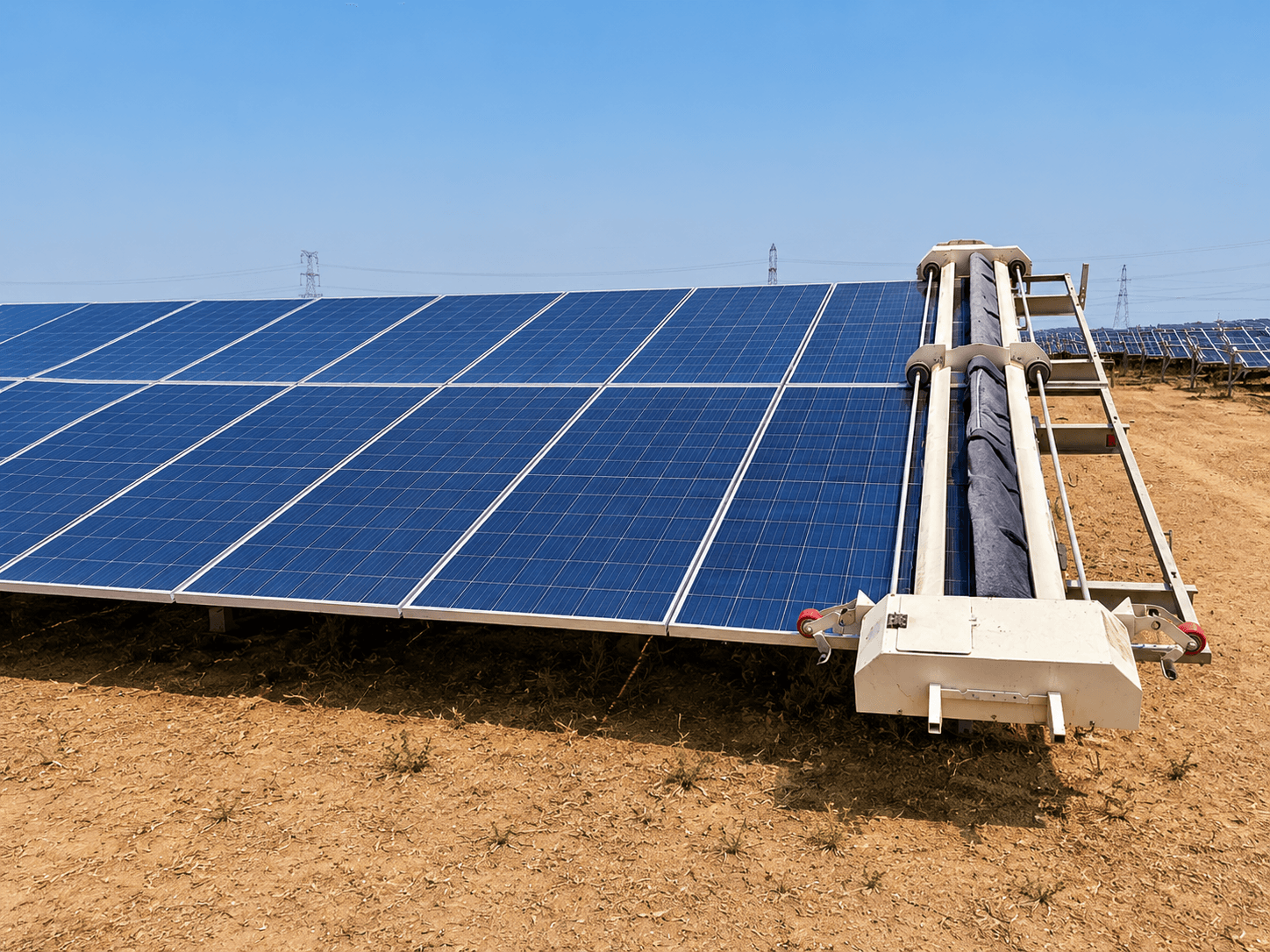
The site uses one semi-automatic NYUMA robot. This robot is designed to navigate the distributed layout of the plant. The pick-and-place configuration is perfect for the Suresh Cotton block structure. This setup allows crews to move the robot with high precision. It helps them target high-soiling areas effectively. Because the system is semi-automatic, it follows a specific schedule. The robot performs 3 to 10 dry cleaning cycles per month. This frequency depends on the weather and site access.
This regular cycle helps fight the local humidity issues. It prevents dust from hardening on the module surfaces. This deployment has also fixed the primary supervision gap. The current system allows for precise tracking of cleaning coverage. Every block is now monitored closely. This ensures every string is serviced based on its actual soiling level. This data-driven method is projected to recover 37.5 MWh of energy every year. It also eliminates the need for 140 thousand litres of water annually. The project now finds a perfect balance between uptime and resource use.
Operations and monitoring
Operations and Monitoring at the 37.5 MW Suresh Cotton Project
Running the 37.5 MW Suresh Cotton site requires a disciplined plan. The team must bridge the gap between high soiling and logistical limits. They use the NYUMA robot alongside the NECTYR fleet portal. This integration gives supervisors a high-quality audit trail. Manual teams previously lacked visibility into individual blocks. Now, NECTYR logs every robotic cleaning cycle. It records specific timestamps and row-specific data.
This accountability is vital for the site. It ensures cleaning directly combats the agricultural dust and road grit. The maintenance cycle follows a steady semi-automatic cadence. The team performs 3 to 10 dry cleaning cycles every month. They schedule these cycles around predicted humidity changes. This prevents deposits from hardening on the panels. This strategy is much more efficient than old manual methods. Manual cleaning often led to inconsistent coverage and wasted water.
Monitoring through NECTYR adds another layer of protection. The team can pause operations automatically during high-wind events. This protects the robot and the panels. It also maintains a high cleaning standard across all rows. The site now operates with total transparency. Supervisors know exactly when and where cleaning occurred. This makes the entire O&M process more predictable and reliable.
Results and impact
Results and Impact of Robotic Solar Cleaning
The NYUMA robotic system has delivered a major upgrade for Suresh Cotton. It is a significant improvement over previous manual practices. The site now has consistent coverage. This was impossible with the old night crew schedules. The use of NECTYR has removed all doubt about maintenance. Supervisors now have verifiable proof of work. They know every block is serviced at the right frequency.
Waterless cleaning technology has also improved resource efficiency. The site no longer relies on heavy water logistics. This has led to massive annual water savings. It also protects the module surfaces. Traditional manual washing can be abrasive. The NYUMA PBT brush system is much safer for the panels. These improvements have led to measurable gains in energy production. The plant is now performing at a much higher level.
The main outcomes of this robotic integration include:
- Elimination of high water use through waterless PBT brush technology.
- Consistent annual energy recovery from agricultural dust and road grit.
- Better maintenance accountability via NECTYR-verified cleaning logs.
- Improved O&M resource use by reducing the manual labor burden.
Peer comparison and planning checklist
Peer Comparison and Planning Checklist
The Suresh Cotton site shows how scalable robotic systems can be. It compares well to other regional projects. The Ahmadnagar-Jalalpur 10 MW project uses a smaller footprint. It focuses on localized soiling. In contrast, Suresh Cotton uses a semi-automatic NYUMA fleet for much larger areas. This is necessary for high-traffic terrain. Smaller sites might still use manual cleaning. However, utility-scale plants need robust hardware to fight heavy dust. The Yavatmal-Kupti 14 MW installation is another good example. The Suresh Cotton site proves that scaling robot density works. It provides better consistency for large string volumes. It also improves resource efficiency in complex Maharashtra environments.
Use this checklist to prepare for your own robotic cleaning integration:
- Assess your site-specific soiling patterns. This helps set the cleaning frequency.
- Audit your current water logistics costs. Compare them to your O&M budget.
- Verify your site connectivity. You need this for NECTYR fleet monitoring.
- Define specific cleaning routes. This helps avoid vegetation and civil work areas.
- Set a clear handover process. This connects site supervisors with the cleaning teams.