Executive summary
solar panel cleaning robot India, The 37.5 MW Thakkar Cotton facility faced several major operational hurdles. High regional soiling levels caused many problems for the plant. This dust constantly lowered the energy yields of the solar array. In the past, the plant used manual cleaning methods. These methods used a lot of water. This was not sustainable because water is very scarce in the area. Also, the cost of manual labor was rising quickly. To modernize the plant, the management changed its strategy. They moved to a Capex-driven model. They wanted a reliable, long-term way to stop soiling losses.
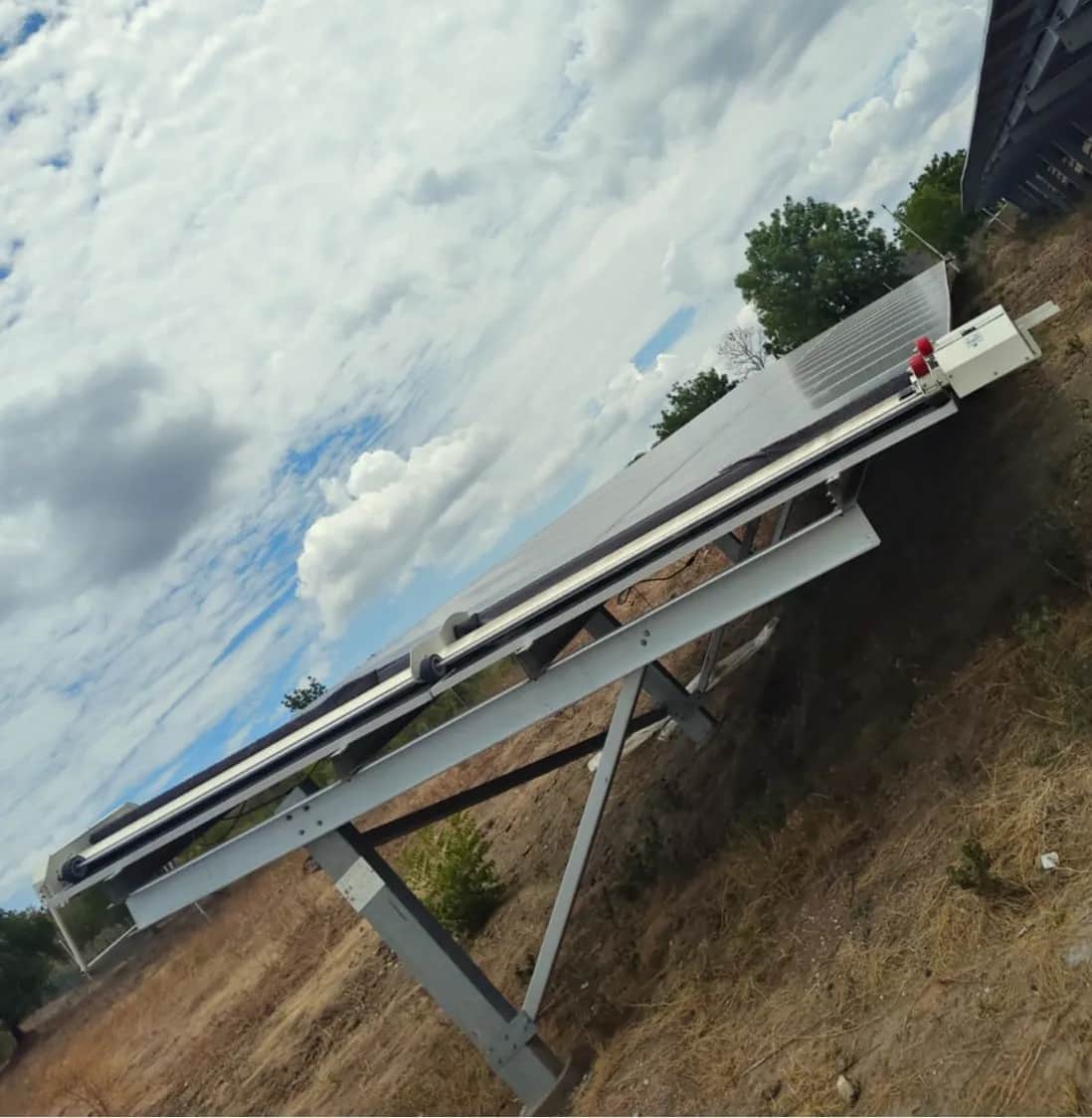
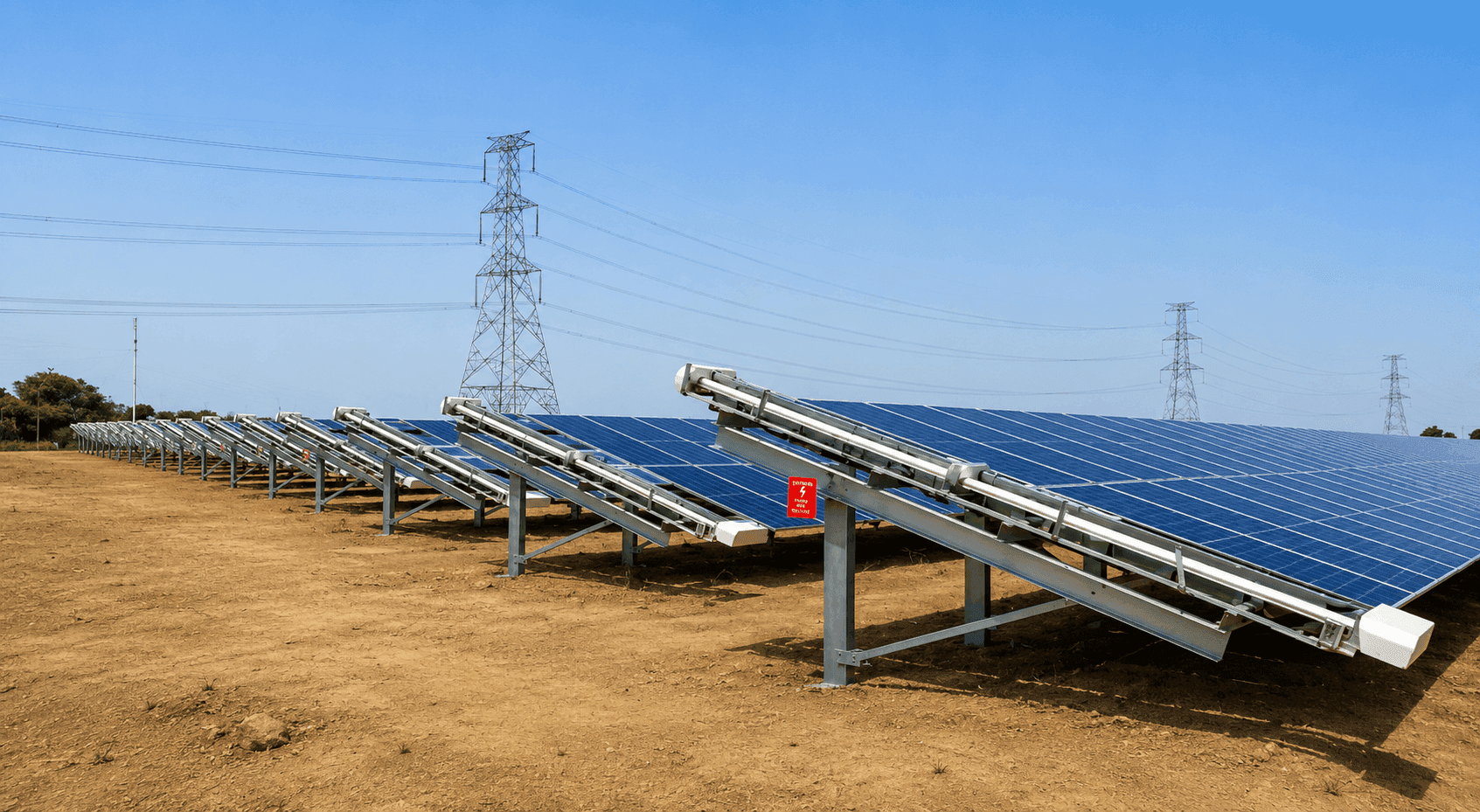
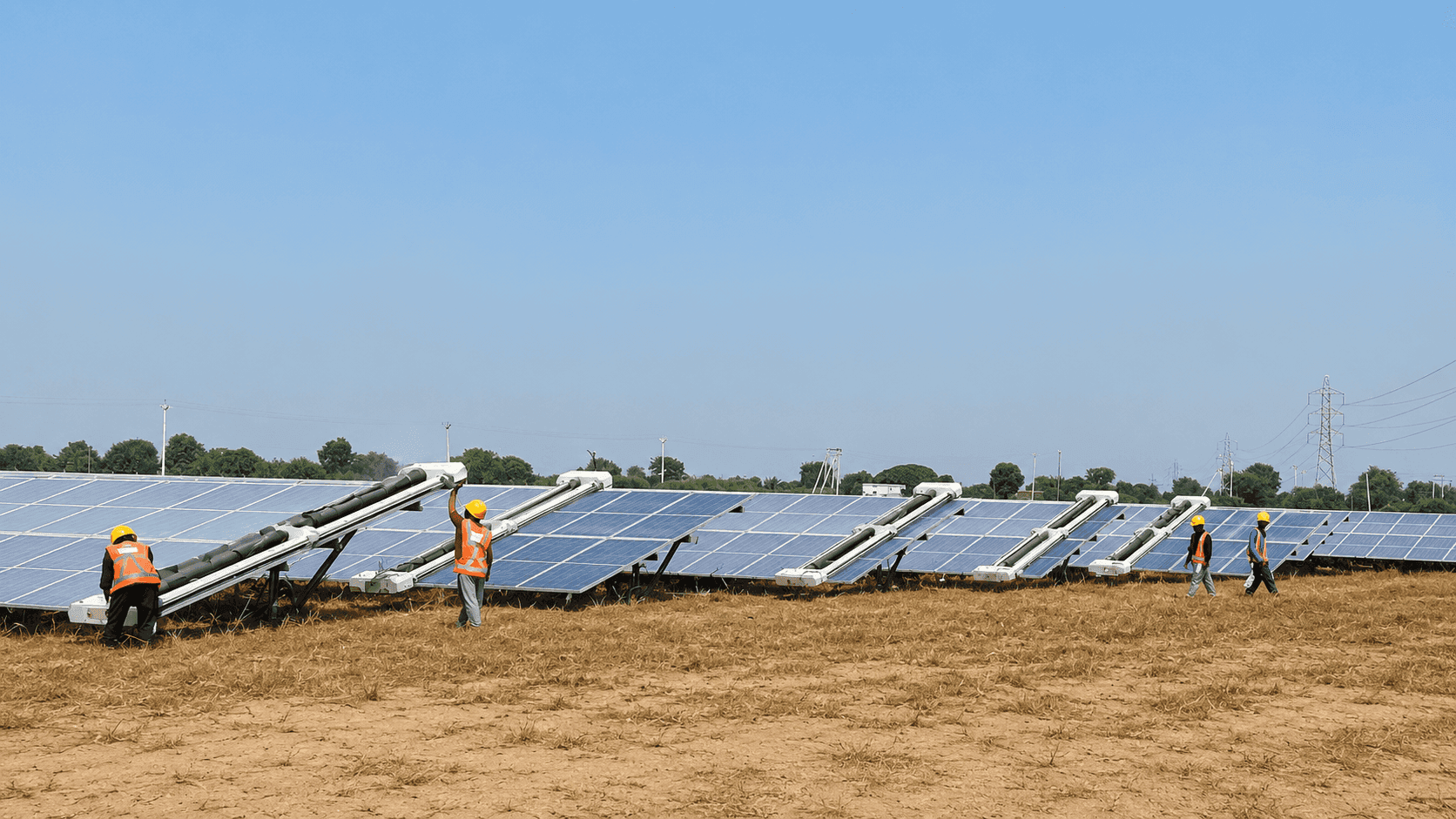
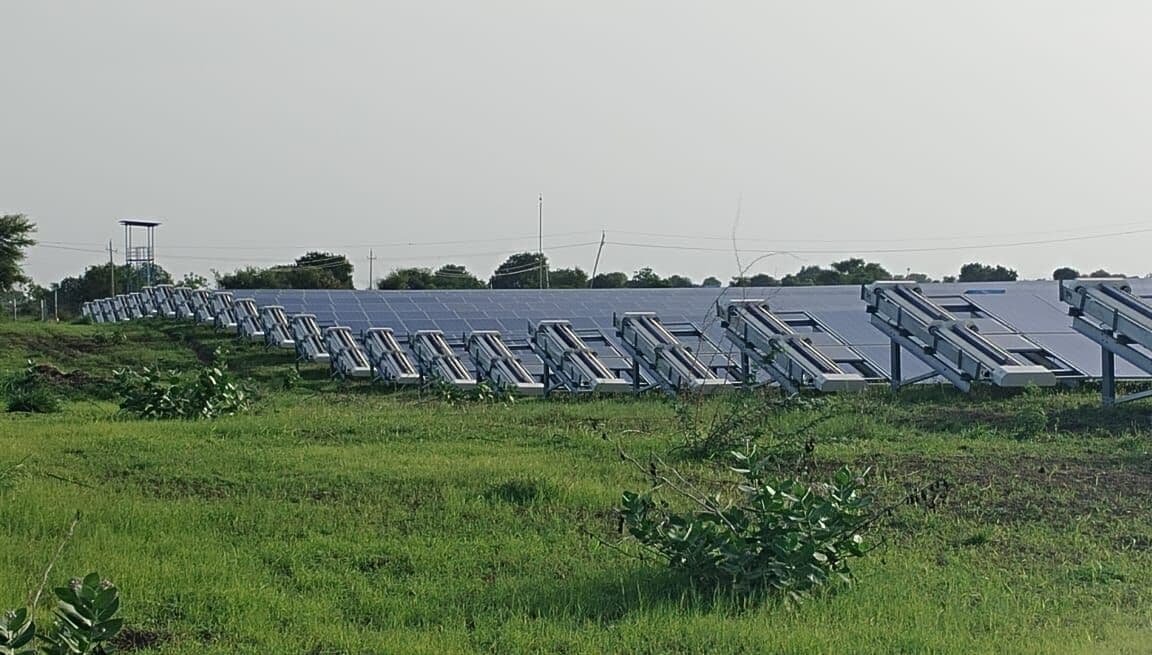
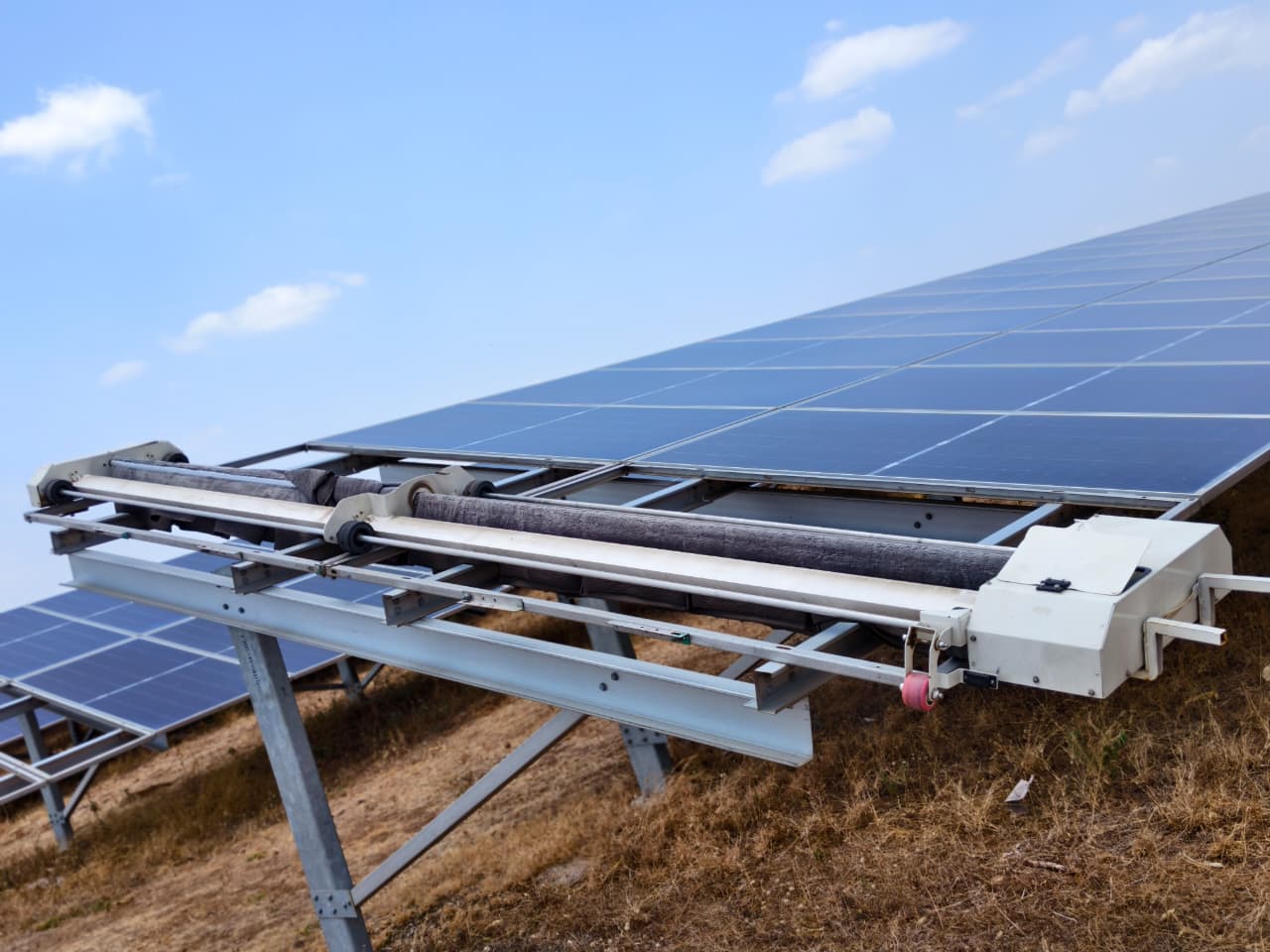
To solve these issues, Taypro deployed one HELYX semi-automatic robot. This robot enables efficient, waterless cleaning cycles across the whole facility. The plant now uses scheduled cleaning cycles. These cycles happen between 3 and 10 times per month. The exact frequency depends on the local weather and dust levels. By replacing manual labor with this robot, the site has seen great results. The plant has recovered 37.5 MWh of extra energy every year. It also saves 140,000 litres of water every year. This shows the real value of a solar panel cleaning robot India for large utility plants.
Environment and soiling at Thakkar Cotton
Environment and soiling at Thakkar Cotton
The Thakkar Cotton site has a very specific soiling profile. This profile is shaped by its local geography. The site is located near several industrial areas. It is also close to active agricultural zones. These factors mean there is a lot of dust in the air. Local wind patterns play a big role here too. The wind carries fine particles across the solar modules. This dust settles on the surface of the panels. It forms a thin layer of grime. This layer acts as a barrier. It stops sunlight from reaching the solar cells. This causes an immediate drop in energy production.
In some areas, humidity can be a major problem. Morning dew can make dust stick to the panels. This creates a "cementing" effect that is hard to clean. However, Thakkar Cotton is different. The environment is mostly dry. The soil particles here are very loose. They settle very quickly on the modules. This creates a matte-like film on the glass. This film is hard to see, but it is very damaging. It reduces the amount of light that passes through the glass. The HELYX robot is designed for this exact environment.
The semi-automatic deployment of the HELYX robot offers several key benefits:
- The robot cleans dust before it hardens or creates hot spots.
- It uses waterless PBT brush technology. This keeps panels safe by removing dust without using water.
- The robot provides uniform cleaning across the entire array. This prevents the uneven streaks seen in manual cleaning.
This systematic approach keeps the 37.5 MW array stable. It also bypasses the limits of using water for maintenance.
O&M before Taypro
Overcoming manual labor and water scarcity in O&M
Before Taypro arrived, the 37.5 MW Thakkar Cotton facility relied only on manual cleaning. This old method created many operational risks. It also added a heavy financial burden to the plant. Managing a huge manual workforce for 37.5 MW is very difficult. It creates unpredictable labor costs. It also requires a lot of management oversight. Furthermore, manual cleaning is often inconsistent. This meant the site suffered from constant energy gaps due to dust buildup.
The reliance on manual labor also caused water problems. Cleaning the whole array required thousands of litres of water. This was not good for the local environment. It was also hard to move that much water to the site. There were also gaps in the cleaning records. Manual crews often struggled to prove they cleaned every panel. They could not always keep the same pressure on the modules. This led to uneven cleaning results. To modernize, the facility moved away from these inefficient habits. They adopted a semi-automatic cleaning strategy. This replaced heavy labor with a controlled robotic solution. This change ensures consistent performance and clear reporting.
Fleet and deployment at 37.5 MW
Fleet and deployment at 37.5 MW
We used a "fleet-of-one" approach for this 37.5 MW facility. We deployed the HELYX solar panel cleaning robot in India. We used a single high-performance unit to cover the site. This unit moves across different plant blocks. This method is very efficient. It allows for block-based coverage. It also helps the plant save money on capital costs. This model does not require redundant hardware. It helps the plant gain 37.5 MWh of extra power every year through targeted cleaning.
The deployment focuses on three main pillars:
- Strategic Fleet Scaling: One HELYX robot manages the full 37.5 MW capacity. It rotates through different plant blocks. This ensures the whole site is covered without buying too many robots.
- Capex-Driven Procurement: The site management chose a Capex model. This gives them full ownership of the robot. It allows for predictable long-term budgets. It also helps the investment pay for itself quickly.
- Commissioning for Reliability: We focused on fast and reliable setup. The robot integrates well with existing site tools. It can be moved easily between different sections of the plant.
This strategy provides a great way to manage regional dust. By using the HELYX system, the plant saves 140,000 litres of water each year. It replaces old, water-heavy routines with a reliable, waterless process.
Operations and monitoring
Operations and Monitoring at Thakkar Cotton
The 37.5 MW Thakkar Cotton facility keeps its performance high. We use a refined, inspection-led model. We do not rely on random schedules. Instead, our team uses the NECTYR fleet portal. We sync cleaning cycles with real-time site data. This ensures the robot is only used when dust levels are high. This approach keeps energy yields high. It also protects the lifespan of the equipment.
Management at the site follows these specific protocols:
- Cleaning Cadence: The plant manages 3 to 10 scheduled monthly dry cleaning cycles per block. We adjust this based on the weather and dust levels.
- NECTYR Oversight: Every cleaning task is logged through NECTYR. This gives managers full visibility. They can check robot performance and battery status. They also get completion reports for every row.
- Weather Resilience: We have strict rules for high winds. The HELYX system is secured during wind events. This prevents hardware damage and keeps the site safe.
This inspection-led model prevents energy losses. It replaces the gaps often found in manual cleaning. This robotic process ensures the panels stay safe and reliable.
Results and impact
Delivering Sustainable Energy Recovery at Thakkar Cotton
The switch to waterless robotic maintenance has changed the plant. The Thakkar Cotton facility now has much better output. By using the HELYX system, the site has removed the need for manual labor. This saves the local water supply. Robotic precision ensures the 37.5 MW asset stays clean. This supports long-term power goals for the site.
The impact of this change shows in two main areas:
- Resource Conservation: The PBT technology is waterless. This removes the need for traditional washing. The site saves a huge amount of water every year. This water stays in the local environment.
- Generation Stability: The robot stops dust from building up. This reclaims a lot of lost energy every year. The plant can hit its targets even during the dustiest seasons.
This Capex investment provides a stable O&M framework. The robot-driven model guarantees clean panels. This leads to measurable improvements in annual energy recovery for the 37.5 MW site.
Peer comparison and planning checklist
Peer Comparison and Planning Checklist
The 37.5 MW Thakkar Cotton project shows how Taypro tailors its work. Every site has different needs. Fully automatic sites are different. For example, sites with GLYDE-X manage daily waterless cleaning. Those sites are often on tracker tables. The Thakkar Cotton site uses a semi-automatic HELYX model. This focuses on flexible maintenance for specific layouts. This approach is common in our 150+ site portfolio. Many 30 to 50 MW plants use this model. They do this to save on capital costs. Across our 5 GW+ fleet, Taypro ensures high performance for every client.
- Assess your annual dust rates. This helps you find the right cleaning frequency.
- Check site access and row length. Choose between automatic or semi-automatic fleets.
- Review local water scarcity. Use this to justify waterless PBT technology.
- Calculate your ROI. Compare Capex costs against long-term OPEX savings.
- Use the NECTYR portal. Set a schedule for maintenance and battery care.