Executive summary
solar panel cleaning robot India. The 18.8 MW ground mount solar facility in Vasai faced serious operational issues. Heavy regional soiling caused major energy losses. Dust buildup on the modules reduced power output. Manual cleaning also created high costs for labor and water. These methods were not sustainable for long-term growth.
To fix these issues, plant management moved to a Capex-driven robotic strategy. They deployed the NYUMA solar panel cleaning robot to automate module maintenance. This transition to waterless cleaning removes the need for manual scrubbing. It allows for consistent and reliable maintenance cycles across the site. This robotic technology has changed the plant's performance. The site now recovers an additional 18.8 MWh of clean energy every year. It also saves 70,000 litres of water annually. This deployment proves that robotic operations work well for utility-scale assets in high-soiling areas.
Environment and soiling at Vasai
Regional Soiling and Site-Specific Maintenance at Vasai
The Vasai facility operates in a very specific environment. It sits where coastal humidity meets inland dust. This combination creates a unique challenge for solar panels. The moisture and dust mix to form a stubborn, adhesive layer of soiling. This grime sticks to the surface of the modules. Traditional dry-wiping methods often fail to remove this layer effectively. Standard cleaning can leave streaks or residue behind. This reduces the amount of sunlight that reaches the cells.
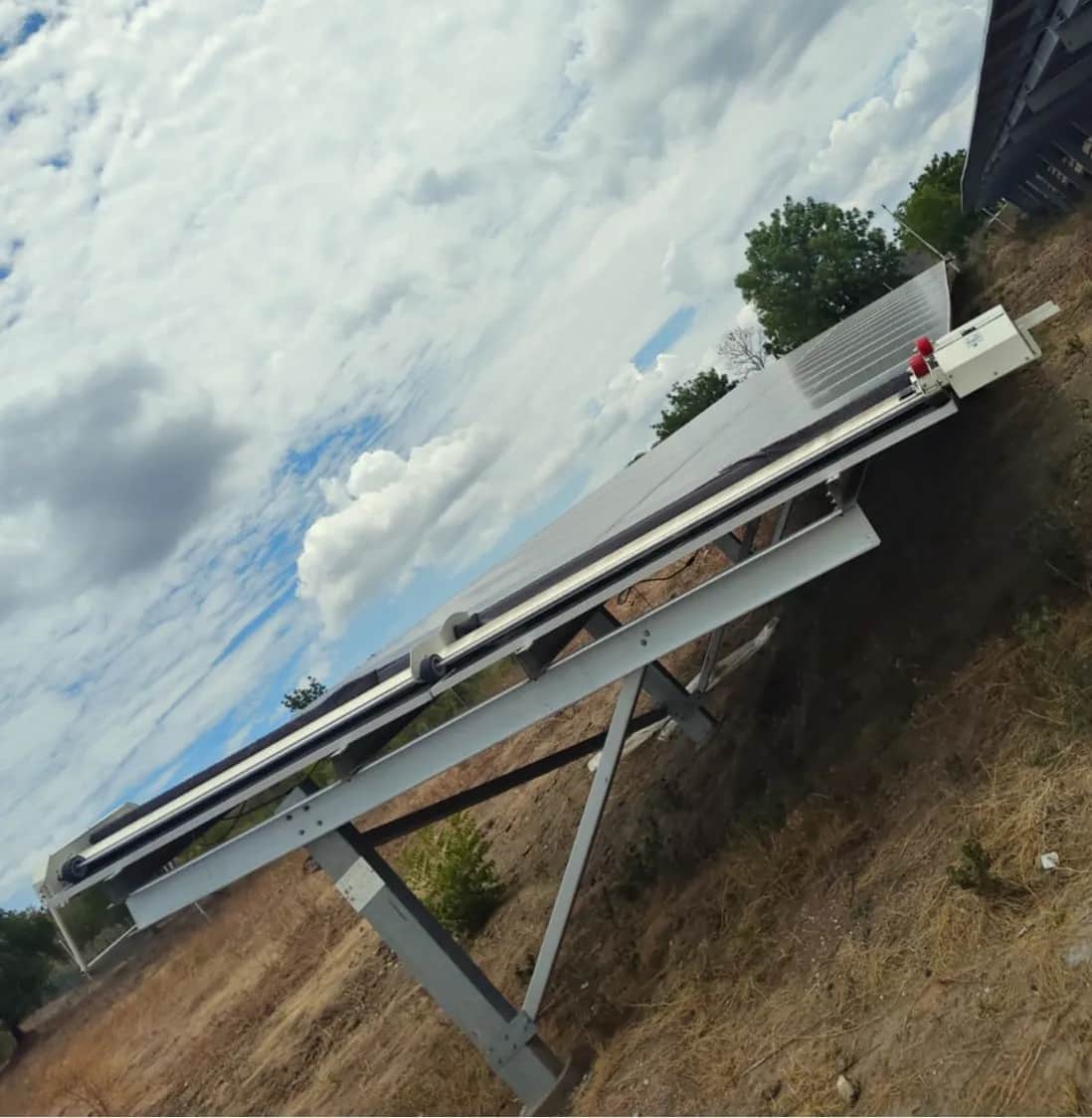
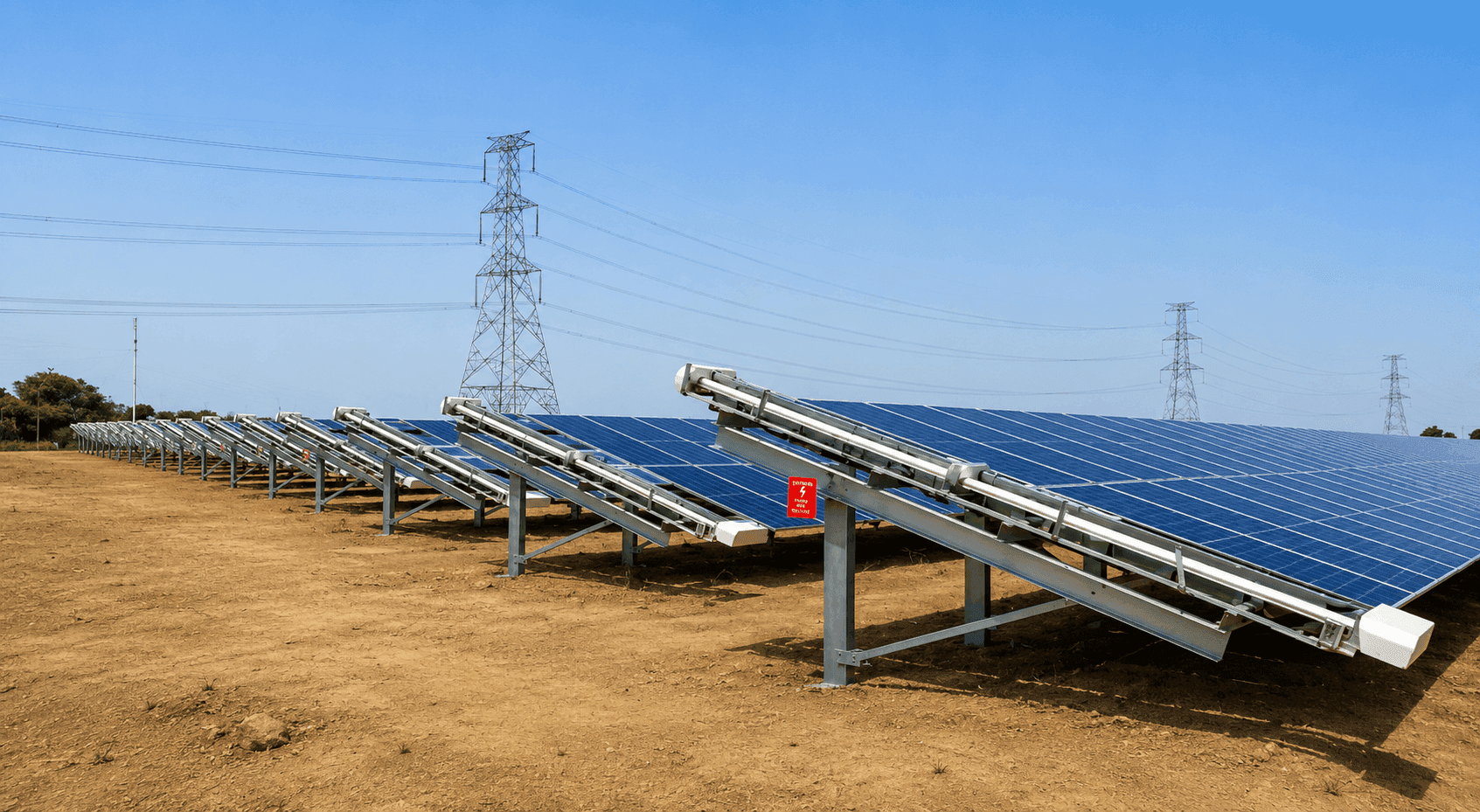
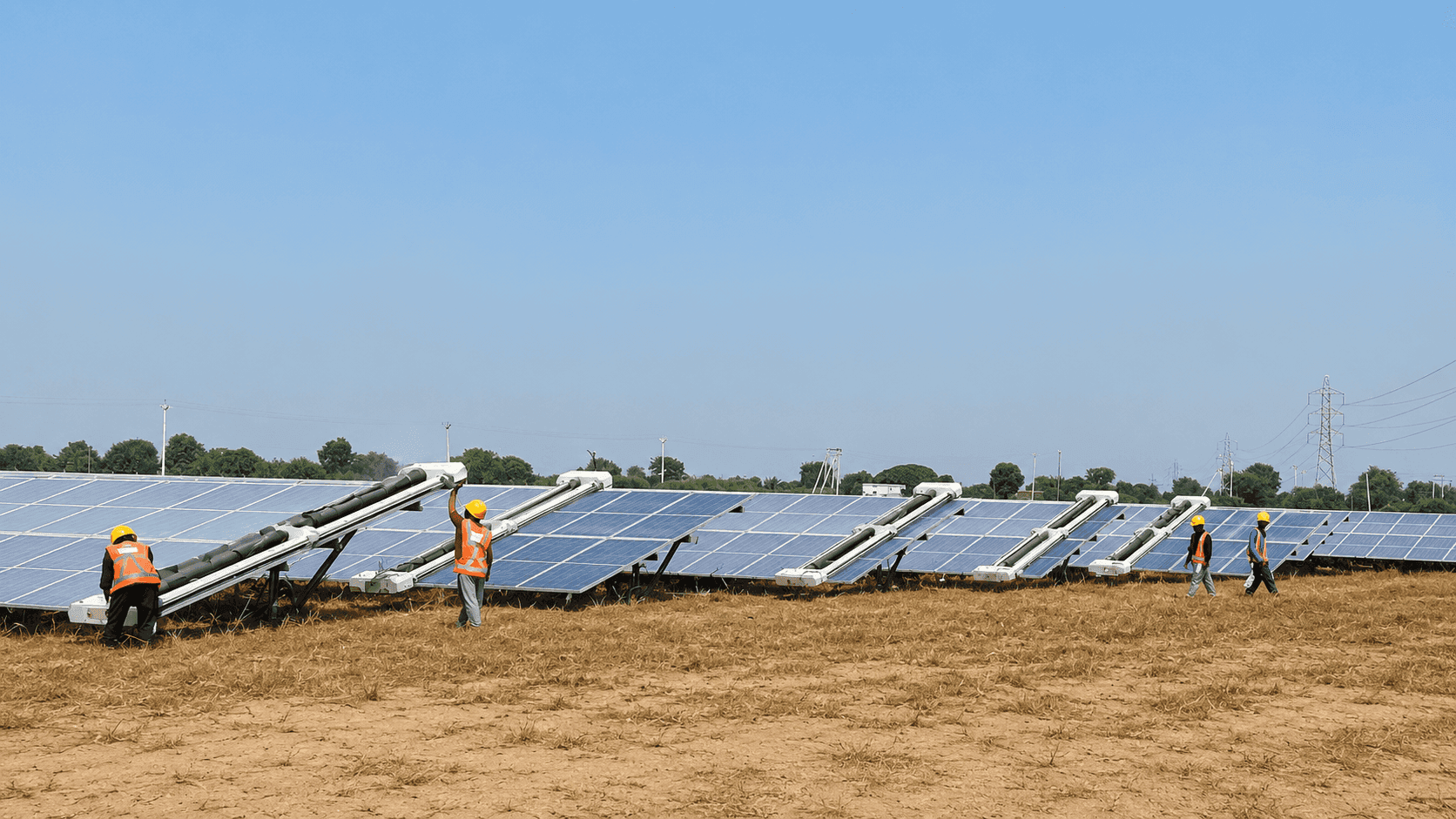
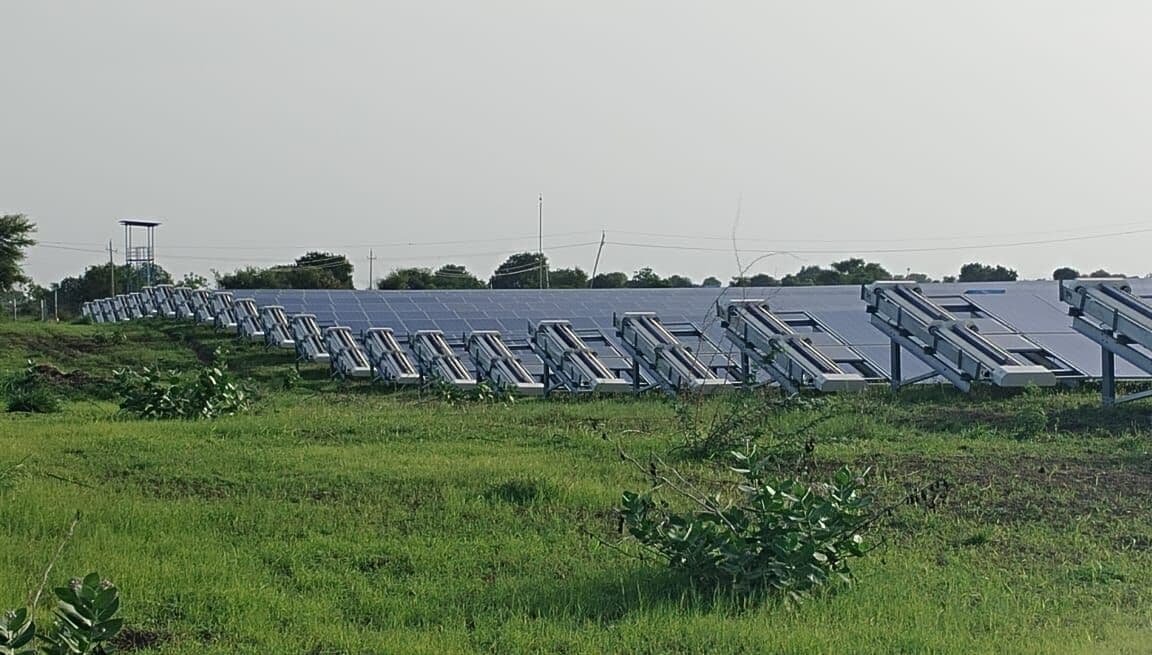
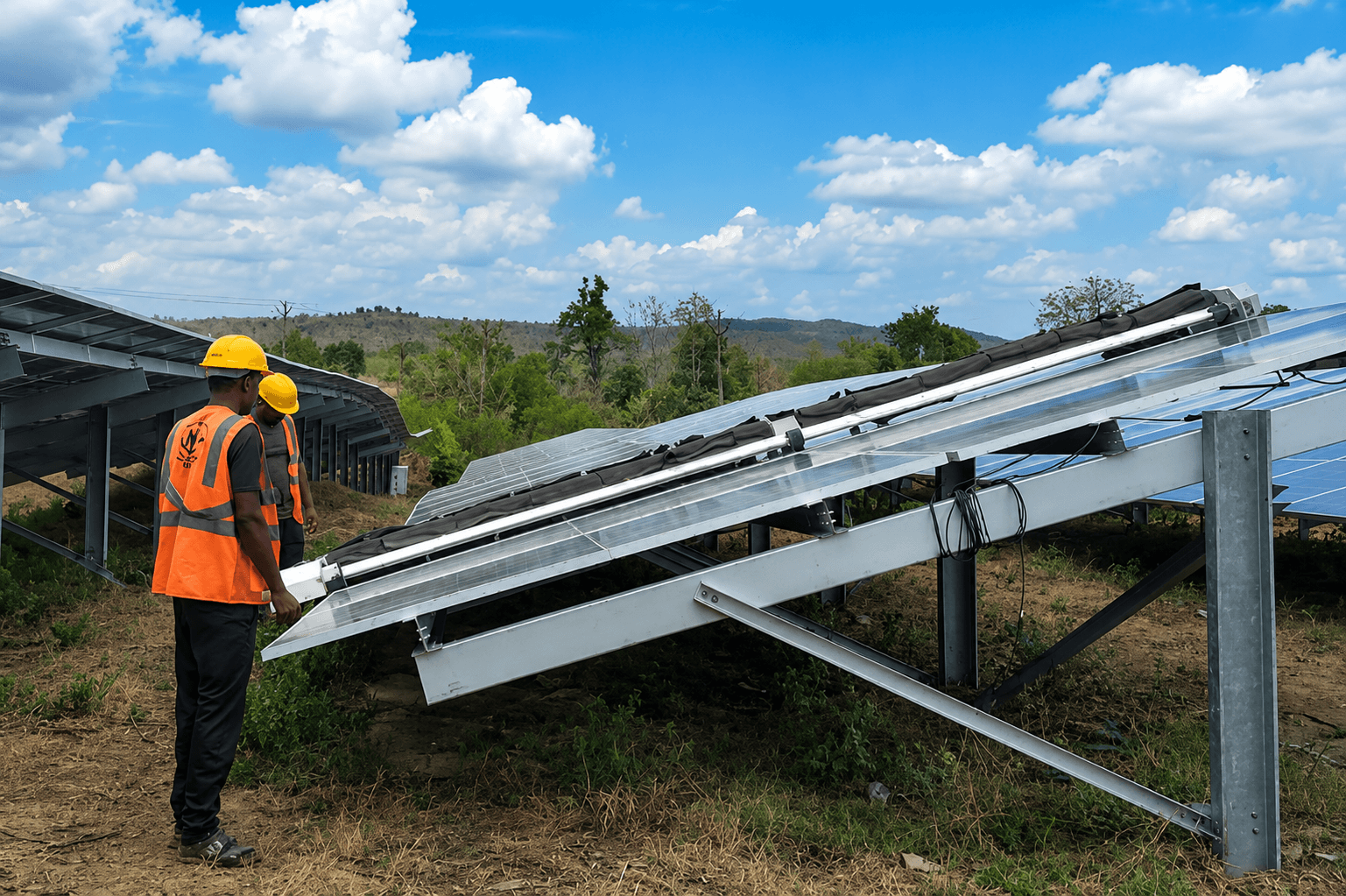
This 18.8 MW site uses a ground mount array. Unlike larger, fully automatic utility-scale plants, this site needs a more targeted approach. It does not use a continuous, high-frequency robotic schedule. Instead, the maintenance team uses a semi-automatic cleaning model. This allows them to manage the distributed array more efficiently. The cleaning cadence is optimized for the local dust patterns. By using the NYUMA robot, the team ensures that each panel block stays clean.
- Site-specific scheduling targets 3 to 10 dry cleaning cycles per month. This helps mitigate coastal dust buildup.
- The NYUMA robot uses single-pass PBT brush technology. This effectively clears the adhesive grime found in Vasai.
- Strategic deployment helps the site avoid high costs. It avoids the massive capital needs of a full, fully automatic infrastructure.
- Waterless maintenance preserves local water resources. It also maintains high panel transparency for maximum light absorption.
O&M before Taypro
Addressing Operational Hurdles in the Vasai Ground Mount Array
The 18.8 MW ground mount array in Vasai had many constraints before Taypro arrived. The local climate caused persistent dust accumulation. This created a cycle that manual cleaning could not keep up with. Relying on manual labor caused many problems. Cleaning quality was often inconsistent. Different workers provided different levels of care. This led to frequent gaps in maintenance audits. Traditional scrubbing methods could not clear the heavy soil layers properly.
The plant also suffered from high overhead costs. Manual cleaning required too many hours of labor. This inefficiency led to energy generation shortfalls. These losses directly impacted the plant's bottom line. Water availability was another major hurdle. The region faces increasing water scarcity. Relying on external water sources for cleaning created a logistical bottleneck. Managers had to spend time and money just to move water to the site. These combined issues prevented the site from reaching its peak power potential. The plant needed a more reliable and autonomous O&M strategy.
- Manual labor caused inconsistent module transparency. This led to recurring energy losses across the 18.8 MW array.
- Lack of standardized cleaning caused audit gaps. It was difficult to keep accurate records of every cleaning task.
- High water consumption made manual maintenance expensive. The logistical costs of water were too high for long-term use.
- The site needed robotic integration. This was necessary to secure the consistent energy generation required for utility-scale operations.
Fleet and deployment at 18.8 MW
Fleet and Deployment at 18.8 MW
The 18.8 MW Vasai site shows a smart shift toward robotic O&M. The project uses the NYUMA system to improve efficiency. The site follows a semi-automatic deployment model. It also uses a Capital Expenditure (Capex) procurement framework. This model allows the plant to add high-efficiency robots to the existing ground mount structure. No invasive modifications to the solar array are needed. This makes the setup fast and cost-effective.
The NYUMA robot is built for this type of work. It features robust UV-stable PBT brush technology. These brushes are engineered to remove adhesive dust. This is the specific type of dust common in the Vasai region. The single-pass cleaning method is both fast and thorough. By using a semi-automatic solution, the site ensures that maintenance is targeted. This provides a repeatable performance level. Manual labor simply cannot match this consistency. The deployment has already delivered great results. It has saved 70,000 litres of water every year. It has also recovered 18.8 MWh of additional generation annually.
- The 18.8 MW facility uses a semi-automatic NYUMA robotic fleet. This helps standardize all site maintenance tasks.
- Capex procurement was used for the rollout. This allowed for direct integration into the current ground mount framework.
- Commissioning included detailed site mapping. This ensures seamless robot navigation and high cleaning quality.
- This deployment secures 18.8 MWh of extra generation each year. It also achieves 70,000 litres of annual water savings.
Operations and monitoring
Optimizing Operations with Scheduled Dry Cleaning
Operations at the Vasai site follow a strict cleaning schedule. The team performs 3 to 10 scheduled dry cleaning cycles every month. This frequency depends on real-time soiling data. The team monitors how much dust accumulates in the local environment. By using single-pass PBT technology, the NYUMA fleet keeps the panels clean. This method avoids the risks of water-based systems. It also avoids the high costs of water transport. This approach moves away from the myth of daily washing. Daily washing can waste resources and wear out components too early.
The site maintains high accountability through inspection-led verification. The NECTYR platform is a key part of this process. NECTYR provides full transparency for the plant manager. It logs every single cleaning cycle. This allows managers to verify cleaning performance against actual power output. The system is also built for safety. If there are high-velocity winds, the automated wind hold protocols trigger. This protects the robot and the panels. The fleet only operates when it is most effective. This maximizes the life of the modules and the total energy output of the 18.8 MW array.
- Scheduled dry cleaning cycles ensure consistent module performance.
- Single-pass PBT technology provides efficient, waterless cleaning.
- The NECTYR platform logs all operations for complete transparency.
- Automated wind protocols protect the equipment during harsh weather.
Results and impact
Results and Impact of Robotic Deployment in Vasai
The NYUMA semi-automatic cleaning fleet has transformed the Vasai facility. It replaced inconsistent manual labor with precision robotics. The site now reaches a repeatable performance standard. This was impossible with traditional manual methods. The transition has directly addressed energy losses. It has solved the problem of regional soiling. The 18.8 MW ground mount array now maintains optimal light absorption all year long.
- Robotic cleaning delivers a significant boost in energy yield. It successfully mitigates the impact of persistent soiling.
- Water conservation has improved drastically. The site no longer needs high-volume water for cleaning.
- The NECTYR operations portal provides precise tracking. Site managers can verify every cleaning cycle and performance metric.
- The Capex-driven model has normalized maintenance costs. It provides a predictable and efficient path for long-term cleaning.
This deployment shows the real benefits of waterless technology. It is especially useful in coastal or high-dust areas in India. By combining advanced PBT hardware with data-driven schedules, the Vasai plant has won. It has achieved meaningful gains in water preservation and recovered energy generation.
Peer comparison and planning checklist
Peer Comparison and Planning Checklist
The Vasai project is different from larger, fully automatic sites in Maharashtra. Those larger sites use high-density robot fleets for daily waterless cleaning. The 18.8 MW Vasai project uses a more targeted, semi-automatic approach. Fully automatic plants aim for maximum yield through fixed daily cycles. In contrast, the Vasai site optimizes its CAPEX. It uses a single NYUMA unit to manage ground-mount blocks. It uses a flexible, semi-automatic schedule instead. This strategy provides similar cleaning quality for the local dust profile. It does not require the massive infrastructure of a fully autonomous installation. This balance allows the facility to gain 18.8 MWh of extra annual generation. It also saves thousands of litres of water. This proves that strategic robot integration is better than just increasing fleet size.
- Evaluate your local soiling rates first. This helps you choose between manual, semi-automatic, or fully automatic robots.
- Assess your site layout and row access. Ensure there is enough space for semi-automatic PBT brush systems to move.
- Set clear water-saving and energy-recovery goals. These goals help justify the initial CAPEX investment.
- Integrate the NECTYR fleet monitoring system. Use it to log cleaning performance and verify energy yield improvements.
- Plan for periodic robot maintenance. Consistent hardware care ensures high-quality cleaning across all ground-mount arrays.