Executive summary
This case study explores the use of a solar panel cleaning robot India for a large facility. The 75 MW ground mount solar plant is located in Dahegaon, Yavatmal. This region sits within the semi-arid cotton belt of Maharashtra. The location faces intense operational challenges due to heavy dust and organic residue. These factors caused steady losses in energy yield. Traditional manual cleaning was also too expensive and difficult to manage at this scale.
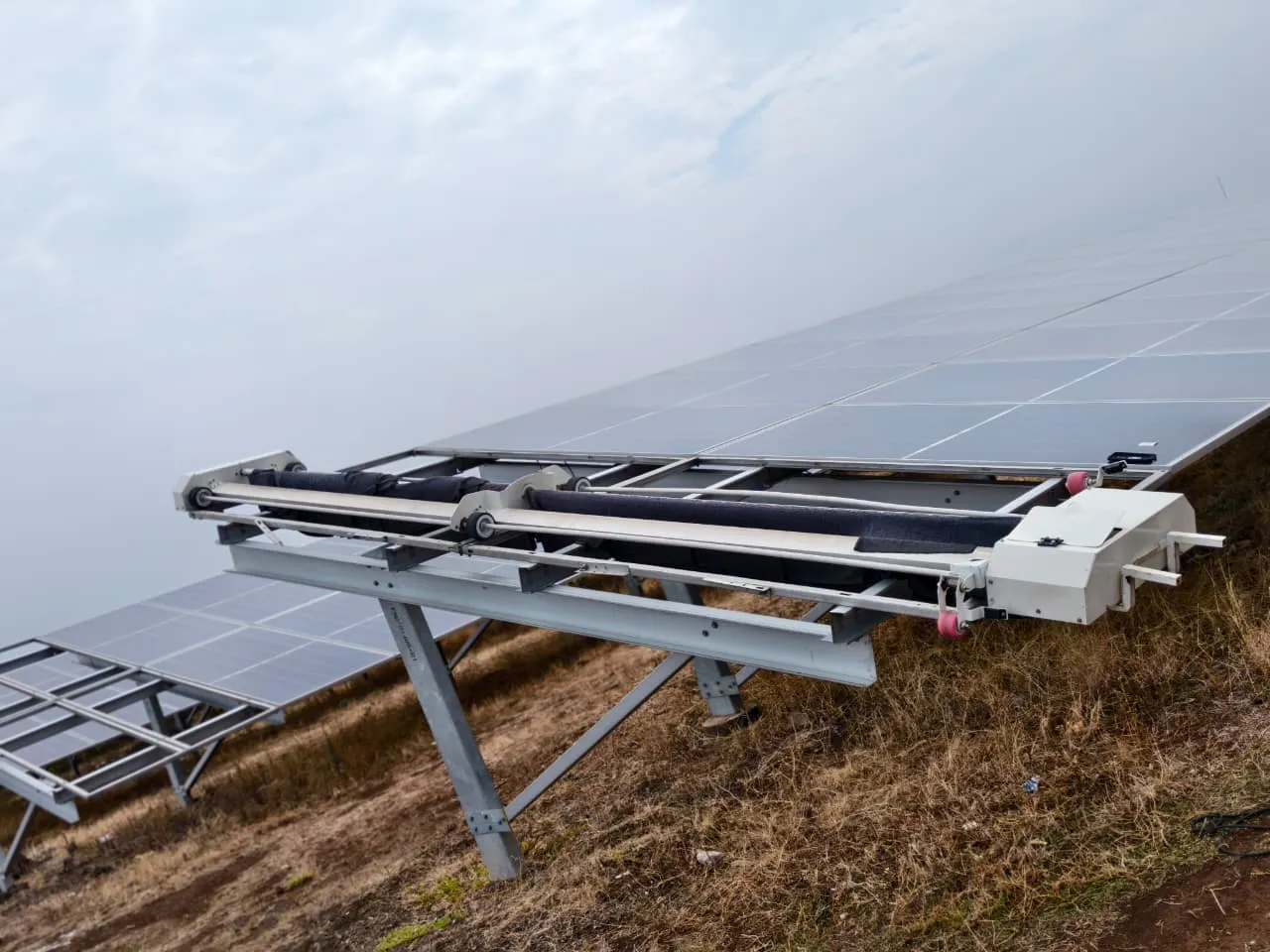
To solve these problems, management deployed a semi-automatic cleaning solution. They used two NYUMA robots to handle the cleaning tasks. This move to a waterless maintenance strategy changed everything. It removed the need for local water sources. It also fixed the issues caused by inconsistent manual labor. This shift has led to massive operational gains. The site now recovers 75 MWh of energy every year. It also reduces CO2 emissions by 37 metric tons annually. This project proves that robotic maintenance works for large plants in resource-limited areas.
The implementation of the NYUMA system has streamlined all O&M activities. The plant now maintains a much more predictable schedule. By moving away from water-based cleaning, the facility has improved its sustainability. It now sets a standard for solar operations in rural Maharashtra. The transition demonstrates a clear return on investment for utility-scale owners. It replaces human error with robotic precision.
Environment and soiling at Yavatmal, Dahegaon
Regional Soiling Dynamics in the Yavatmal Cotton Belt
The Dahegaon site has a very specific soiling profile. This is due to its location in the Maharashtra cotton belt. During the main harvest seasons, the air is full of dust. This dust includes lightweight organic particles and dry agricultural residue. This debris settles quickly on the solar modules. It forms a thick layer on the glass surfaces. This layer is much harder to clean than standard road dust. It is often quite sticky and adheres to the panels.
The semi-arid climate in Yavatmal makes things even harder. High solar heat and changing temperatures affect the modules. These daily temperature shifts bake the agricultural residue onto the glass. This process creates a strong bond between the dust and the panel. Unlike simple sand, this residue is fibrous. Standard rainfall cannot wash it away. Even basic manual cleaning often fails to remove it completely. This requires a more specialized approach to maintain high efficiency.
The environmental factors at this site include several key risks:
- High Adhesion Residue: Crop-specific dust creates a film. This film blocks photons and reduces energy absorption across the 75 MW array.
- Wind-Driven Accumulation: The open geography allows wind to move debris easily. This wind deposits dust in uneven patches across the field.
- Mechanical Stress: Local dust can be abrasive. Using the wrong cleaning method could damage the anti-reflective coating on the modules.
The NYUMA system addresses these specific environmental risks. The robot uses a single-pass PBT brush to clean the panels. This brush is UV-stable and designed for durability. It can lift and remove fibrous organic matter effectively. Because the process is waterless, it does not add more moisture to the dust. This prevents the "mudding" effect often seen in manual cleaning. The robot provides uniform pressure across every module. This ensures a consistent clean without damaging the delicate glass surfaces.
By using this robotic approach, the site manages soiling better. The plant no longer waits for rain to clear the dust. Instead, it uses scheduled dry cleaning cycles. This proactive method keeps the panels at peak performance. It directly counters the challenges of the Yavatmal climate. The result is a much more stable energy profile for the utility provider.
O&M before Taypro
Operational Hurdles and Manual Maintenance Constraints in 75 MW Dahegaon
Before the NYUMA system arrived, the 75 MW project faced many hurdles. The facility relied heavily on manual cleaning teams. This created massive logistical problems in a semi-arid region. Finding skilled labor in rural Maharashtra is a constant struggle. Workers often move between jobs, leading to high turnover rates. This makes it very hard to maintain a steady cleaning schedule. It also makes the total cost of O&M much higher than expected.
The manual process relied on water-based cleaning. This created two major failure points for the plant. First, the site had to manage water tankers. This is very difficult during the dry seasons. Local water reserves are often low. Relying on tankers made the cleaning schedule unpredictable. If a tanker was late, the cleaning stopped. This led to long periods where dust could build up unchecked. This directly hurt the plant's total energy output.
Second, the quality of human cleaning was inconsistent. Different teams used different methods. Some areas were cleaned well, while others were neglected. This led to uneven energy generation across the 75 MW site. Some blocks would produce high power, while others would underperform. These gaps made it hard to meet annual MWh targets. The plant managers could not easily audit the cleaning quality. They had no way to prove that every module was actually clean.
The manual approach also faced several specific risks:
- Water Scarcity: Managing water logistics was costly. It was also bad for the local environment in a water-stressed zone.
- Labour Instability: Finding and keeping staff was difficult. This made long-term planning almost impossible.
- Yield Inconsistency: Gaps in cleaning led to measurable energy losses. This prevented the site from reaching its full potential.
The transition to a robotic O&M strategy removed these variables. By using NYUMA robots, the plant moved to a predictable model. They no longer need to wait for water tankers. They also no longer depend on a fluctuating local workforce. This shift has brought stability to the entire operation. It has turned a reactive process into a proactive one. The site now controls its maintenance rather than being controlled by external factors.
Fleet and deployment at 75 MW
Optimising 75 MW Fleet Deployment through Semi-Automatic Robotic Cleaning
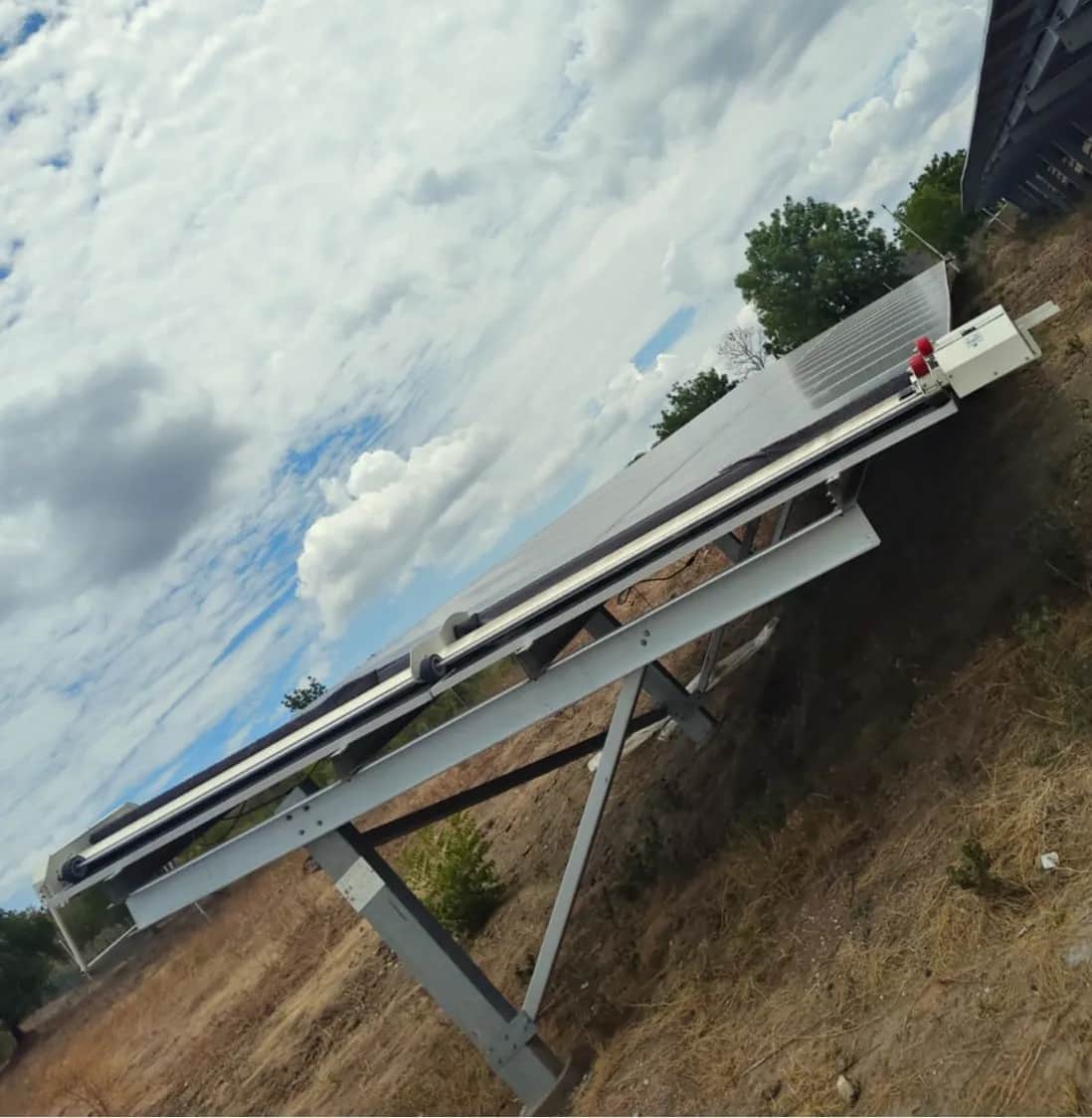
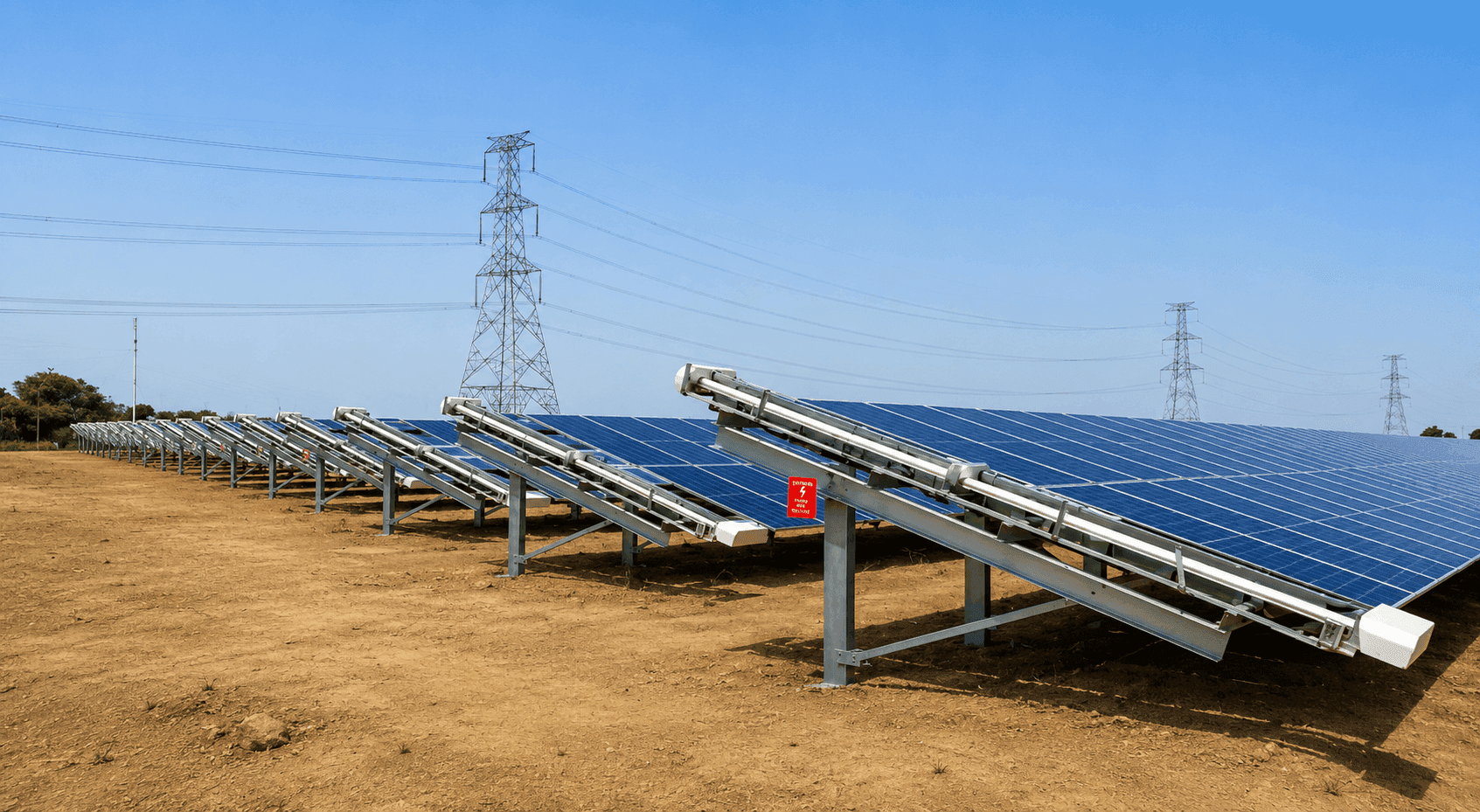
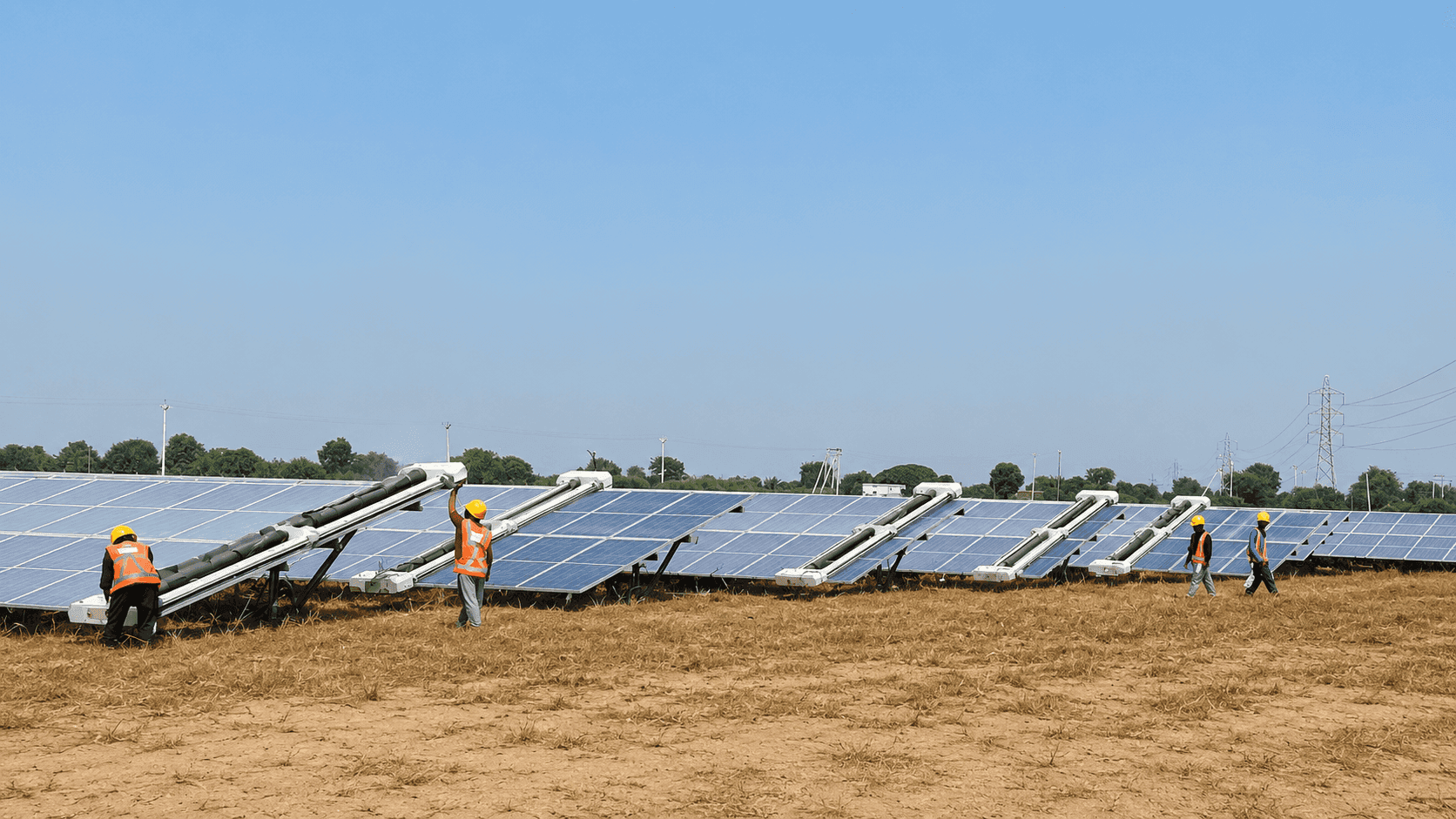
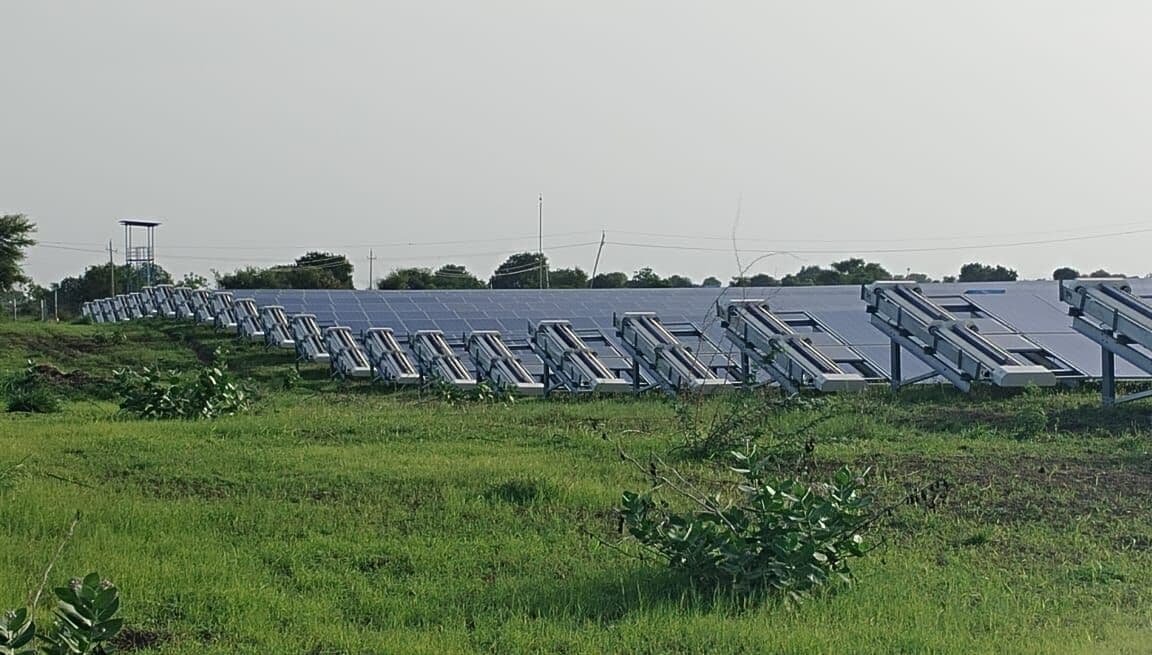
To fix the high costs and low yields, managers chose a semi-automatic model. They deployed a fleet of two NYUMA cleaning robots. These robots were chosen for their specific technical strengths. The goal was to replace water-heavy labor with dry cleaning. This method is perfect for the agricultural dust found in the cotton belt. The deployment focuses on reliability and ease of use for the staff.
The procurement strategy balanced cost and performance. Using two NYUMA units provides excellent coverage for a 75 MW site. The robots follow a schedule of 3 to 10 dry cleaning cycles per month. This frequency depends on the weather and site access. This cadence is designed to fight moderate-to-high soiling levels. It ensures that dust never becomes a permanent problem. The semi-automatic approach is flexible for ground-mount arrays. It allows the team to focus on the most critical areas first.
The NYUMA robots bring several technical advantages to the site:
- Single-Pass Technology: The UV-stable PBT brush cleans the panels in one pass. This is efficient and saves time.
- Robust Design: The robots have an IP65 rating. This means they can handle the dusty environment of Yavatmal.
- Technical Specs: Each robot weighs 38 kg and moves at 10 to 15 metres per minute. They are designed for utility-scale durability.
- Terrain Capability: They can operate on slopes up to 15 degrees. This makes them ideal for large ground-mount fields.
This deployment has several key benefits for the 75 MW facility:
- Systematic Cleaning: The two robots allow for targeted work. High-priority blocks get cleaned more often to ensure energy recovery.
- Operational Efficiency: The team no longer struggles with labor shortages. The robots provide a consistent service that does not change with the seasons.
- Sustainable Impact: The site now saves 280,000 litres of water every year. This is a huge win for the local environment.
- Energy Recovery: The dry cleaning cycles help recover 75 MWh of energy annually. This directly improves the plant's bottom line.
The deployment also helps reduce the carbon footprint. The robotic fleet saves 37 metric tons of CO2 every year. This happens because the site no longer uses water tankers for cleaning. Removing those heavy vehicles from the site reduces fuel use and emissions. This project shows how semi-automatic robots can work at scale. It provides a roadmap for other utility plants in rural India.
Operations and monitoring
Operations and Maintenance Strategy for the 75 MW Dahegaon Site
The Dahegaon facility operates in a tough environment. The soil contains a lot of agricultural residue and cotton belt dust. Previously, this caused very inconsistent energy yields. To fix this, the plant uses a structured maintenance plan. This plan uses two semi-automatic NYUMA robots. The approach ensures that cleaning is precise and repeatable. It also removes the need to find and transport water.
The maintenance schedule is very specific. The site aims for 3 to 10 dry cleaning cycles every month. This number is based on how fast dust builds up in Dahegaon. By using robotic dry cleaning, the facility avoids the risks of manual work. They no longer have to worry about water supply issues. The schedule is also much easier to follow. It allows the O&M team to plan their work weeks in advance.
The operational strategy includes these core pillars:
- Scheduled Accountability: The semi-automatic setup allows for specific cleaning queues. High-soiling zones are given priority during the monthly cycle.
- Resource Optimization: The site does not rely on seasonal water tankers. This reduces O&M costs in the water-constrained Maharashtra region.
- Energy Stabilization: Regular cleaning stops micro-shading from dust. This helps the 75 MW array hit its generation targets.
- Safety and Uniformity: Robots are safer than manual teams on large ground mounts. They also ensure every module is cleaned with the same pressure.
Managing the robots is also part of the strategy. Even in a semi-automatic mode, the cleaning must be tracked. The team monitors the progress to ensure the 3 to 10 cycles are met. This creates a predictable flow of work. It also allows for better reporting to the plant owners. The facility can now prove that its maintenance is actually happening.
This model is highly scalable for other sites. It shows that you can manage a 75 MW plant without a massive water supply. By using a structured cadence, the plant stays healthy. It also remains productive even during the harshest dry seasons. This is a vital capability for utility-scale solar in India.
Results and impact
Quantifiable Operational Gains at the Dahegaon Facility
The use of NYUMA robots at the 75 MW Dahegaon site has produced clear results. The site now has much more stable energy output. This is because the robots handle the heavy dust from the cotton belt. The proactive cleaning prevents the large yield losses seen in the past. Instead of waiting for dust to become a problem, the robots prevent it.
Sustainability is another major area of improvement. The transition to waterless cleaning has changed the site's environmental impact. The plant no longer depends on local water for cleaning. This is a huge benefit in a region facing water stress. It also makes the site much easier to run. There are no more complex water logistics to manage. This streamlines the entire O&M process.
The key impacts can be summarized here:
- Recovered Yields: The consistent cleaning cycles have added significant energy back to the grid. This ensures the 75 MW array stays productive.
- Water Conservation: Saving 280,000 litres of water annually is a massive achievement. It helps protect the local community's resources.
- Carbon Savings: The reduction of 37 metric tons of CO2 per year is measurable. This helps the facility meet its green energy goals.
- Asset Health: Replacing manual labor with robots improves long-term module health. The cleaning is gentle and consistent.
The project has also improved the financial outlook for the plant. The energy recovered (75 MWh/yr) helps offset the cost of the robots. By reducing the need for water and manual labor, the OPEX is more controlled. This makes the entire 75 MW asset more valuable. It turns cleaning from a cost center into a predictable part of the business.
Ultimately, the Dahegaon site proves that robotic cleaning works. It works in difficult climates and resource-poor areas. The results are both economic and environmental. For utility owners, this is the most effective way to manage large-scale solar assets today.
Peer comparison and planning checklist
Peer Comparison and Implementation Planning
The 75 MW Dahegaon project is unique. It uses two semi-automatic units to manage high dust loads. We can compare it to the 14 MW yavatmal-kupti-14-mw project. That site uses different fleet sizes to manage its soil. We also look at the 10 MW ahmadnagar-jalalpur-10-mw installation. That project shows how automated systems scale on smaller fixed-tilt assets. All these sites, including the soyegaon-solar-project, use waterless methods. They all do this to fight agricultural dust. By looking at these peers, managers can plan better. They can decide how often to clean based on local wind and dust patterns.
To get the best results from your robots, use this checklist:
- Site Mapping: Find the zones with the most dust. Prioritize these blocks in your cleaning schedule.
- Resource Audit: Calculate your current manual costs. Compare them to the cost of water and labor scarcity.
- Connectivity Check: Ensure you have good Wi-Fi or LTE coverage. This is vital for monitoring your fleet performance.
- Structural Readiness: Check your end-row space. Make sure your modules have a consistent tilt for the robots.
- KPI Definition: Decide on your targets early. Track water savings and MWh recovery to prove your ROI.
Following these steps will ensure a smooth deployment. It will also help you maximize the benefits of your solar panel cleaning robot India. Whether you choose a semi-automatic or fully automatic route, planning is key to success.