Executive summary
robotic solar panel cleaning Maharashtra. This 75 MW ground-mount solar project in Yavatmal, Maharashtra, faced major performance challenges. The regional environment is very tough. The site is frequently exposed to agricultural dust and road grit. Intense humidity cycles also play a large role. These factors create uneven soiling at the string level. These deposits significantly reduced the energy output of the plant.
Traditional manual cleaning was difficult to manage. It was hard to verify the work. Complex water logistics and conflicting maintenance schedules caused many problems. To address these gaps, the project deployed two semi-automatic HELYX robots. This move from manual labor to targeted robotic cleaning solved many issues. The O&M team no longer needs to rely on unreliable night crews. They also no longer need to use massive amounts of water.
The HELYX fleet ensures consistent and high-quality cleaning. It works across scattered plant blocks. This provides supervisors with verifiable proof of maintenance for every string. The project has achieved substantial gains. By enabling 3 to 10 dry cleaning cycles per month, the project recovered 75 MWh of extra generation annually. The waterless process saved 280,000 litres of water per year. This supports long-term sustainability and plant efficiency.
Environment and soiling at Yavatmal, Galwha
Managing Chemical Crusting and String-Level Soiling in Yavatmal
The 75 MW Galwha solar site in Yavatmal has a unique environmental profile. It experiences more than just simple dust buildup. The region has very intensive agricultural activity. There is also heavy road grit from local transit routes. These particles settle on the solar panel surfaces. The area also has distinct humidity cycles. This moisture acts as a binding agent.
This moisture triggers a chemical crusting effect. The dust and grit do not stay loose on the glass. Instead, they harden into a stubborn and uneven film. This film clings to the surface of the panels. This process creates large variations in soiling density. It happens across individual strings. Local micro-climates and wind patterns dictate where this crust forms most heavily.
The primary challenges at this Galwha installation include:
- Uneven String Performance: The crusting effect is not consistent. This leads to mismatched energy yields across different rows. It creates complex losses at the string level.
- Logistical Friction: Agricultural dust requires frequent removal. However, traditional cleaning intervals often missed the best window. This allowed the dust to harden into a crust.
- Verification Gaps: Before the implementation of robotic solar panel cleaning in Maharashtra, data was scarce. Supervisors lacked granular information. It was hard to confirm which rows had received a full cleaning cycle.
The site team now manages these cycles with high precision. They use a semi-automatic fleet to target these problems. This approach effectively counters the rapid build-up of chemical crusting. It ensures that panel surfaces are maintained consistently. The team no longer relies on reactive and unverified manual schedules.
O&M before Taypro
Operational Challenges Before Robotic Integration in Yavatmal
Before deploying the current semi-automatic cleaning fleet, the 75 MW Galwha project faced many inefficiencies. These are typical of large solar assets in Maharashtra. The main burden was the reliance on manual labor. Manual crews struggled to keep up with the intense soiling. Agricultural dust and road grit were constant problems. High humidity turned this dirt into a stubborn, crust-like layer.
The operational friction was made worse by several critical gaps:
- Water and Resource Competition: Manual cleaning requires a lot of water. Scheduling these crews often conflicted with other site tasks. For example, vegetation management and civil O&M tasks were often scheduled at the same time. Coordinating these logistics across a 75 MW site caused delays. These delays allowed soiling to harden on the panels.
- The Verification Gap: This was the most significant audit finding. Supervisors had no verifiable record of which strings were cleaned. They could not prove that a specific cycle was completed. Without this proof, they could not link cleaning to actual power gains.
- Unpredictable Yield Losses: Because cleaning could not be confirmed, the plant suffered. It had uneven generation profiles. These losses were often invisible. They only appeared in long-term monitoring reports.
The site suffered from inconsistent quality due to manual labor. There was also a total lack of accountability. These challenges made it necessary to shift to a data-driven cleaning solution. The goal was to stabilize energy production through better technology.
Fleet and deployment at 75 MW
Fleet Strategy and Deployment at the 75 MW Yavatmal Site
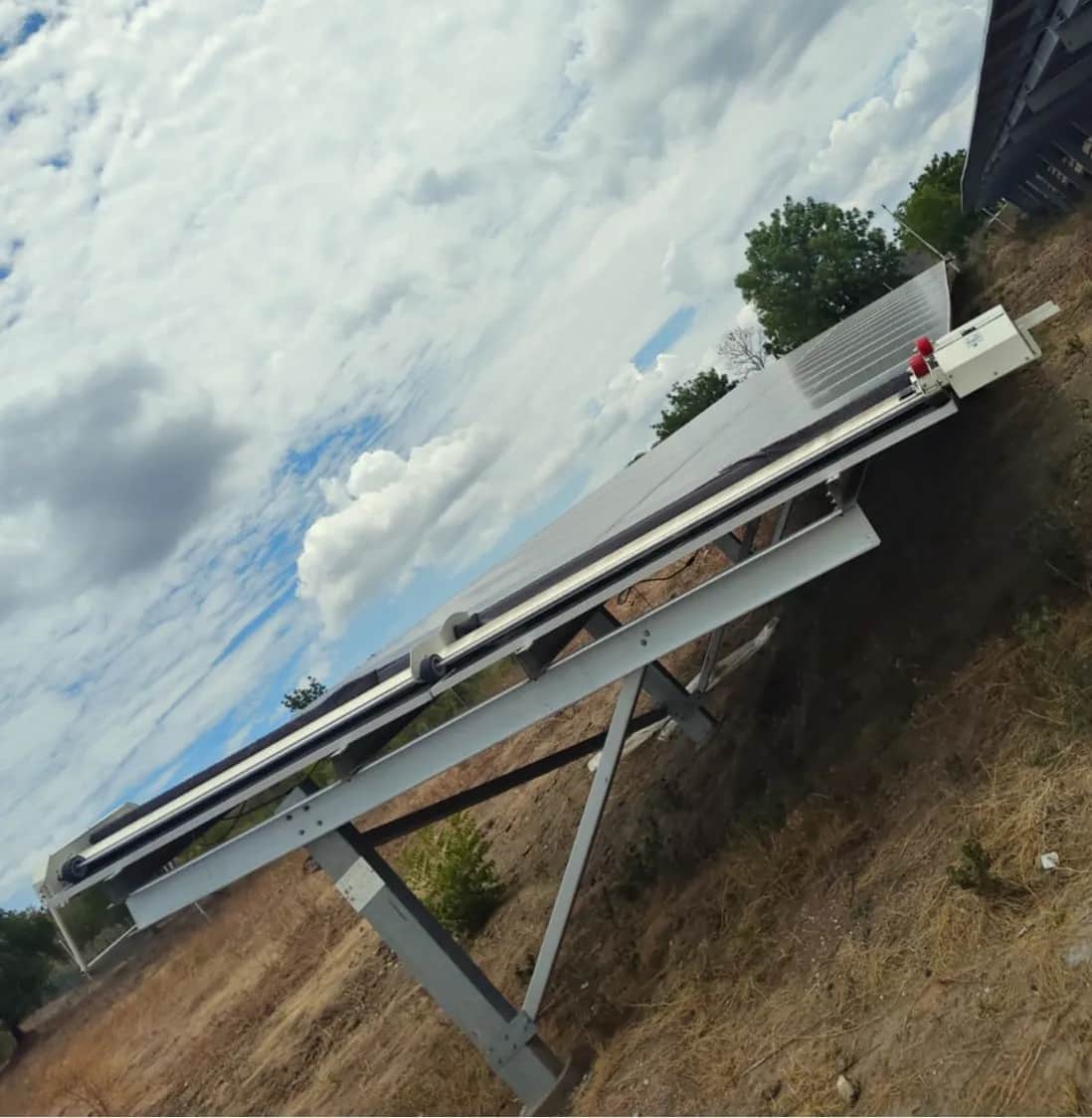
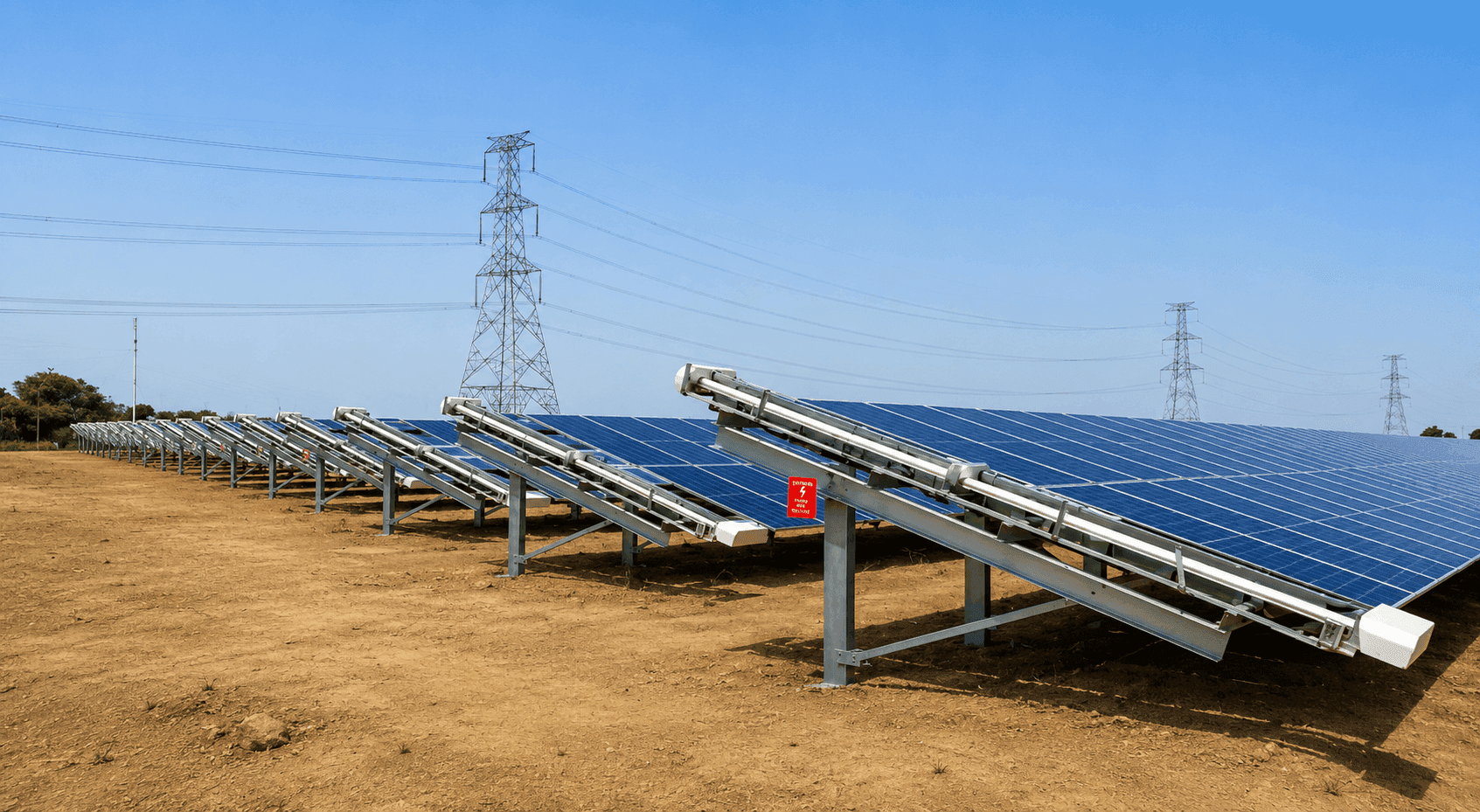
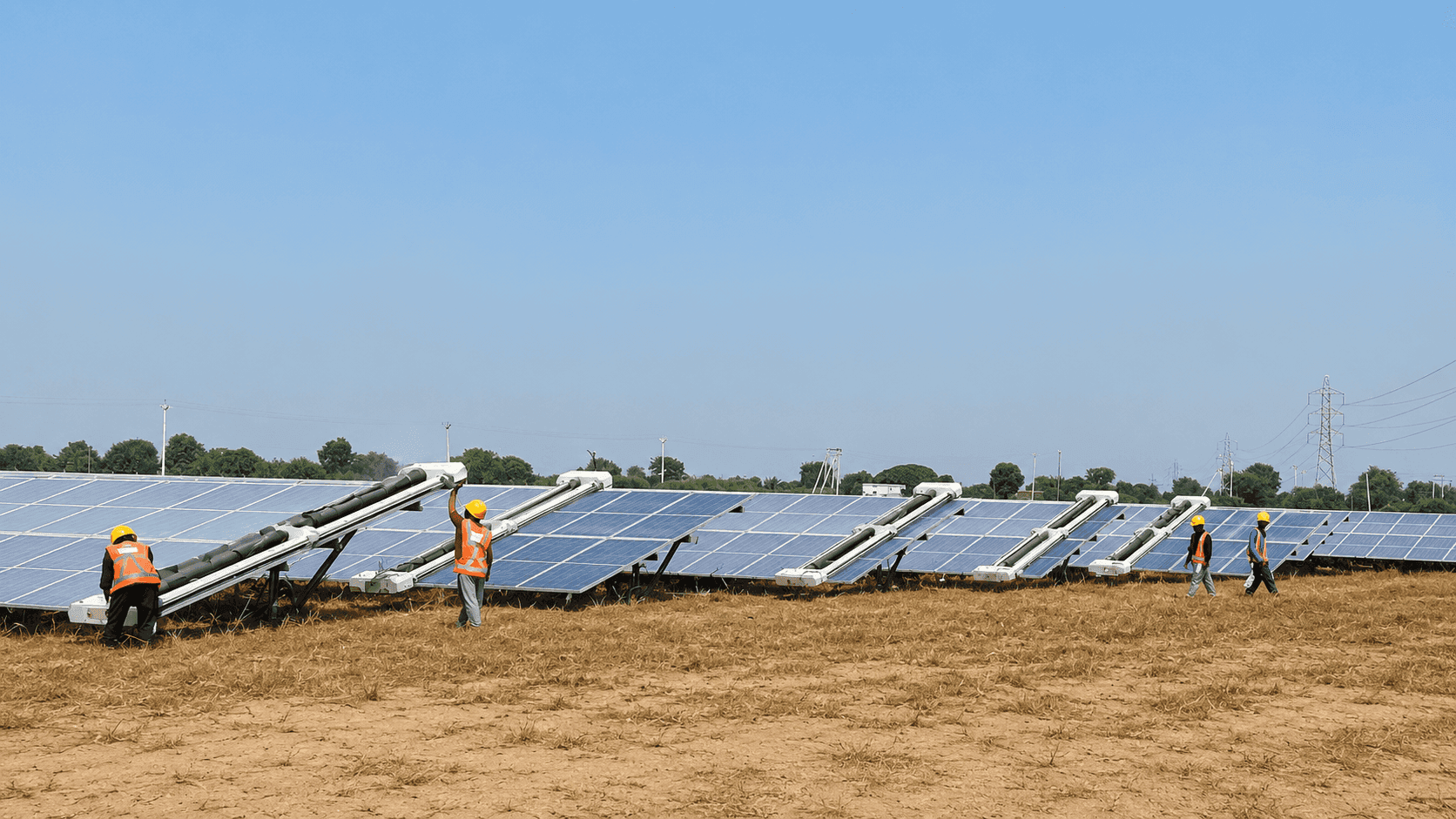
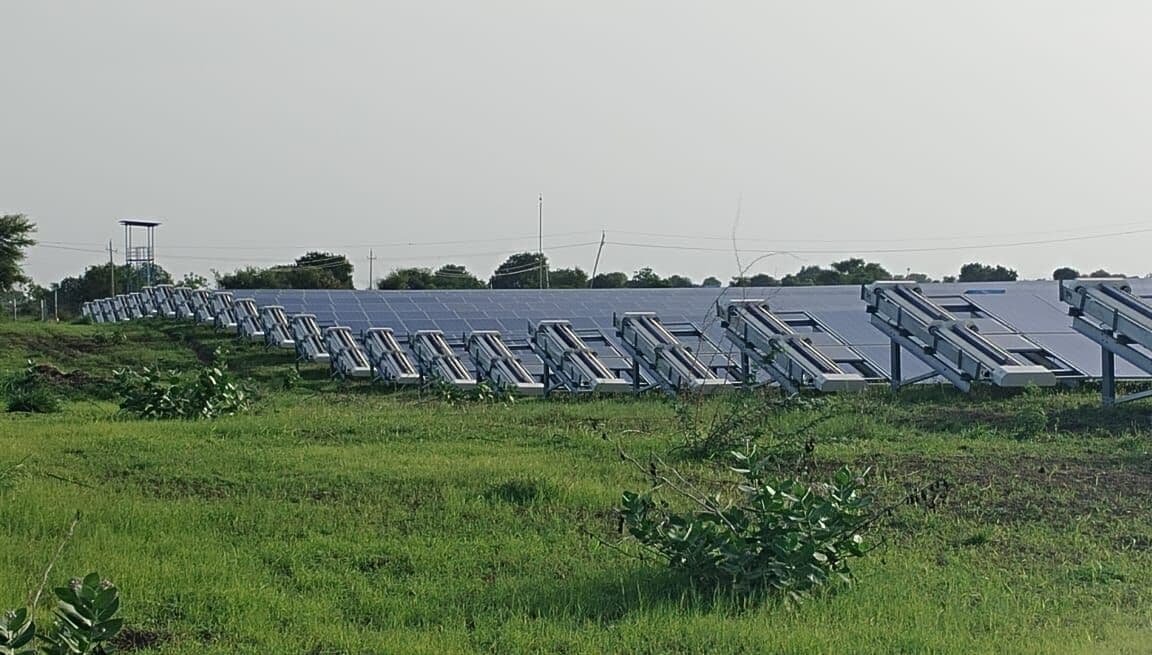
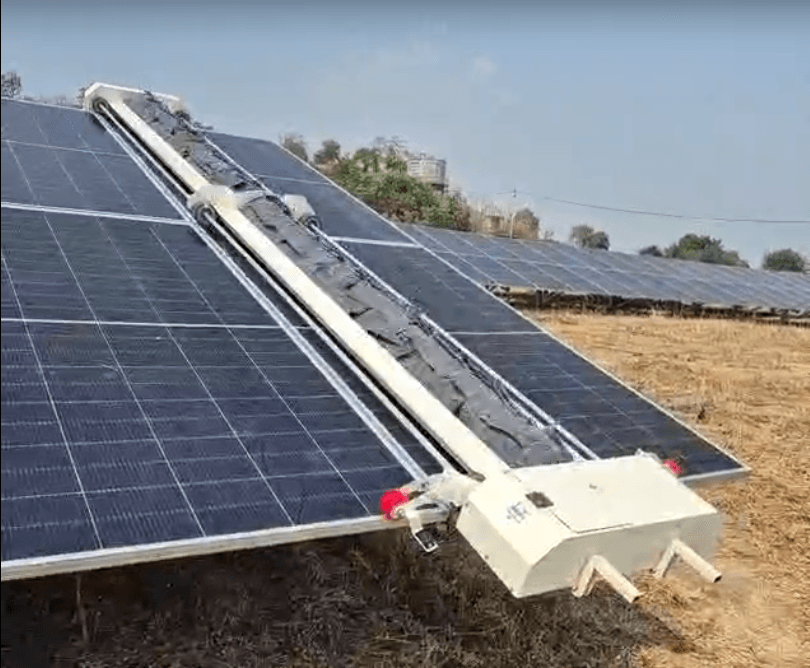
Taypro implemented a targeted cleaning solution for the Yavatmal site. This deployment used a CAPEX-optimized model. The site uses two HELYX semi-automatic robots. These robots provide a high-performance, waterless cleaning method. This method is specifically tailored for this 75 MW ground-mount array. By using a semi-automatic fleet, the team has precise control. They can target the blocks most affected by road grit and agricultural dust.
The procurement model focuses on long-term asset value. It uses the durable single-pass PBT brush technology found in HELYX. This equipment allows the site to manage resources efficiently. It avoids the high overhead of continuous manual labor. The commissioning process focused on three tactical improvements:
- Targeted Block Maintenance: Operators do not use a uniform routine across the whole site. Instead, they deploy HELYX units to specific zones. They target the areas with the highest soiling accumulation. This is much more efficient for a 75 MW footprint.
- Verifiable Cleaning Logs: The integration of NECTYR is a major benefit. It allows supervisors to track every robot. They can see the deployment and status of every scheduled cycle. This provides the audit trail needed for management.
- Flexible Scheduling: The site no longer depends on large night crews. The O&M team can execute 3 to 10 dry cleaning cycles per month. They base these cycles on real-time soil metrics.
This strategic deployment balances capital expenditure with measurable improvements. The transition to robotic solar panel cleaning in Maharashtra has already helped. The site has recovered 75 MWh of additional generation per year. Furthermore, the waterless technology saves 280,000 litres of water annually. This supports the environmental and sustainability goals of the site.
Operations and monitoring
Optimizing robotic solar panel cleaning in Maharashtra: operations and monitoring
Operations at the Yavatmal site require careful planning. The 75 MW facility faces heavy soiling from dust and grit. This dirt settles unevenly across different string zones. To manage this, the team uses a set cleaning cadence. They perform 3 to 10 dry cleaning cycles per month. This frequency allows the HELYX robots to respond to weather events. It also accounts for humidity cycles. This schedule does not disrupt other site activities.
Managing these cleaning windows is critical for success. Supervisors use NECTYR fleet monitoring for clear visibility. They can see exactly which blocks are serviced. This solves the previous lack of proof-of-work. Now, the team can verify performance at the string level. This digital oversight ensures that cleaning does not clash with other tasks. It avoids conflicts with vegetation management or civil maintenance.
- Verified Cycles: NECTYR logs confirm when and where HELYX units operated. This provides granular data on cleaning progress.
- Scheduling Efficiency: The 3 to 10 cycle cadence is very efficient. It aligns maintenance with actual soil accumulation. This avoids redundant operations.
- Resource Management: Automated data logs eliminate scheduling conflicts. The robots do not interfere with ground crew schedules. This ensures smooth site logistics.
The system is designed to handle operational challenges. High-wind holds are automatically integrated into the NECTYR workflow. This protects the equipment during extreme weather. The approach focuses on site-specific soil density. This secures consistent yield improvements. It also respects the logistical limits of a 75 MW utility project.
Results and impact
Results and impact: driving yield recovery in Yavatmal
The implementation of the HELYX system has transformed the site. It has changed the way the Yavatmal facility handles operations. The project moved from manual labor to an intelligent, verifiable robotic regimen. This has successfully addressed the performance drops caused by soiling. The chronic issues with inconsistent string-level soiling are now managed.
The primary success is the move to data-driven accountability. Supervisors now rely on the NECTYR platform. It generates precise cleaning logs. These logs map service events to specific blocks. This replaces the guesswork of manual schedules. It ensures that every cleaning cycle is accounted for. Digital proof is now part of the process. This transparency helps the team correlate cleaning with energy gains. They can now mitigate the impact of dust and grit more effectively.
- Yield Restoration: The deployment has achieved a measurable recovery in power. It has stabilized the annual output for the 75 MW array.
- Verified Compliance: Detailed cleaning logs are available in NECTYR. This provides the audit trail needed for asset owners.
- Operational Harmony: The efficiency of the process is high. Robotic activity no longer conflicts with vegetation or civil maintenance. This optimizes the total O&M budget.
- Sustainability Metrics: The move to waterless technology is a big win. It has significantly reduced the annual water consumption footprint.
Peer comparison and planning checklist
Peer comparison and operational planning
The Yavatmal 75 MW site operates in a complex environment. It is similar to other regional sites. These include the 10 MW Ahmadnagar Jalalpur project and the 14 MW Kupti site. Smaller sites often rely on local crew oversight. However, the scale of Yavatmal requires a more advanced approach. This is why the site uses semi-automatic robotic cleaning. Unlike fully autonomous sites that use daily cycles, this project uses structured scheduling. This is the best way to manage regional dust and humidity.
By leveraging the HELYX system, the project team avoids many problems. They avoid the fragmentation seen in manual sites in Maharashtra. This deployment is a benchmark for the industry. It balances CAPEX procurement with the need for verifiable logs. It ensures every block receives attention regardless of site size.
- Audit your regional soiling patterns. This helps you find the best cleaning frequency.
- Validate your water logistics. Compare them against the savings of a waterless transition.
- Assess your existing O&M schedules. Look for conflicts with vegetation clearing.
- Establish a per-block verification protocol. Use NECTYR to ensure full coverage.
- Conduct a site-wide terrain review. Confirm that the equipment is compatible with your mounting.