
Executive summary
robotic solar panel cleaning Maharashtra. The 150 MW Kinhi solar project in Yavatmal is a major case study for the region. This ground-mount installation faces very difficult environmental conditions. Local farming creates heavy agricultural dust. Nearby unpaved roads add layers of road grit. Additionally, humidity cycles change how this dirt sticks to the modules. This creates uneven and stubborn grime across the entire solar array. In the past, these conditions led to unpredictable power drops. These drops occurred at the string level. This made energy yield hard to predict and threatened long-term asset health.
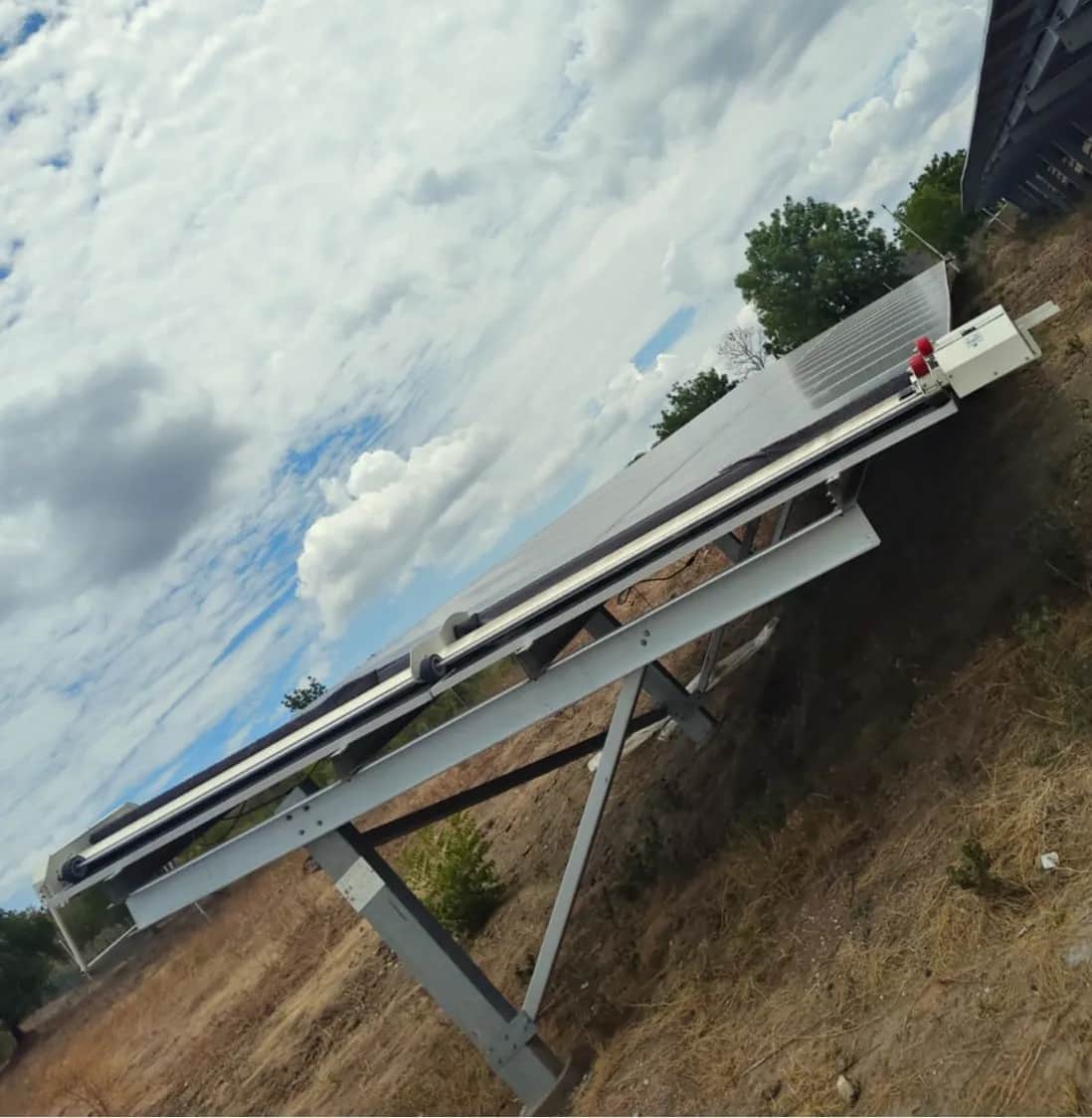
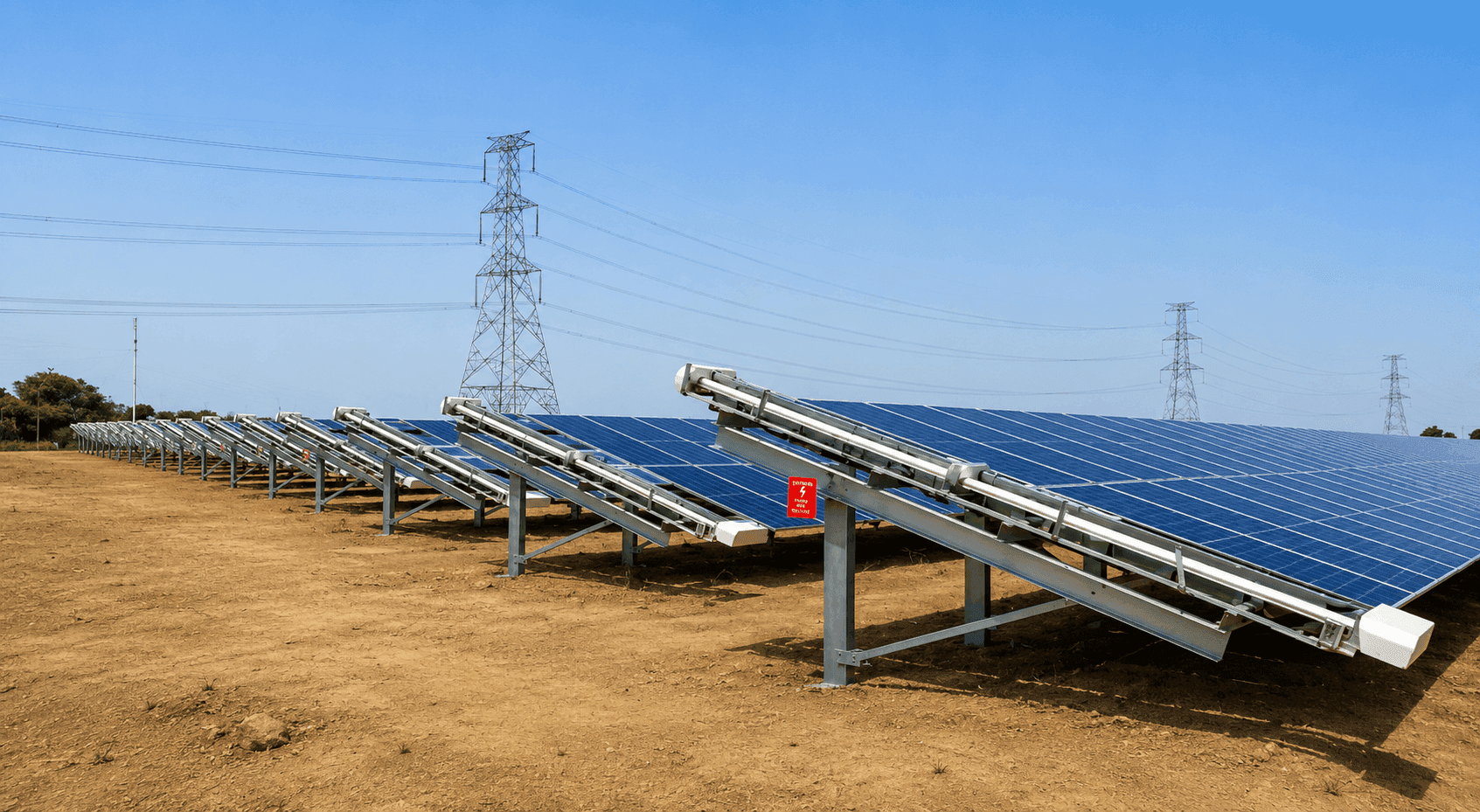
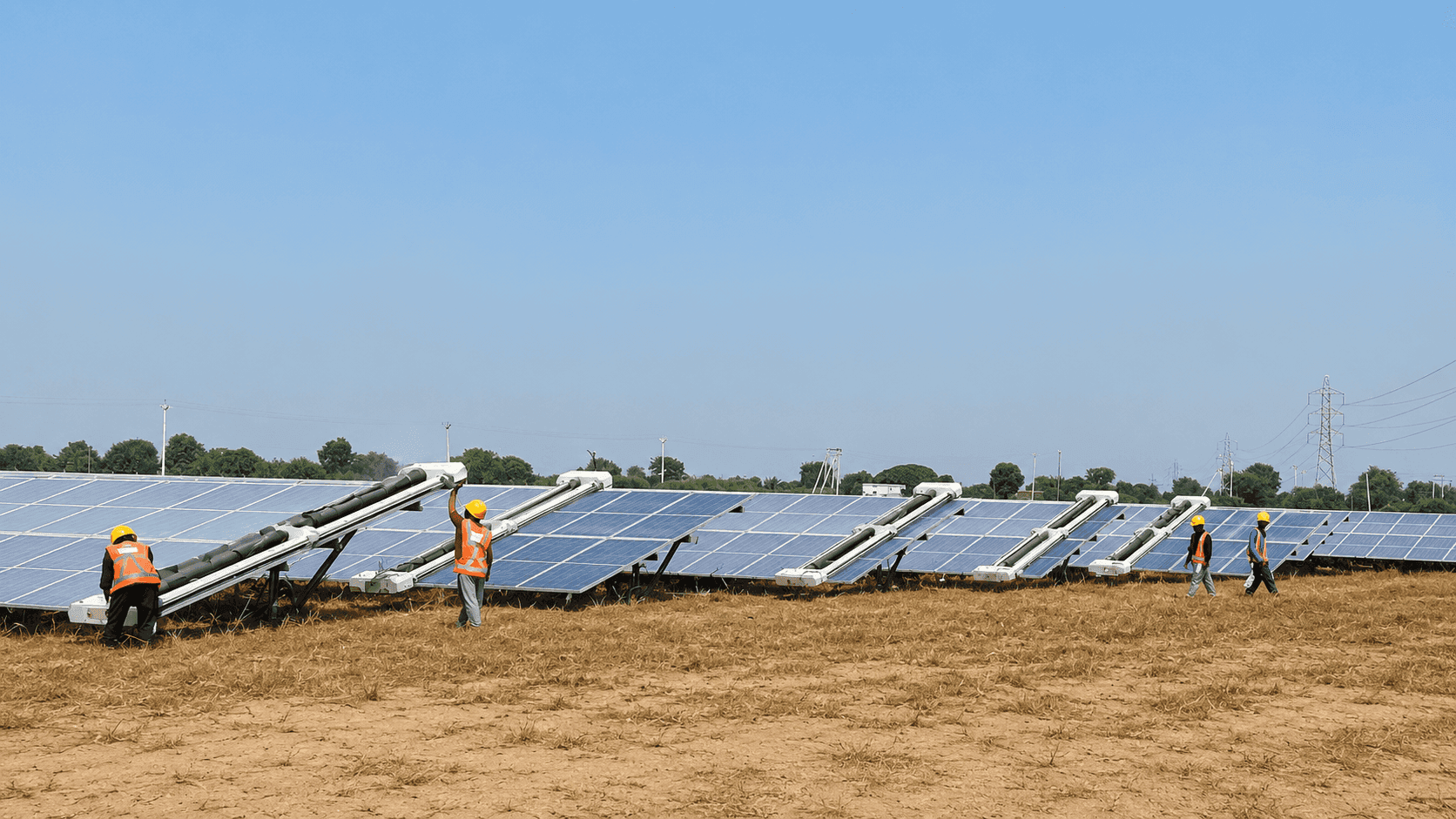
To solve these operational hurdles, Taypro deployed two NYUMA units. This is a semi-automatic pick-and-place solution. This system replaces old, manual cleaning methods. It allows site teams to perform scheduled dry cleaning cycles. The team typically performs 3 to 10 cycles per month. This frequency depends on how much dust builds up. The integration of NECTYR has changed site management. Supervisors now have a clear digital audit trail. They can verify exactly which strings were cleaned after every pass. This has optimized water logistics significantly. The project now saves 560,000 litres of water every year. It also recovers 150 MWh of energy annually.
Environment and soiling at Yavatmal, Kinhi
Managing string-level soiling in the Kinhi agricultural belt
The 150 MW ground-mount installation in Kinhi, Yavatmal, sits in a high-intensity agricultural zone. Local farming practices directly impact the cleaning needs of the plant. The site faces a persistent issue called the grime-lock effect. This happens when seasonal crop dust meets road grit. Nightly humidity cycles then harden this mixture. It creates a stubborn, cement-like residue on the solar glass. This residue is very hard to remove with traditional manual methods.
In this environment, soiling is rarely uniform. Dust patterns change based on wind direction. They also change based on how close a row is to unpaved agricultural tracks. This creates uneven shading across the array. The shading happens at the string level. This leads to different voltage drops across the plant. These drops significantly degrade overall performance. Previously, manual cleaning crews struggled to find these uneven patches. This led to poor water use and gaps in maintenance coverage.
The current strategy uses several methods to handle these regional factors:
- Targeted dry removal: The NYUMA system provides the mechanical force needed to break the grime-lock layer. It avoids the moisture-induced streaks common in manual wash cycles.
- Verified coverage: NECTYR integration removes all guesswork. Site supervisors can track every string cleaned. They can ensure high-accumulation zones receive priority.
- Water-neutral operations: The plant no longer relies on daily water logistics. This allows the team to focus on other tasks. They can maintain a steady 3 to 10 pass range per month.
By moving to semi-automatic robotic cleaning, the Kinhi project has changed its approach. The team no longer cleans reactively. Instead, they use a data-driven model. This model counters the uneven dust caused by the Maharashtra landscape. This approach ensures optimal energy recovery across the whole 150 MW footprint.
O&M before Taypro
Managing Logistical Friction in Maharashtra Solar O&M
Before using semi-automatic robotic cleaning, the 150 MW Kinhi site faced many constraints. The O&M team relied on manual, water-based cleaning. This created many logistical challenges. Water transport and night crew schedules often conflicted with other work. For example, cleaning times often overlapped with vegetation management. These conflicts created a scheduling bottleneck. The team could not maintain a consistent cleaning rhythm across the vast array.
The lack of precise oversight created a verification void. In manual operations, it was nearly impossible to confirm cleaning results. Supervisors could not know which specific strings were cleaned. This was a major problem for managing uneven soiling. Local agricultural dust and road grit caused highly localized dirt patterns. Without per-block accountability, the site suffered from shading. This shading directly reduced the total energy output of the plant.
These systemic gaps hurt the 150 MW capacity in three main ways:
- Resource competition: Water logistics and manual labor caused downtime. These tasks often fought for time with essential civil maintenance.
- Maintenance blind spots: Supervisors lacked a reliable audit trail. This led to uneven coverage across the solar blocks. It caused unpredictable performance losses.
- Inefficient scheduling: Reactive cleaning failed to keep up. The team could not address the rapid soiling caused by regional humidity and nearby roads.
The project replaced this uncertainty with a better strategy. By switching to NYUMA robotic systems, the site gained a verifiable process. They moved from manual guesswork to a data-backed plan.
Fleet and deployment at 150 MW
Fleet and Deployment at 150 MW
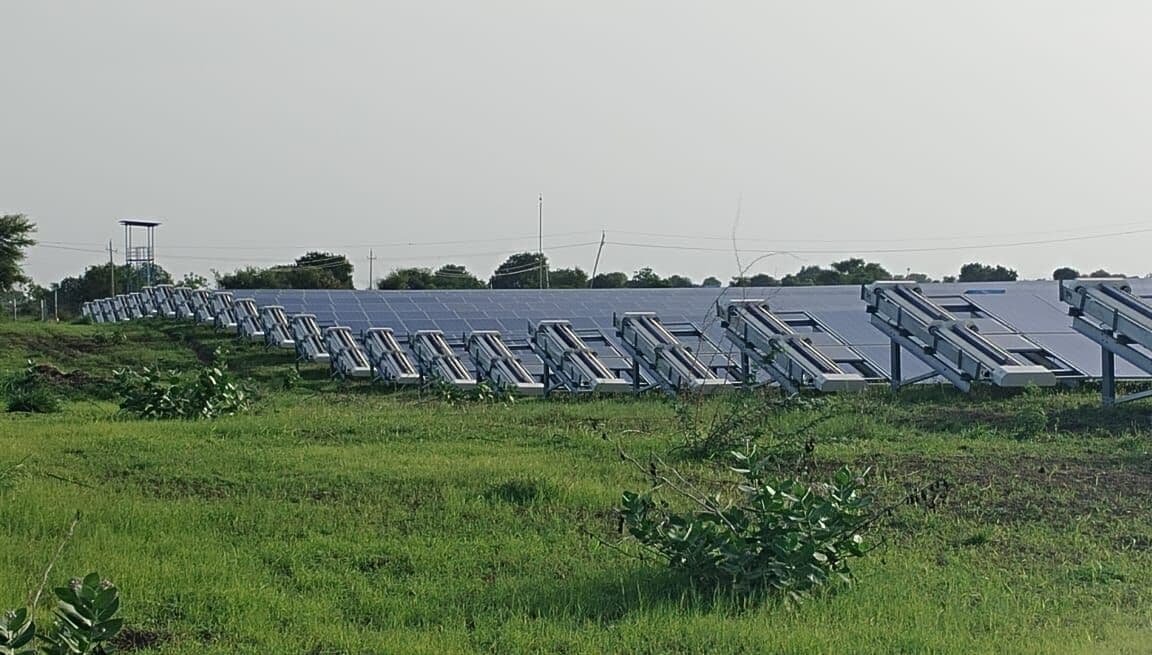
The 150 MW Yavatmal deployment uses a smart, Capex-optimized approach. It addresses complex regional soiling through automation. The site uses two semi-automatic NYUMA units. This moves the plant away from unpredictable manual labor. It creates a structured and repeatable cleaning protocol. This fleet is designed for the real-world needs of Maharashtra. It manages road grit and humidity cycles that manual crews often miss.
The deployment uses a pick-and-place strategy. The site follows a cadence of 3 to 10 dry cleaning cycles per month. This rate matches the specific dust accumulation in the Kinhi area. The maintenance team moves the robots across different segments of the 150 MW array. This ensures high-impact areas get attention. They do not need a robot on every single row. This method optimizes initial capital expenditure while protecting asset performance.
Commissioning the NYUMA fleet focuses on modularity and performance. Every cleaning cycle is logged in the NECTYR operations portal. This provides the proof of work that manual cleaning lacked. The commissioning process focuses on three core pillars:
- Precision logistics: The team replaced night crew labor with battery-powered robots. This eliminates conflicts with civil and vegetation maintenance windows.
- Data-backed auditing: NECTYR connectivity verifies which strings are cleaned. This closes the audit gap in site maintenance.
- Resource conservation: The plant eliminated the need for massive water transport. This saves 560,000 litres of water every year.
This model shows a clear path for utility-scale projects in Maharashtra. It provides measurable improvements in generation. The site recovers an extra 150 MWh of energy annually. The consistent PBT brush contact fights the regional dust challenges effectively. This secures a more reliable performance baseline for the asset owner.
Operations and monitoring
Optimizing robotic solar panel cleaning in Maharashtra: Digital accountability and logistics
The 150 MW Yavatmal project in Kinhi is a leader in integrated operations. The two NYUMA semi-automatic robots change how the site functions. They move the facility away from inefficient, manual water-based washing. The O&M team has resolved the conflict between night crews and civil maintenance. Robotic cycles are now a smooth part of the site routine.
Digital accountability has replaced manual guesswork. The NECTYR portal gives supervisors real-time logs. They can see exactly which strings were serviced. This transparency prevents missed panels. It ensures that road grit and agricultural dust do not hurt generation. Managers can now track cleaning performance against SCADA data. This provides much better oversight for the entire 150 MW plant.
- Verified coverage: NECTYR provides per-block proof of work. This ensures consistent maintenance at the string level.
- Logistics management: Robotic cycles happen during the day. This removes the friction between water logistics and vegetation management teams.
- Resource efficiency: The waterless PBT brush technology is highly efficient. It saves 560,000 litres of water annually and recovers 150 MWh of energy.
The operations strategy focuses on reliable maintenance. It avoids the complexity of wind holds that affect watering systems. By using NYUMA robots, the team maintains a steady cleaning rhythm. This rhythm adapts to local humidity cycles. This model proves that large-scale cleaning needs software. It sets a new benchmark for utility sites across Maharashtra.

Results and impact
Quantifying impact: Robotic solar panel cleaning Maharashtra
The 150 MW Kinhi site shows the real impact of robotic cleaning. The transition from manual labor to semi-automatic robots was successful. By using NYUMA technology, the site solved its primary challenge. It addressed the uneven soiling from agricultural dust and road grit. The technology provides the precision needed to keep panels clear. It maintains peak transparency across complex string-level patterns.
Semi-automatic robotic cleaning has optimized resource use at the Yavatmal plant. The O&M team no longer relies on water-heavy processes. This has removed conflicts with vegetation management schedules. The controlled, dry cleaning approach is much more efficient. The site now achieves massive annual water savings. It also removes the burden of hauling water for night crews.
- Generation recovery: Removing agricultural grime ensures higher energy yields. This improves the plant output compared to manual cycles.
- Resource conservation: Dry robotic cleaning saves a vast amount of water. This helps the facility meet its sustainability goals.
- Operational oversight: NECTYR fleet monitoring gives supervisors clear proof of service. Every block is addressed according to the schedule.
The success at Kinhi shows how robotics can solve local soiling issues. The project provides predictable and high-quality cleaning cycles. This results in a notable recovery in annual generation. This outcome provides a scalable model for other large sites. Other assets in Maharashtra facing dust and humidity can follow this path.
Peer comparison and planning checklist
Peer comparison and planning checklist
The Kinhi 150 MW site shows a shift toward precision O&M. This mirrors the technical trends seen in other Maharashtra projects. The Yavatmal-Kupti 14 MW project uses fixed-tilt deployments. The Soyegaon solar project also deals with complex agricultural debris. However, the Kinhi site shows how to scale semi-automatic cleaning for huge utility environments.
Some sites use fully autonomous NYUMA robots for daily cleaning. The Kinhi project focuses on targeted cycles instead. These cycles address uneven soiling from road grit and humidity. The team uses a pick-and-place approach. They maintain a steady cadence of 3 to 10 dry cleaning cycles per month. This method solves the logistical friction seen at other regional sites. It keeps cleaning and vegetation management separate.
To optimize your site transition, use this planning checklist:
- Evaluate your string-level soiling patterns. Compare them against rainfall and dust data.
- Assess your site layout. Determine if semi-automatic robots or CRADYL-assisted systems fit your budget.
- Audit your current costs. Include water logistics and night crew labor in your ROI calculation.
- Integrate NECTYR fleet monitoring. Replace manual inspections with verifiable, block-level data.
- Coordinate your cleaning cycles. Avoid overlapping with civil or electrical maintenance tasks.
- Verify robot compatibility. Ensure the contact method works with your specific module glass and tilt.