Executive summary
robotic solar panel cleaning Maharashtra, The 75 MW ground-mount solar project in Mahadapur, Yavatmal, faced persistent operational inefficiencies due to the region's specific environmental profile. Agricultural dust, road grit, and local humidity cycles created a stubborn, uneven layer of soiling that varied significantly across individual strings. This inconsistency, compounded by the inability of site supervisors to verify which specific blocks were addressed during manual shifts, hindered overall plant performance and energy yield.
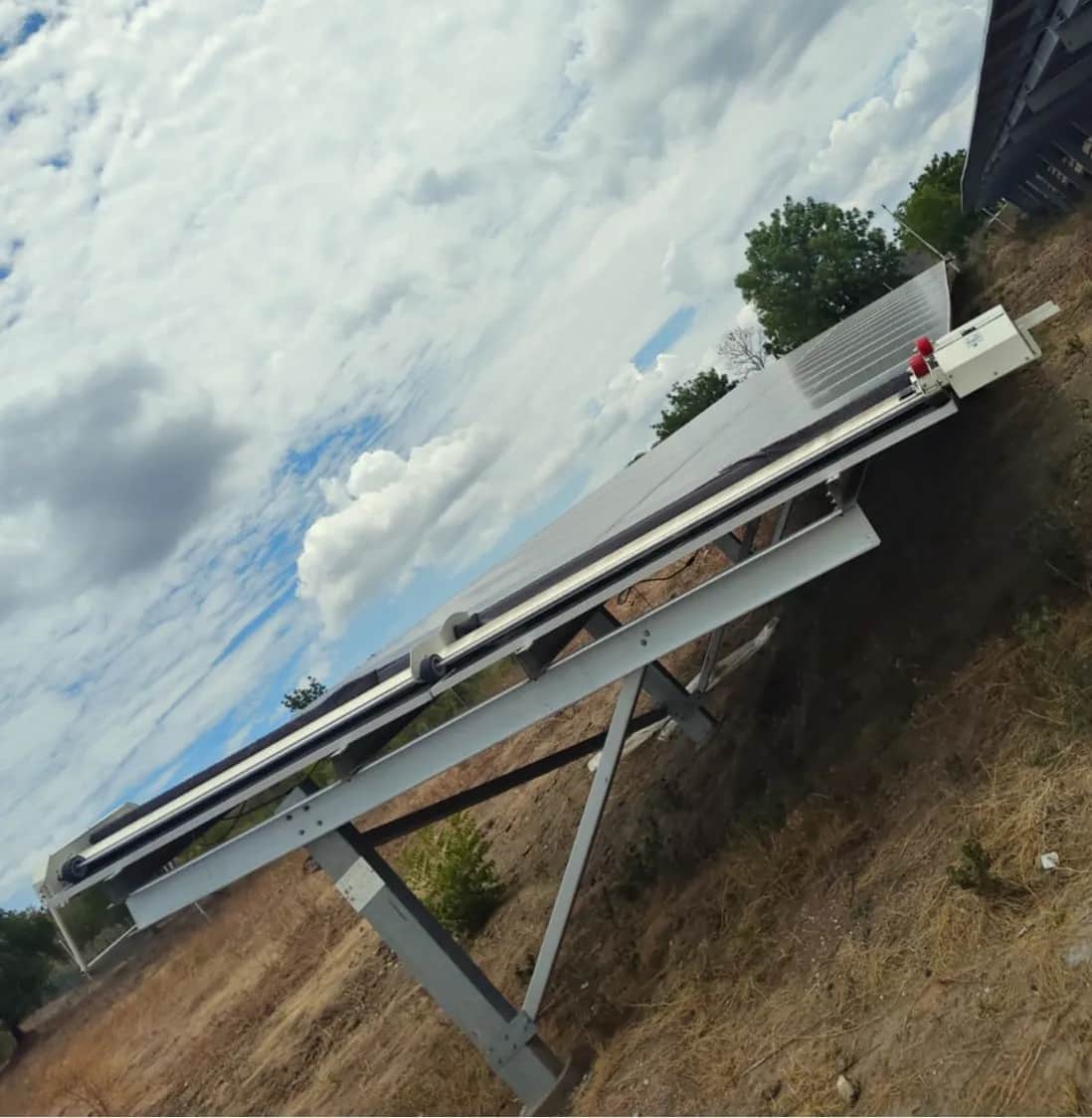
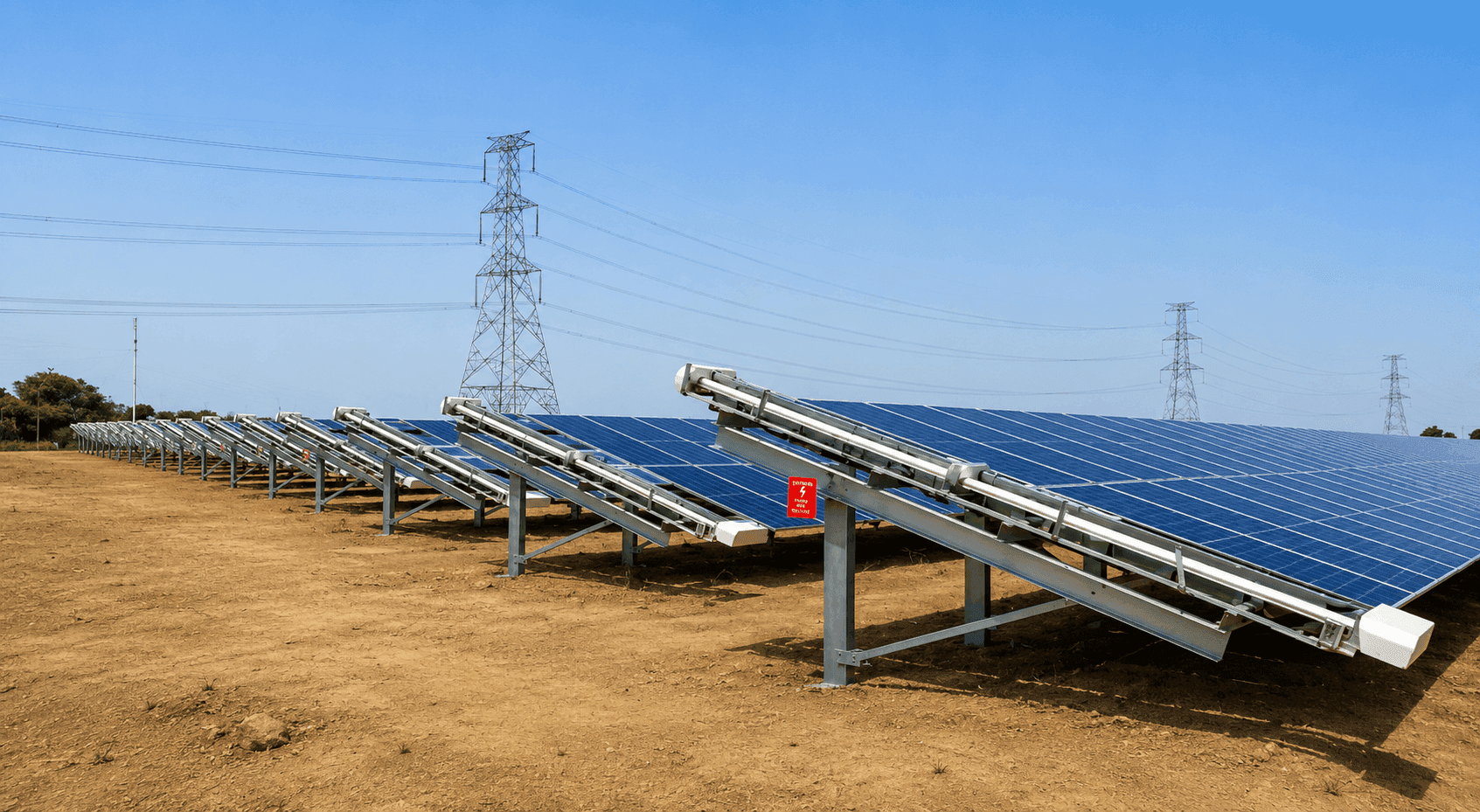
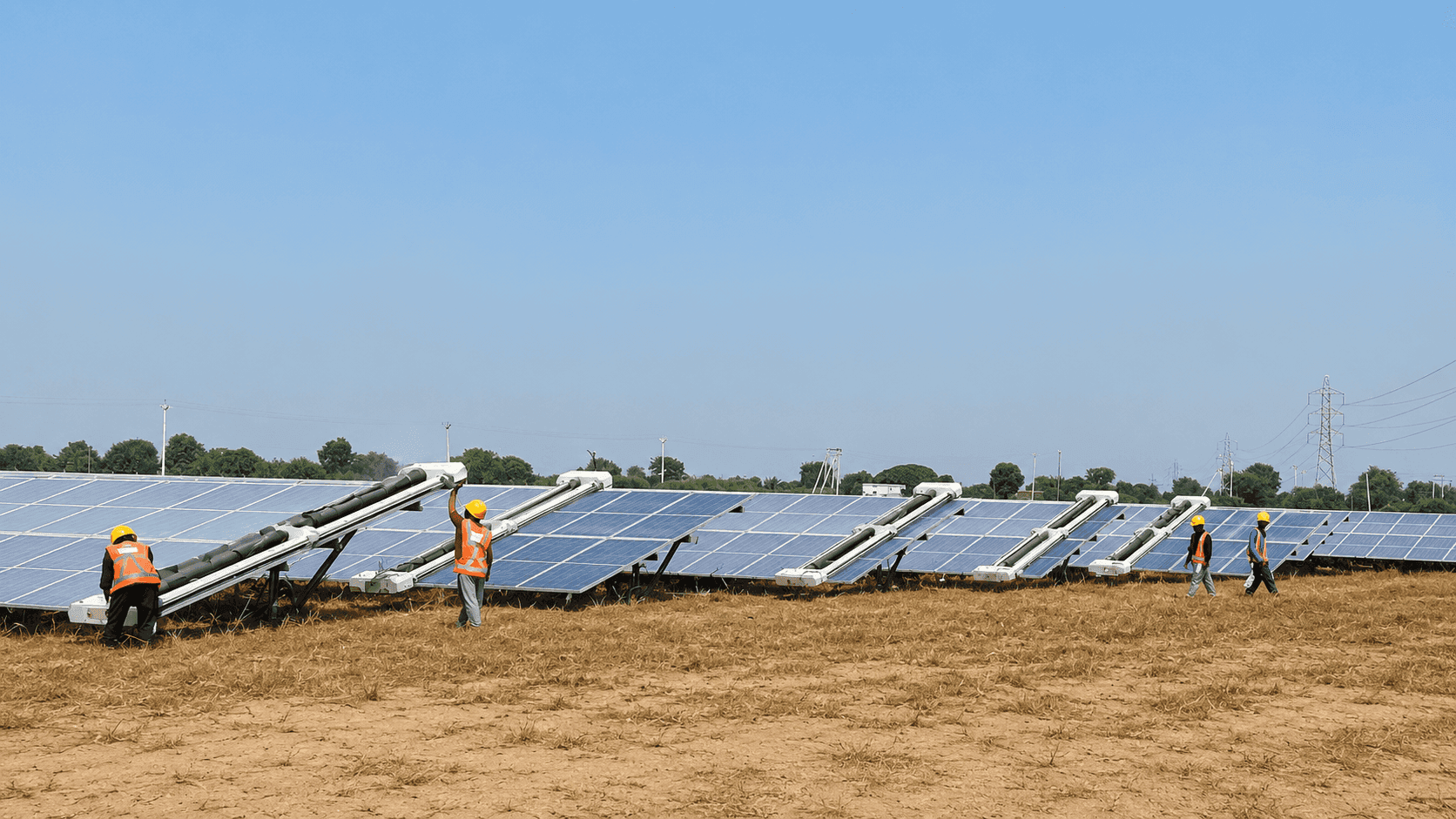
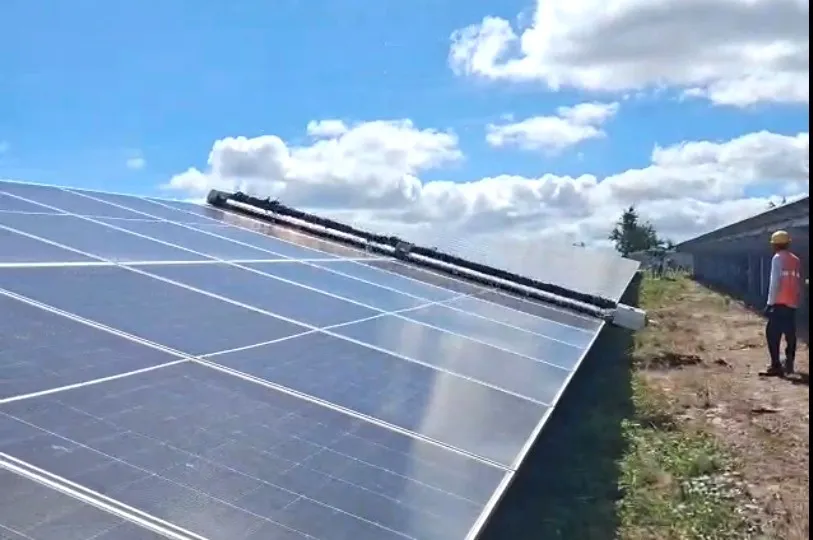
To overcome these challenges, the project transitioned to a strategic deployment of two HELYX semi-automatic robots. This procurement allowed the site to move away from water-dependent cleaning processes that often conflicted with essential vegetation and civil maintenance schedules. By leveraging the portable, pick-and-place capabilities of the HELYX units, the site established a consistent cleaning cadence, typically executing 3–10 dry cycles per month based on real-time soiling levels. This shift to waterless robotic solar panel cleaning in Maharashtra successfully resolved water logistics hurdles while delivering 75 MWh of additional generation per year through improved operational visibility and reliable panel maintenance.
Environment and soiling at Yavatmal, Mahadapur
Managing agricultural dust and road grit at a 75 MW Mahadapur solar site
The 75 MW Mahadapur solar project in Yavatmal, Maharashtra, operates within an environment defined by intense seasonal variations. Local agricultural practices and high traffic from nearby transport routes generate significant volumes of dust and road grit. These particulates settle on the modules and interact with frequent humidity cycles to form a stubborn, non-uniform layer of grime. This uneven soiling pattern creates string-level disparities that traditional maintenance crews struggle to address systematically.
Operating a site at this massive 75 MW scale creates logistical constraints that are far more complex than those found at smaller installations like the 14 MW Kupti facility. At the Mahadapur site, the sheer size of the array means that water logistics, crew scheduling, and manual access often compete for time with critical vegetation and civil O&M tasks. Previous oversight limitations left supervisors without verifiable proof of which strings were cleaned, leading to inconsistent performance across the plant.
To address these specific environmental challenges, the project integrated semi-automatic robotic solar panel cleaning in Maharashtra. The deployment of two HELYX units allows for targeted, waterless maintenance of the panels. By shifting to a scheduled cycle of 3–10 cleanings per month, the plant avoids the inefficiencies of manual water-based washing. This approach not only conserves water resources but also provides the operational visibility required to maintain consistent energy yields across the entire 75 MW footprint.
O&M before Taypro
Managing agricultural dust and road grit at a 75 MW Mahadapur solar site
The 75 MW Mahadapur solar project in Yavatmal, Maharashtra, operates within a challenging environment defined by heavy agricultural dust and fine road grit. These particulates frequently settle on the panels, where they combine with regional humidity cycles to form a stubborn, non-uniform layer of grime. This uneven soiling pattern creates string-level disparities that result in significant generation losses, leaving managers struggling to maintain plant uniformity.
Operating a utility-scale plant of this capacity imposes complex logistical constraints on O&M teams. Before adopting robotic cleaning, the site faced a significant supervisory blind spot. Maintenance schedules for water-based cleaning frequently conflicted with essential vegetation management and civil O&M windows. Because teams operated without standardized logging, site supervisors lacked verifiable, per-block proof of which strings were actually cleaned during each cycle. This opacity made it difficult to hold contractors accountable for cleaning quality or to optimize the cleaning schedule against real-time soiling levels.
To resolve these operational hurdles, the project integrated two HELYX semi-automatic robots. This transition to robotic solar panel cleaning in Maharashtra eliminated the need for manual, water-intensive labor. The team now executes 3–10 dry cycles per month, ensuring consistent maintenance while resolving the previous audit gaps in cleaning coverage.
Fleet and deployment at 75 MW
Fleet and deployment at 75 MW: Optimizing robotic solar panel cleaning in Maharashtra
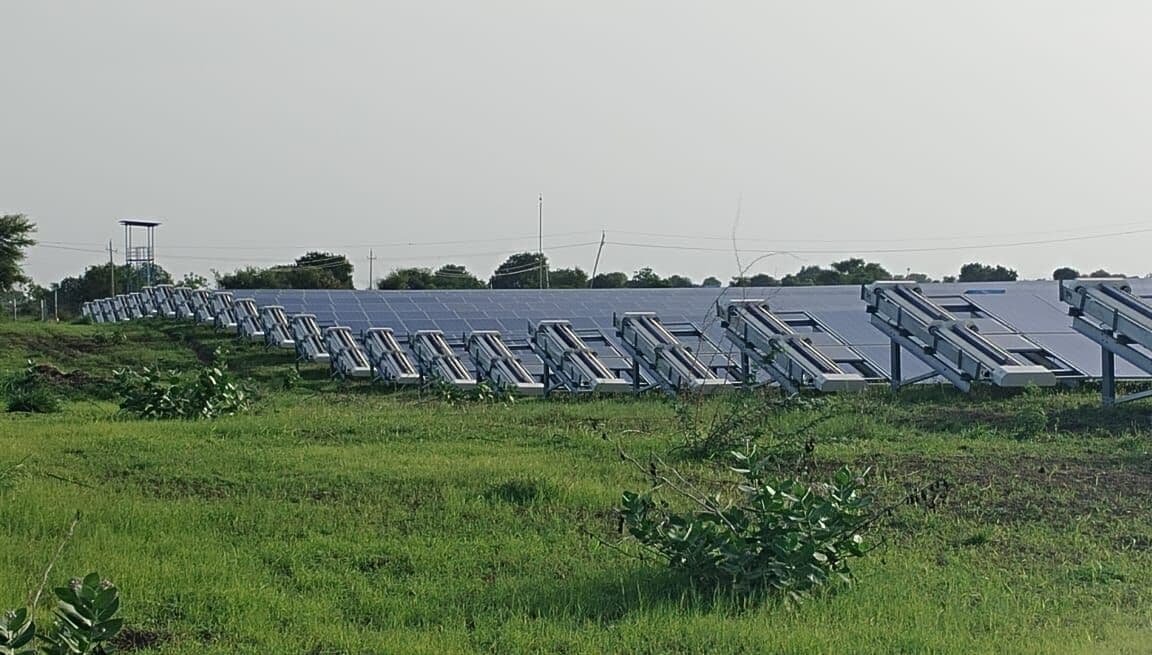
The 75 MW Mahadapur solar site in Yavatmal requires a strategic approach to managing regional soiling. With a primary focus on the HELYX semi-automatic system, we have deployed two units to handle the ground-mount array. This deployment reflects a deliberate Capex procurement strategy, replacing manual, water-heavy maintenance with high-efficiency robotic cleaning technology.
The deployment centers on a pick-and-place methodology designed for distributed plant blocks. Our operational cadence involves 3–10 scheduled dry cleaning cycles per month. This frequency allows the site to manage the accumulation of agricultural dust and road grit without the logistical burden of coordinating night crews or water transport. By decoupling the cleaning schedule from traditional manual O&M windows, the plant minimizes operational interference with vegetation and civil maintenance activities.
Commissioning of the NYUMA-based fleet emphasized data-driven accountability. Before this deployment, supervisors lacked clear evidence of which blocks were cleaned, leading to uneven energy yields across the facility. The current robot fleet now enables structured reporting for every cleaning cycle. This granular visibility ensures that the entire 75 MW array receives consistent maintenance while providing the following operational advantages:
- Water conservation by eliminating the need for traditional water-based washing methods.
- Consistent cleaning of panels across all blocks to mitigate string-level performance drops caused by localized soiling patterns.
- Improved workforce safety and reduced reliance on manual labour for hazardous tasks.
- Enhanced plant intelligence through systematic logging of dry cleaning intervals.
This robotic installation represents a scalable model for large-scale solar assets in Maharashtra. It balances the need for consistent output with the realities of site logistics and environmental conditions found in the Yavatmal region.
Operations and monitoring
Operations and Monitoring in Yavatmal: Moving Beyond Water Logistics
The 75 MW Yavatmal project previously struggled with the logistical complexities of manual water-based maintenance. Coordinating night crews for wet cleaning often conflicted with essential vegetation management and civil O&M windows. These overlaps created operational friction and inconsistent cleaning coverage, leaving supervisors without verified proof of performance across the array. By transitioning to a semi-automatic model with two HELYX robots, we replaced these inefficiencies with a controlled, data-backed dry cleaning rhythm.
Our operational cadence is now defined by 3–10 scheduled dry cleaning cycles per month. This frequency effectively mitigates the uneven soiling patterns caused by local agricultural dust and road grit without requiring water transport or complex shift scheduling. Because the HELYX fleet operates independently of water logistics, it integrates seamlessly into the broader site maintenance calendar. This decoupling ensures that site managers no longer choose between panel cleaning and other critical civil tasks.
Accountability is maintained through NECTYR fleet monitoring, which replaces manual checklists with digital logs. Every robot movement is tracked, providing supervisors with per-block proof of cleaning activity. This granular visibility allows for rapid intervention if soiling patterns shift due to localized humidity cycles. The result is a streamlined O&M cycle that prioritizes efficiency and asset availability while eliminating the reliance on inefficient water-heavy practices.
Results and impact
Results and Impact: Sustaining Yield in Yavatmal
The transition to a robotic cleaning model has significantly shifted the operational trajectory for this 75 MW ground-mount plant in Maharashtra. By implementing a semi-automatic fleet, the site has successfully mitigated the output volatility previously caused by agricultural dust and stubborn humidity-bound grit. This strategic investment has enabled the recovery of additional energy generation annually, providing a consistent boost to the plant capacity factor.
The shift away from manual, water-intensive cleaning has delivered measurable improvements in site-wide efficiency:
- Increased annual generation through precise management of uneven string-level soiling patterns.
- Improved operational accountability, as site supervisors now utilize NECTYR to verify cleaning status per block.
- Eliminated conflicts between cleaning windows and broader civil or vegetation management O&M tasks.
- Significant reduction in annual water consumption by adopting a reliable waterless cleaning method.
Beyond the immediate yield gains, the project has established a new standard for internal site management. Supervisors are no longer reliant on the logistical unpredictability of night crews or manual labour. Instead, they operate with a clear, data-driven overview of site cleanliness. This robotic deployment proves that for distributed utility-scale arrays, the right combination of technology and monitoring turns historical soiling challenges into reliable, automated performance.
Peer comparison and planning checklist
Peer Comparison and Planning for Scaling Operations
The 75 MW Mahadapur site requires a structured deployment strategy compared to smaller 14 MW projects like Yavatmal-Kupti. While the 14 MW site allows for manual-led oversight, the 75 MW scale of Mahadapur necessitates advanced NECTYR integration to prevent O&M bottlenecks. The primary difference lies in task density: at 75 MW, the competition between cleaning cycles and civil site maintenance is significantly higher. Unlike the Kupti project, where a smaller fleet handles limited blocks, Mahadapur uses two semi-automatic robots to tackle uneven soiling across vast, distributed string configurations. Scaling to this magnitude requires moving from reactive, crew-based scheduling to the data-backed, block-specific verification provided by our robotics suite.
To optimize O&M complexity across large-scale portfolios, follow this planning checklist:
- Audit regional soiling patterns to identify high-frequency cleaning zones before finalizing robot counts.
- Allocate dedicated storage and charging points for each block to minimize robot travel time between rows.
- Integrate NECTYR dashboard access for all site supervisors to ensure per-block cleaning validation.
- Coordinate robot cleaning windows with vegetation management and civil teams to prevent site access conflicts.
- Develop a phased deployment plan to scale from pilot blocks to full site coverage as capacity grows.