Executive summary
robotic solar panel cleaning Maharashtra, The 37.5 MW Punvat solar plant is located in Yavatmal, Maharashtra. This ground-mount facility recently faced serious performance drops. The local environment was the main cause of these issues. Agricultural dust and road grit covered the panels constantly. Local humidity cycles also played a major role. These factors combined to create uneven soiling patterns. This made traditional maintenance very difficult to plan. O&M supervisors also faced major logistical problems. They had to coordinate water supplies and night crews. These tasks often clashed with other site maintenance needs.
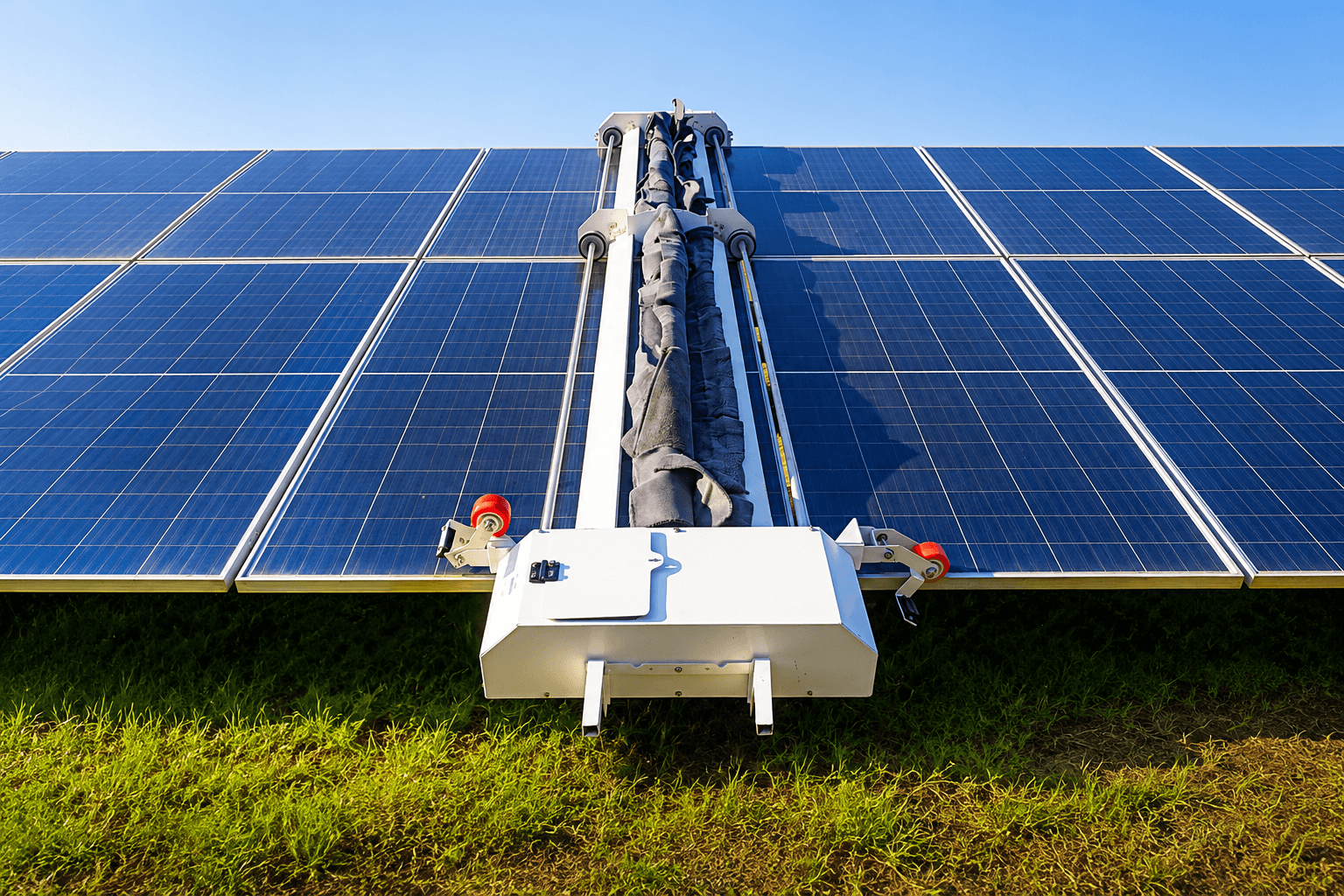
To solve these problems, the site deployed two NYUMA semi-automatic robots. This was done through a Capex procurement model. This robotic solar panel cleaning Maharashtra project changed how the plant operates. The site moved to a scheduled dry-cleaning cadence. The robots perform 3 to 10 cycles per month. The integration of NECTYR software changed everything for the managers. It provided verifiable, block-level proof of cleaning for every string. By using this dry-cleaning approach, the site saw great results. It saved 140,000 liters of water every year. It also recovered 37.5 MWh of energy production annually.
Environment and soiling at Yavatmal, Punvat
Environment and soiling at Yavatmal, Punvat
The 37.5 MW site in Punvat faces a very specific soiling profile. This is driven by local agricultural cycles and regional logistics. The plant is near many rural roads. This leads to a heavy layer of road grit on the panels. This grit mixes with organic agricultural dust. The humidity cycles in Yavatmal make the problem worse. Moisture causes the dust and grit to bond together. This creates a thick, cement-like film on the module surfaces. This film is very hard to remove with standard methods.
This environmental layering causes significant problems at the string level. Individual strings experience different levels of energy loss. This depends on local wind patterns. It also depends on how close a string is to a dusty road. Manual cleaning crews often struggle to find these dirty spots. They might miss small clusters of soiling. This leads to inconsistent power output across the whole plant. It is hard to track which strings are clean and which are dirty. These challenges are made worse by the site's complex terrain.
The site now uses semi-automatic robotic cleaning for targeted help. This helps the team deal with high-soiling zones. By using the NYUMA system, the site reduces unpredictability. The robots ensure that every string gets the attention it needs. This prevents localized shading. It also ensures the plant can recover its maximum energy. This approach handles the unique conditions of Maharashtra effectively.
O&M before Taypro
The Accountability Gap in Manual Cleaning
The 37.5 MW Yavatmal project used manual cleaning in the past. This created a constant accountability gap for O&M supervisors. Manual cleaning cycles lacked detailed documentation. Managers could not see proof of work for each block. They could not verify which specific strings were cleaned. This made it very hard to diagnose performance issues. It was difficult to know if dust was the main cause of power loss. The lack of data made planning very difficult.
Labor management was another major headache for the site. Coordinating water logistics for manual teams was hard. Moving water trucks around the site took a lot of time. This often interfered with other important maintenance tasks. For example, vegetation control and civil work were often delayed. Supervisors also had to manage night crew schedules. These schedules often clashed with other site requirements. Without a systematic monitoring layer, energy recovery was left to chance. The team could not guarantee that every module was actually cleaned. This left the plant vulnerable to the heavy soiling common in Maharashtra.
Fleet and deployment at 37.5 MW
Fleet Integration and Deployment at the 37.5 MW Yavatmal Site
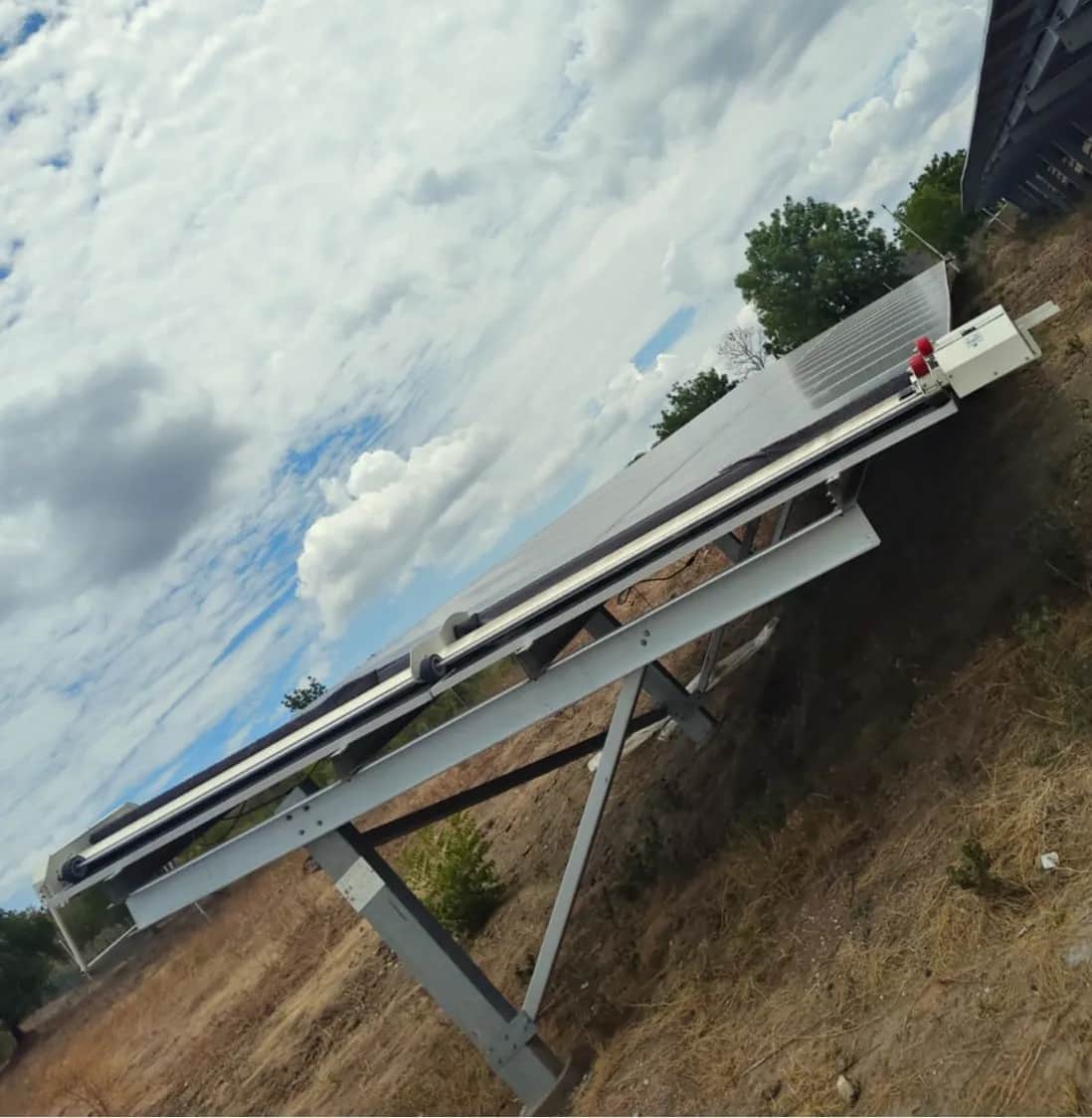
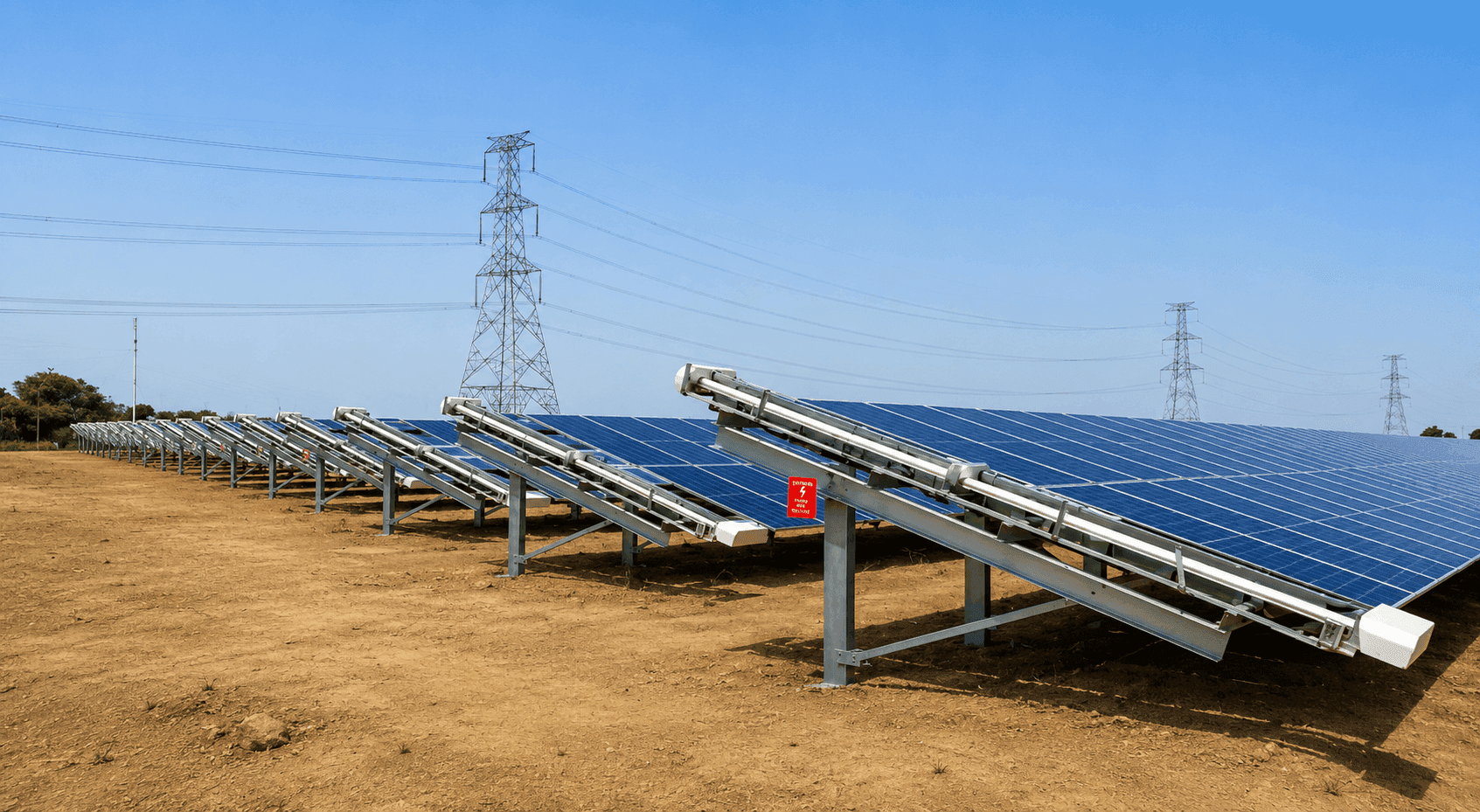
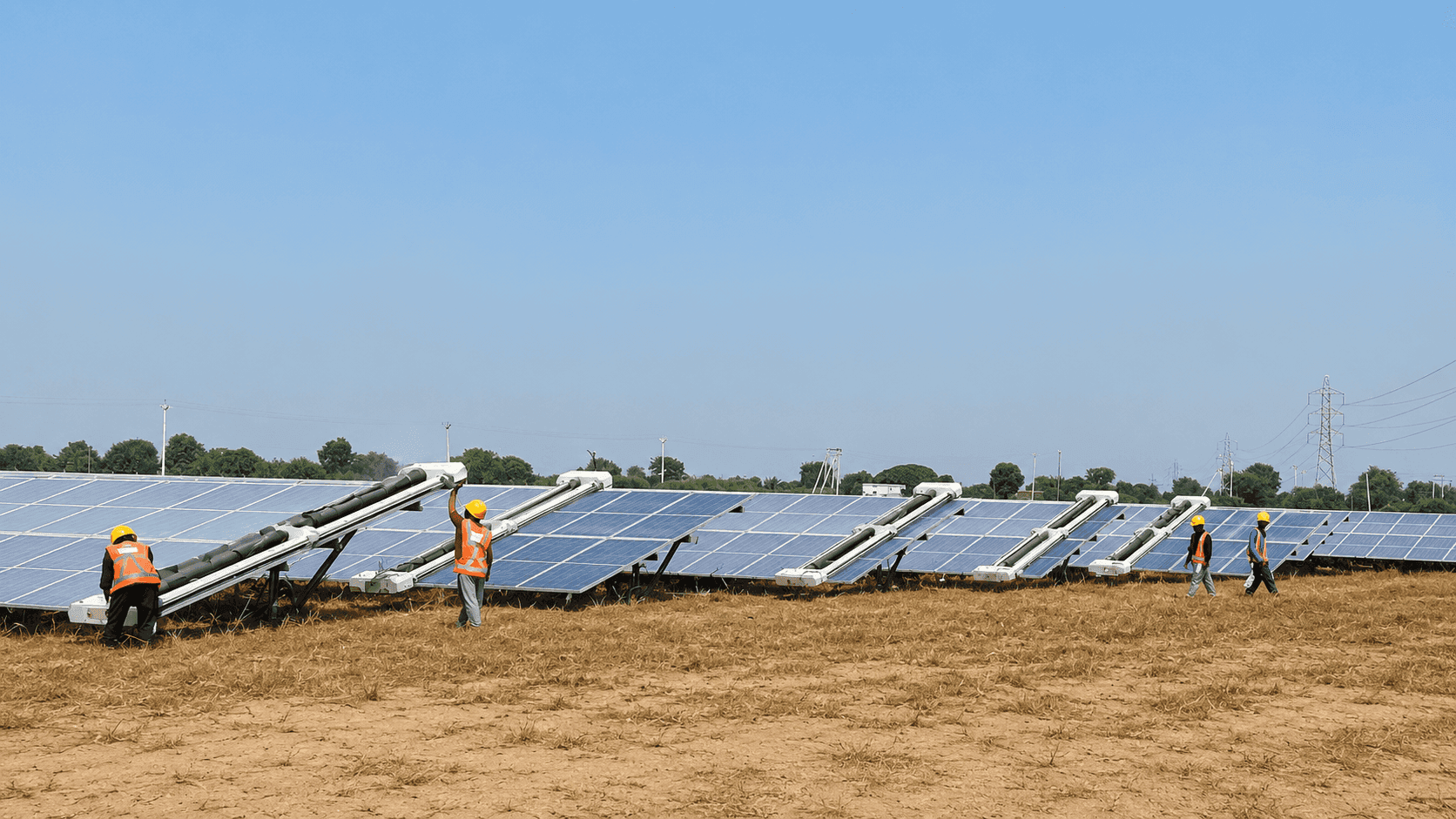
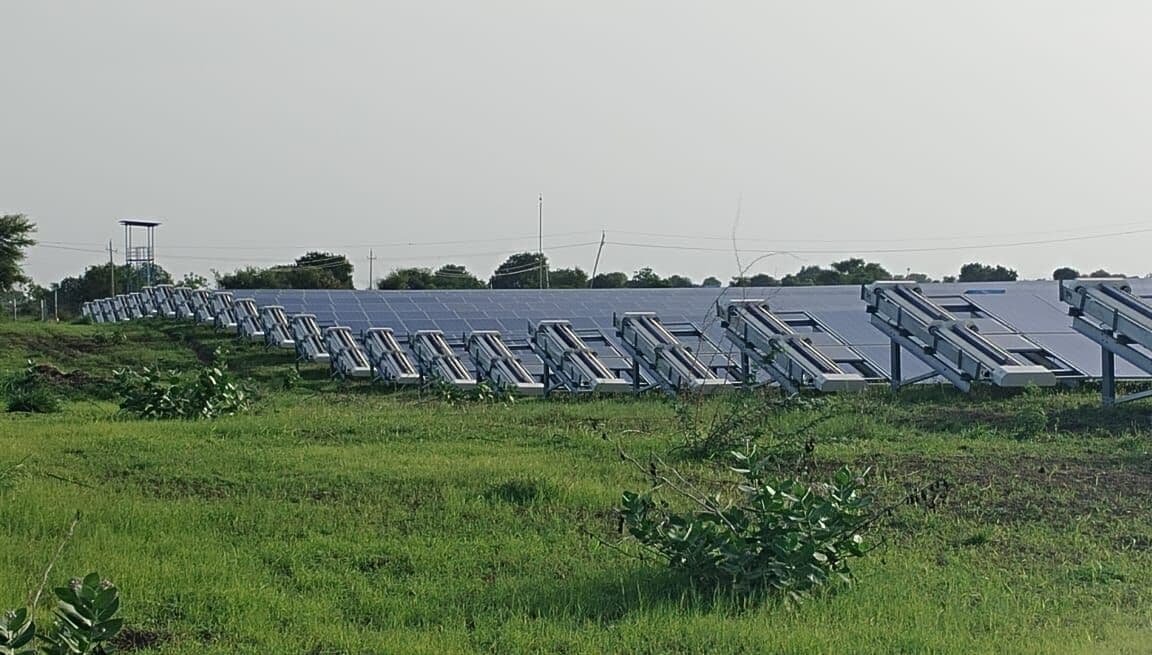
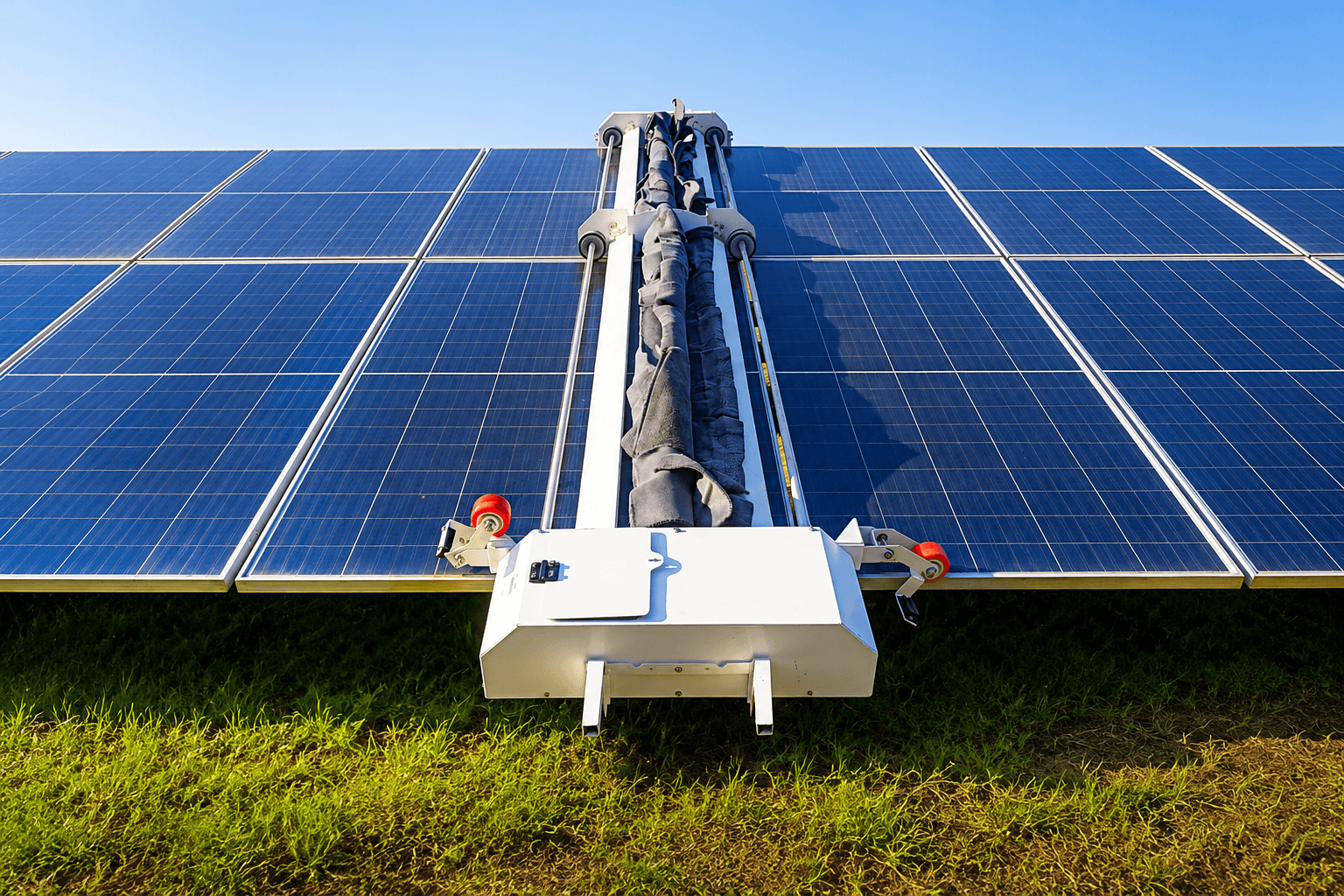
The deployment strategy at the Yavatmal site has changed significantly. The team moved from manual labor to a targeted robotic fleet. The 37.5 MW project now uses two semi-automatic NYUMA units. These were purchased through a capital expenditure (Capex) model. This strategy helps manage the uneven soiling from agricultural dust. It also handles the road grit more effectively than manual teams. The robots provide a more controlled cleaning solution.
The commissioning phase focused on a smooth integration. The team did not attempt a massive, instant rollout. Instead, they used a phased deployment strategy. This allowed them to study the specific soiling patterns on the strings. They calibrated the robots to match the site's needs. This method ensures high precision during cleaning. It also reduces the workload for site personnel. They no longer have to manage constant water truck rotations. They also spend less time managing night crew schedules.
- Deployment Method: A semi-automatic pick-and-place strategy is used. This manages scattered clusters of dirty strings.
- Cleaning Cadence: The site uses a structured schedule of 3 to 10 monthly dry cycles. This is optimized for local humidity and dust.
- Operational Focus: The goal is to end the dependency on water and manual labor. This ensures consistent coverage across all blocks.
This robot-assisted model removes the uncertainty of manual work. The current deployment recovers 37.5 MWh of energy every year. It also saves 140,000 liters of water annually. This allows supervisors to focus on other critical tasks. They can now better manage vegetation and civil maintenance windows.
Operations and monitoring
Operations and Monitoring: Moving to Scheduled Precision
The 37.5 MW Yavatmal project has moved to a proactive model. It no longer relies on reactive manual cleaning efforts. Previously, supervisors lacked proof of cleaning completion. Now, they use NECTYR to maintain full accountability. NECTYR provides granular, block-by-block data for every sweep. This means the operations team knows exactly what happened on every row.
This shift replaces erratic cleaning with scheduled precision. The semi-automatic strategy uses NECTYR-logged dry cleaning sweeps. These sweeps address the dust and grit typical of Maharashtra. By using a semi-automatic fleet, the site avoids logistical friction. There is no longer a conflict between cleaning and other site work. The robots do not compete with vegetation management or civil maintenance. The entire process is much more streamlined.
- Cleaning Cadence: Robots follow an optimized schedule of 3 to 10 dry cleaning cycles per month. This is based on real-time site data.
- Inspection-Led Accountability: NECTYR provides digital verification for every row. This allows supervisors to validate performance across the 37.5 MW array.
- Operational Resilience: The system includes automated safety protocols. These protect the equipment during high-wind events without manual help.
This approach proves that daily washing is not always necessary. Instead, targeted waterless maintenance works better. It recovers 37.5 MWh of energy annually. It also eliminates the need for heavy water logistics. This makes the entire plant more efficient and easier to run.
Results and impact
Results and Impact: The Efficiency Dividend in Yavatmal
The robotic cleaning fleet has changed the Yavatmal project. The site now handles soiling losses much more effectively. Shifting away from manual labor has created a clear efficiency dividend. This balances technical output with better resource conservation. The deployment directly solves the problems caused by agricultural dust. It also manages the road grit across the 37.5 MW site.
The results show a massive improvement in operational health. The site now has a consistent cleaning cadence. This prevents thick soil layers from building up on the panels. This consistency leads to a large recovery in annual energy. Furthermore, the waterless technology protects local resources. The O&M team can now achieve high performance without wasting water. This gives supervisors more flexibility. They can now prioritize vegetation and civil tasks. These tasks were often neglected before due to cleaning schedules.
Peer comparison and planning checklist
Peer Comparison and Planning Checklist for Robotic Solar Cleaning
The Yavatmal 37.5 MW project is a benchmark for the region. It is a leading example of robotic solar panel cleaning Maharashtra deployments. We can compare it to the Kupti 14 MW installation. That site uses semi-automatic HELYX units. The Punvat site shows a more robust use of block-level proofing. It also differs from the Ahmadnagar-Jalalpur 10 MW site. The Ahmadnagar site relies more on manual oversight. In contrast, the Punvat array uses a semi-automatic fleet. This helps it stay in sync with local dust and humidity patterns.
Use this checklist to evaluate your own deployment readiness. Follow these steps to align your O&M strategy with our success:
- Assess your current soiling levels. This helps you decide how many semi-automatic units you need per block.
- Integrate NECTYR fleet monitoring. This creates digital logs to replace manual schedules.
- Map out your water logistics and vegetation management. Ensure these do not create bottlenecks for the robots.
- Align your cleaning cycles with local humidity patterns. This prevents mud from forming on the solar panels.
- Verify your hardware against your site topography. Ensure your units are compatible with your specific terrain.